23 August – 8 September, 2015 – As the Pamir Highway has been an important milestone of our journey you’ll find below our diary entries with the highlights of every day presented in four parts.
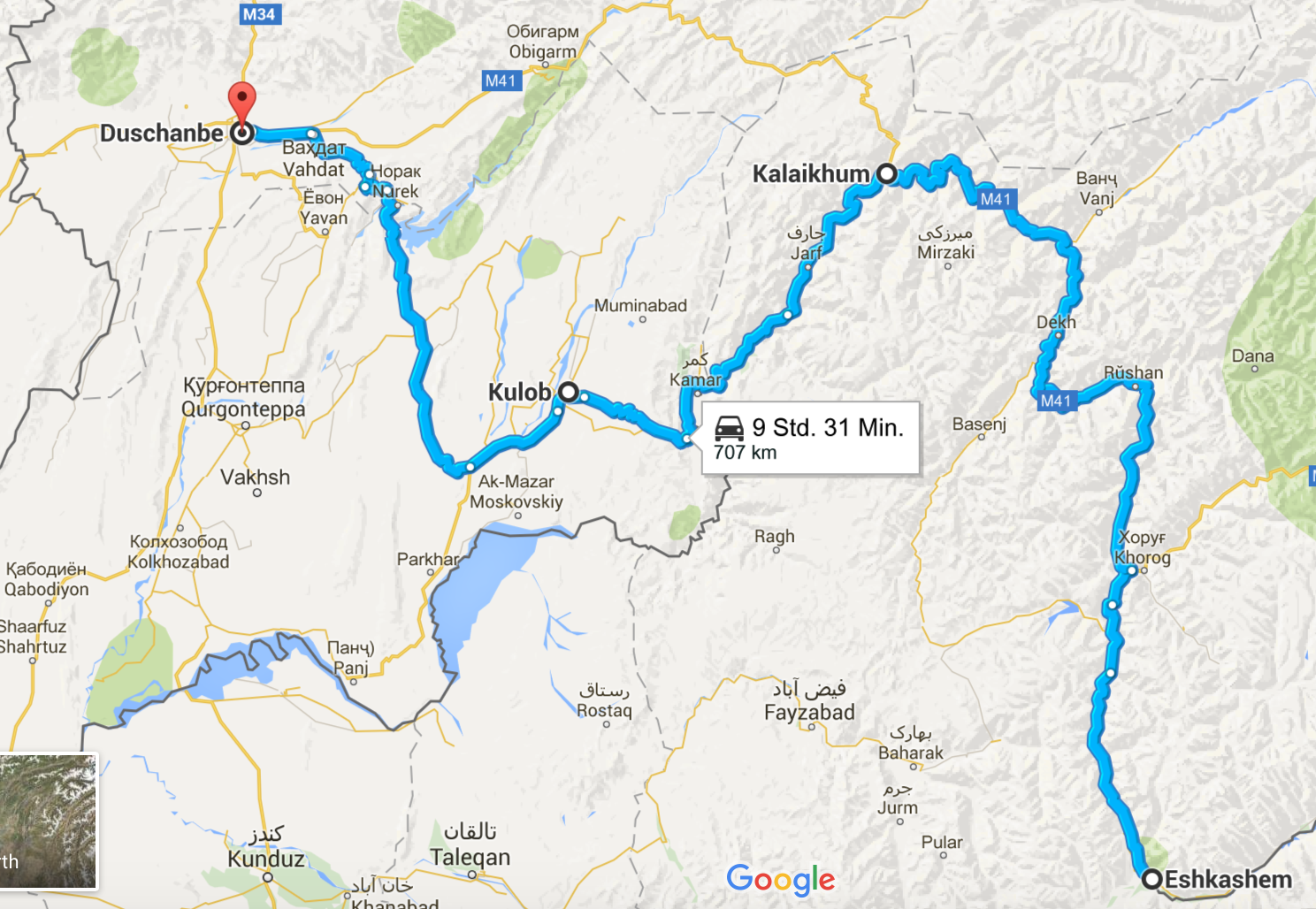
Day 16 and 17: Ishkashim – Dushanbe: 700km
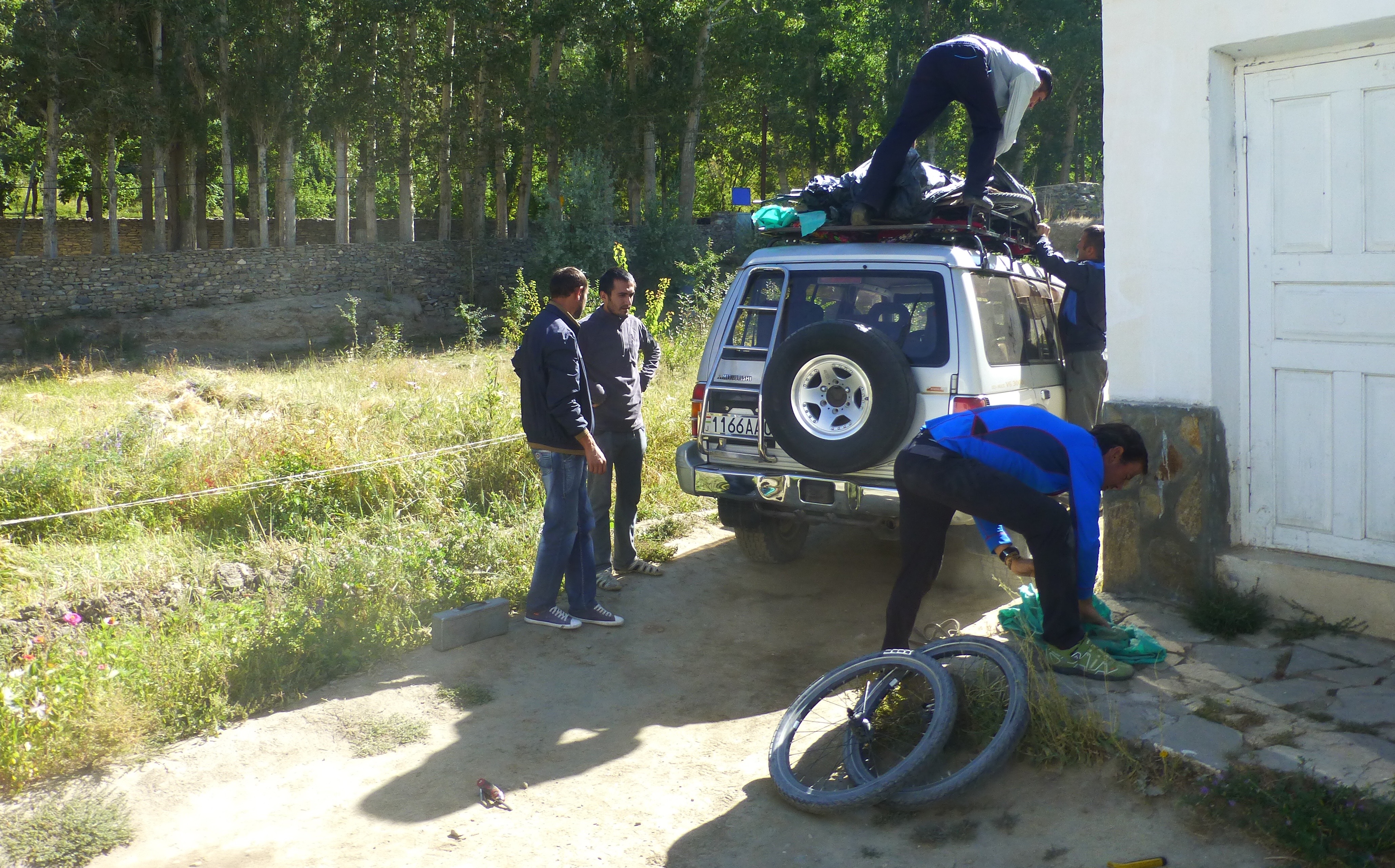
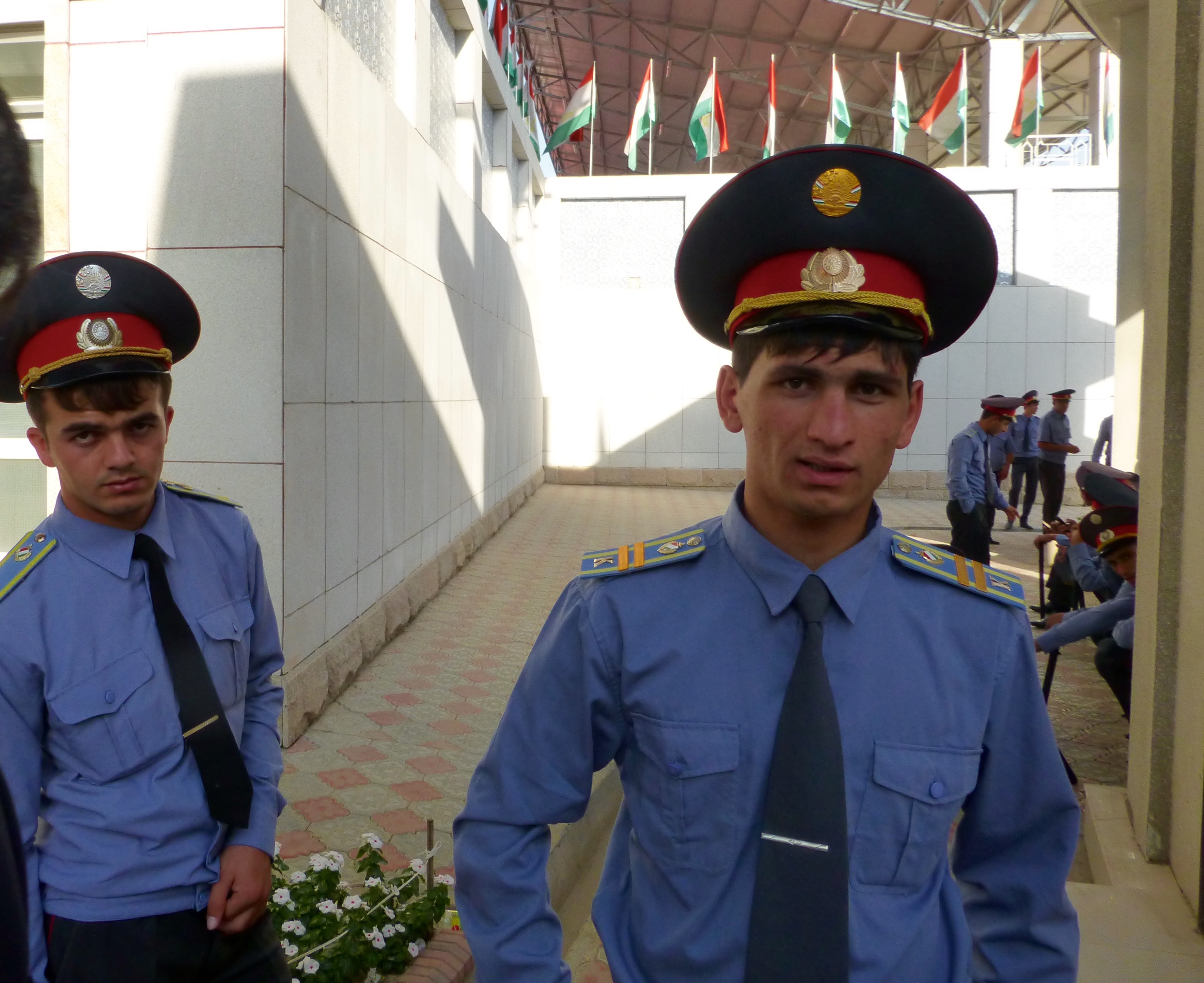
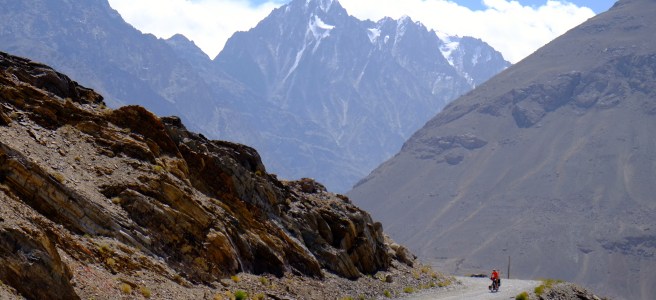
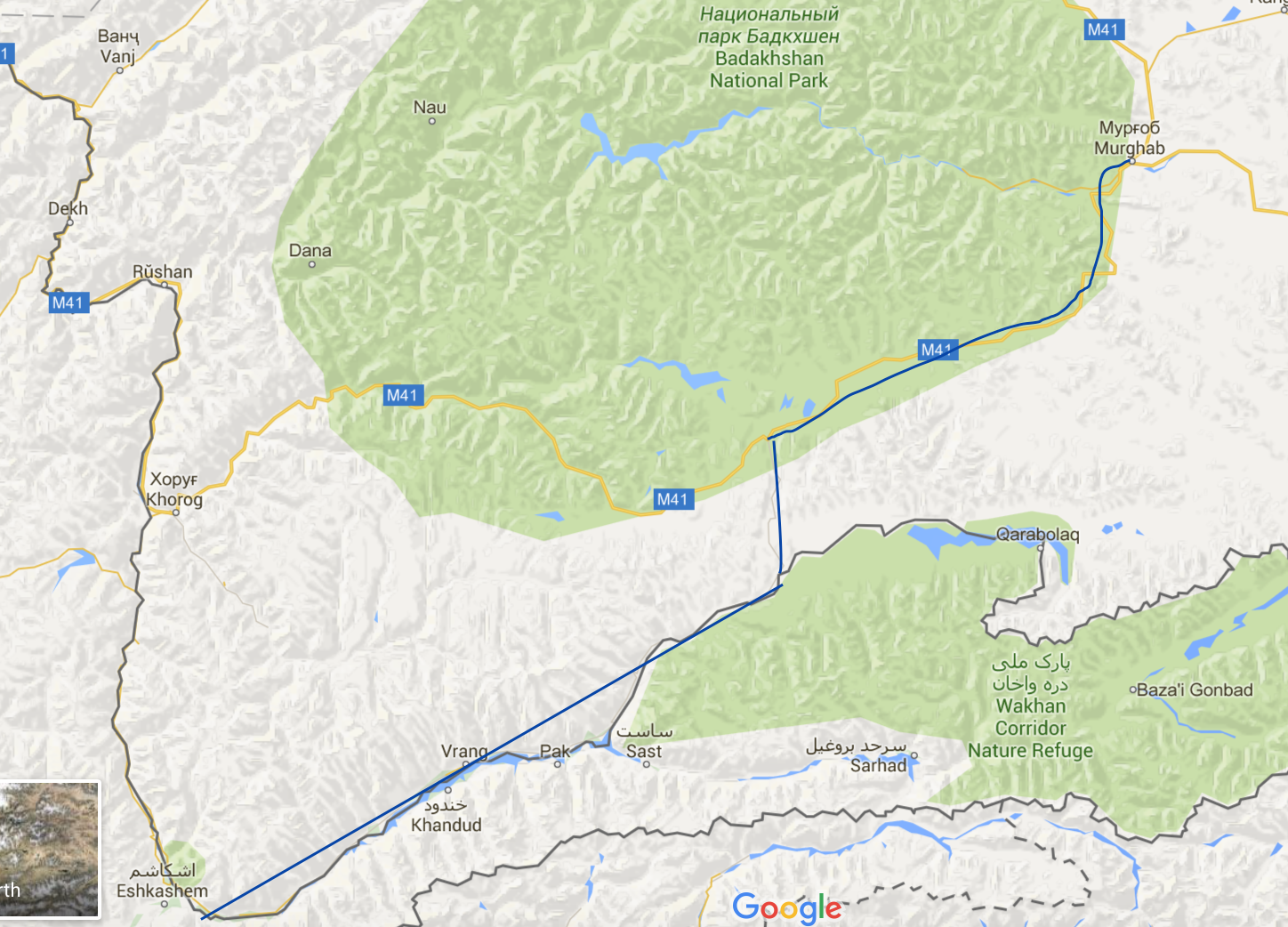
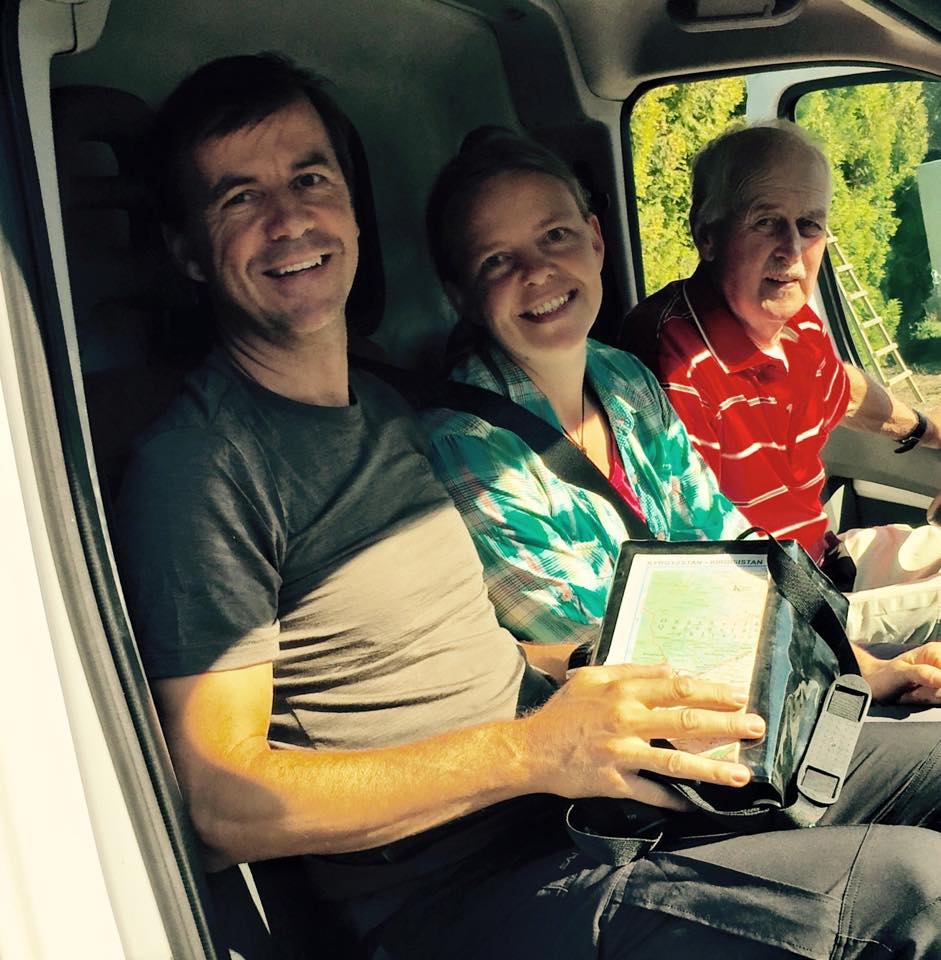
With Johan still being weak and us having to be in Dushanbe for our Turkmenistan visa application we take a taxi already from Ishkashim and not from Khorog as originally planned. The guesthouse manager is able to negotiate a good deal with a taxi driver and we head off with our bikes on top of the car and the trunk stuffed with our many panniers. 10 minutes later we pick up an Afghan police officer who also has to go Dushanbe – there it goes our private taxi. Annoyed and a few phone calls later we negotiate another discount as our private taxi has become a shared taxi. Unfortunately our macho driver thinks he owns the road and we think he might have obtained his driver’s licence in India as most of the time he is driving on the left handside. Much to our annoyance, as the left is the cliff with the river a few hundred meters below. The bone-crunching road that has in the meantime rejoined the Pamir Highway continues twisting through canyons and gorges with barren mountains raising to the left and right. At the other side of the river still lies Afghanistan and a small donkey track winds along the river. The vistas are spectacular and we both are saddened that we aren’t able to cycle this part of the Pamir Highway. We also regret that we’ve relied on our travel guide’s advice to make a detour through the Wakhan Valley as we are now on the most spectacular part of the highway. Every once in a while Johan advises the driver to slow down, to drive on the right handside of the road and not to pass trucks on a one-way-track while we cannot see anything due to the dust raised by the vehicle in front of us. At nightfall we even get more scared as the road is worsening, the visibility is low and the driver seems to be more interested in the many phone calls that keep coming in until as late as 2am than paying attention to the road. Poor Johan stays awake all night, once avoiding a collision with a pile of sand and constantly arguing with the driver to make sure we’ll arrive safely. The next morning – on a finally paved highway – the driver once more needs to demonstrate his skills: at a horrendous speed of 140 km/h and a car that’s almost falling apart I tell him off and stubborn as he is he continues at 60 km/h asking every few seconds if he is still going too fast. The atmosphere in the car climaxes when we arrive in Dushanbe and Johan tries to guide our driver to our chosen guesthouse, but he just doesn’t want to follow Johan’s instructions – while not even knowing where to go. Listening to the driver’s behavior in silence for a while and us standing at a crossing and the driver not wanting to turn left as needed I burst out and yell at him to do what Johan is telling him, adding some abusive language in German and we finally arrive after 24 sleepless hours. During this far too exciting journey we pass about 20 military and police check points, each time showing our passports and each time having long discussions because of the Afghan in a car with European tourists. Later we learn that there had been a clash with several fatalities a few days ago in Dushanbe.
Getting the car packed for a long journey
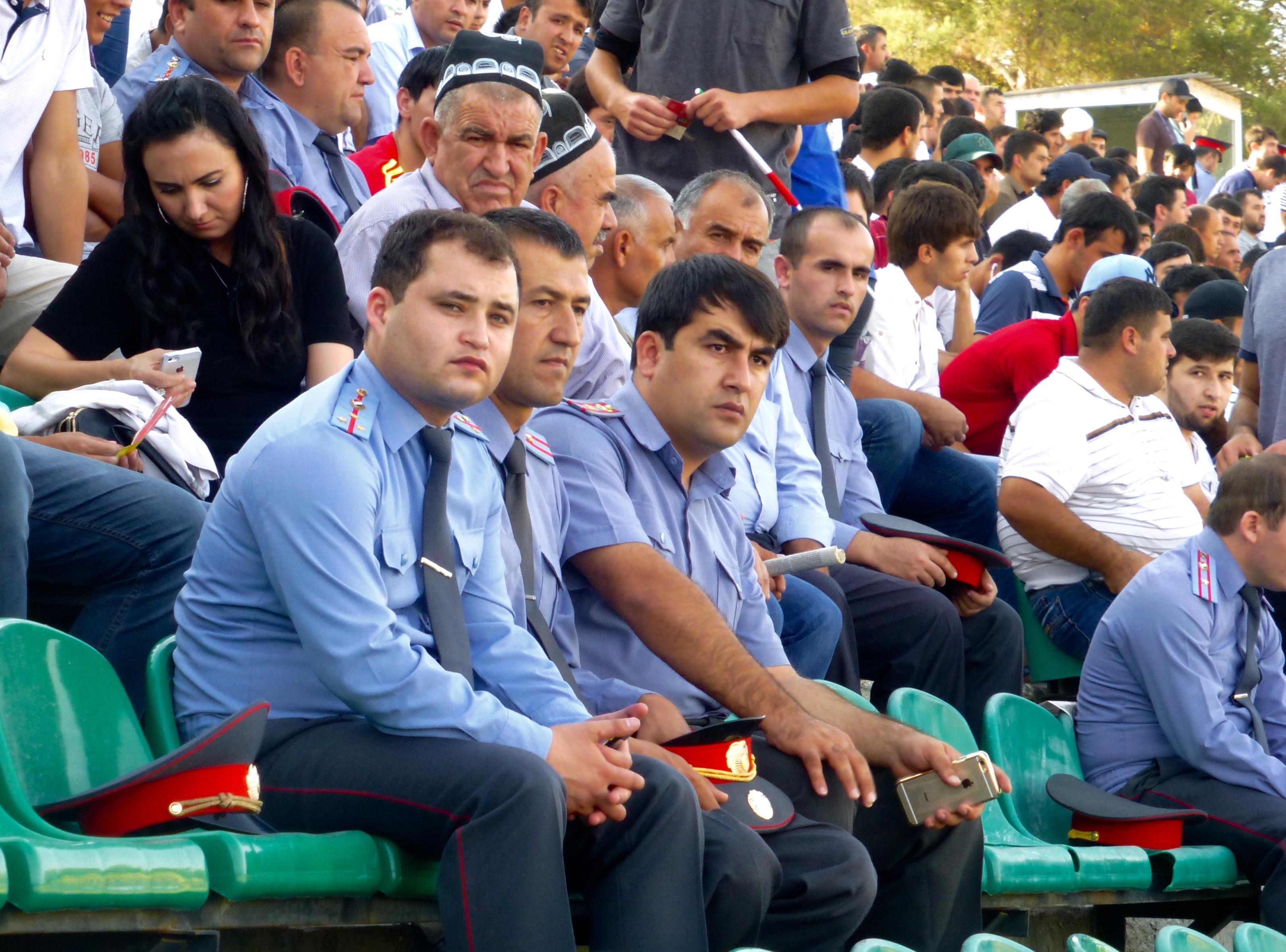
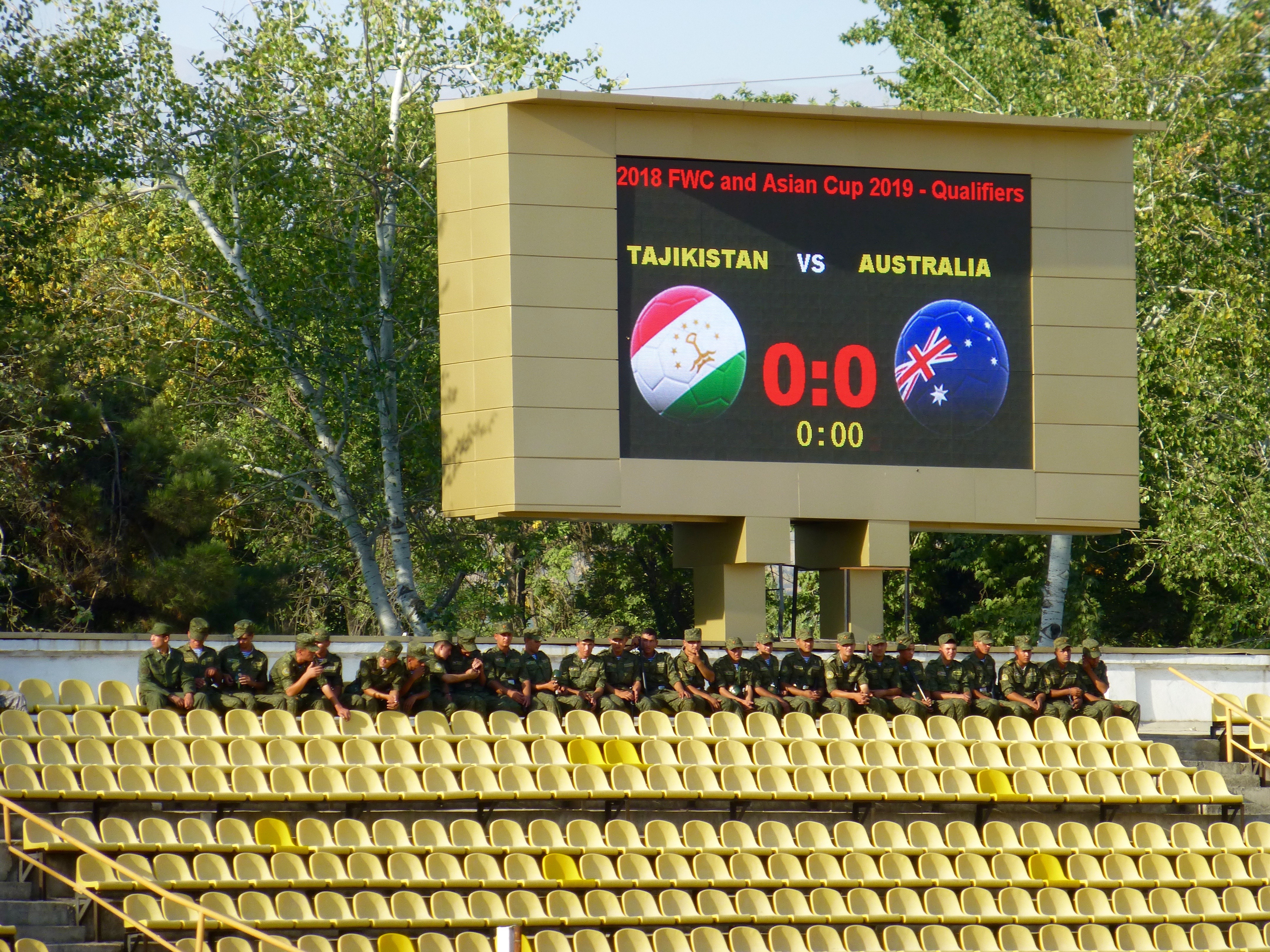
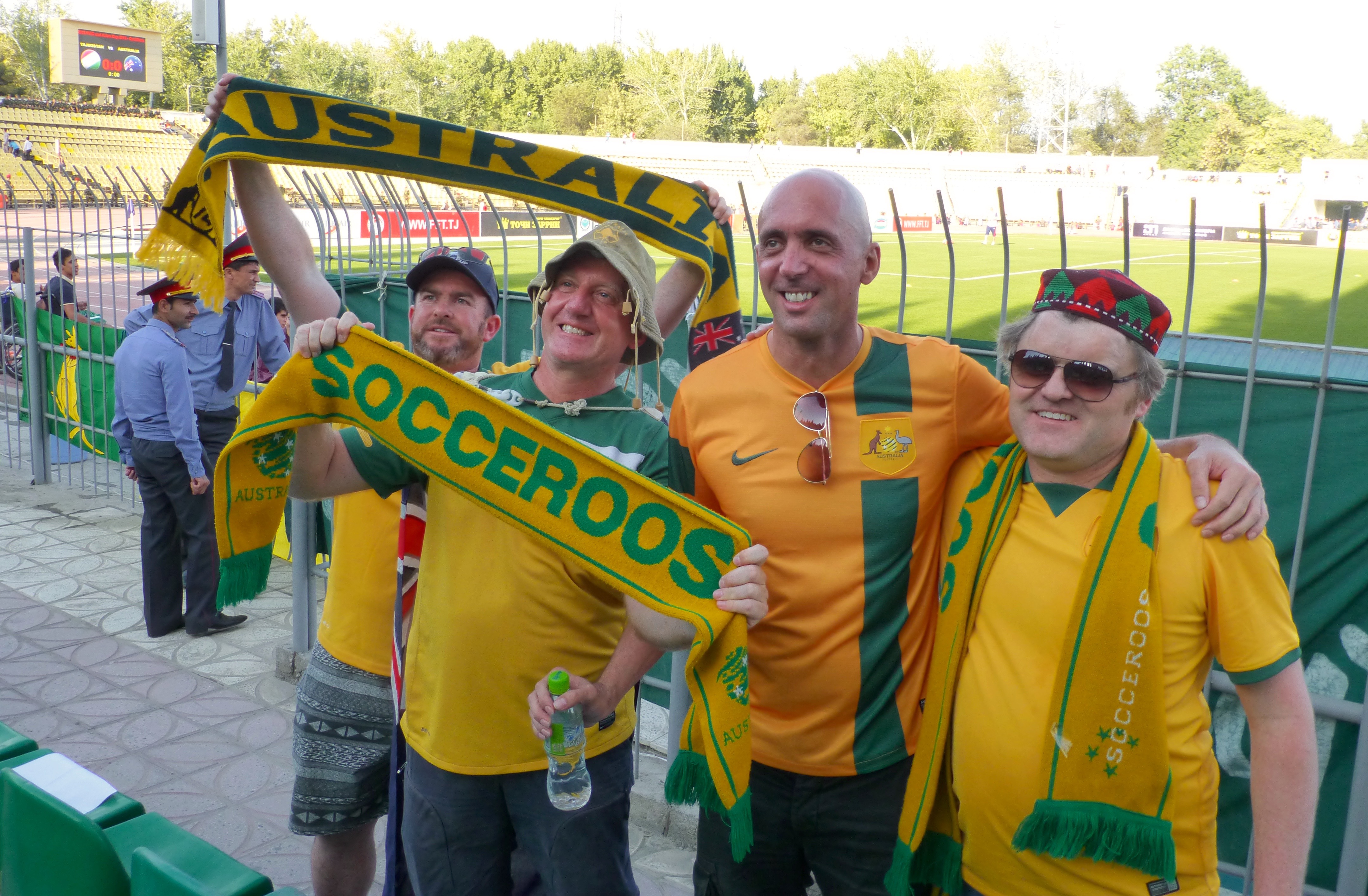
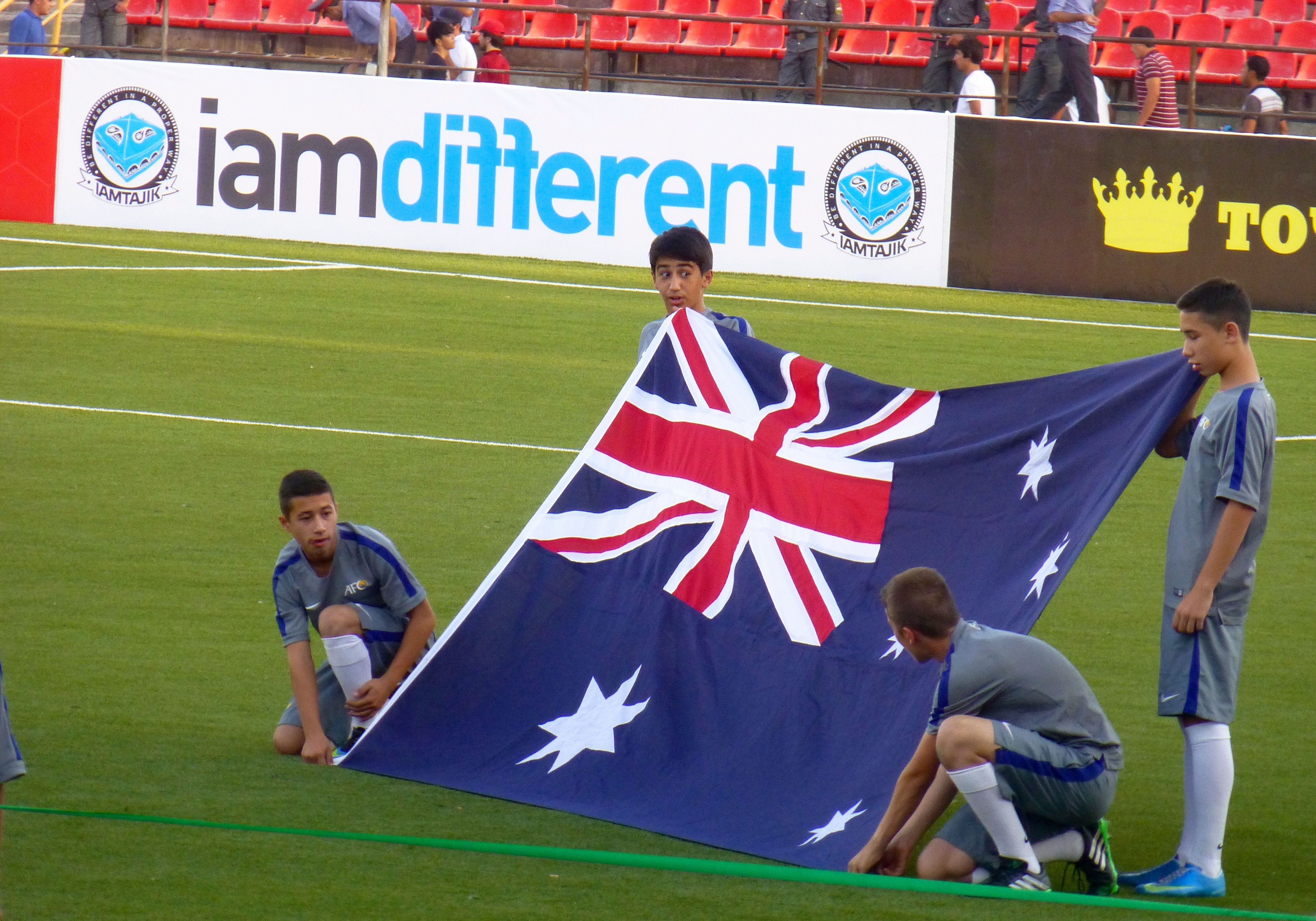
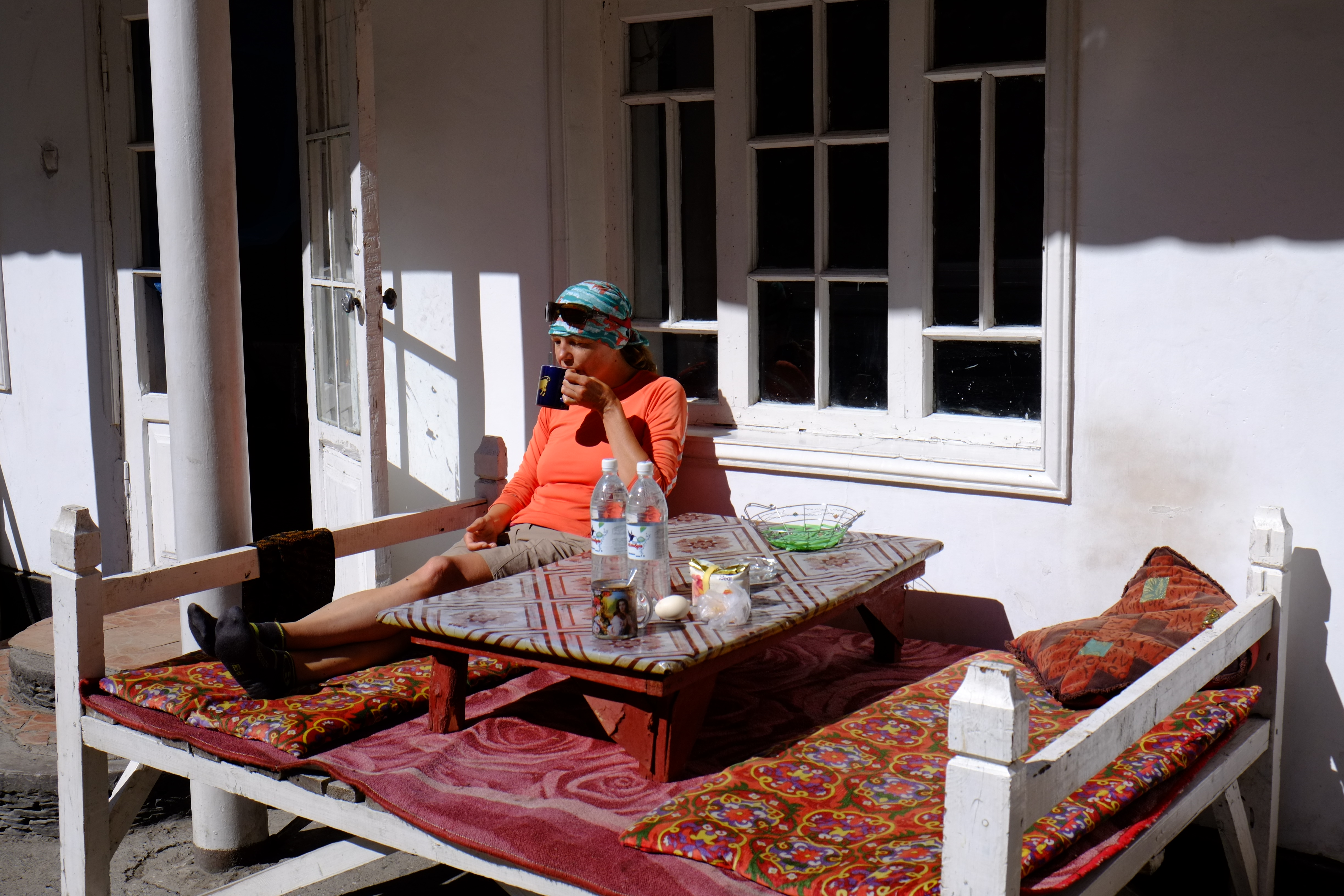
Johan negotiates a fantastic deal at Marian’s Guesthouse where we will relax until we have our visas for Turkmenistan. Today also happens to be the day the Australian football team plays against Tajikistan to qualify for the 2018 World Championship. Lucky as we are we chose to stay at an Australian-run guesthouse with a few Australian fans. Not only do we have a great deal with Marian for our stay in Dushanbe, she also offers us tickets for the game. We have a fantastic evening (and a few more later on) supporting the Australian team with our new Aussie friends and even I enjoy the atmosphere in the stadium while not being a football enthusiast at all.
23 August – 8 September, 2015 – As the Pamir Highway has been an important milestone of our journey you’ll find below our diary entries with the highlights of every day presented in four parts.
253km, altitude gain of 2,493 m (1,558km and altitude gain of 18.991 in total)
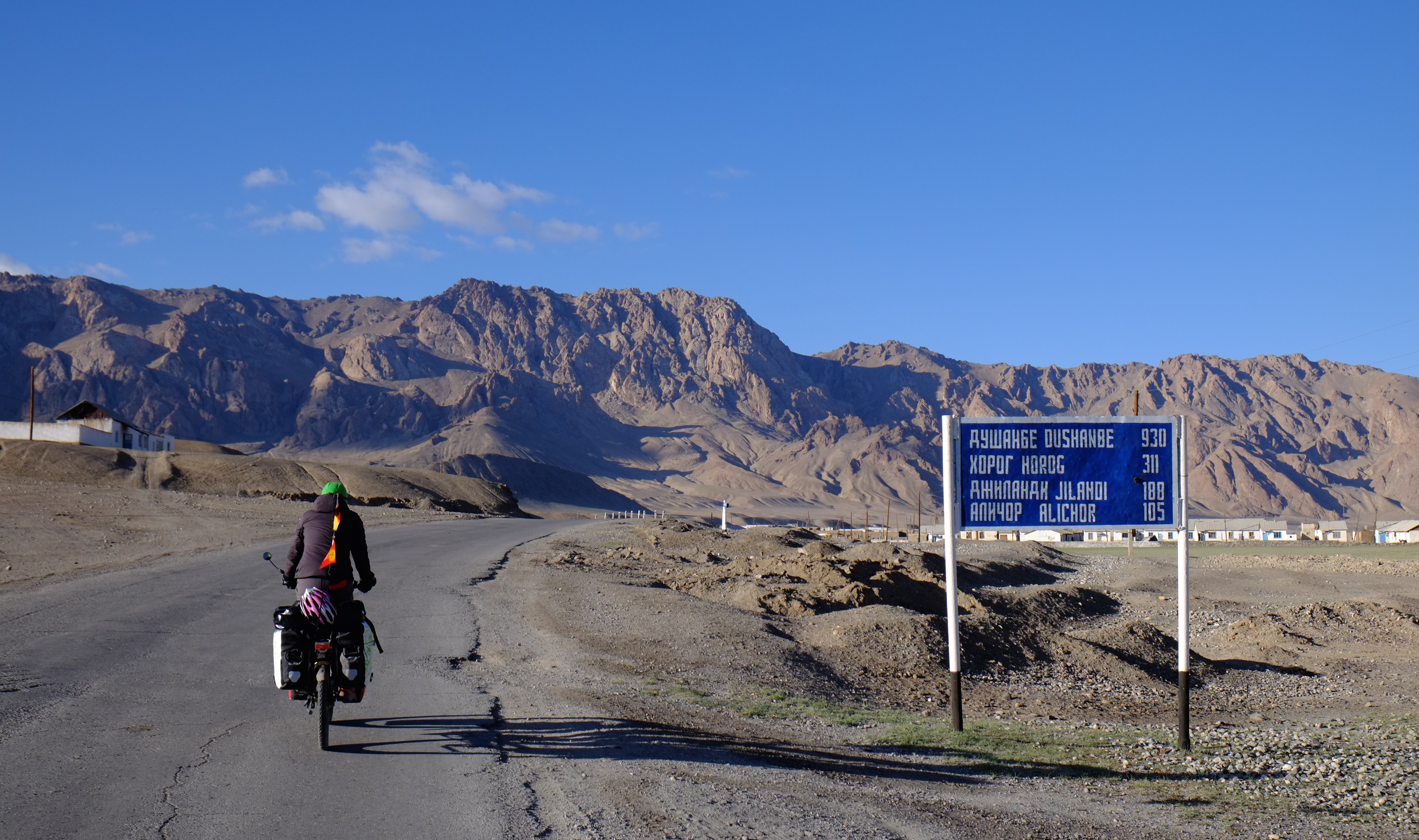
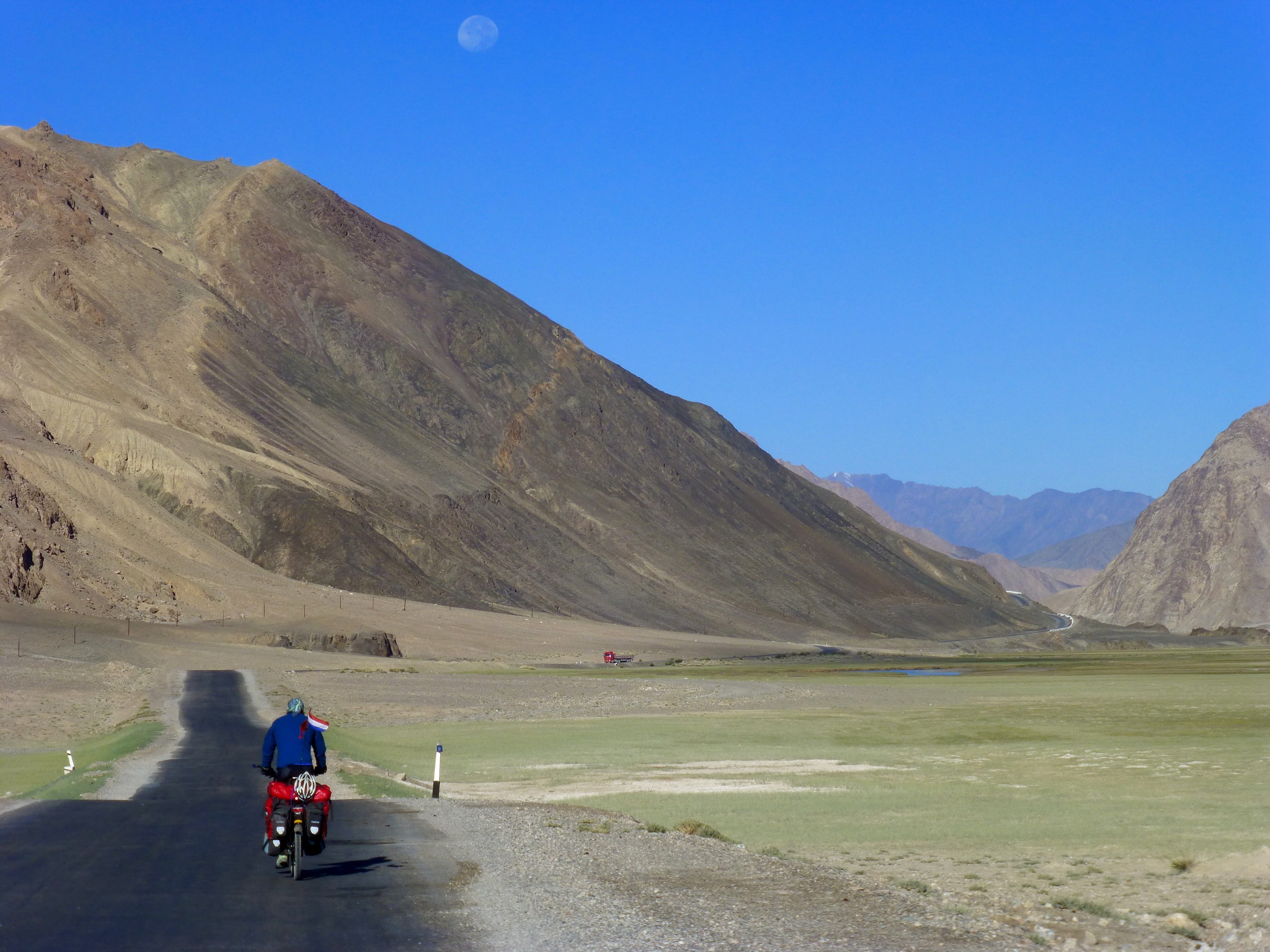
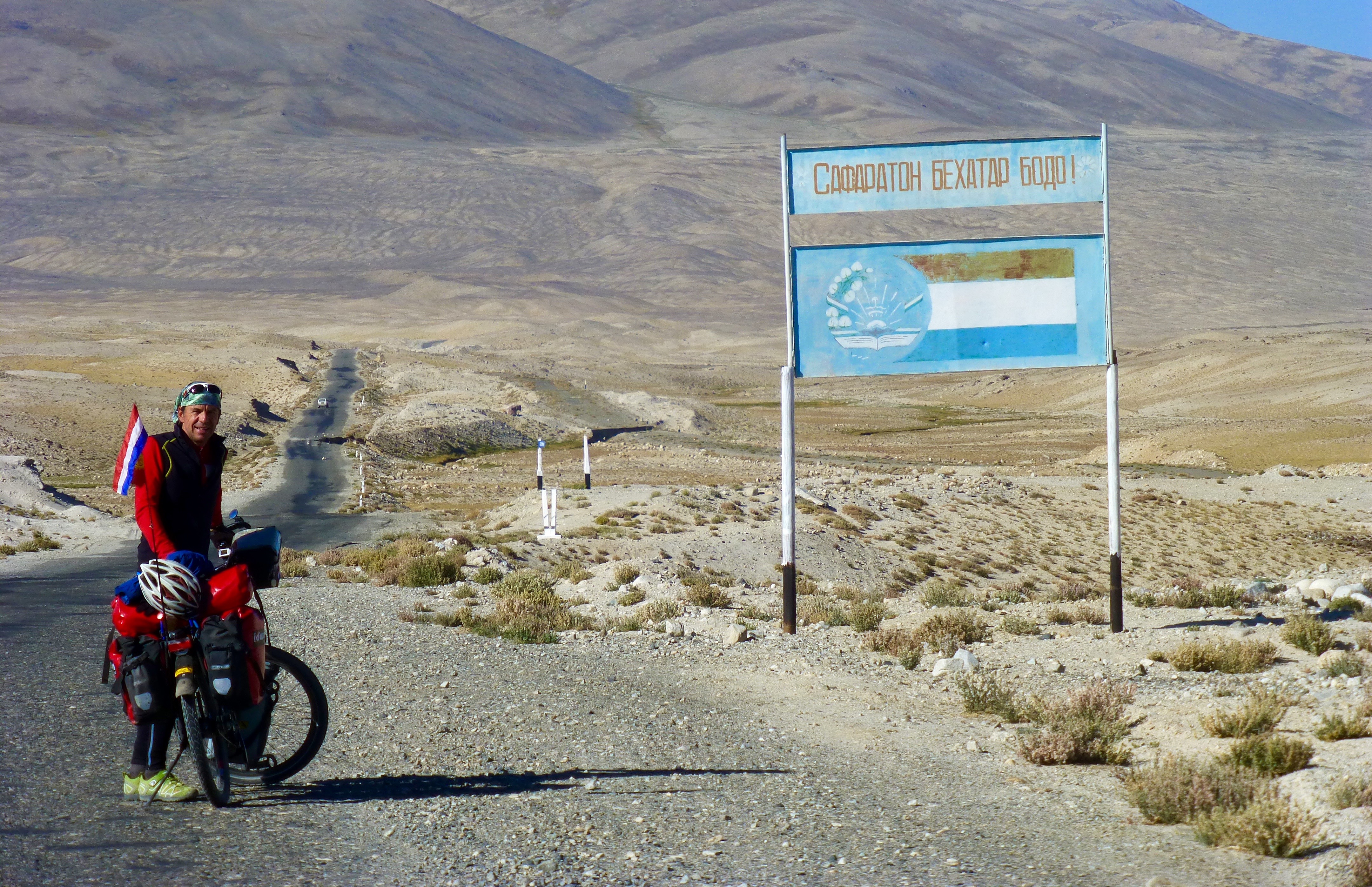
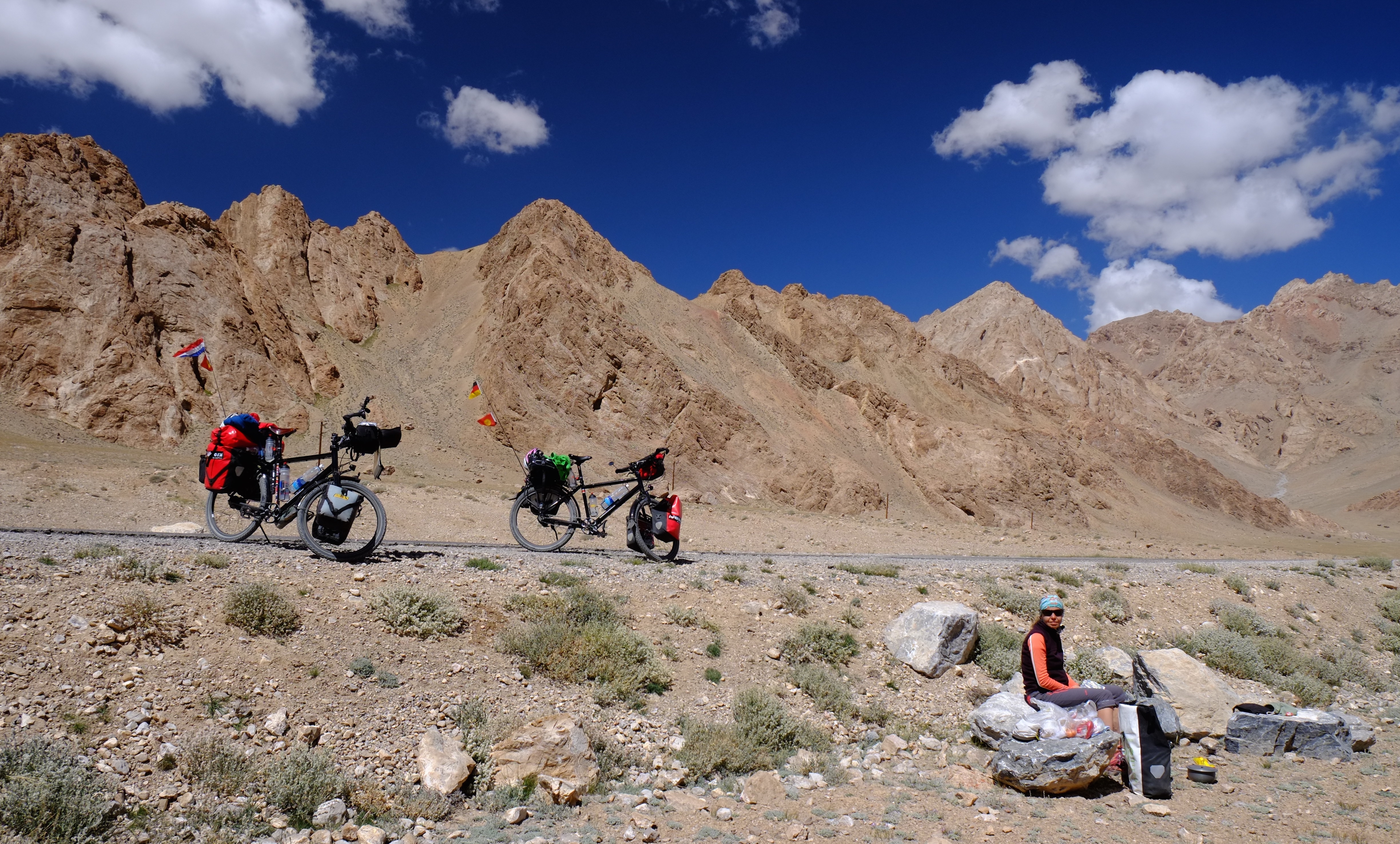
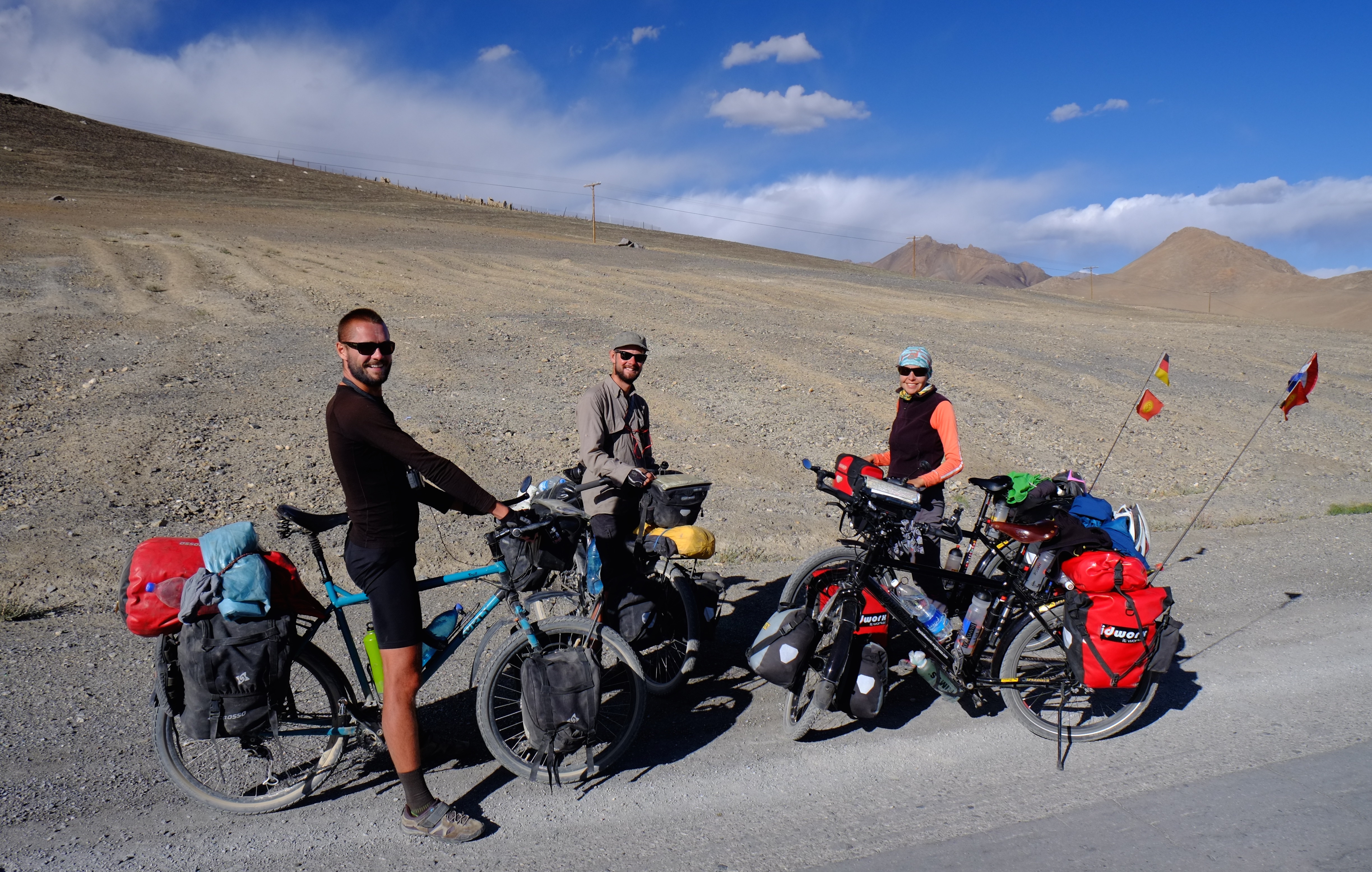
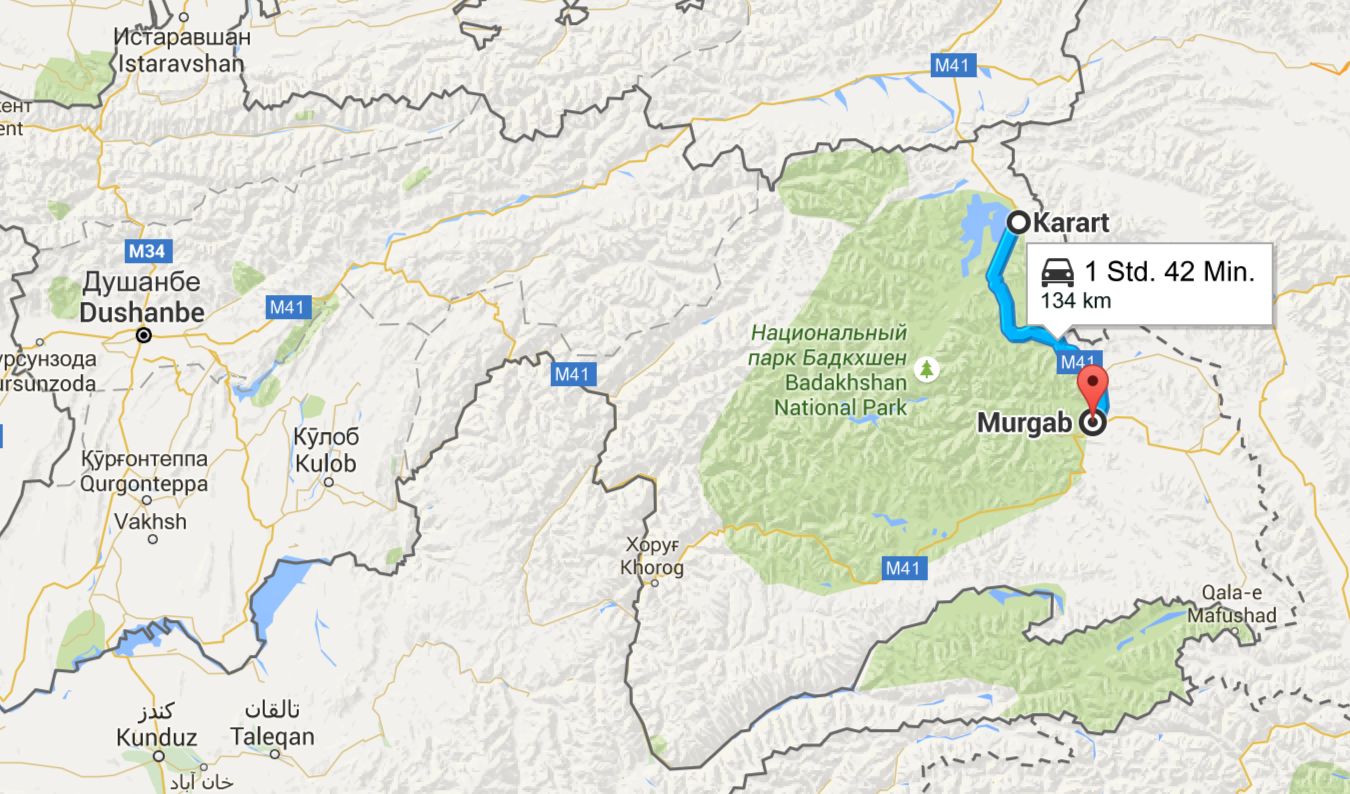
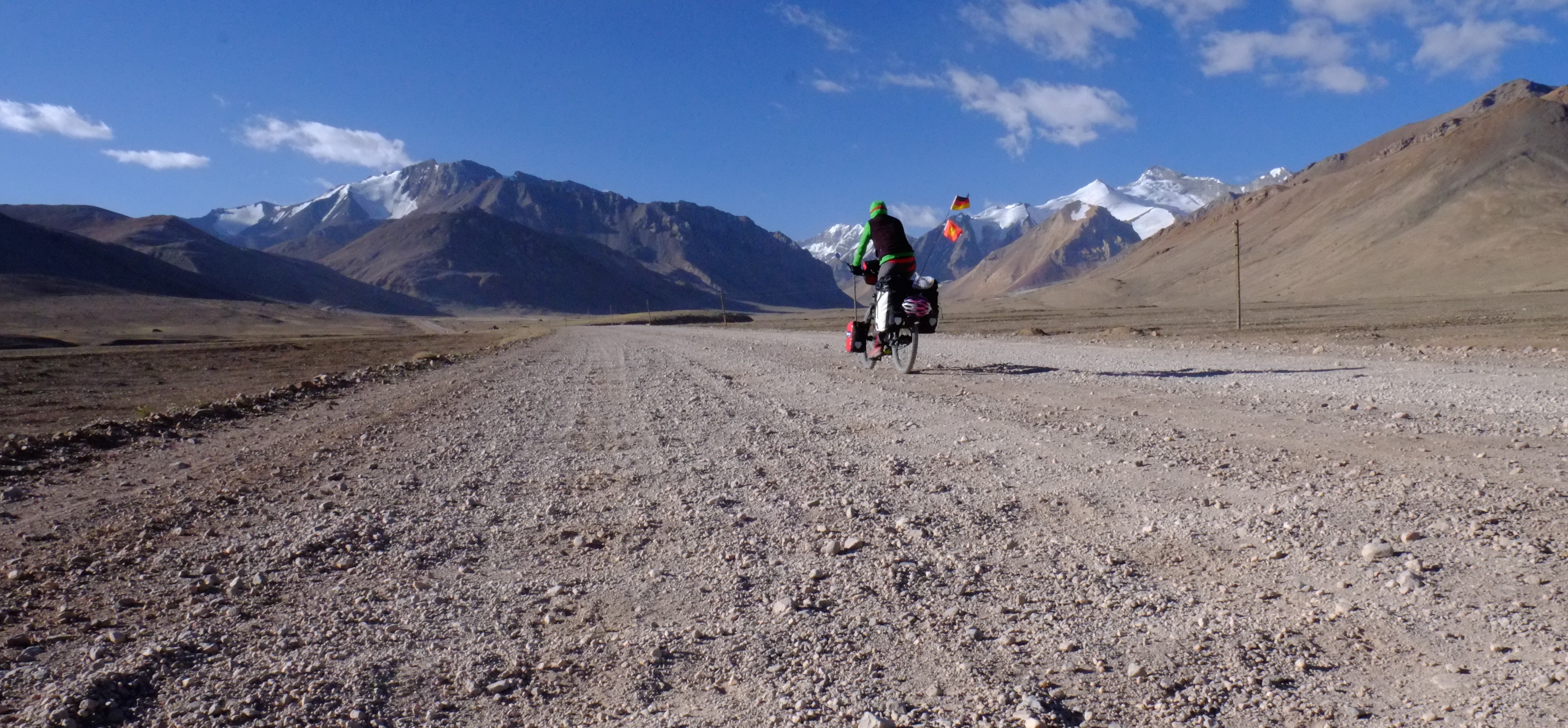
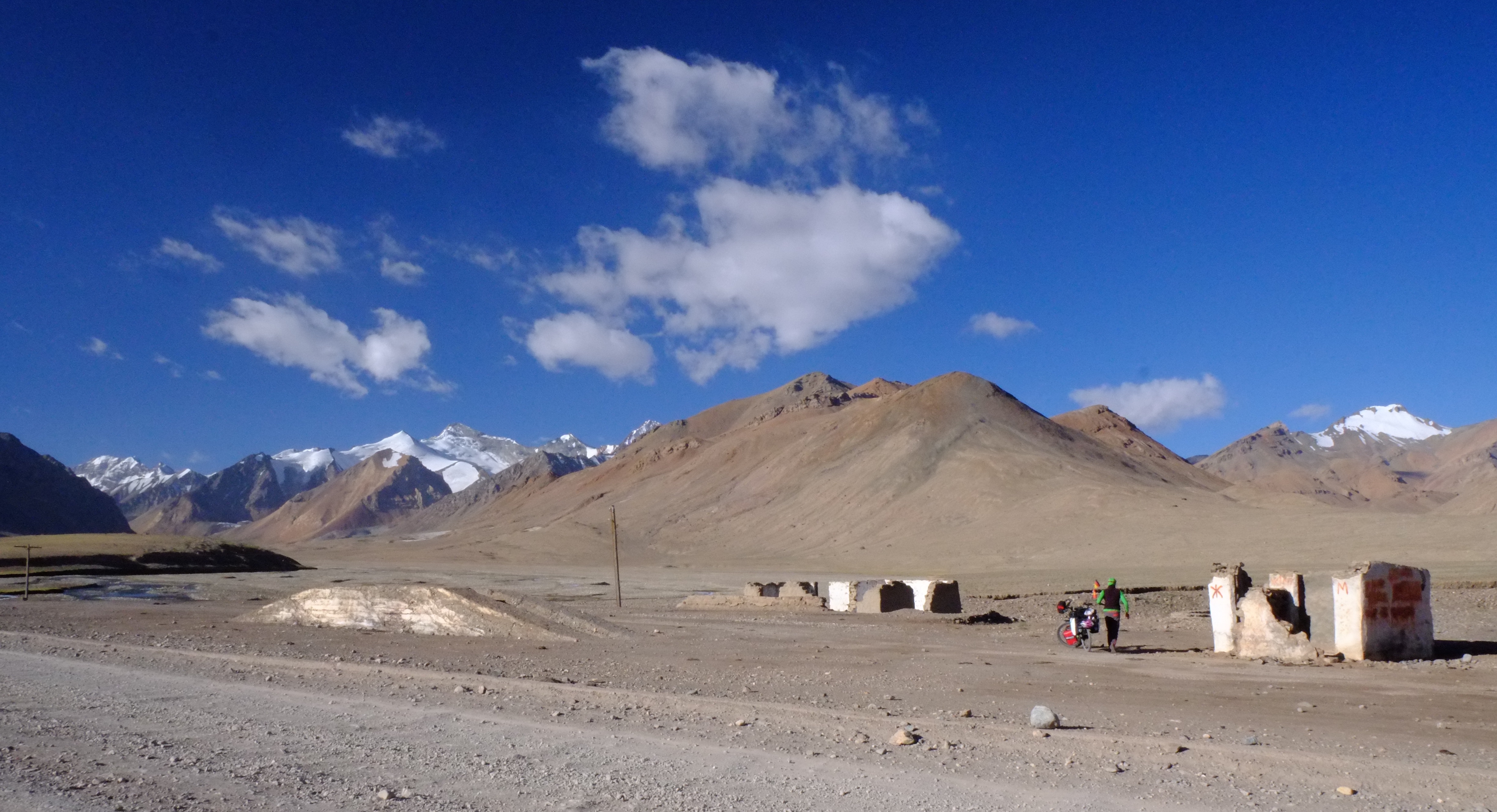
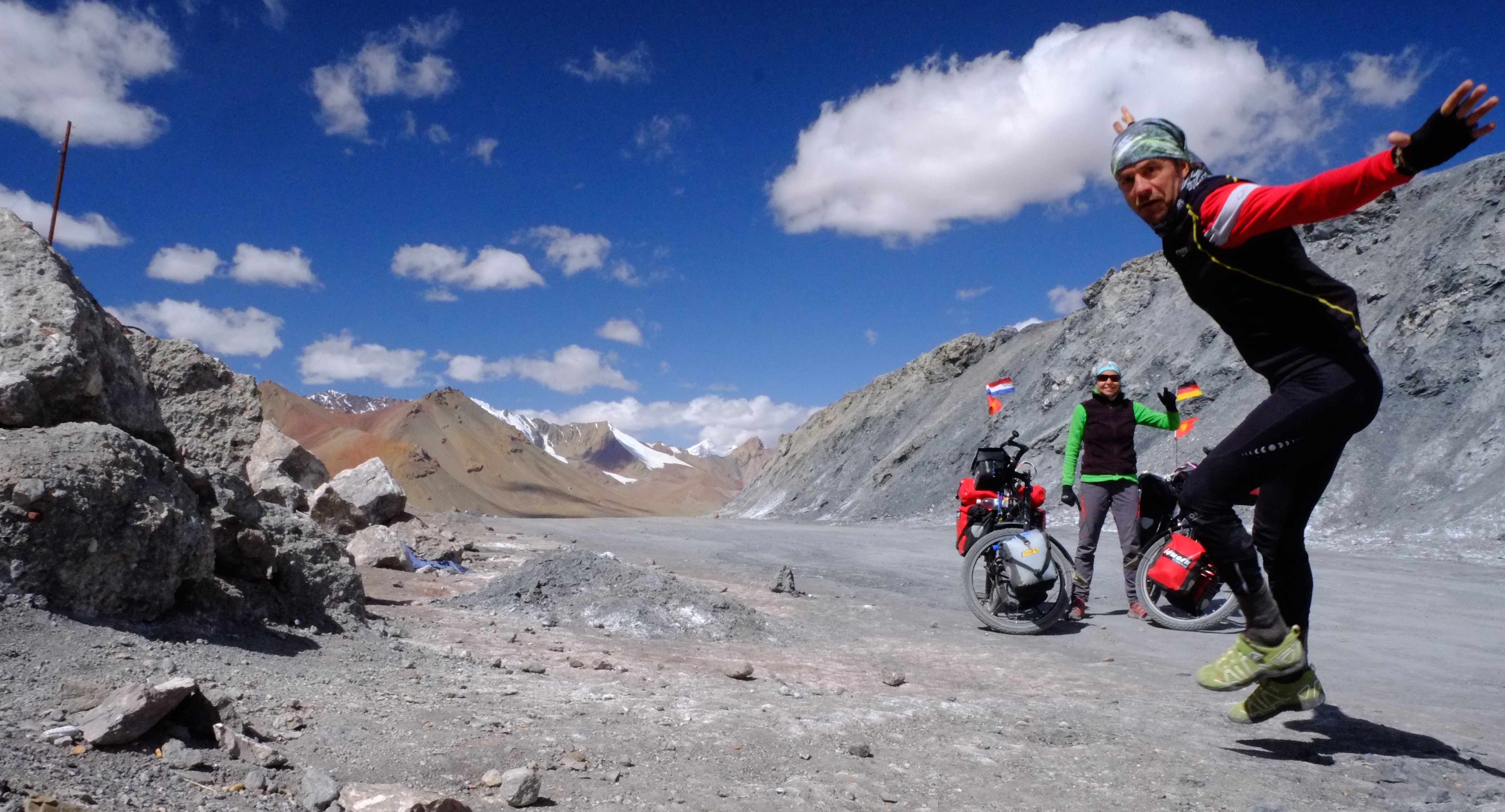
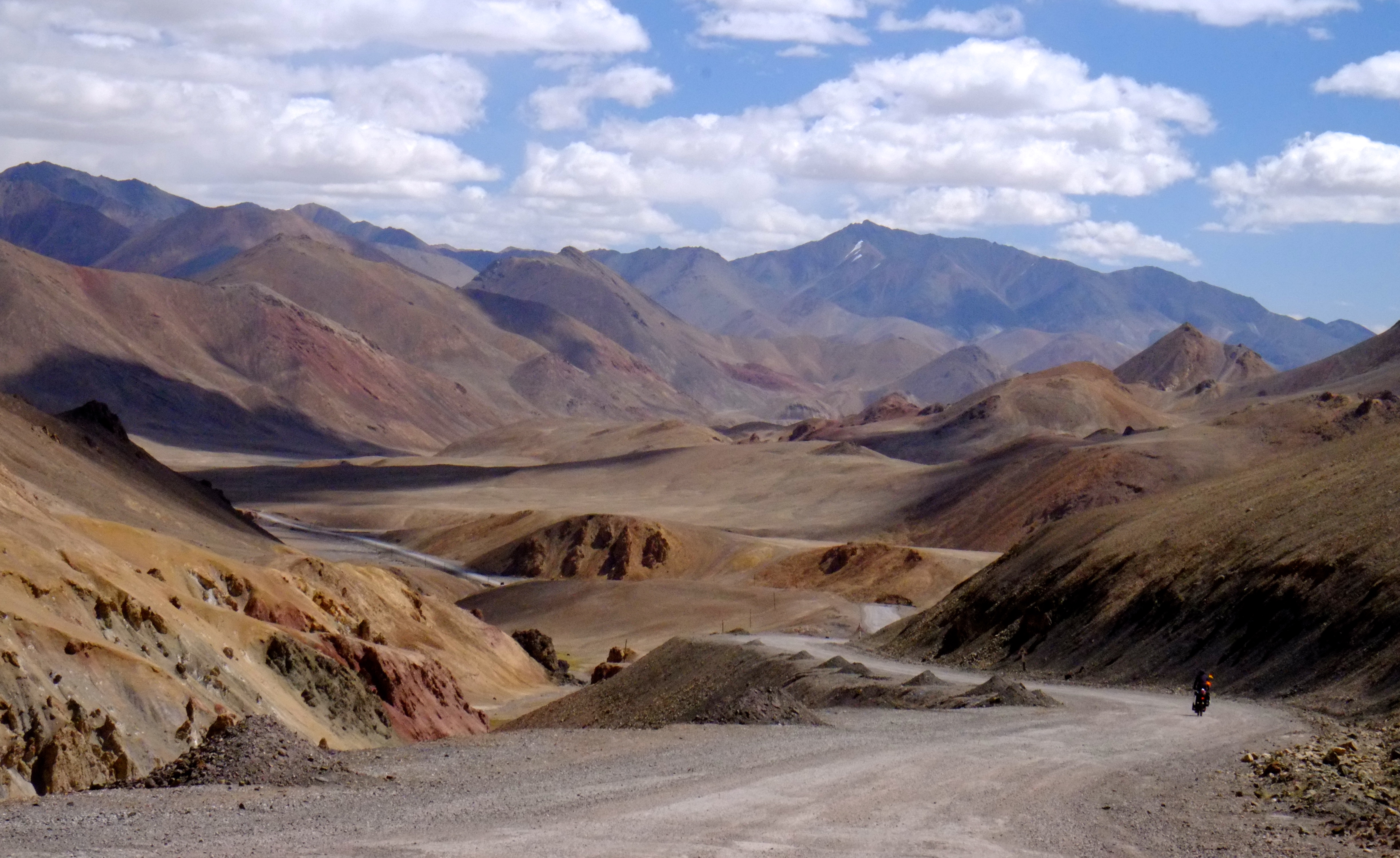
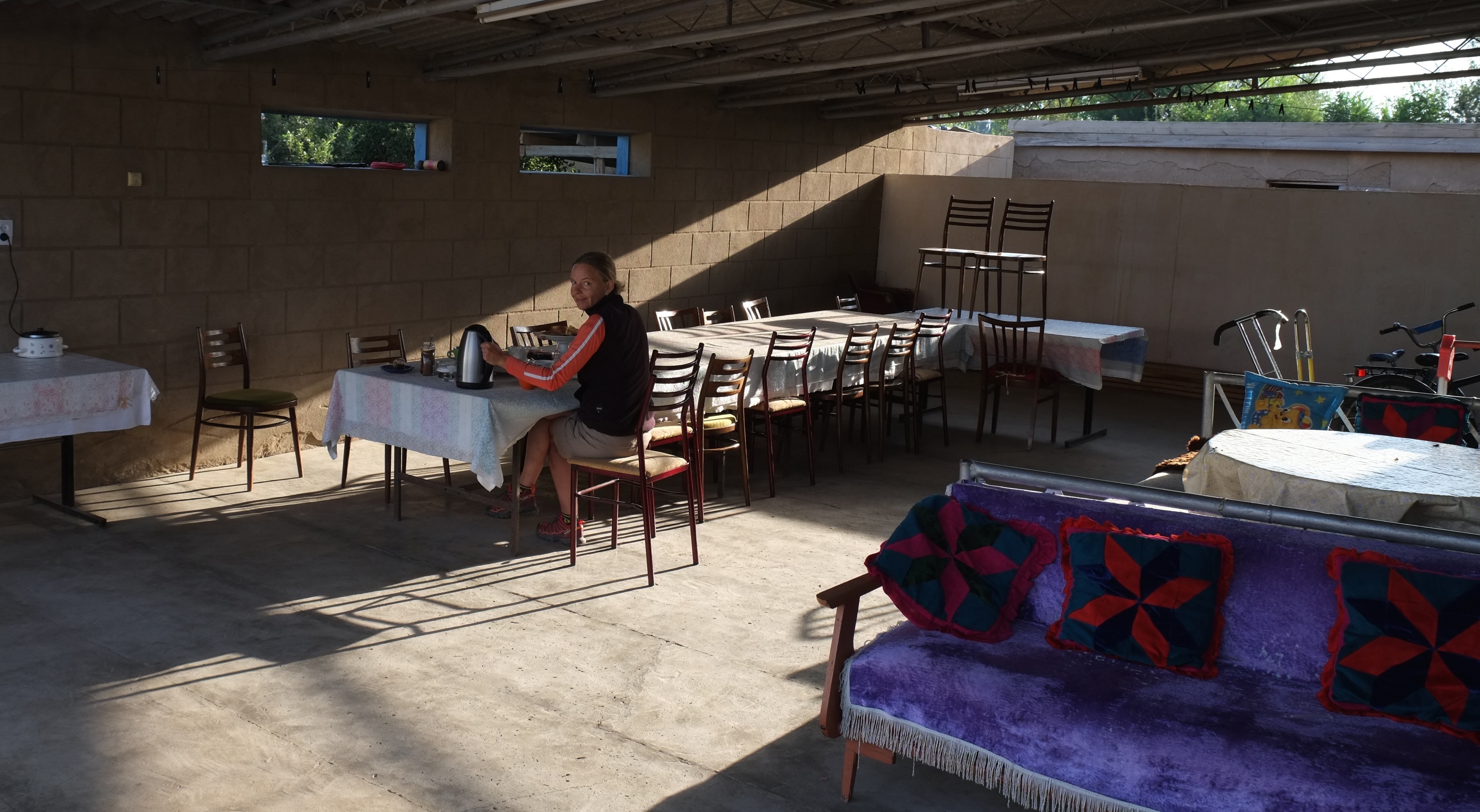
Day 10: Murghab – Alichor: 107km, altitude gain 841m Early start and fantastic weather: no wind and another day with clear-blue sky. Shortly after Murghab we pass our first military checkpoint. We are now cycling through the Gorno-Badakhshan Autonomous Region for which a permit is needed. Our passports are thoroughly checked, details entered into a journal and ten minutes later we continue. We pedal up our first pass of today of 3600m, a piece of cake as we start climbing at 3500m. The coming hours the road is undulating uphill through a valley, we cycle through small canyons and to our left and right are red rocky mountains. Again hardly any vegetation, only a few thistles, succulents and grasses line the road. After the second pass of over 4100m the landscape becomes boring with a wide valley and brownish mountains around us. We feel a bit like in the movie ‘Groundhog Day’ as the road follows the same pattern over and over again: uphill, then left and downhill, another right turn and then uphill again. Despite the headwind as of 3pm we make good progress and end up at another homestay where we wash ourselves in the same room where we eat and sleep. We get two buckets, one filled with warm water. Our room also seems to be the only room where the phones can be charged and while Johan is standing naked in one of the buckets one after the other person tries to come in to check the status of the phones – of course without knocking on the door first. To avoid any embarrassments we watch the door until we are finished washing. The phone checking continues later on while we are trying to sleep. That evening we have a good laugh as we imagine all these interesting features of Tajik homestays to be added to our own B&B upon our return.
Leaving MurghabRight before the first pass at 3,600m
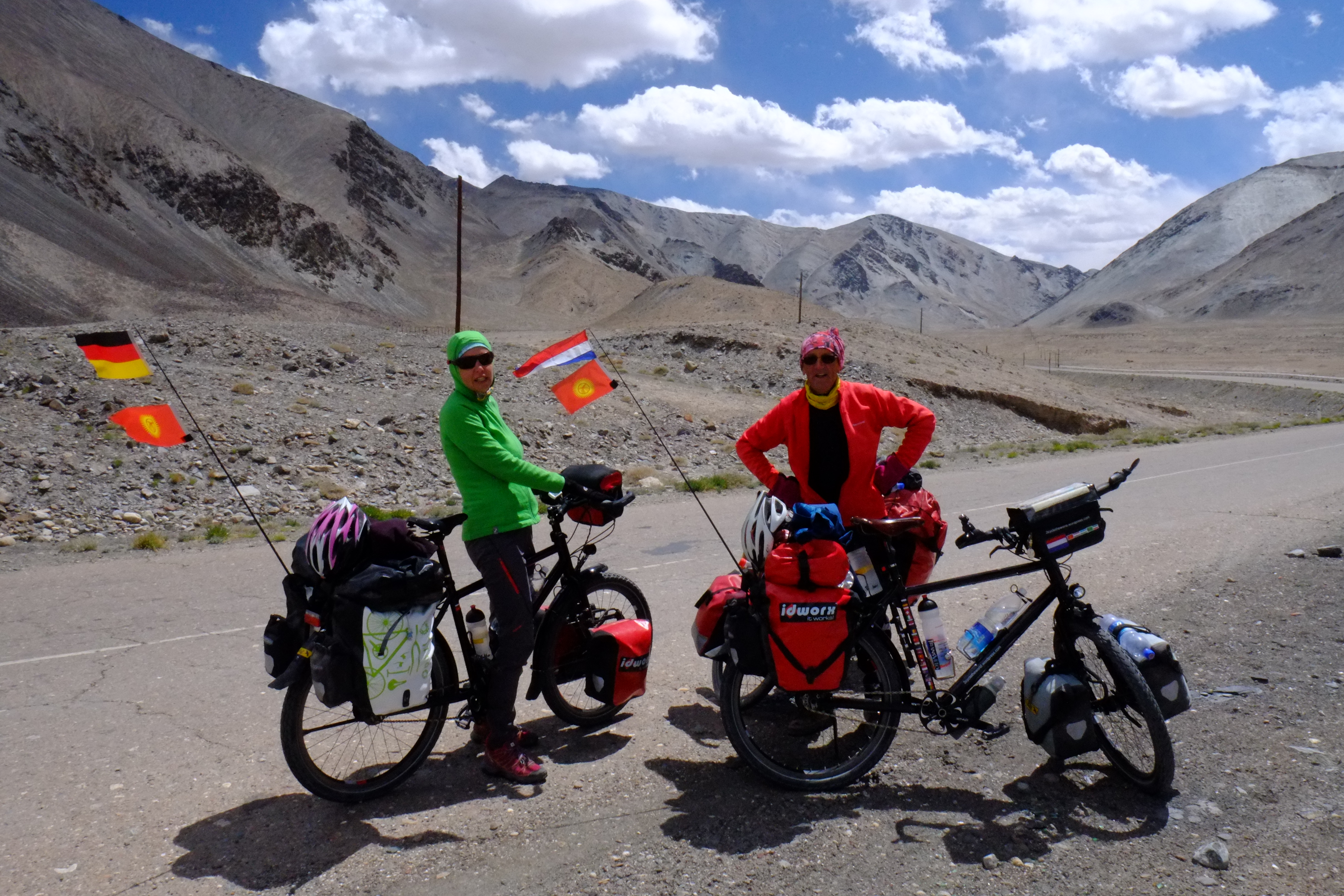
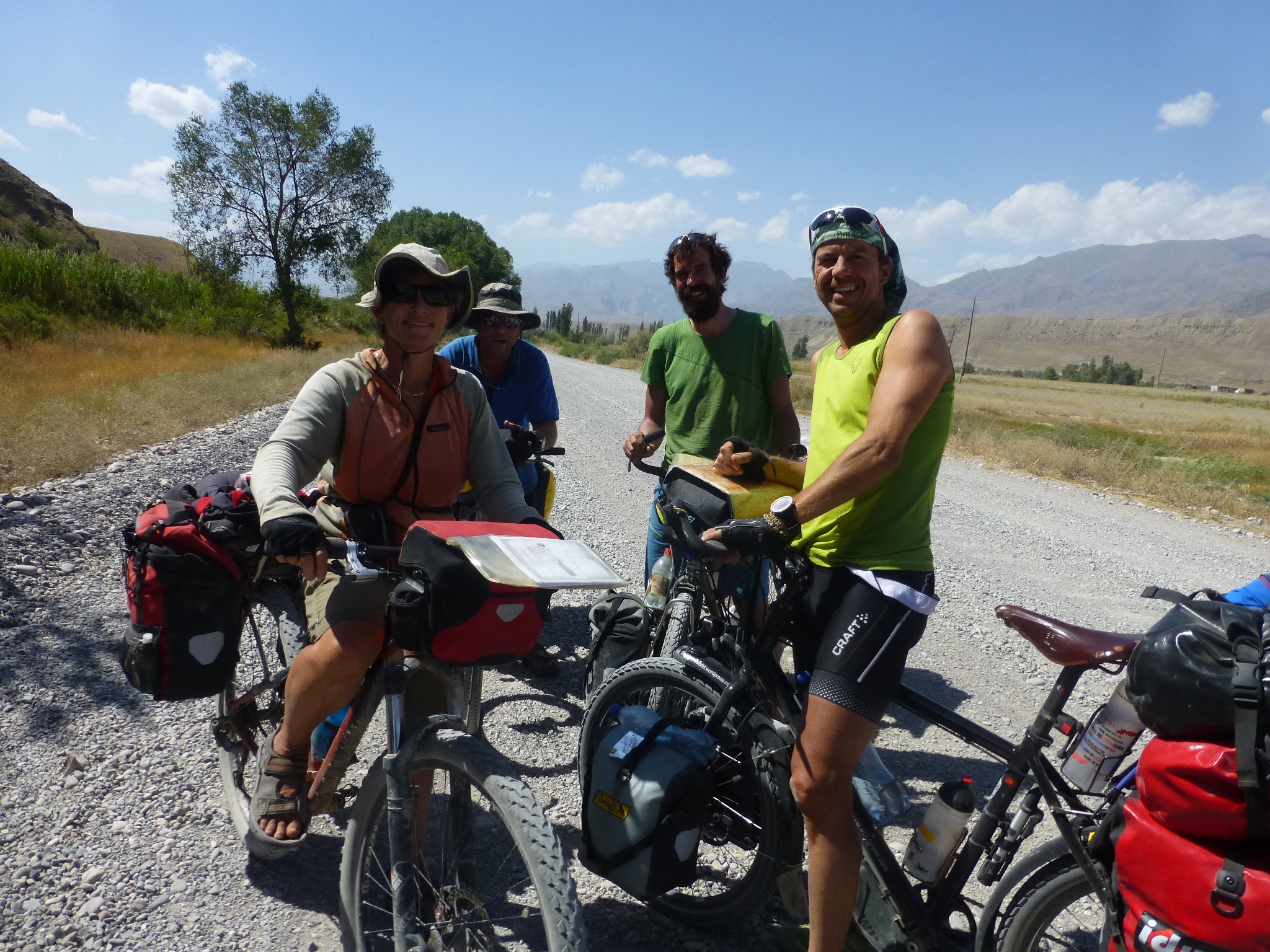
Another break with instant noodles and cookies for lunchTwo very funny and inspiring guys from England and the Netherlands‘Fantastic’ roads – at least hazards are marked
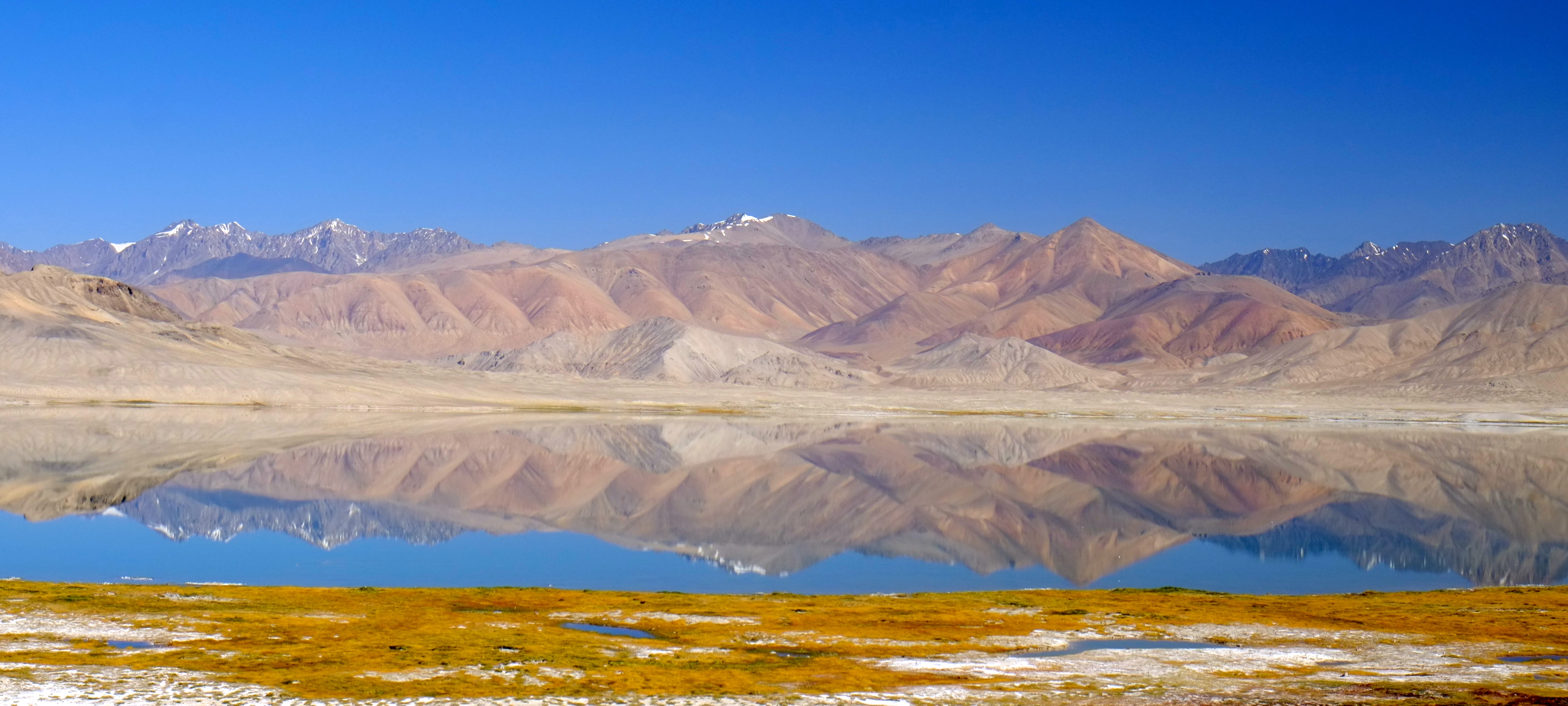
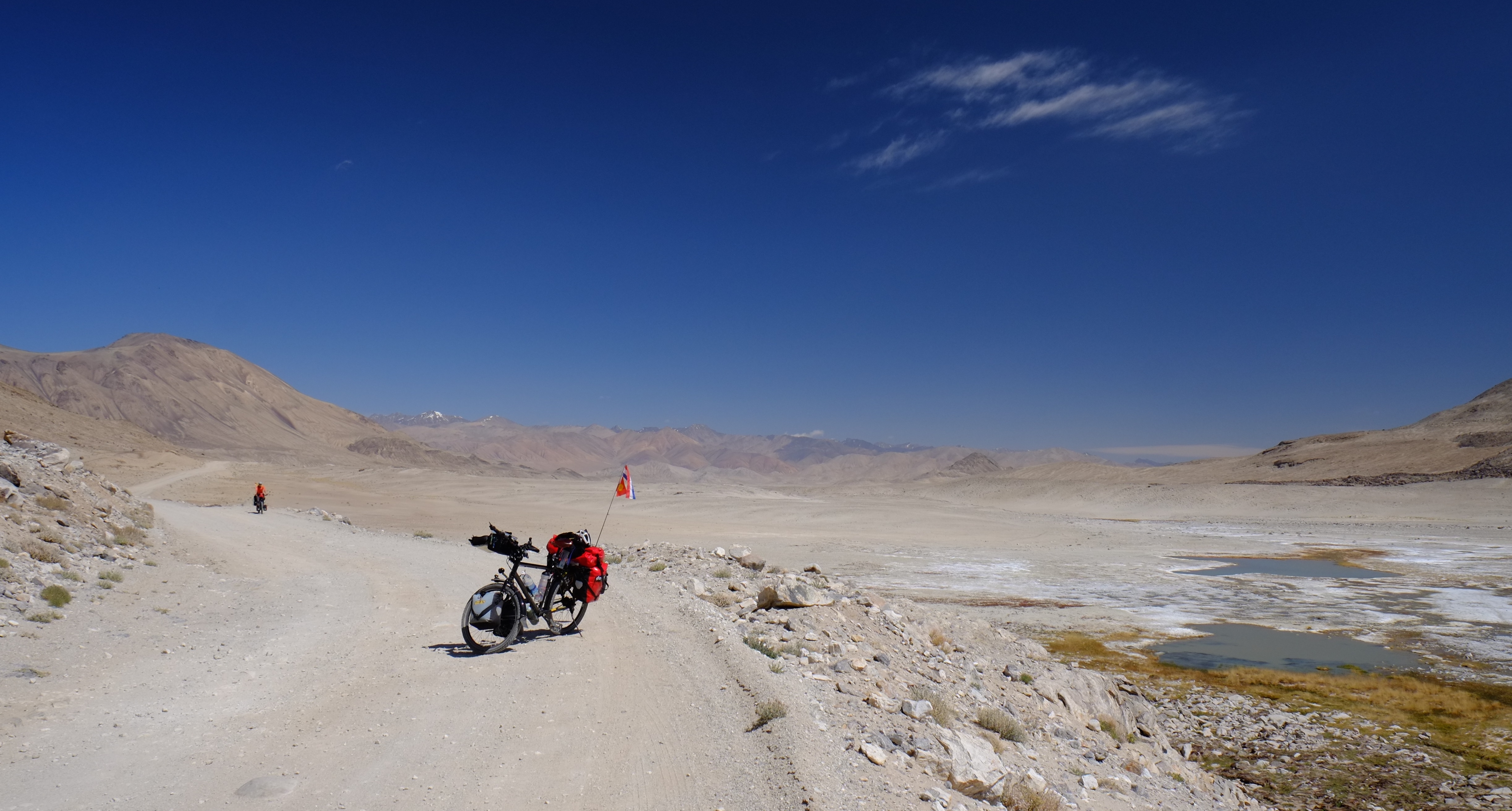
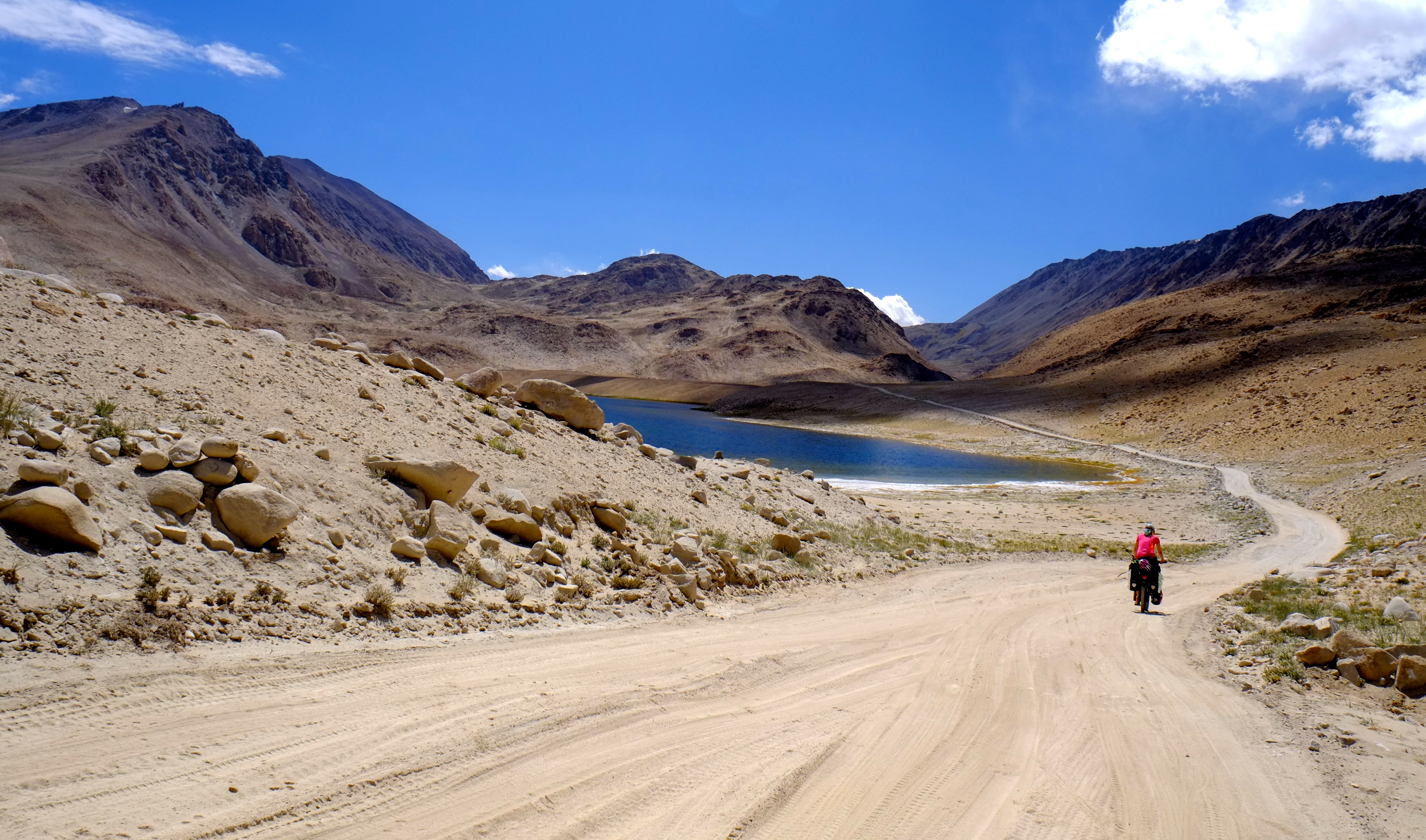
Day 11: Alichor – Kharghush Pass: 62 km, altitude gain 773m 25 km asphalt and then we leave the Pamir Highway to cycle a loop through the Wakhan valley along the border of Afghanistan, only separated by the river Pamir. Other cyclists told us not to be worried about the Taliban as they can’t swim. So we don’t worry. We first cycle on a pretty bad road through sand, over rocks, up and down and up again, along a few salt lakes until we finally reach the pass. With a strong headwind and steep gradients we often have to push our bikes – now we know why they are called push bikes! After the summit the weather doesn’t really improve but we move on to find a camp spot at lower altitude. We pass another military checkpoint – this time with armed soldiers who are first asking for cigarettes and then for earphones – we pitch our tent with a vista of Afghanistan and the Pamir River. Traffic is almost non-existing: today we meet 5 French cyclists and 3 cars pass by.
One of the many salt lakes that followThe beginning of the end of asphaltStruggling through sandAnother loner in the vastness of this beautiful landscapeAt the top of the second pass – the snow-capped mountains belong to the Afghan HindukushProtection from the cold windFinally arrived after a long and tiresome day – Afghanistan in the background
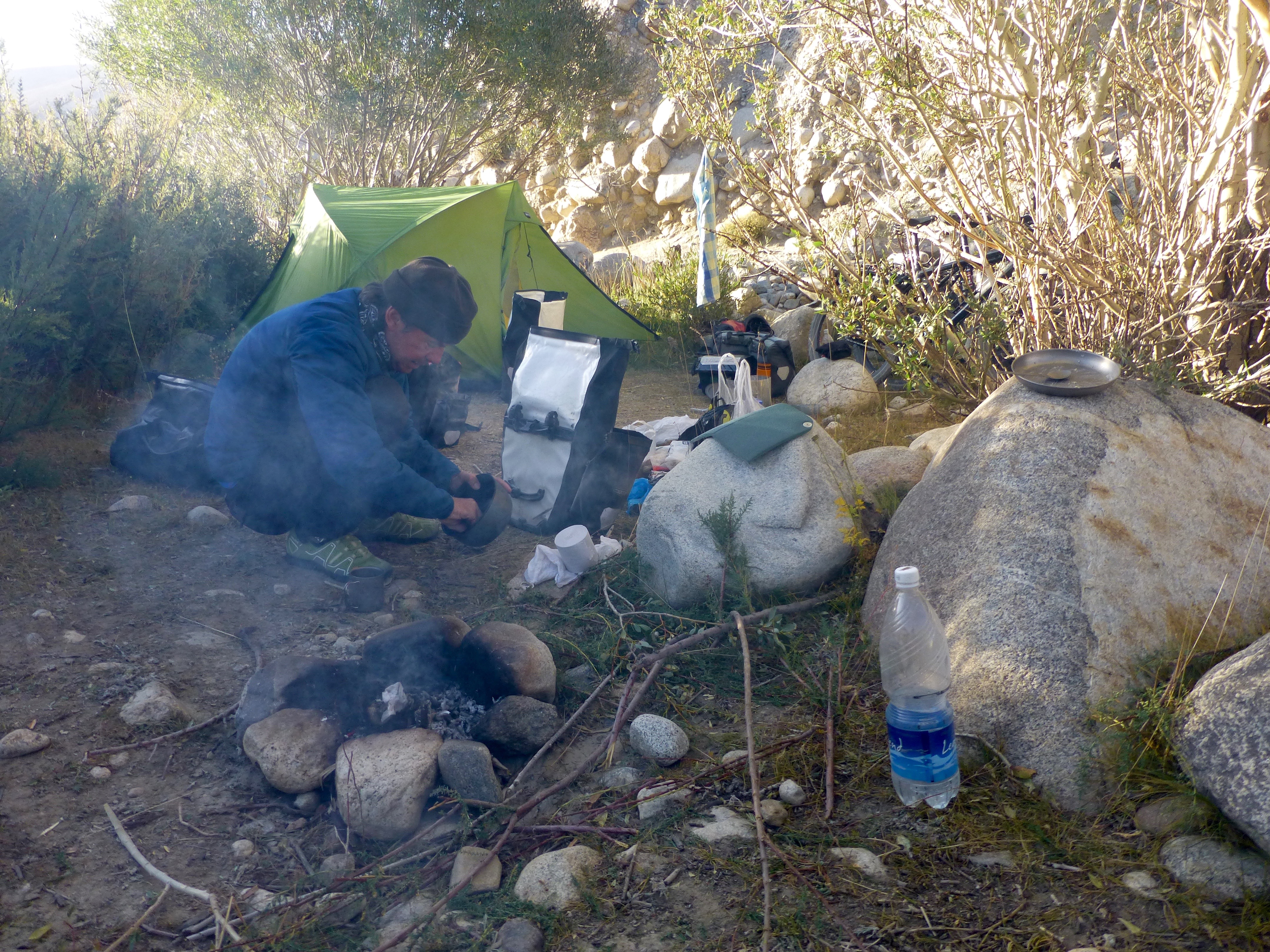
Day 12: Kharghush to the middle of nowhere: 22km, altitude gain 152m A day we don’t want to remember. Extremely strong headwind and a maddening bad road prevents us from making any progress. At 3pm we have a huge argument: Johan wants to continue for about 9km – the last hour we only cycled 3km – and I want to stop as we’ve been cycling to the limit for the past days. Shortly afterwards we find the perfect spot for our camp next to a river and hidden under trees. At night Johan wakes up with a start as he dreamed that the Taliban were trying to kidnap us and I wake up because I hear strange noises. For the rest of the night Johan keeps his knife in his hand to protect us from the evil. Today we meet one Dutch cyclist and two cars are passing by.
Tough cycling on rough roads
It’s been a day……but the beauty of the nature keeps us going
“To my left is Afghanistan”Our hidden camp
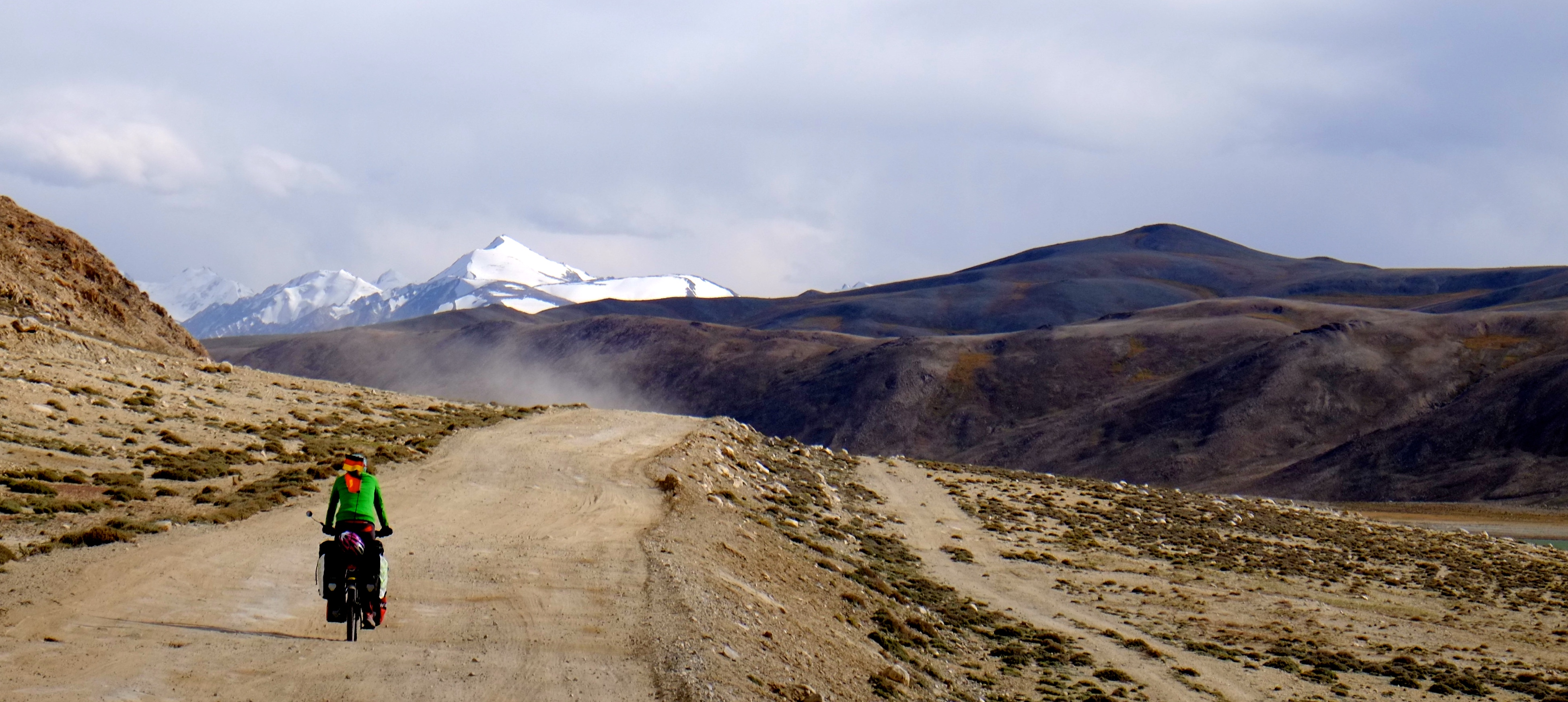
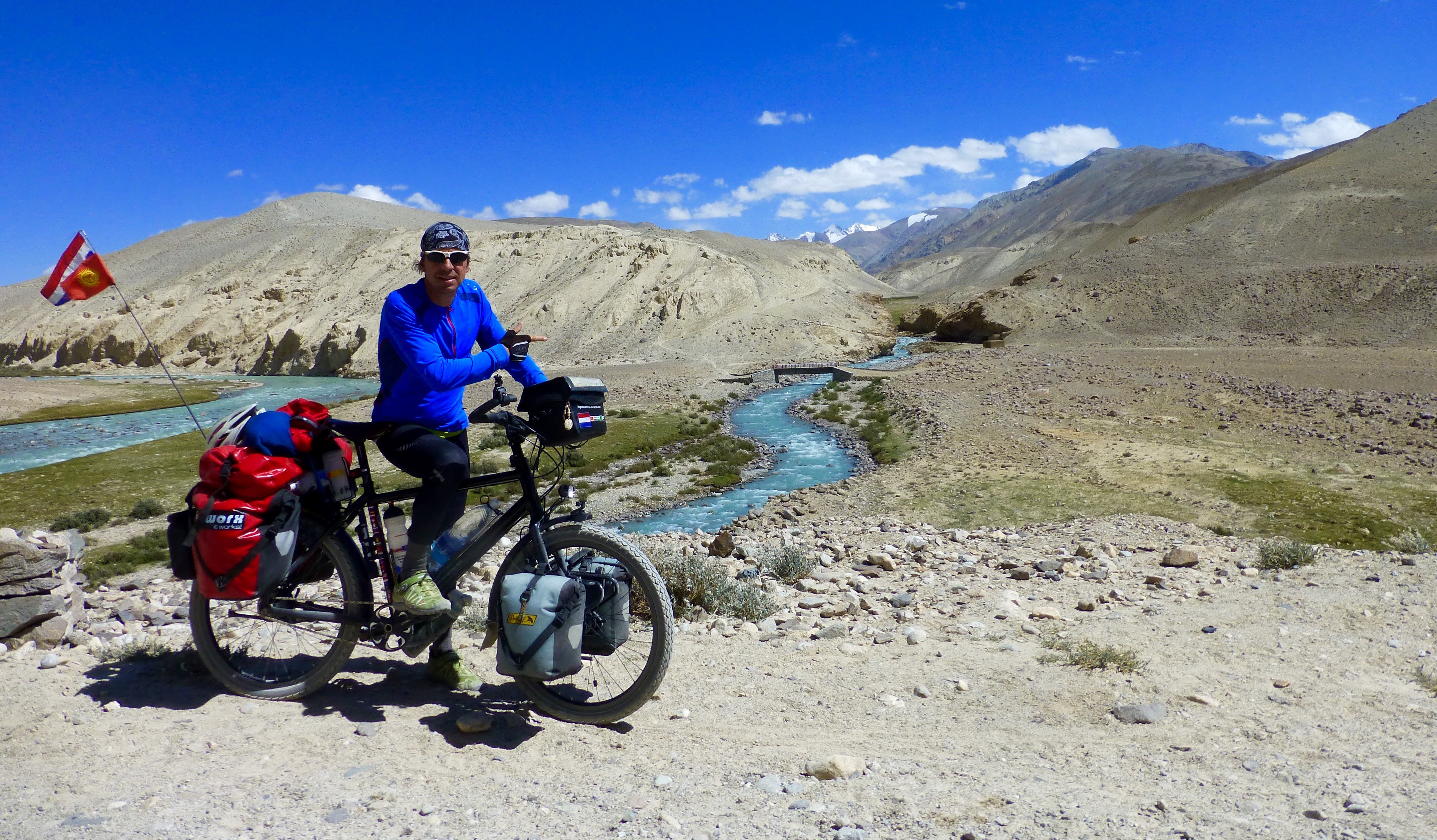
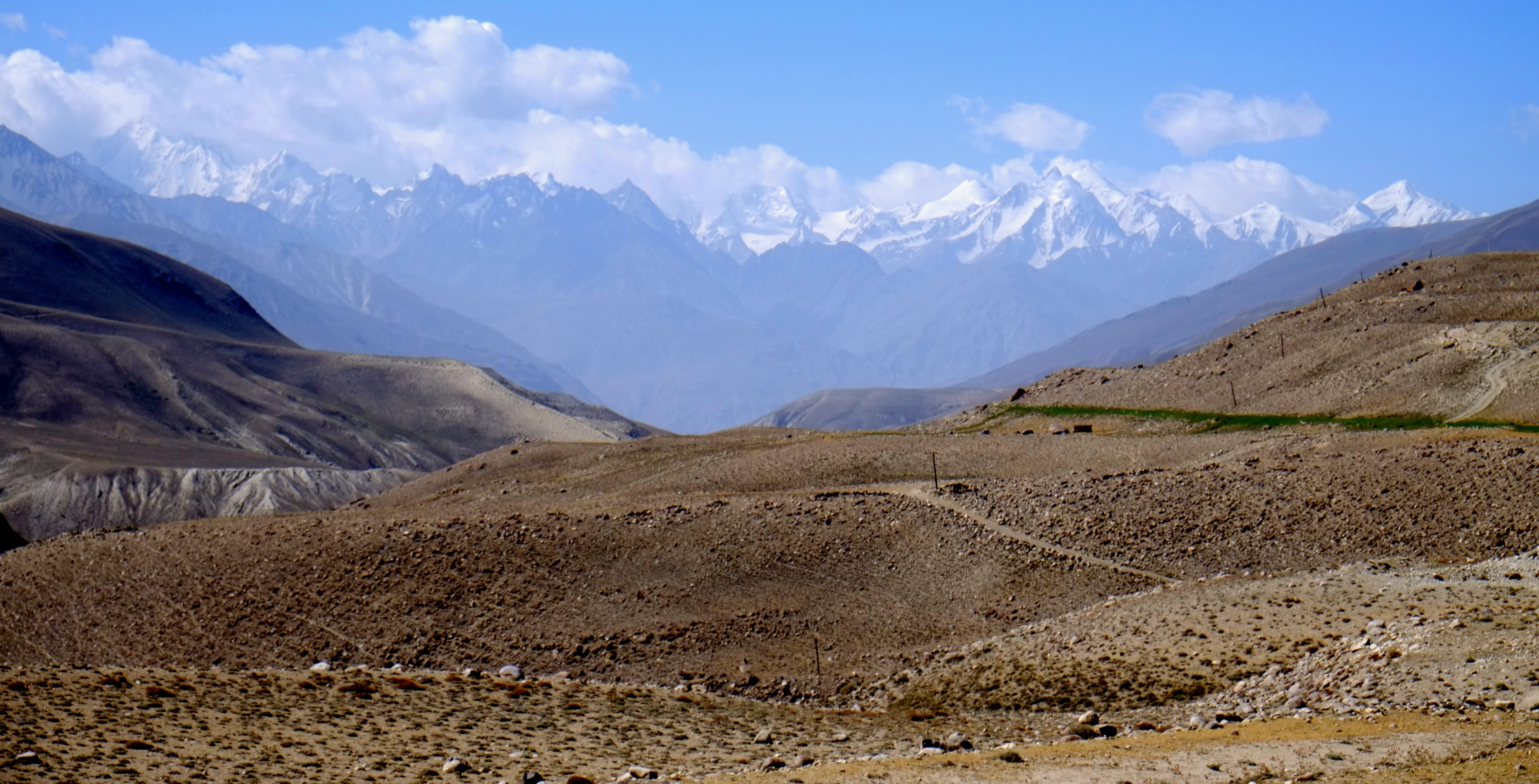
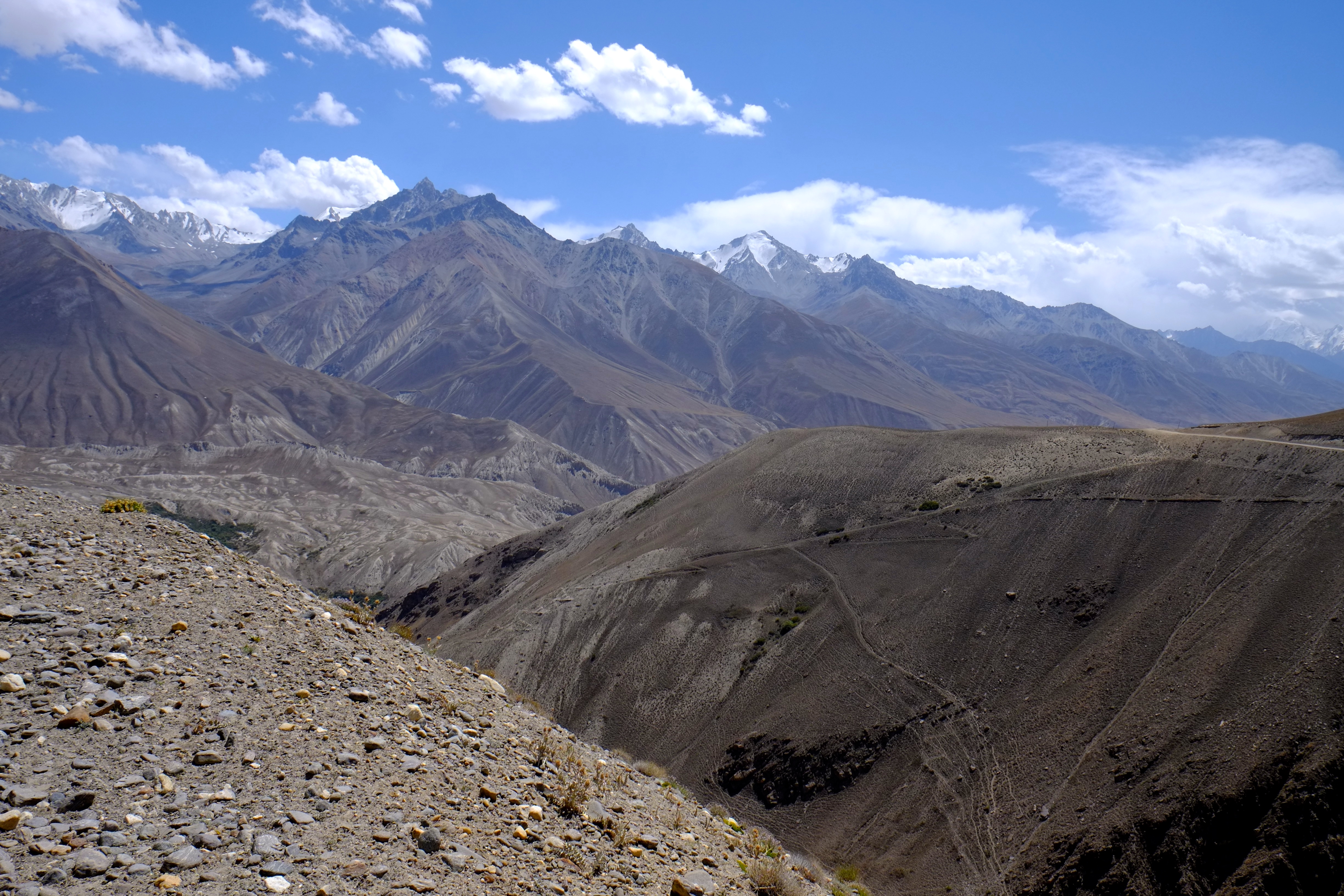
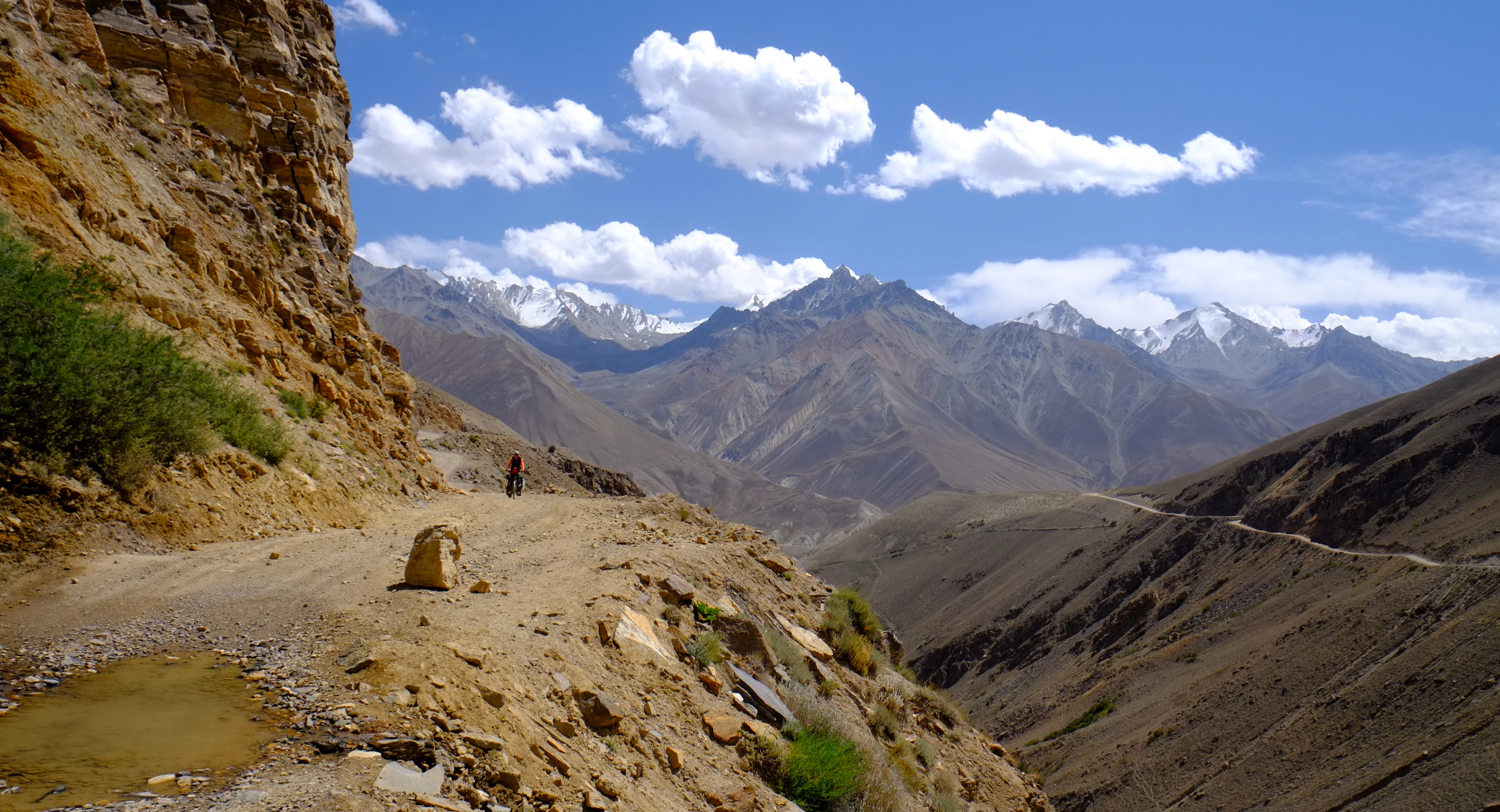
Day 13: Middle of nowhere to Langar: 44km, altitude gain 396m We are descending from 3600m to 2800m and are still climbing almost 400m! Does that make any sense? We keep meeting cyclists who tell us we would only descend as from now and they lied! We promise each other to tell the next cyclist that they would soon cycle on tarmac again and that the next pass is a piece of cake! Other than that the day is great, well rested legs, no wind all morning and scenic surroundings, looking all day at the infamous mountain range Hindukush and the roaring turquoise river Pamir – at least when the road allows. In the evening we check-in at a homestay with a perfect German-speaking landlady. A film crew from the German TV station mdr shooting a mountaineering documentary has checked in as well and we spend a nice evening chatting with them. Today it’s been busy on the road: 2 French and 2 Swiss cyclists, 7 cars and 3 trucks full of workers at the back.
Rolling landscape with a Hindukush backdrop
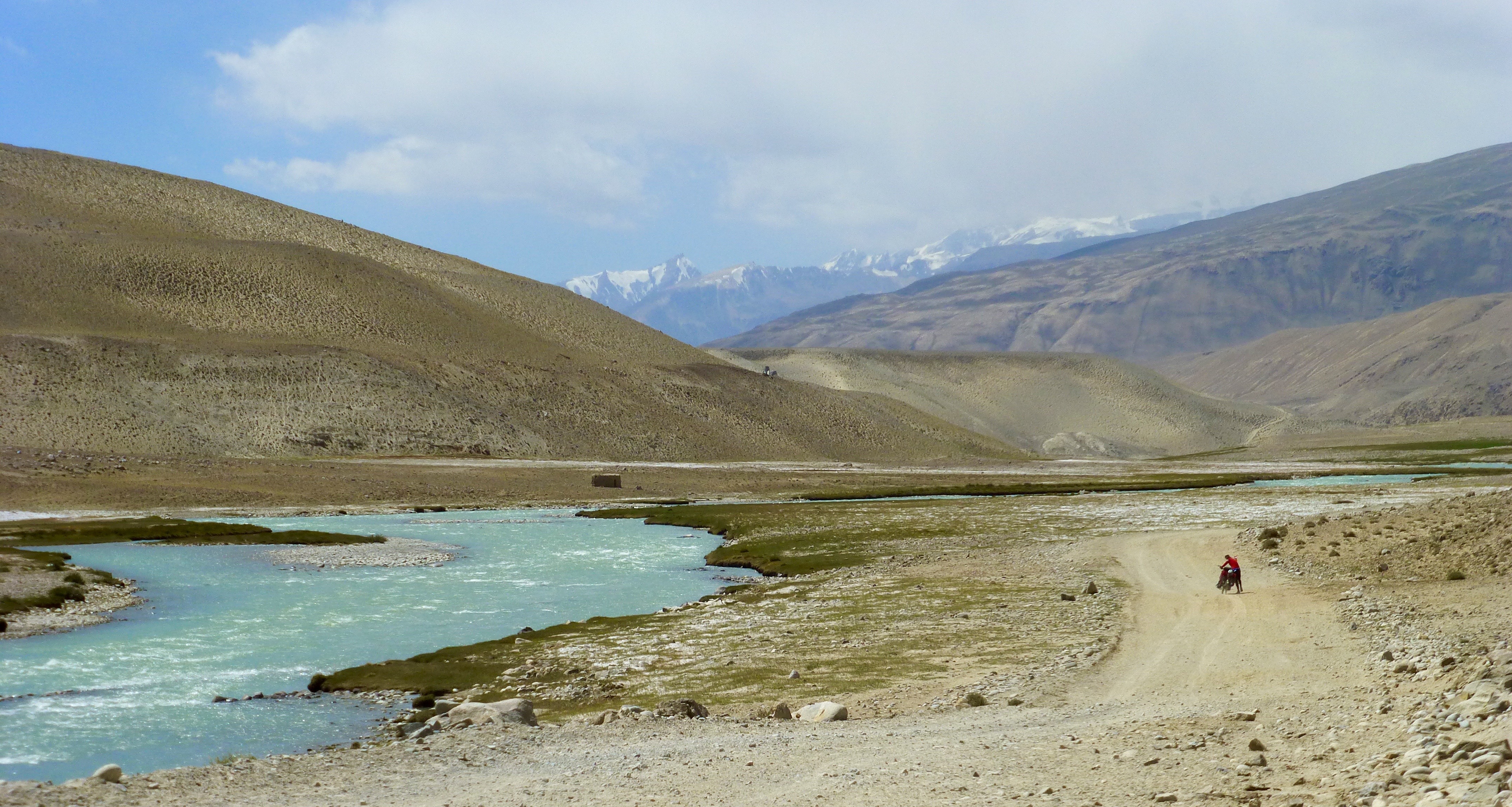
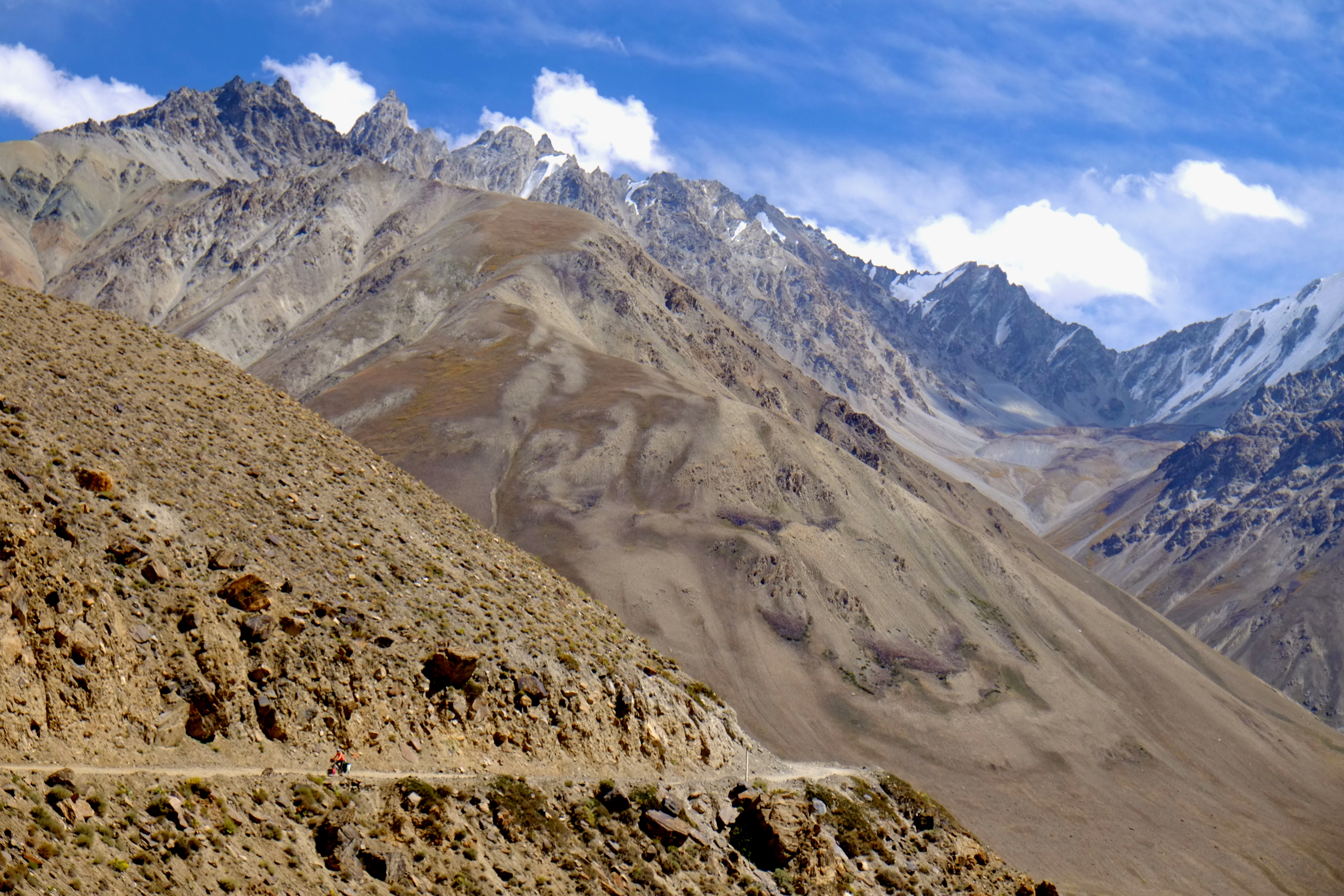
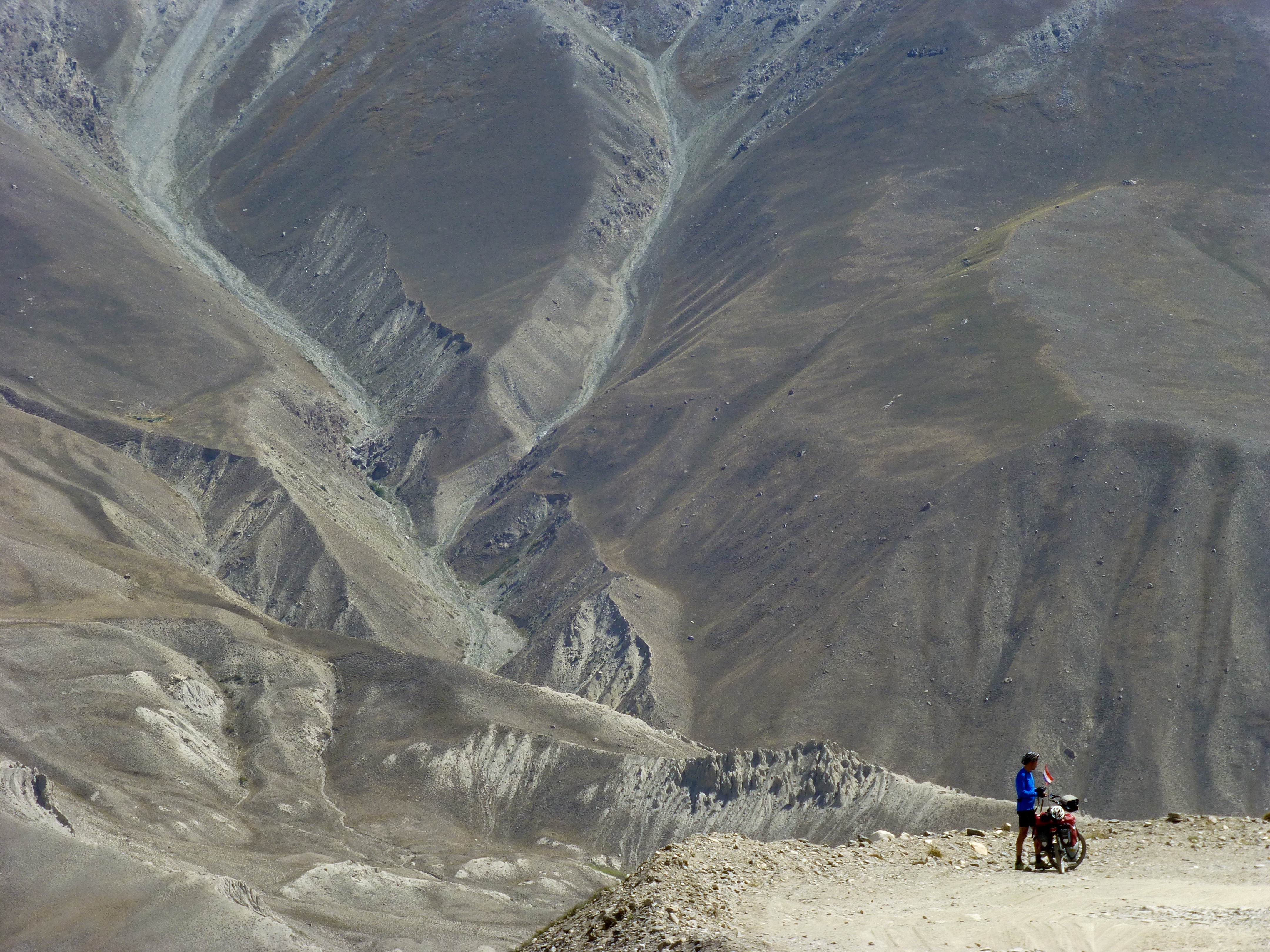
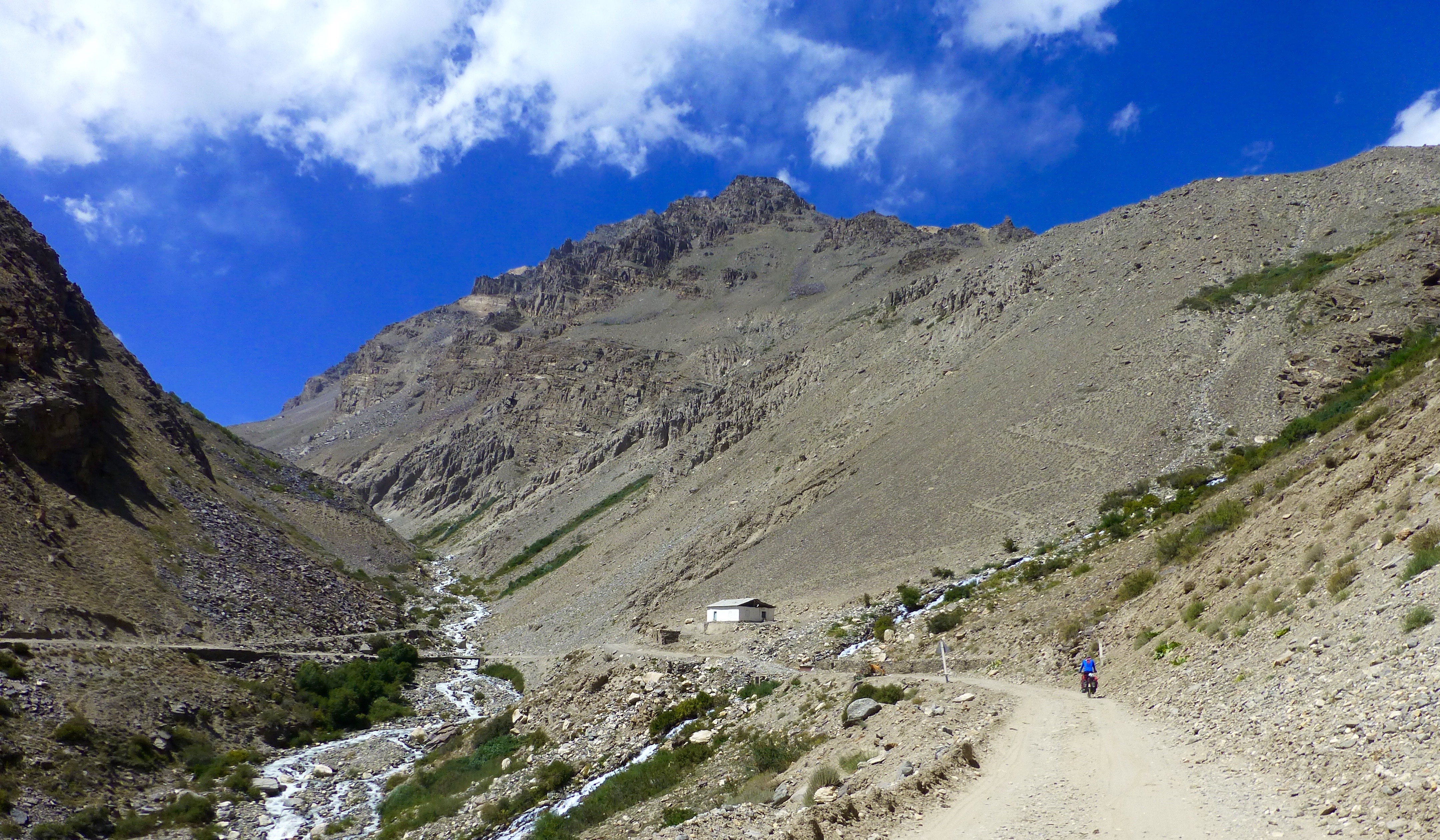
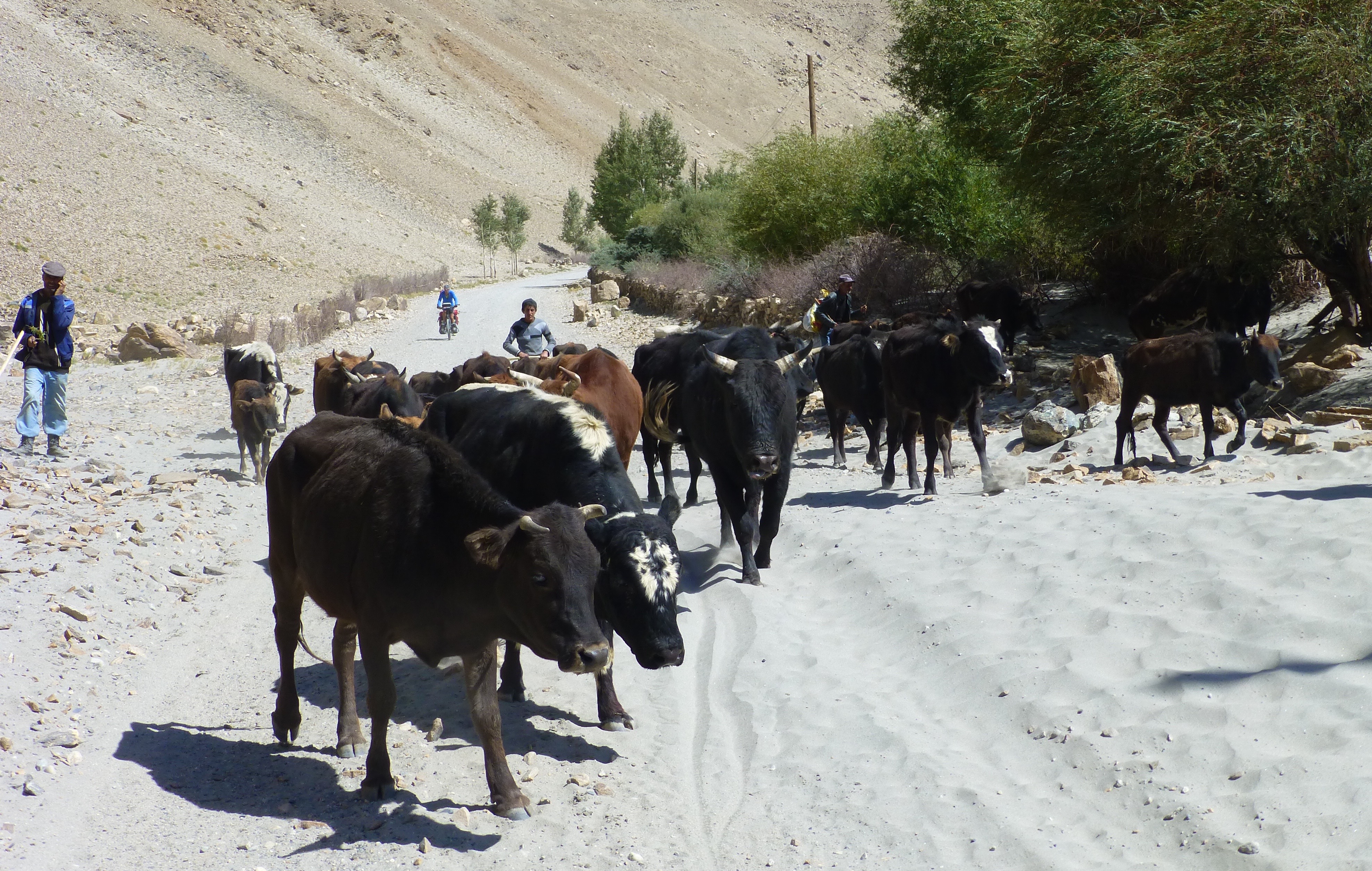
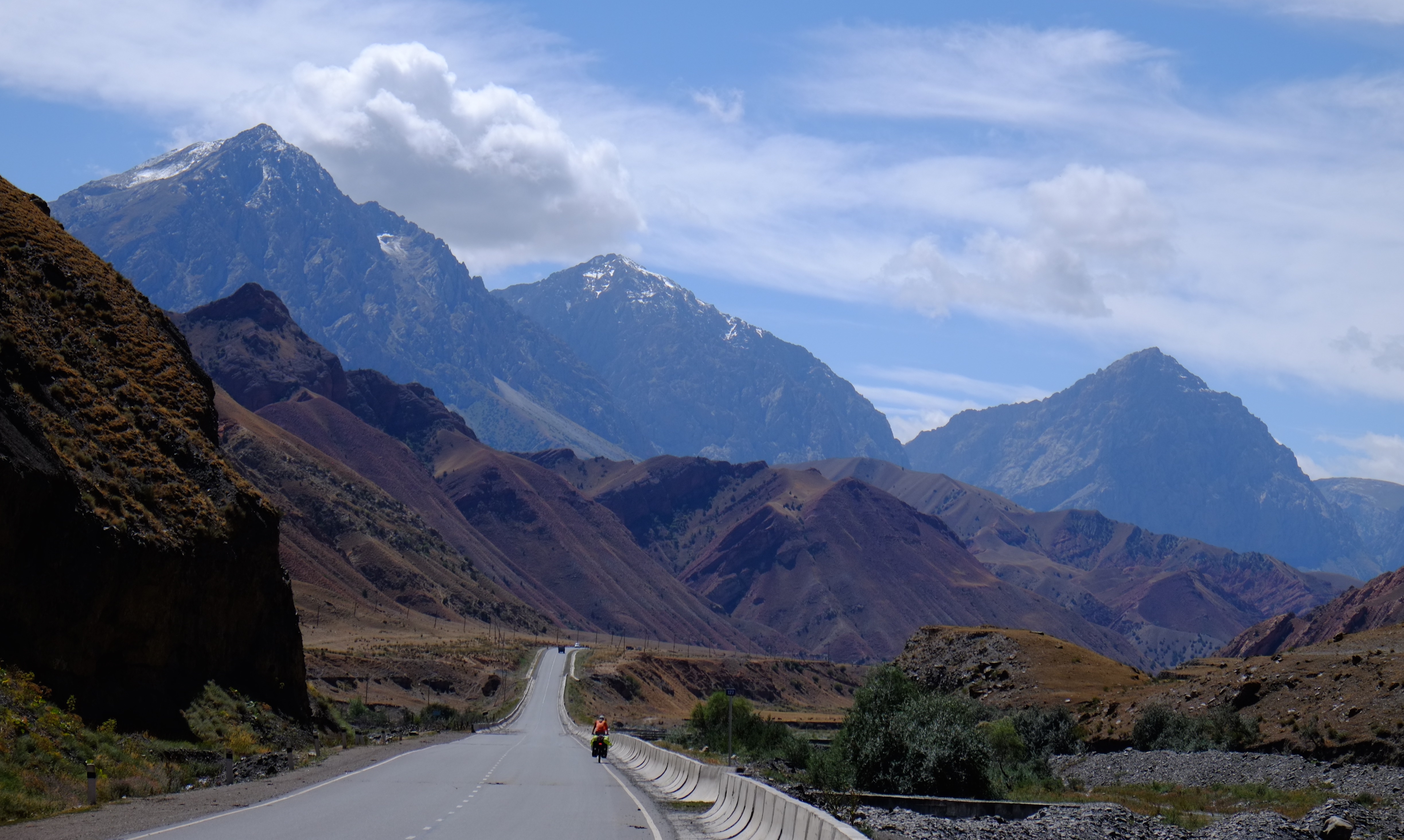
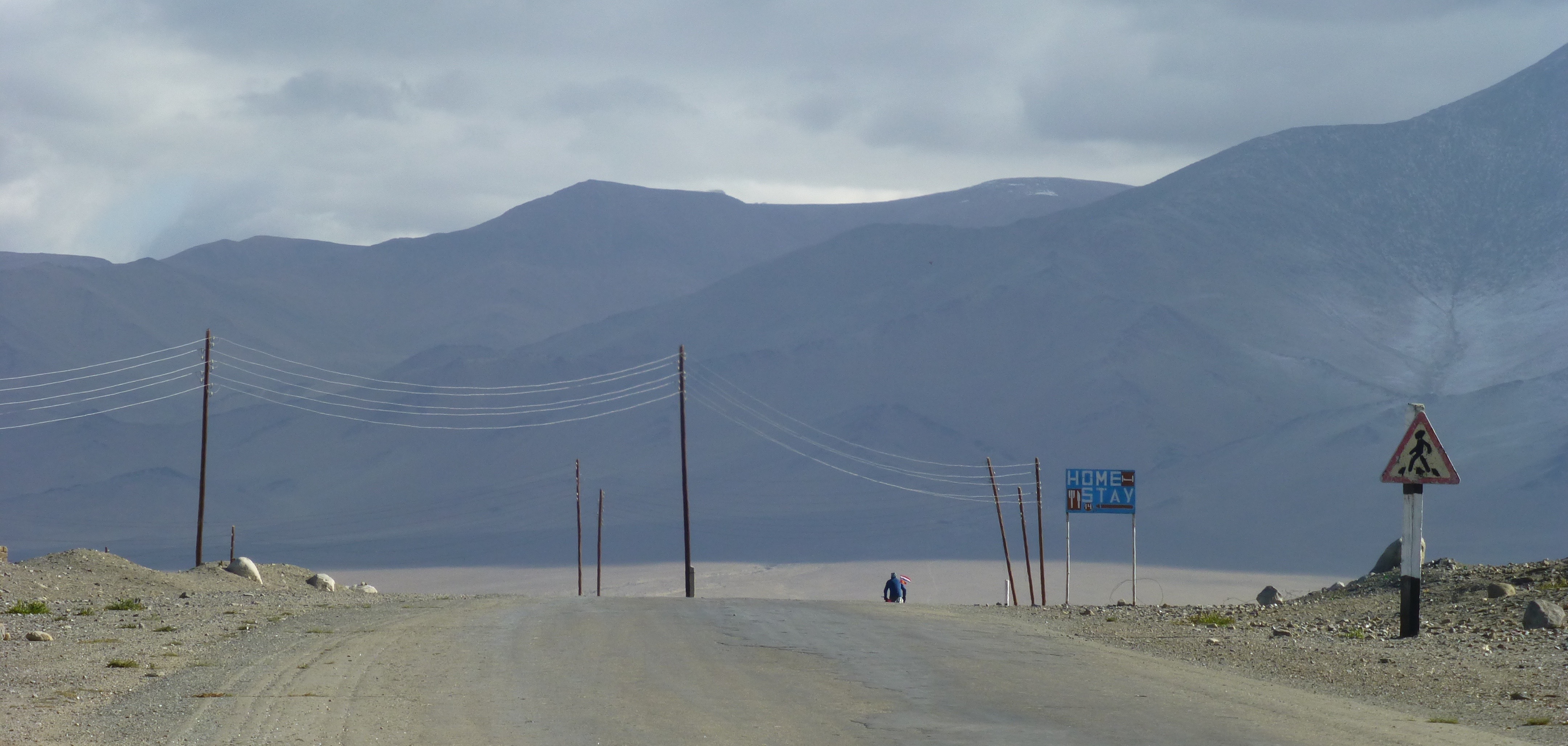
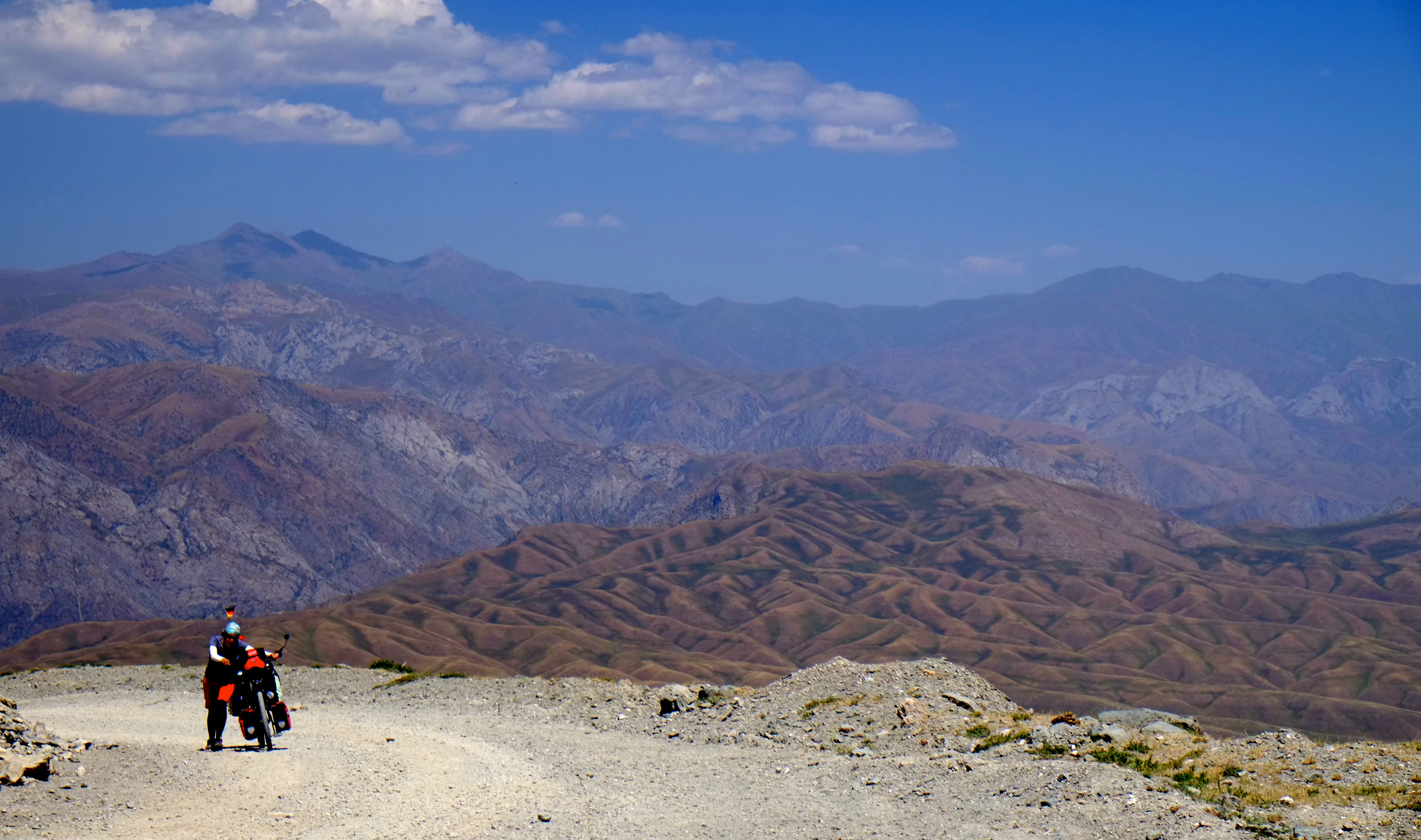
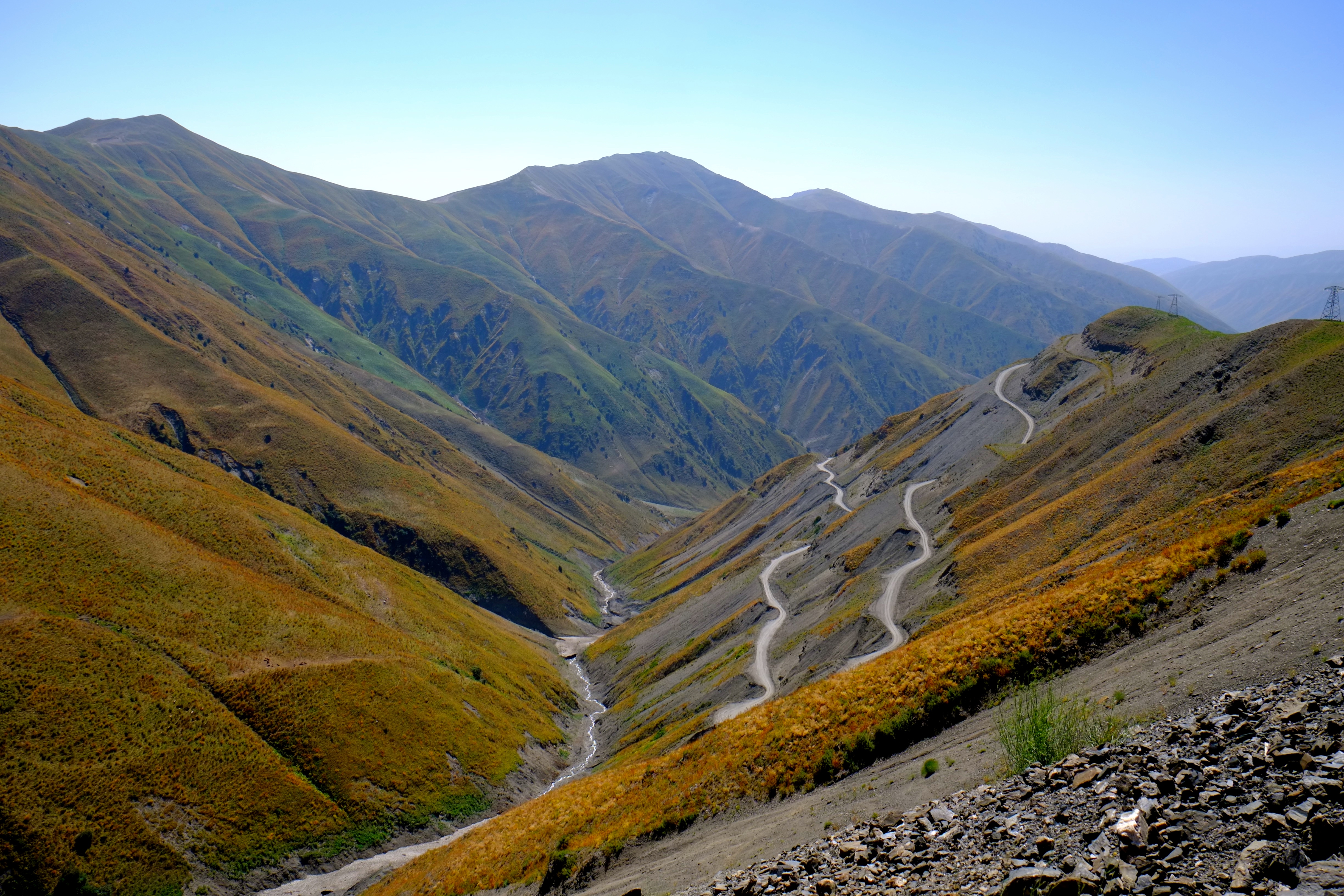
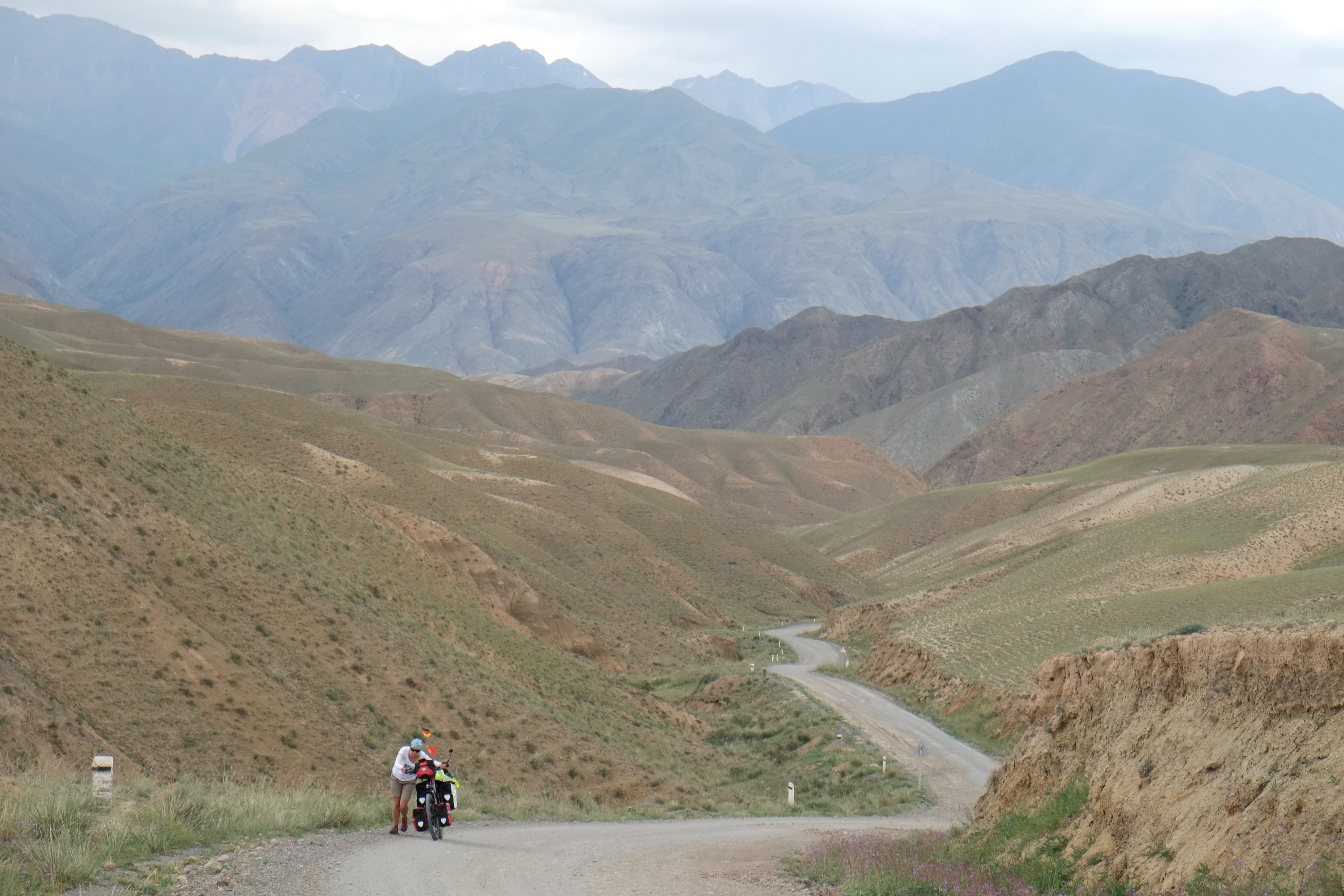
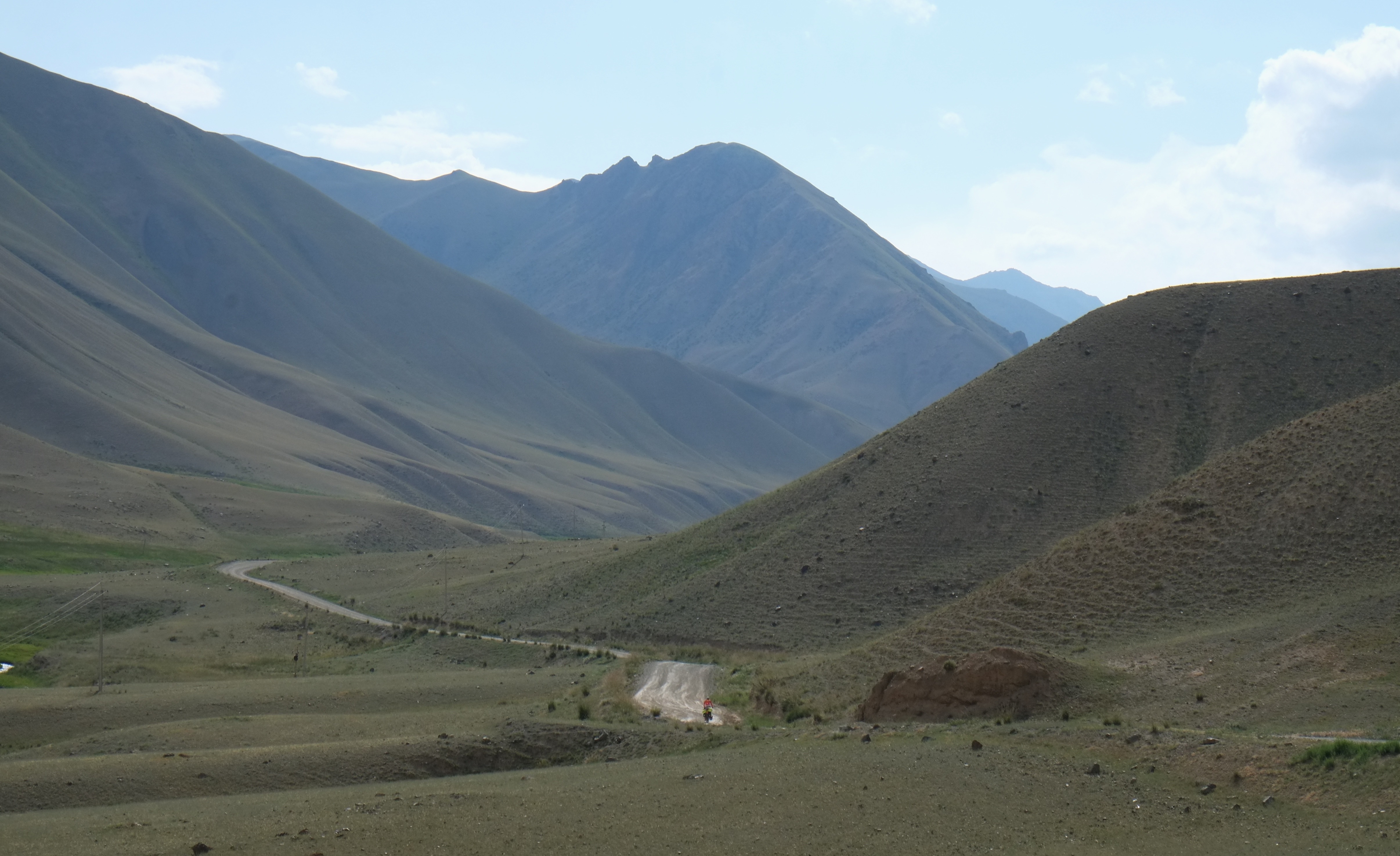
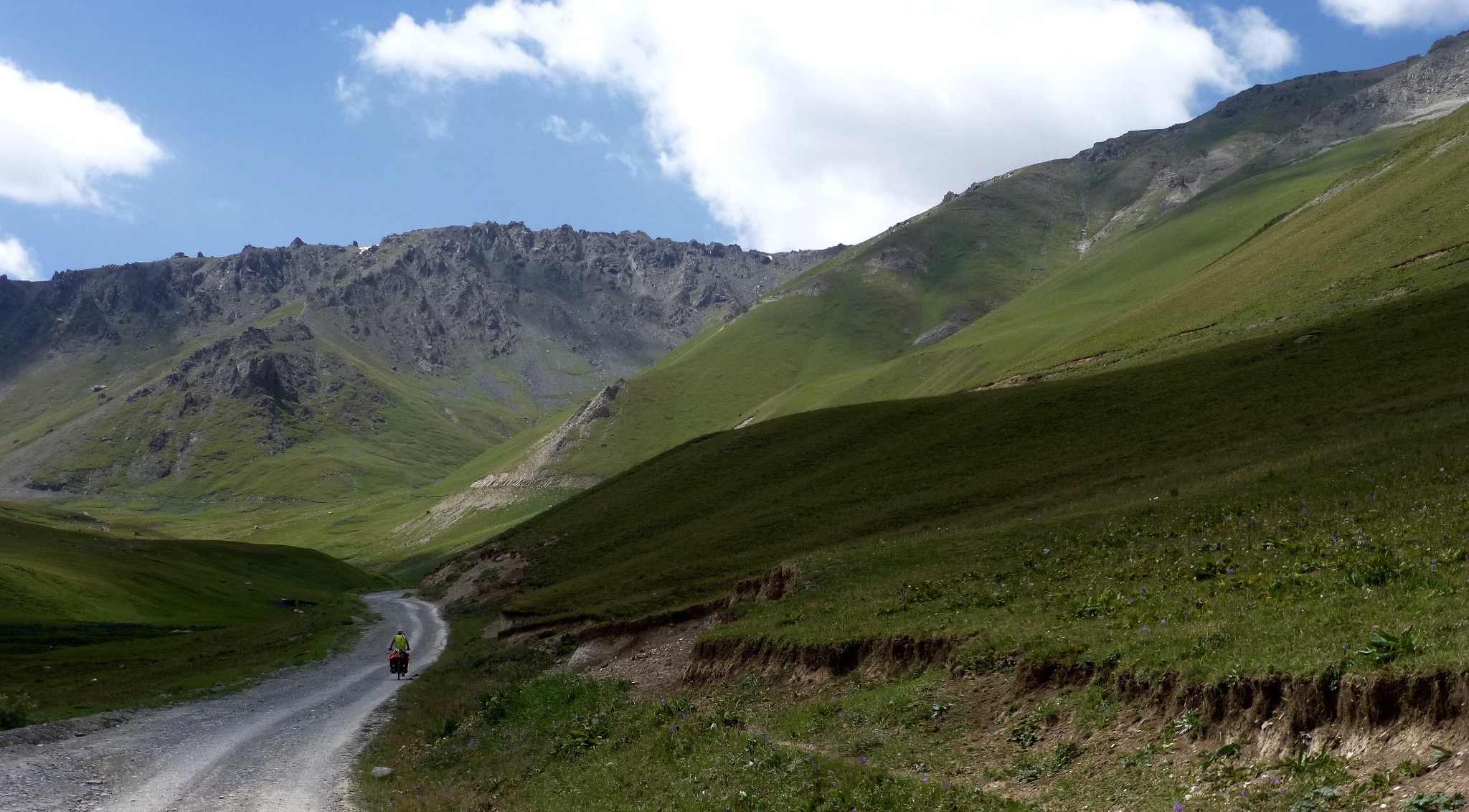
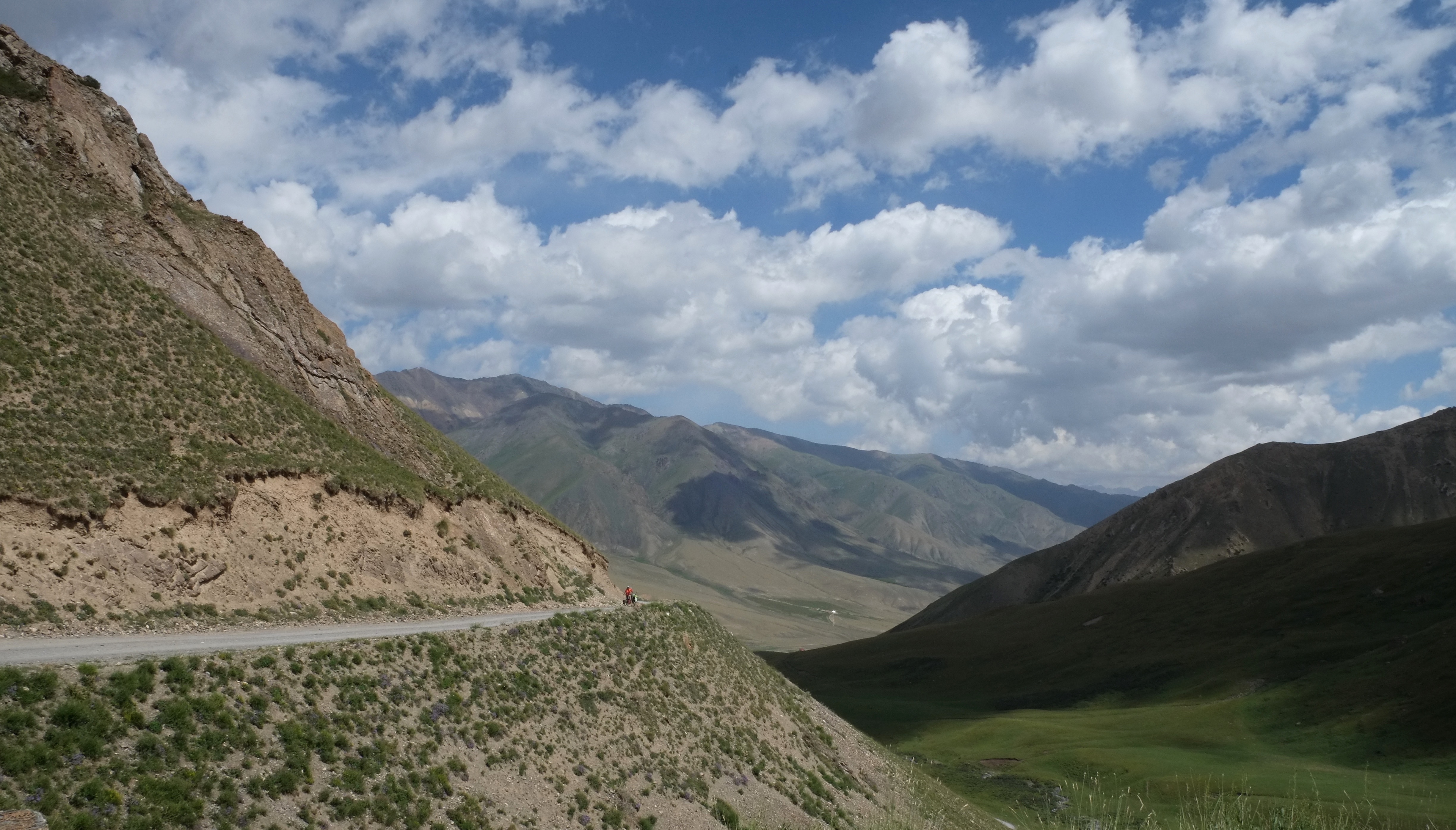
Roads looking scarier on the photo than in realityCan you find the little cyclist?The mightiness of the mountains
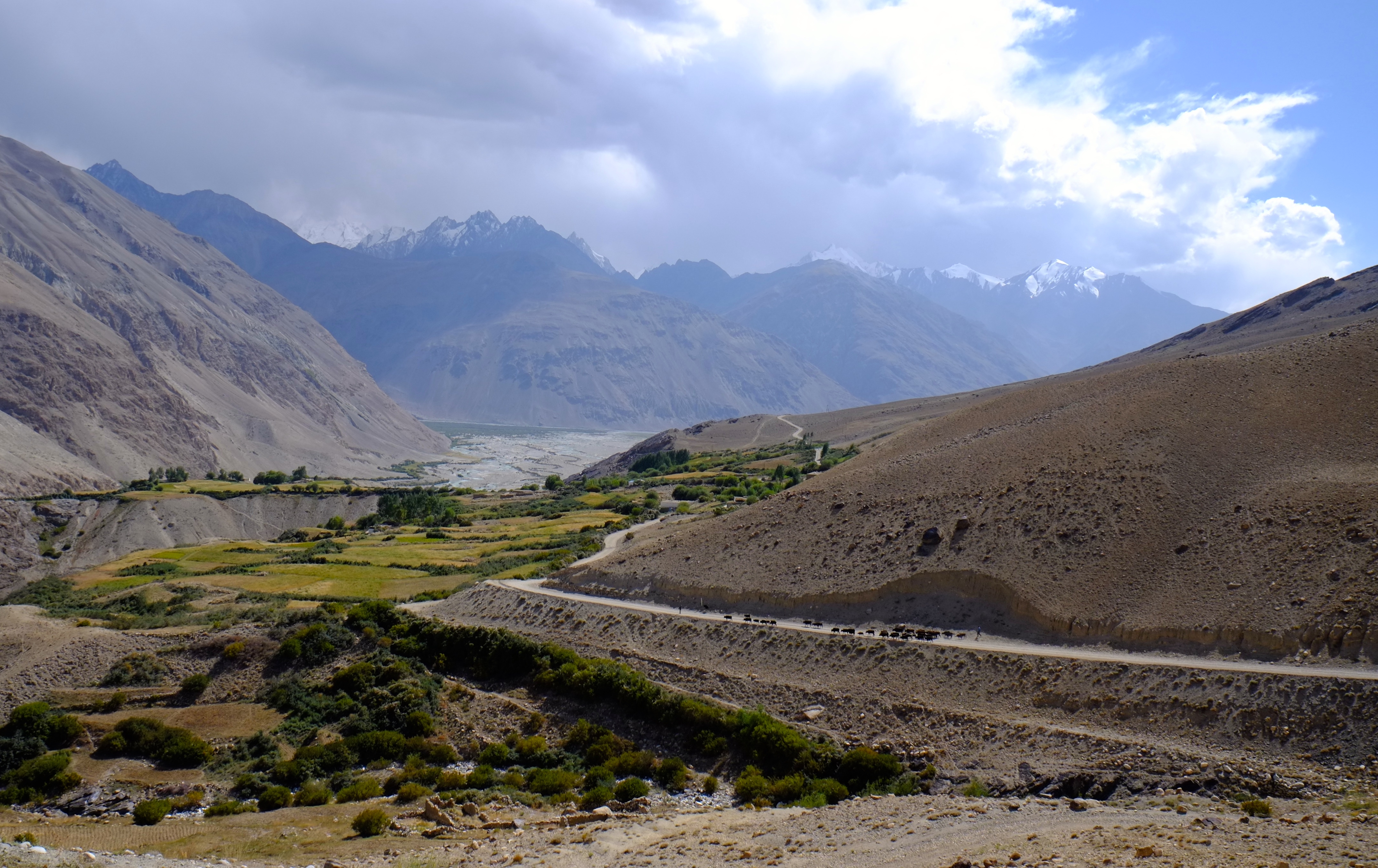
A few more hills and we’re in LangarWe finally made it – and yes, there are still trees on this planet 😉Our nice homestay
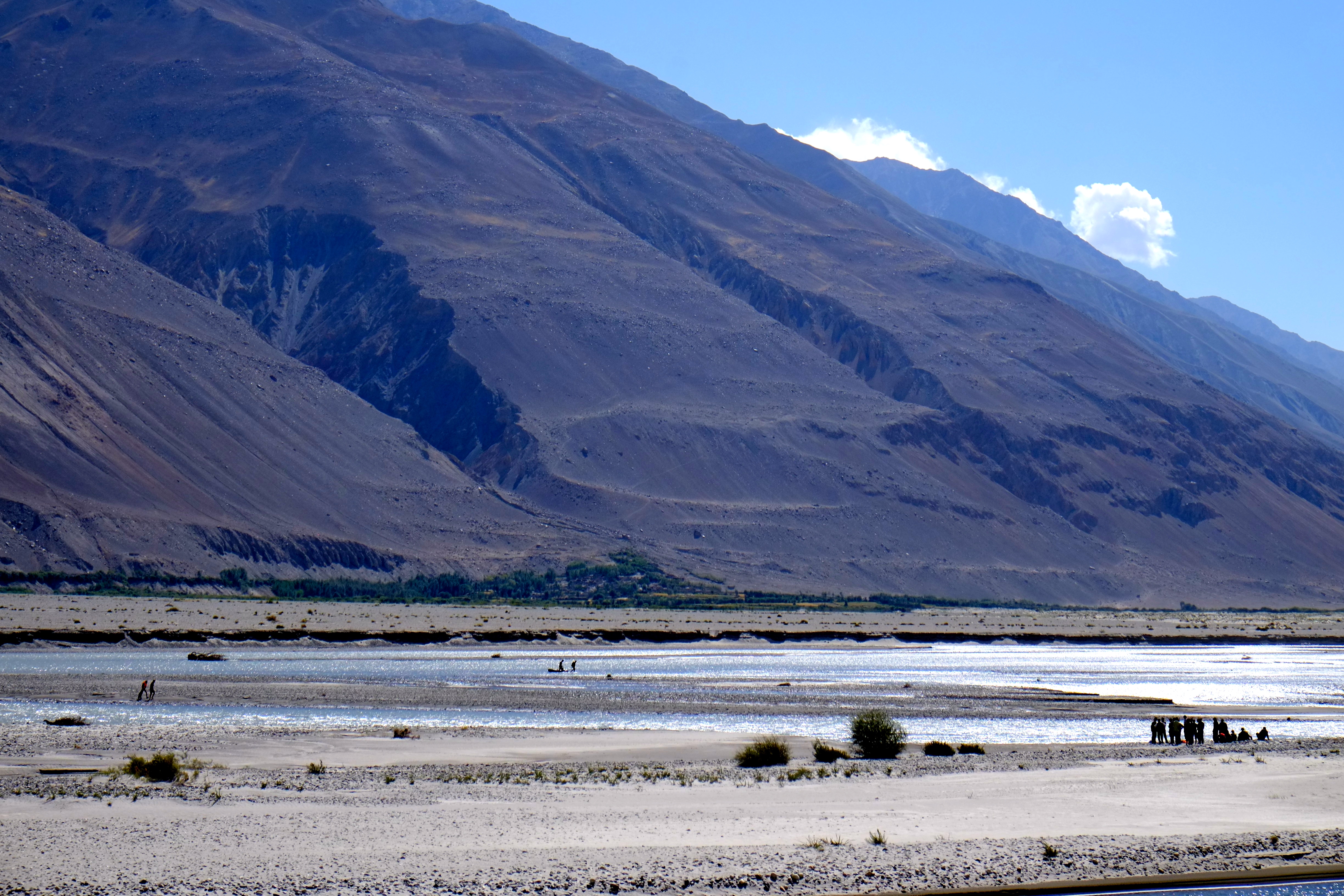
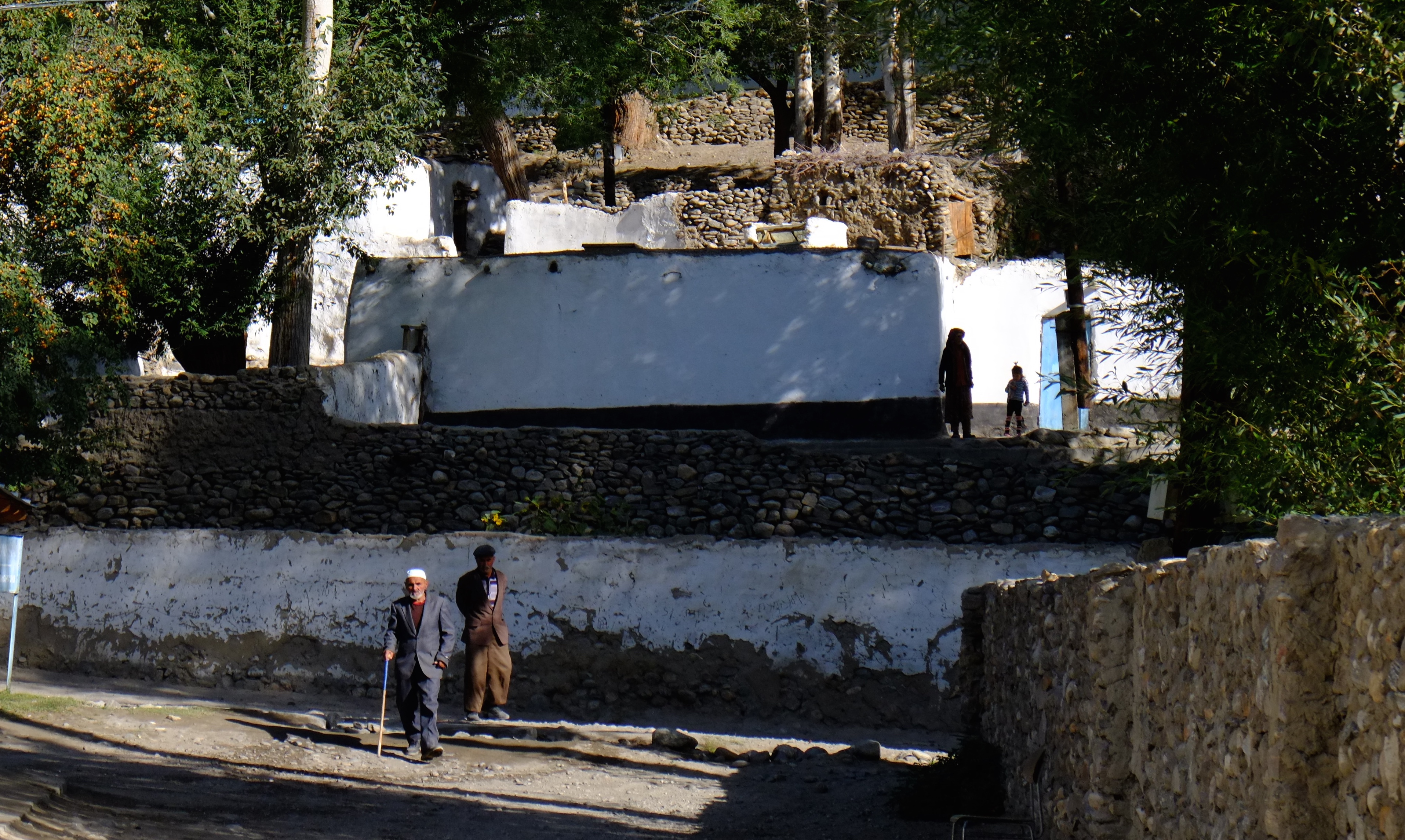
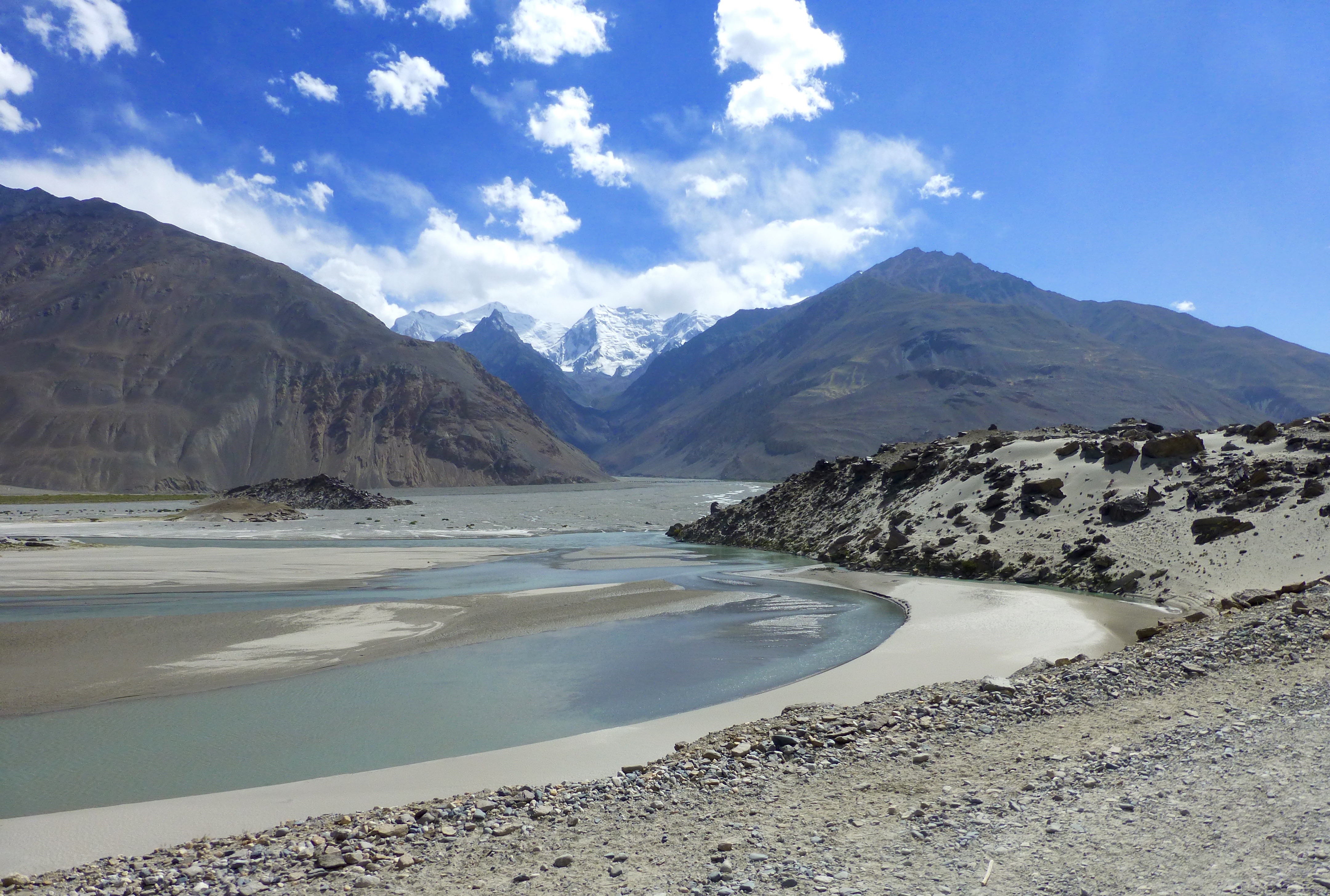
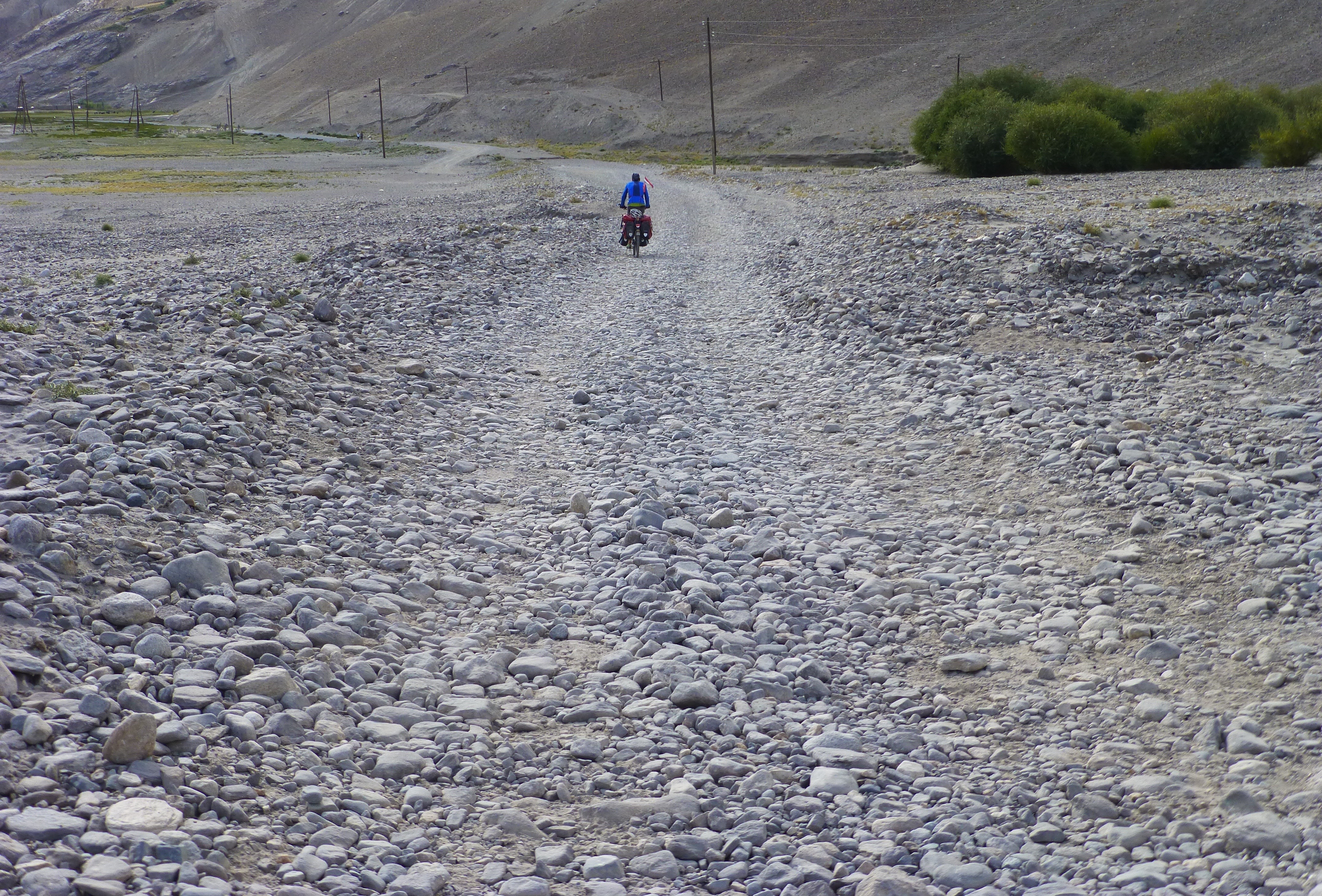
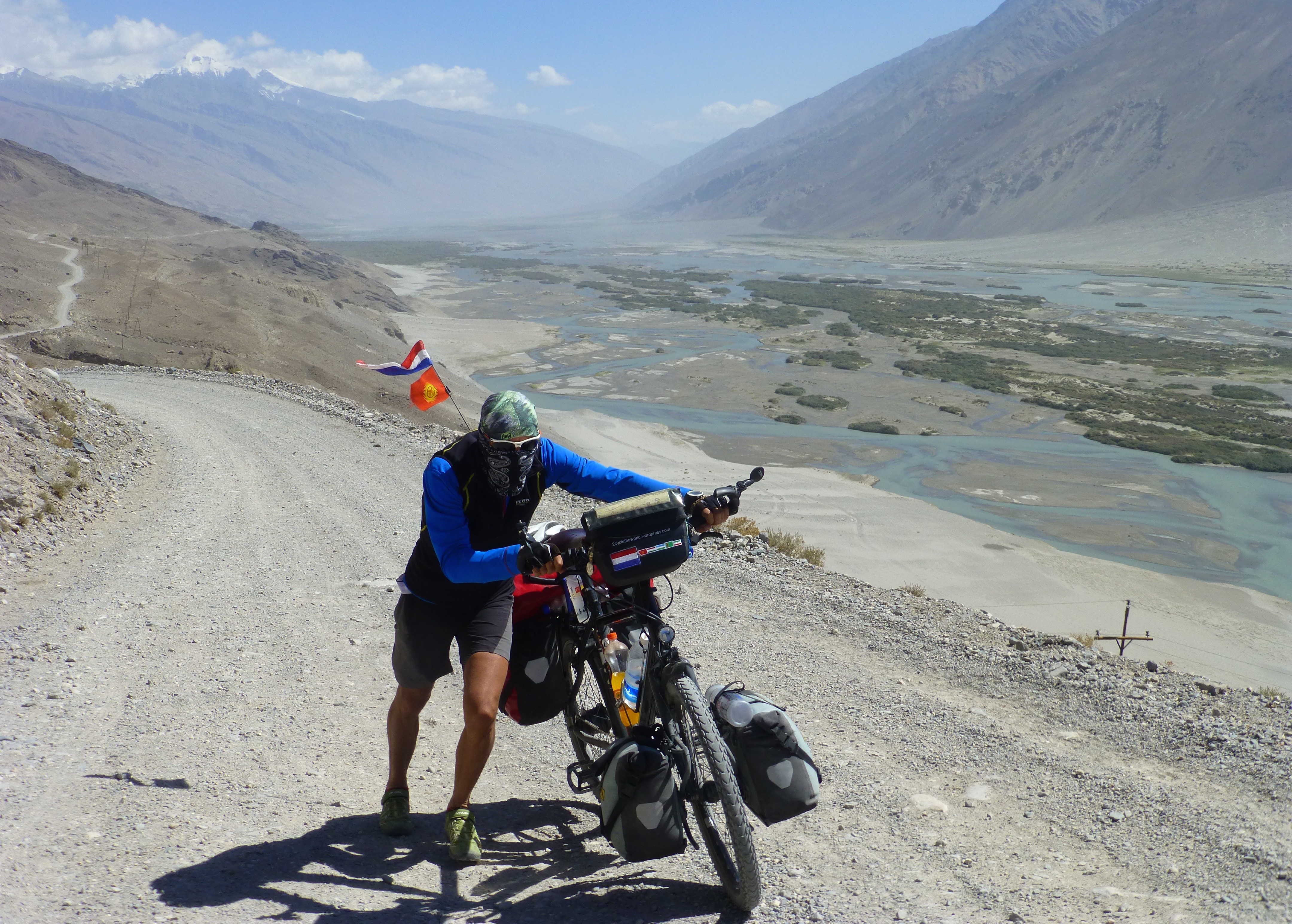
Day 14: Langar – Ptup, 46km, altitude gain 350m Late start and never-ending bad roads. Whoever told us that the roads would become better after Langar is a liar. Either we go through sand, over huge rocks, washboard or 20cm deep gravel. And yes, there is some asphalt as well, but that is melting, so once again no pleasure to ride on. By the evening our bottoms are sore and hours later we are still shaky from the bumpy roads. But enough ranting. The landscape has changed a lot. We are now at the wide river Panj, again marking the border between Afghanistan and Tajikistan. The valley is semi-arid and apart from occasional clusters of shrubs or willow, birch and other small trees the landscape remains barren. The villages that emerge every few kilometers seem like small oases to us with all the trees, fields and vegetable gardens we haven’t seen since Osh two weeks ago. Between two villages we see about 10 to 15 men far away at the river, a rubber boat trying to get to the Tajikistan shore and five big 4WD cars waiting next to the road. My first thought is that they are fishing, but Johan’s got a better idea: the men are smuggling drugs from Afghanistan to Tajikistan. It is estimated that as much as 50% of Tajikistan’s economic activity in the last decade was linked to Afghanistan’s narcotic trade. We try to get away from there as quickly as the road allows. Today we meet a group of supported German cyclists, 1 truck and about 20 – 30 cars.
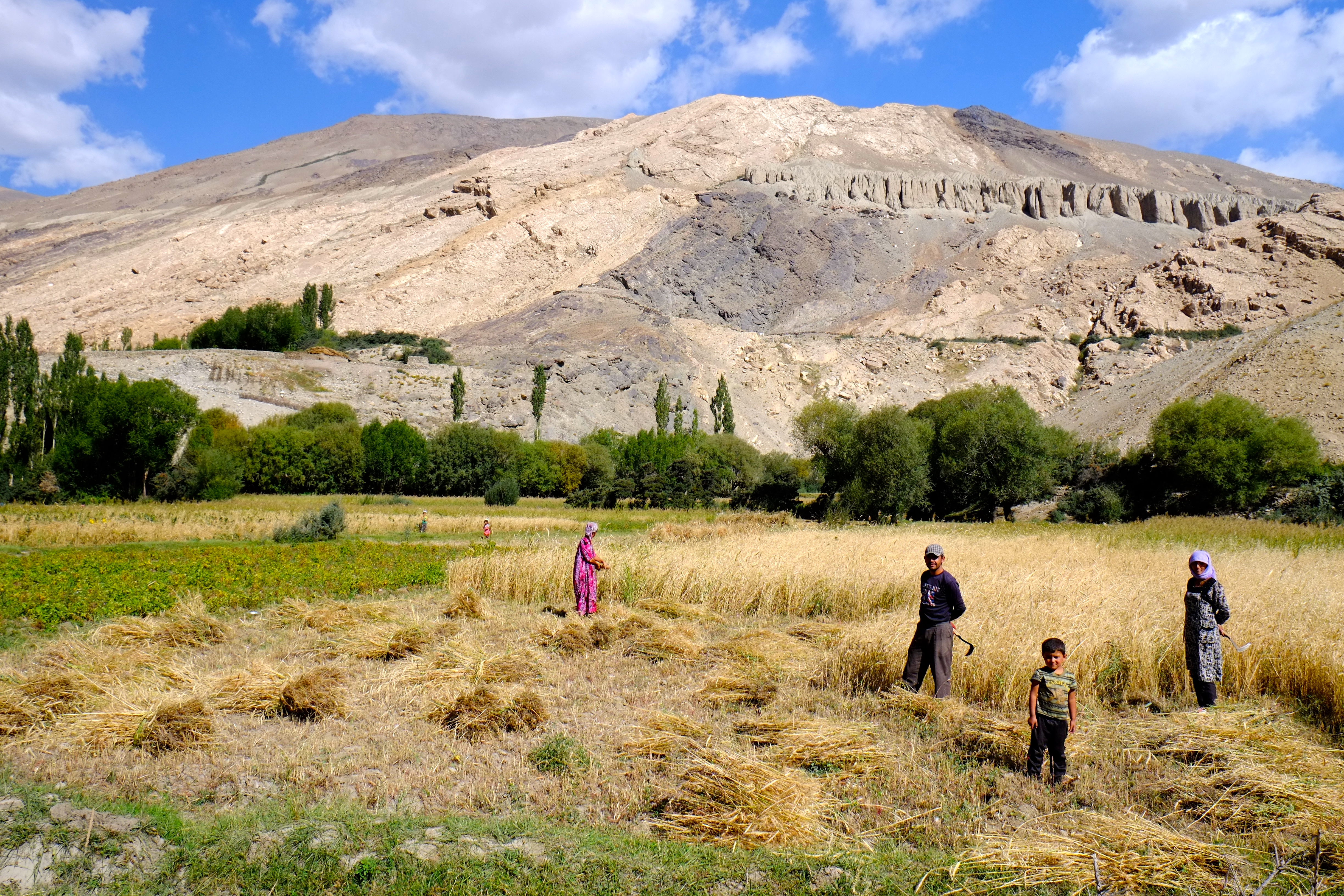
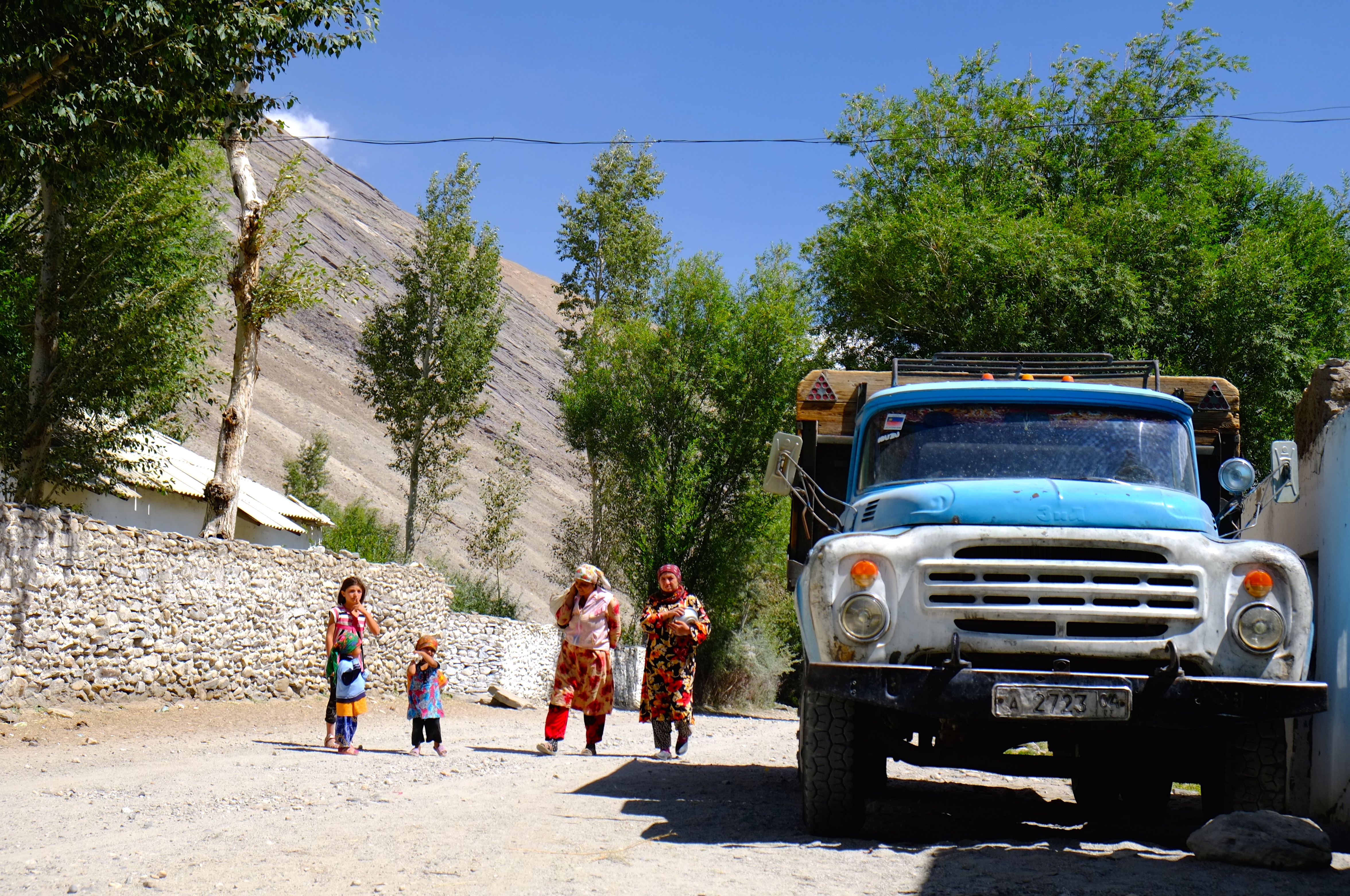
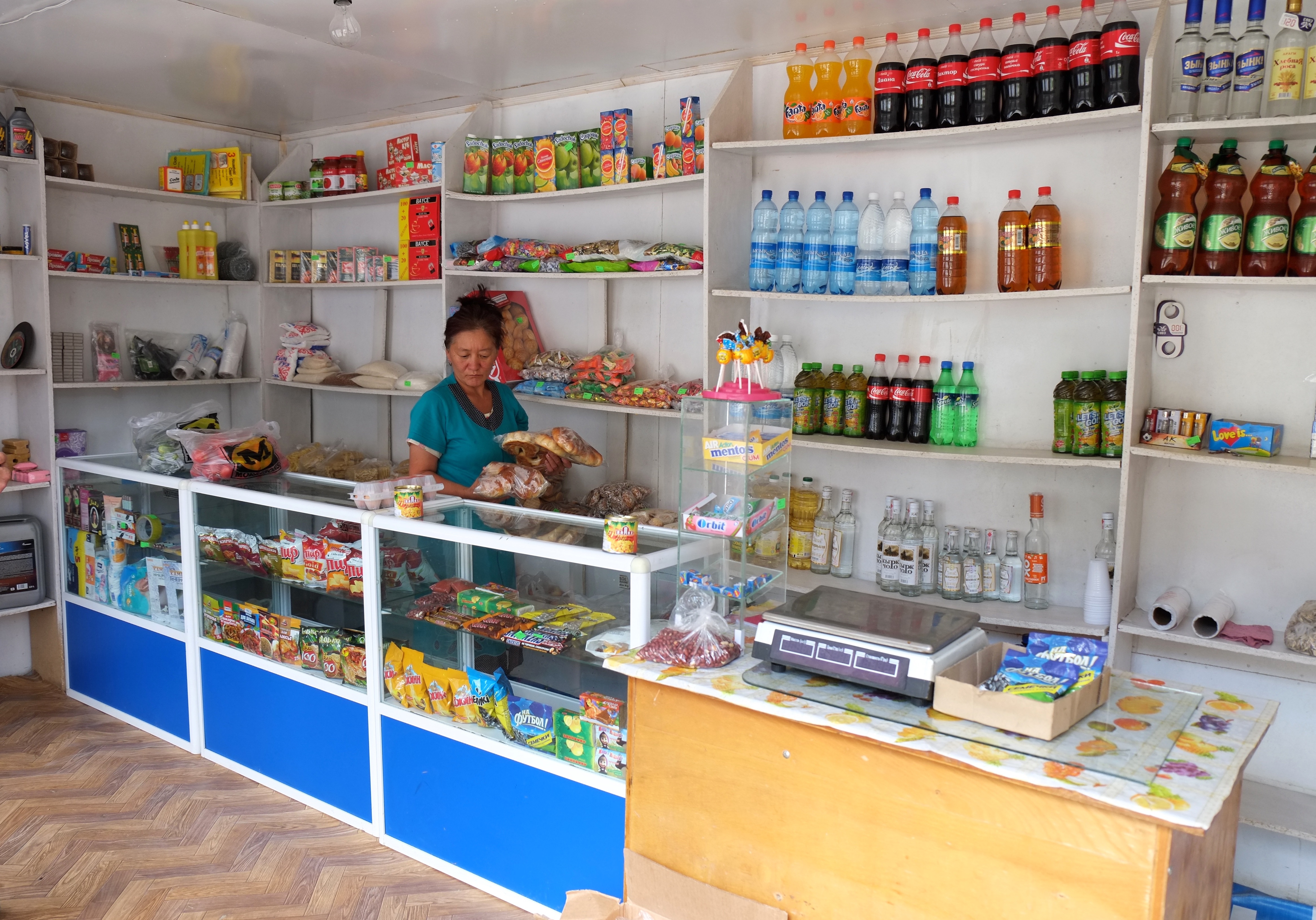
Another shop with an extraordinary choice: 10 different types of cookies and candies, 100 packages of instant noodle soup, Vodka and cigarettesField workCycling through another oasisResting from too much field workAnother majestic mountain
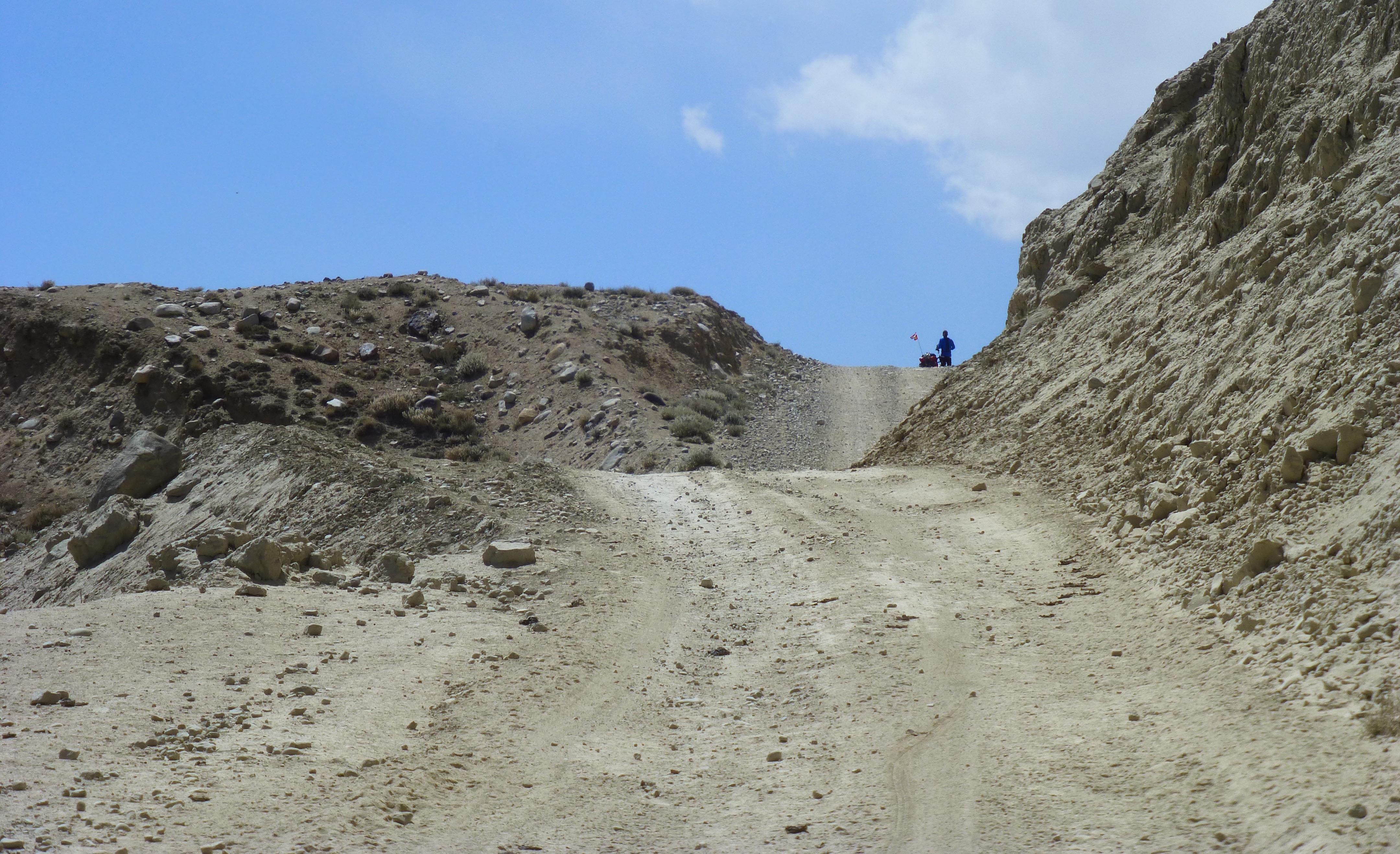
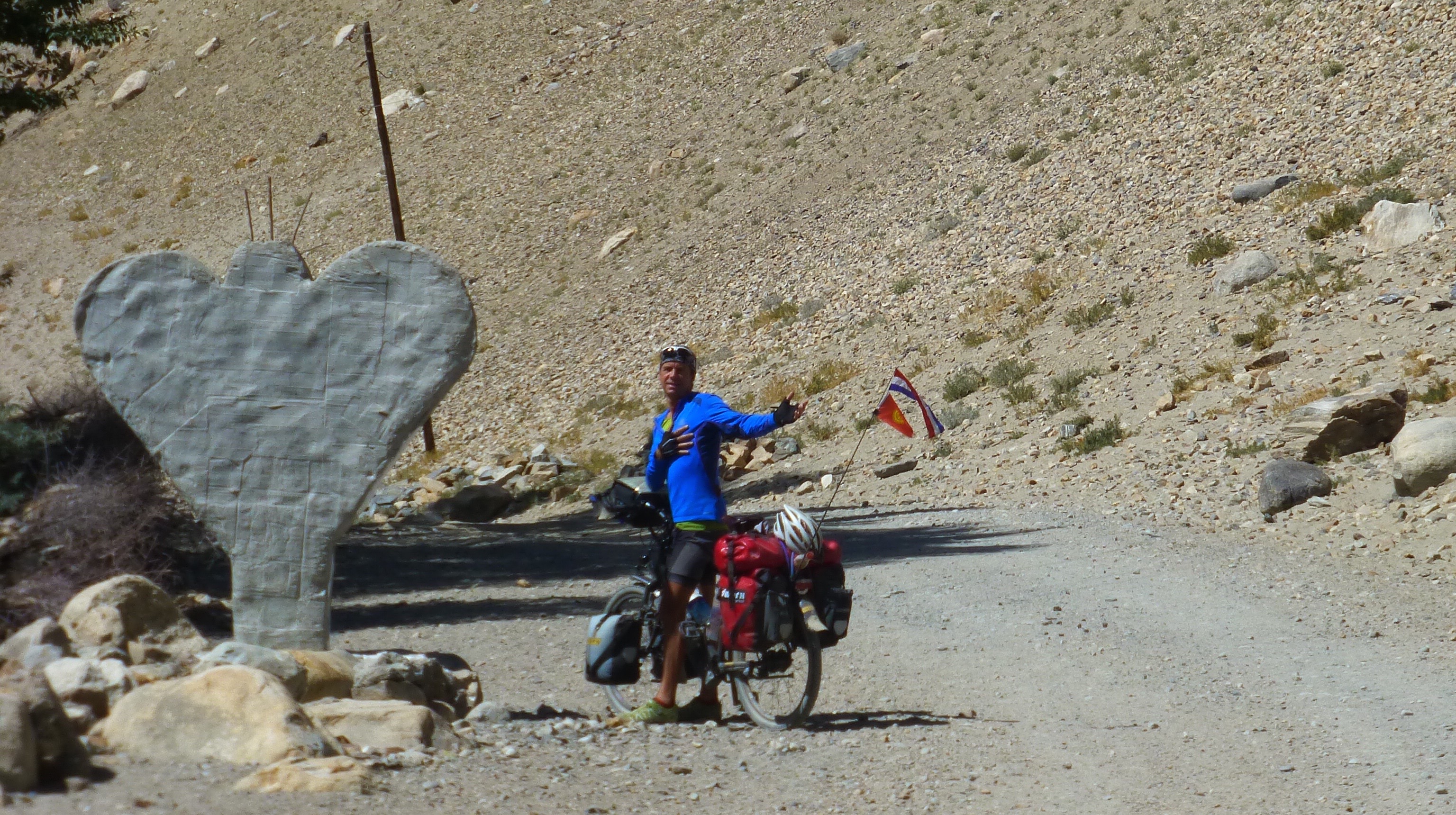
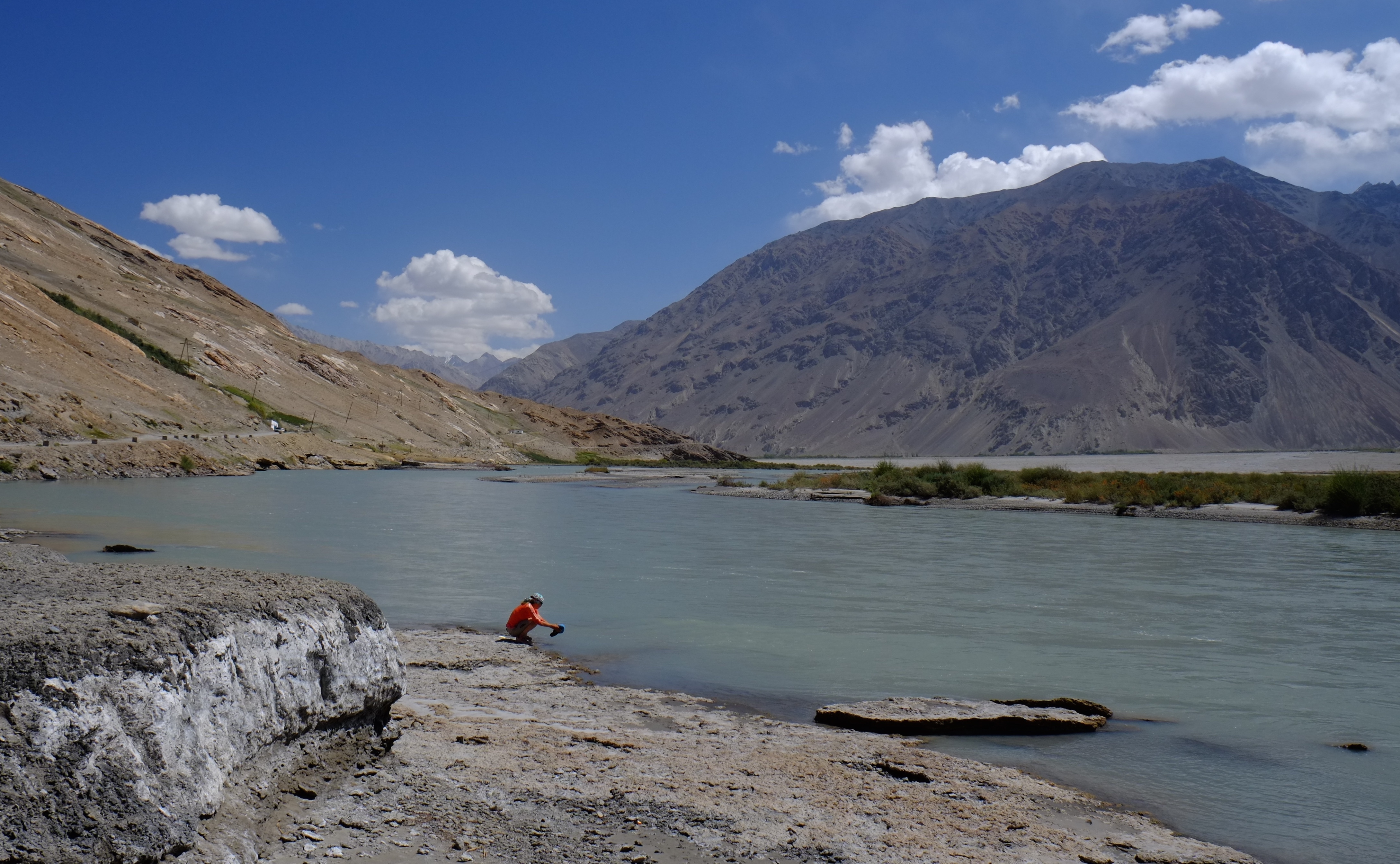
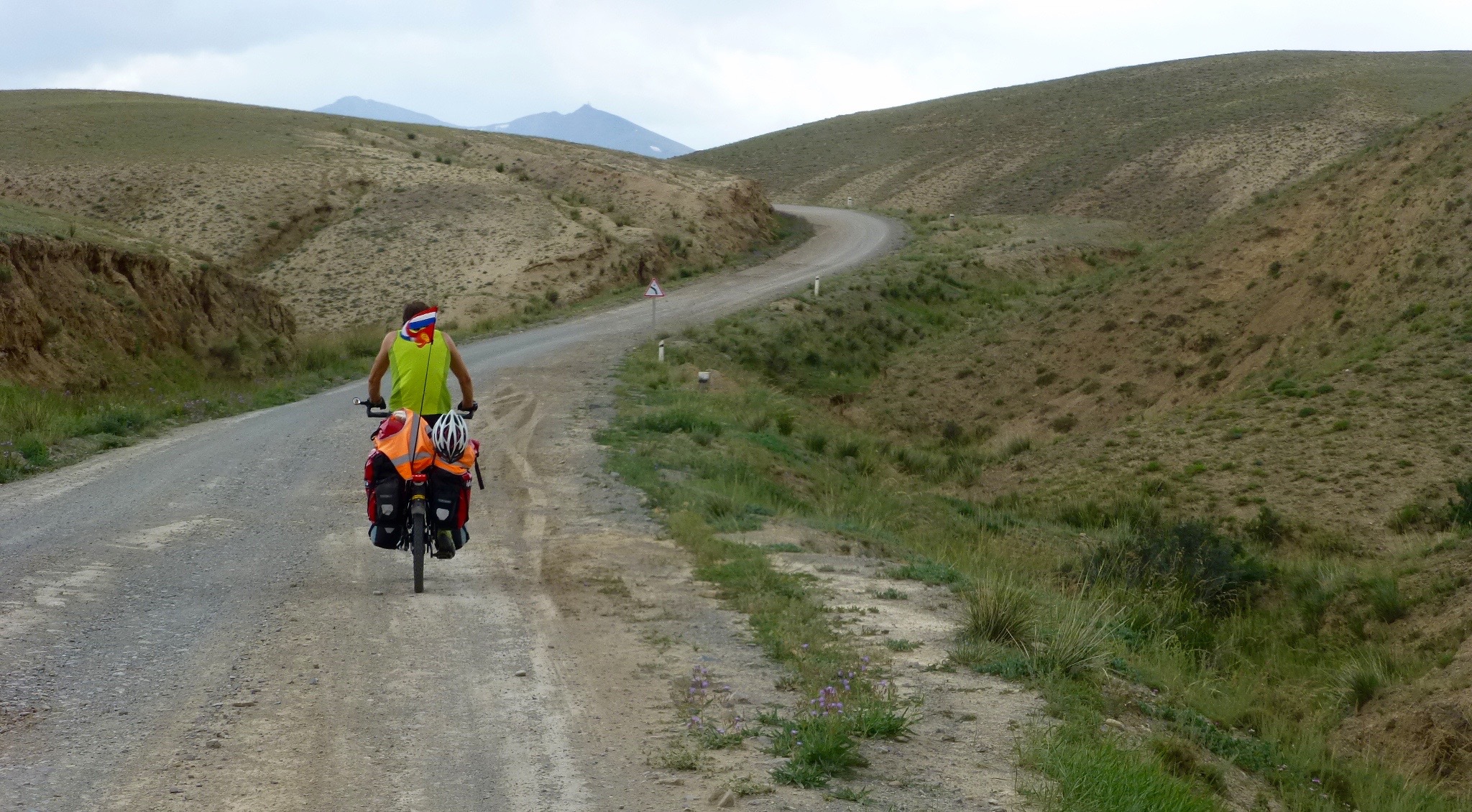
“Sending my love to everyone out there”Just in case you were thinking we are exaggerating about the roads…Washing dirty laundry
And here is the evidence: smugglers!At the end of another exhausting day we get served fried potatoes swimming in oil with old bread and cucumber salad, cookies and tea.
Day 15: Ptup – Ishkashim: 18km, altitude gain 341m Another day we’d rather forget. We leave with Johan having severe stomach cramps on a sunny and stormy day. Guess what – we are cycling into the wind. Four hours later we are just 18km further, having pushed our bikes up most of the time due to the storm. Johan marks the road as I did a few days ago. We hire a taxi to Ishkashim as we know we won’t make it by bike, given the weather and road circumstances.
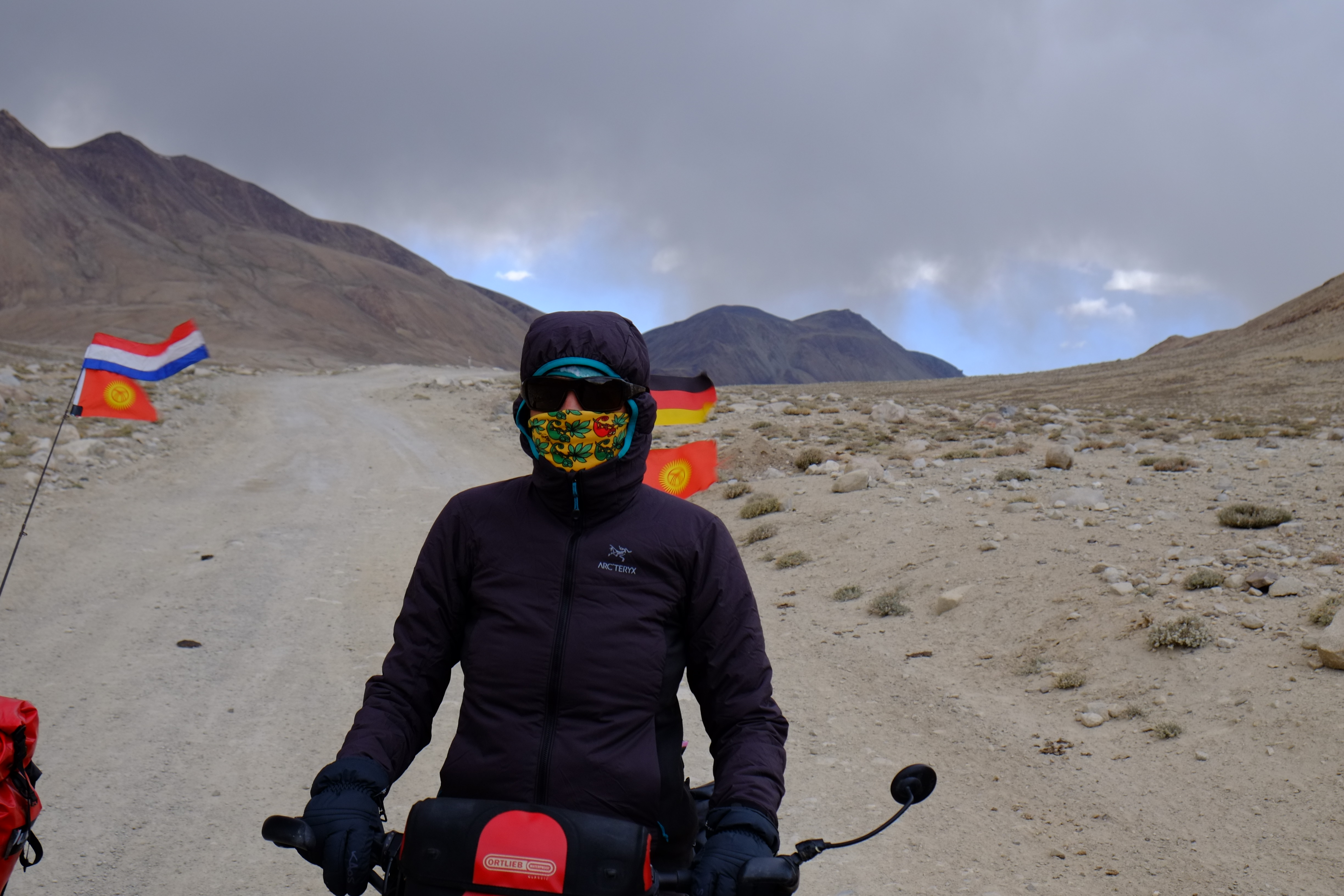
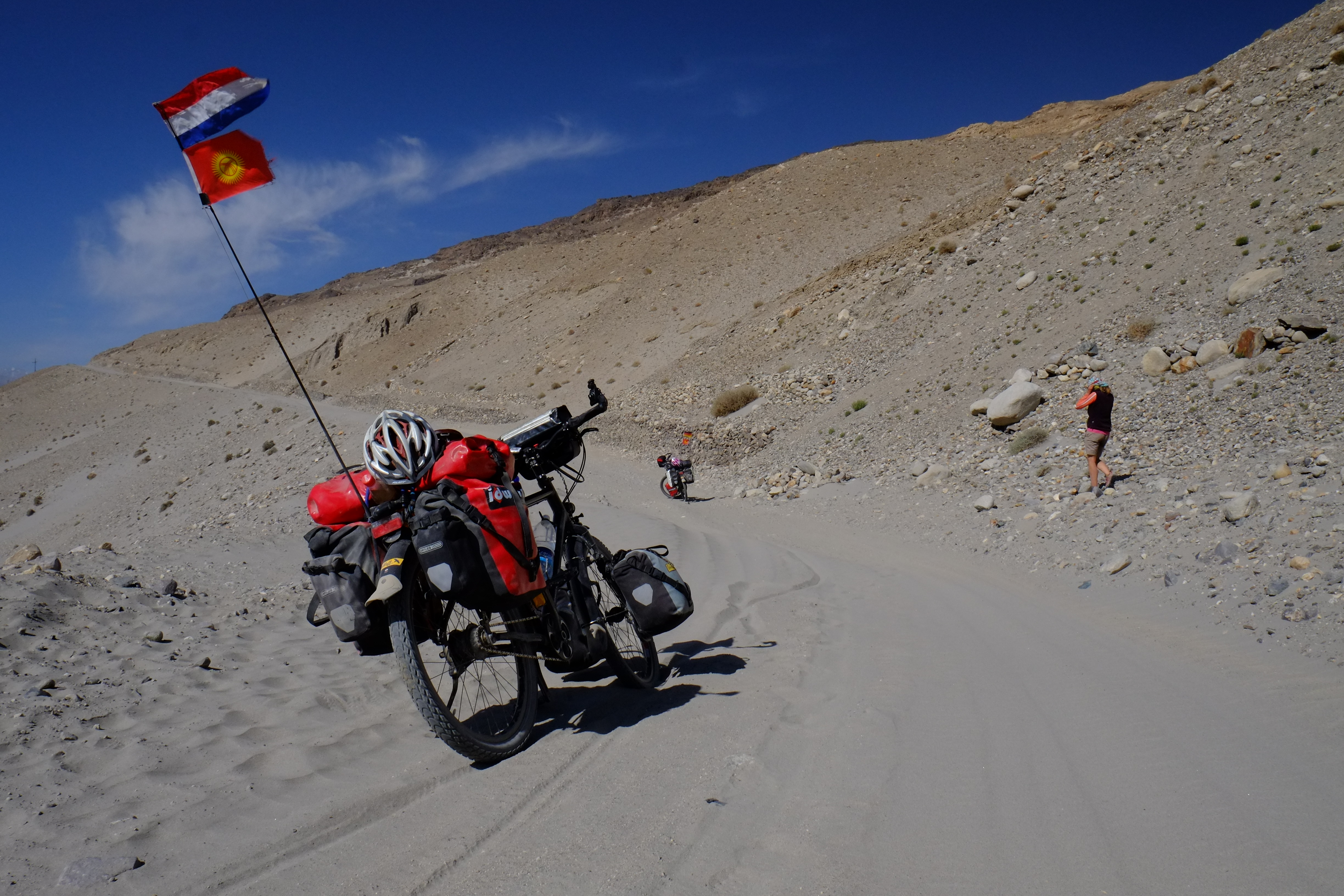
Village life on an early Sunday morningToday’s vista of AfghanistanToday’s state of the road: pebbles, ……and sand. And have a look at our flags, sigh!No, I am not having a good time todayPush, push, push…
23 August – 8 September, 2015 – As the Pamir Highway has been an important milestone of our journey you’ll find below our diary entries with the highlights of every day presented in four parts.
137km, 1047 meters altitude gain (1258km and 16,155 m altitude gain in total)
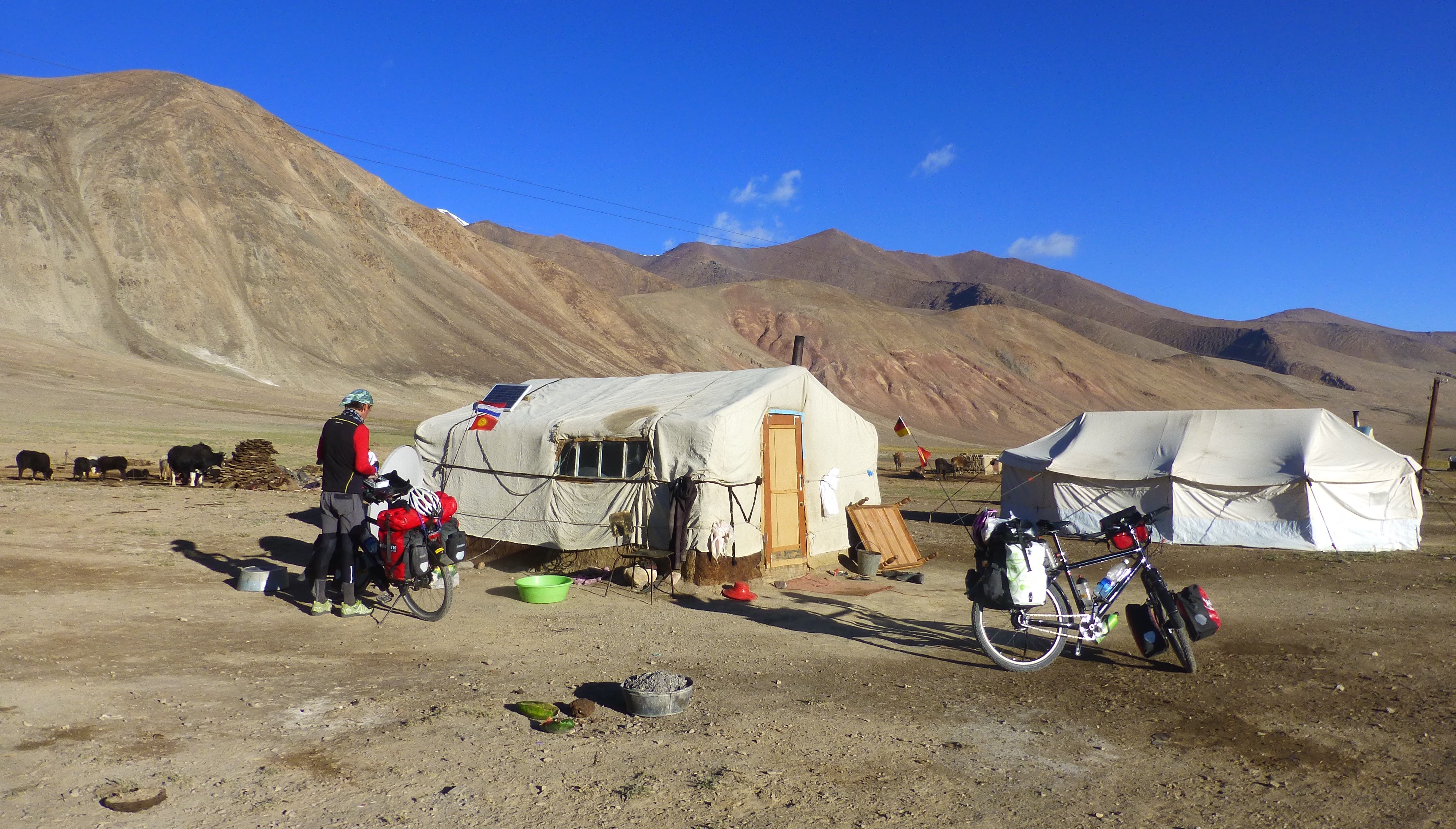
Day 6: Karakul – bottom of pass Akbaital: 48km, altitude gain 503m A late start and a tremendous headwind prevents us from making any progress. We meet two Austrian cyclists and Eddy (not Merckx) from Belgium who are today’s lucky ones. We get updates on the road and continue. Extreme washboard after 40km doesn’t help us and I get weaker and weaker and even start walking at times as it is easier than cycling against this wind. Right before the pass we see a farmer’s camp and decide to call it a day. Johan and I agree to pitch the tent and cook ourselves and five minutes later Johan ‘books’ us into the hut including half-board for around 7 EUR. At first happy to be be done for the day, we would soon regret it. The people are very hospitable, prepare chai for us which is served with bread, kefir and butter. We relax in the overheated hut at temperatures of around 30 degrees but almost suffocate from the exhaust of the little oven used for cooking and heating. We can’t wash ourselves so we endure and soon dinner is served. Again chai and bread and a kind of ravioli filled with meat and onions. A tasty but greasy dish. Right after dinner our bed is being prepared next to the dining table. The 10-year-old daughter lays out many thick blankets and pillows on the floor and indicates that we now can go to sleep. The whole family is still sitting around the table eating and drinking and we feel a bit odd to go to bed, especially as we are still dressed in our cycling clothes and not keen on keeping them on all night. Not being able to wash has already been hard enough. We are being told another time to go to sleep and we finally obey. With low voices the family continues eating and firing the heating. After dinner the father lits a few cigarettes, farts with Johan laying right next to him and us almost dying with all our clothes on under two heavy blankets. About a sleepless hour later the family starts making their own sleeping arrangements, now stumbling over us as their bedding is right behind us. Finally ready, the daughter begins to talk endlessly for at least another hour, us still fully awake, but in the meantime secretly undressed under our blankets. No way I could sleep in my sports bra and cycling shorts as our clothes pannier stands on the other side of the hut. Now I am only wearing my sweaty tee. Johan had been smart enough to bring his pyjama with him. My challenge now is to keep my naked bottom under the blanket and to get dressed on time the next morning. When the talking finally stops we hear another strange noise – the girl is peeing into a bowl right next to the beds. This procedure is being repeated several times and in the morning we get up more shattered than the evening before. An altitude of 4100m and my beginning stomach problems most likely didn’t really help either.
Our nice little homestay
Leaving Sary TashLake KarakulEddy from Belgium
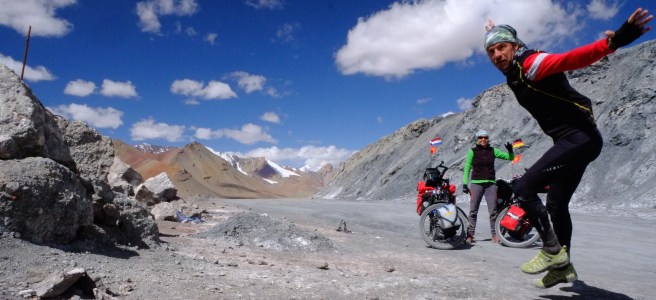
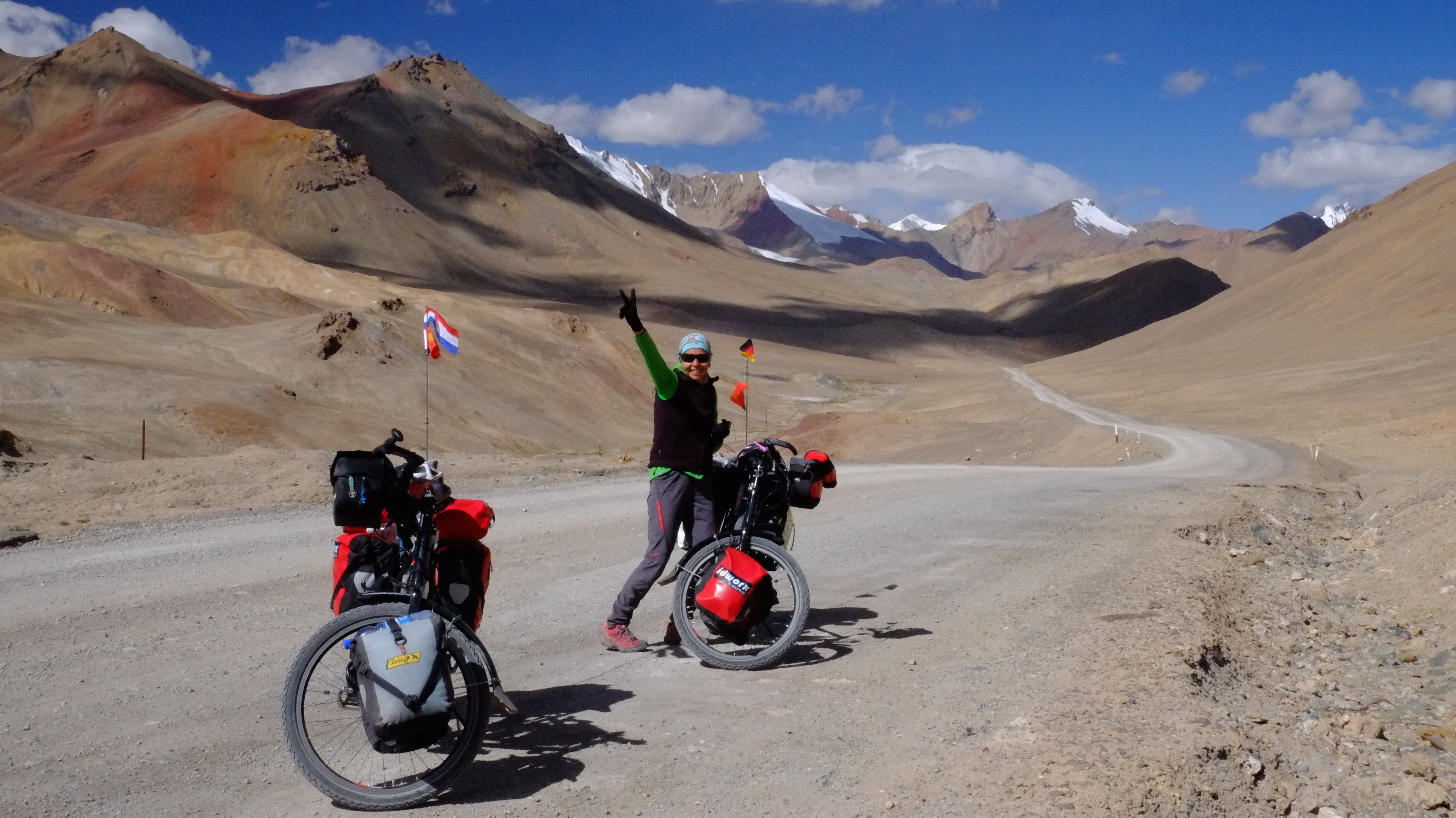
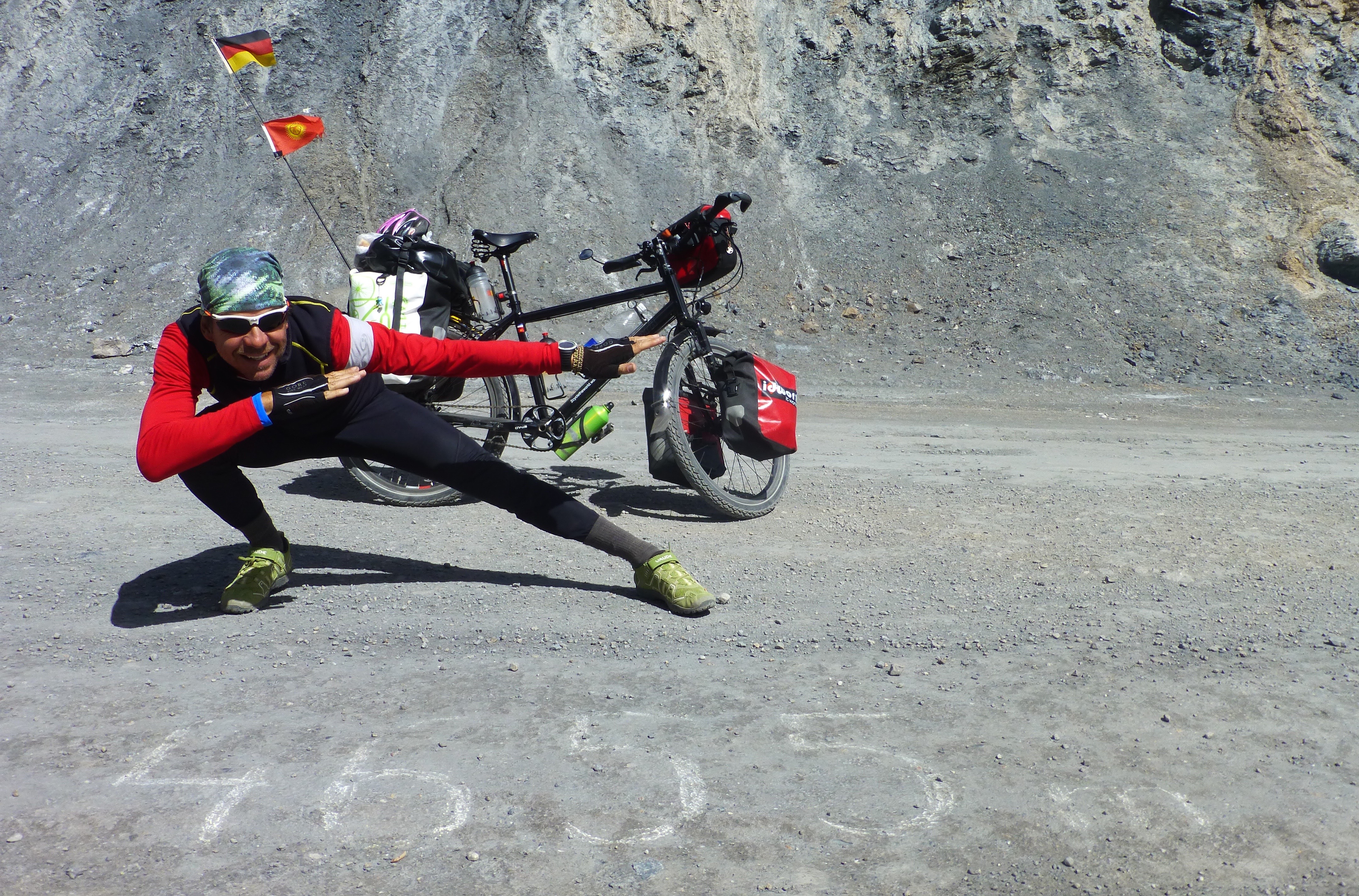
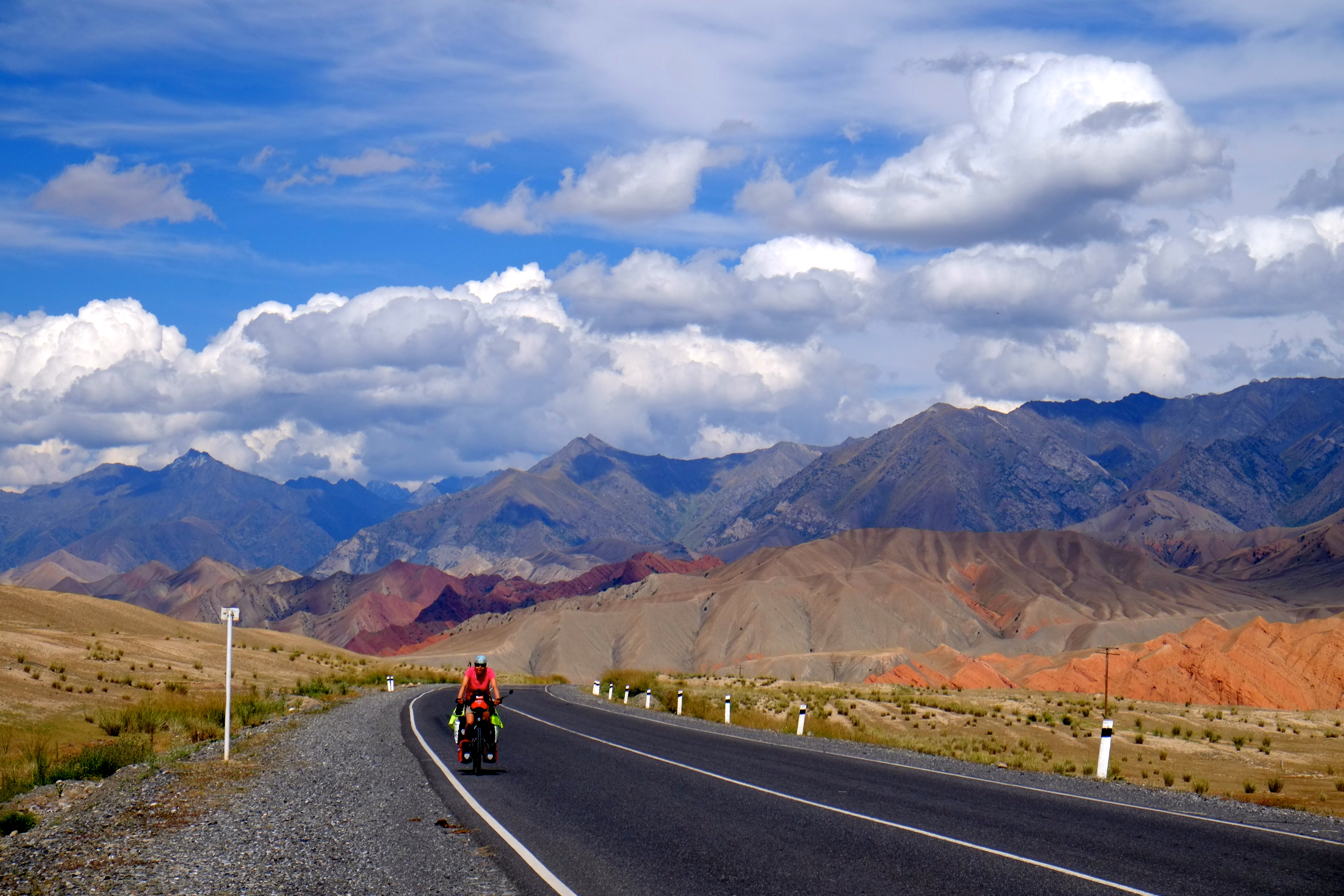
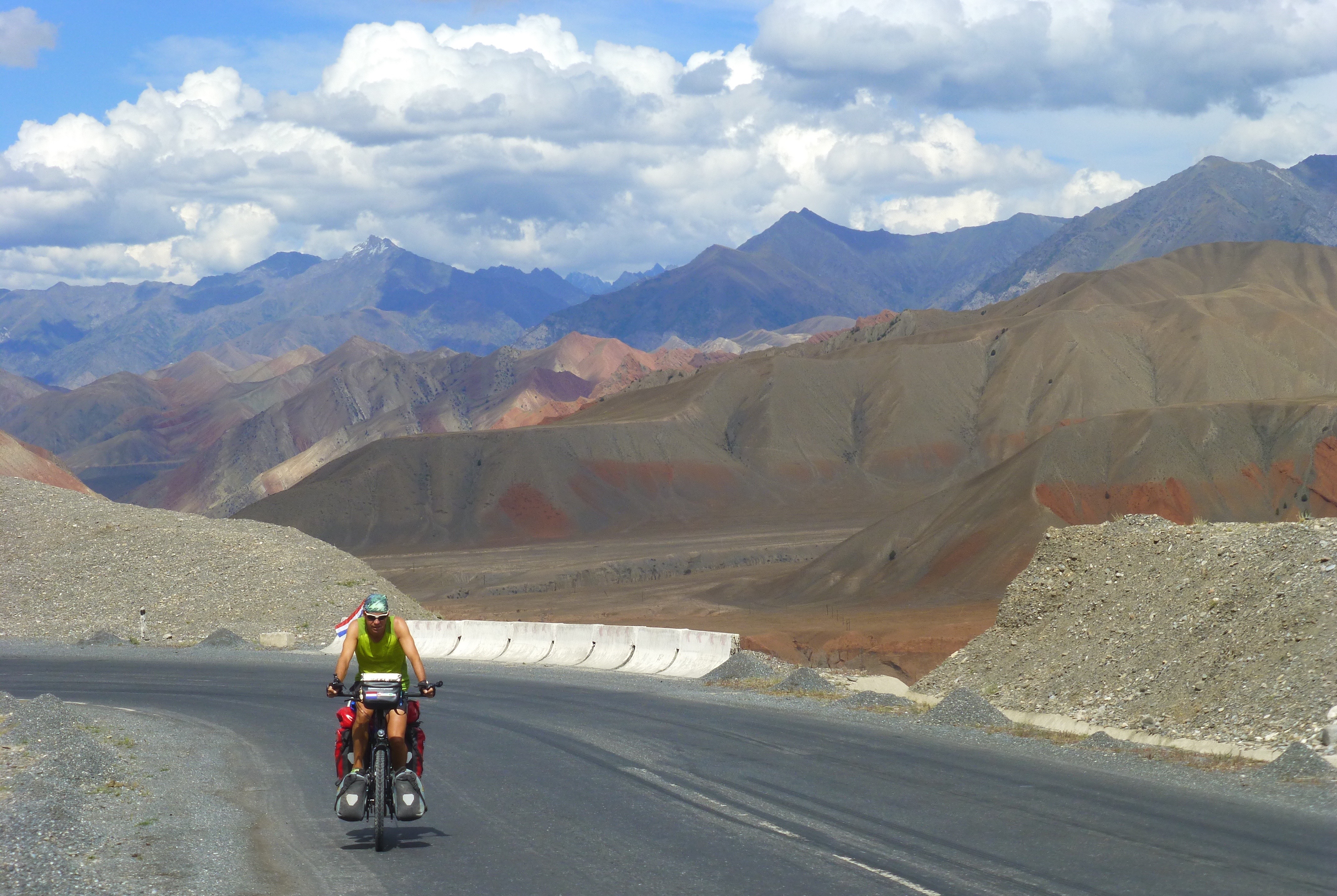
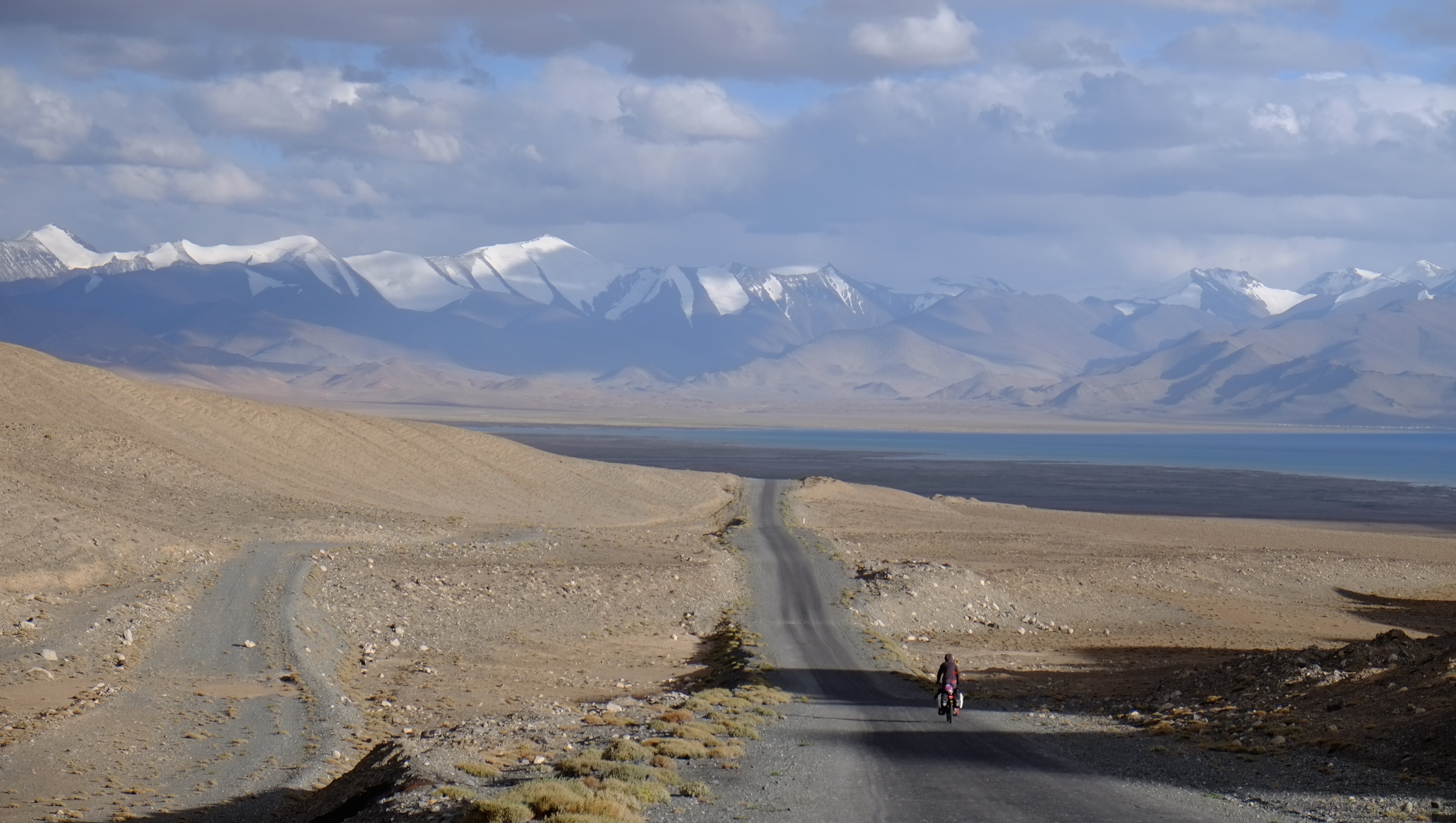
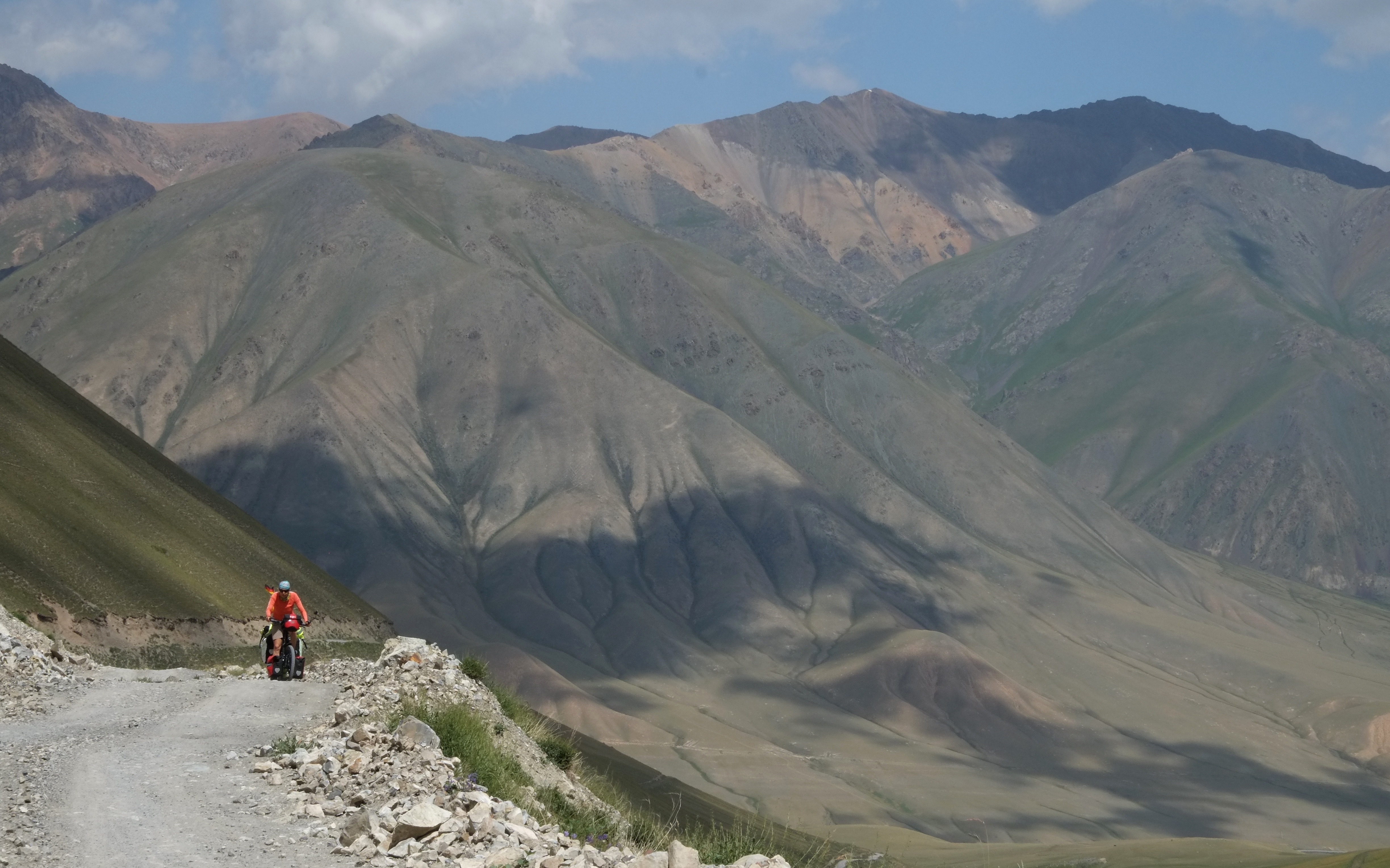
Day 7: Pass Akbaital – Murghab: 89km, altitude gain 544m Today we would traverse our highest pass ever at an altitude of 4655m. As we leave early we start cycling without any wind. I feel very bad with stomach cramps and have to relieve myself right before the pass for the first time. The climb is very difficult with very steep gradients and we walk several times. The altitude adds to the difficulty and we often only manage to cycle 50m before we rest again. The landscape is surreal, red mountains that change colours with the light, hardly any vegetation and besides the funny whistles from the marmots that curiously watch us an eerie silence. After 12.5 km we happily reach the summit and as from now it would only go down – altitude and health-wise. I start feeling like a dog as I leave a mark every few kilometers. After lunch we have our first strange encounter. About 500m ahead I see people standing on the road, there is nothing else close-by and I get a little worried not knowing what to expect. We both take out our pepper spray and cycle next to each other. Only a maximum of 10 to 20 cars are passing us each day and we know we are on our own. Getting closer we recognize two soldiers armed with machine guns standing and another man sitting on the road. As we approach, the sitting man gets up to let us pass. Johan greets ‚Salam’, they are all greeting back and we are gone with the wind. At around 3pm the wind picks up again and again it is headwind. I am very exhausted as my diarrhoea is getting worse by the minute and knowing I still have to cycle at least 10km against the strong wind makes me break down for the first time on this trip. I can’t stop crying not knowing how to get to the next village. Johan tries to comfort me and we continue slowly with me cycling in his slipstream. When we finally see the village after the last bend in a valley tears keep running again. This time they are tears of joy. We are nearly there. This night I spend mostly on the loo – another sleepless night!
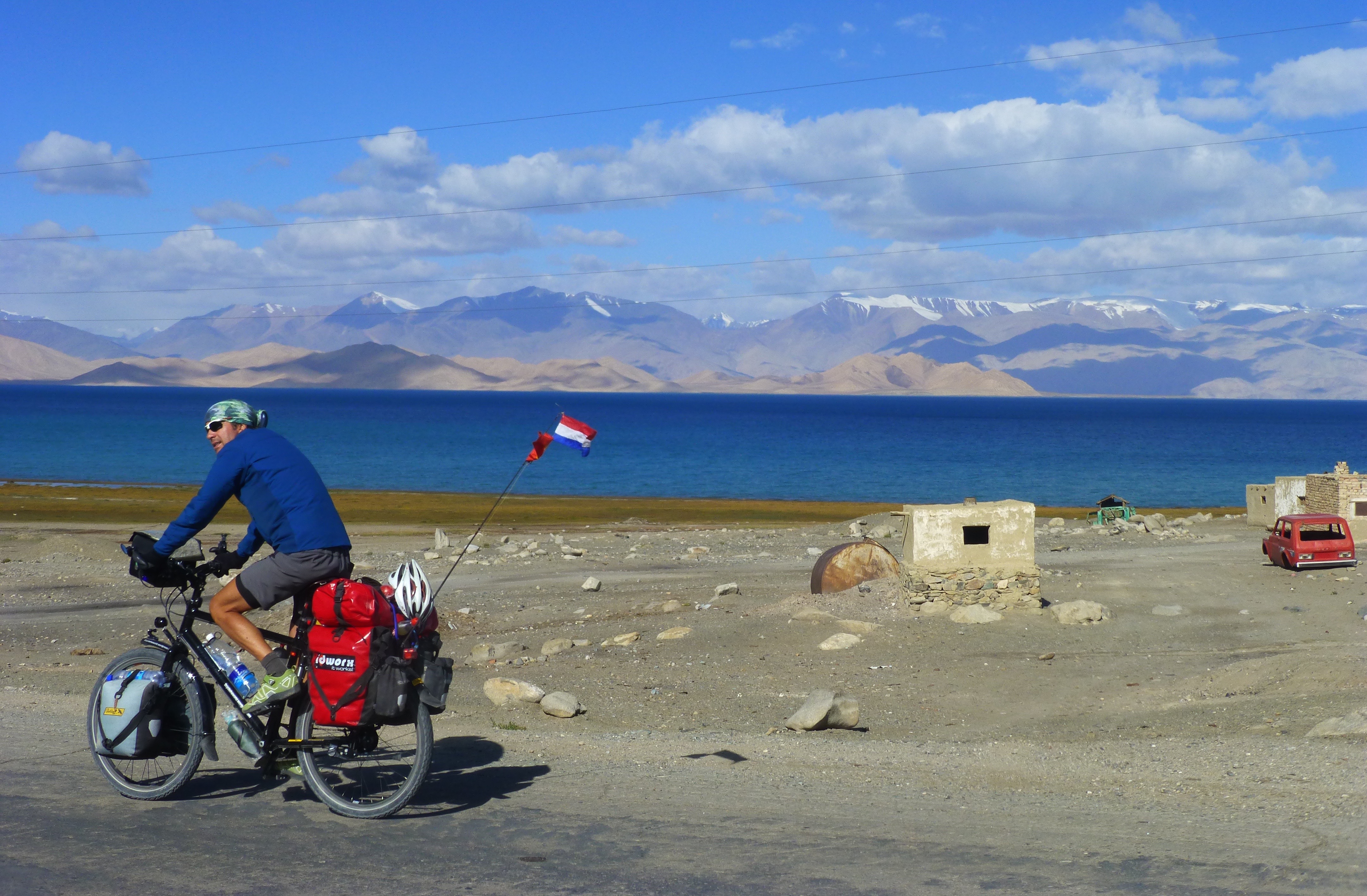
Leaving our camp early in the morningWashboard!First toilet breakAscending the highest passConfident to be able to make itHa – we made it……but we definitely didn’t flyThe beginning of a very long downhillSand stormsThis was more or less the population between the pass and MurghabHappily arrived in Murghab
Days 8 and 9: Murghab Long cycling days, food I should not have eaten, maybe contaminated water, headwinds, sleepless nights due to the altitude, the most demanding cycling ever on bad roads and a heavy bike had taken its toll. I am down with fever and the worst diarrhoea ever and we need to take two days off of cycling. My symptoms correspond with the traveller’s diarrhoea and I start taking antibiotics which make me feel much better the second day and confident to be able to continue our journey tomorrow.
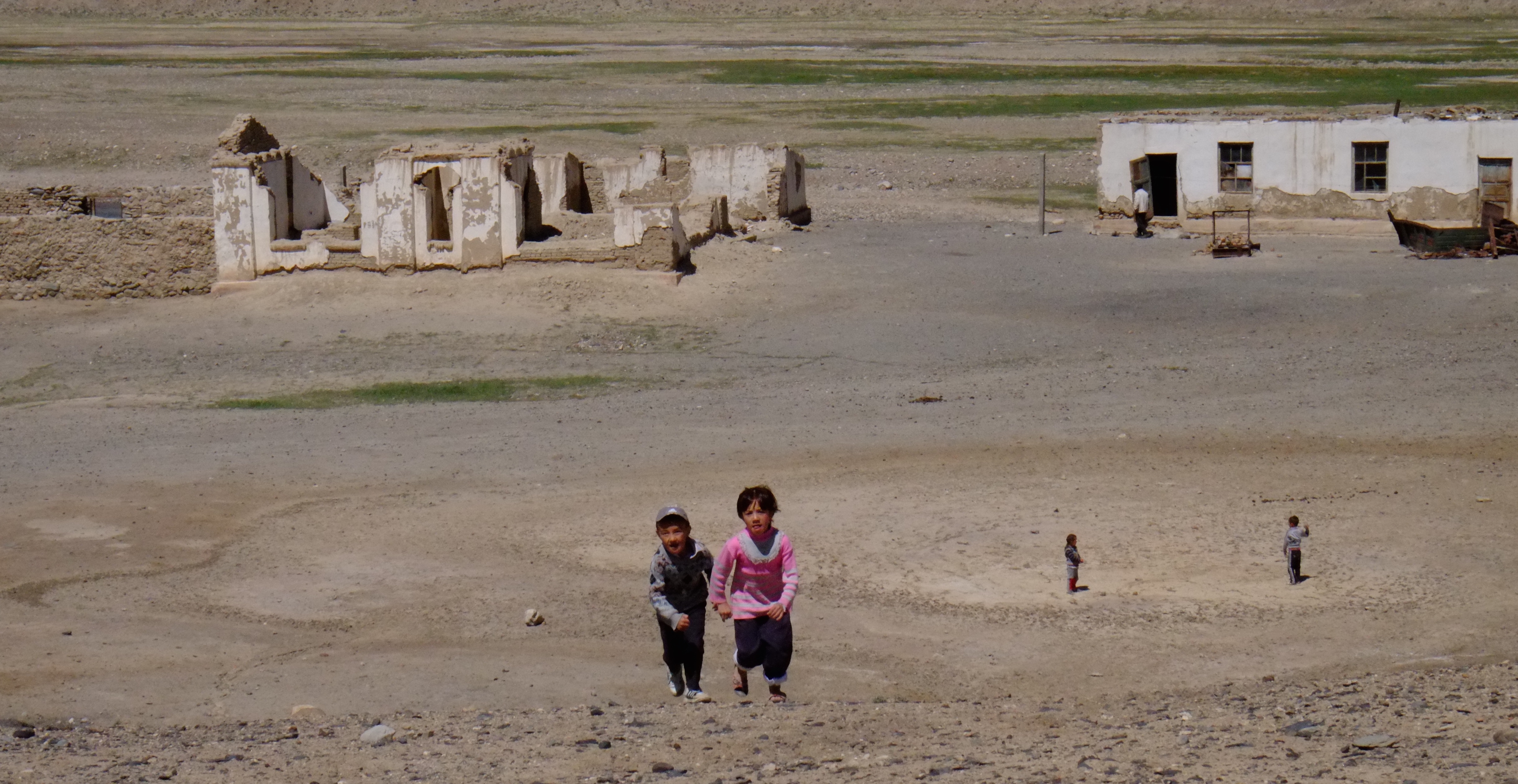
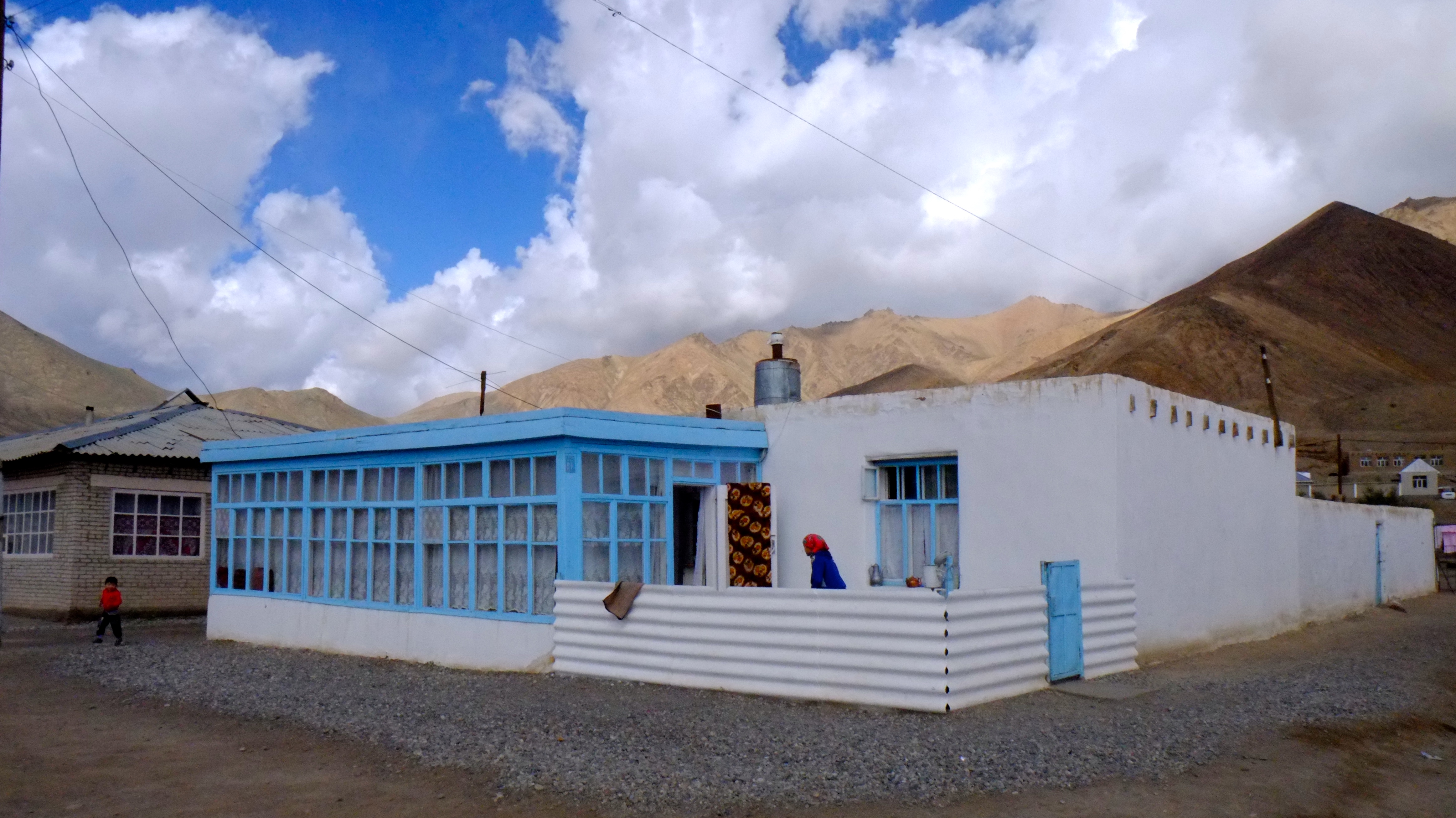
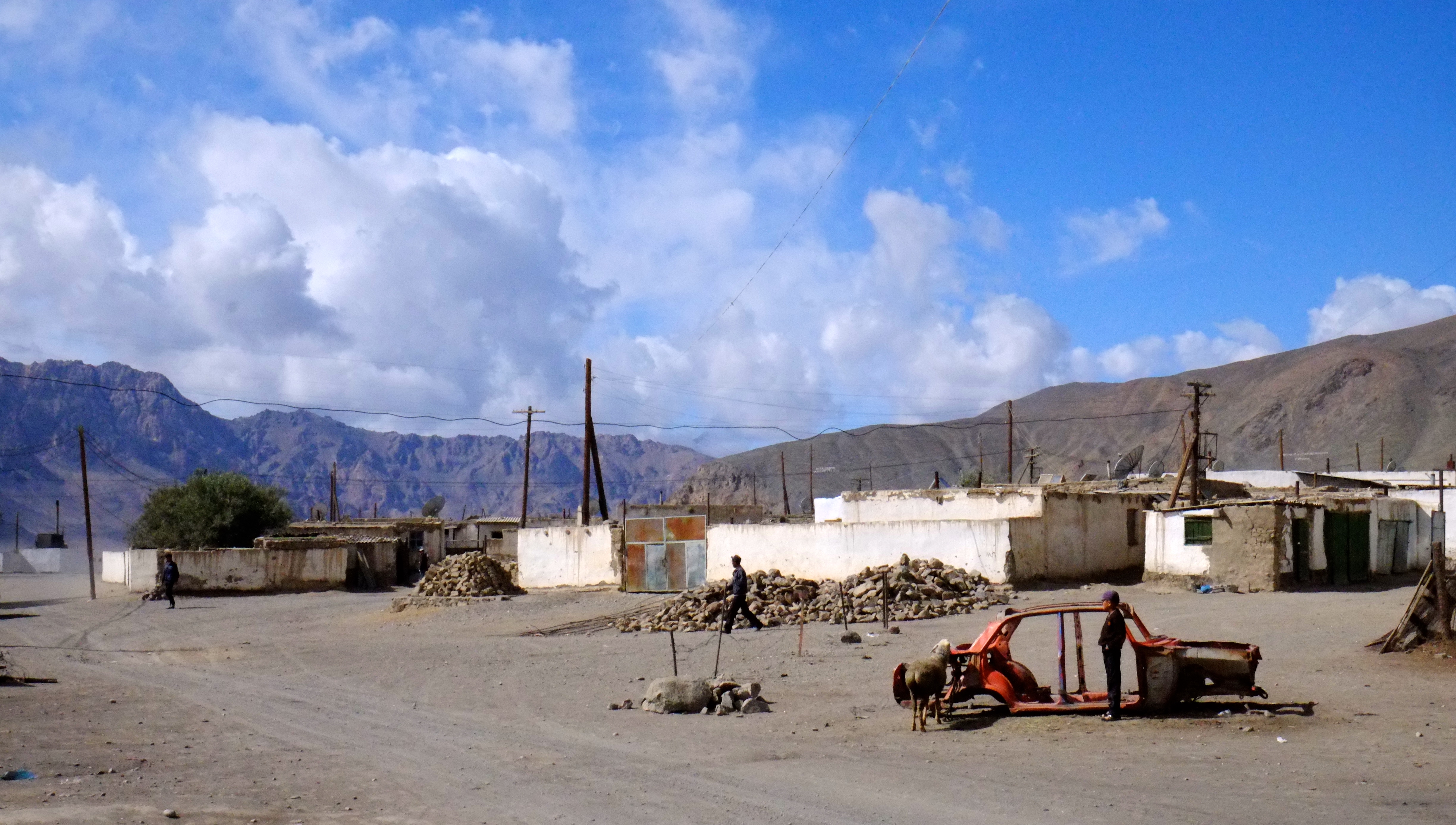
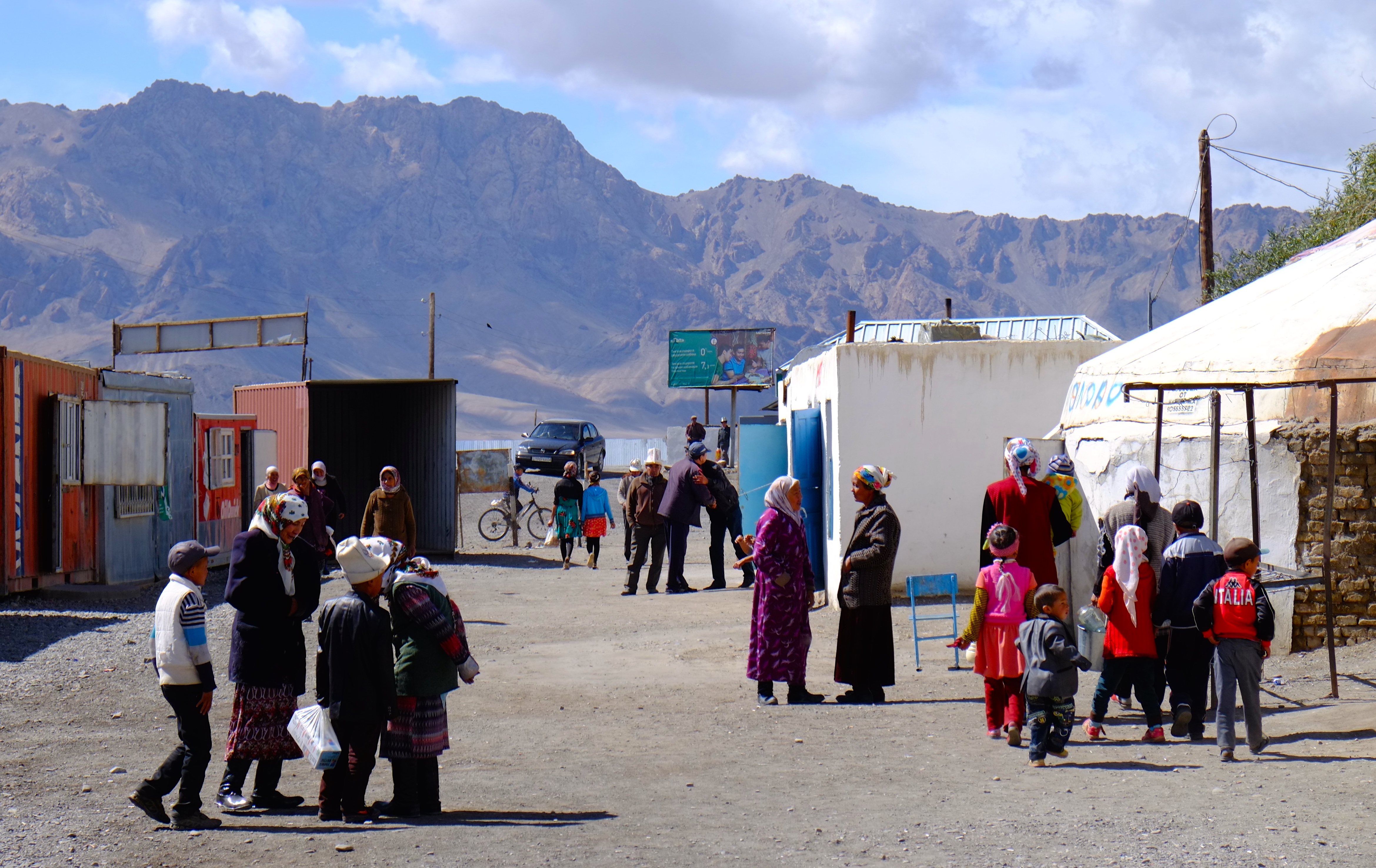
A typical townhouse in the PamirsThe desolate township of MurghabLenin welcomes us in the smallest villageMarket time
23 August – 8 September, 2015 – As the Pamir Highway has been an important milestone of our journey you’ll find below our diary entries with the highlights of every day presented in four different parts.
293km, altitude gain: 5224m (1,121km and 15,107m altitude gain in total)
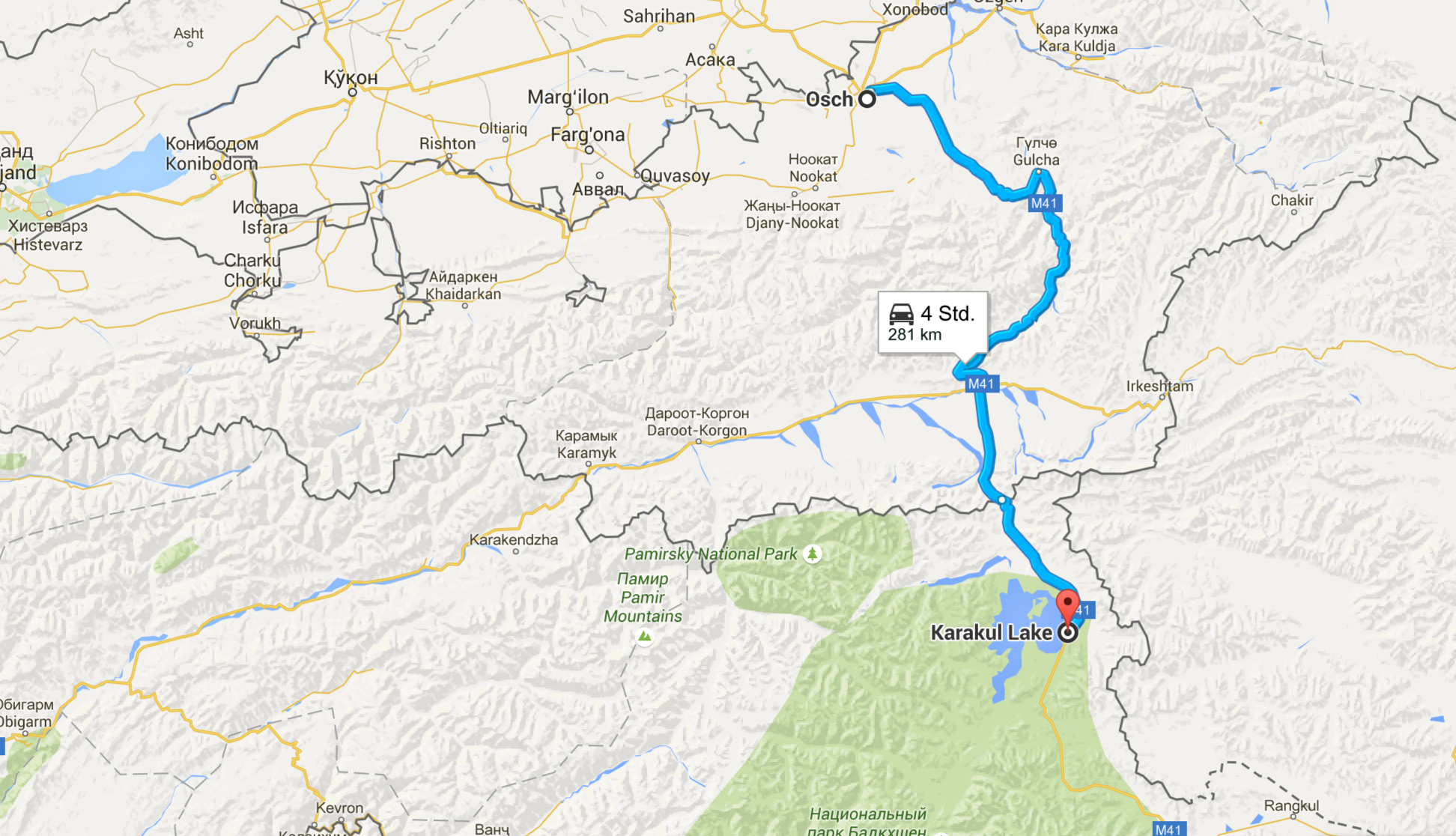
Day 1: Osh – Gulcha: 85km, altitude gain 1436m
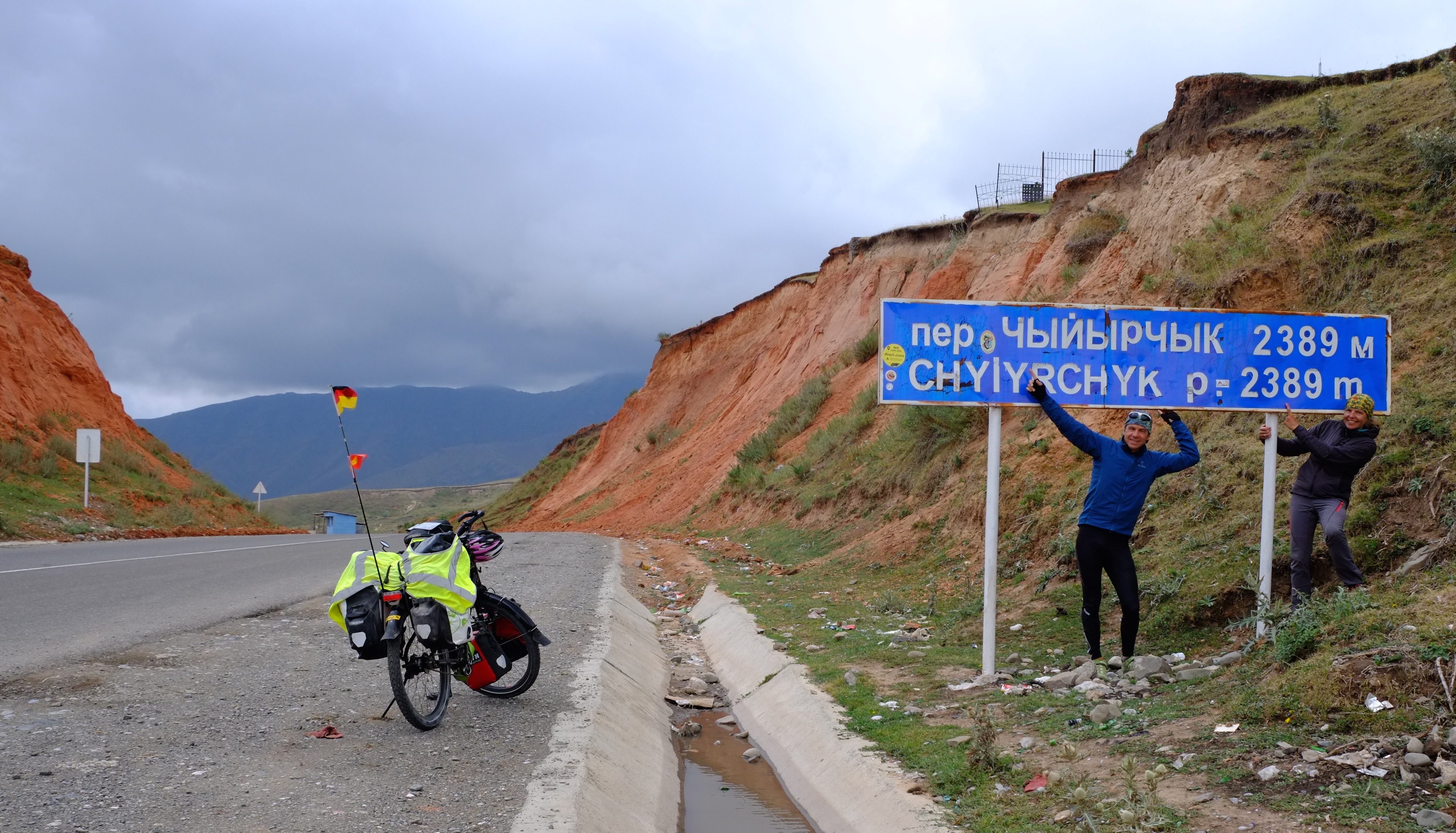
We’re in doubts if we should leave as heavy rainfalls are forecast. We anyway leave as we are on a tight schedule given our expiring Tajikistan visas and are happy we did as it doesn’t rain all day. It’s a climbing day through desolate landscapes with small villages in a bad state, a pass of 2,389m and little tailwind. On our way we are given apples and carrots and meet an Irish-American cycling couple. We are grateful for the guesthouse in Gulcha as we don’t have to cook ourselves as we are shattered after a long days’ cycling.
Preparation at its best!
Day 2: Gulcha – Ak Bosoga: 77km, altitude gain 1369m
Early start on a beautiful day with clear blue sky and no wind. We continue on undulating roads through the Gulcha valley. High mountains to the left and right, the valley narrows and opens up again to make room for another small village. Later the landscape reminds us on the deserts of California. We are cycling into a strong headwind – one tailwind day had been too good for us. At the end of the afternoon we ask in the village for a place to sleep and the family invites us in. We get chai, cookies, fresh melon and soup and our own room to sleep. We love Kyrgyz hospitality.
An unexpected coffee break
And another break
The wind is picking upAlmost there…The Kyrgyz family we stayed with
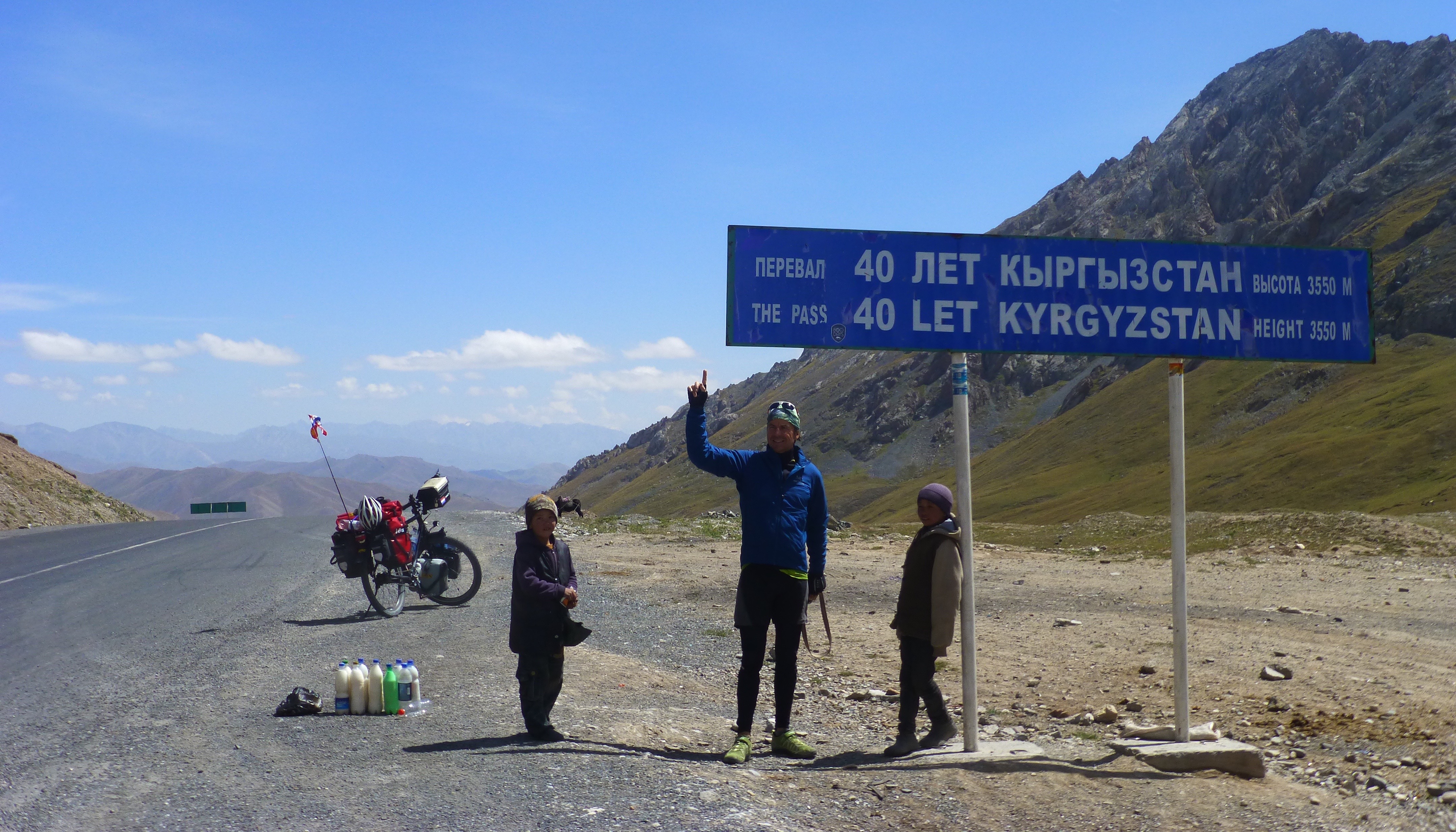
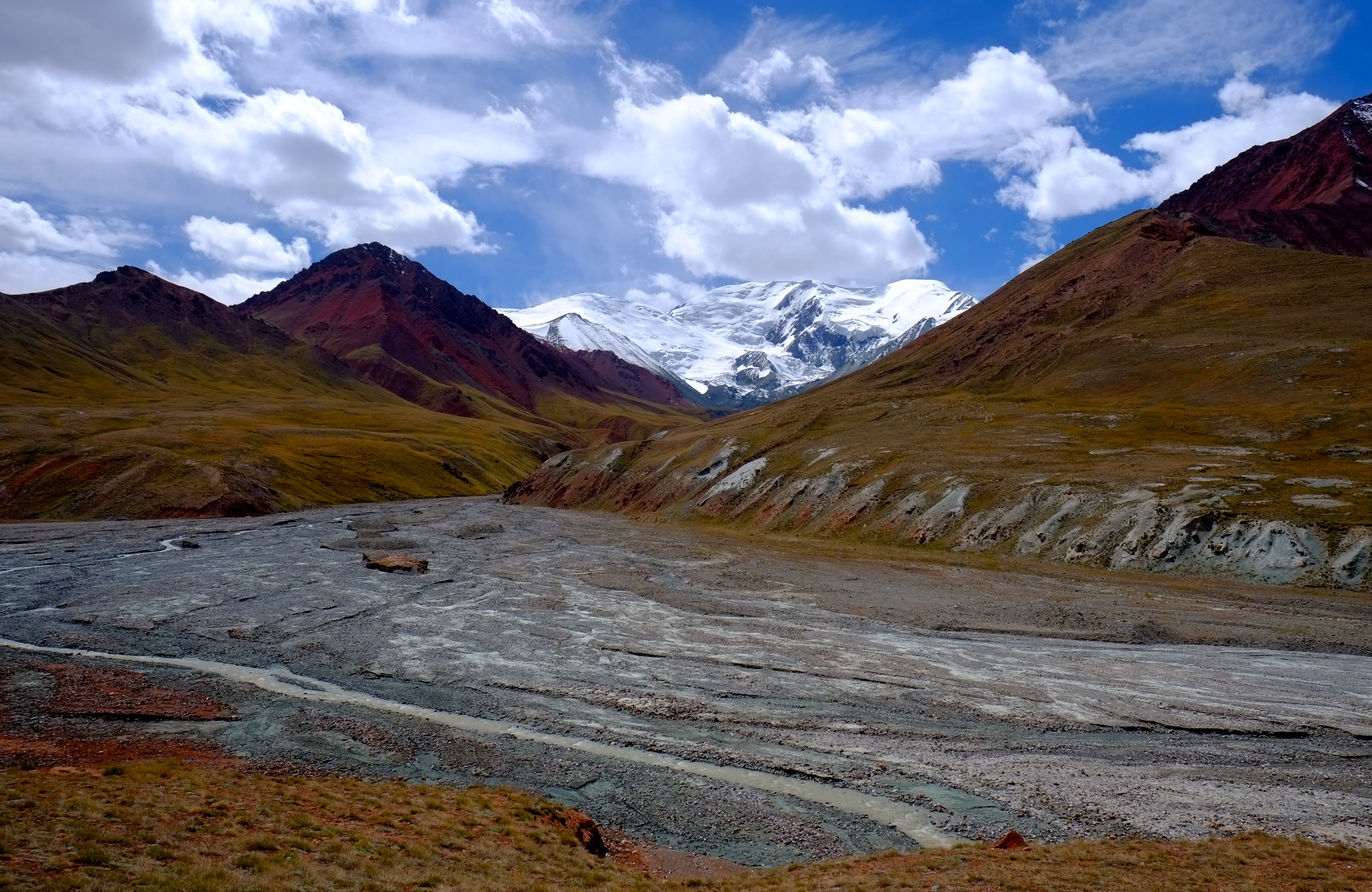
Day 3: Ak Bosoga – Sary Tash: 30km, altitude gain 922m Another early start and with heavy legs we are climbing up another pass, again against the wind. Gradients are tough, most of the time at around 8%. After four hours we reach the top at 3615m, annoyed with the wind and the kids who are touching everything. For the first time we see snow-capped Peak Lenin, the second highest mountain in Kyrgyzstan at 7134m. Later, Sary Tash offers superb views over a dazzling mountain horizon. We finally go down, but only for three kilometers, then the road climbs for another two kilometers to the second peak at 3550m. What a deception! We arrive early, have lunch at our guesthouse, do the necessary shopping at one of the two shops that also serves as the local bar, money changer and telecom outlet. We are lucky as the shop owner’s husband seems to be shopping in Osh and every time we are asking for something that’s missing she is bellowing our order into her phone. We can pick it up the next morning at 7am.
Ascending the first pass before Sary TashOur first 1000 kilometers cycledSummit #1Summit #2
Day 4: Sary Tash Another rest day at 3200m as it doesn’t look inviting to fight against the heavy storm and rain outside. I don’t mind as it gives us more time to get adjusted to the altitude. The coming days we’ll be at over 4000m.
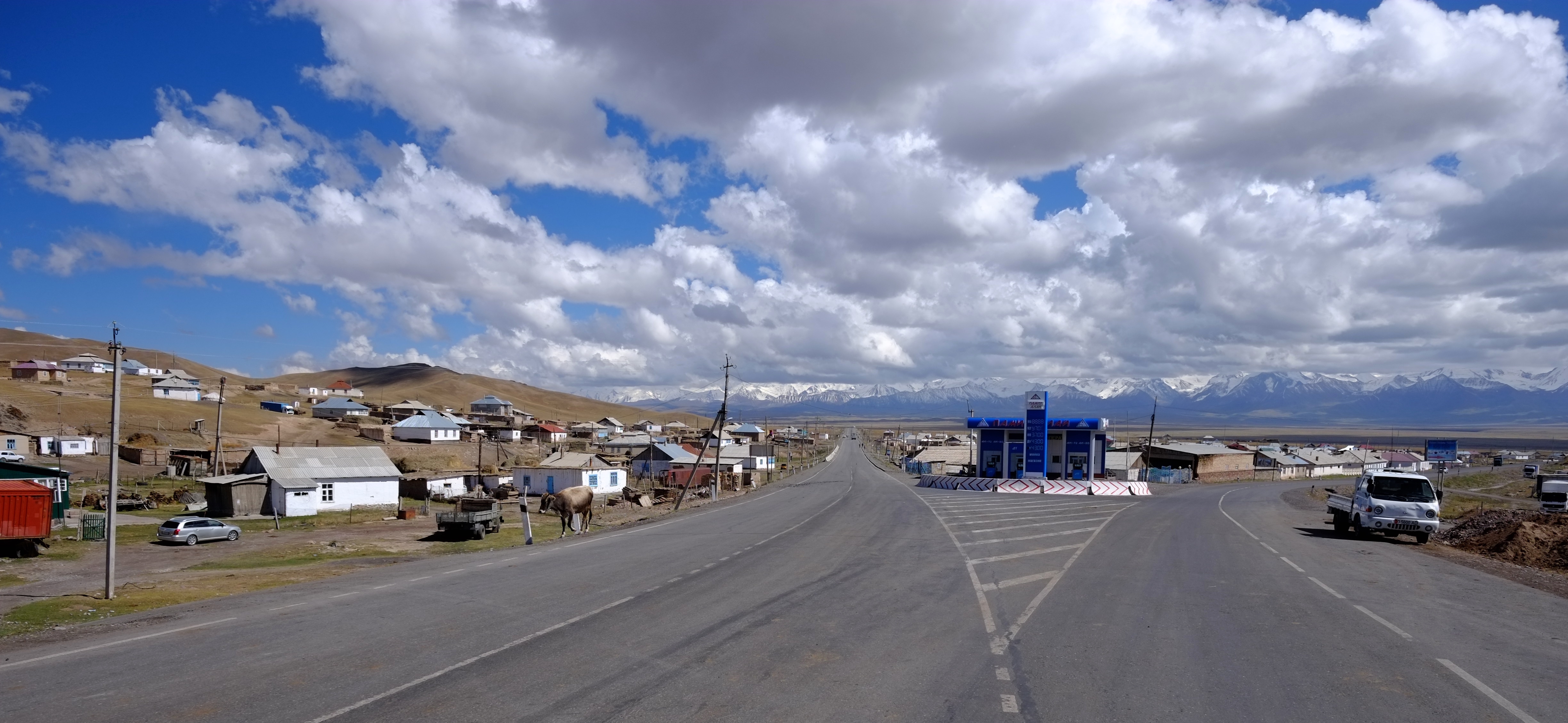
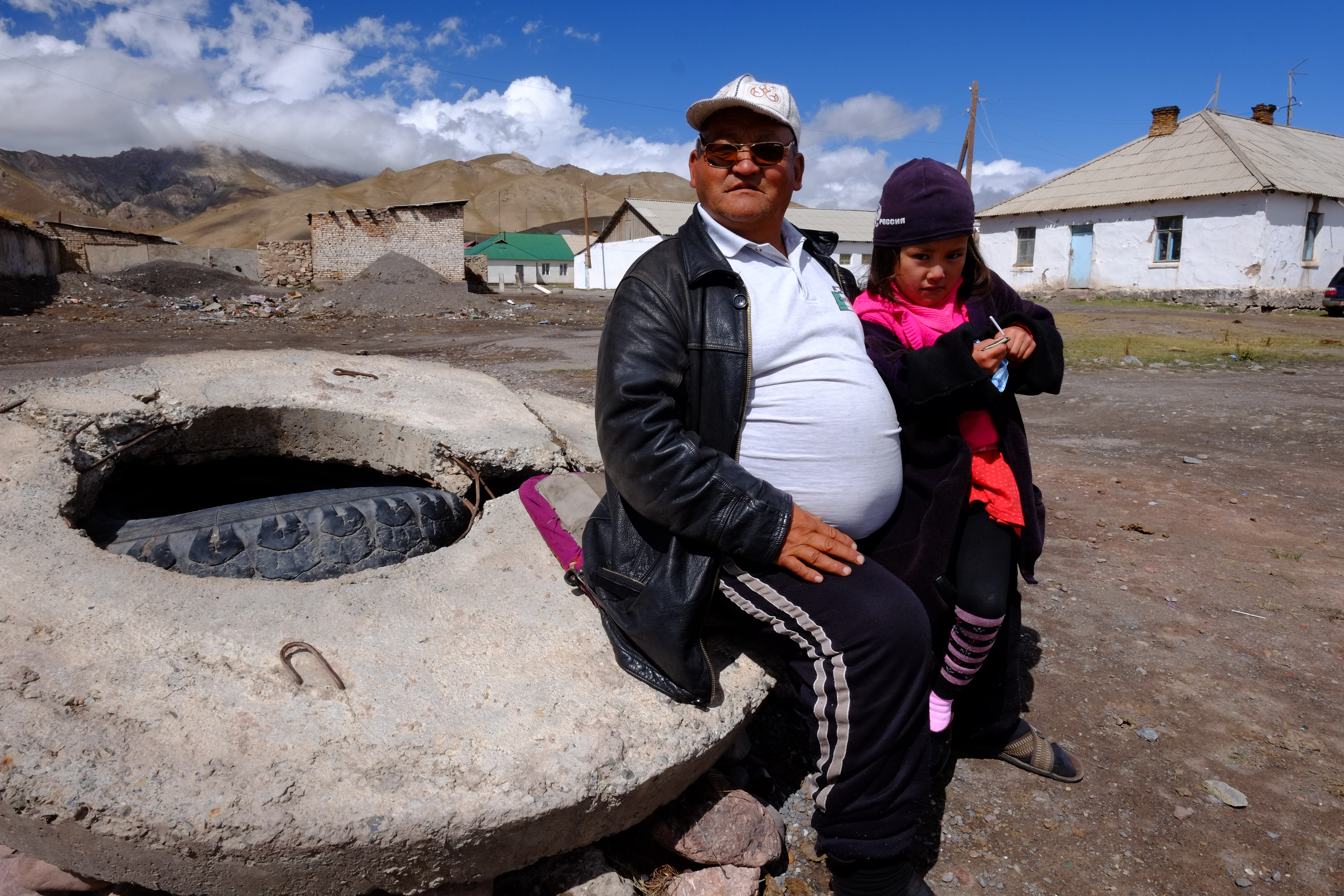
Downtown Sary Tash: Left turn goes to China, right turn to TajikistanLocals
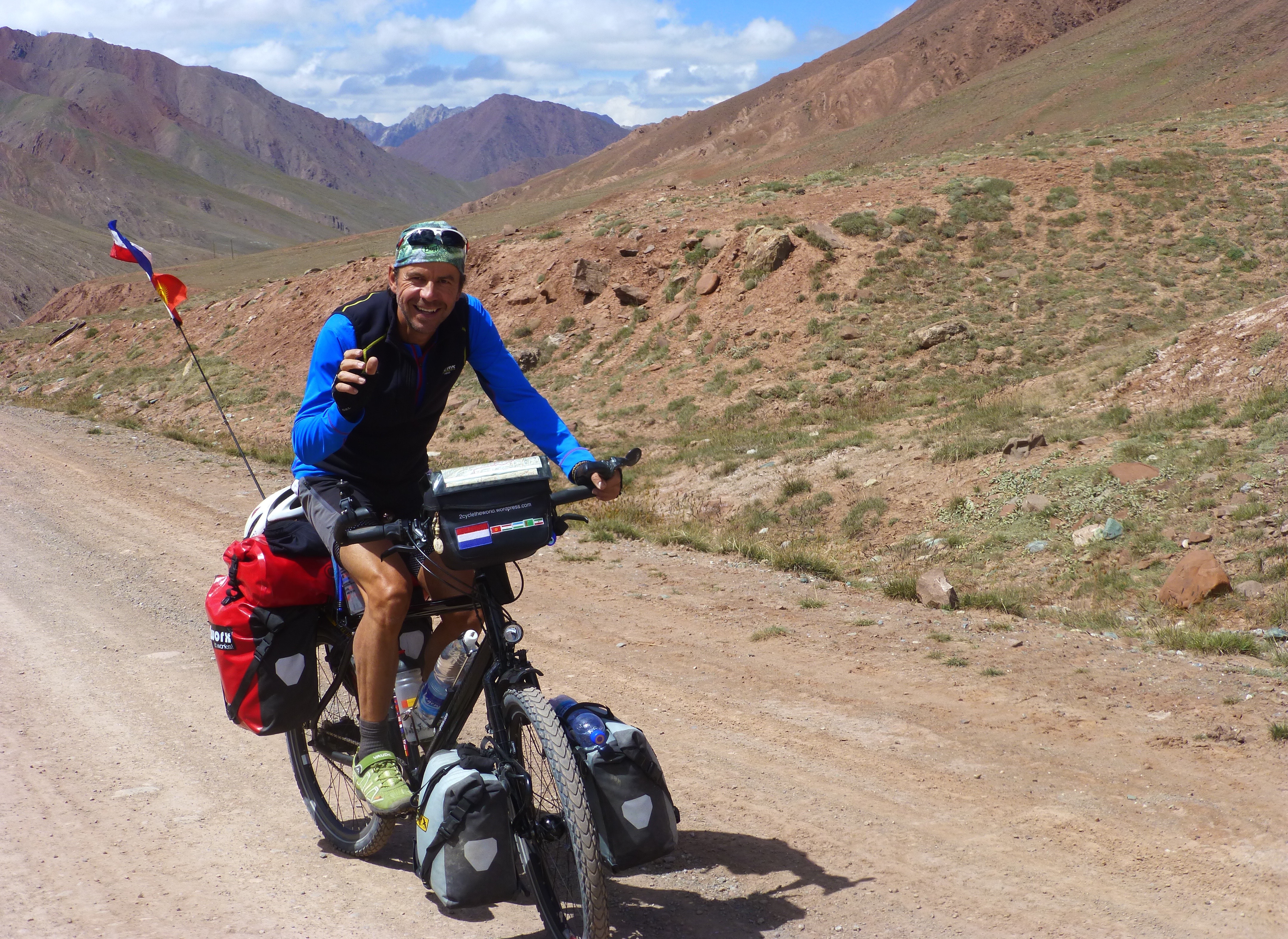
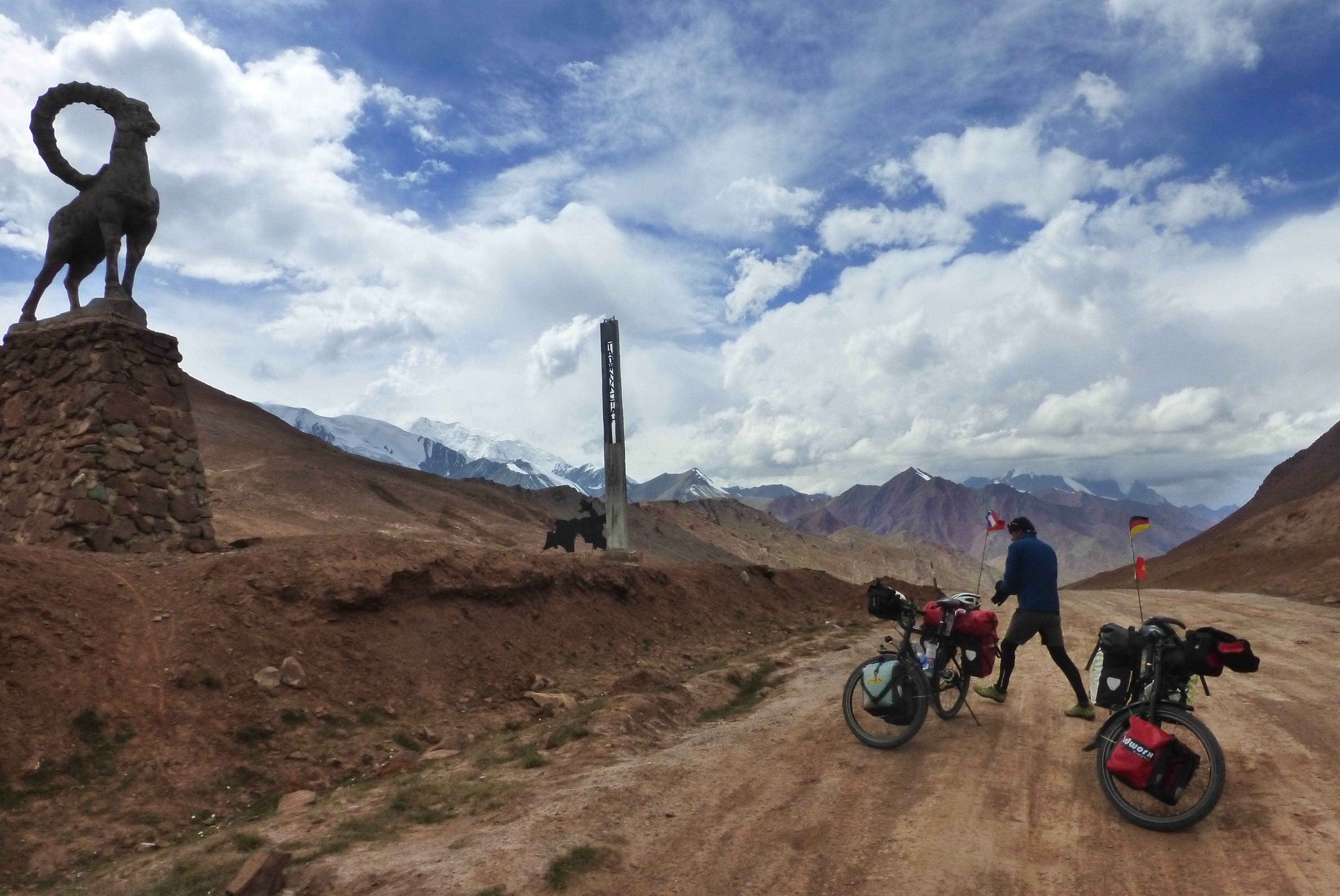
Day 5: Sary Tash – Karakul: 101km, altitude gain 1497m A beautiful day with a clear blue sky and rested legs – ideal to tackle two passes in one day. For about 20km we cycle with a view of the dazzling snow-capped mountain chain, to the right Peak Lenin. We pass the first border at 10:30 am without problems and shortly after start the climb of today’s first pass through 20km of no man’s land. Around us are red mountains, marmots and a few eagles are circling in the air. Other than that there is silence. Shortly before the border we meet an Australian motorcyclist warning us that there are issues with customs at the Tajik border. Two French tourists are held by not returning their passports as they don’t want to pay a 10 $ fee for hoax-fumigation.
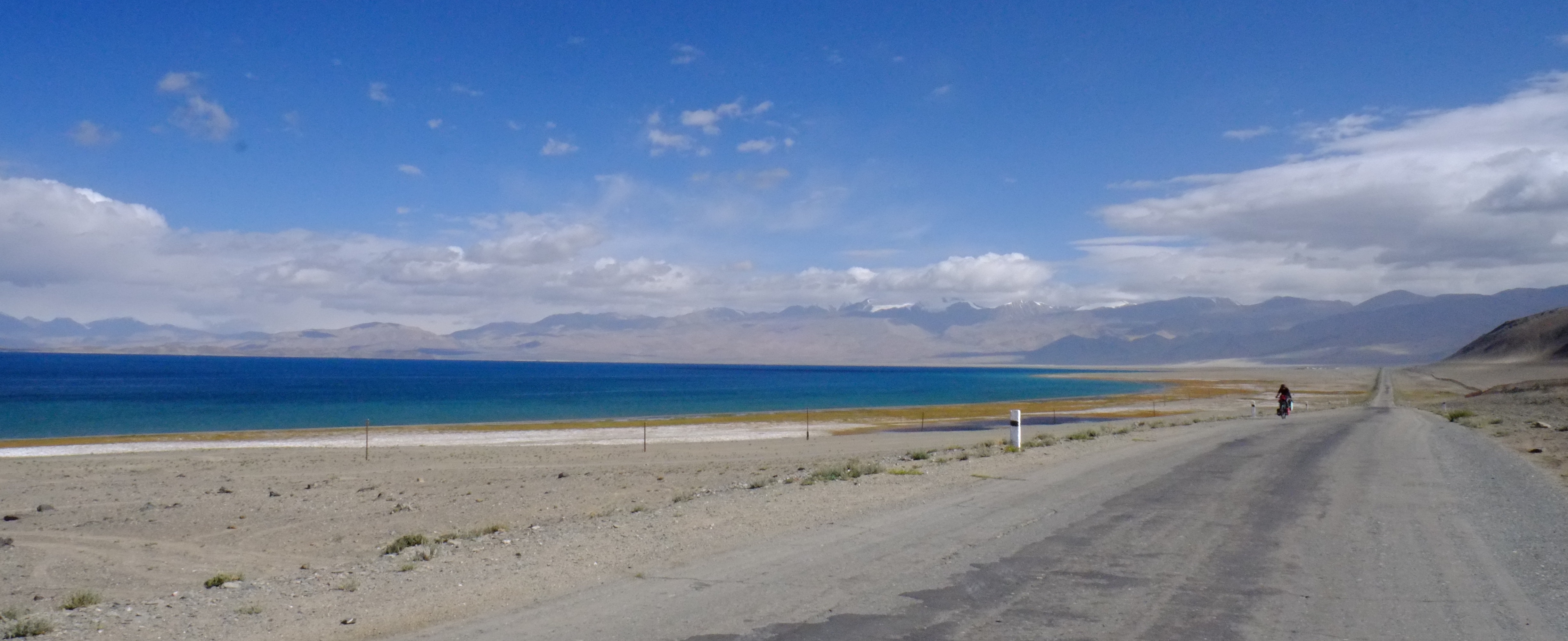
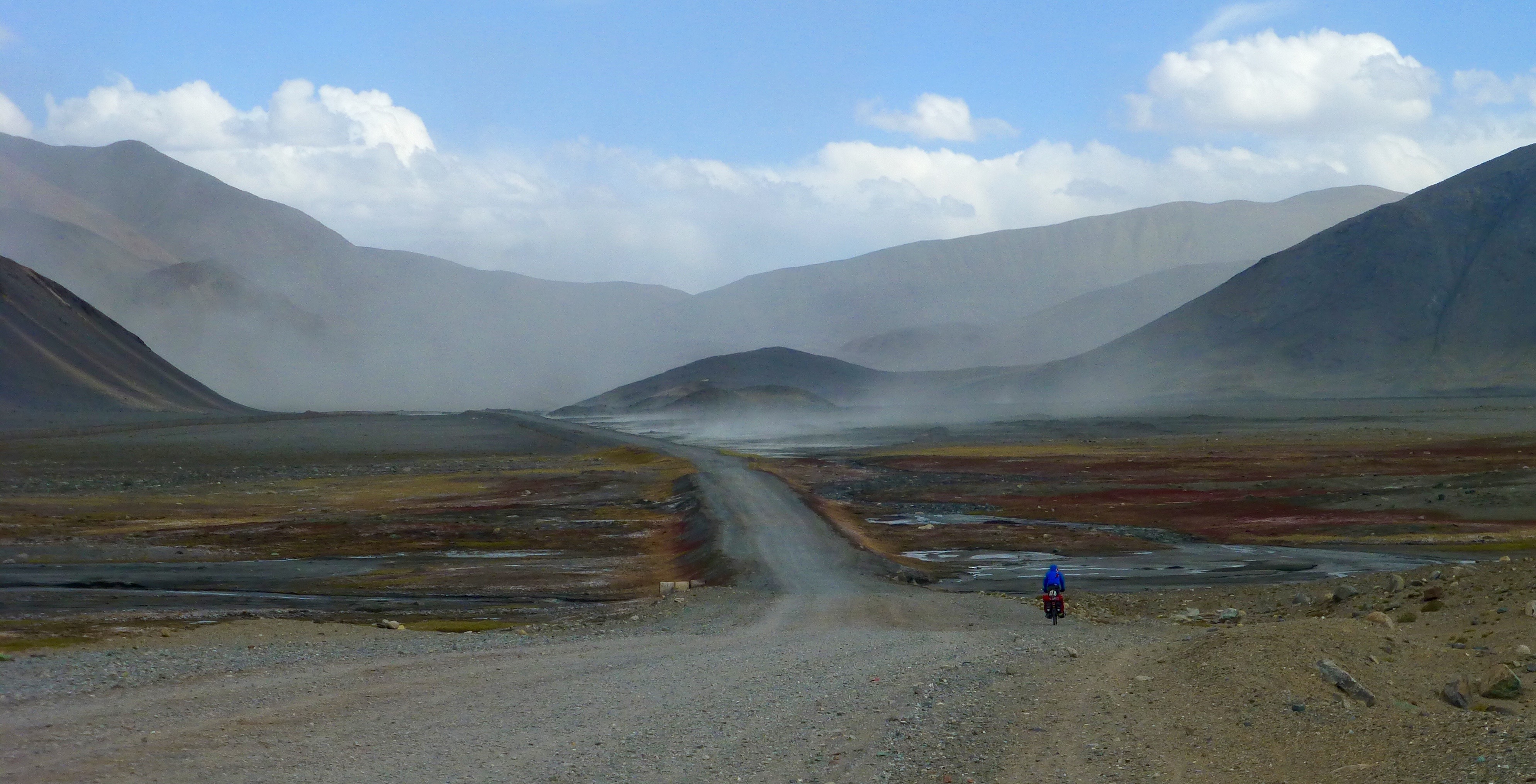
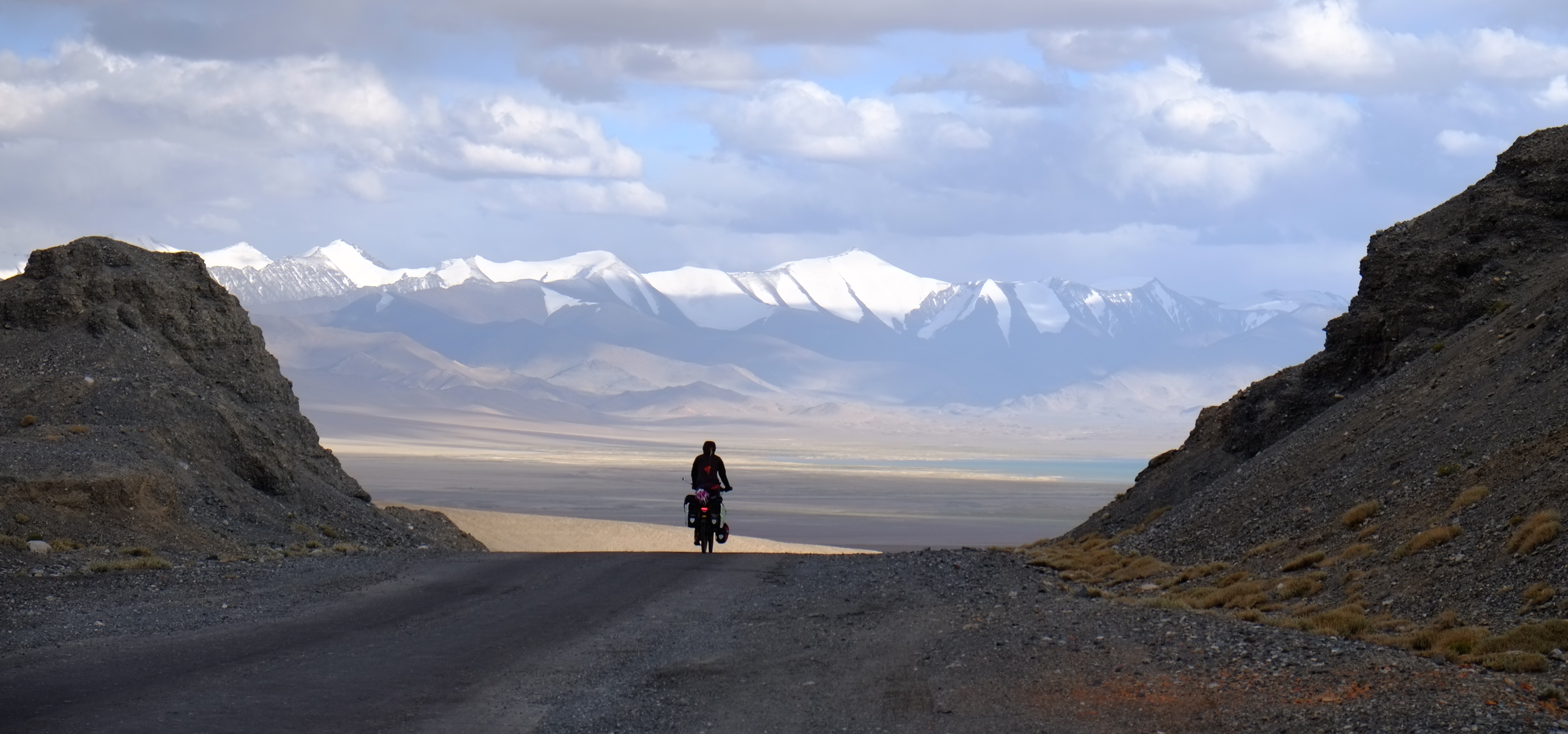
Arriving at the closed border gate a soldier walks slowly towards us asking for cigarettes. As we have none he walks away without opening the gate. Five minutes later he comes back, opens the gate, guides us to the customs office ( a sea container at an elevation of over 4100m), takes our passports and asks us to wait. Another five minutes later we get our stamped passports back and are officially welcomed to Tajikistan. We slowly cycle through another gate, always waiting for the fumigation-men, but nothing happens. We’re lucky again. We are now on a short downhill – just before the border we passed our ninth and last pass in Kyrgyzstan at 4336m – and cycle through a moon-like landscape with rough mountains around us, along an almost dried-out riverbed and dust storms that resemble thermal activities. We are even luckier as we are by now flying with a very strong tailwind making it easier for us to tackle today’s pass number two. At around 6pm we reach the summit with a fantastic view of lake Karakul. As from now it’s only downhill – 30km! However, the wind decides to change and the last 10km are a fight against it. Right before dark we arrive. Shattered but happy about our achievement – especially as we learned the next day, that we overtook a Scottish couple on their lightweight bikes!
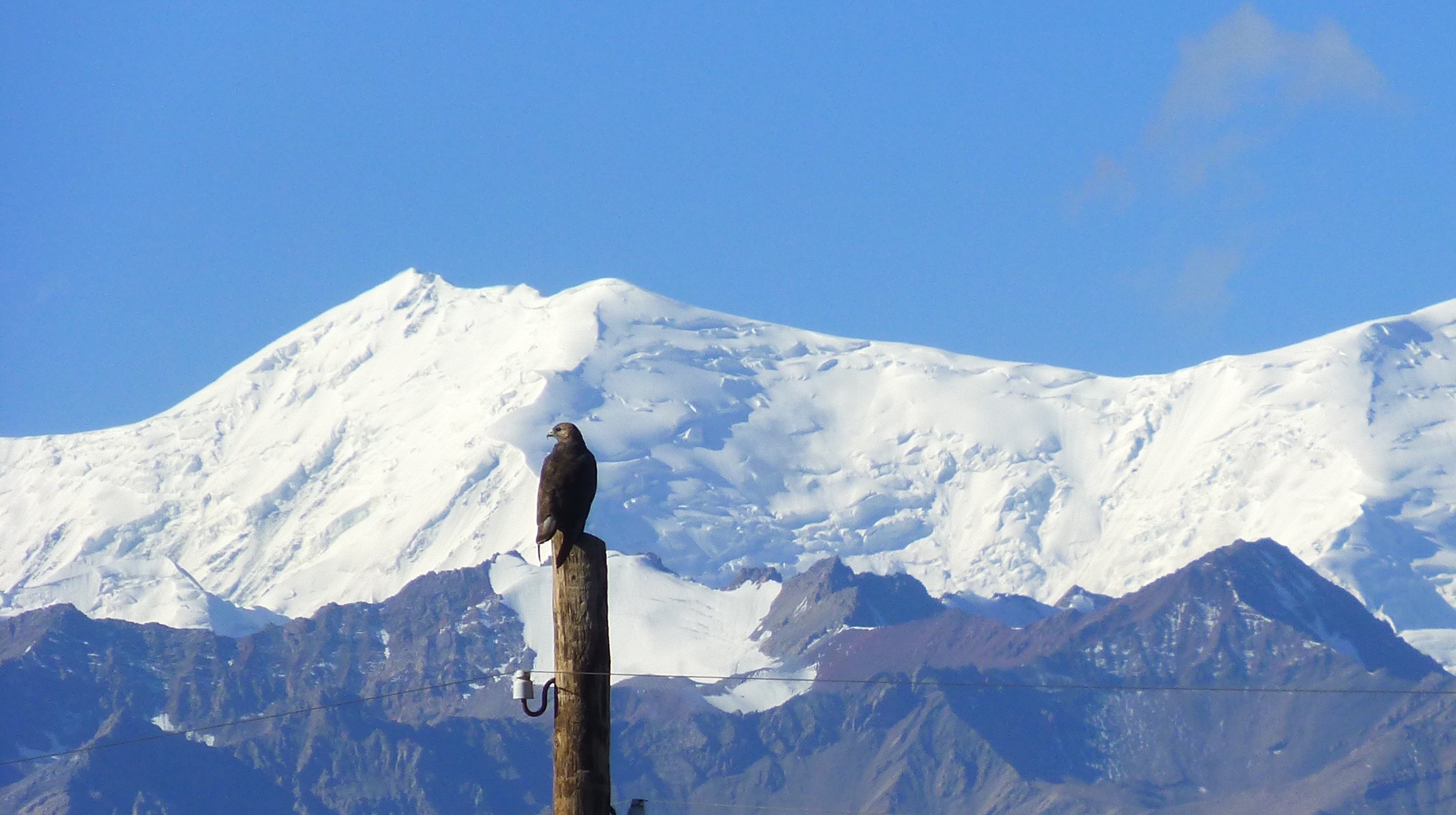
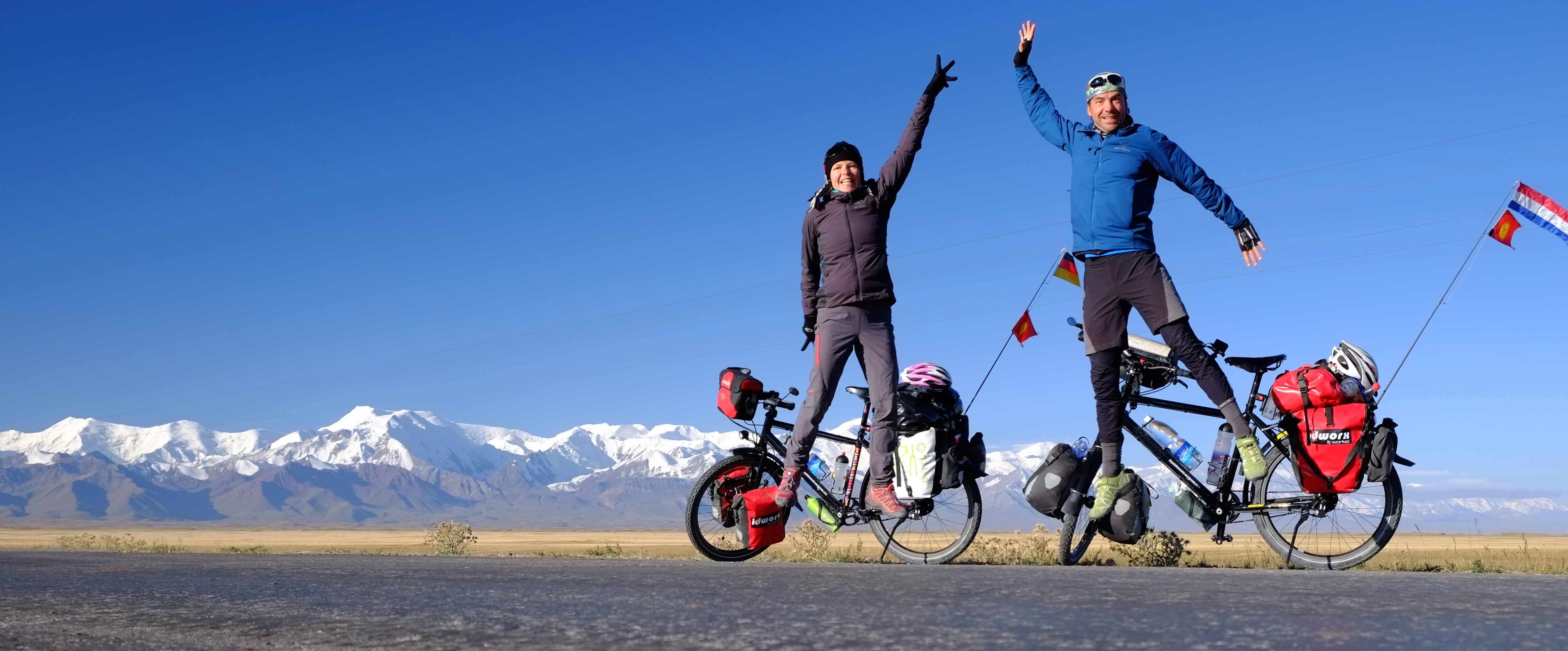
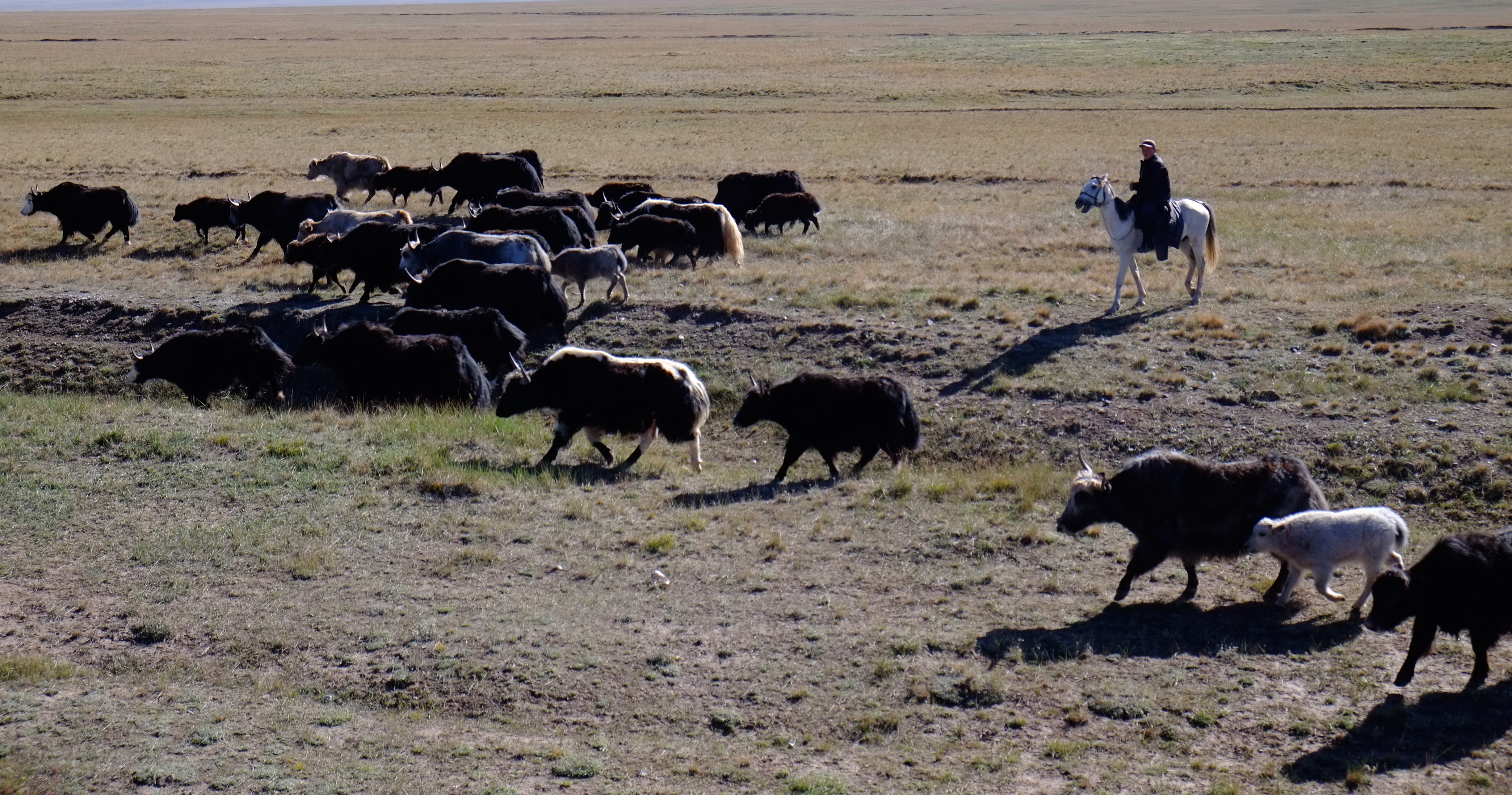
Leaving Sary TashIs this an eagle?Photo session with Peak Lenin as a backdropThe first Yaks we see
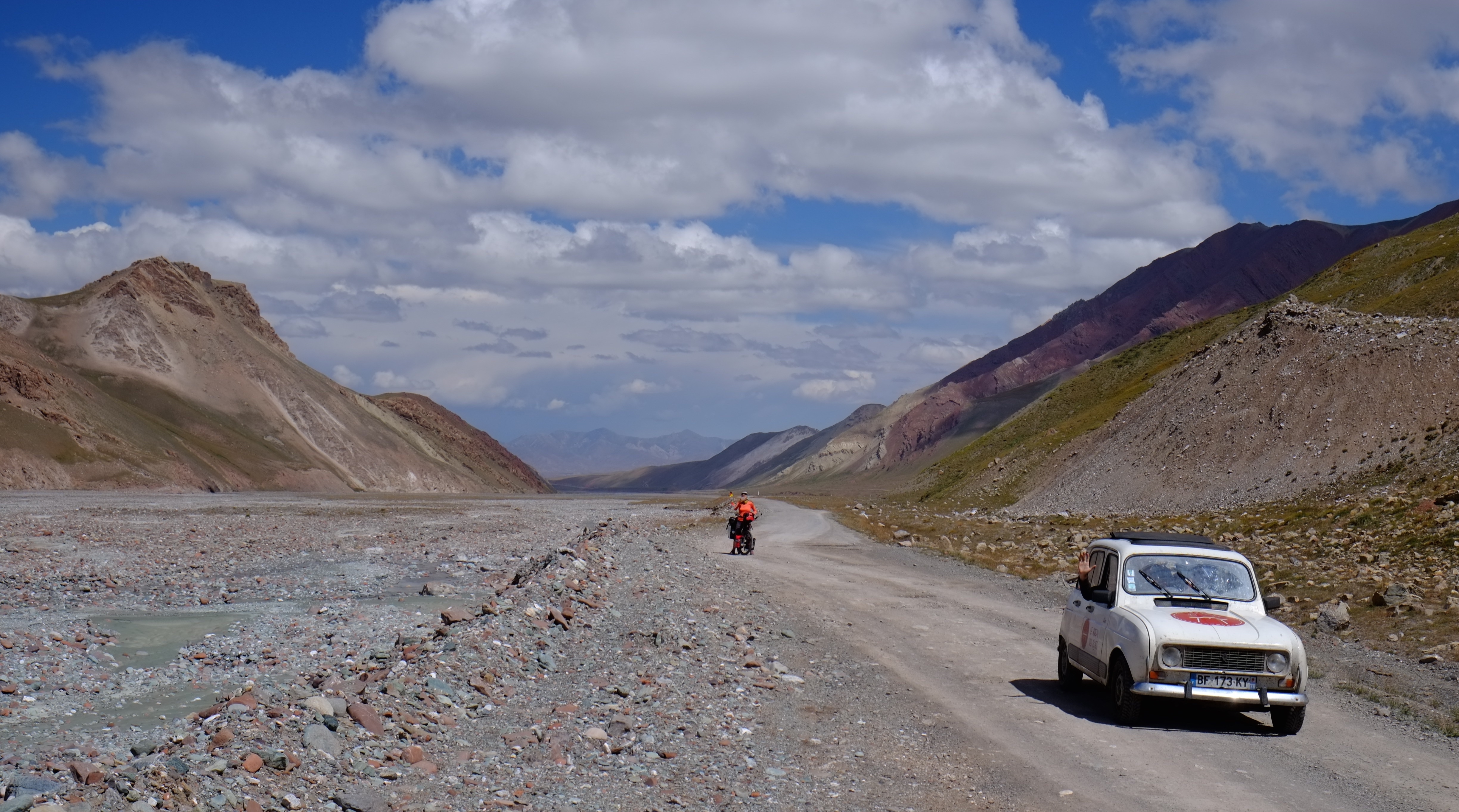
Lunch break right before the Kyrgyz border crossingIf an old R4 can do the Pamir Highway we should be able to do so, too!The beginning of the first pass in no man’s land between the bordersGetting closer to the top
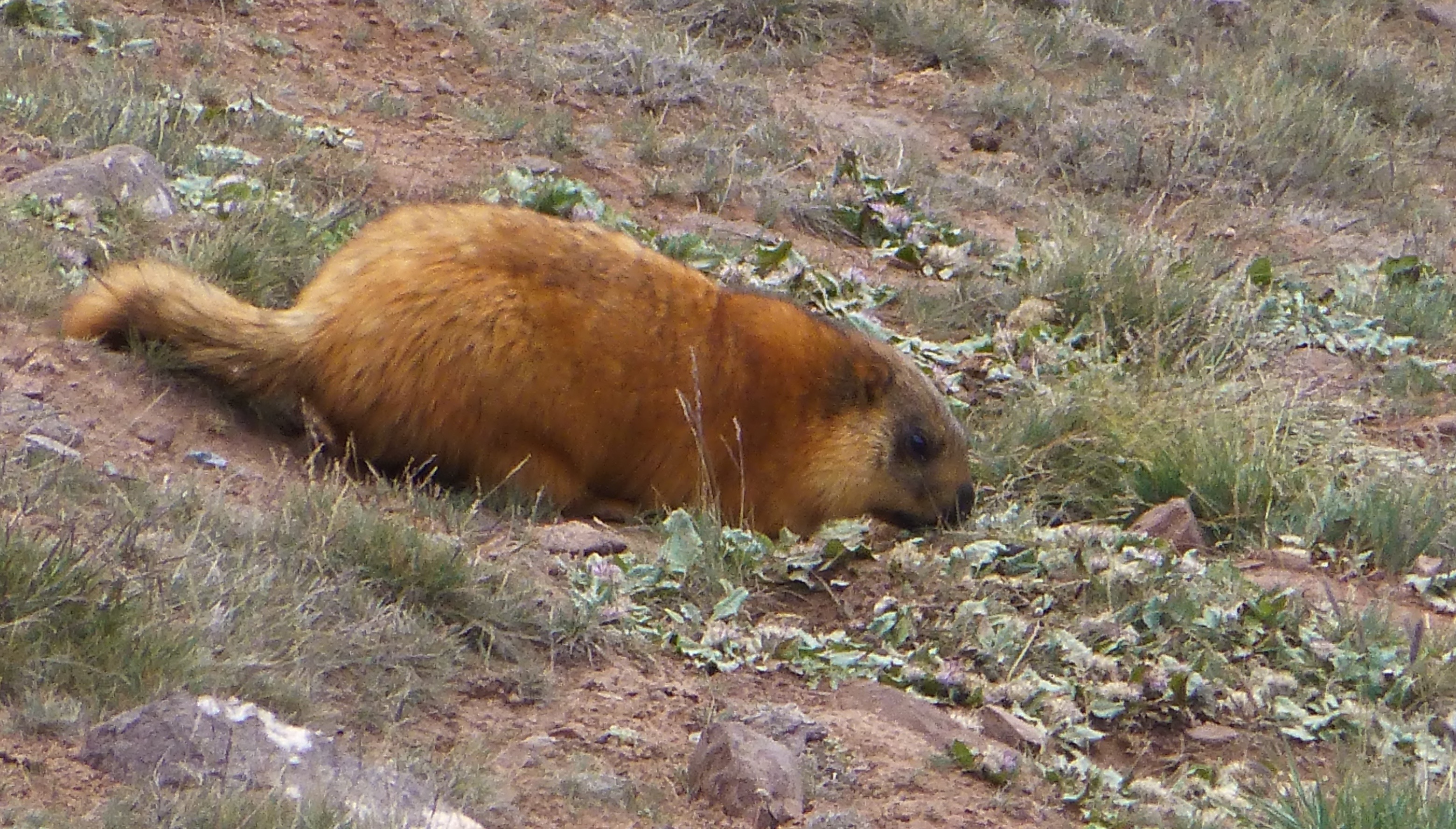
A fluffy marmotHighest point ever by bike at 4336mWe can Selfie 🙂Dust stormsFinal destination: KarakulAnd from here it’s only: downhill, downhill, downhillArrived!
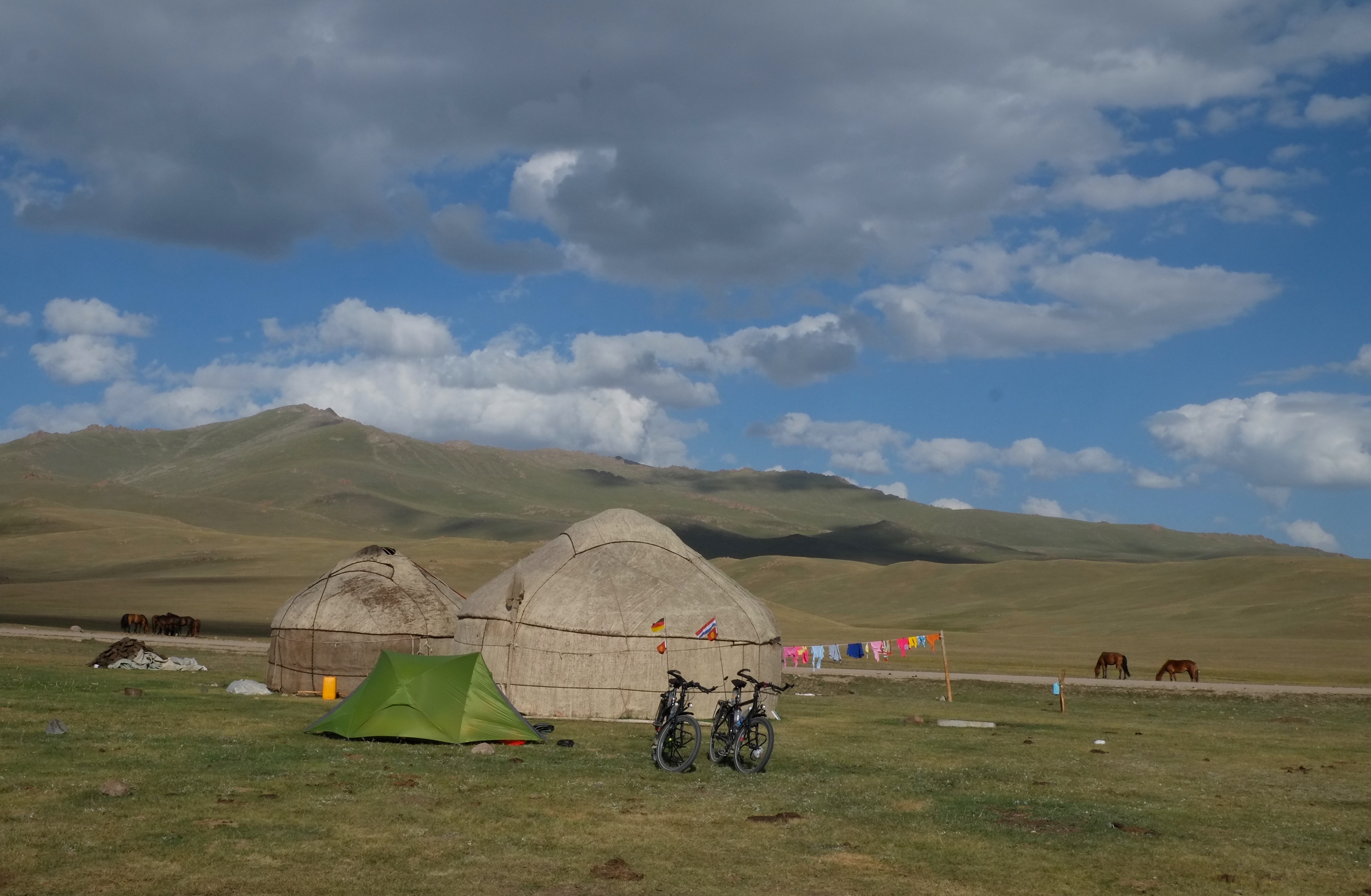
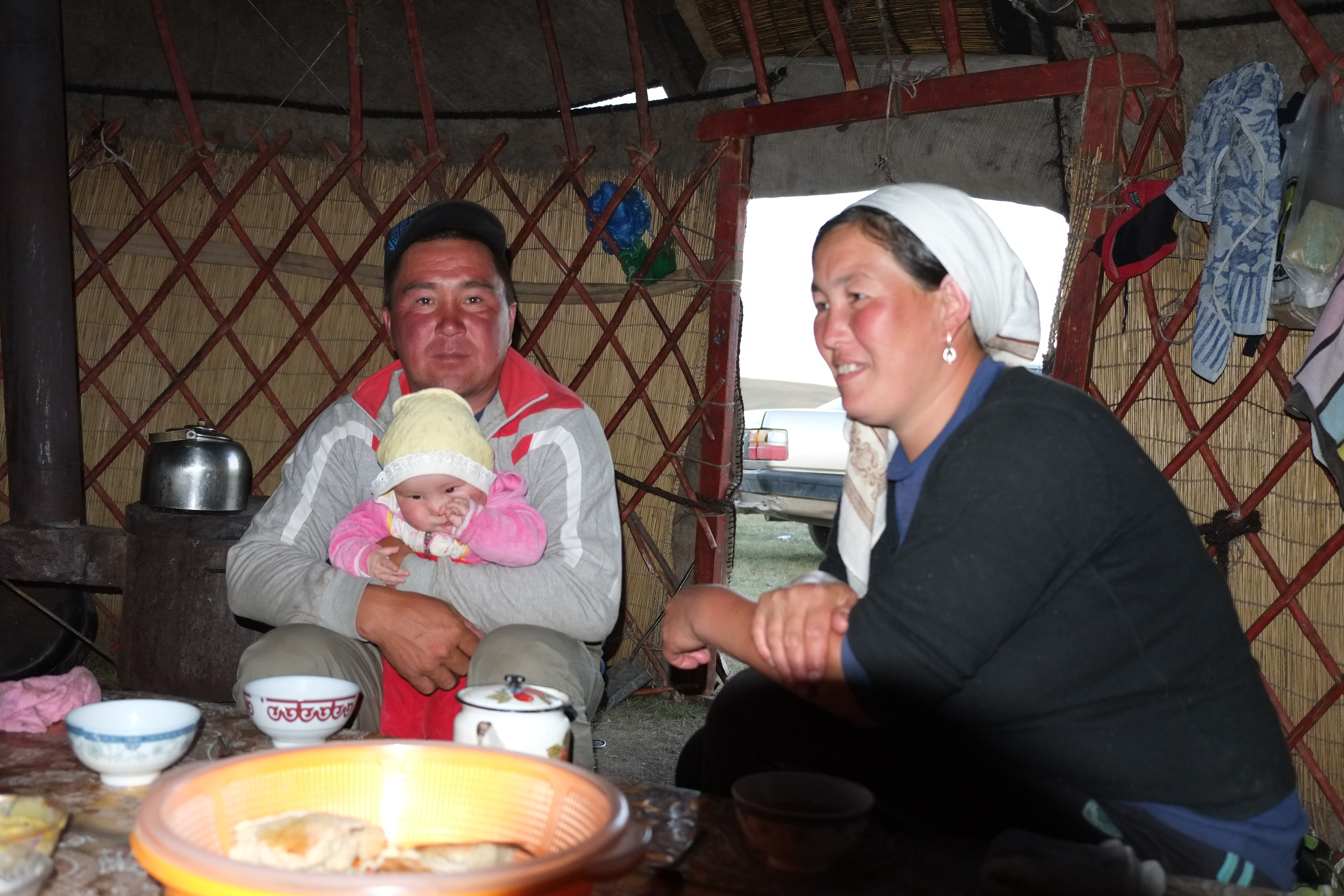
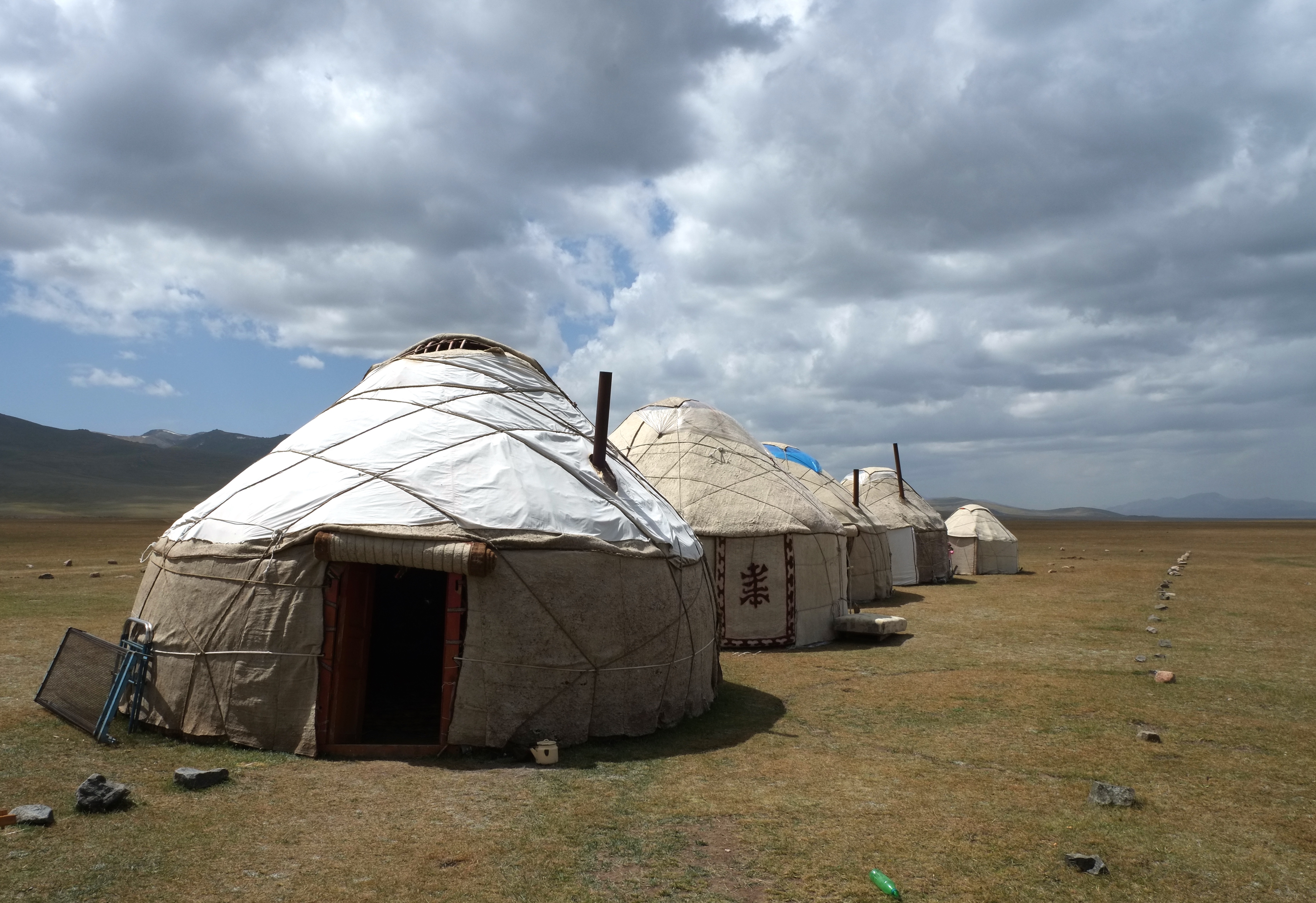
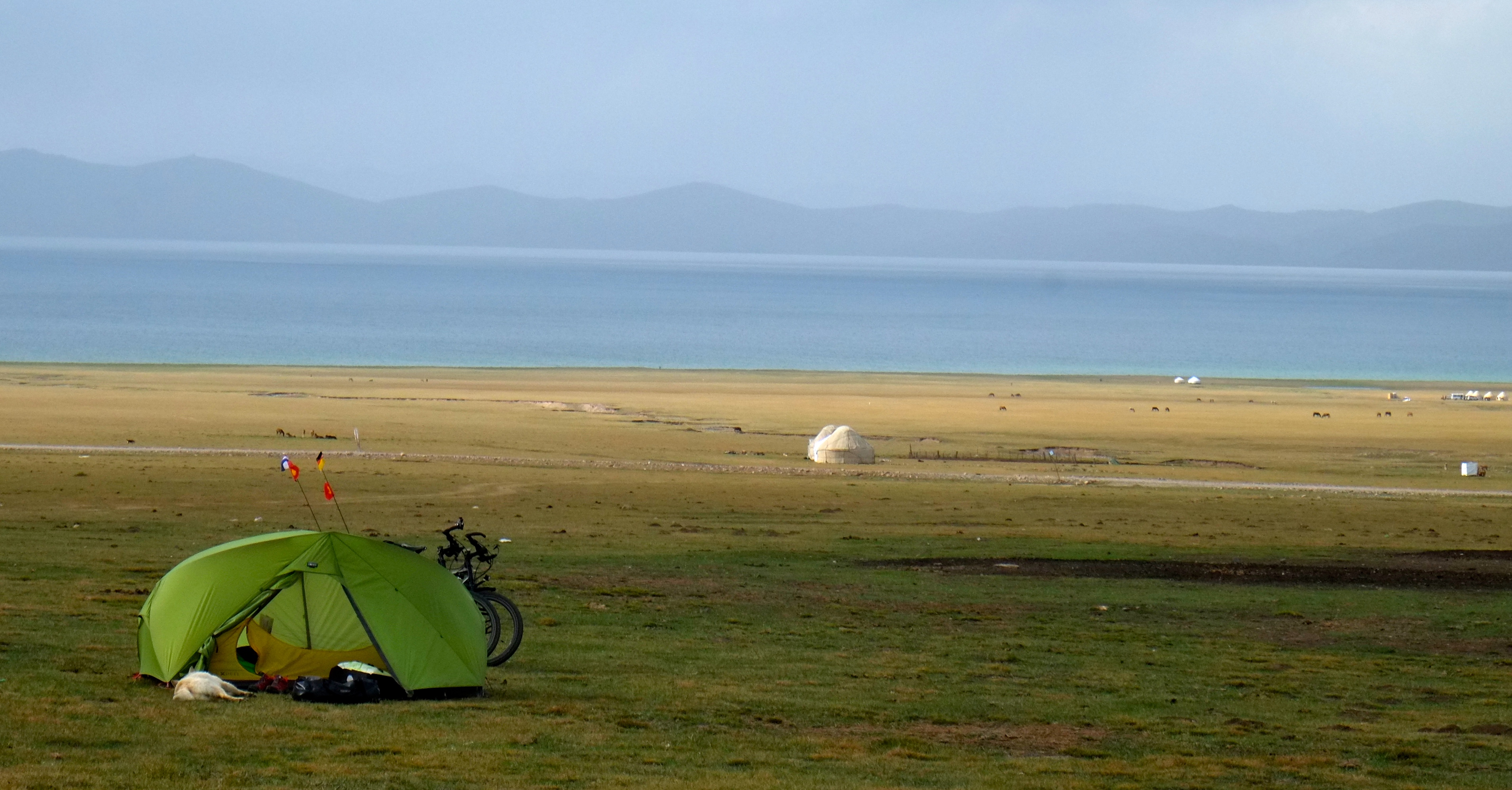
09 – 20 August, 2015 – 200m later around the corner we reached the top. No sign indicated that we were at over 3,400m. We took a few photos, enjoyed the view, put on a few more clothes and then cycled downhill. Finally! We passed a few yurt camps before we decided to stop at a smaller camp with lake view, pitched the tent together with three handy children and joined the family for Chai (tea), bread and kumys, which is fermented mare milk and a beloved national drink in spring and summer. It has a little alcohol and tastes very sour with a slightly prickly feeling on the tongue. It is drinkable but not really our taste, especially as there are all kinds of other indefinable things swimming in it.
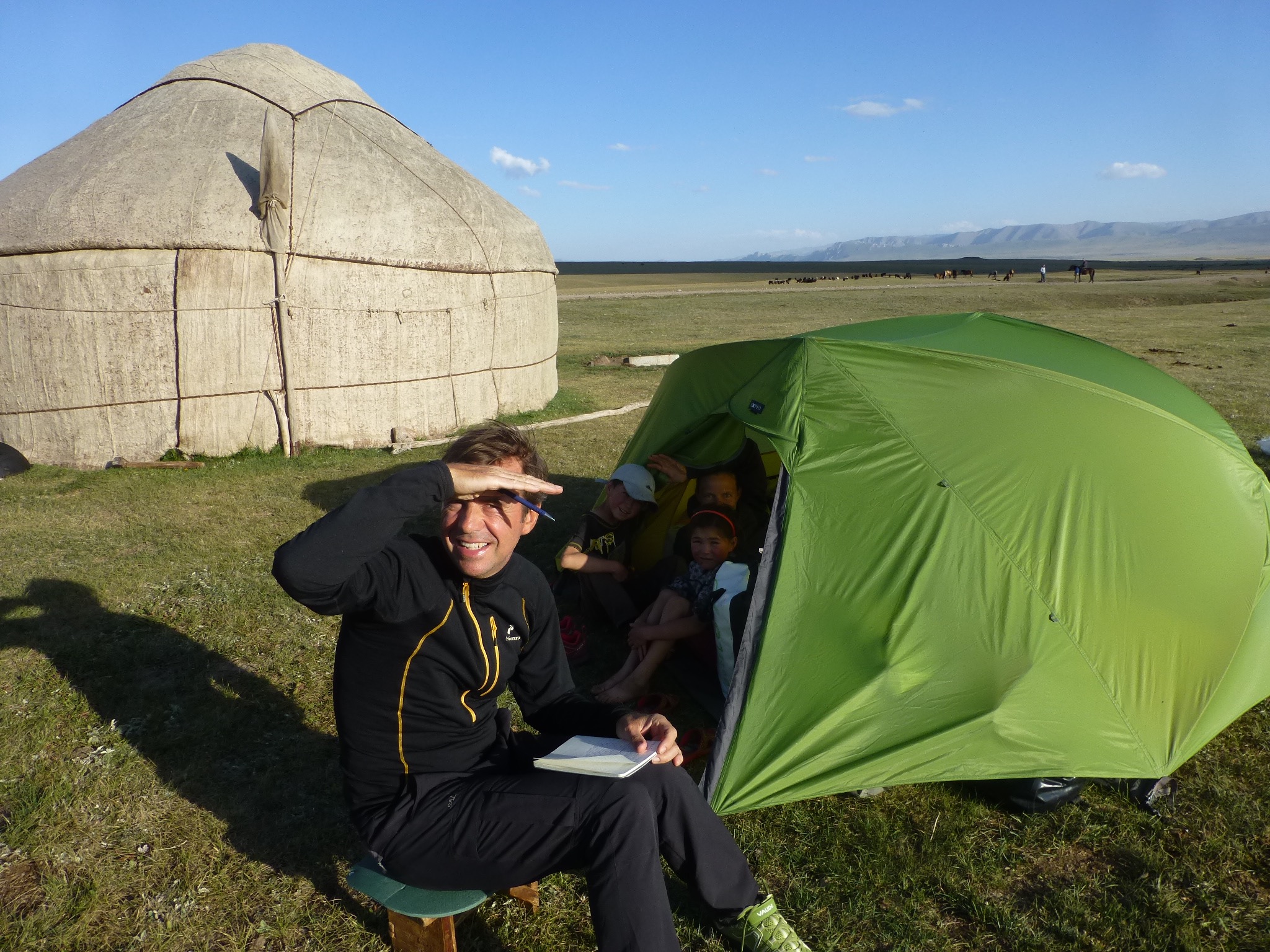
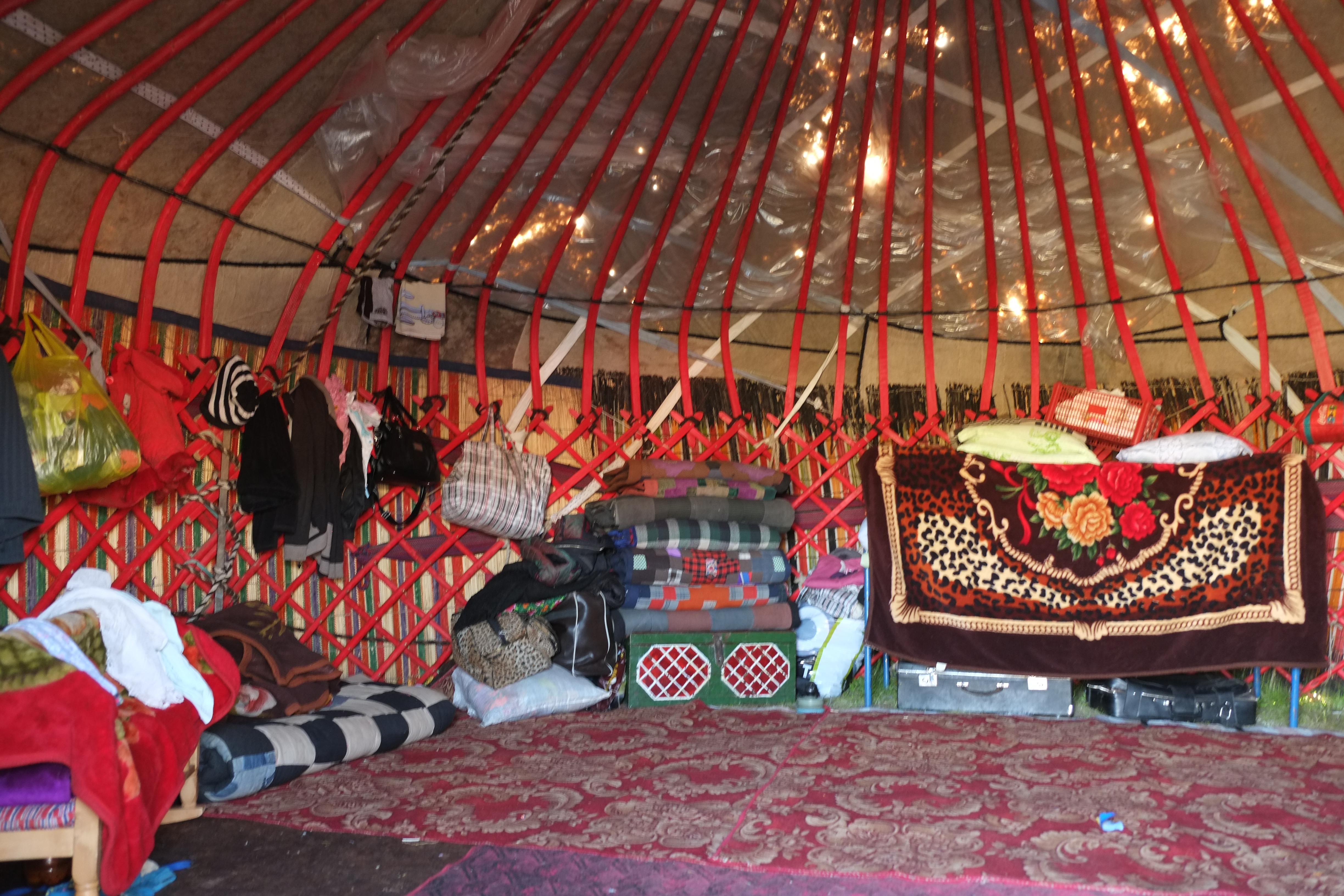
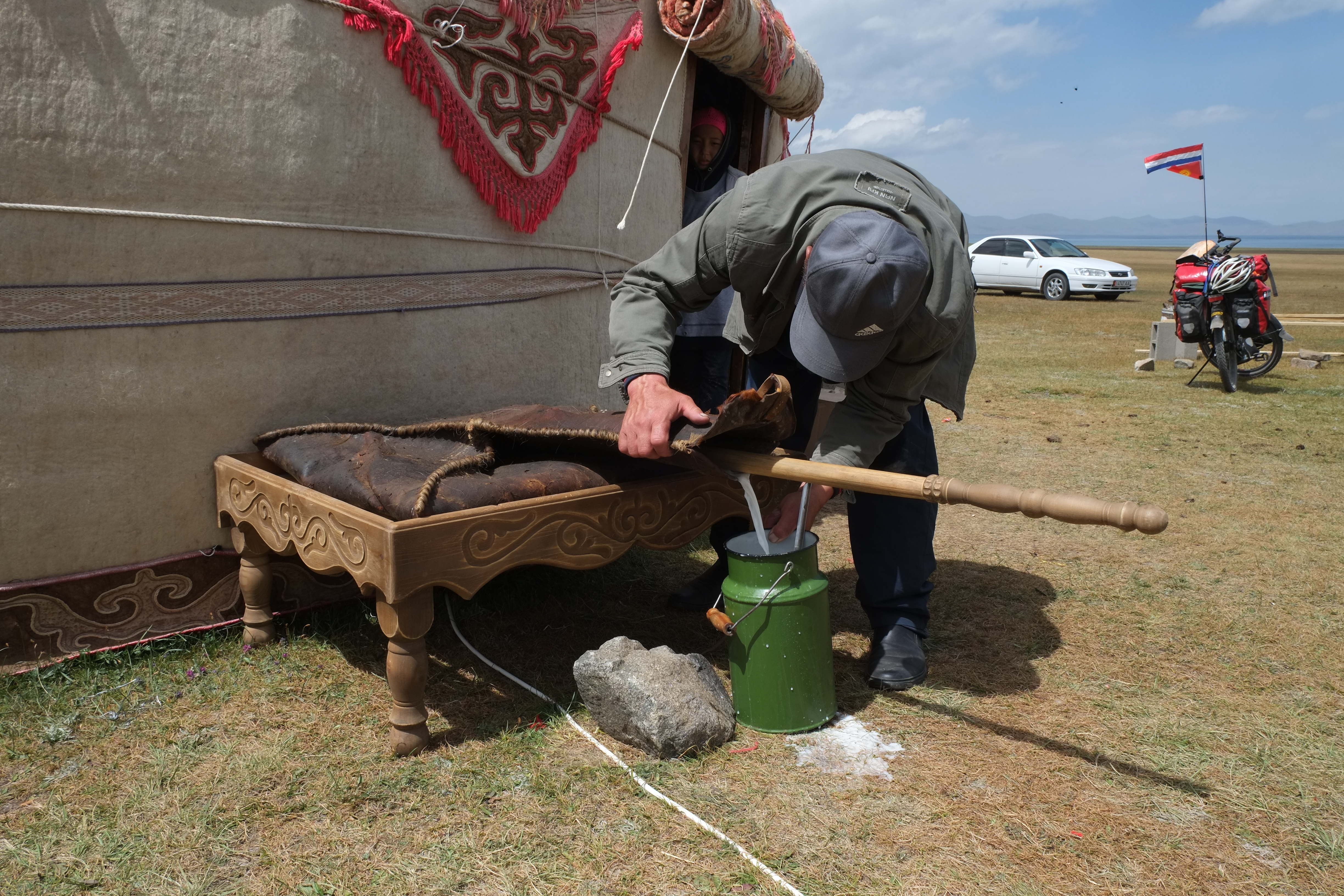
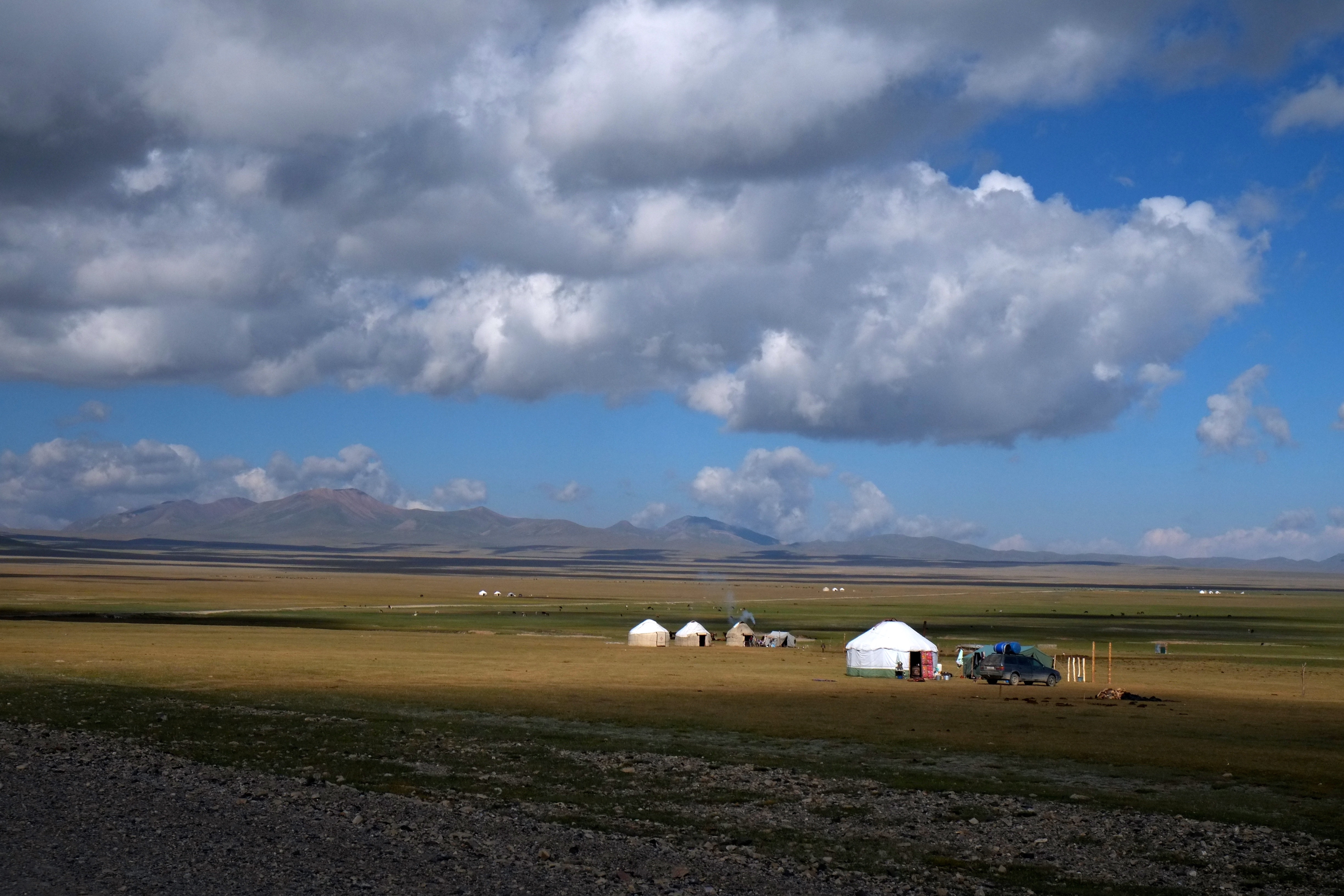
Leaving the highest point to dateAfter the children helped with pitching the tent they also wanted to explore the insideOur little yurt behind its big brothersThe inside of a sleeping yurt: mattresses, blankets and pillows are neatly folded and stored along the felt walls during the day. There are always enough blankets to host a few guests.The inside of a dining yurt: for dinner we had soup with vegetables and mutton meat served with bread and washed down with enormous amounts of chaiMilking the mare……for the fermented mare milk stored in leather bottles
Communication turned out to be quite difficult as my Russian is very limited as well as their English. Now was the time to make use of our handy Russian-German dictionary with useful phrases as we were trying to find out at what time we could get dinner. The closest we could find was the sentence “Will there be warm food?” Later on it would prove to be even less useful when checking for a hostel room with sentences like “Do you have a room with sea view?” Going back to sign language or our pictionary still proves to be the best option.
At slightly over 3,000m the Song Köl area is only accessible between early June and late August. During this time, herders build their camps and move up their cattle. At the same time it is school holiday, so the farmers can take their children with them. We were amazed about their way of living and about how they bring up their children. They are used to work, older children take care of their younger siblings, girls are helping with the cooking, getting water from the nearby river, boys are herding the cows, sheep or horses. Everybody is busy all day long, but on the other hand it still felt very peaceful and relaxed to us. The adults would get up when it gets light while the children continued sleeping all next to each other in the sleeping Yurt. We all would have an extended breakfast with greasy noodles fried with onions and the mandatory Chai before heading off around the lake.
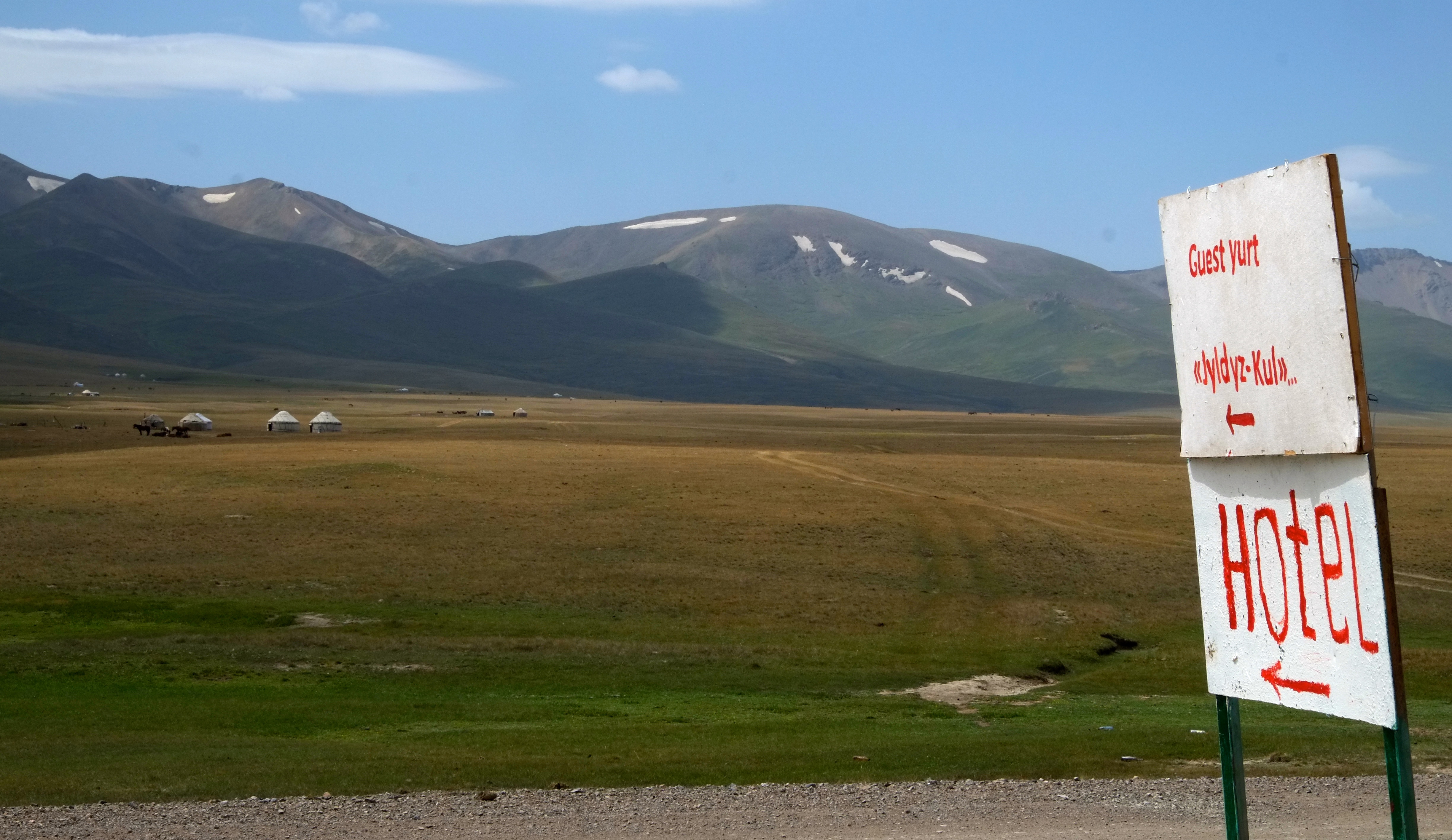
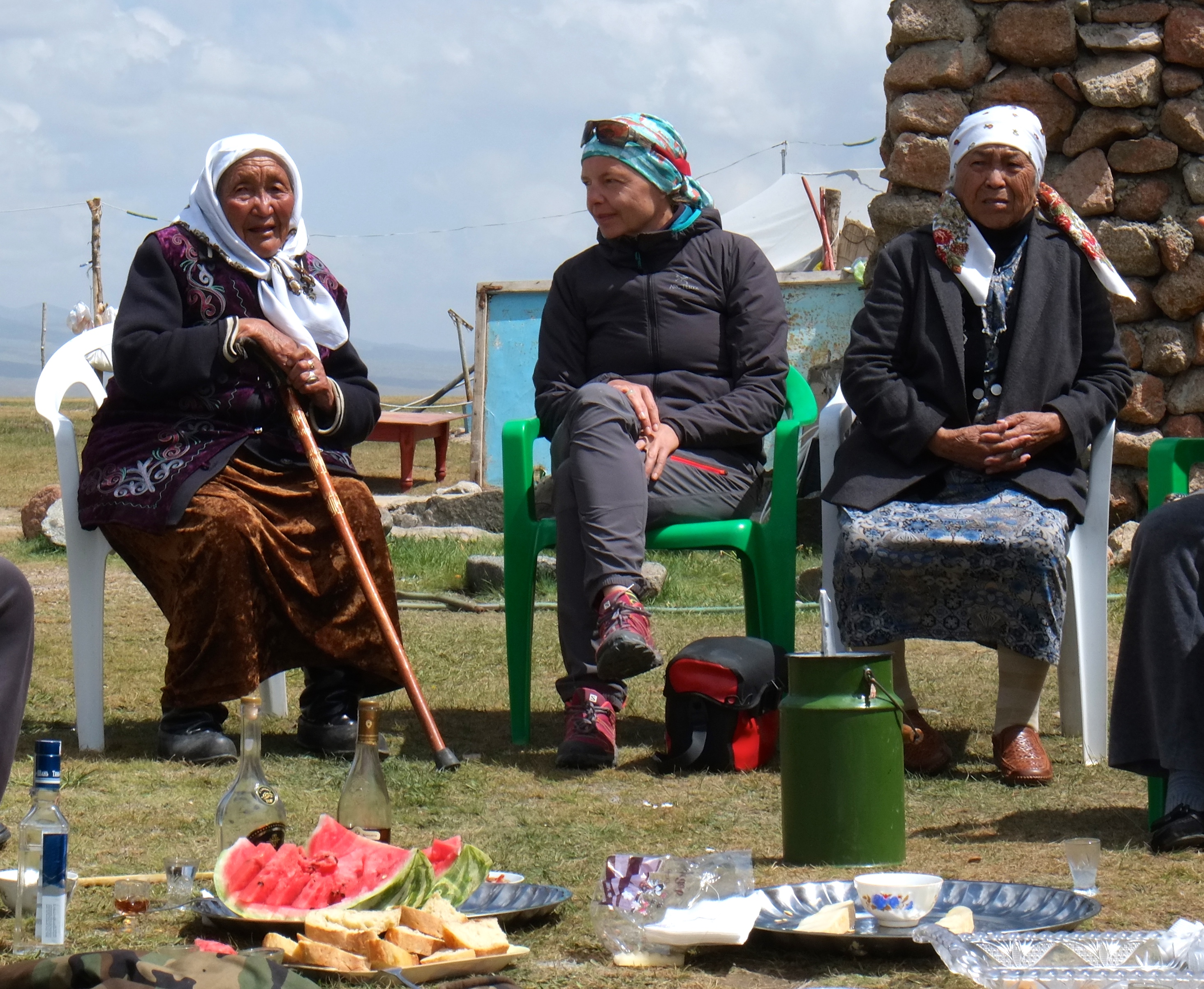
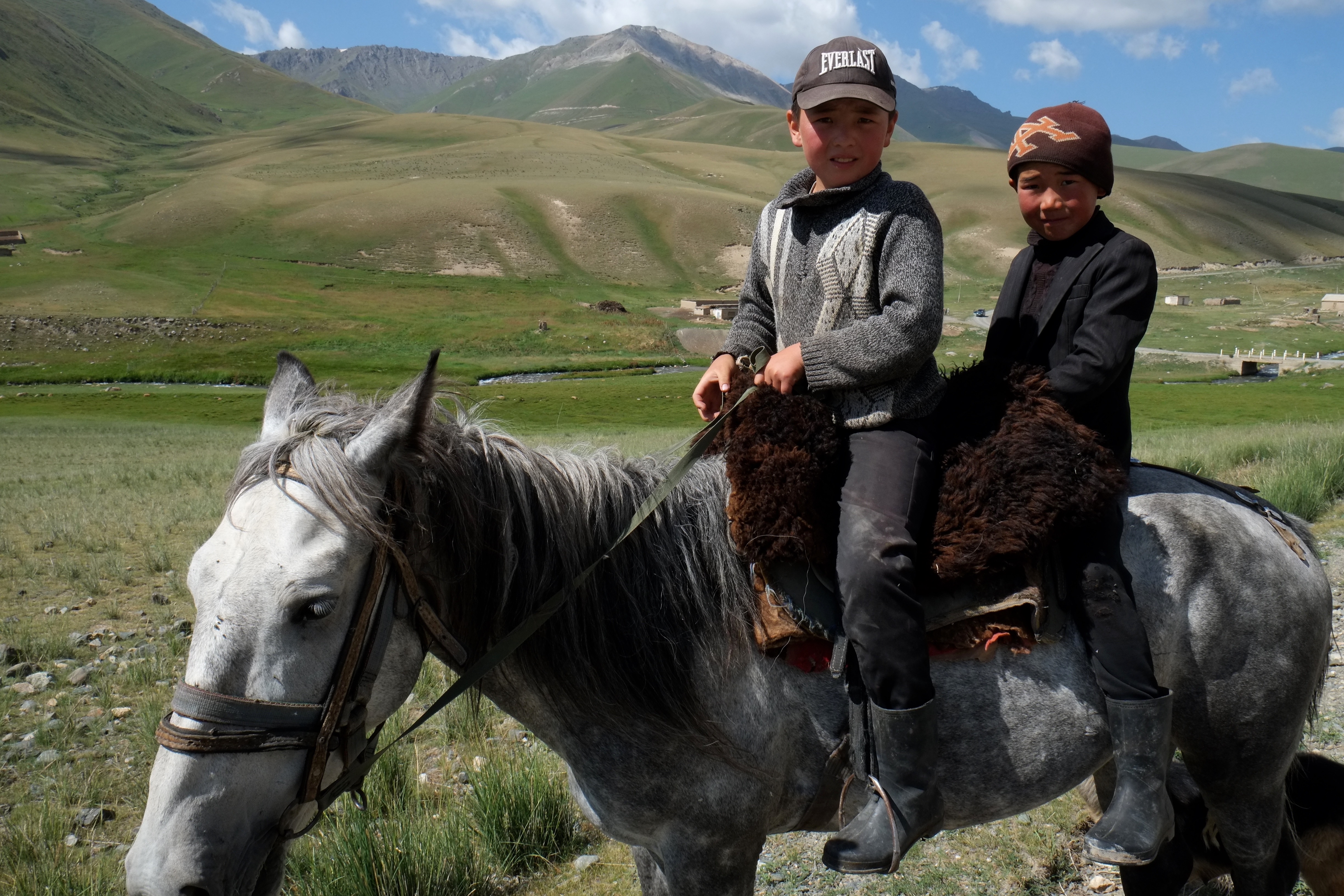
A coffee break and curious herdersRiding with the cowboysHotels Kyrgyz-styleEnjoying Kyrgyz hospitality: invited by a family on vacation at Song KölThree old women having lunch
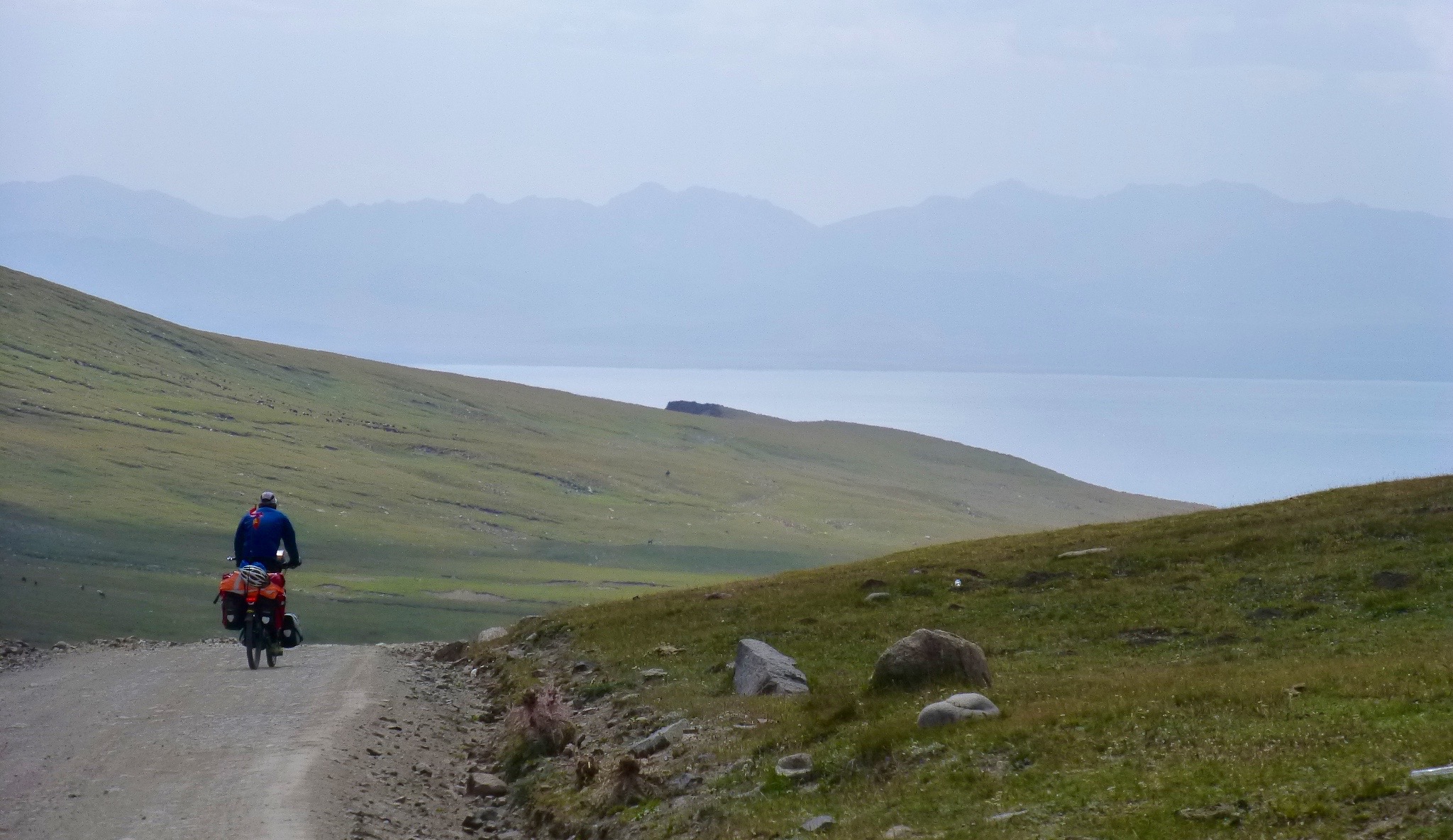
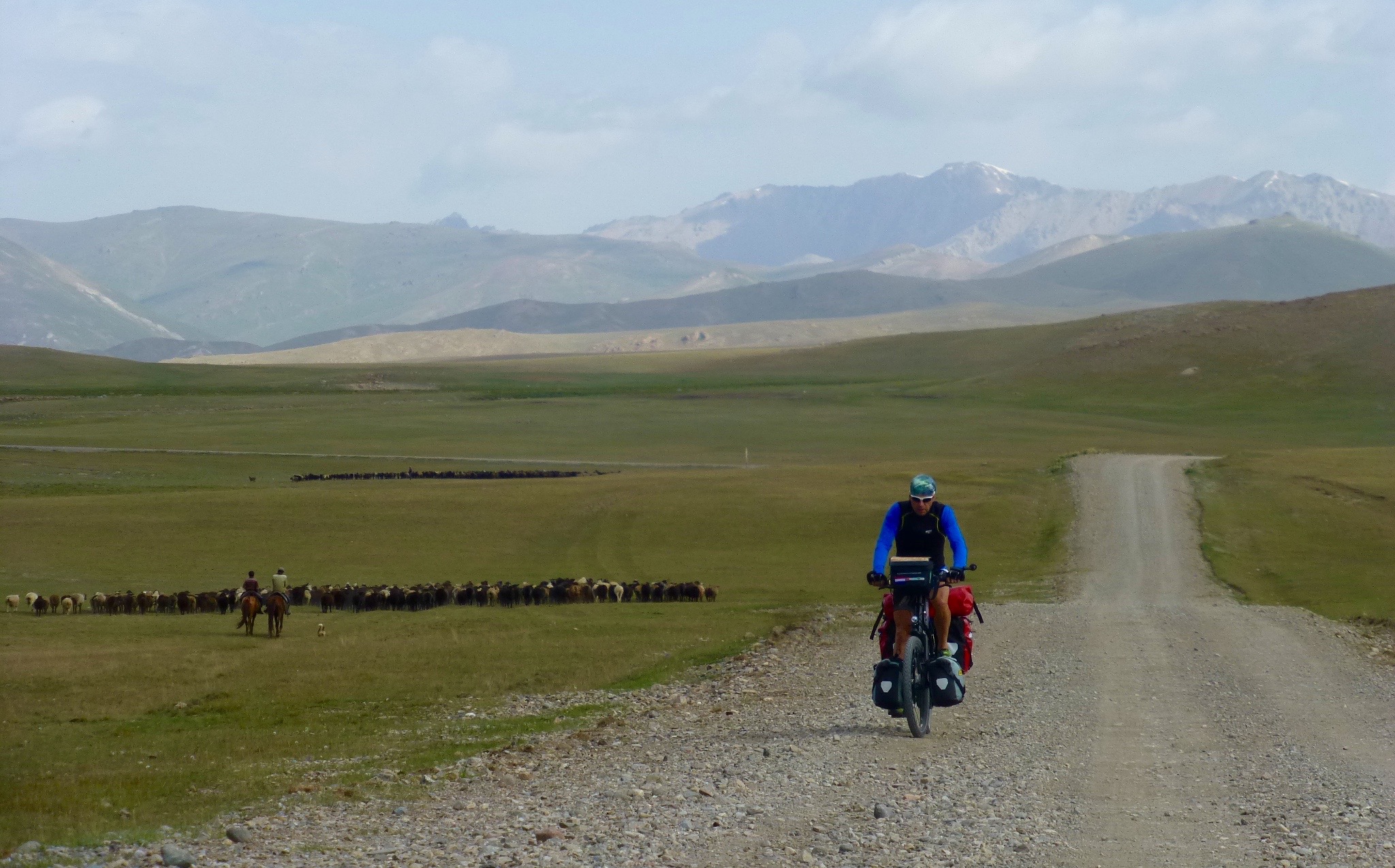
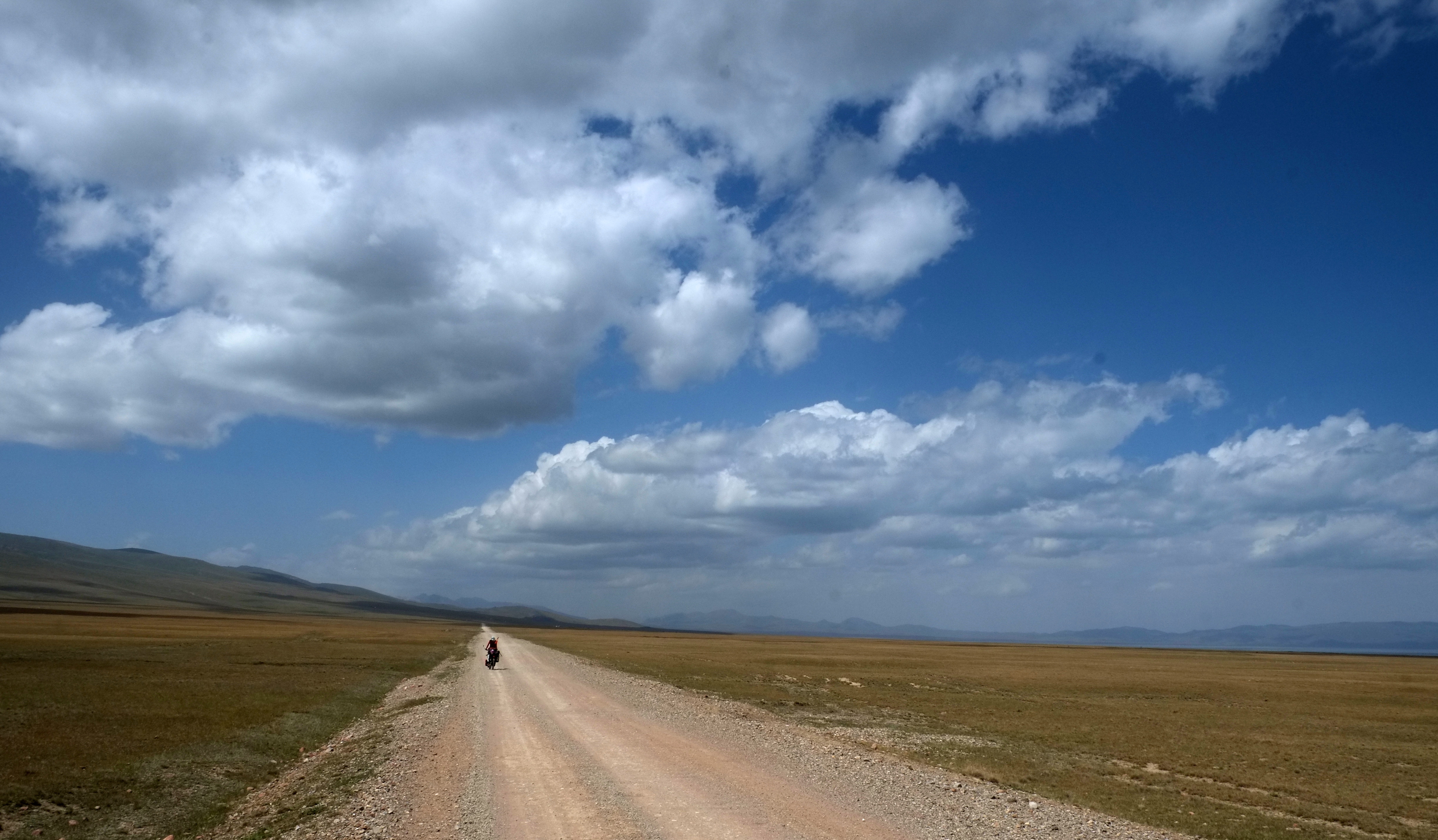
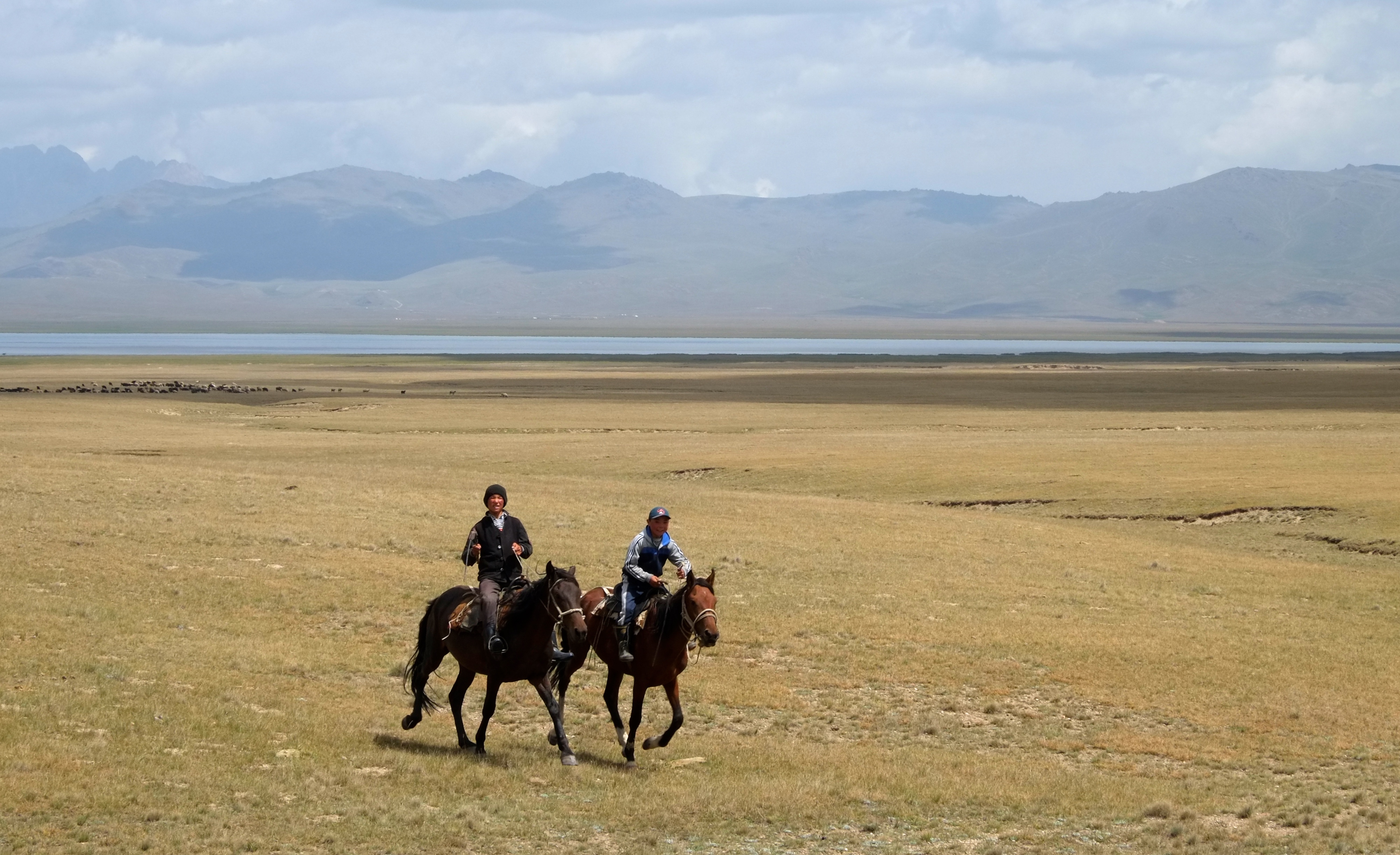
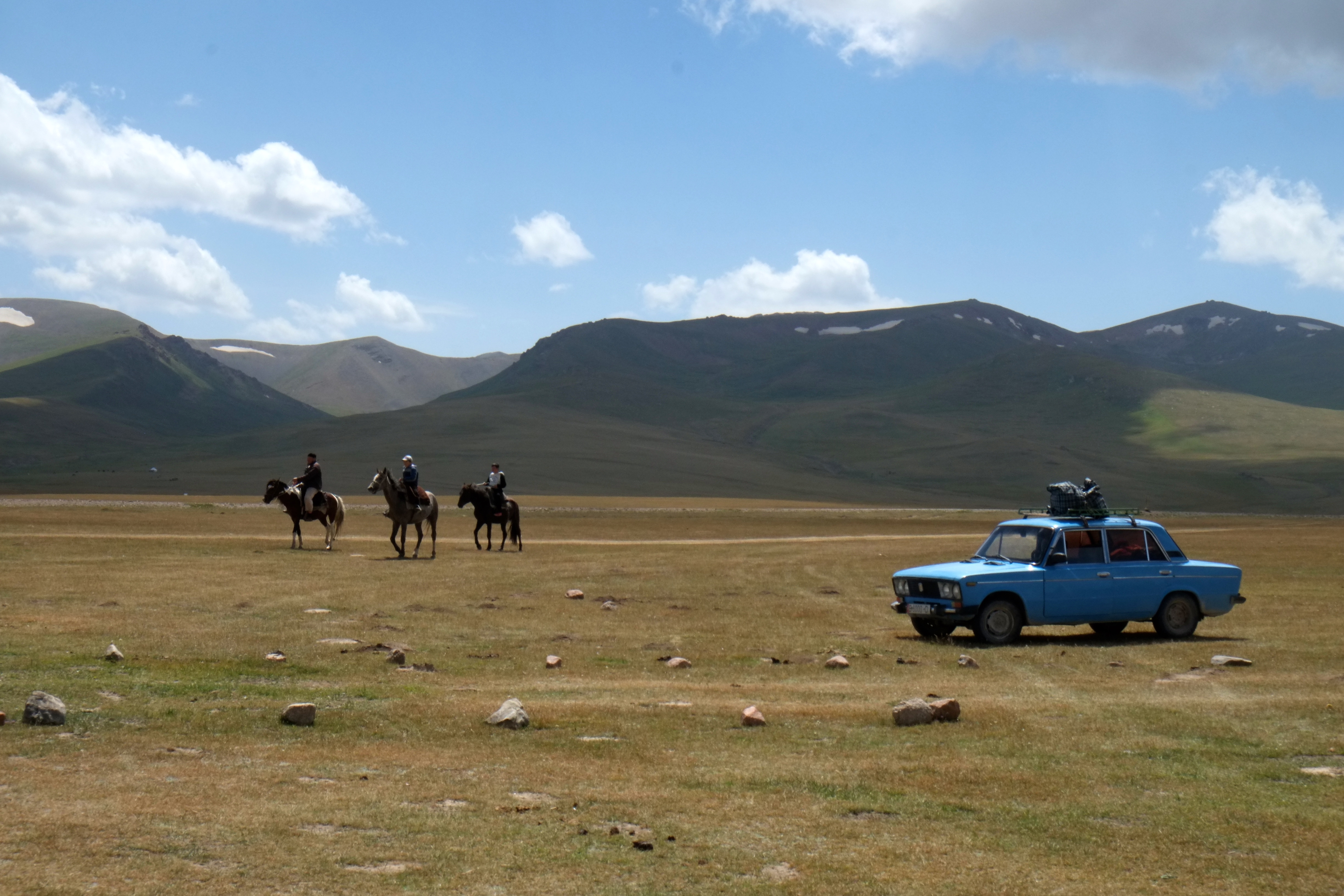
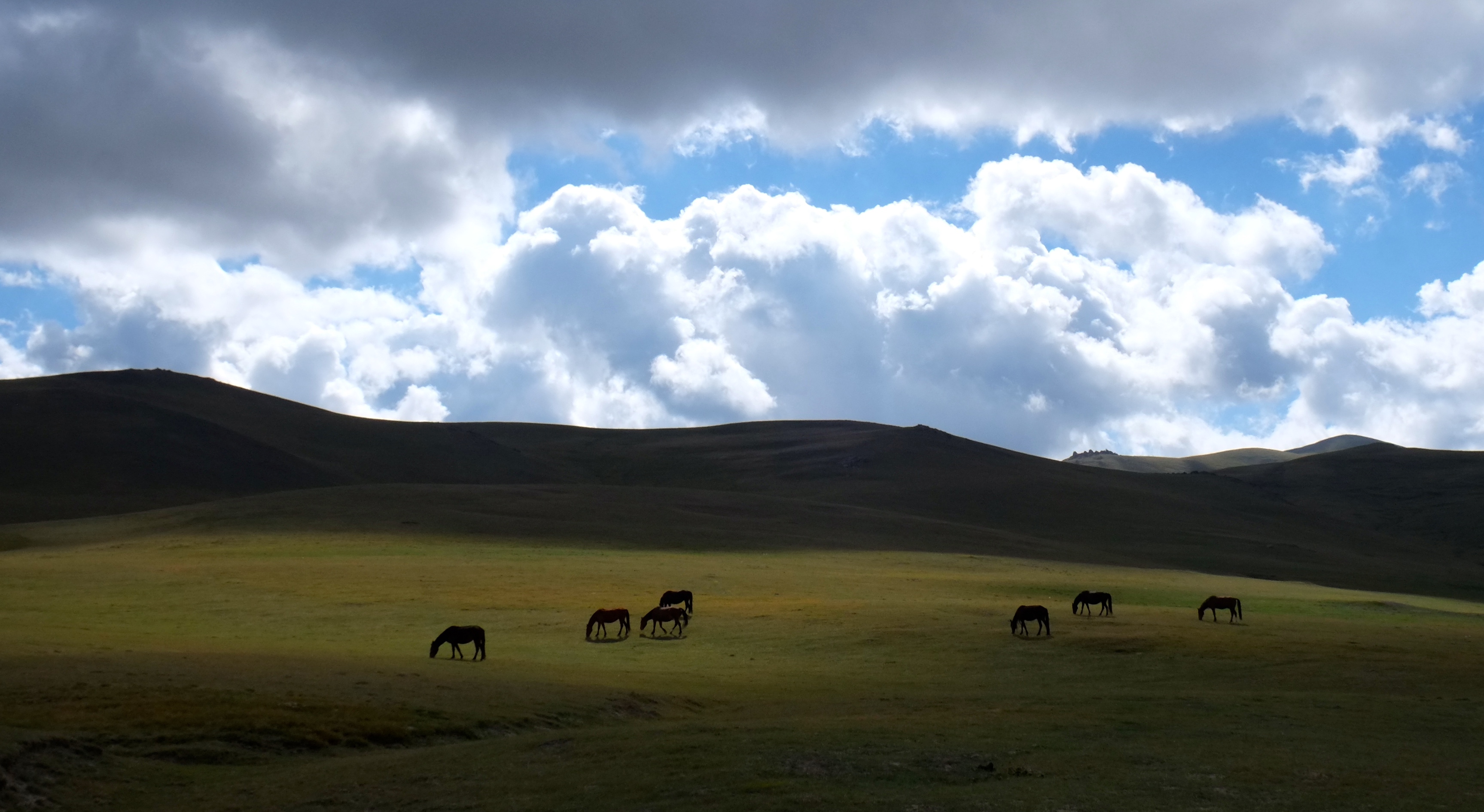
The lake is ringed by a saw-toothed horizon of peaks, fronted by lush summer pastures. Herders’ yurts dot the shore side meadows every kilometer or so. We felt like cycling through a Hollywood setting for a Western movie with cowboys on horses near and far. We could hardly get enough of this beautiful scenery, all the pain to get there was forgotten.
Another perfect camp spotOur new furry friend: we gave him some stale bread and he wouldn’t leave our tent anymore – all night he watched over our tent and couldn’t wait for us to emerge from it the next morning to greet us with his wagging tale.
Over another pass and down via 33 switchbacks we left the area and now descended with more stunning views over the valley and high snow-capped mountains we knew we had to cross soon as well.
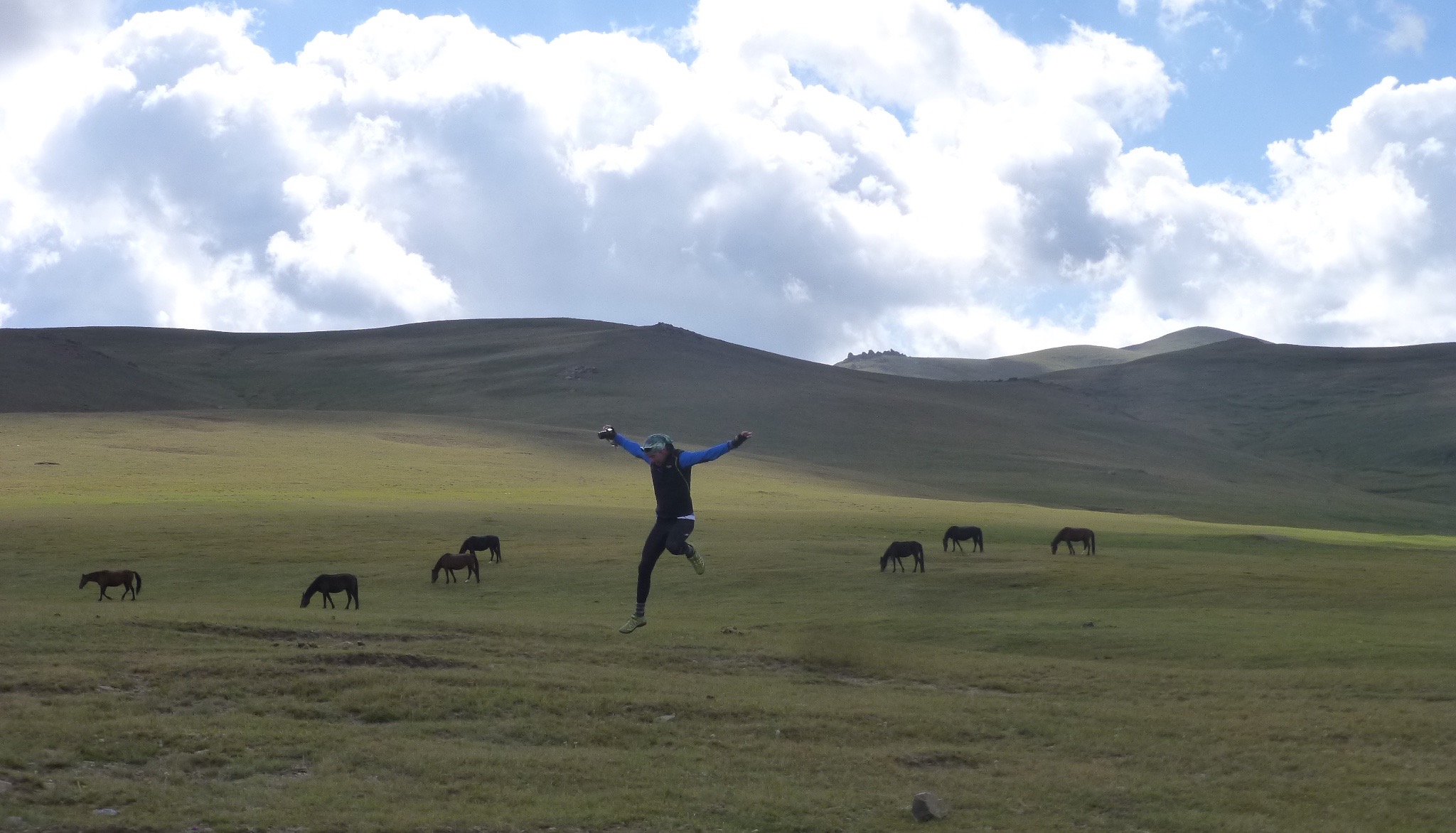
I can fly, I can fly…At the top of yet another pass
Pass after pass after pass we climbed on still unbelievably bad roads and we made slow progress towards Osh. One day we had to stop early as I was unwell. Soon I started vomiting and it became clear we wouldn’t be able to traverse the last pass before Kazarman. A few days later Johan spent most of the rest day in bed respectively on the toilet as he now suffered from diarrhoea. We nonetheless continued the following day as I had to finish a job and we knew there was another 3,000m pass to overcome. It’s been a tough day with weak bodies, endless undulating roads, pebbles, rocks, dust and the sun burning relentlessly. Temperatures in their high 30s and speeding Audi 100 – 50 % of the local population is driving this make, the other 50% drives in Japanese cars with the steering wheel on right – didn’t make the journey more pleasant. But we endured and pitched our tent at the foot of the pass next to a river where we could wash and cook and relax our bodies.
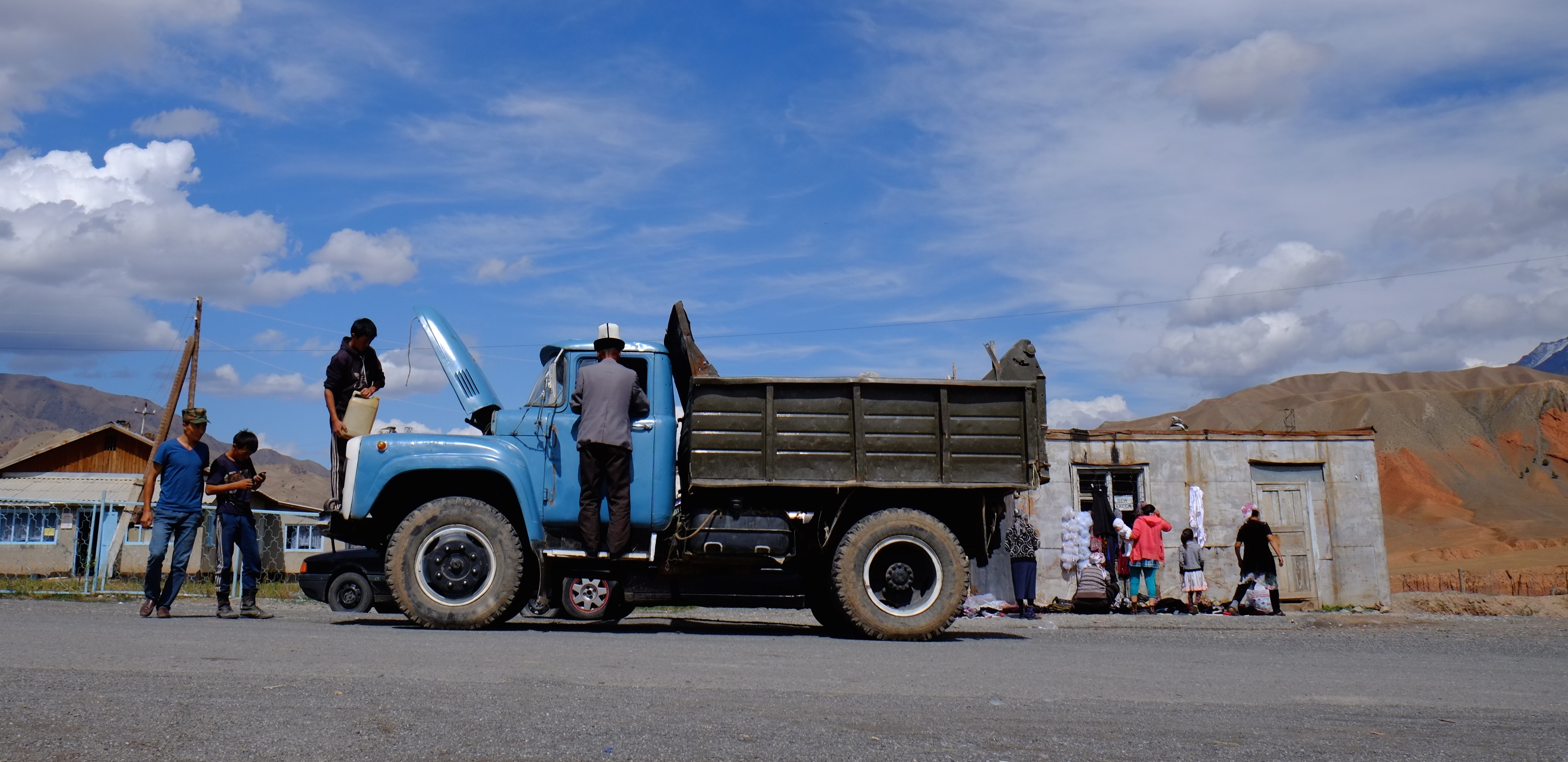
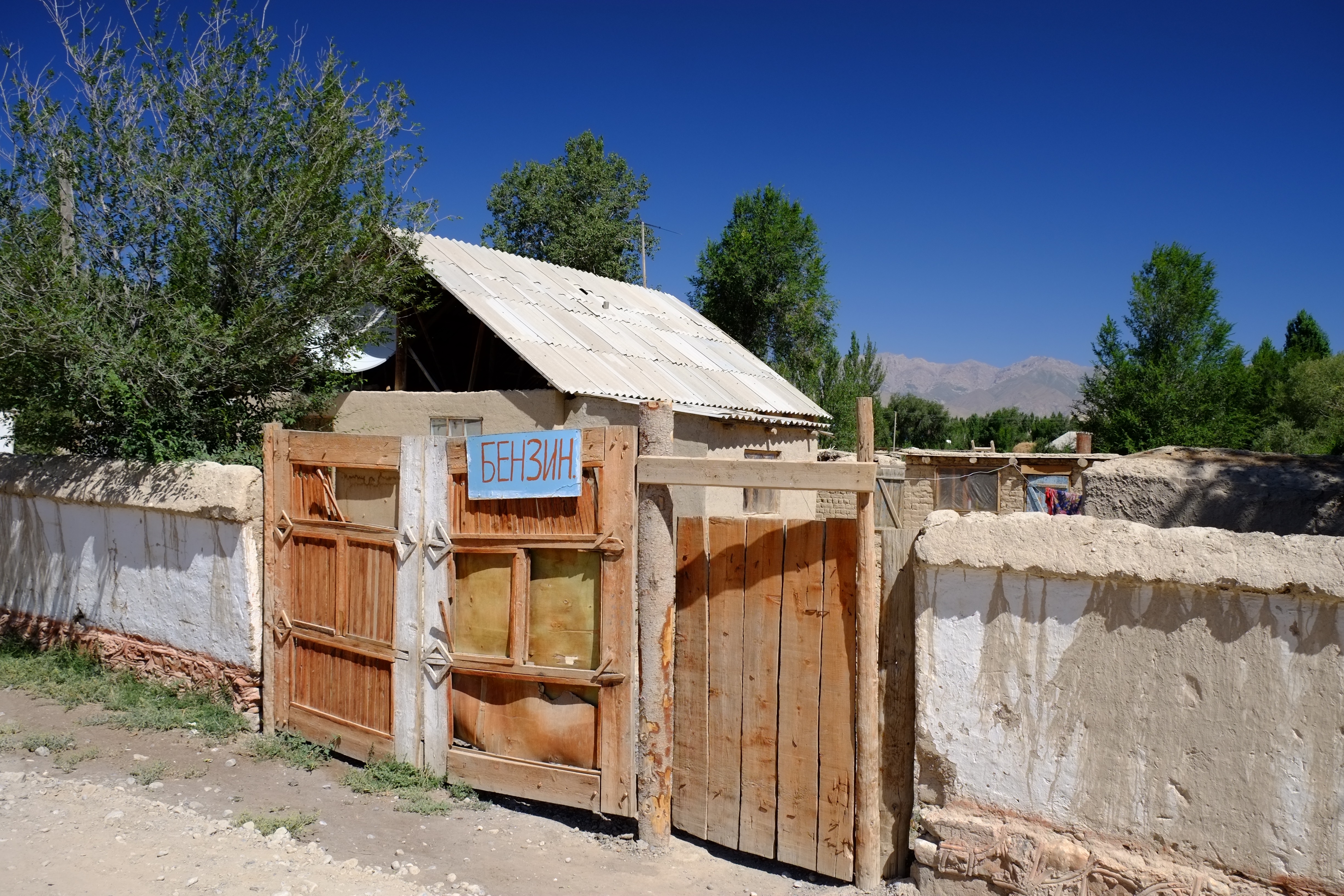
Petrol station in a remote village
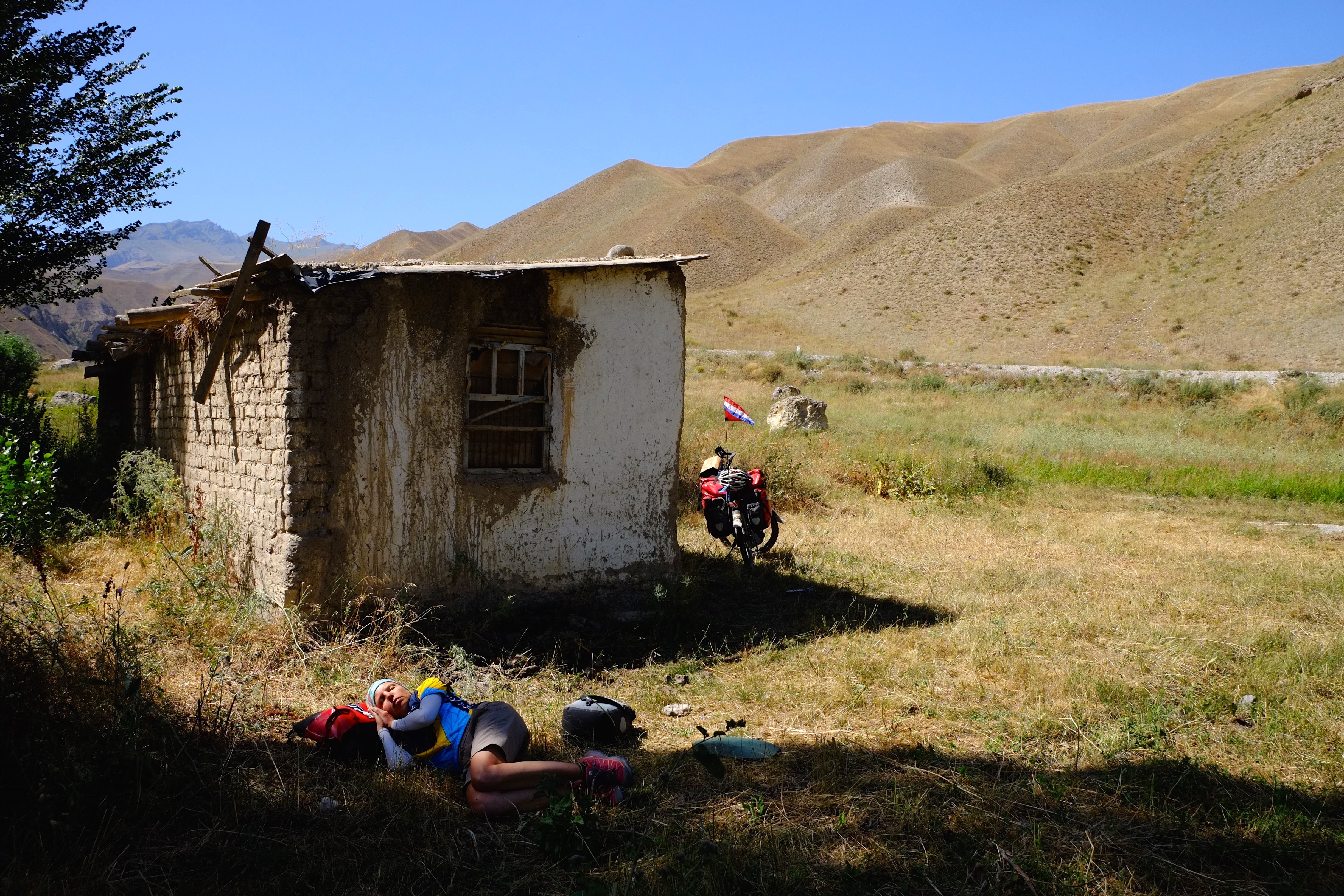
Sick on the road
Almost daily we meet other cyclists, here from New Zealand and SwitzerlandRiverside lunch
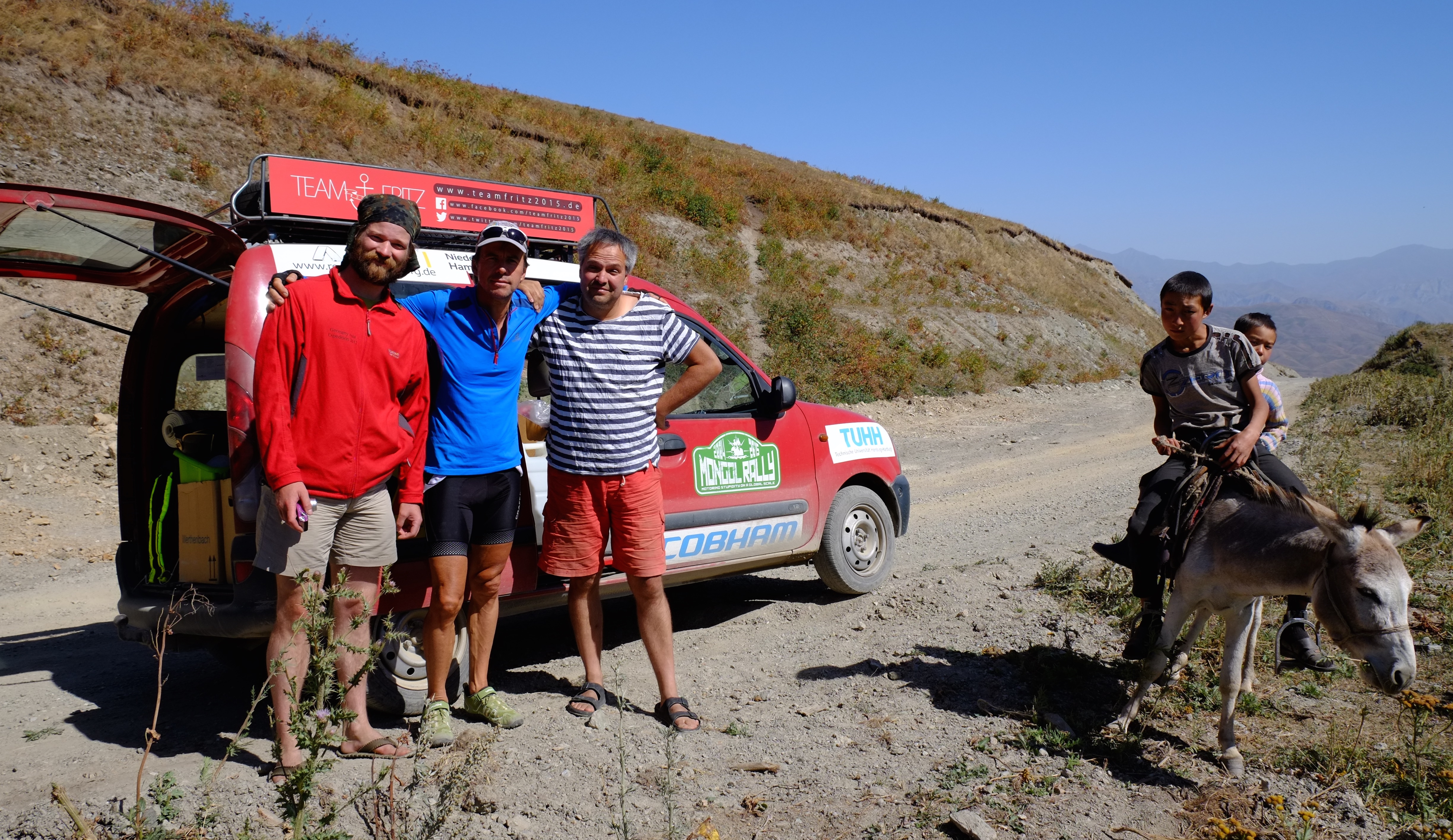
Then came our lucky day. Cycling slowly up the last pass before Osh on another cloudless and hot day we soon met a German in her 4WD treating us with “Nimm 2” (German candy) and refilling our water bottles. A few kilometres further up another German car stopped, two guys participating in a race from London to Mongolia stepped out and refilled our water bottles once again. Later, we were just cooking a big pot of yummy spaghetti, three cars from France and Belgium stopped. And again, they treated us well, refilling our water bottles once more and giving us Swiss chocolate.
Two funny German guys treating us well
Friendly people along the roadA typical clean toilet: there is also toilet paper which is as rough as sandpaperA Kyrgyz waitress in a small cafe being very happy that she could take a picture with meTypical Kyrgyz outfitKygryz-style house
And another pass tackledHappy children along the roadShopping once again
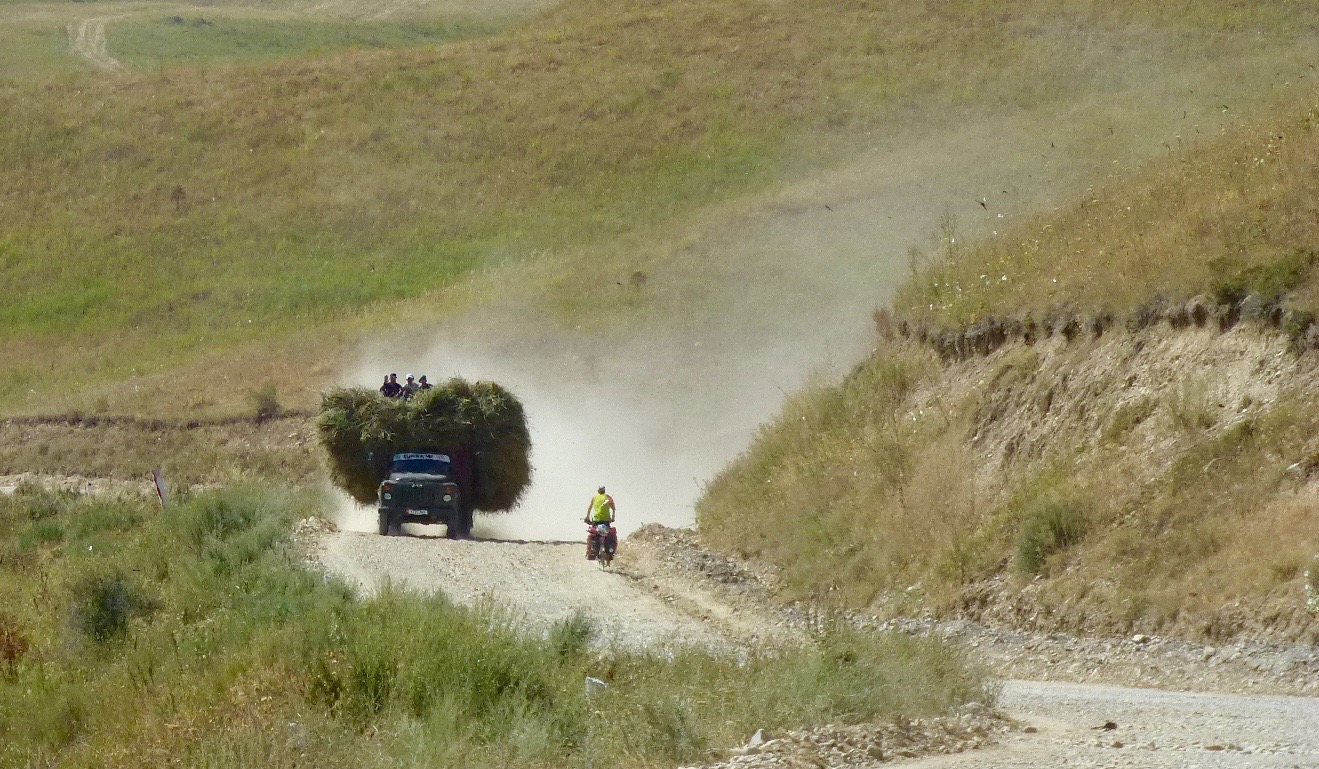
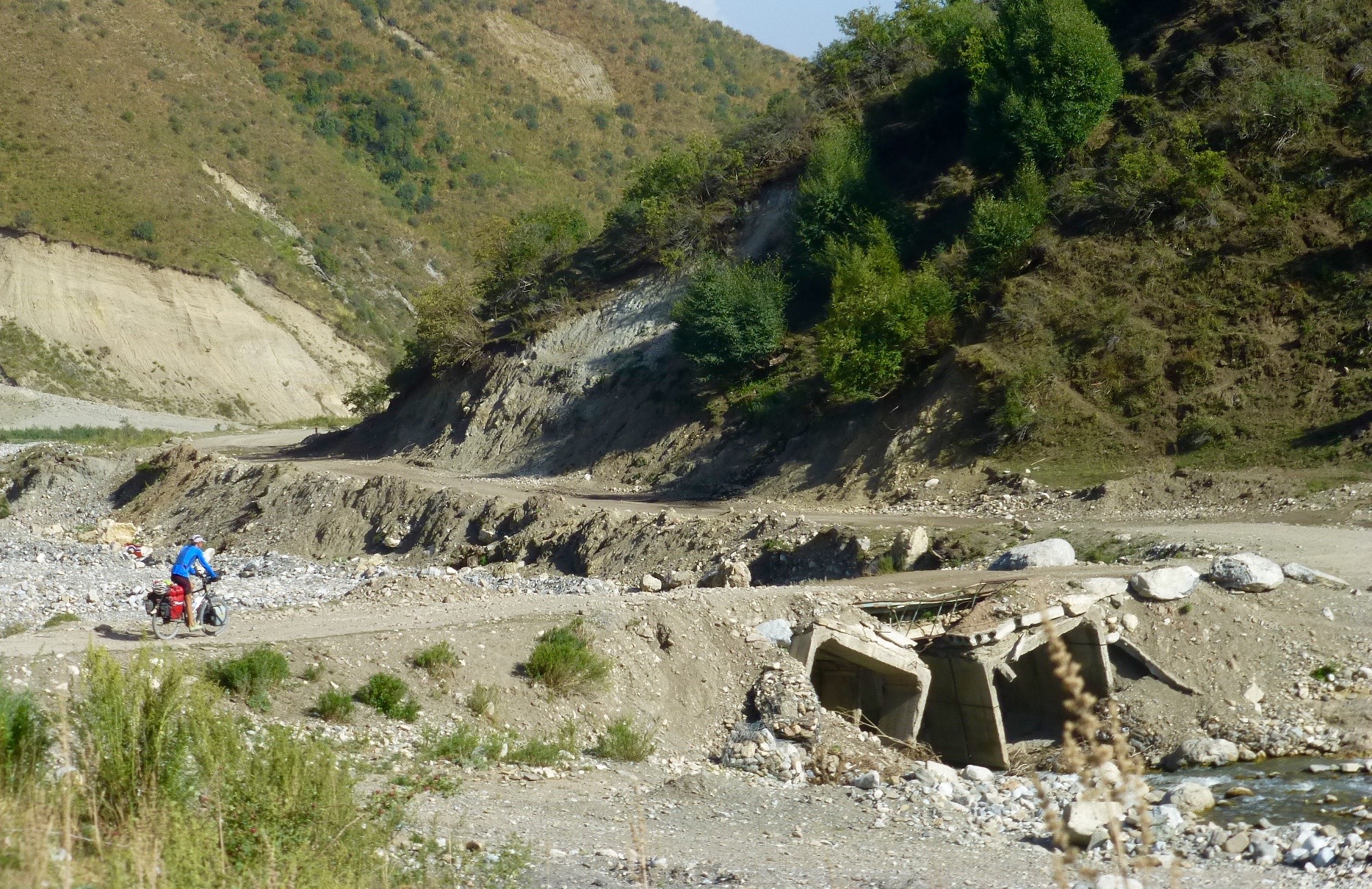
One of the many broken bridges we and many heavy trucks are passing
Traversing the pass we officially entered South Kyrgyzstan. And in many ways this area felt like a different country. Hotter in terms of climate as well as human temperament and closer to the conservative Islamic culture than the industrialised, Russified Bishkek. People however are unfailingly hospitable, giving us fruit or vegetables when passing by and welcoming us in every village with their hellos, welcomes or bye-byes.
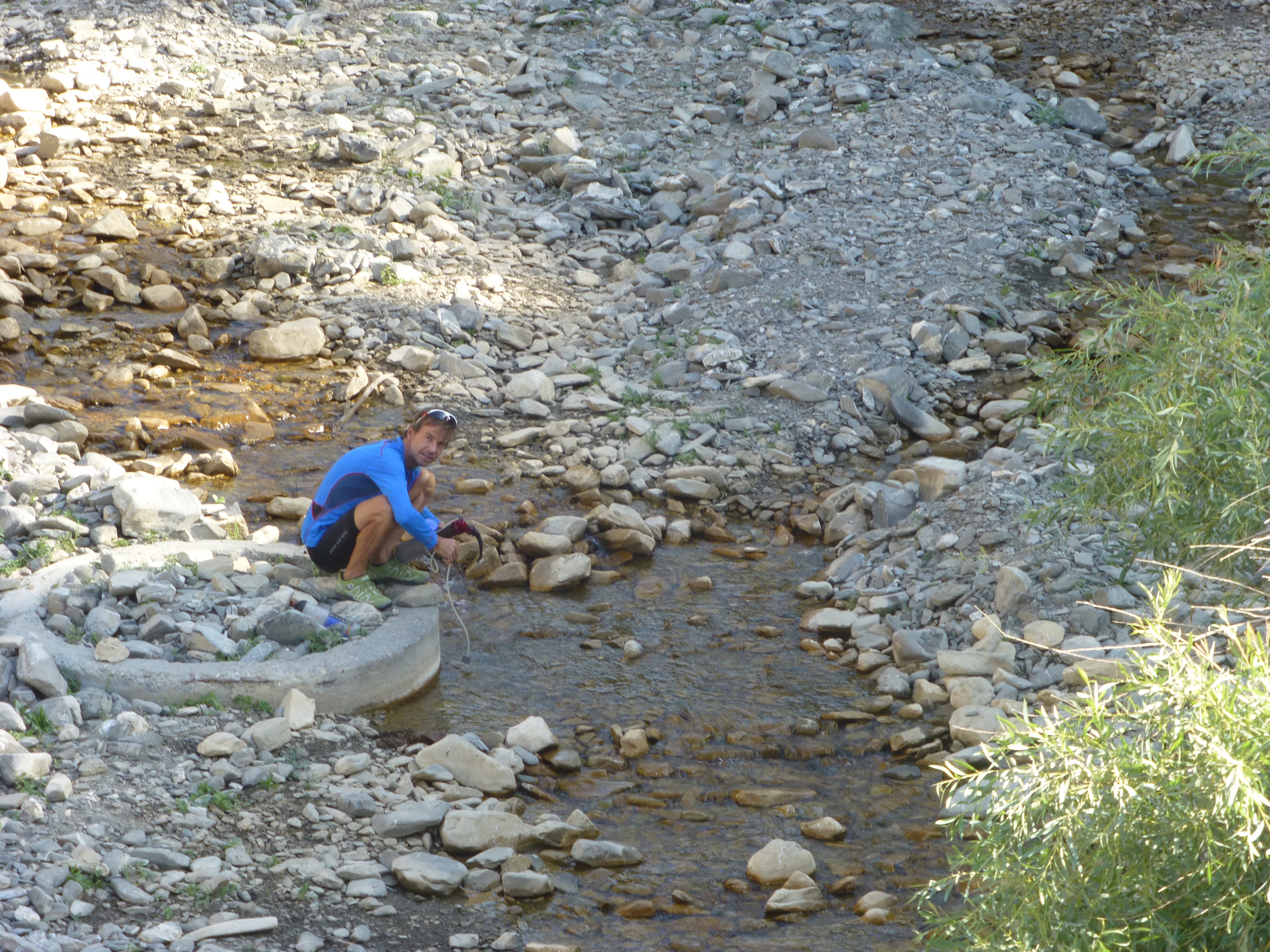
The pass marking the border between North and South KyrgyzstanFiltering water
The landscape changed as well. From arid, rugged and mostly treeless and often yellowish dried countryside to a now still mountainous but much more fertile area with apple, walnut and plum trees lining the streets and giving us the much-needed shelter from the sun. We continued wobbling over rocks, pebbles and sand, sweat running down our faces and bodies, breathing in dust, up and down and once more up. The river roared hundreds of meters below us and we couldn’t wait to finally roll downhill and to finally meet tarmac again. After a few more hours of strenuous cycling there it was: a village and tarmac. We tried to buy lunch, but all we could find in the first shop was a drunk elderly couple savouring a glass of vodka and in the second shop two 4-packs of yoghurt, a package of crisps and another package of sweet biscuits. Hungry, we sat down under a tree and ate like starving wolves, when some children came running to watch us, going away again to pick sunflower seeds that they were currently drying on the roads. They clearly understood how hungry we were and their empathy and this nice little gesture meant a lot to us.
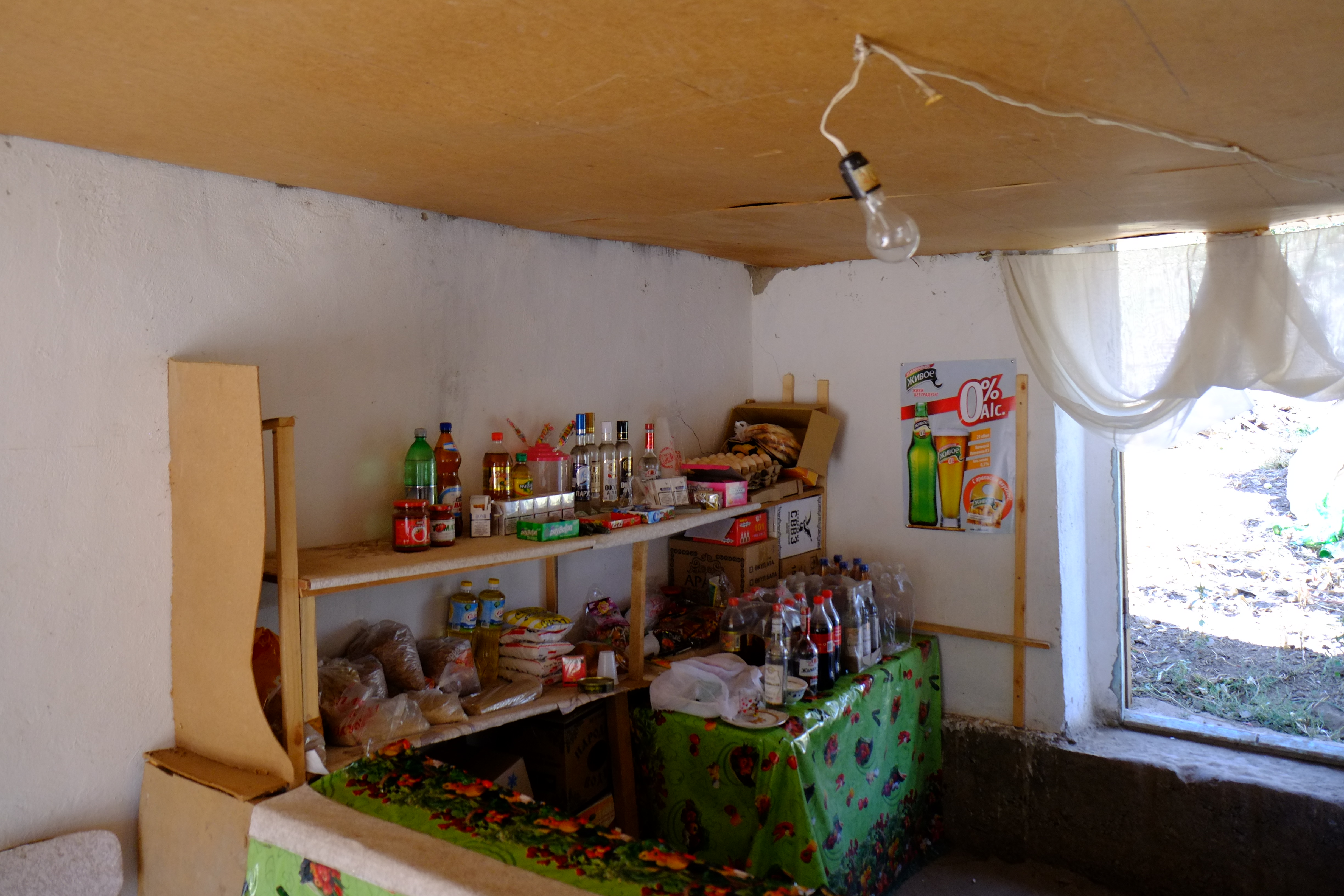
Village life: drying sunflower seeds on the roadsThe enormous assortment of a typical village shop: most importantly there is Vodka and cigarette
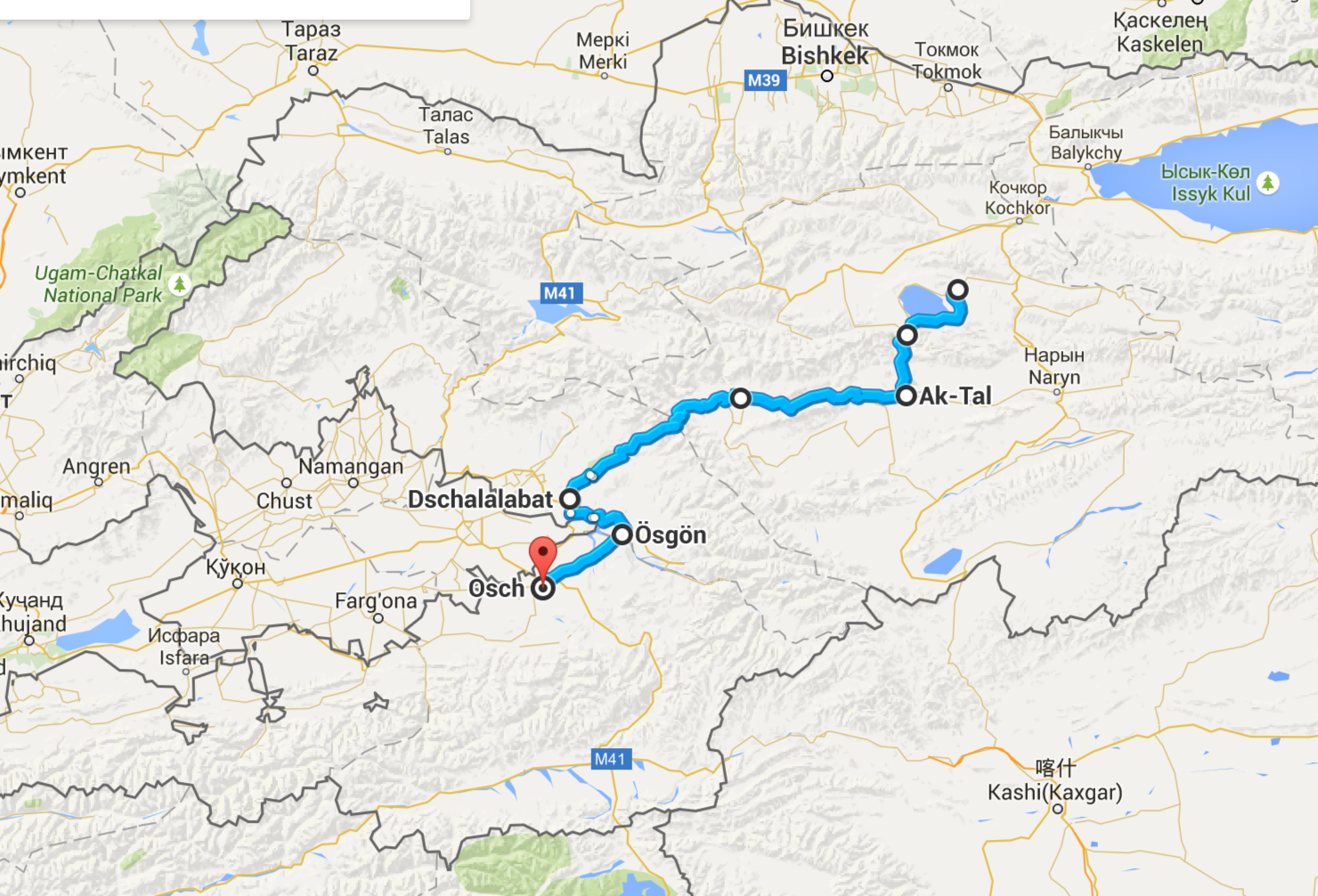
Once we hit the tarmac cycling felt like flying and we enjoyed the smooth ride despite traffic picking up again. Within a few days we reached Osh and celebrated our achievements to date: by now we had traversed six passes and gained 10.000m. With two rest days we prepared for the real challenge – the Pamir Highway.
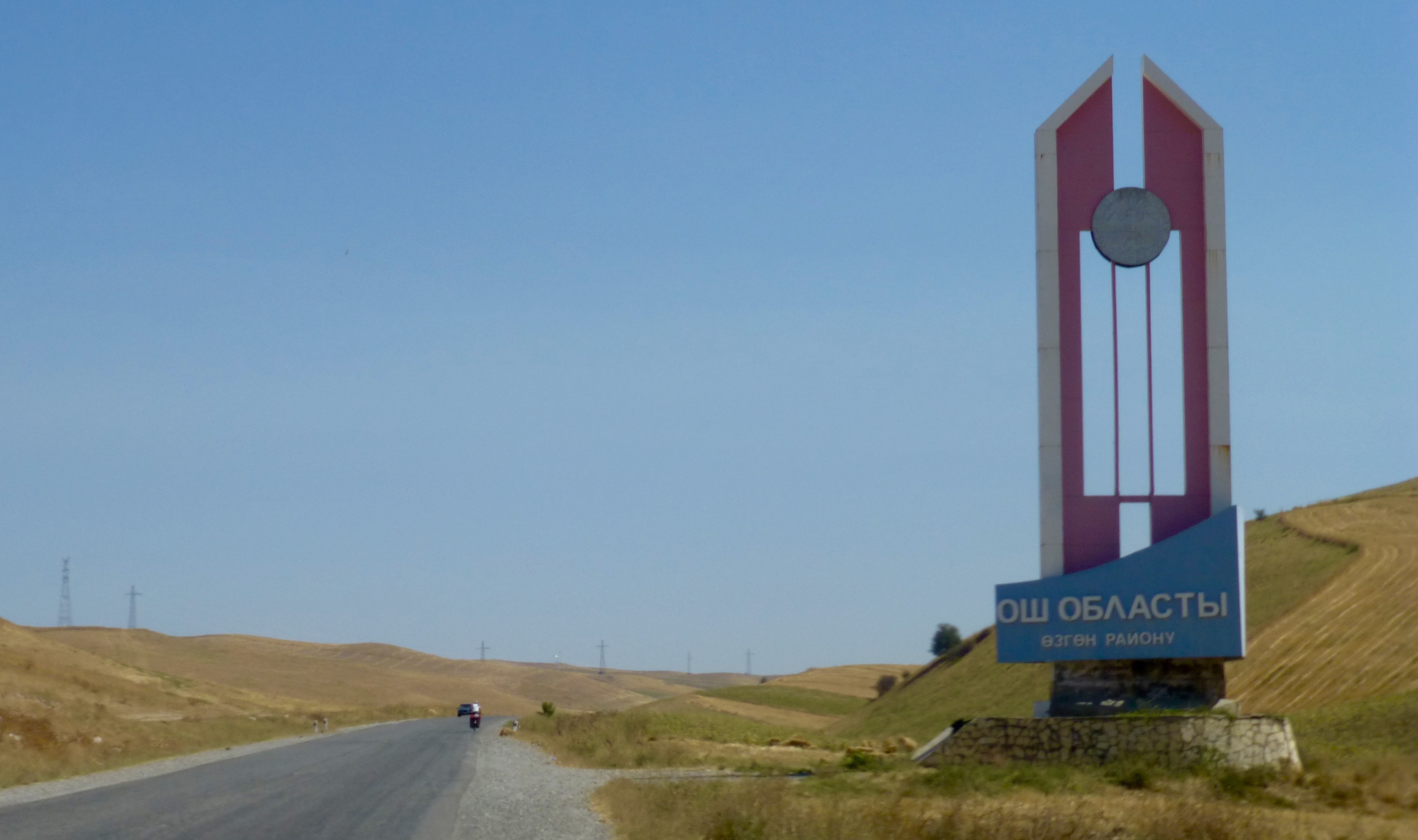
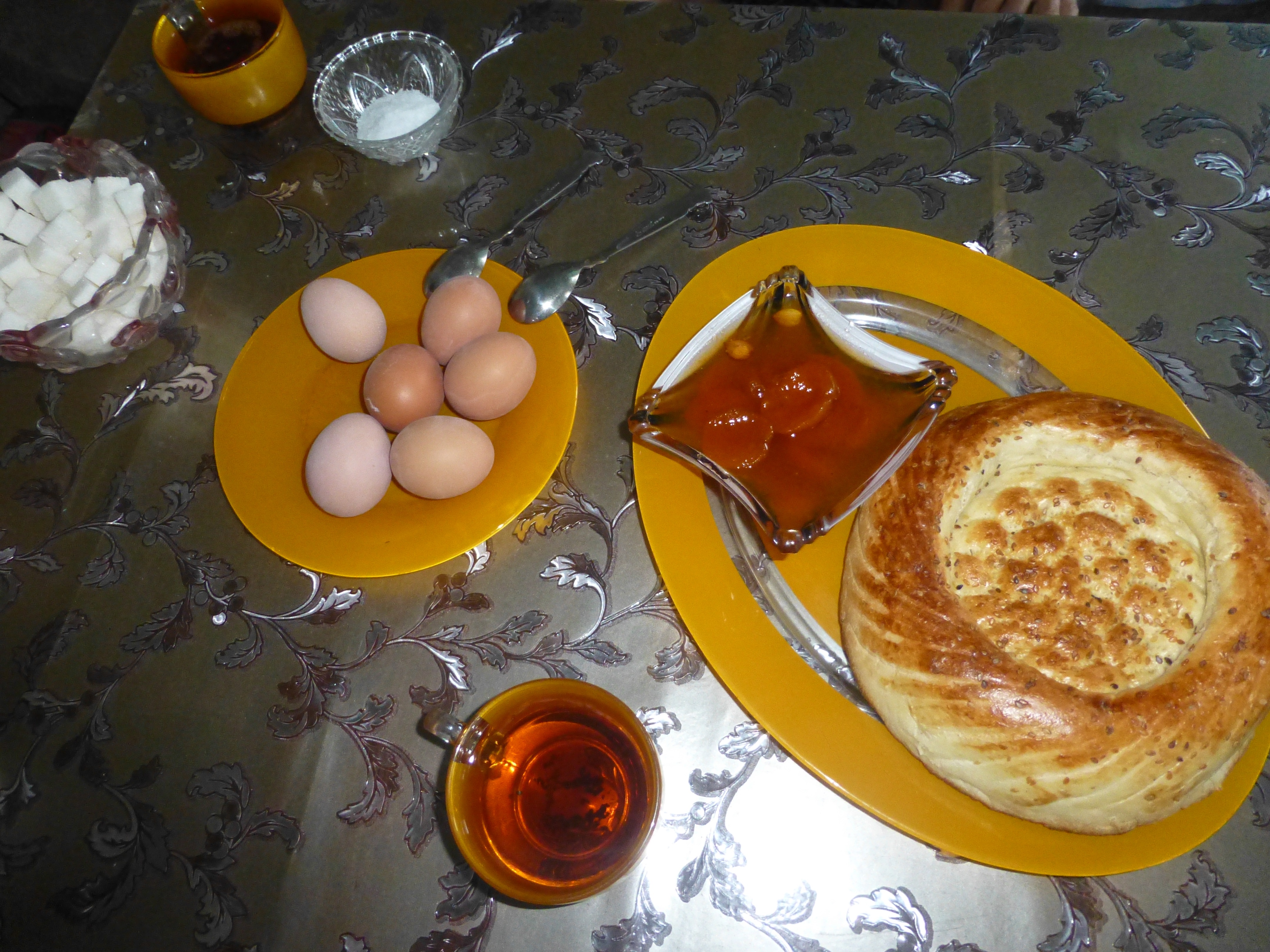
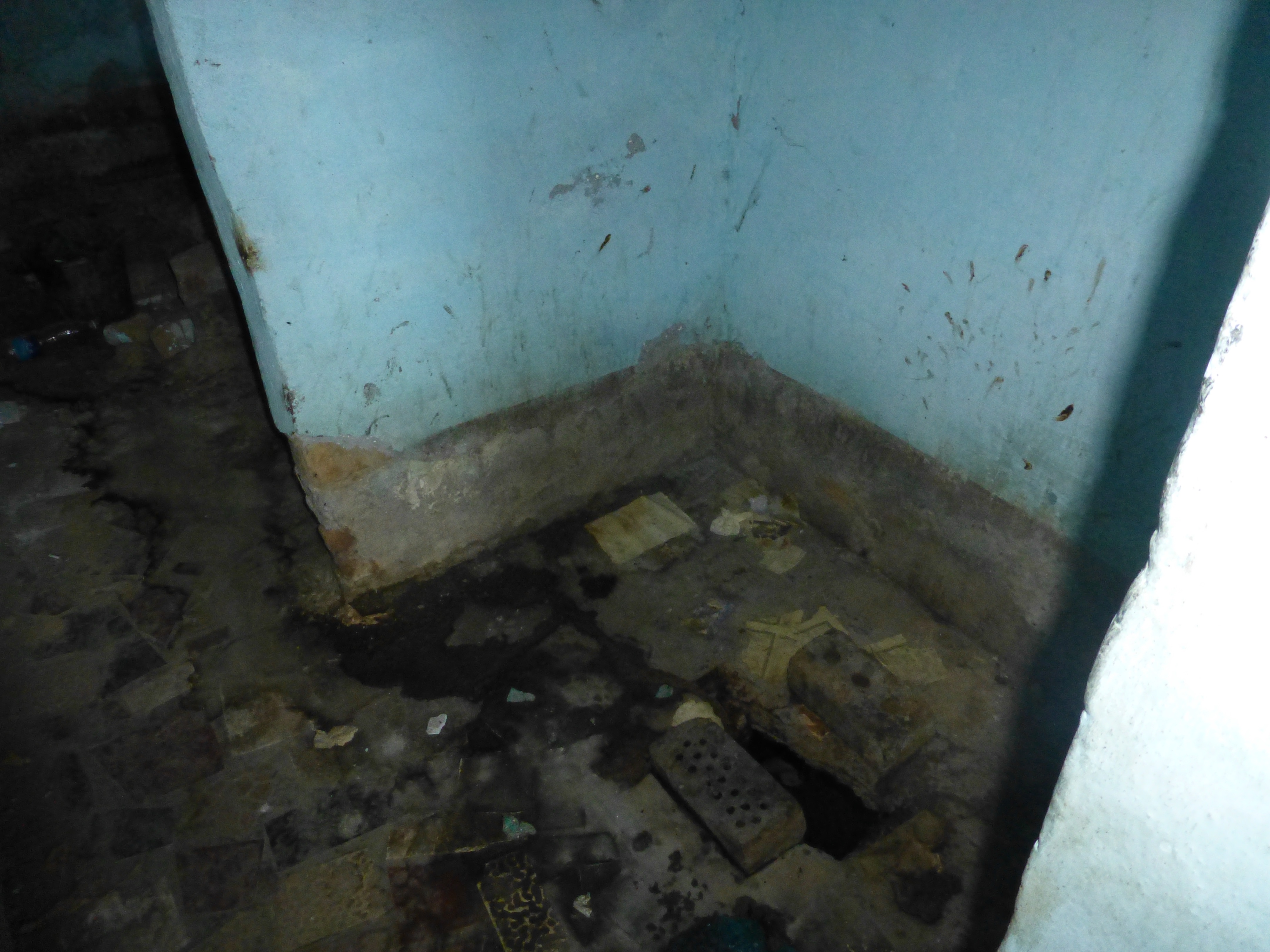
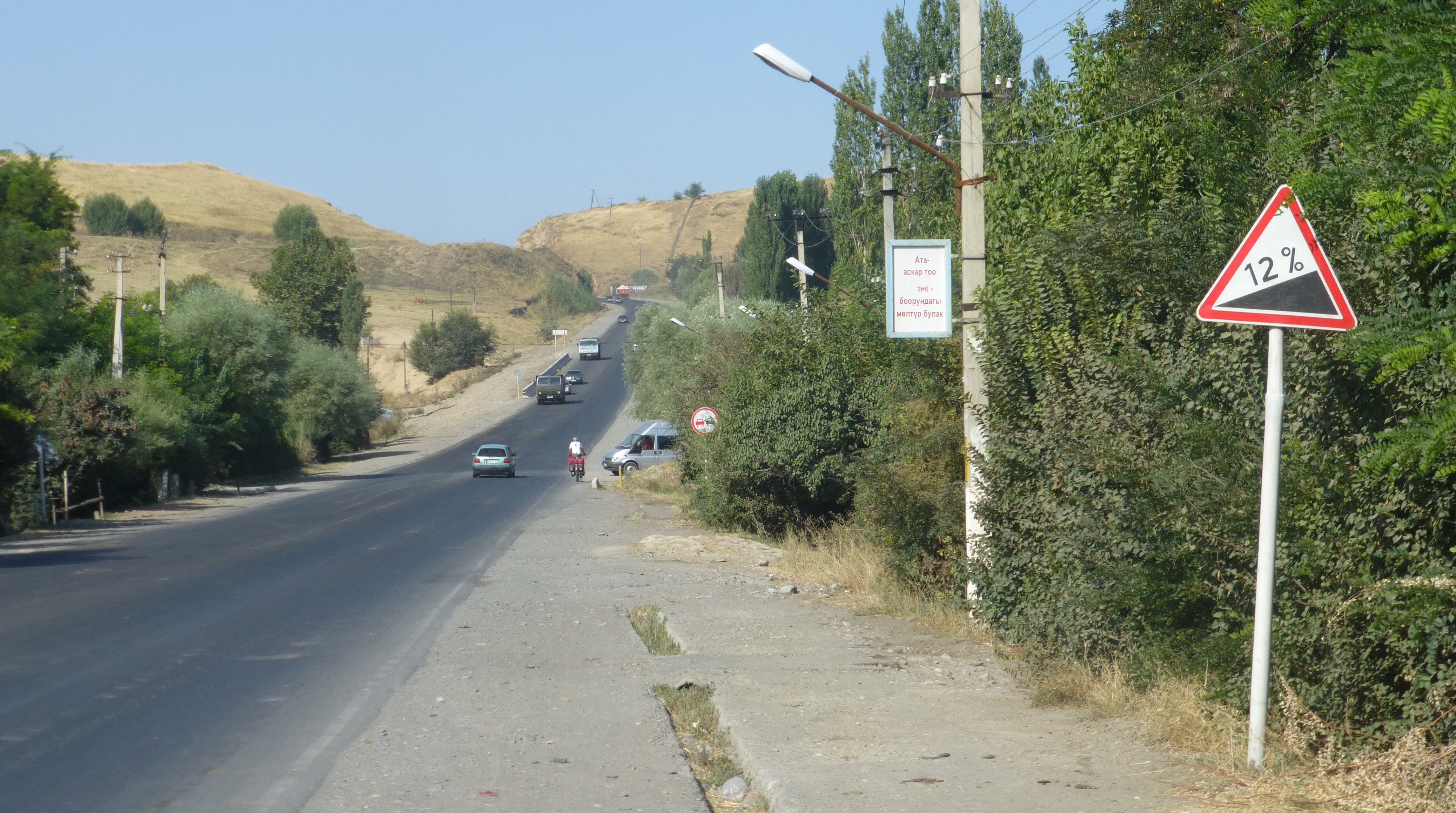
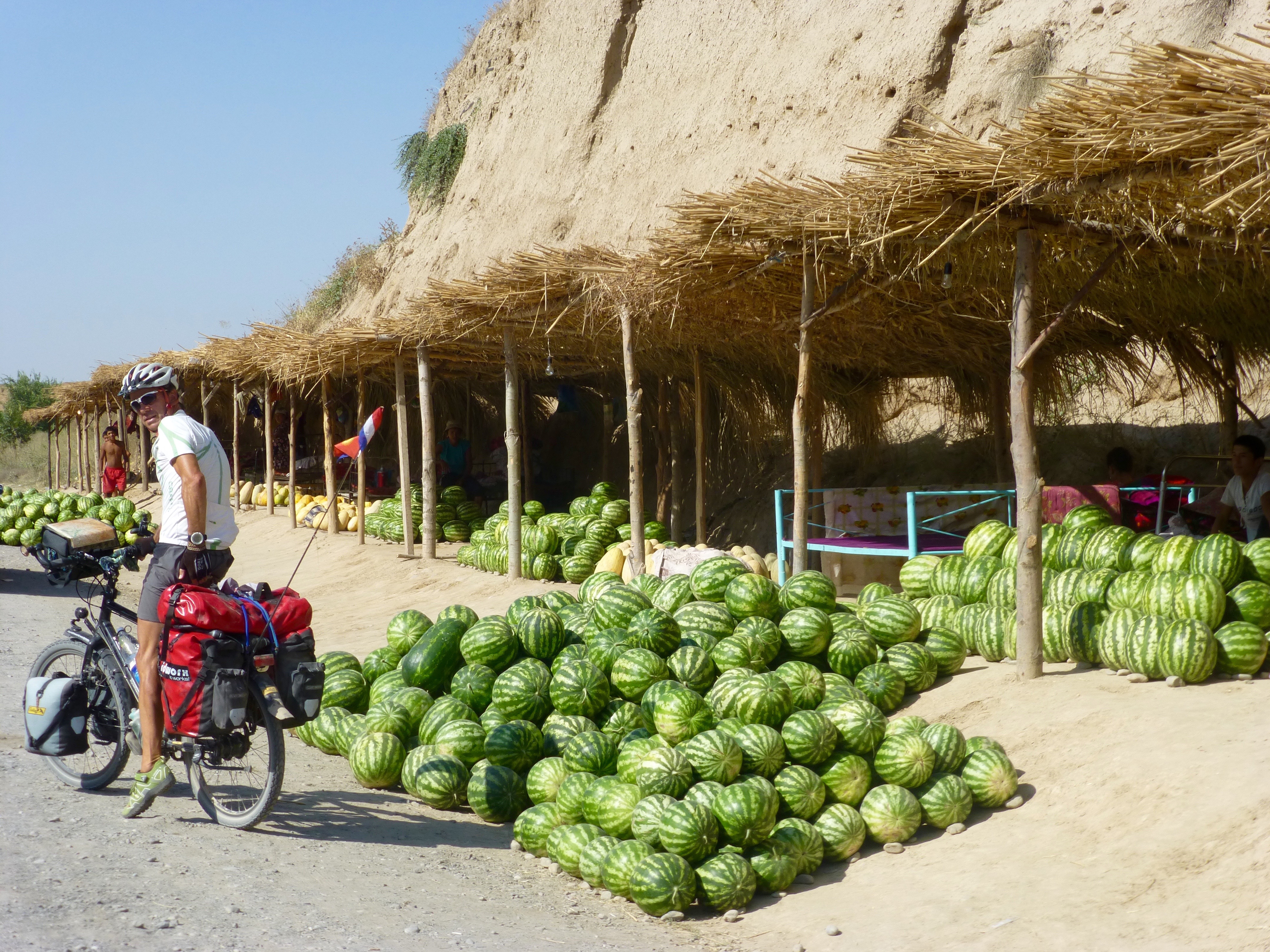
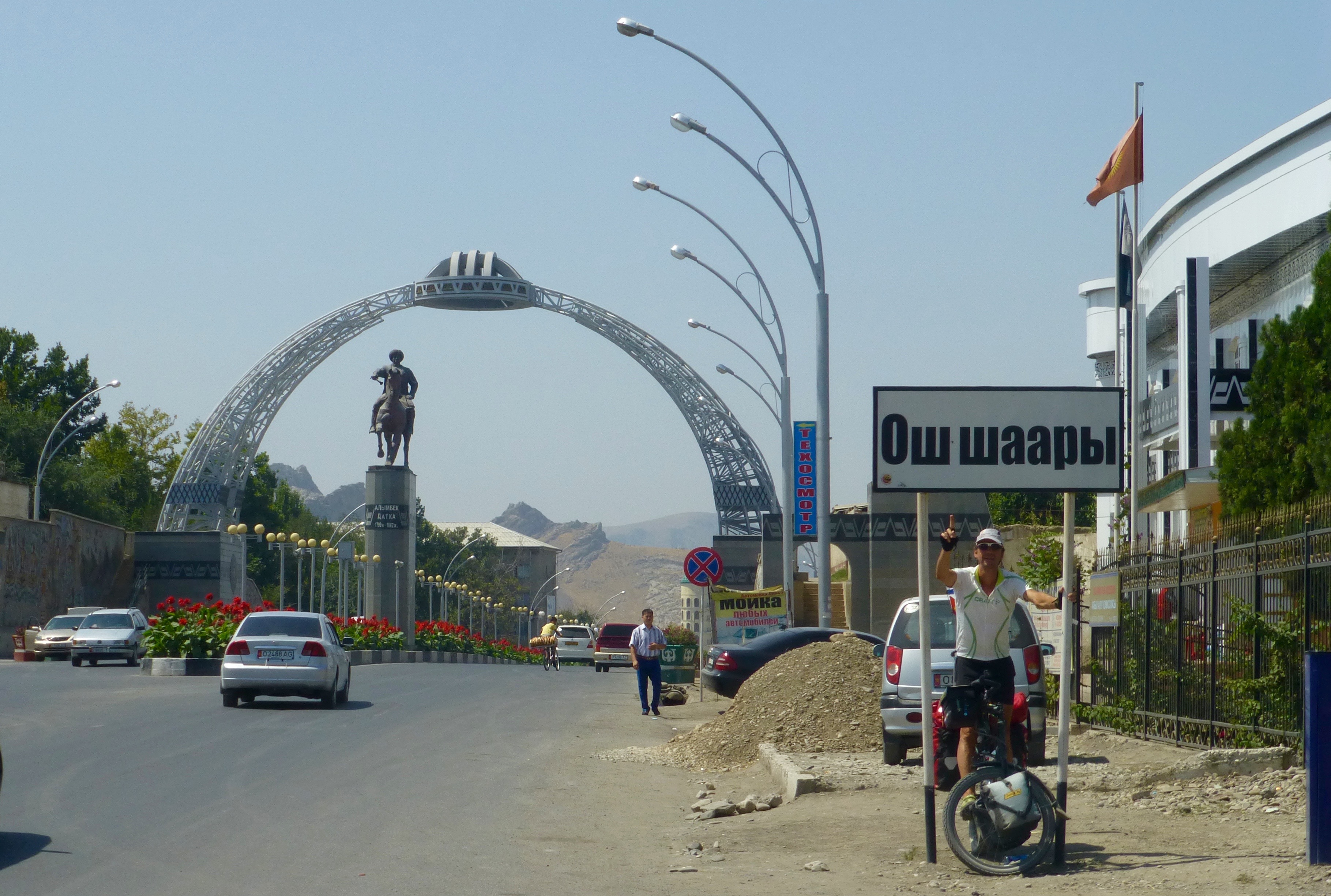
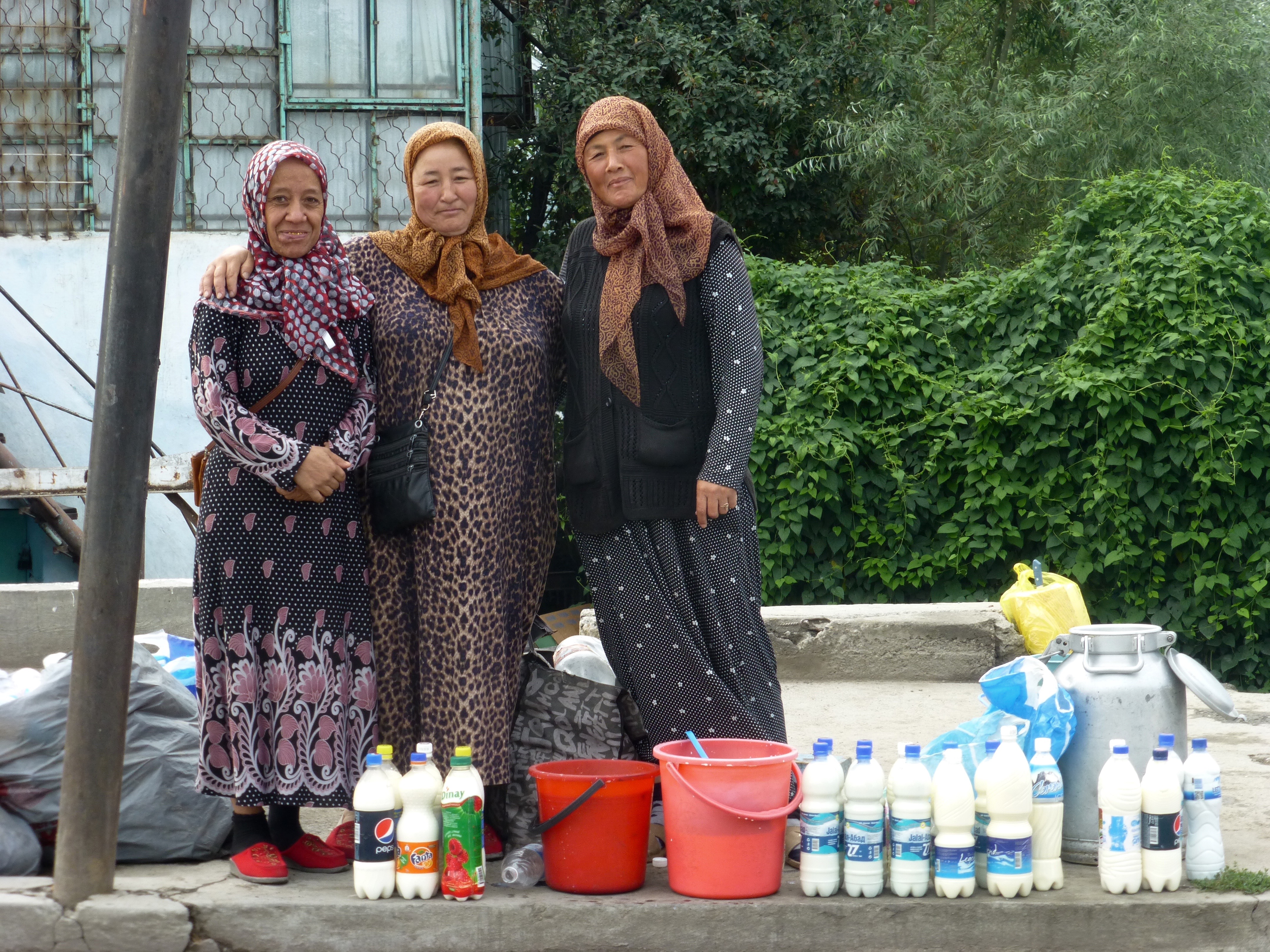
Entering the province of Osh with ‘beautiful’ Soviet architectureTypical breakfast: eggs, bread and self-made jam served with black tea and sometimes coffeeOur room at a hotel which took us an hour to find as they don’t put up signs in KyrgyzstanAnd the filthy outside toilet at the same hotelIn Kyrgyzstan all signs indicating the gradients of hills are at 12%Our favorite snacks. In the meantime we manage to eat one melon in one go!Entering OshWomen selling kumys along the road
Cycling was’t easy these past weeks. However, we are enjoying every day, our freedom, the beautiful landscapes and that we are able to do what we do.
528km (830km in total) and total altitude gain of 9517m
Independent since 1991, the country had to invent itself as no such country had existed in the pre-Soviet period
90% of the country lies above 1,500 meters and 71% over 2,000 meters above sea level
The beauty of the country for visitors is that is has a bit of everything: nomadic traditions, central Asian mystique, Soviet-era trappings and Silk Road sites
Population: 5.7 million people
Kyrgyzstan is approximately the size of Spain
Neighboring countries: Kazakhstan (North), China (Southeast), Tajikistan (South), Uzbekistan (West)
Our route: 303 km, 2,741 altitude meters
August 3 – 10, 2015 – We landed safely in Bishkek, Kyrgyzstan with a two hours delay and so did our luggage. Shattered from a sleepless flight Johan started putting the bikes together at a deserted airport. A few hours later we were once again ready – this time to begin with a short 35-kilometer ride into town on a yet deserted but still scary to me motorway in the soaring heat on bikes that were heavier than ever. We asked ourselves how we would be able to pedal our luggage of more than 35 kg each over passes higher than 4,000 meters. We would yet have to find out.
Trying to leave the motorway for no obvious reasons – there wasn’t any traffic – we got lost in the dust and found a poor farmer, who desperately wanted to offer us a melon. We weren’t able to leave without it. Later at the hostel we knew why he was so desperate, the melon must have laid in the sun for days as it was completely dried out and not edible.
Arriving at the hostel we learned that the receptionist forgot our booking and that there were no rooms available for us. Feeling sorry for us and knowing it was her fault, she arranged another place for us to stay and a few hours later we settled in and finally fell into a sound sleep in the middle of the day.
Kyrgyzstan so far surprised us with its efficiency to work out things in our way. The next day we picked up our visas for Iran, bought a SIM-card for our phone, arranged our food supplies for the coming days and were ready for our departure into the wild.
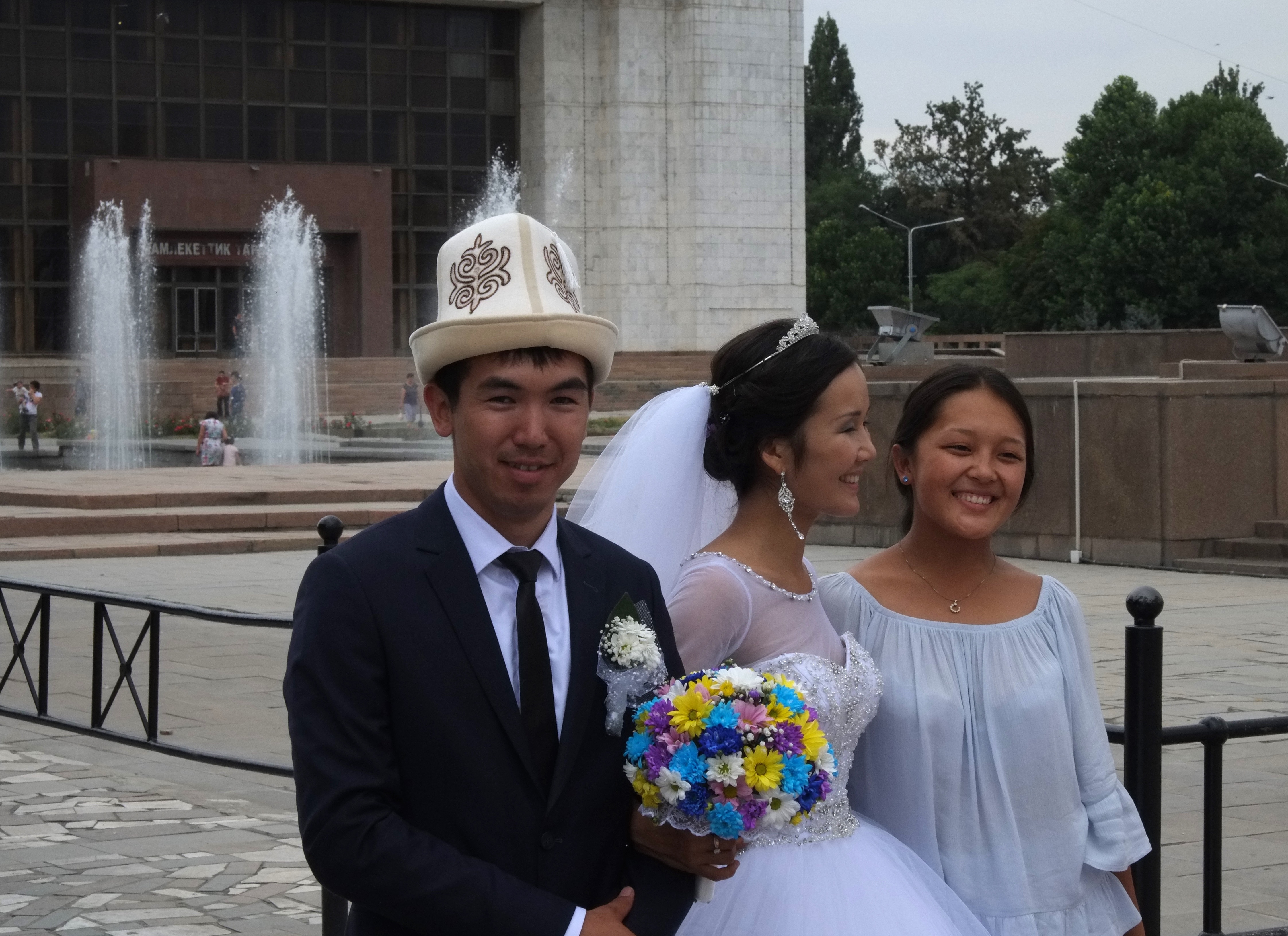
Kyrgyz wedding in Bishkek
The morning of our departure we met a couple that had just returned from a cycling trip through Kyrgyzstan and scared me off with horror stories about heavy traffic and mad drivers on some of the roads we intended to take. Nonetheless we pedaled off to discover the beauty of this country.
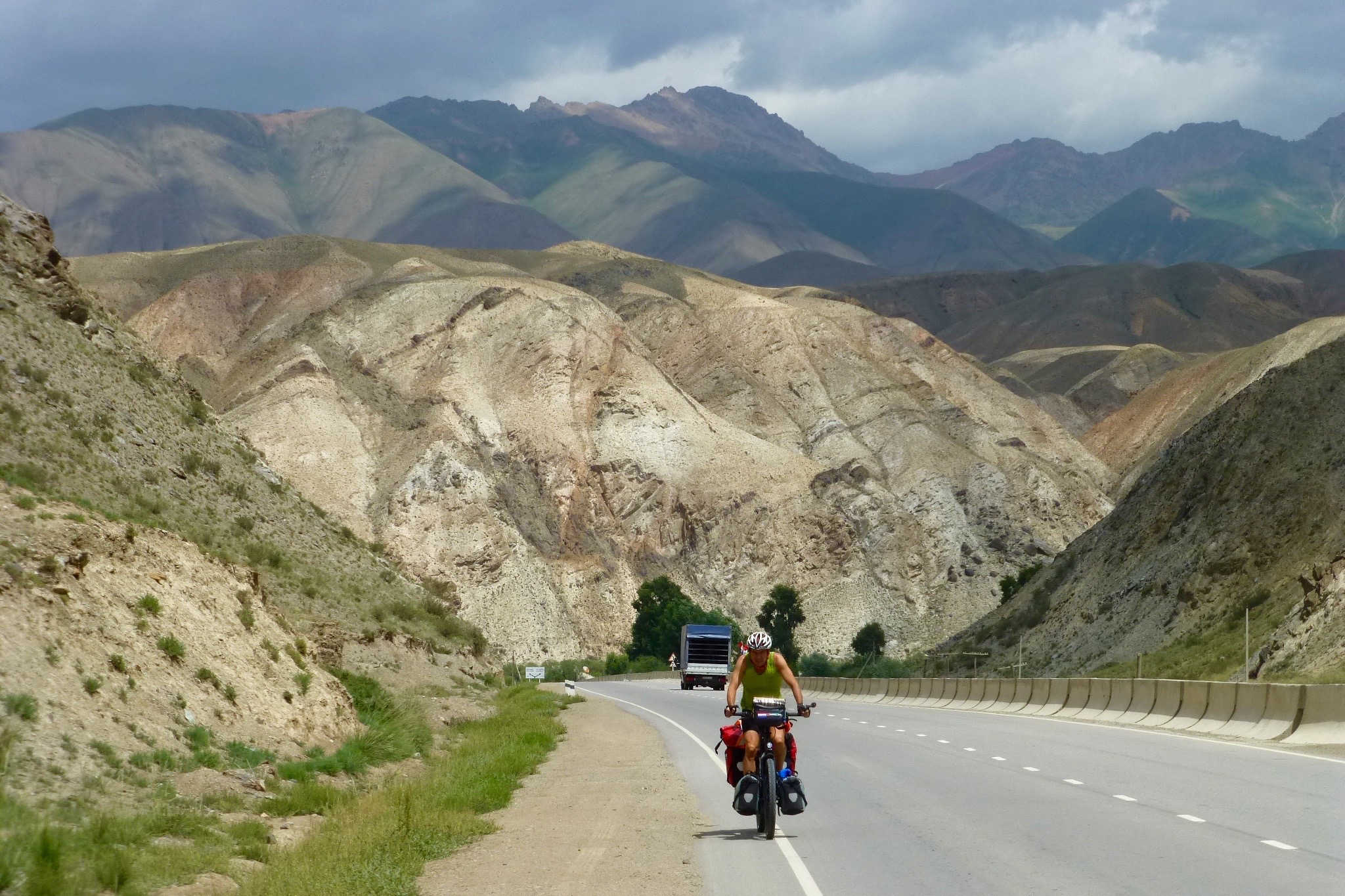
The cyclists were right, there was heavy traffic getting out of town and on our way to lake Son Köl, but they weren’t right with their assessment of the roads and the drivers. On the new Chinese-built roads we always had a small hard shoulder and a wide enough soft shoulder to escape any dangerous situation and the older Russian-built roads were wide enough to handle a few cars next to each other as well as two lonely cyclists.
In the late afternoon of our second cycling day traffic got heavy and we stopped at a rest place where small Chinese stalls and tourist shops were selling summer gadgets and lots of Vodka– we were on the main road to the famous holiday destination Lake Issyk Köl – and were invited by one of the shop owners to sleep in one of his tents, normally used for dining purposes of transients. Later that evening, we were just preparing to go to sleep, a decent English-speaking Kyrgyz woman approached us and invited us for ice-cream at her little shop. A few conversations later she told us we could stay at her mother’s house the next day before we would head off to traverse our first big passes. Again we happily accepted, bought a huge watermelon the next day upon arrival in Kochkor as a present only to find out that we weren’t welcomed but shown to an expensive but neat guesthouse nearby. We had to eat 10kg of melon all by ourselves in just one evening as we couldn’t carry it up the mountains.
Our first free campScenery between Bishkek and Kochkor
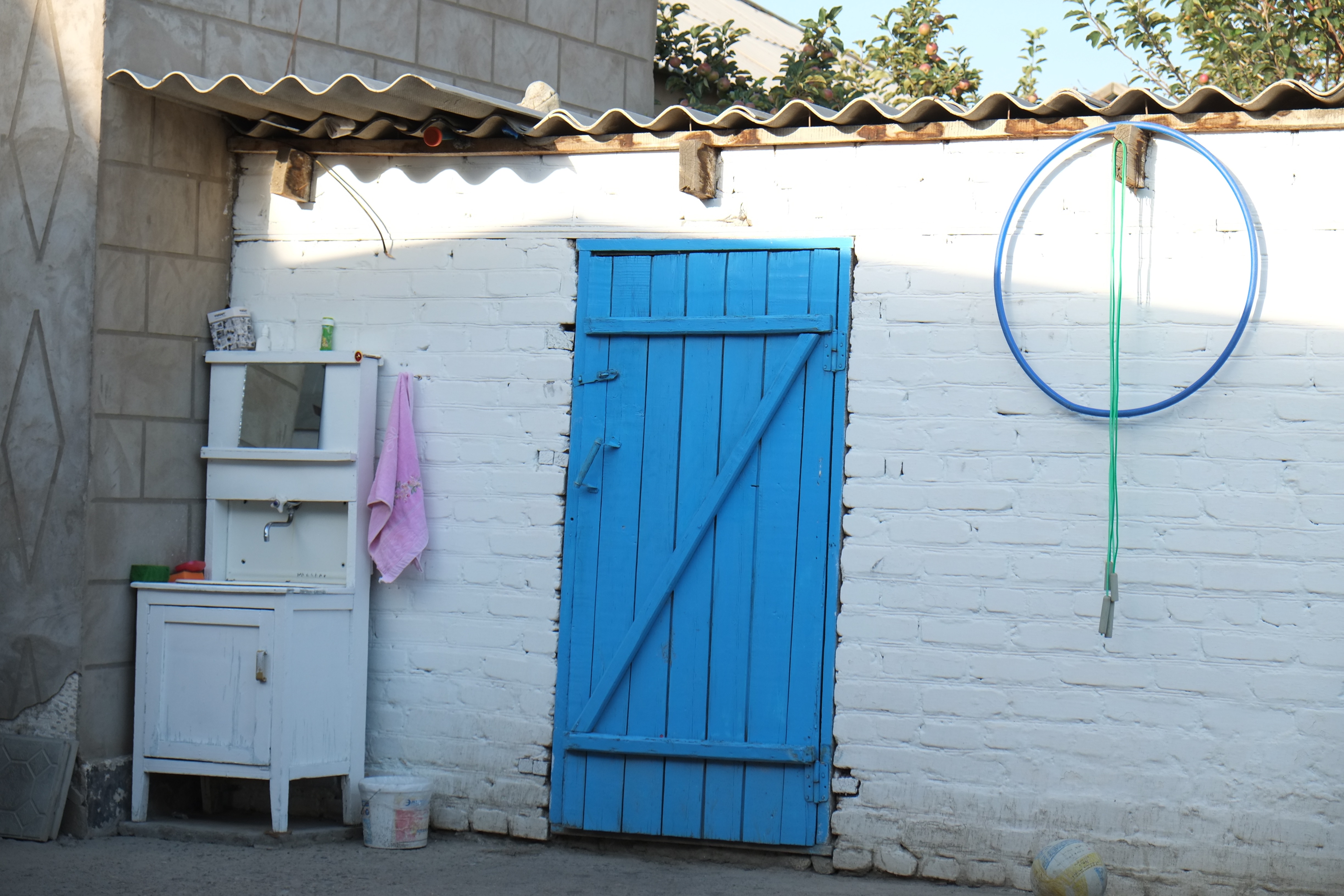
Our first real pass at 2,160 m right before KochkorGetting closer to KochkorThe sink is usually outside the house, as there are no real bathroomsA typical village shopBreakfast at our luxury B&B
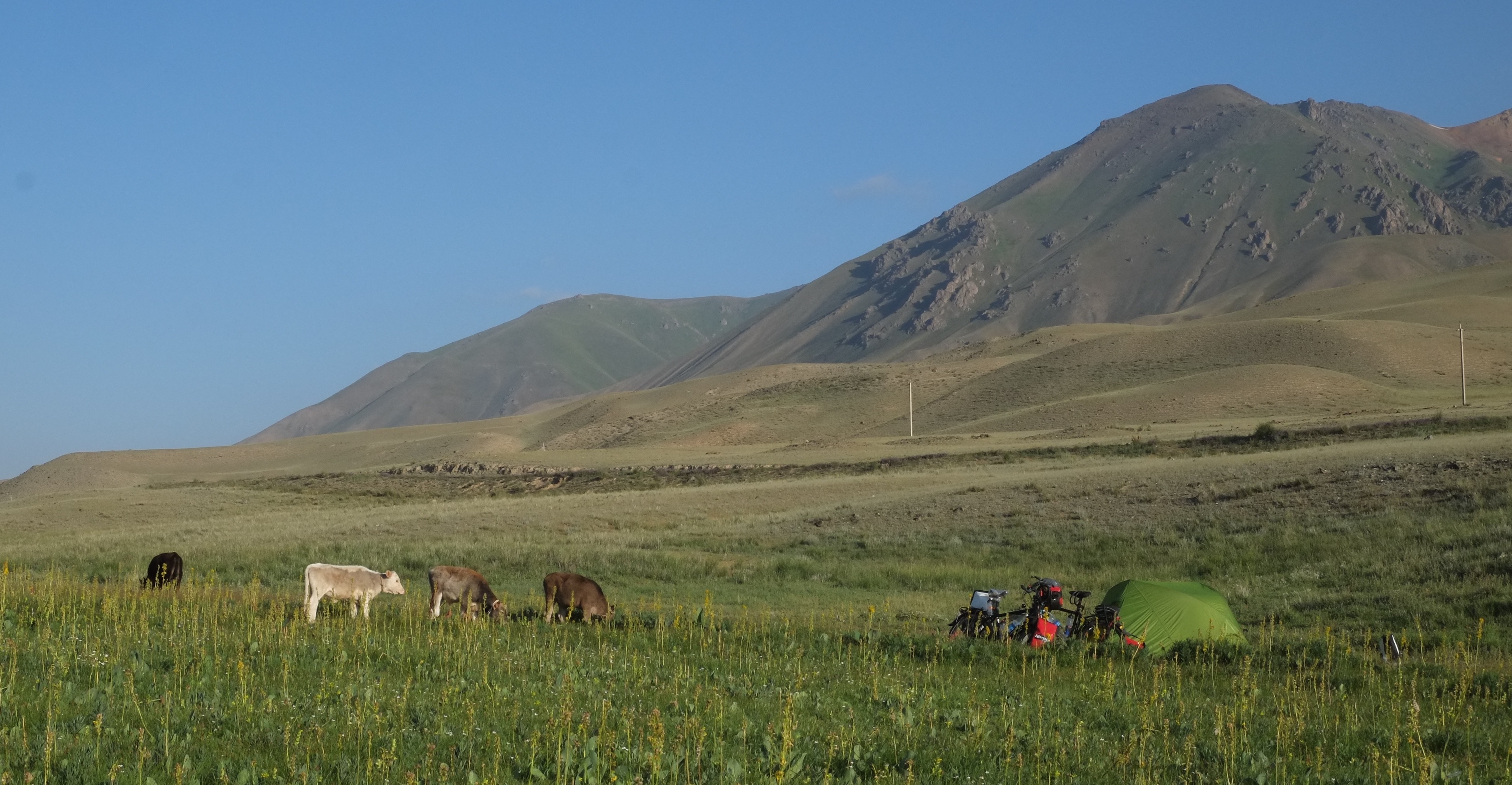
A few more kilometers of tarmac the next day and then we took a right turn into the direction of Son Köl. No more asphalt for the next few hundred kilometers, instead gravel, dust, rocks, pebbles, pot-holes and bumpy roads. The tough part had just begun. To add to this we also started our climb as we had to pedal over a 3,446-meter high pass to get to the lake. The landscape was stunning – lush green grassland, roaring rivers underneath and undulating scenery all around us. At the foot of the pass we pitched our tent next to a farmhouse, washed ourselves in the icy river, cooked and just managed to get everything into our tents before the big storm hit the valley. Our first night in the tent and we had rain, not the luckiest start.
Last kilometers on tarmacLet the torture beginPushing due to the strong headwindRugged sceneryDust
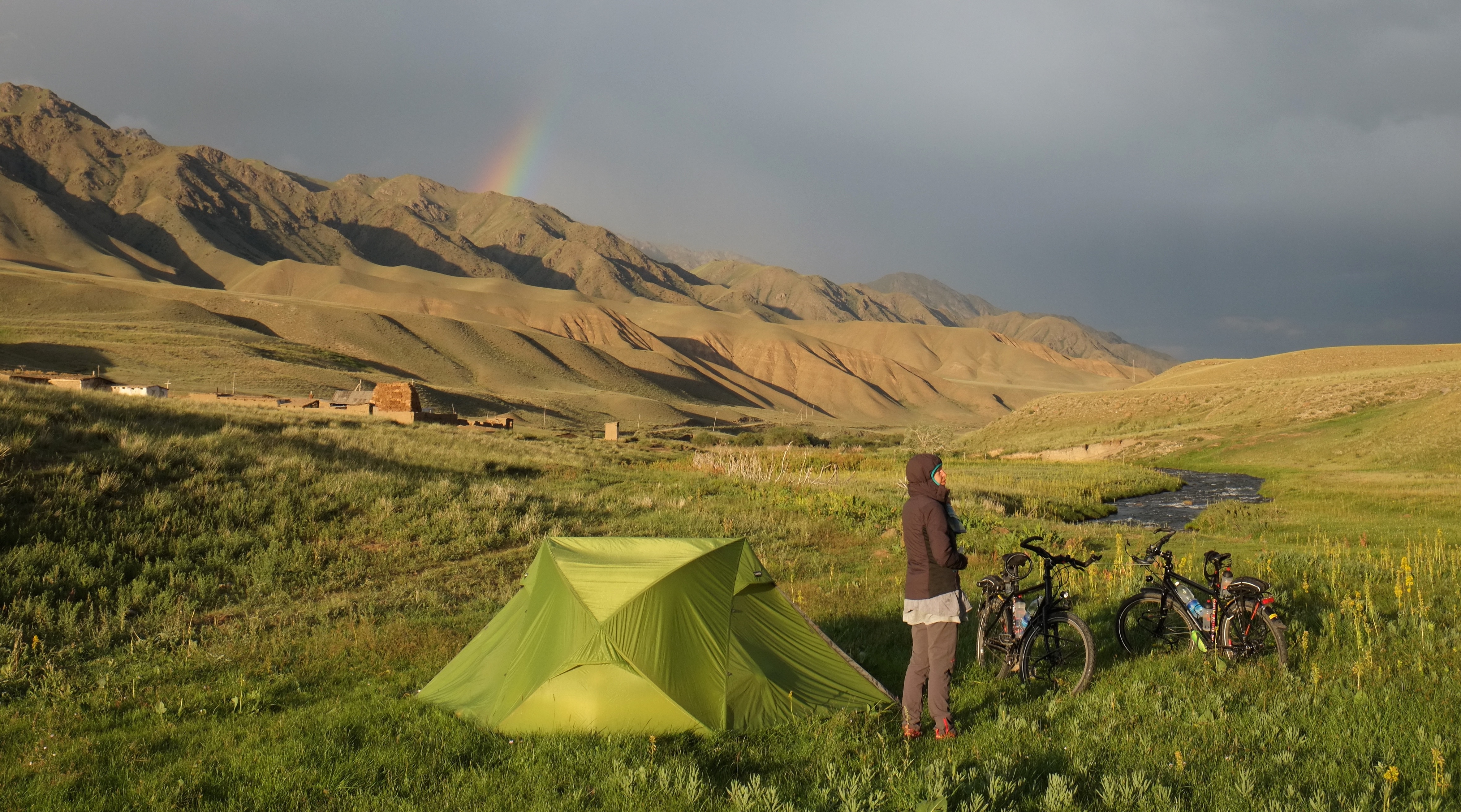
Can you see the gold at the end of the rainbow?A home with a viewFiltering water
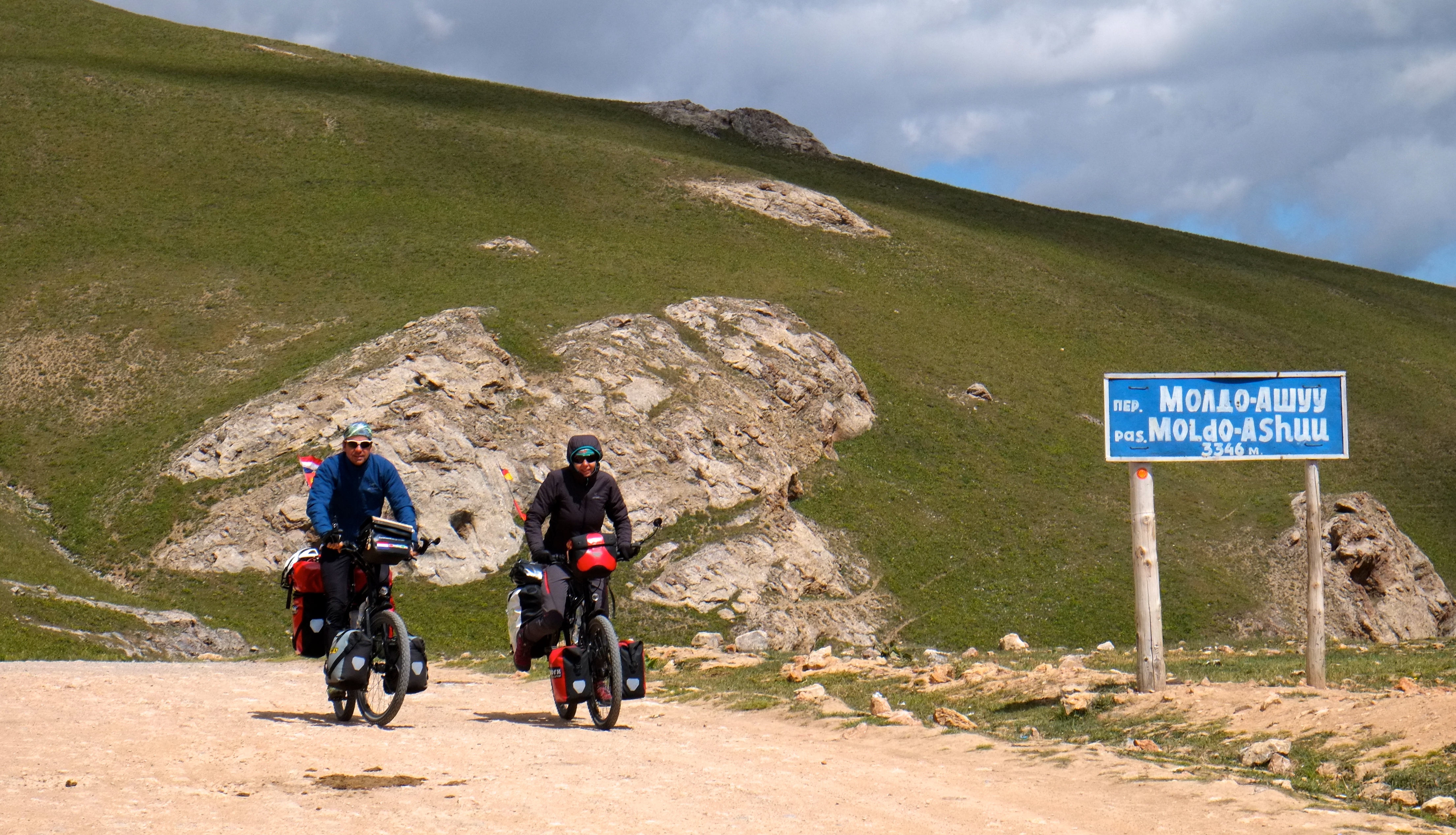
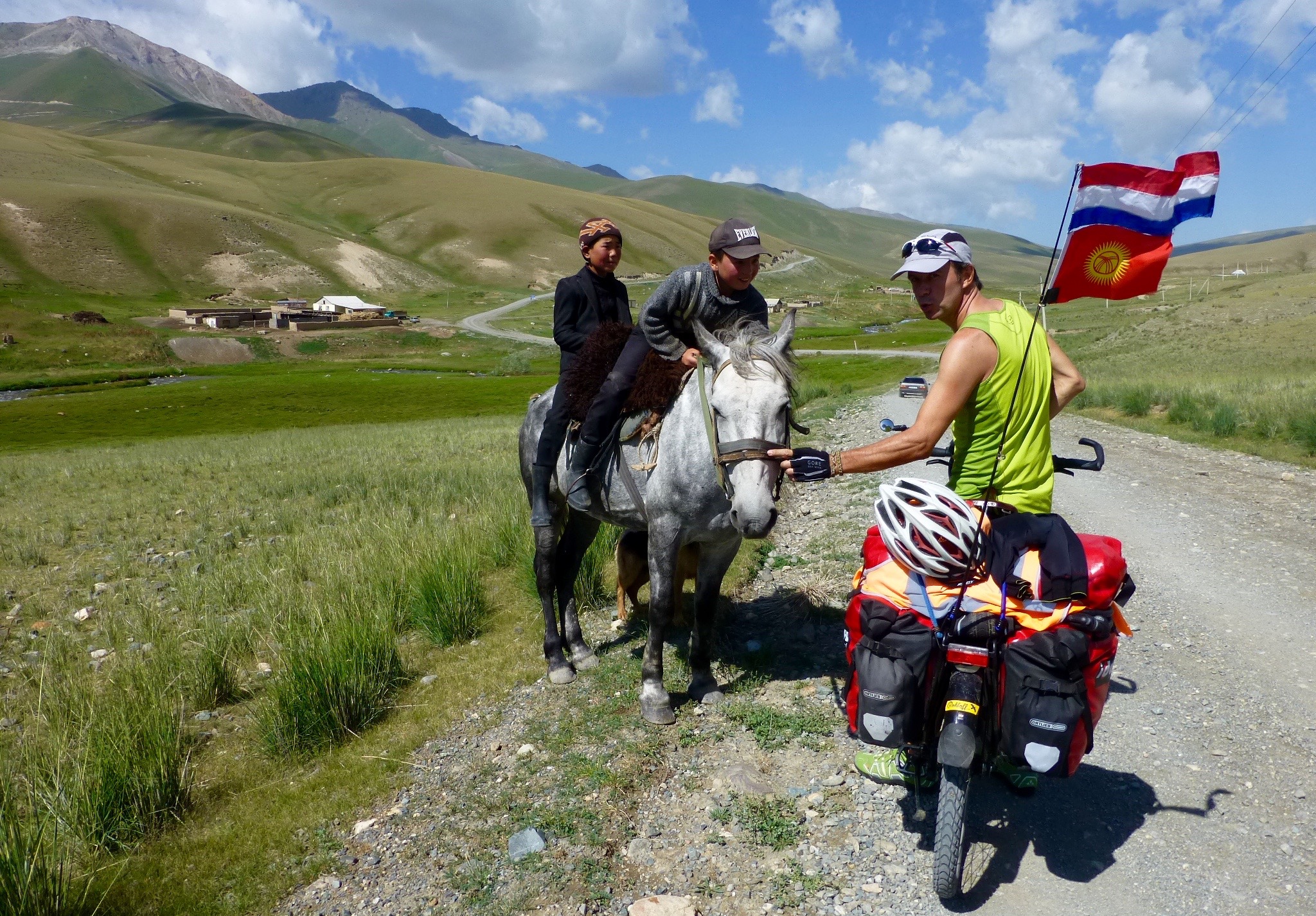
We weren’t really organized and set as a team yet and it took us three hours the next morning before we could begin our climb. Sweating and swearing, slowly pedaling and even slower pushing, wishing we had taken less gear, we step by step moved forward, meter by meter, from rest to rest, and finally reached the top after more than five hours of hard word. But before we could celebrate our first big achievement at 3,446 meters, we had to accept a few presents ourselves. We had stopped just a few hundred meters before the summit – not knowing we were so close – to filter some more water and to refuel ourselves with our remaining food, when the first car stopped. A drunk driver and family father stepped out of the car and desperately wanted to give us something. He started off with Kymyz – more to that later – which we were able to decline. He then handed us a bag with all kinds of mixed sweets, rotten fruit and stale bread and topped this with a donation of sheep meat taken out of huge filthy plastic bag in his trunk. The meat looked disgusting to us, I think we got parts of the stomach. We happily accepted, took a few photos with the donator and his family and buried the meat nearby – hoping, the wolves would find it later. Getting ready to tackle the rest of the mountain, the next car stopped, a muslim opened his window, shouted Salam Aleikum, threw a bottle with a white drink at us and drove off again. With our mouths open we said our goodbyes and thanks while he was already snaking down the pass. We saw another car coming down and wanted to wait for it to pass when it stopped again. The guesthouse owner we stayed with two nights before and who offered us to give us a ride up the mountain stepped out of the car with two tourists to say hello! Surprised we chatted for a few minutes – the tourists were by the way two Dutch guys who shyly asked us how we found each other and if we were a couple as we weren’t of the same nationality. We would get this question more often and most often from other travelers.
Leaving this time was different. After our first 20-month cycle trip from Germany to New Zealand we had spent 15 months in the South of Germany with my family, me working as a communications freelancer and Johan building up his own vintage bike sale. We both knew that it was too soon for us to settle down, so we were preparing for our second big journey. Some family events prevented us from leaving earlier and sometime in April this year we decided to start cycling again as of August into the unknown and without a fixed return date. We chose the old silk route from East to West, beginning in Kyrgyzstan as we had left out Central Asia during our last trip as some of the regions we wanted to cycle aren’t accessible at winter time.
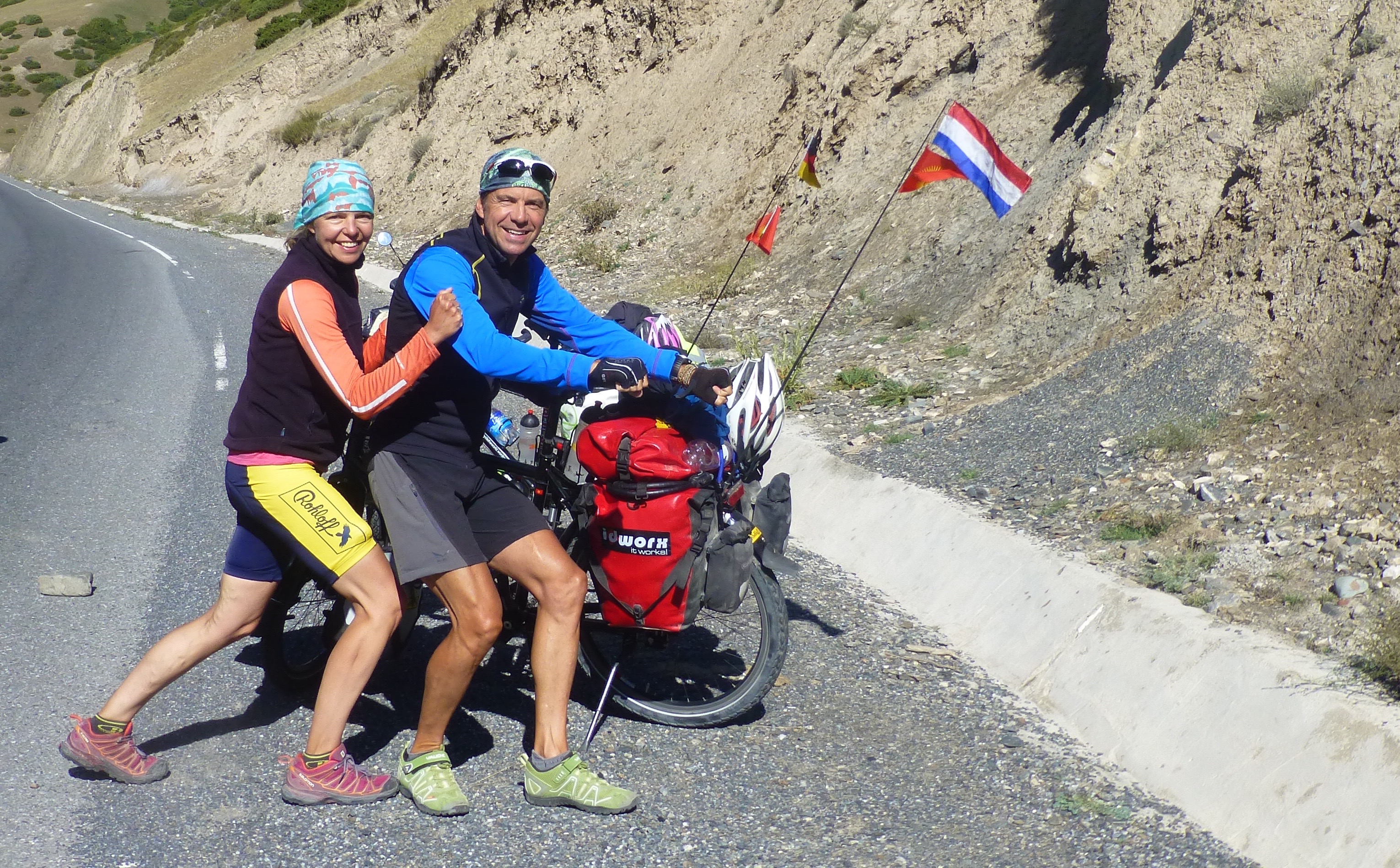
The route was quickly set, new and old sponsors aboard – Rohloff and Idworx – but getting the gear ready was a different task. We considered ourselves seasoned touring cyclists, but choosing the right gear for both hot summer and cold winter temperatures became a challenge. We weren’t prepared to buy all things new, but also knew we had to pack light as we would attempt to ride the second highest highway on this planet – the Pamir Highway. I as always was more concerned about our health and taking good food with us, Johan on the contrary being very weight conscious and having the final word on what could go and what had to stay – even the number of tampons I intended to take was worth a discussion. We sold our old bikes and bought new ones knowing we would most of the time ride on unpaved and unmaintained roads. We are very grateful that Idworx and Rohloff made this possible for us! On the evening of August 1 all panniers, bags and boxes were packed and sealed and ready for take off.
Different was the fact, that we had much more time to pack up our stuff and clear our apartment, as we only had to fill boxes, dismantle our furniture and carry everything one floor up as we thankfully are able store everything at my brother’s house. Not that there weren’t any hickups or we didn’t get stressed in the end – some last job assignments had to be finished, tax and insurance things settled and farewells arranged with friends and family from near and far.
And finally – after a last breakfast with my parents and my brother’s family, some tears shed and some sad goodbyes we took off in the morning of August 2 to embark onto our new adventure and to become cycling nomads once again.
Our new bikes have arrived – a big thank you to our sponsors Idworx and Rohloff. And now is the time to let you know that we’ll embark on a new cycling adventure – on new bikes and renewed spirits.
After our 20-month cycling tour from Germany to New Zealand from 2012 to 2014 and a break of more than a year in South Germany we are excited to join the cycle touring community once more. On August 2, 2015 we’ll fly to Bishkek, Kyrgysztan and from there we are planning to cycle via Tajikistan, Usbekistan, Turkmenistan, Iran, United Arab Emirates to Oman. What’s next still needs to be discussed.
We are looking forward to sharing our stories with you and even more so to stay in touch with all of you. We’ll also continue to blog in English and German and update our Facebook page (where possible) more regularly.
For now, stay tuned for more, be safe and see you soon!
Unsere neuen Fahrräder sind da – ein herzliches Dankeschön an unsere Sponsoren Idworx und Rohloff! Jetzt ist es auch an der Zeit, euch alle wissen zu lassen, dass wir uns wieder ins nächste Radelabenteuer stürzen – auf neuen Rädern und mental und körperlich aufgetankt!
Nach unserer ersten großen Radreise von Deutschland nach Neuseeland von 2012 bis 2014 und mehr als einem Jahr Pause in Süddeutschland freuen wir uns riesig, wieder auf unsere Räder umzusteigen. Am 2. August fliegen wir nach Bishkek in Kirgisistan, um von dort über Tadschikistan, Usbekistan, Iran, die Vereinten Arabischen Emirate in den Oman zu radeln. Wie es dann weitergeht, steht noch in den Sternen.
Hier werden wir ab August über unsere Erfahrungen berichten und wir hoffen, so mit euch allen in Kontakt bleiben zu können. Wie gehabt bloggen wir in Deutsch und Englisch und versuchen – wo immer das möglich ist – unsere Facebook-Seite regelmäßiger zu aktualisieren.















































 2cycletheworld