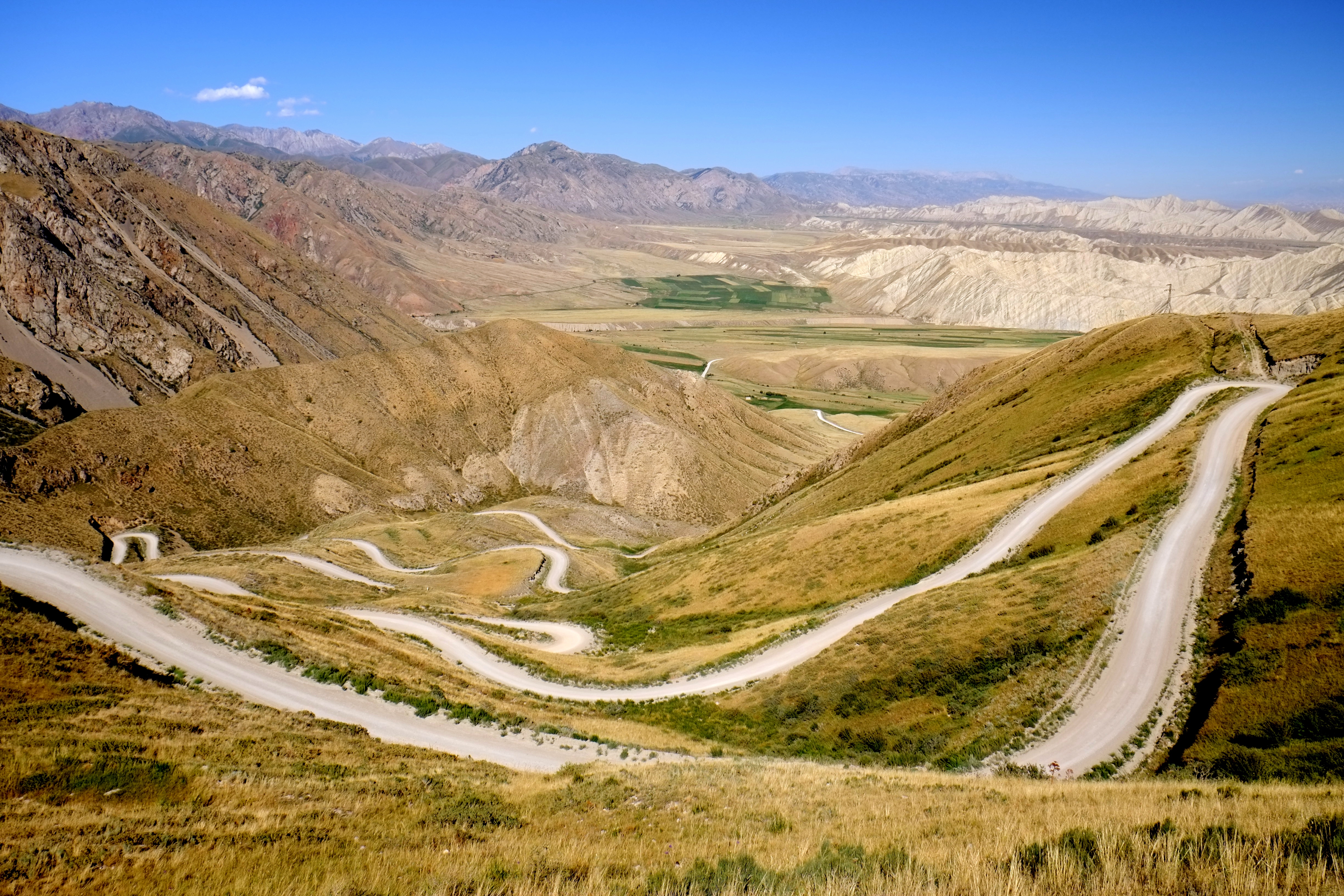
The Infamous Pamir Highway – Part 2

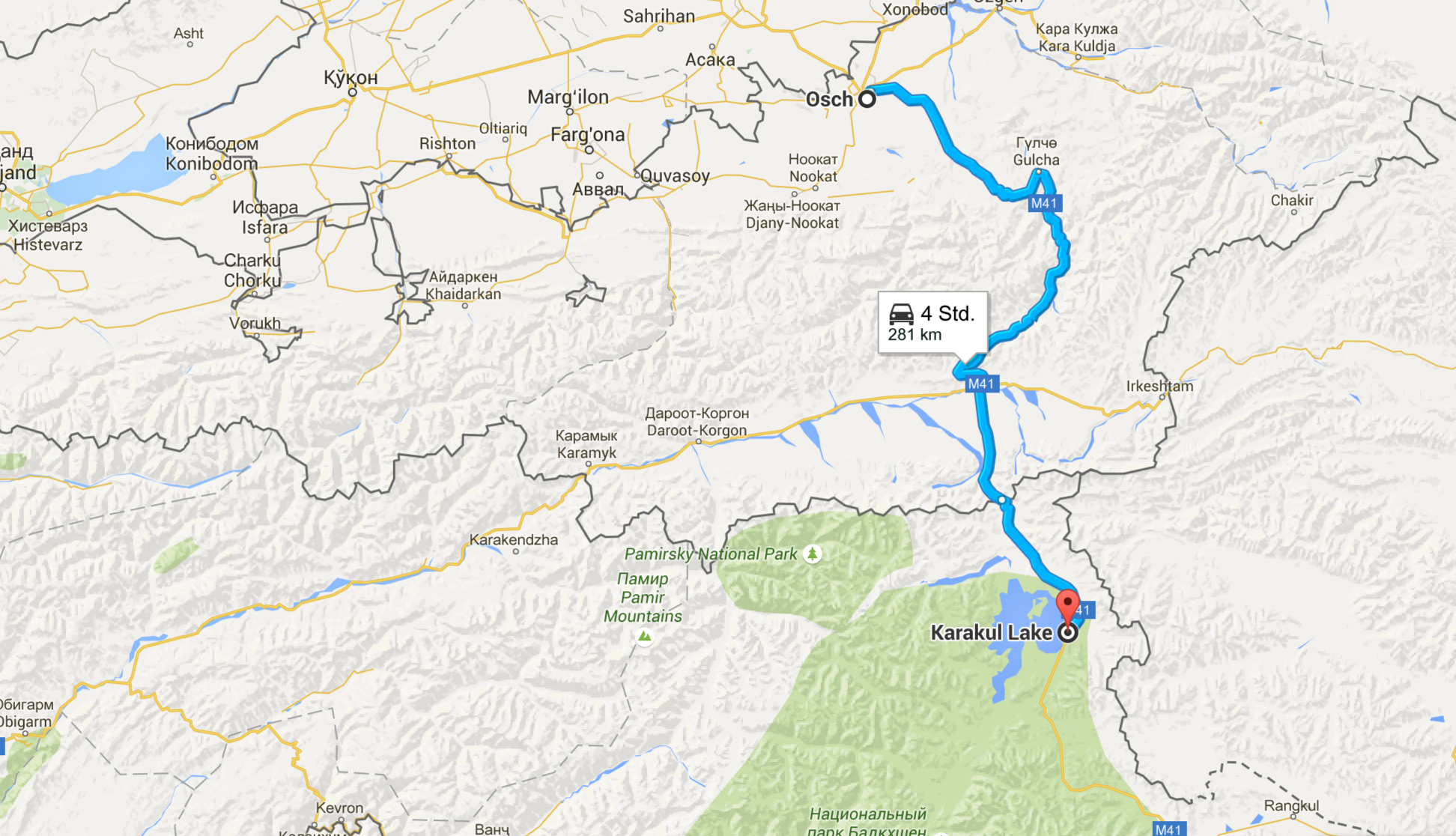
23 August – 8 September, 2015 – As the Pamir Highway has been an important milestone of our journey you’ll find below our diary entries with the highlights of every day presented in four parts.
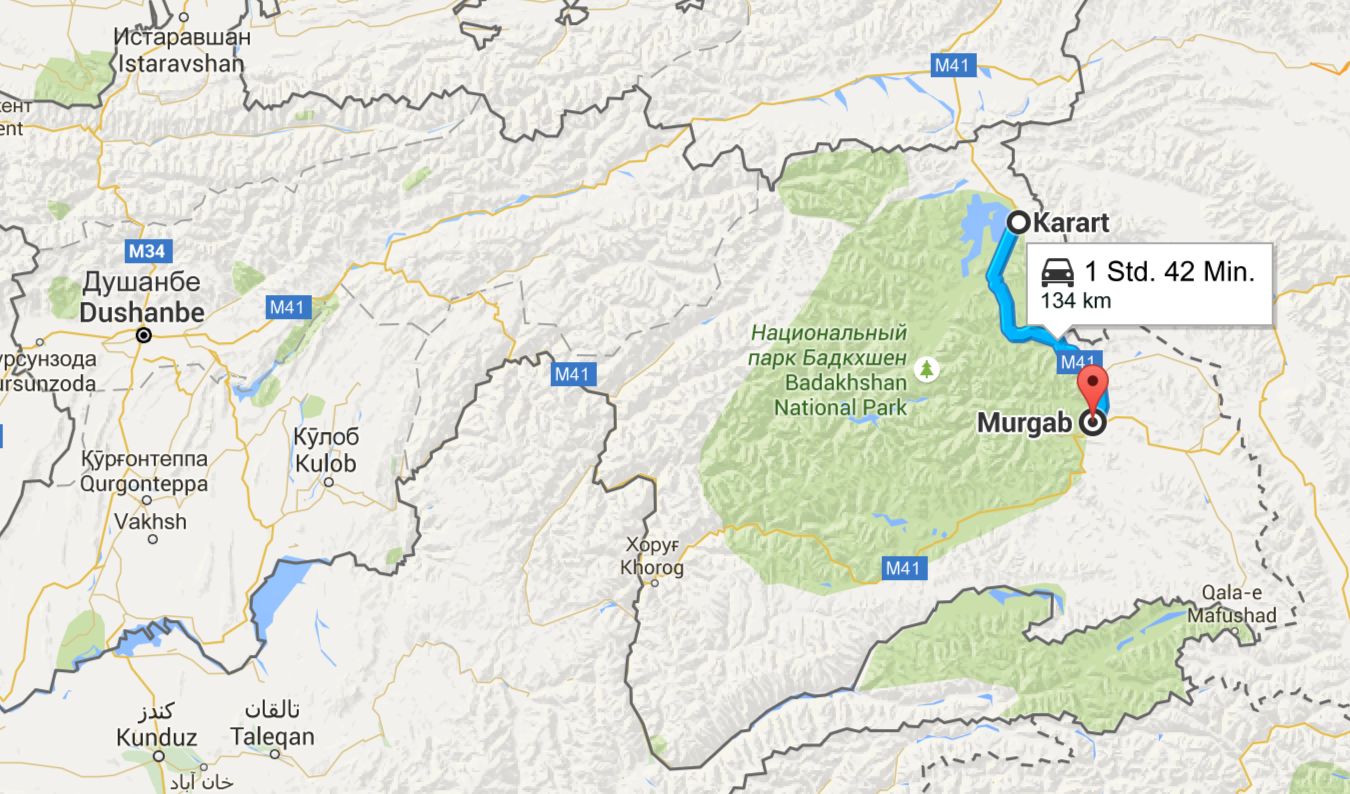
137km, 1047 meters altitude gain (1258km and 16,155 m altitude gain in total)

Day 6: Karakul – bottom of pass Akbaital: 48km, altitude gain 503m
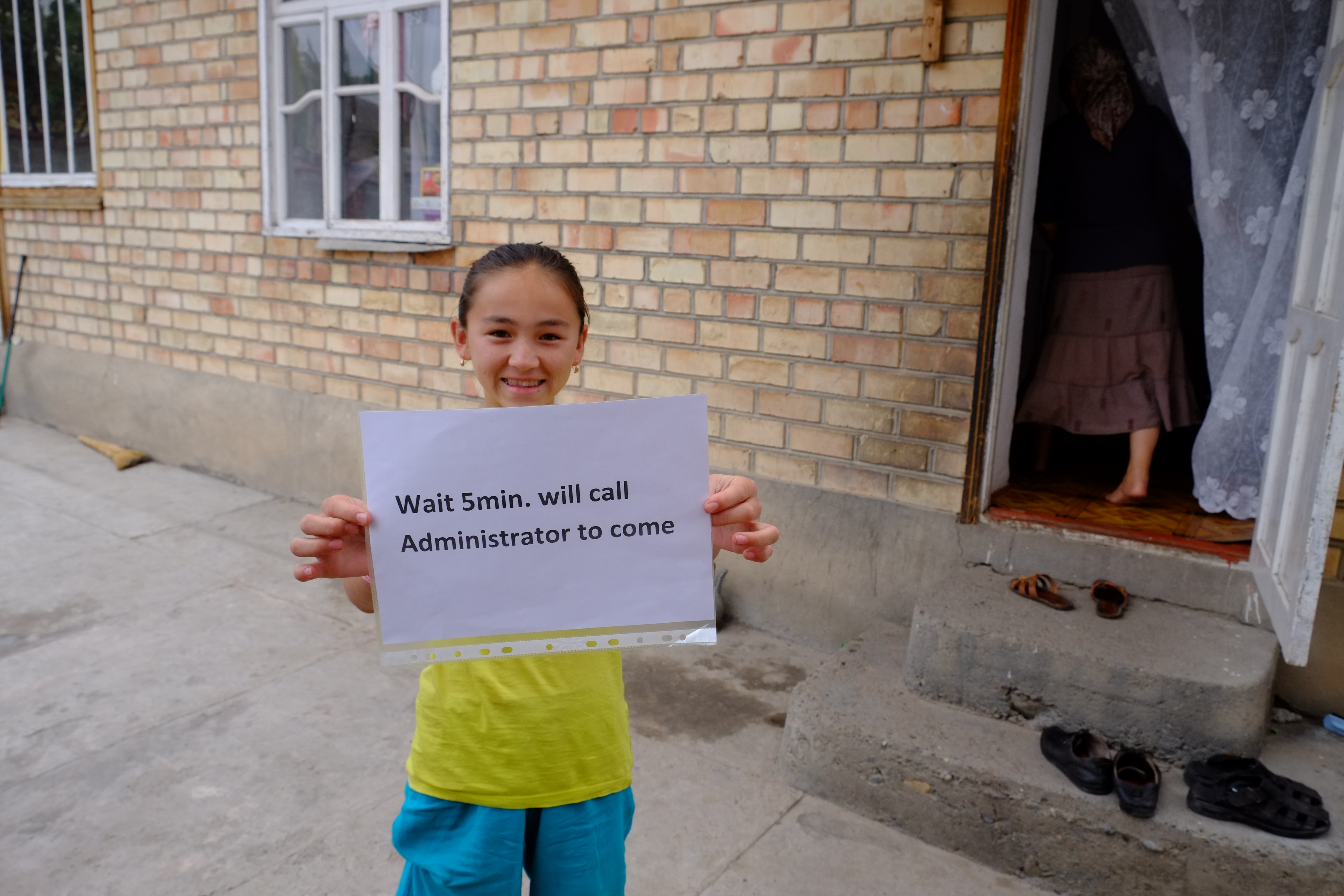
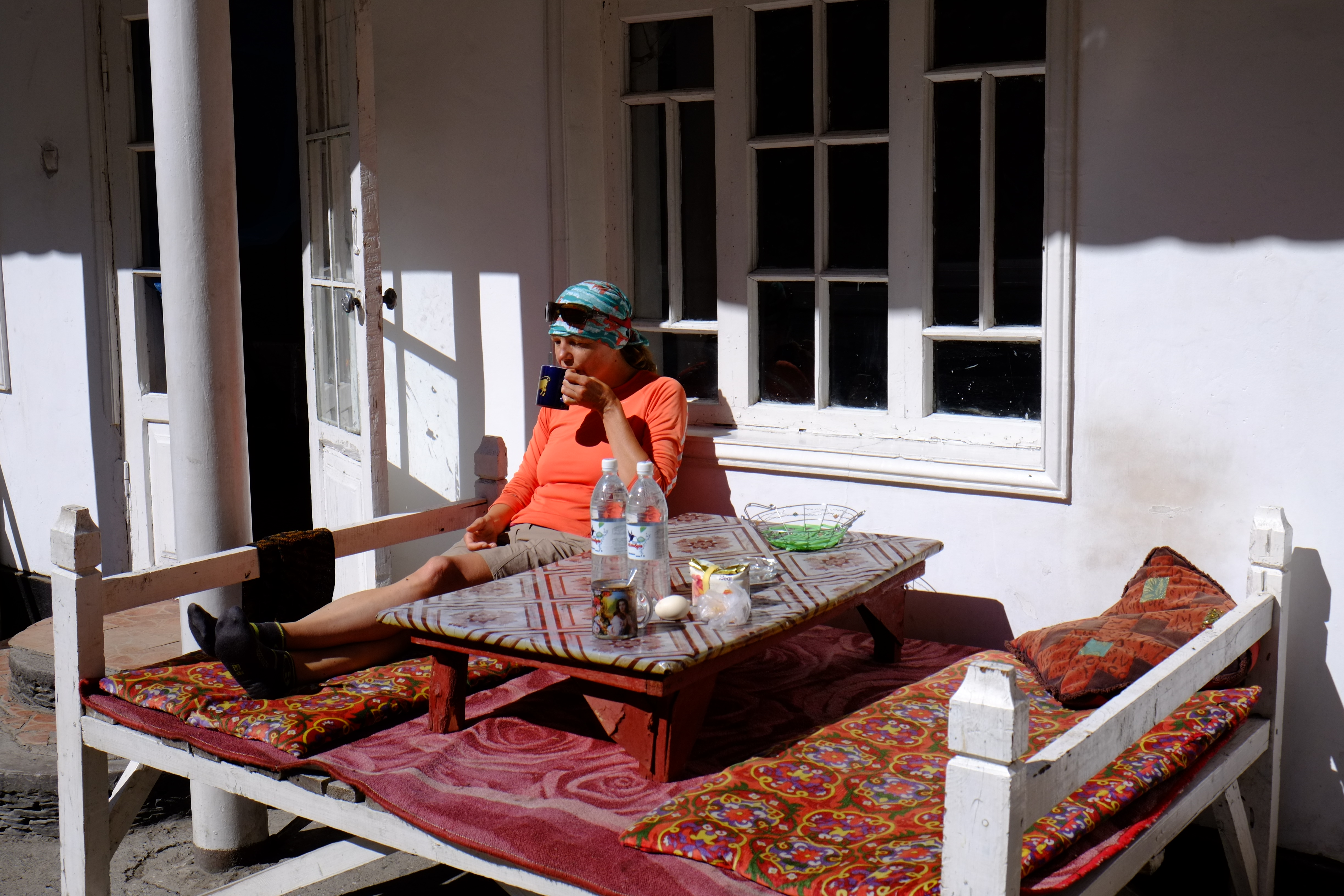
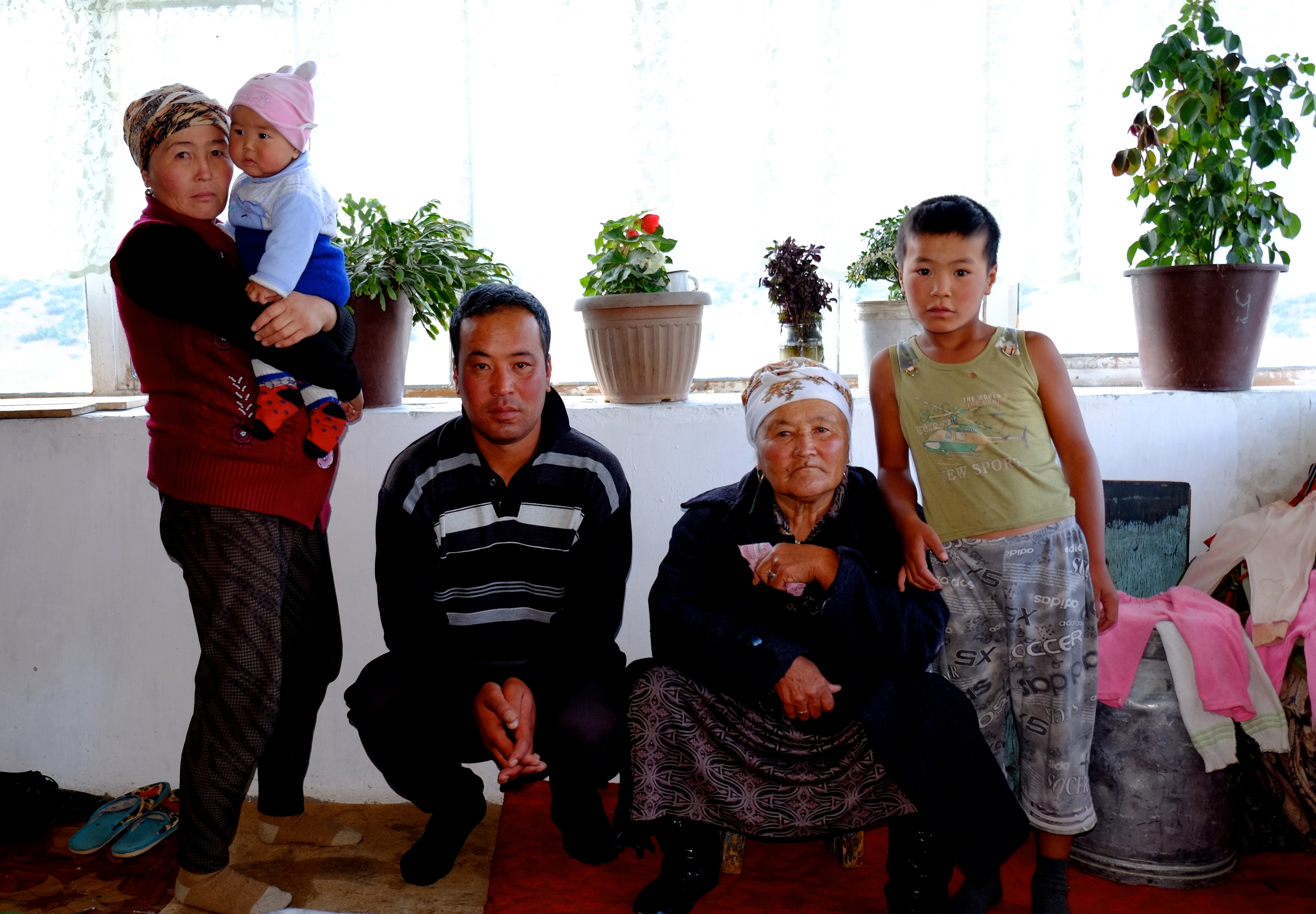
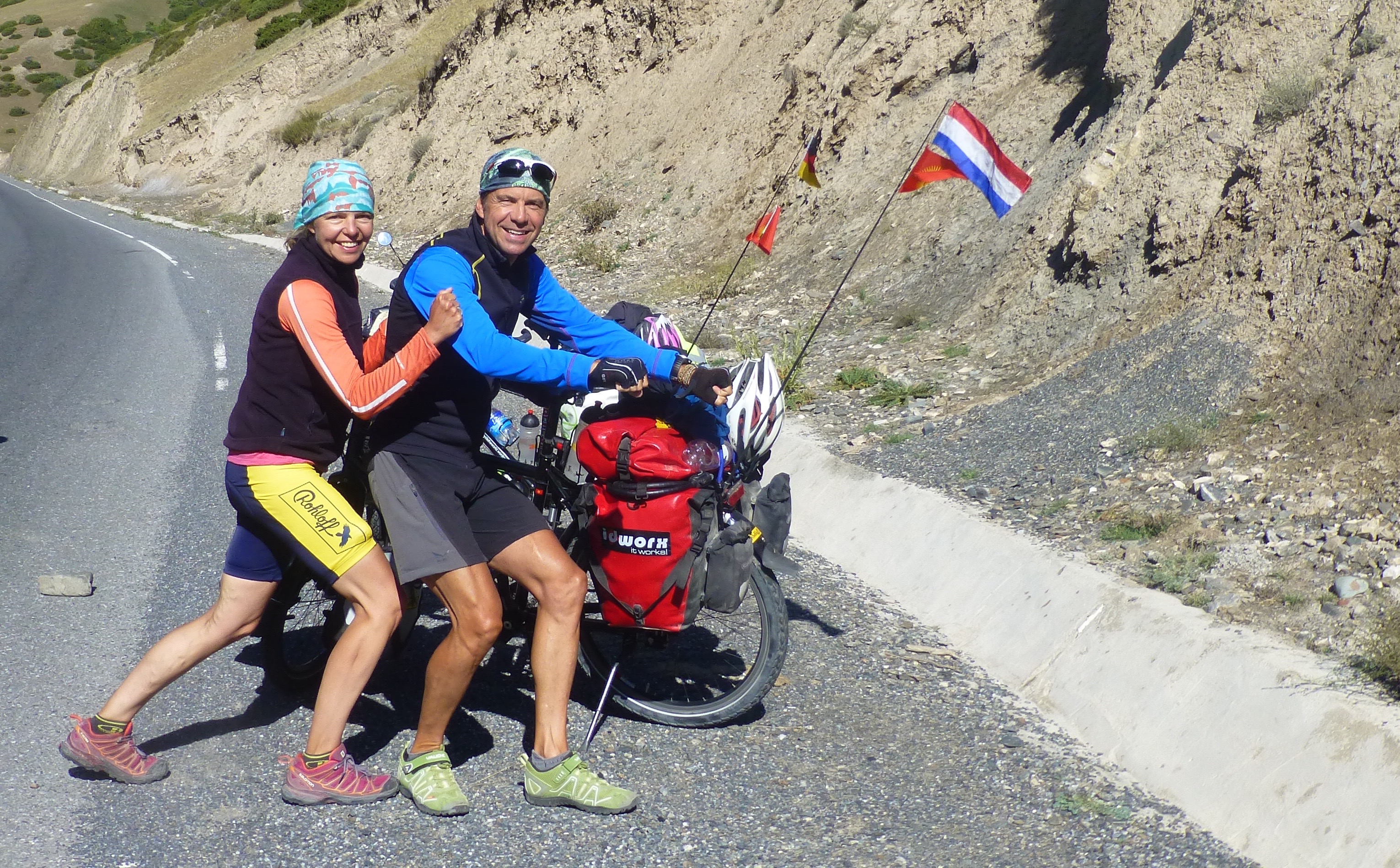
A late start and a tremendous headwind prevents us from making any progress. We meet two Austrian cyclists and Eddy (not Merckx) from Belgium who are today’s lucky ones. We get updates on the road and continue. Extreme washboard after 40km doesn’t help us and I get weaker and weaker and even start walking at times as it is easier than cycling against this wind. Right before the pass we see a farmer’s camp and decide to call it a day. Johan and I agree to pitch the tent and cook ourselves and five minutes later Johan ‘books’ us into the hut including half-board for around 7 EUR. At first happy to be be done for the day, we would soon regret it. The people are very hospitable, prepare chai for us which is served with bread, kefir and butter. We relax in the overheated hut at temperatures of around 30 degrees but almost suffocate from the exhaust of the little oven used for cooking and heating. We can’t wash ourselves so we endure and soon dinner is served. Again chai and bread and a kind of ravioli filled with meat and onions. A tasty but greasy dish. Right after dinner our bed is being prepared next to the dining table. The 10-year-old daughter lays out many thick blankets and pillows on the floor and indicates that we now can go to sleep. The whole family is still sitting around the table eating and drinking and we feel a bit odd to go to bed, especially as we are still dressed in our cycling clothes and not keen on keeping them on all night. Not being able to wash has already been hard enough. We are being told another time to go to sleep and we finally obey. With low voices the family continues eating and firing the heating. After dinner the father lits a few cigarettes, farts with Johan laying right next to him and us almost dying with all our clothes on under two heavy blankets. About a sleepless hour later the family starts making their own sleeping arrangements, now stumbling over us as their bedding is right behind us. Finally ready, the daughter begins to talk endlessly for at least another hour, us still fully awake, but in the meantime secretly undressed under our blankets. No way I could sleep in my sports bra and cycling shorts as our clothes pannier stands on the other side of the hut. Now I am only wearing my sweaty tee. Johan had been smart enough to bring his pyjama with him. My challenge now is to keep my naked bottom under the blanket and to get dressed on time the next morning. When the talking finally stops we hear another strange noise – the girl is peeing into a bowl right next to the beds. This procedure is being repeated several times and in the morning we get up more shattered than the evening before. An altitude of 4100m and my beginning stomach problems most likely didn’t really help either.

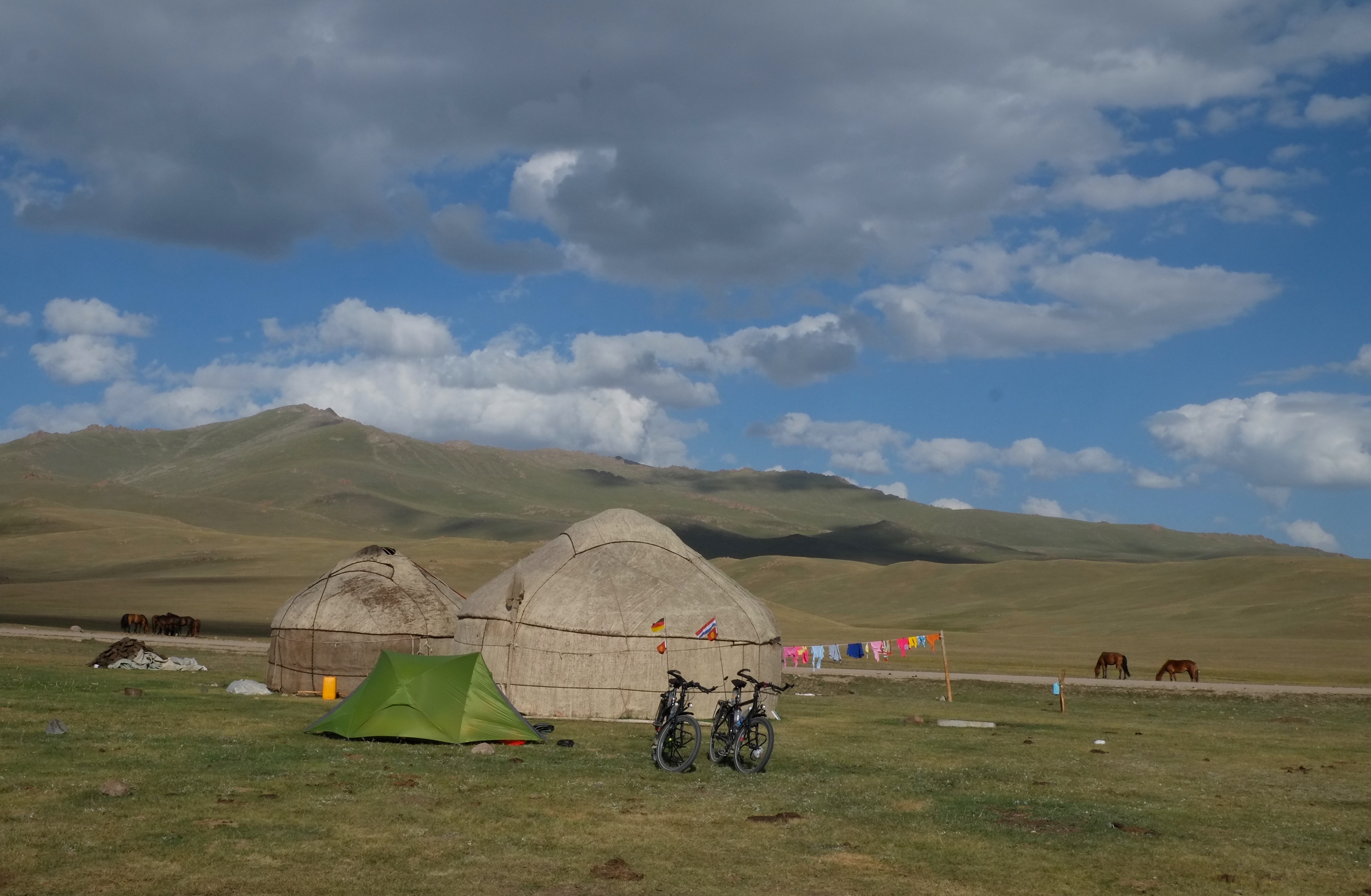
Our nice little homestay

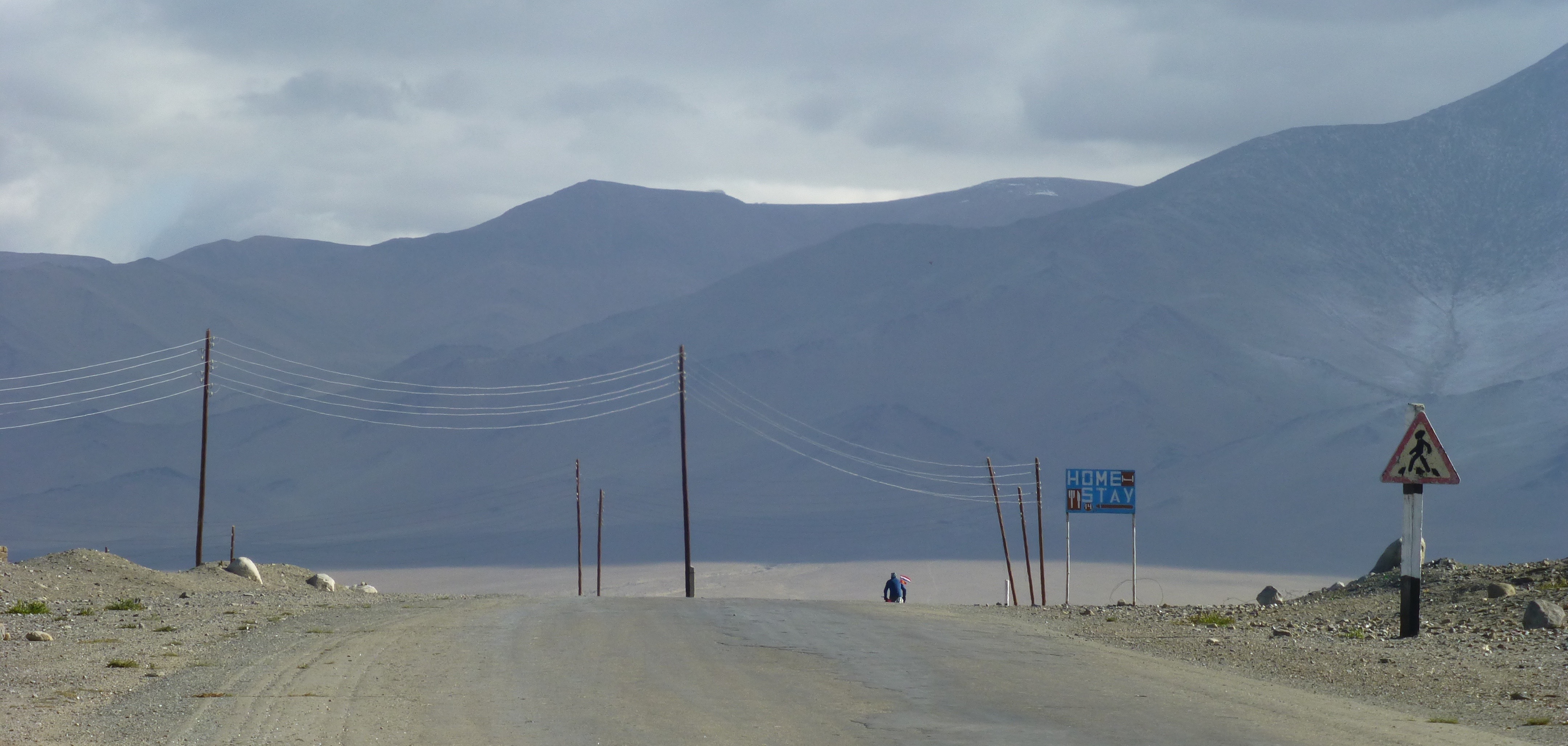
Leaving Sary Tash

Leaving Sary Tash
Leaving Sary Tash
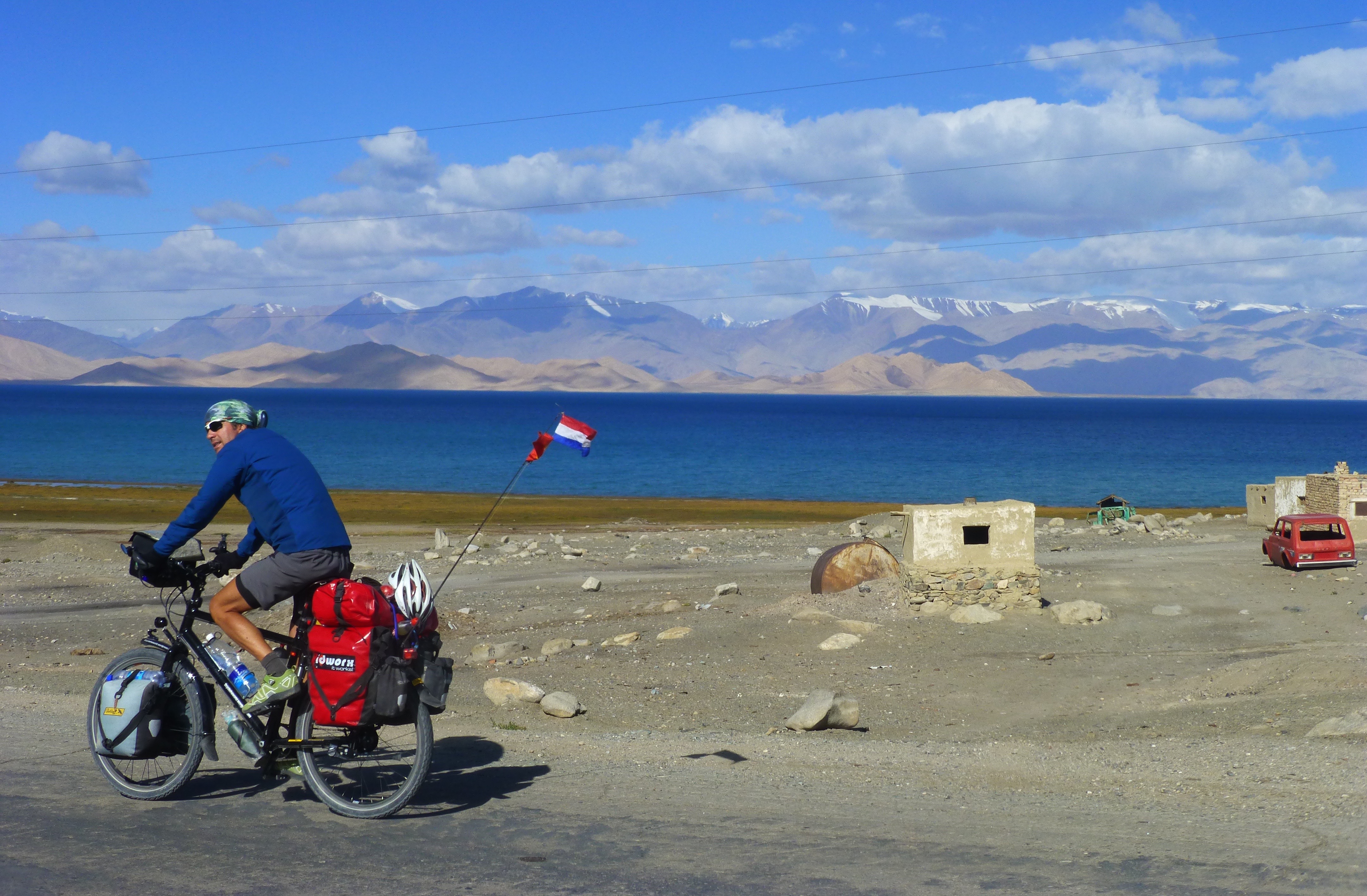
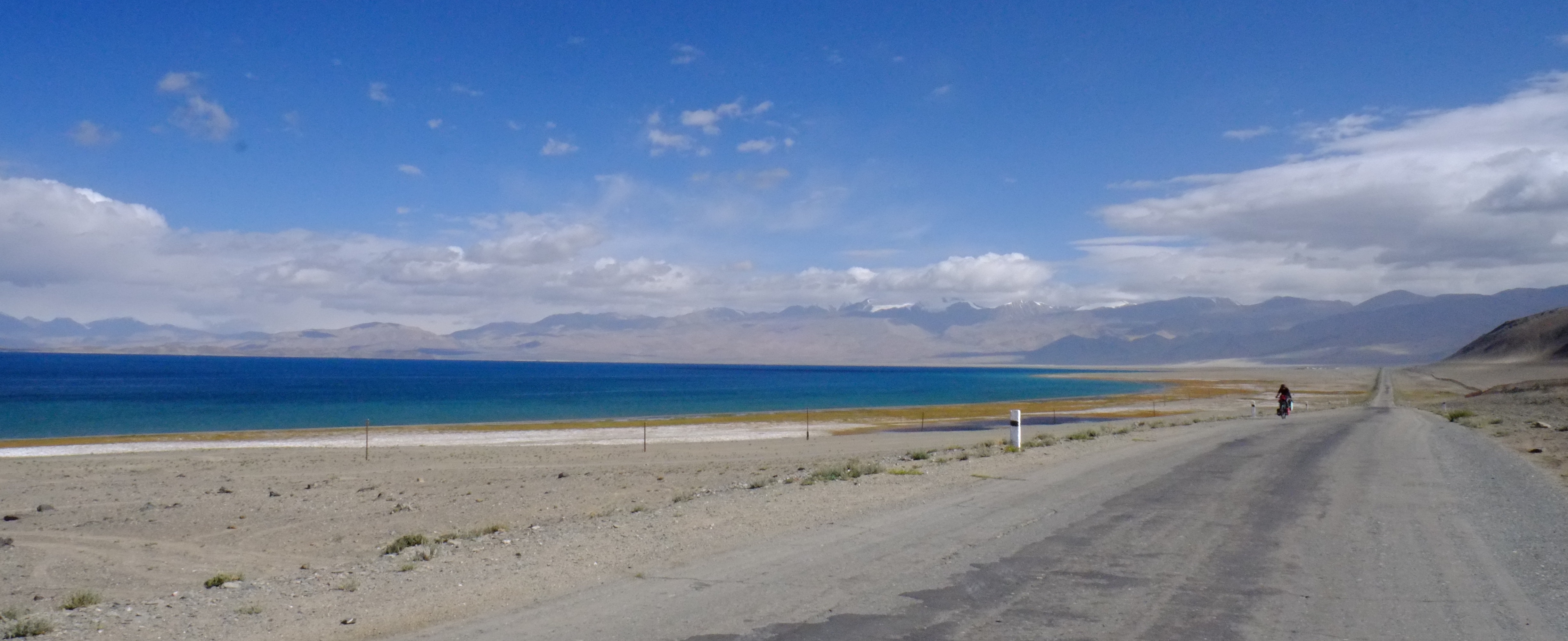
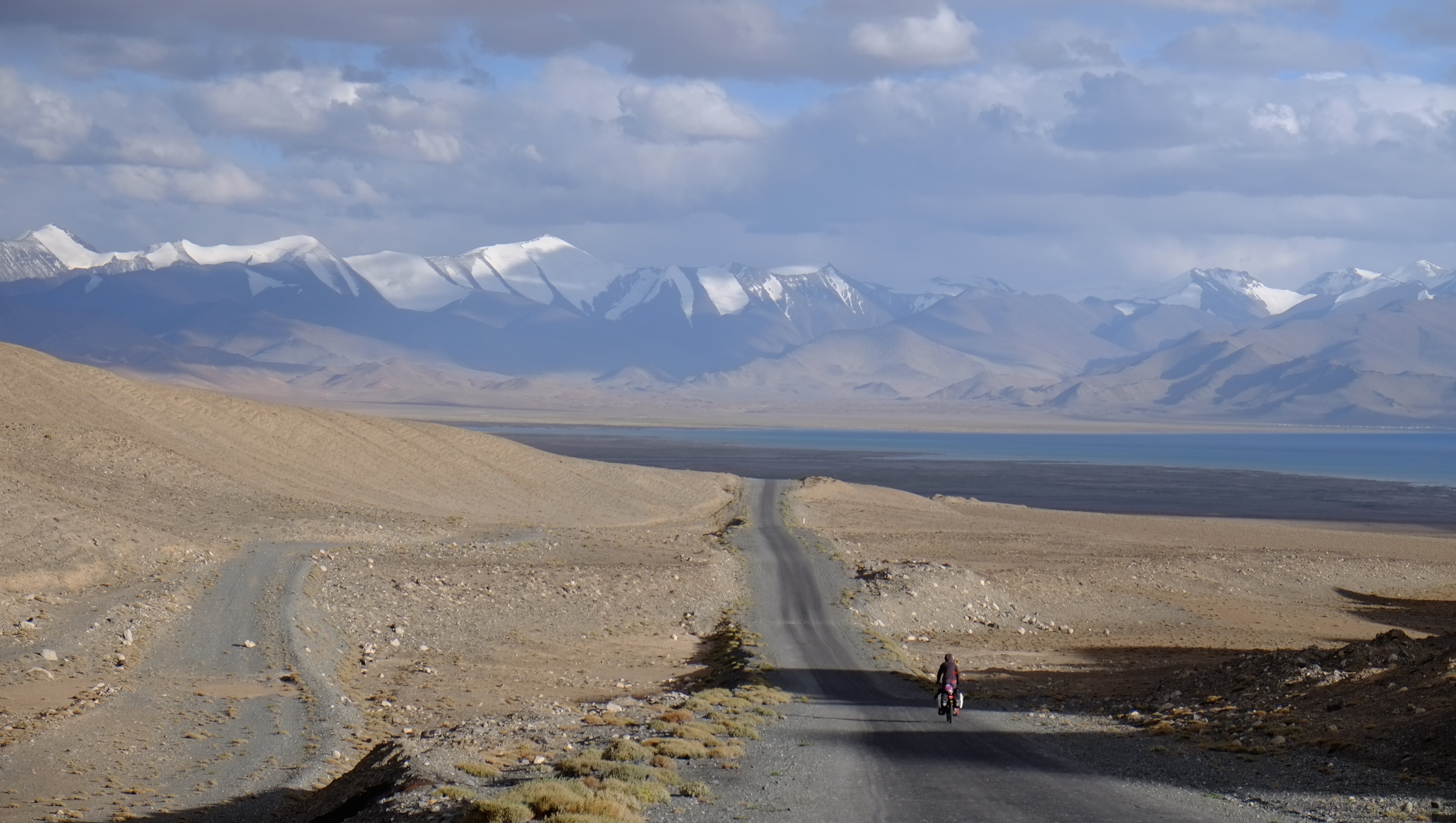
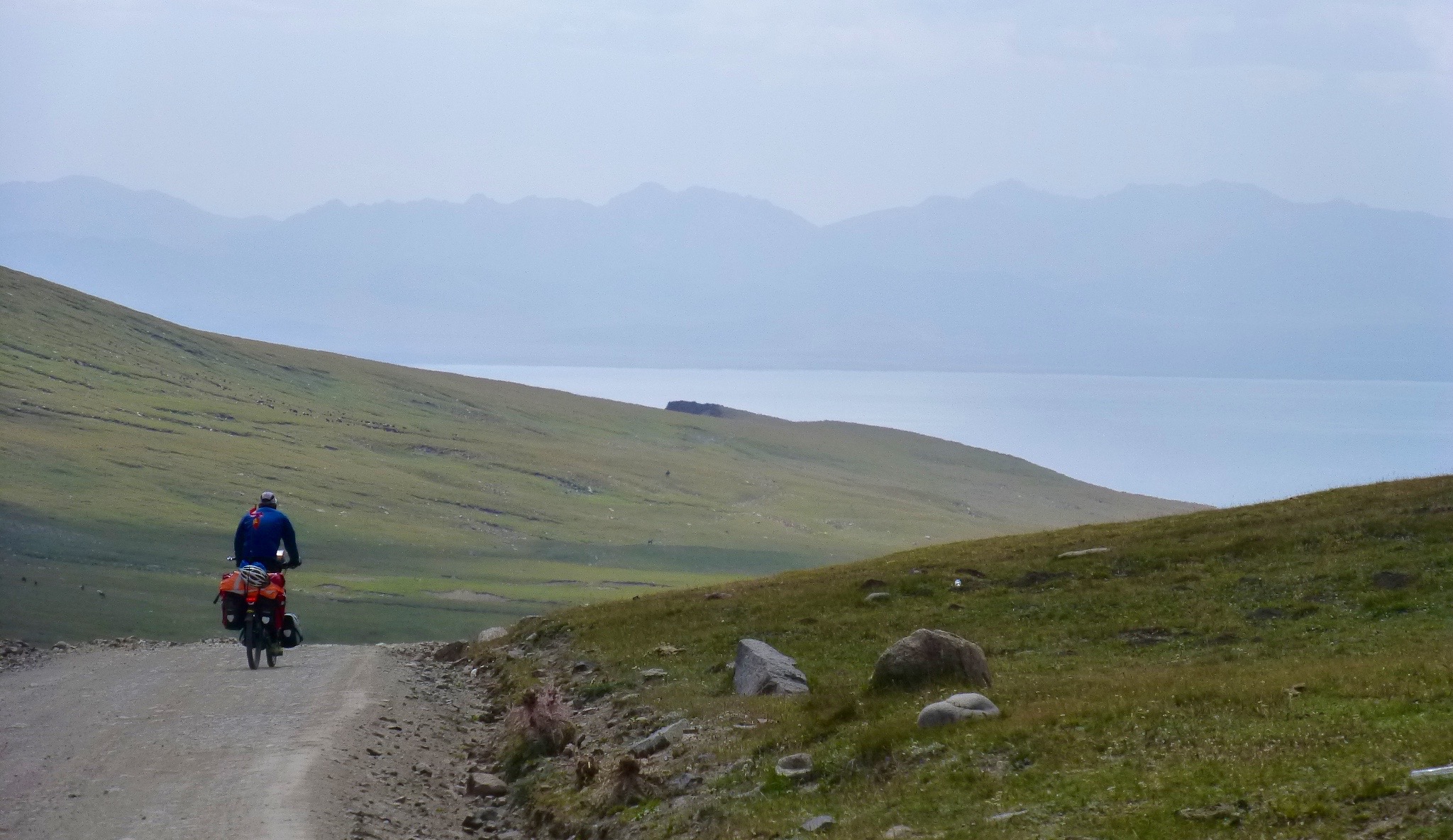
Lake Karakul
Lake Karakul
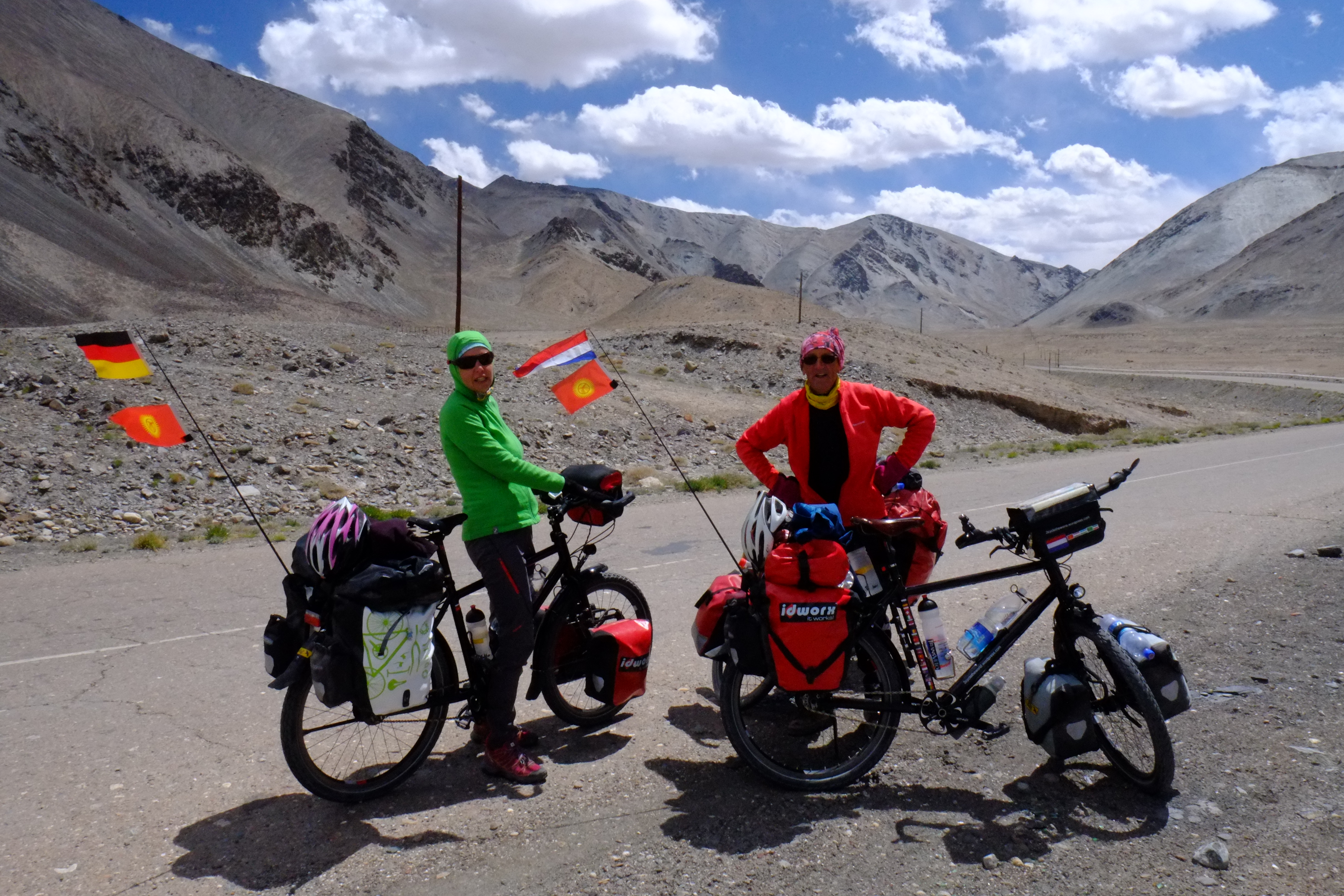
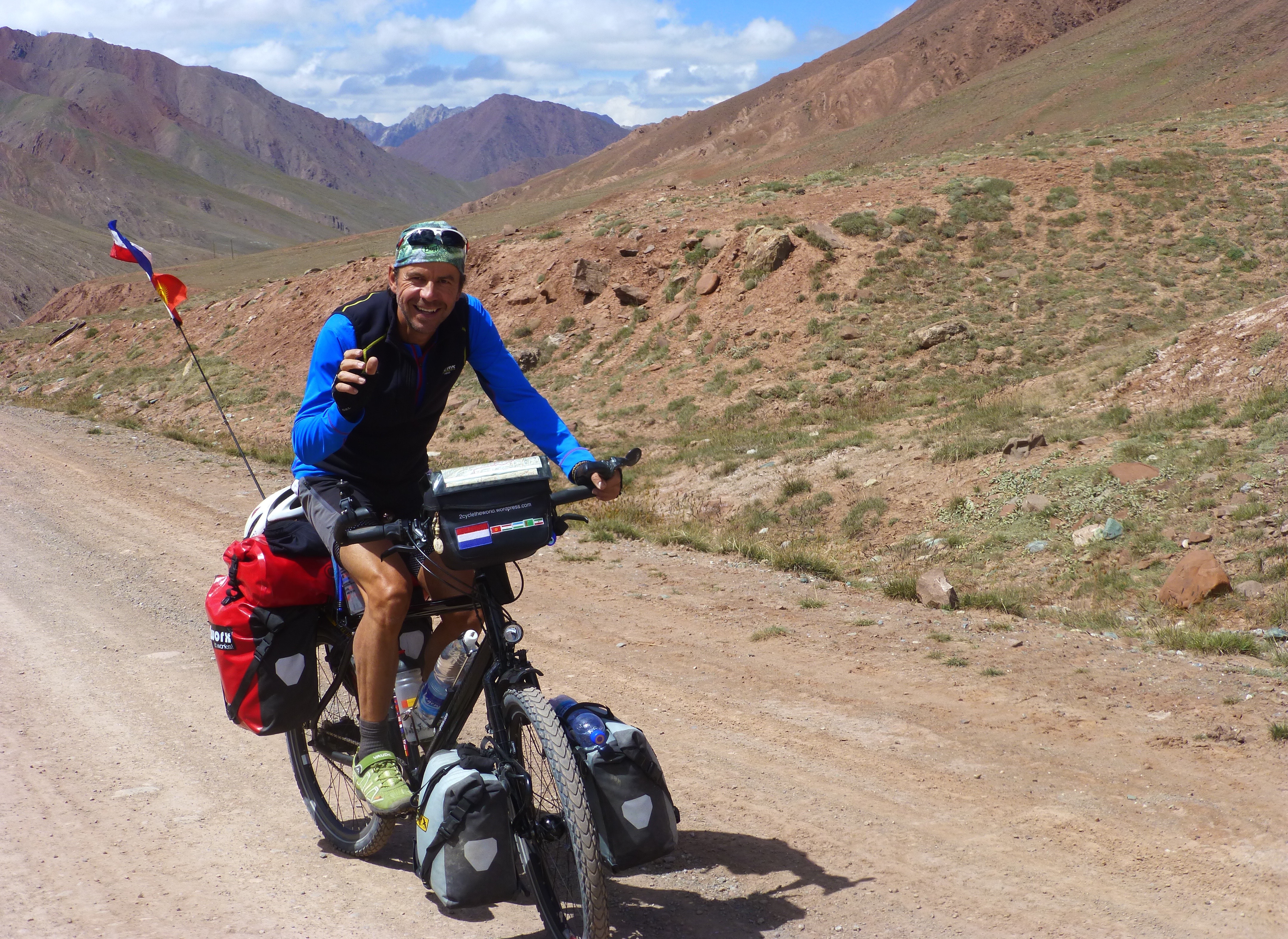
Eddy from Belgium
Eddy from Belgium

Day 7: Pass Akbaital – Murghab: 89km, altitude gain 544m
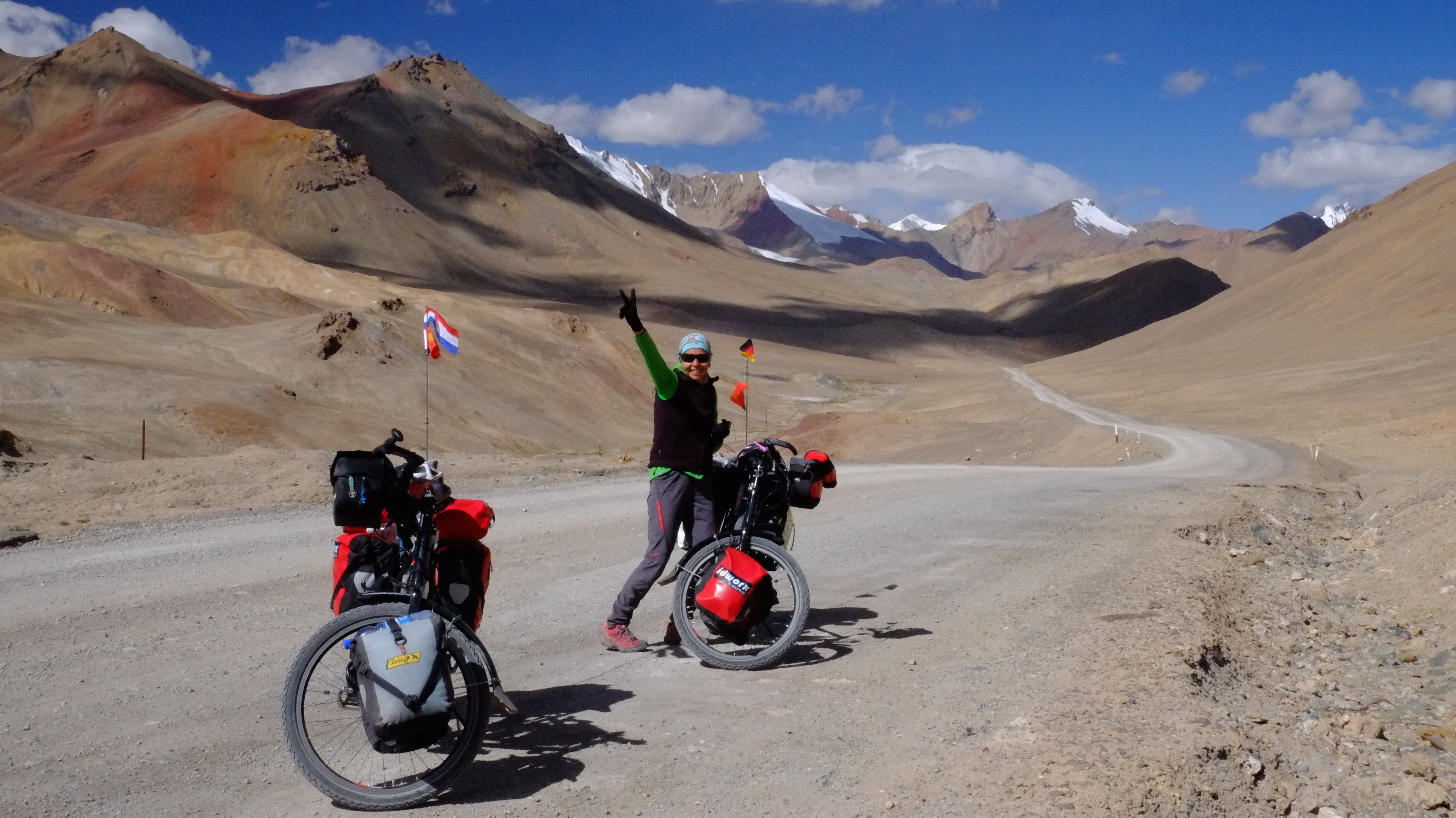
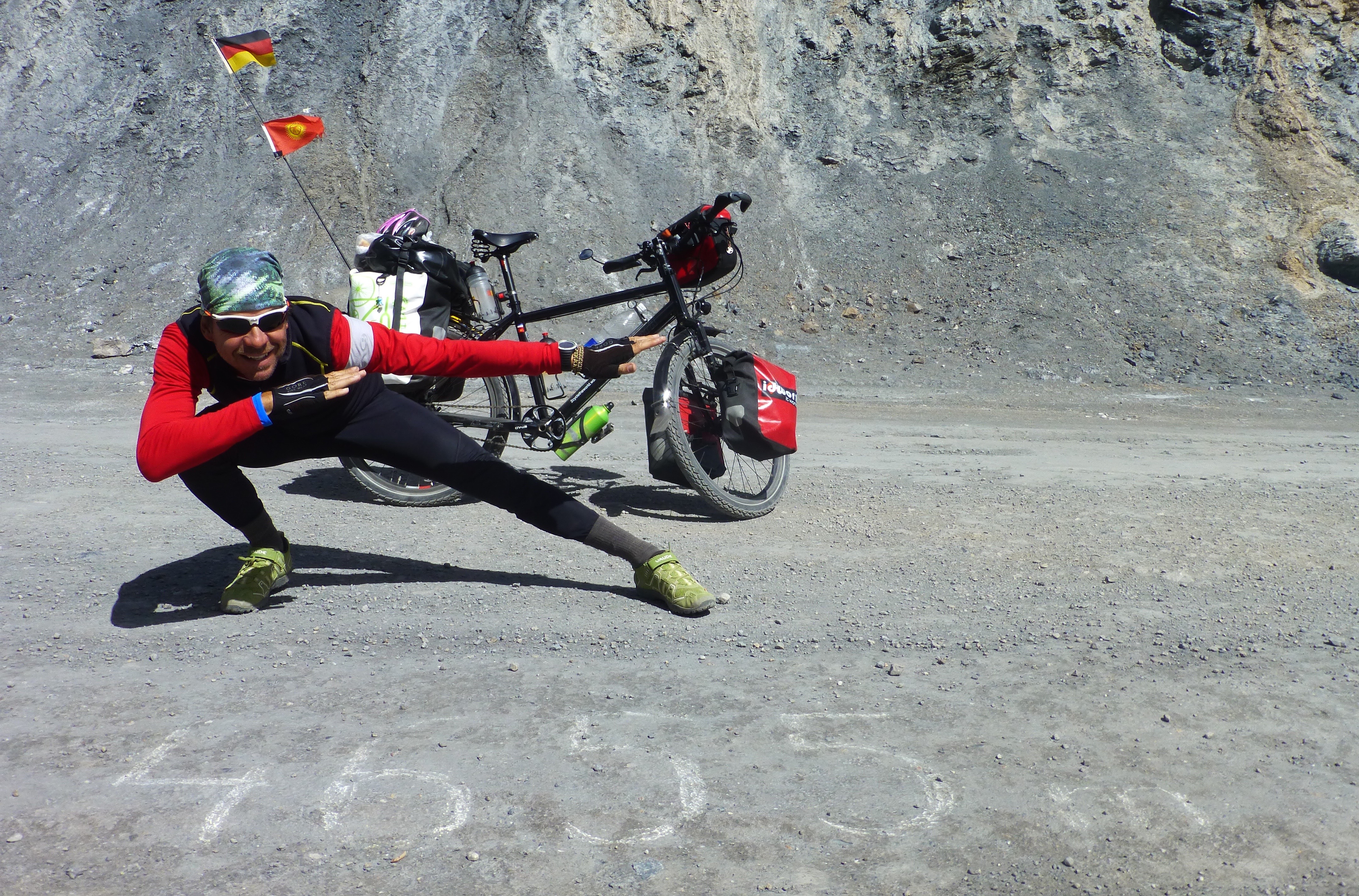
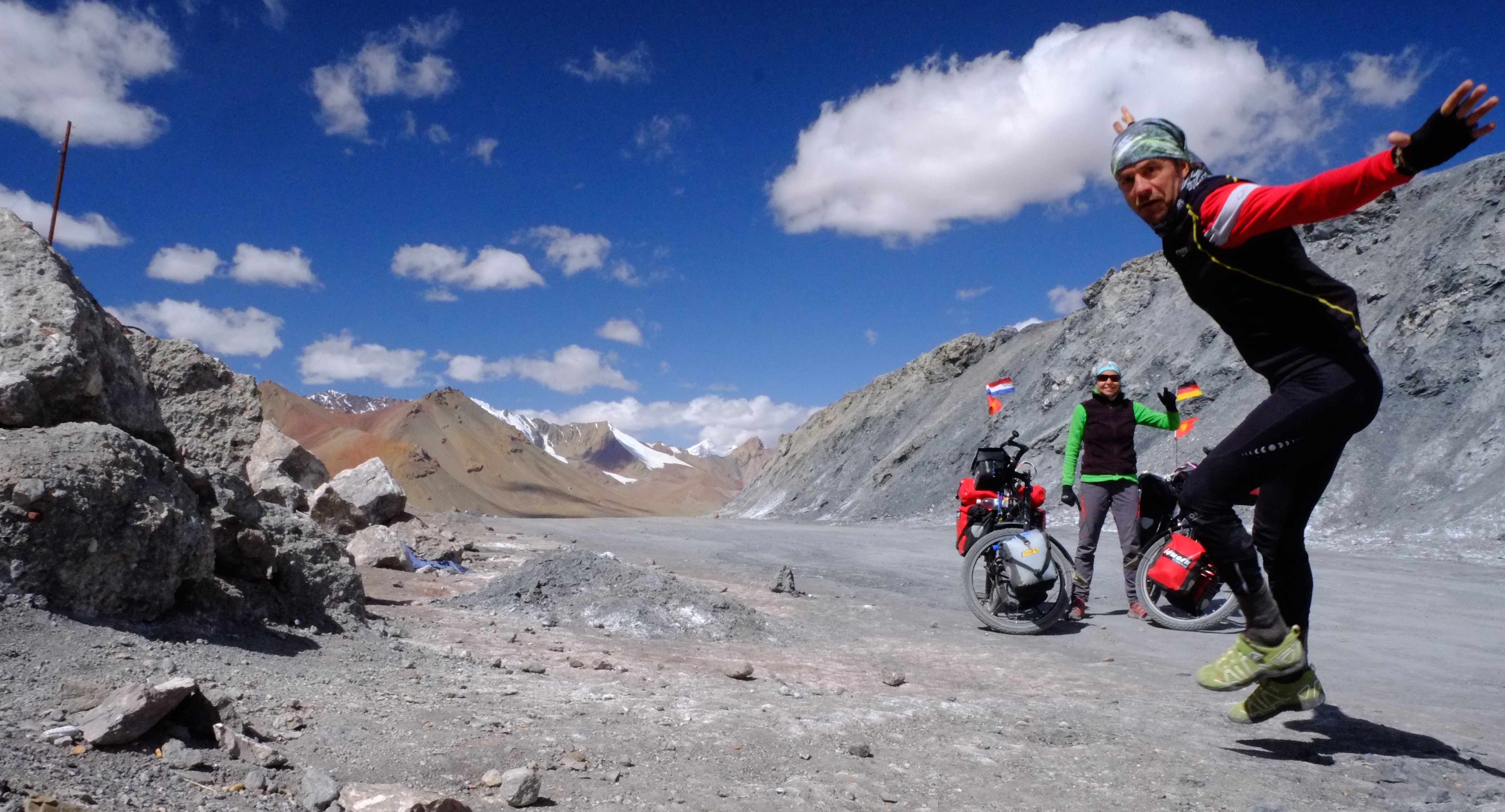
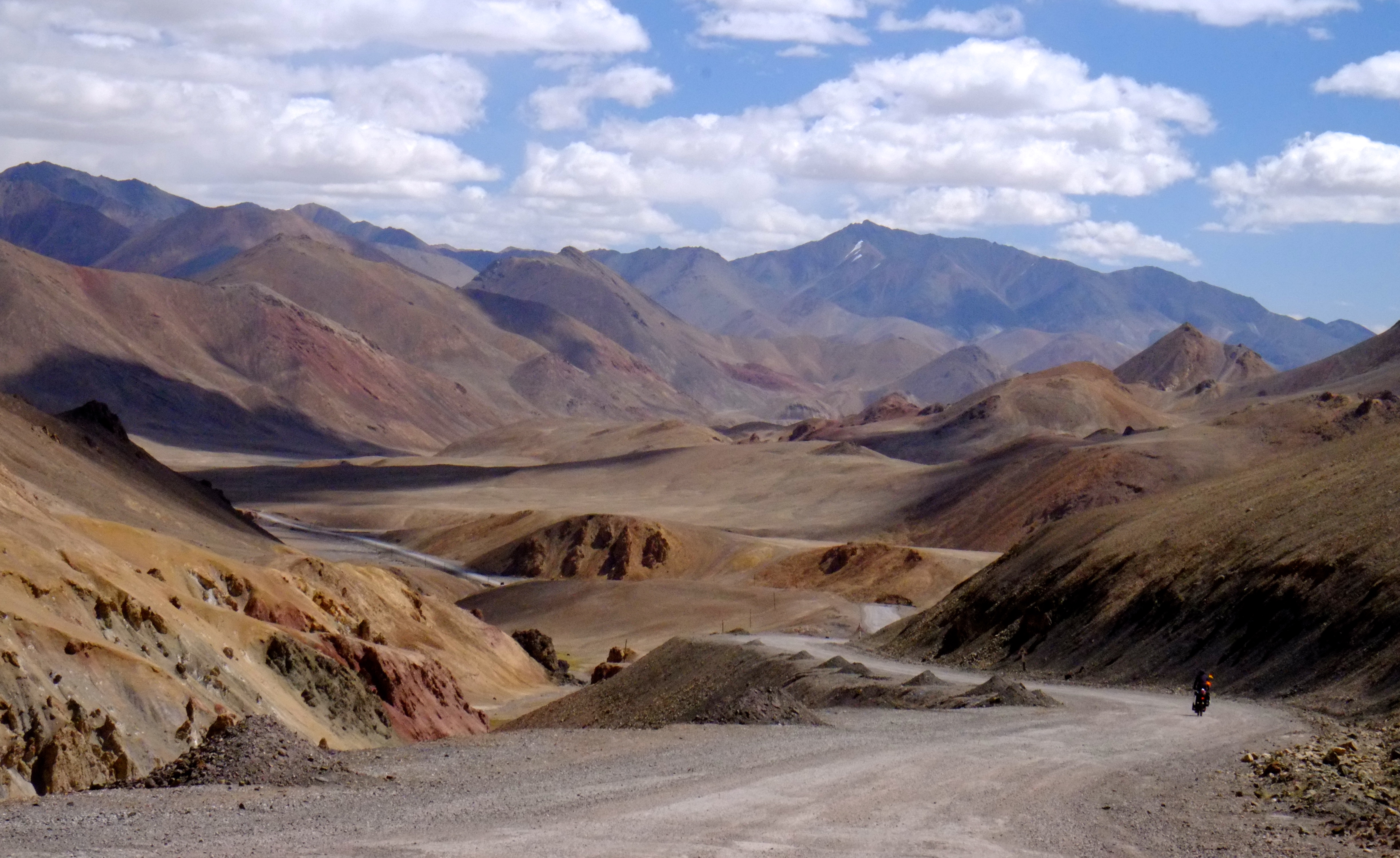
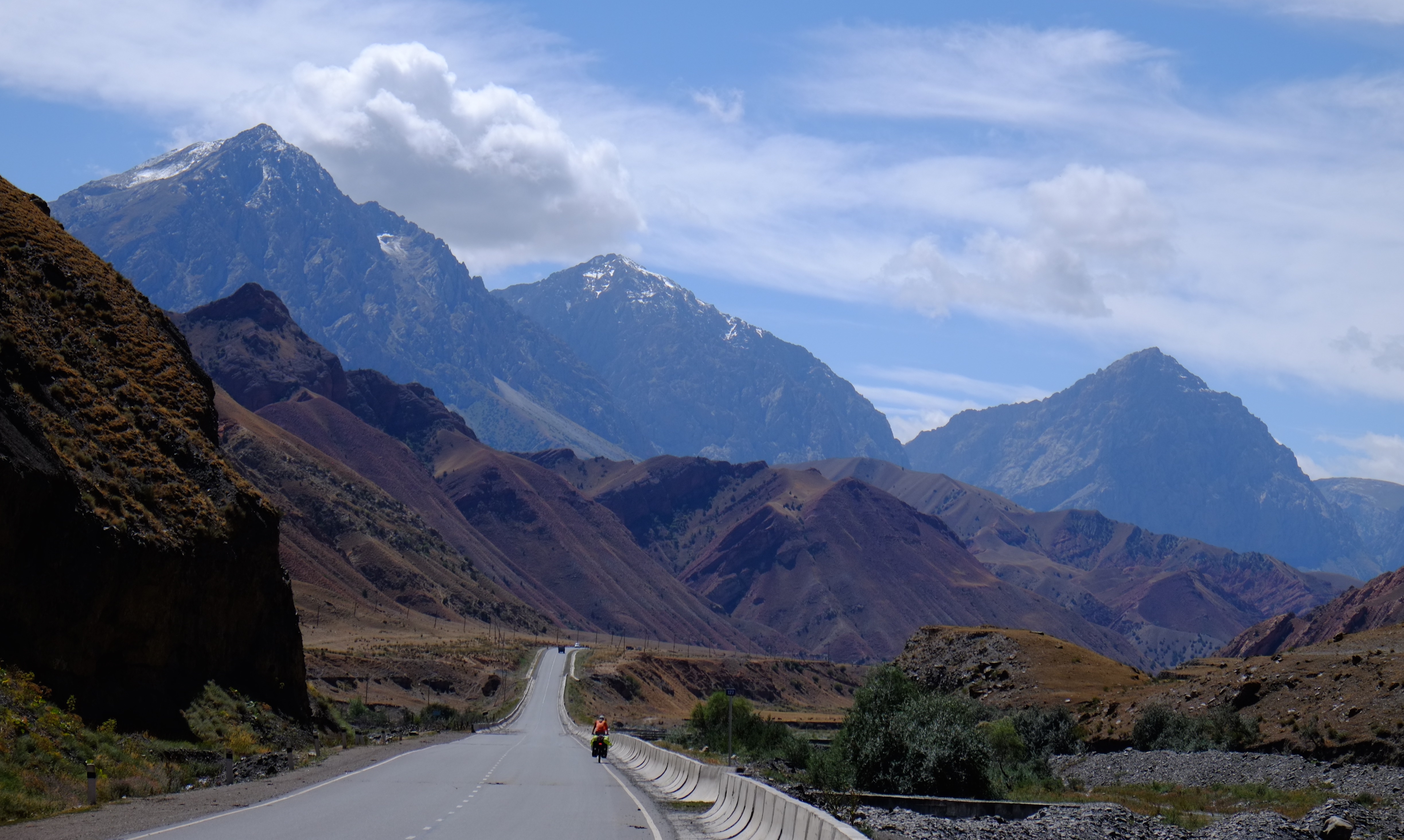
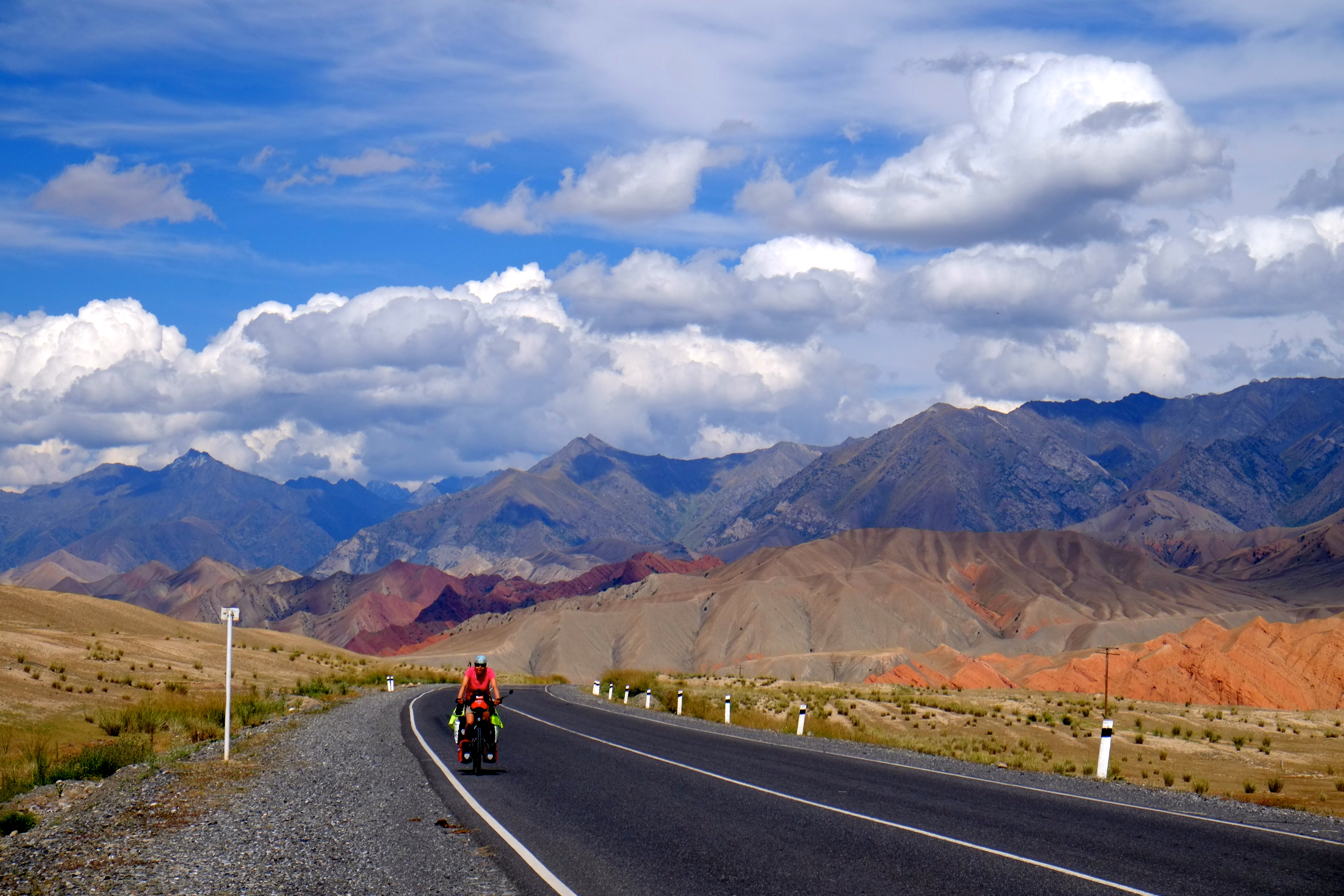
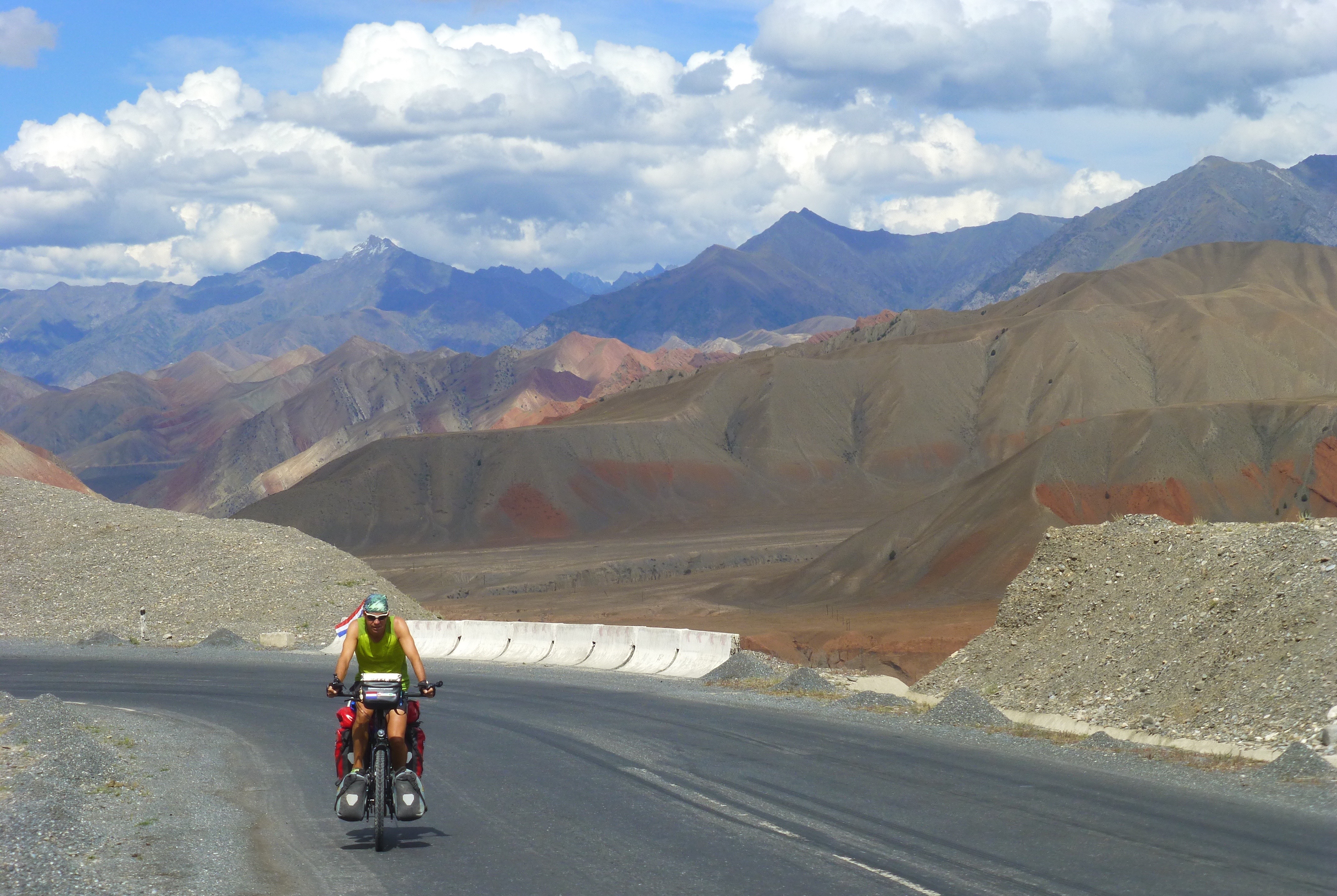
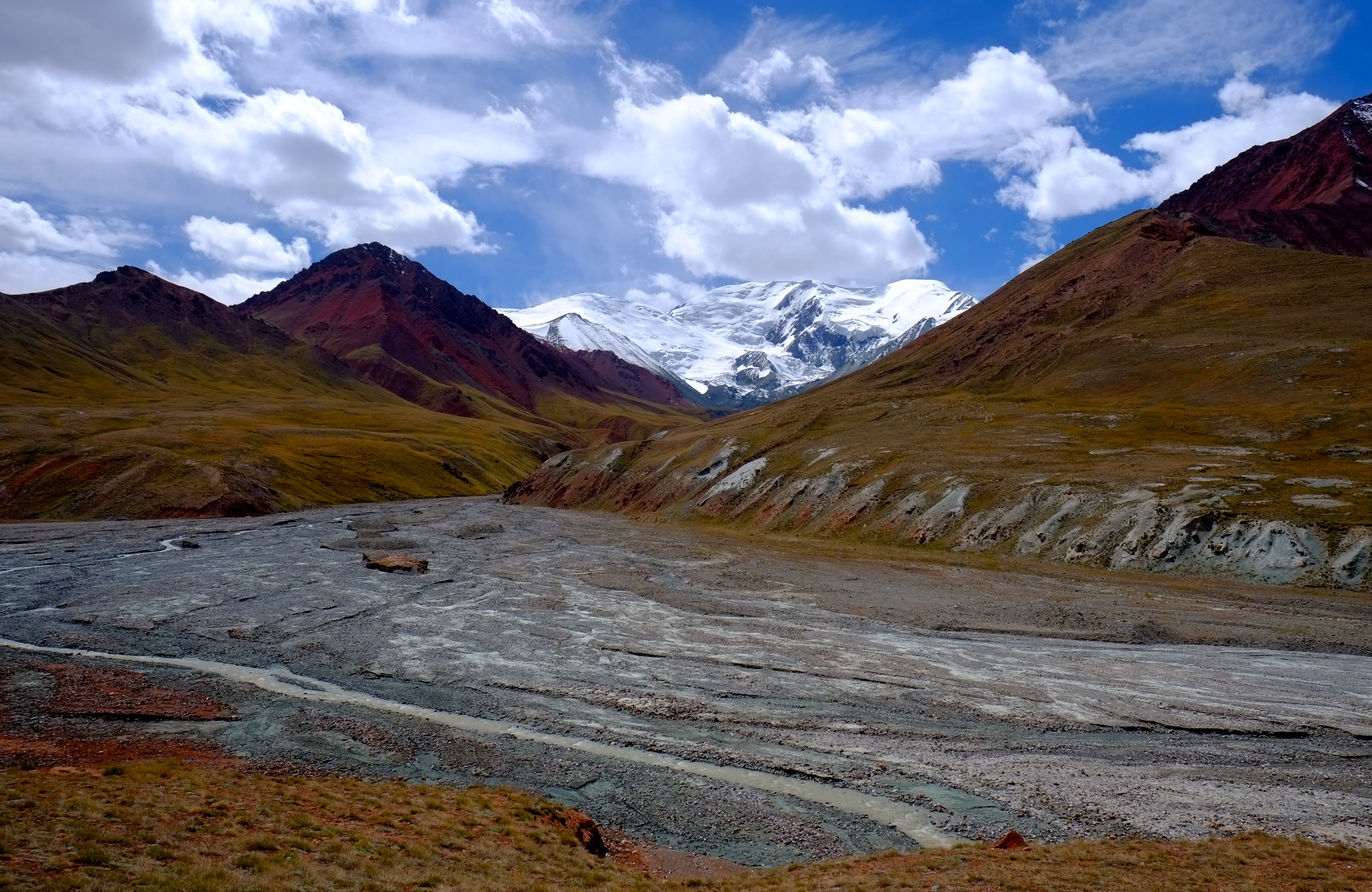
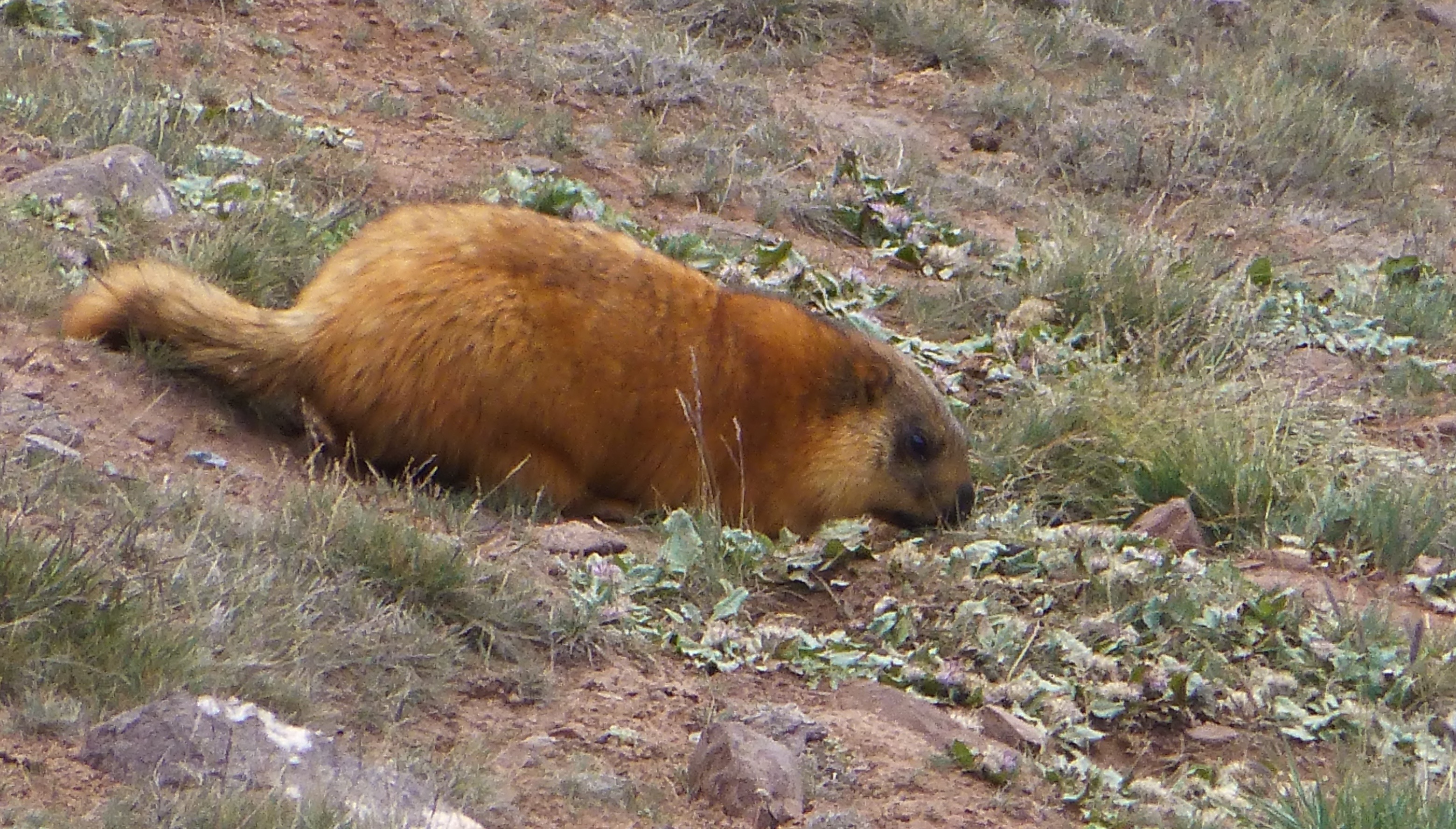
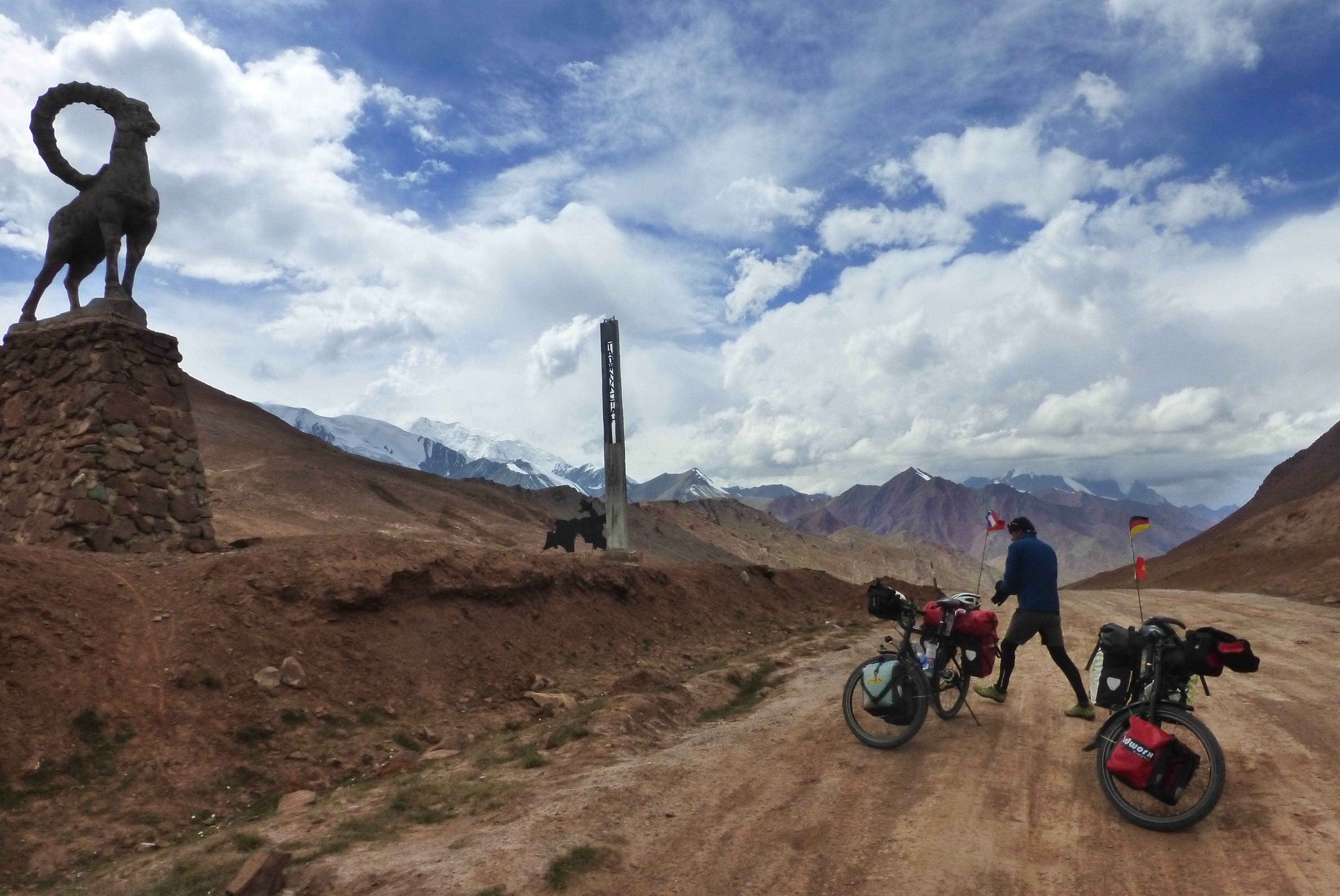
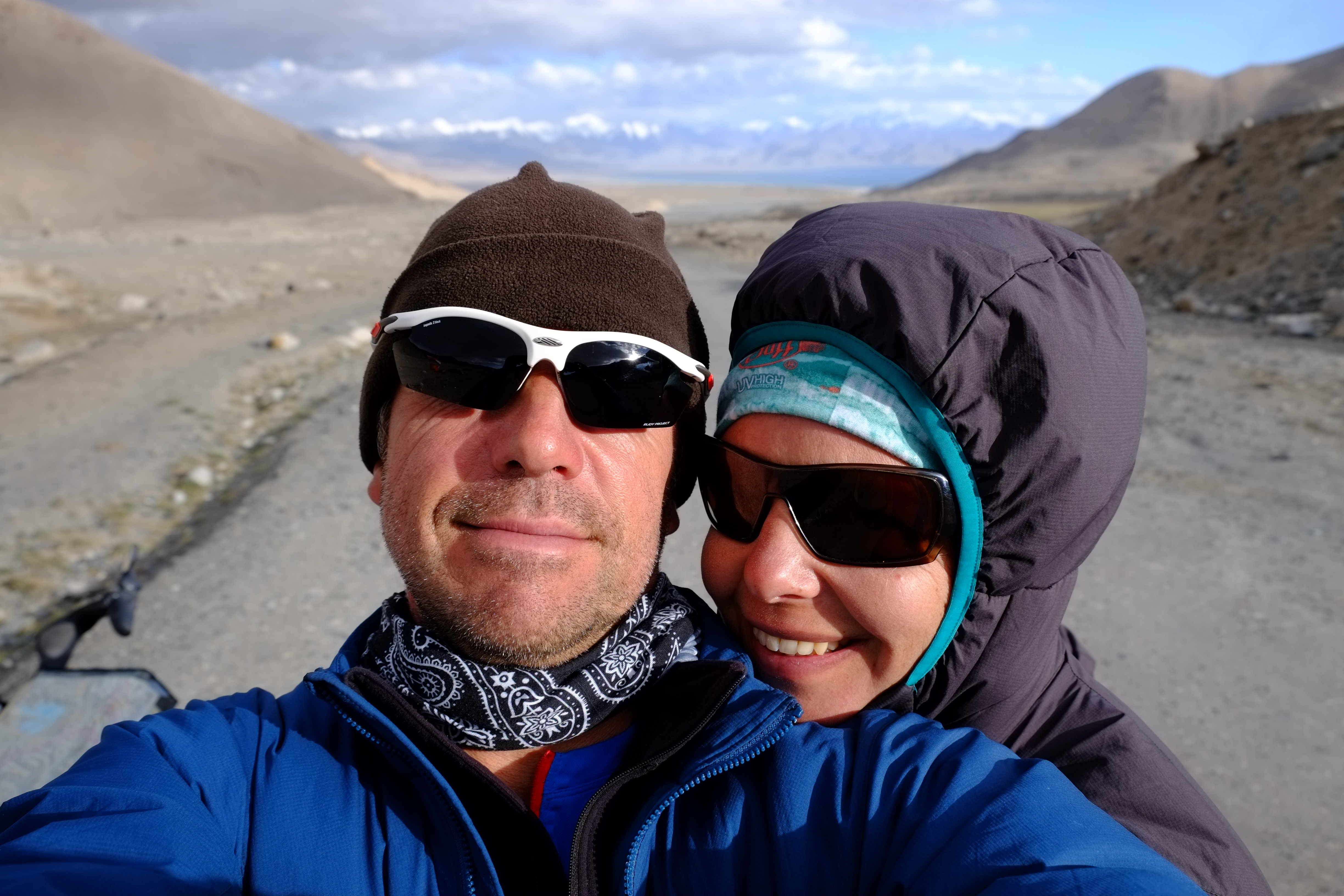
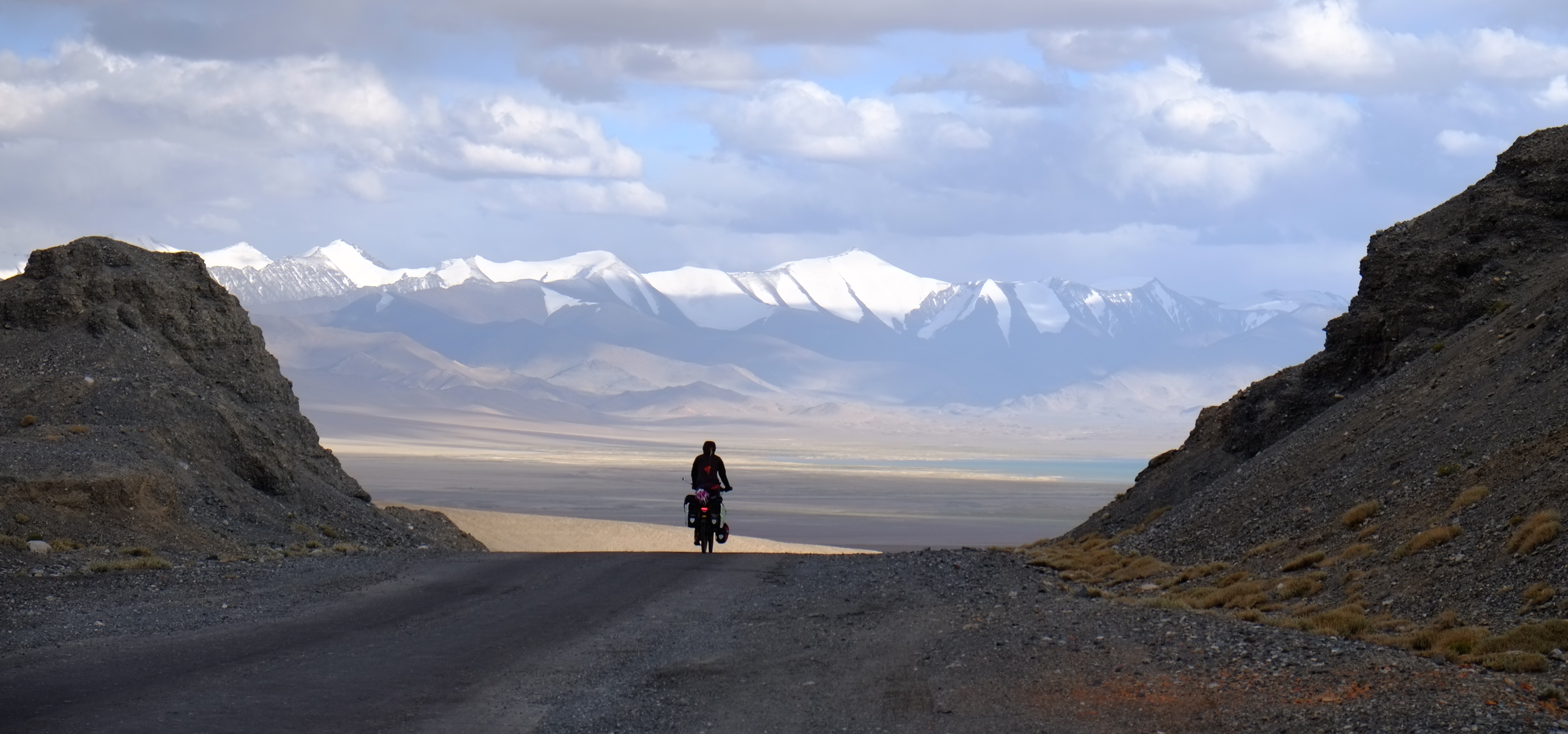
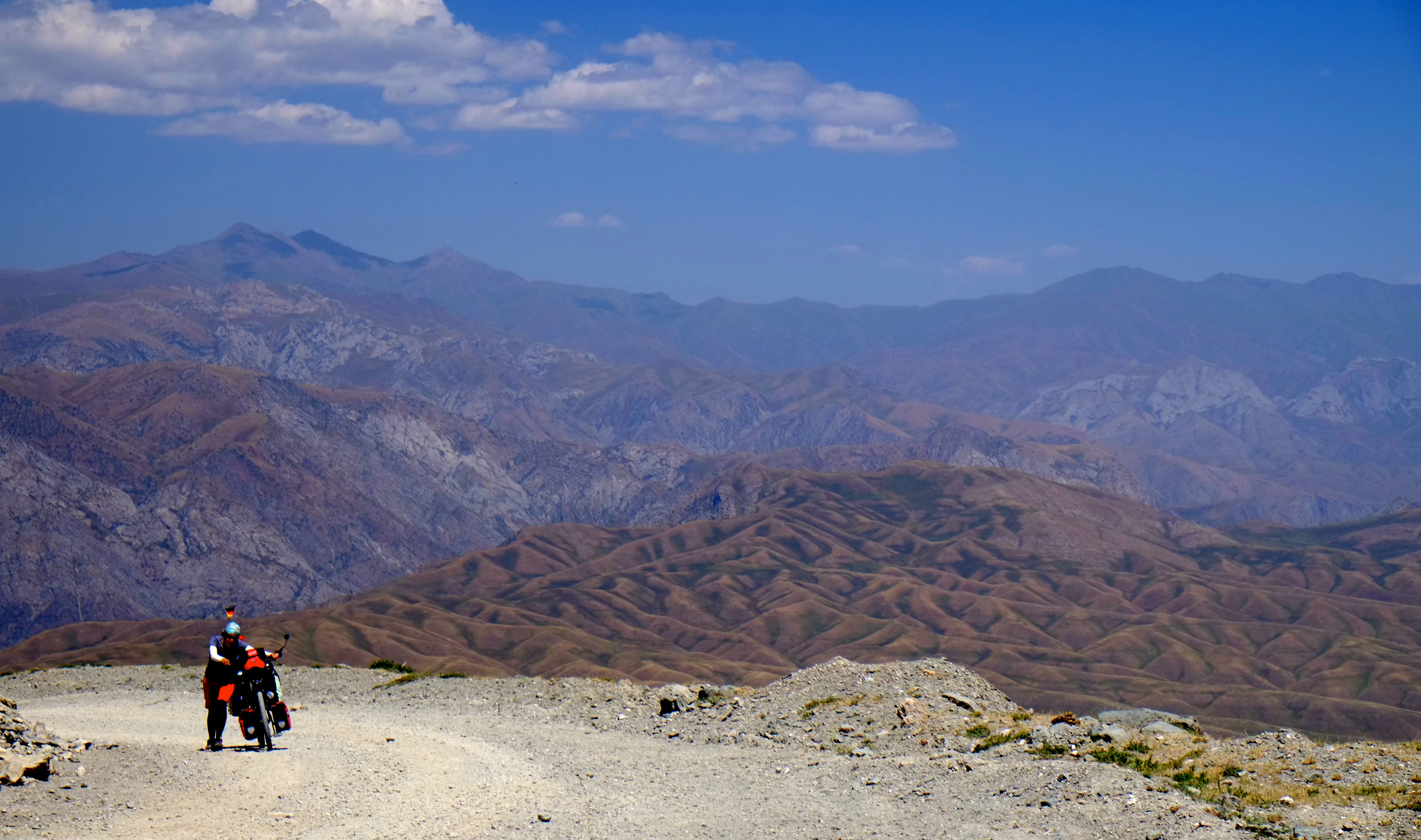
Today we would traverse our highest pass ever at an altitude of 4655m. As we leave early we start cycling without any wind. I feel very bad with stomach cramps and have to relieve myself right before the pass for the first time. The climb is very difficult with very steep gradients and we walk several times. The altitude adds to the difficulty and we often only manage to cycle 50m before we rest again. The landscape is surreal, red mountains that change colours with the light, hardly any vegetation and besides the funny whistles from the marmots that curiously watch us an eerie silence. After 12.5 km we happily reach the summit and as from now it would only go down – altitude and health-wise. I start feeling like a dog as I leave a mark every few kilometers. After lunch we have our first strange encounter. About 500m ahead I see people standing on the road, there is nothing else close-by and I get a little worried not knowing what to expect. We both take out our pepper spray and cycle next to each other. Only a maximum of 10 to 20 cars are passing us each day and we know we are on our own. Getting closer we recognize two soldiers armed with machine guns standing and another man sitting on the road. As we approach, the sitting man gets up to let us pass. Johan greets ‚Salam’, they are all greeting back and we are gone with the wind.  At around 3pm the wind picks up again and again it is headwind. I am very exhausted as my diarrhoea is getting worse by the minute and knowing I still have to cycle at least 10km against the strong wind makes me break down for the first time on this trip. I can’t stop crying not knowing how to get to the next village. Johan tries to comfort me and we continue slowly with me cycling in his slipstream. When we finally see the village after the last bend in a valley tears keep running again. This time they are tears of joy. We are nearly there. This night I spend mostly on the loo – another sleepless night!
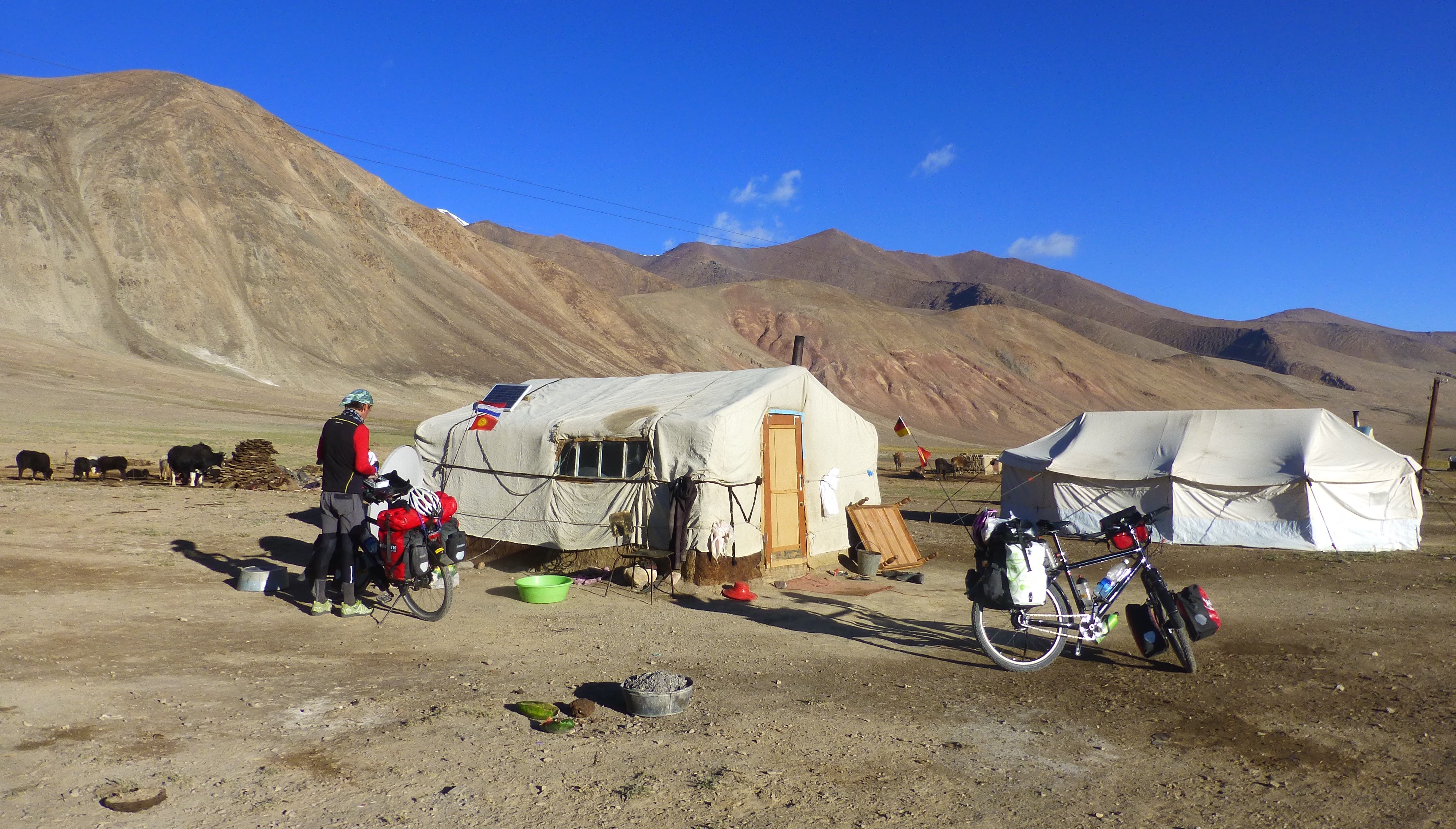
Leaving our camp early in the morning
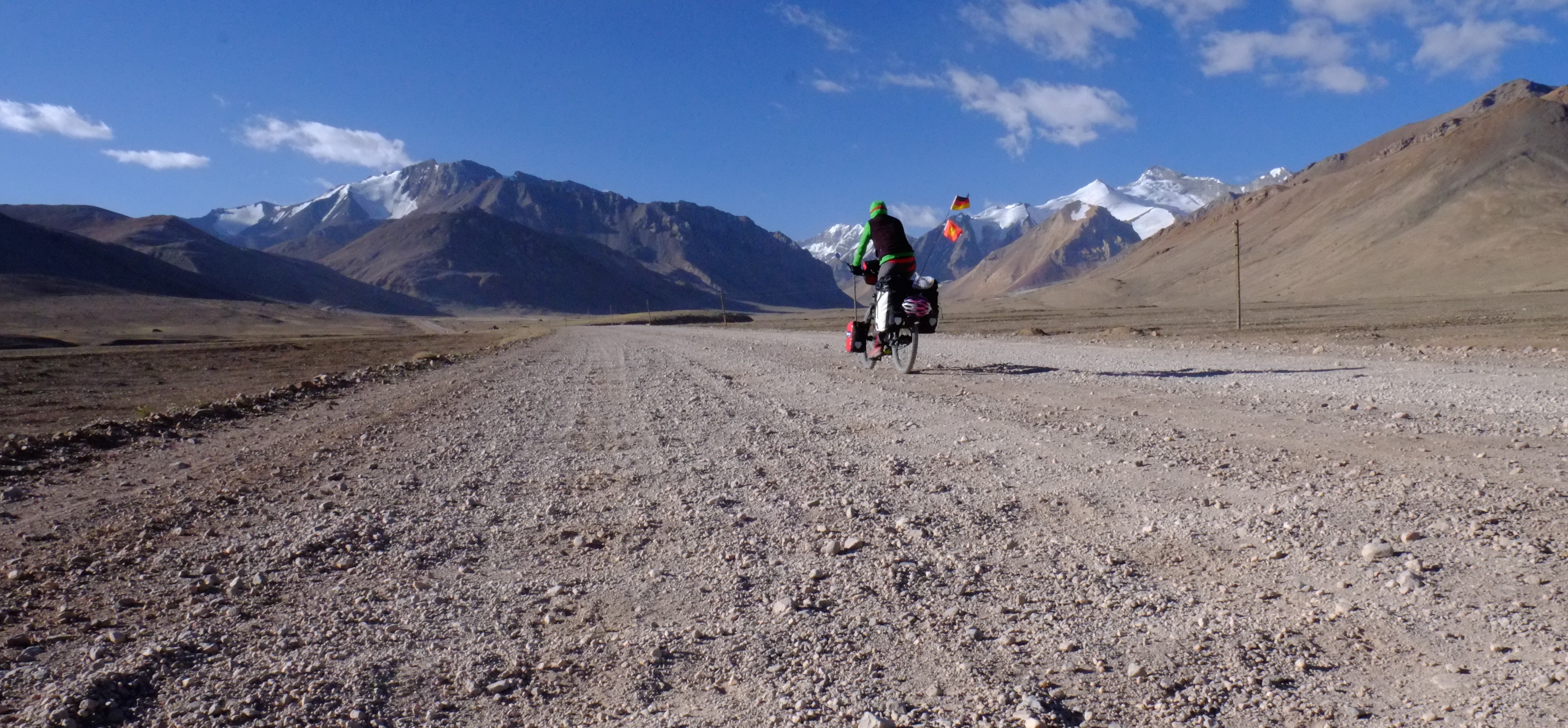
Washboard!
Washboard!
First toilet break
First toilet break
Ascending the highest pass
Confident to be able to make it
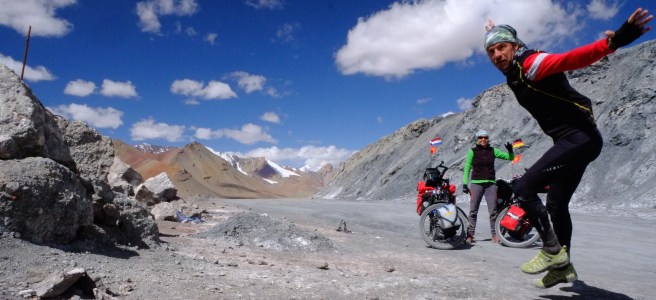
Ha - we made it...
Ha – we made it…
...but we definitely didn't fly
…but we definitely didn’t fly
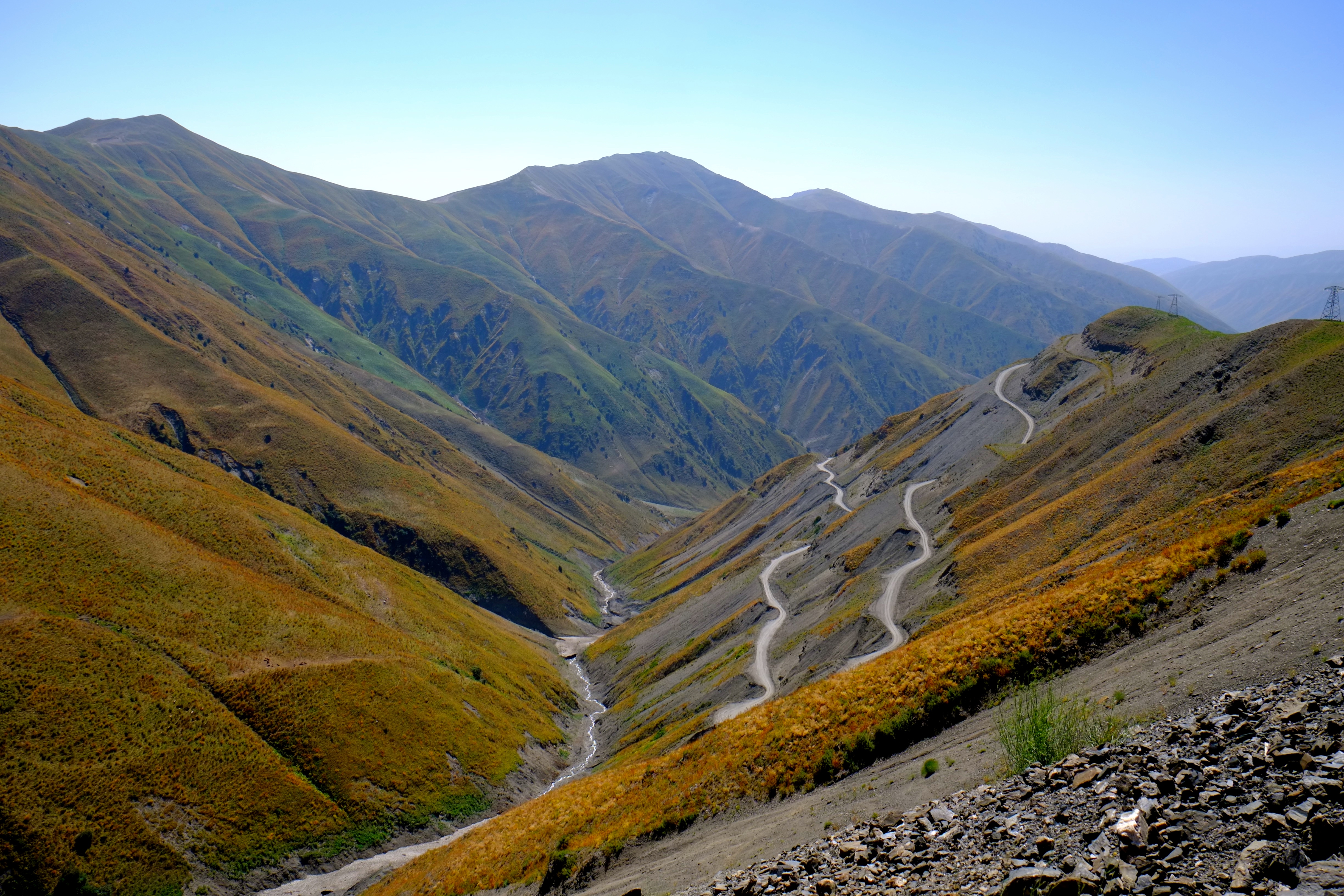
The beginning of a very long downhill
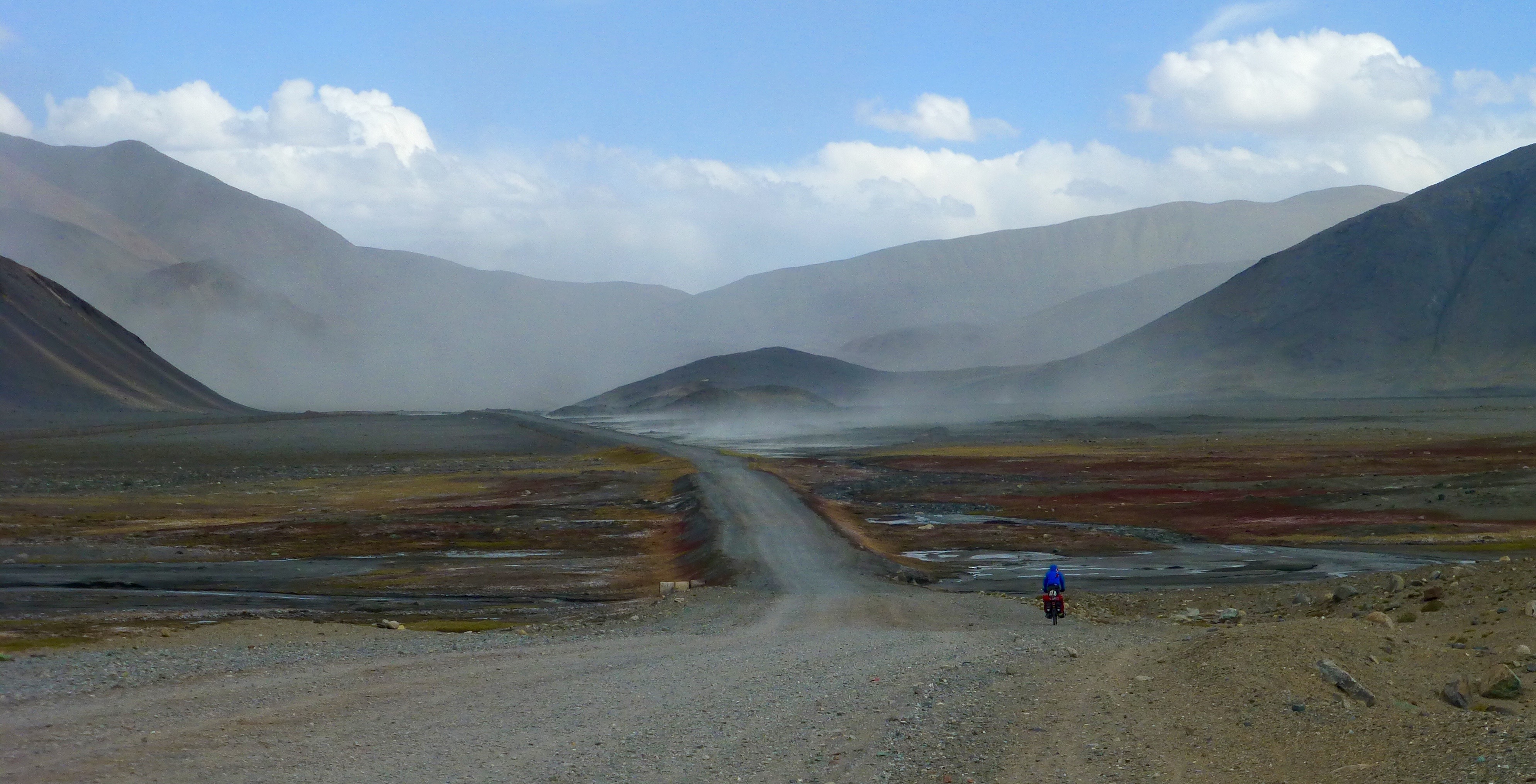
Sand storms
Sand storms
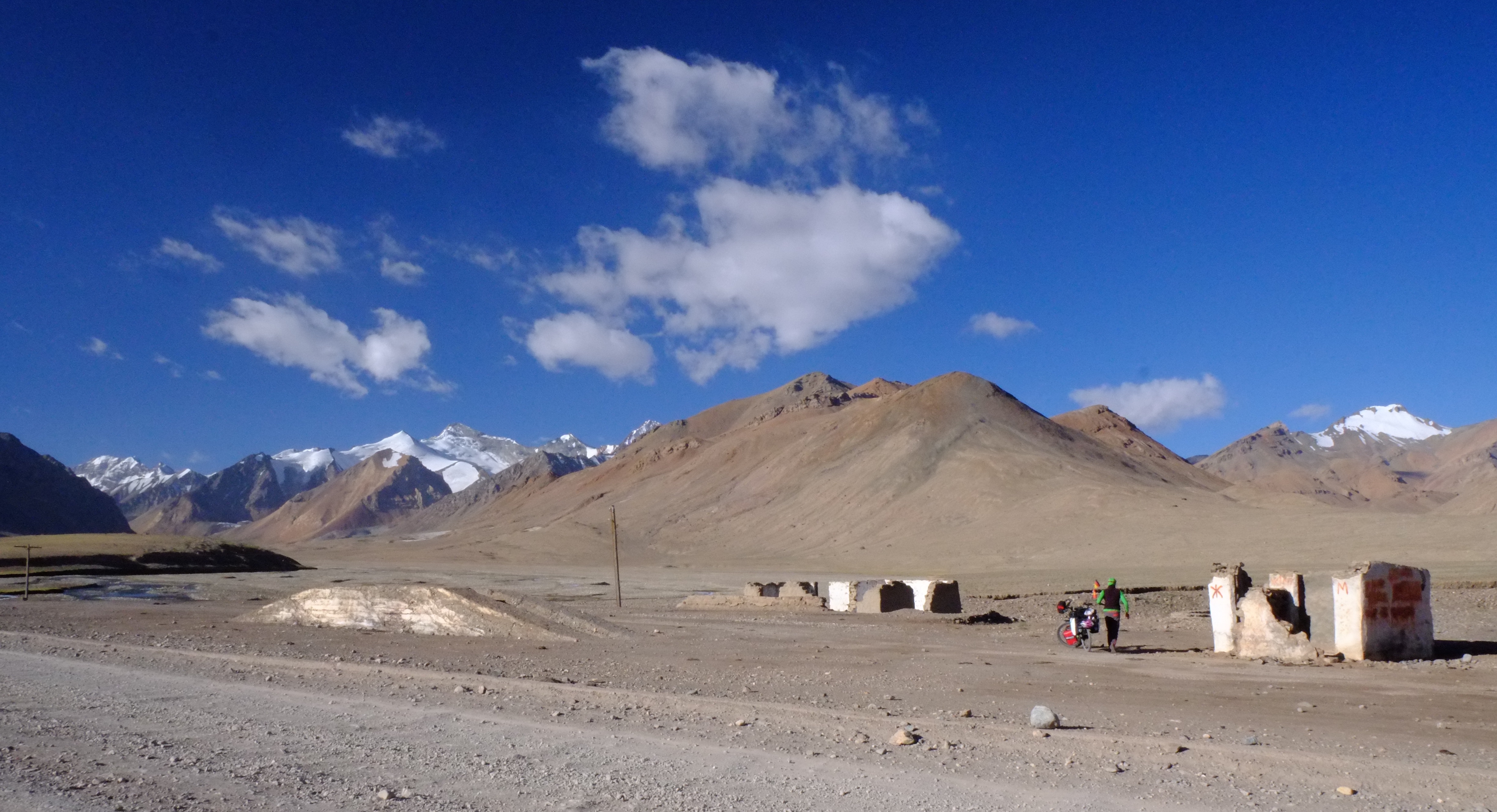
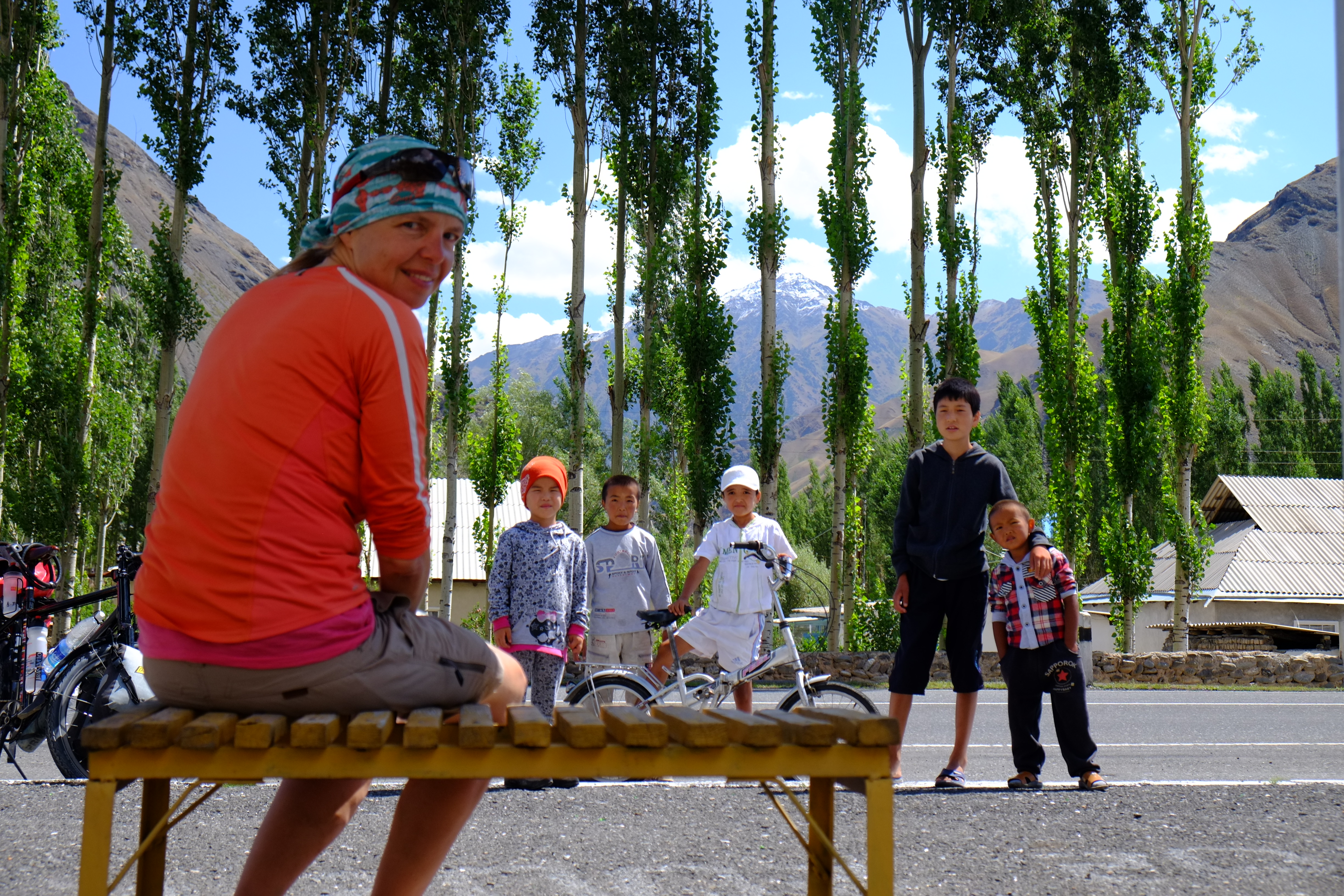
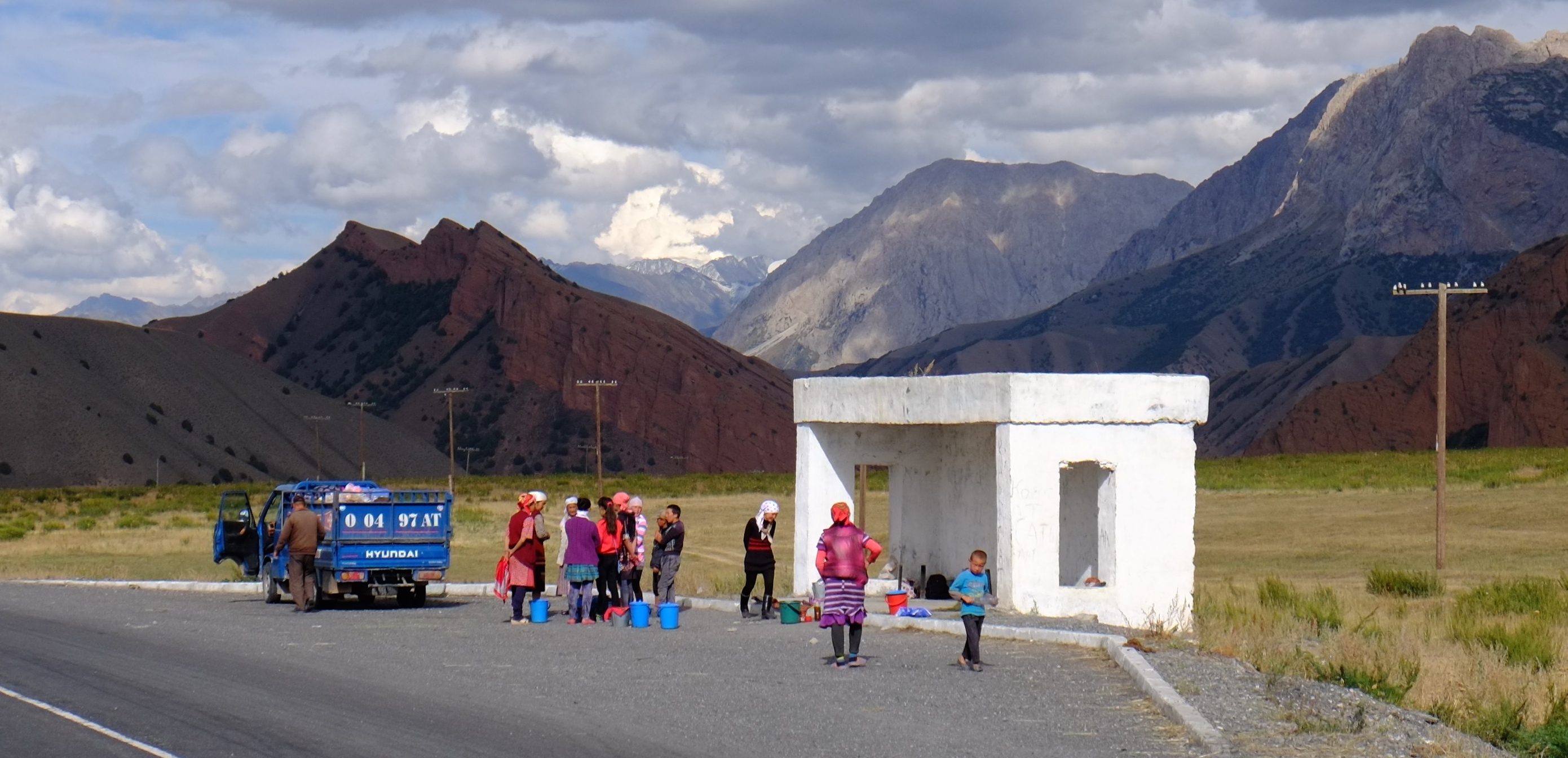
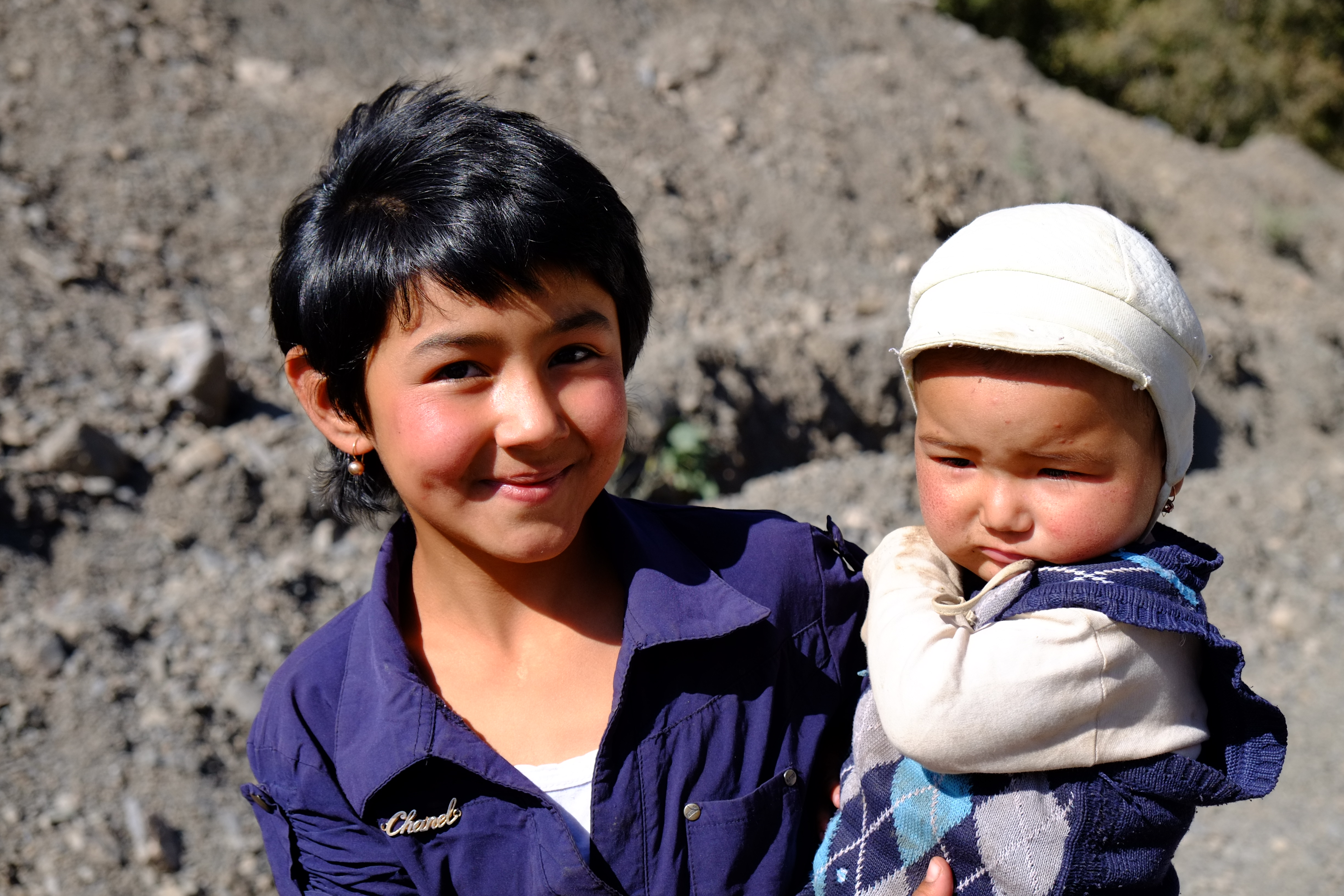
This was more or less the population between the pass and Murghab
Happily arrived in Murghab

Days 8 and 9: Murghab
Long cycling days, food I should not have eaten, maybe contaminated water, headwinds, sleepless nights due to the altitude, the most demanding cycling ever on bad roads and a heavy bike had taken its toll. I am down with fever and the worst diarrhoea ever and we need to take two days off of cycling. My symptoms correspond with the traveller’s diarrhoea and I start taking antibiotics which make me feel much better the second day and confident to be able to continue our journey tomorrow.
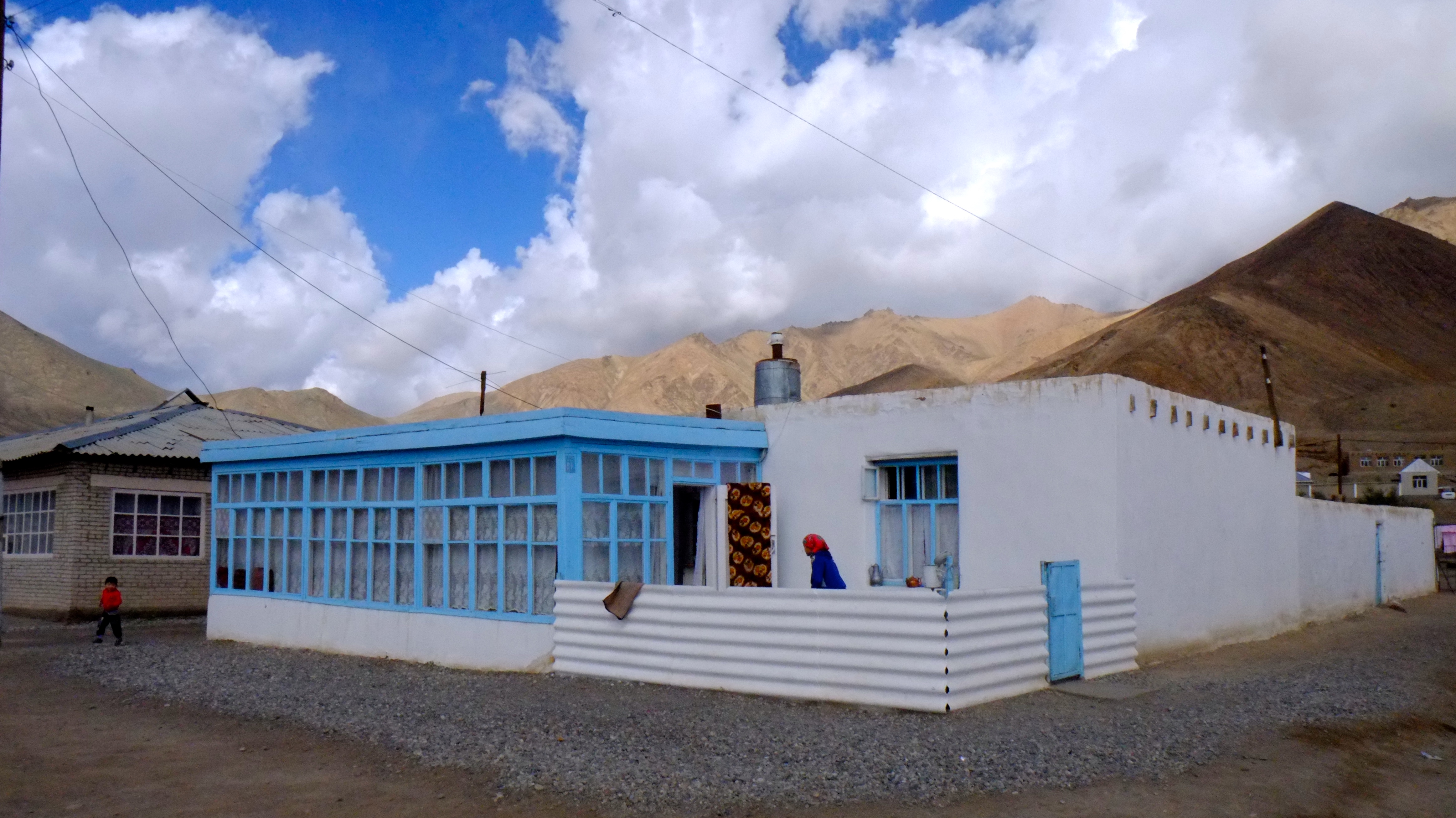
A typical townhouse in the Pamirs
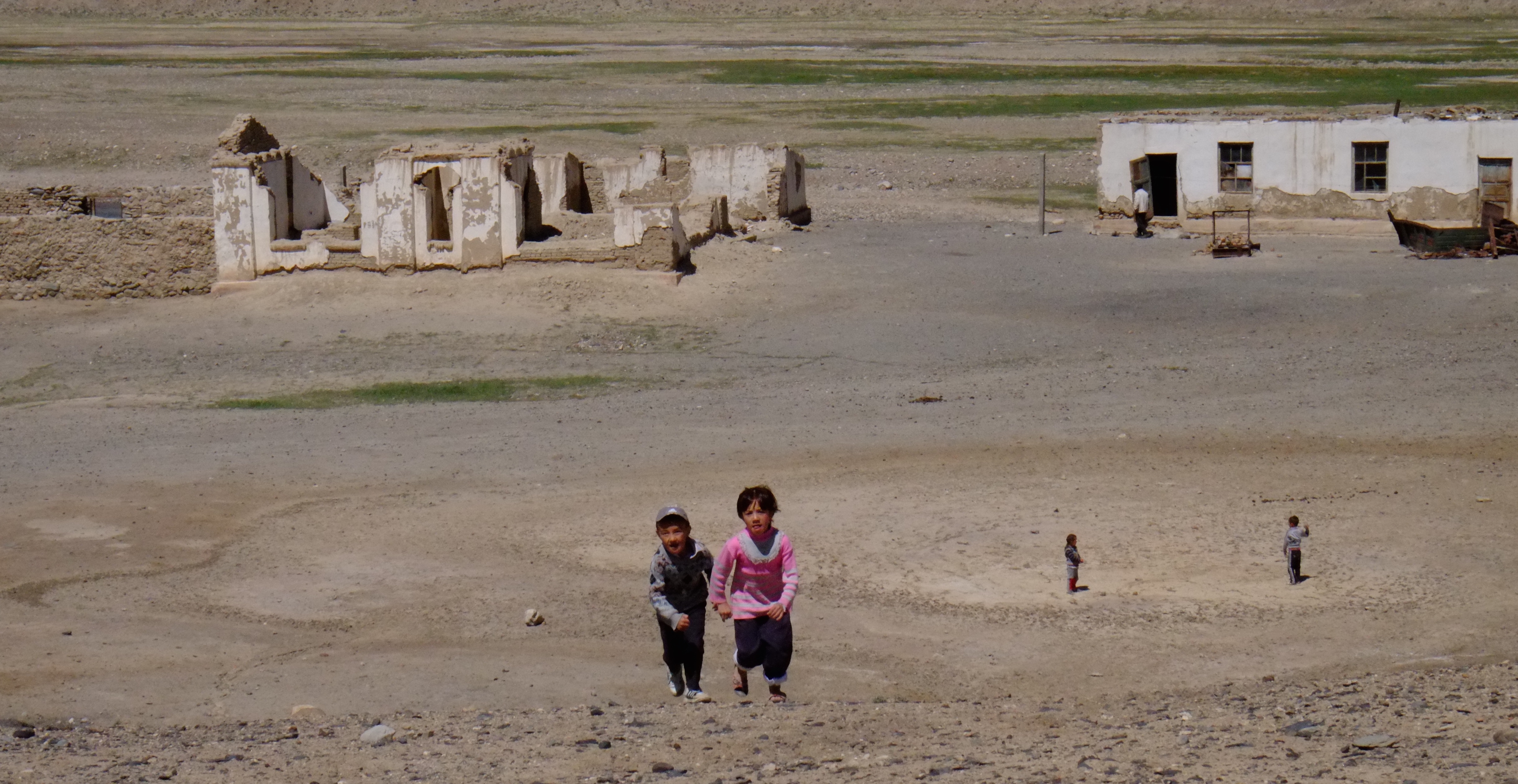
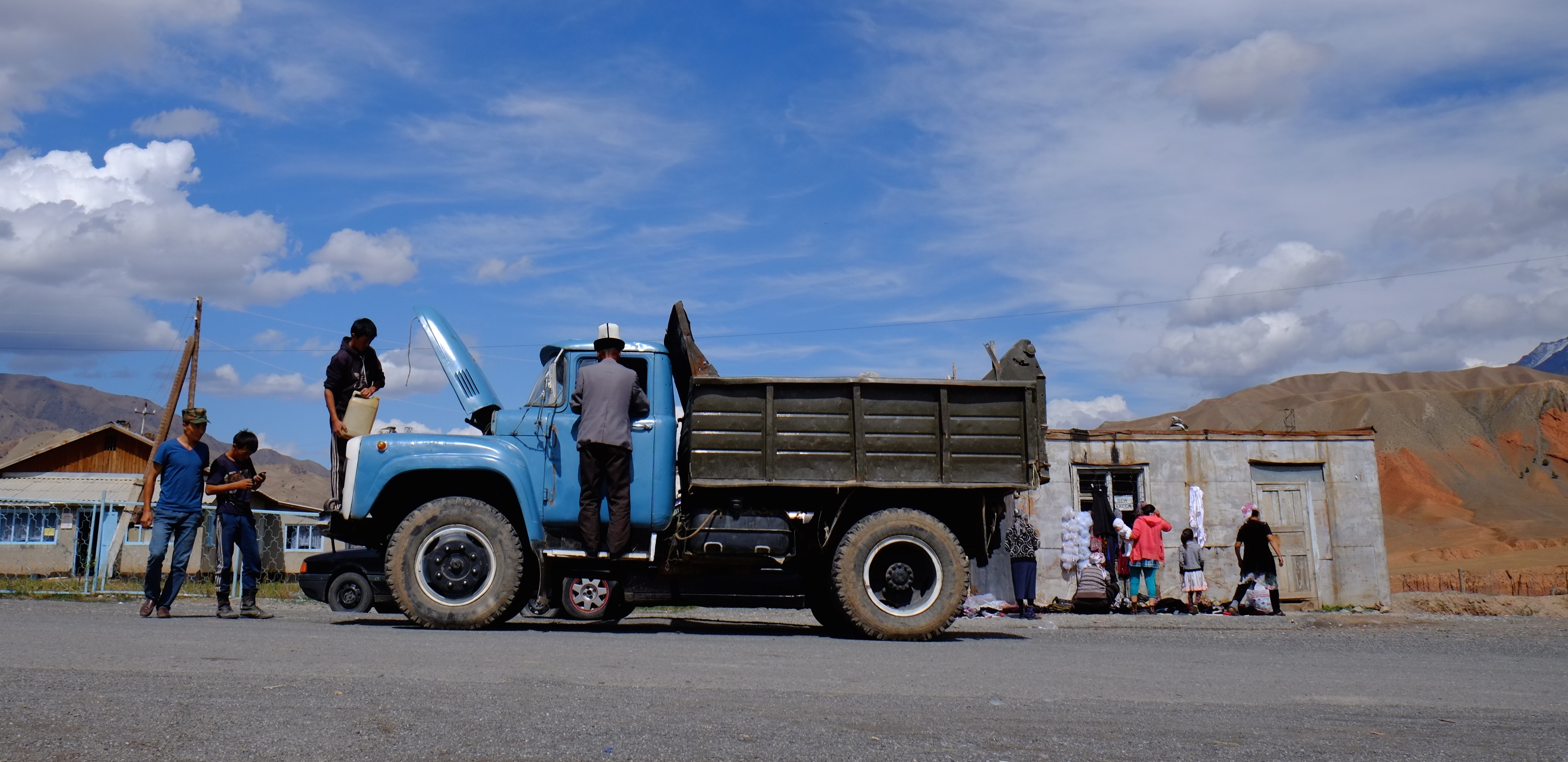
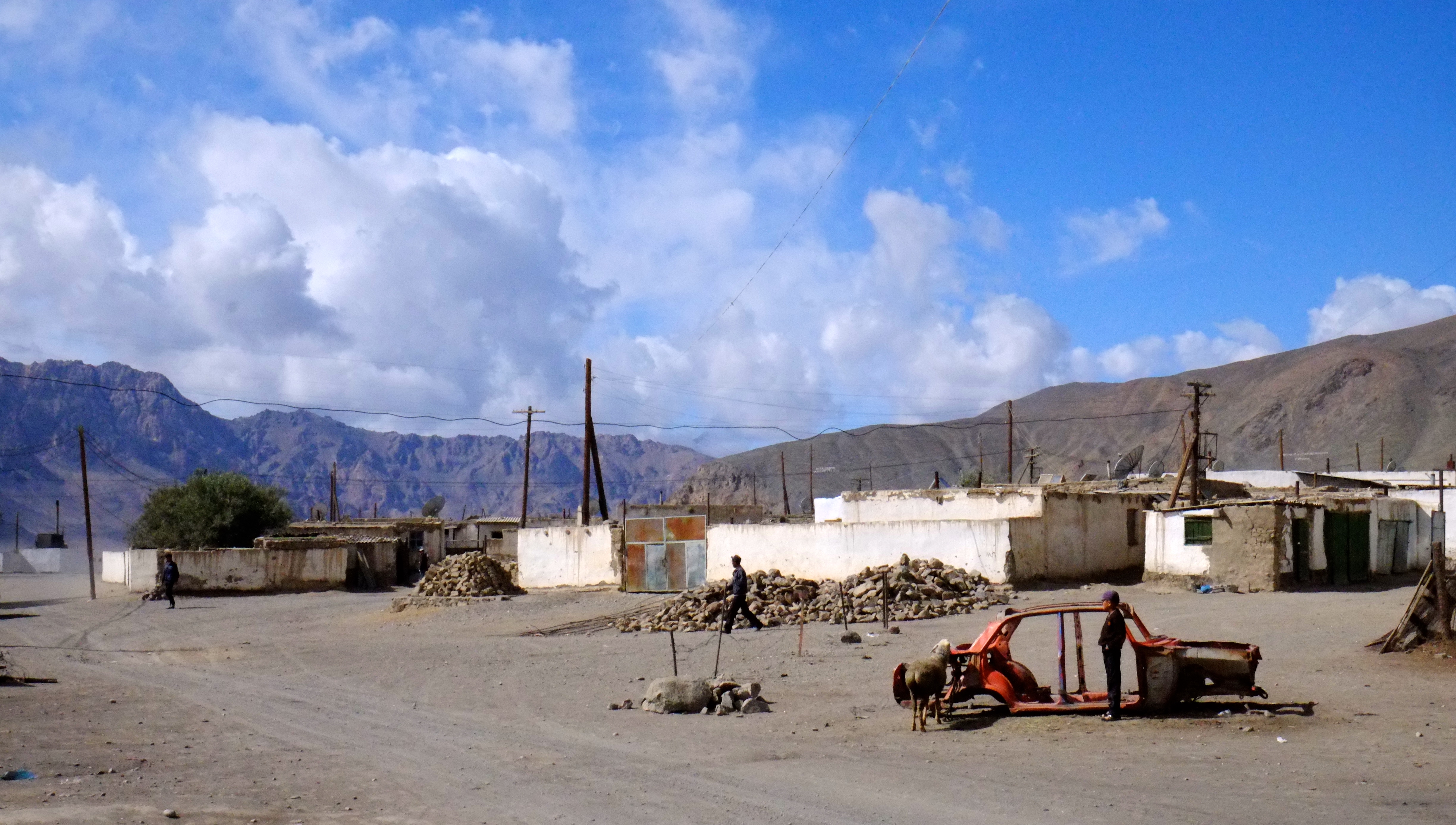
The desolate township of Murghab
Lenin welcomes us in the smallest village
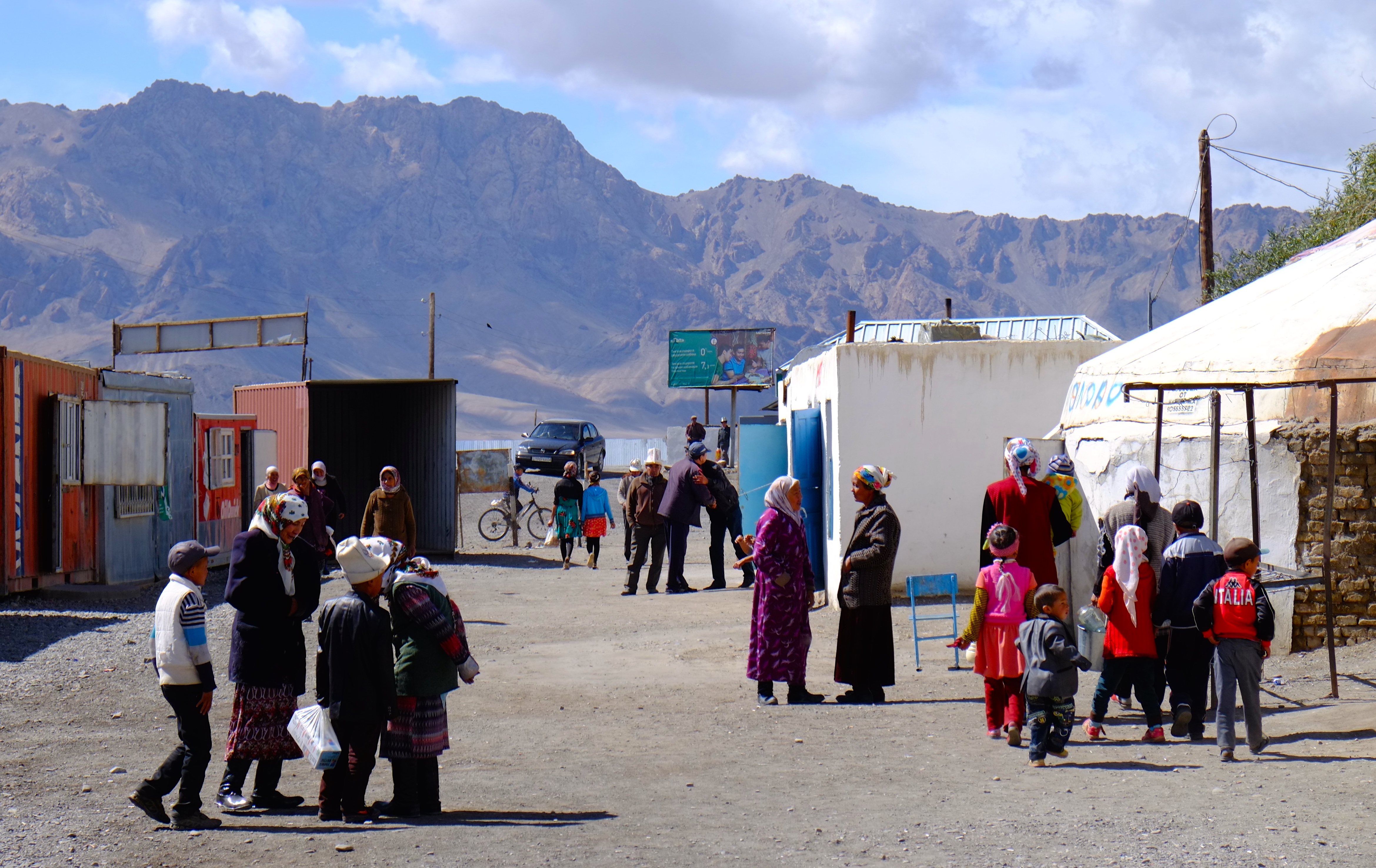
Market time
Market time

Der berühmt-berüchtigte Pamir Highway – Teil 2

23. August – 8. September 2015 – Der Pamir Highway ist eines der Highlights unserer Reise, daher berichten wir über die wichtigsten Geschehnisse in insgesamt vier Teilen anhand unserer täglichen Tagebucheinträge.
137km, 1047 meters altitude gain (1258km and 16,155 m altitude gain in total)
137km, 1.047 Höhenmeter (1.258km und 16,155 Höhenmeter insgesamt)

Tag 6: Karakul – Fuß des Passes Akbaital: 48km, 503 Höhenmeter
Wir kommen heute kaum voran, wir sind spät losgefahren und der Wind bläst gnadenlos in unser Gesicht. Wir treffen zwei österreichische Radler und Eddy (nicht Merckx) aus Belgien, die heute Glück haben, erkundigen uns über die bevorstehende Strecke und weiter geht es. Nach 40km gesellt sich zum Wind auch noch extremes Waschbrett und ich werde vor Anstrengung immer schwächer und schiebe immer öfter mein Rad, da ich so bei diesem Gegenwind und Straßenbelag deutlich schneller vorankomme. Kurz vor dem Pass sehen wir ein Camp und beschließen, dort zu bleiben. Bevor wir bei den Bauern anfragen klären wir ab, dass wir unser eigenes Zelt aufbauen und selber kochen. Fünf Minuten später hat uns Johan für knapp sieben Euro ein Bett in der Hütte ‘gebucht’ einschließlich Halbpension. Zunächst sind wir froh, da wir uns für den restlichen Tag viel Arbeit sparen, bereuen dies aber recht schnell. Die Menschen sind sehr gastfreundlich, wir bekommen Tee, Brot Kefir und Butter. In der total überheizten Hütte ruhen wir uns bei Temperaturen von ca. 30 Grad ein bisschen aus, ersticken aber beinahe, da der kleine Ofen, der zum Kochen und Heizen genutzt wird, viel zu viel Rauch in die Hütte bläst. Wir können uns nicht waschen und so halten wir bis zum Abendessen durch. Es gibt wieder Tee und Brot und so etwas wie Ravioli mit Fleisch- und Zwiebelfüllung. Schmeckt lecker, ist aber viel zu fett. Nach dem Essen fängt die zehnjährige Tochter an, unser Bett vorzubereiten. Dazu legt sie dicke Decken und Kissen auf dem Boden aus und deutet an, dass wir uns nun schlafen legen könnten. Da der Rest der Familie noch um den Tisch herum sitzt und isst und wir noch immer in unseren Radklamotten vor uns hinmüffeln, bleiben wir erst einmal sitzen. Außerdem würden wir uns ja zumindest gerne unsere Schlafanzüge anziehen, wenn wir uns schon nicht waschen können. Nach der zweiten Aufforderung, uns doch jetzt schlafen zu legen, gehorchen wir. Flüsternd fährt die Familie mit ihrem Abendessen fort und feuert immer wieder die Heizung. Nach dem Essen lässt das Oberhaupt der Familie direkt neben Johan einige Fürze fahren, raucht zwei Zigaretten während wir fast eingehen unter den schweren Decken und mit all unseren Kleidern am Körper.  Ungefähr eine uns endlos vorkommende Stunde später, in der wir natürlich kein Auge zugetan haben, beginnt die Familie mit den eigenen Schlafens-Arrangements. Dazu müssen weitere Decken ausgelegt werden, die direkt hinter uns gestapelt sind und so stolpert das Mädchen für die nächsten 10 Minuten andauern über uns. Nachdem sie endlich fertig sind und alle liegen, beginnt das Mädchen endlos zu reden. Wir sind natürlich immer noch hellwach, mittlerweile haben wir uns jedoch heimlich ausgezogen. Beim besten Willen konnte ich mir nicht vorstellen, eine Nacht in Sport-BH und Radhose zu verbringen. Johan war so schlau, und hat sich seinen Schlafanzug mitgenommen, ich hatte leider nur mein verschwitztes T-Shirt, unsere Kleidertasche stand am anderen Ende der Hütte für uns unerreichbar. Jetzt lag ich vor der Herausforderung, meinen nackten Hintern unter der dicken Decke bei weiterhin 30 Grad in der Hütte zu verstecken und mich am nächsten Morgen rechtzeitig bevor die Familie wach wird, anzuziehen. Nachdem es dann endlich still wird hören wir ein weiteres seltsames Geräusch: das Mädchen ist wieder aufgestanden, um in eine Schüssel zu pinkeln. Dieser Vorgang wiederholt sich dann mehrfach in der Nacht und am Morgen wachen wir müder auf als am Tag zuvor. Die Höhe von 4.100m und meine sich ankündigenden Magenprobleme haben zu dieser schlechten Nacht wohl auch noch beigetragen.

Our nice little homestay
Homestay am Karakul-See

Leaving Sary Tash

Leaving Sary Tash
Wir verlassen Sary Tash
Lake Karakul
Am See Karakul
Eddy from Belgium
Eddy aus Belgien

Tag 7: Pass Akbaital – Murghab: 89km, 544 Höhenmeter
Heute überqueren wir unseren höchsten Pass von 4.655m. Da wir früh losfahren, weht noch kein Wind. Mir geht es nicht sehr gut, ich habe starke Magenkrämpfe und muss mich kurz vor dem Pass zum ersten mal erleichtern. Der Anstieg ist sehr schwer und steil und wir schieben beide des öfteren. Die Höhe macht es uns nicht leichter und oft schaffen wir nur 50m, bevor wir wieder pausieren. Die Landschaft um uns herum ist irreal, rote Berge, die mit der Lichteinstrahlung die Farbe ändern, kaum Vegetation und neben den lustigen Pfeiftönen der Murmeltiere, die uns neugierig beobachten, herrscht unheimliche Stille. Nach 12,5 km erreichen wir glücklich den Gipfel und ab hier geht es nur noch nach unten – sowohl was die Höhe aber auch meinen Gesundheitszustand anbelangt. So langsam komme ich mir wie ein Hund vor, der alle Paar Kilometer seine Marke hinterlässt. Nach dem Mittagessen passiert zum ersten Mal etwas Seltsames. Ungefähr 500m vor uns sehe ich  Menschen auf der Straße stehen, obwohl hier nichts um uns herum ist als Landschaft. Ich werde etwas nervös, da ich nicht weiß, was uns erwartet. Wir stecken unser Pfefferspray in die Tasche und radeln nebeneinander. Täglich passieren uns nur ungefähr 10 bis 20 Autos und wir wissen, dass wir auf uns selbst gestellt sind. Als wir näher kommen erkennen wir zwei Soldaten, die mit Maschinengewehren bewaffnet sind und einen weiteren Mann, der auf der Straße sitzt. Kurz bevor wir die Männer passieren, steht der sitzende Mann auf. Johan grüßt freundlich “Salam”, wir werden zurückgegrüßt und dürfen ungestört weiterradeln.

Gegen 15 Uhr beginnt es wieder zu winden und wieder ist es Gegenwind. Ich bin mittlerweile sehr erschöpft, mein Durchfall wird schlimmer und schlimmer und mit dem Wissen, dass wir noch mindestens zehn Kilometer gegen den Wind radeln müssen,  breche ich zusammen. Ich kann nicht mehr aufhören zu heulen, da ich nicht weiß, wie ich es bis ins nächste Dorf schaffen soll. Johan tröstet mich und in seinem Windschatten fahren wir langsam weiter. Als wir dann endlich nach einer letzten Kurve das Dorf im Tal liegen sehen, fließen die Tränen wieder – dieses Mal vor Freude. Wir haben es fast geschafft! Diese Nacht verbringe ich fast ausschließlich auf der Toilette – schon wieder schlaflos!

Leaving our camp early in the morning
Wir verlassen unser Lager am frühen Morgen
Washboard!
Waschbrett!
First toilet break
Erster Toilettenstopp!
Ascending the highest pass
Auf dem Weg zum Gipfel unseres höchsten Passes
Confident to be able to make it
Zuversichtlich, dass wir auch das schaffen!
Ha - we made it...
Ha – geschafft…
...but we definitely didn't fly
…geflogen sind wir allerdings nicht!
The beginning of a very long downhill
Der Anfang einer langen Abfahrt
Sand storms
Sandstürme
This was more or less the population between the pass and Murghab
Das war mehr oder weniger die gesamte Bevölkerung auf diesem Streckenabschnitt
Happily arrived in Murghab
Glücklich in Murghab

Tage 8 und 9: Murghab
Lange Radeltage, Essen, das ich wahrscheinlich nicht hätte zu mir nehmen sollen, eventuell verunreinigtes Wasser, Gegenwind, schlaflose Nächte aufgrund der Höhe, das härteste Radfahren auf schlechten Straßen, das ich je mitgemacht habe und ein schweres Fahrrad haben Spuren hinterlassen. Ich liege im Bett mit Fieber und sehr starkem Durchfall und muss zwei Tage pausieren. Die Symptome sprechen für Reisedurchfall und die Einnahme eines mitgebrachten Antibiotikums verbessern meinen Zustand am zweiten Tag schnell, so dass ich mich in der Lage fühle, morgen die Reise fortzusetzen.

A typical townhouse in the Pamirs
Ein typisches Stadthaus in den Pamirs
The desolate township of Murghab
Die etwas trostlose Stadt Murghab
Lenin welcomes us in the smallest village
Lenin heißt uns im kleinsten Dorf willkommen
Market time
Auf zum Markt!

The Infamous Pamir Highway – Part 1

23 August – 8 September, 2015 – As the Pamir Highway has been an important milestone of our journey you’ll find below our diary entries with the highlights of every day presented in four different parts.

293km, altitude gain: 5224m (1121km and 15107m altitude gain in total)
293km, altitude gain: 5224m (1,121km and 15,107m altitude gain in total)

Day 1: Osh – Gulcha: 85km, altitude gain 1436m
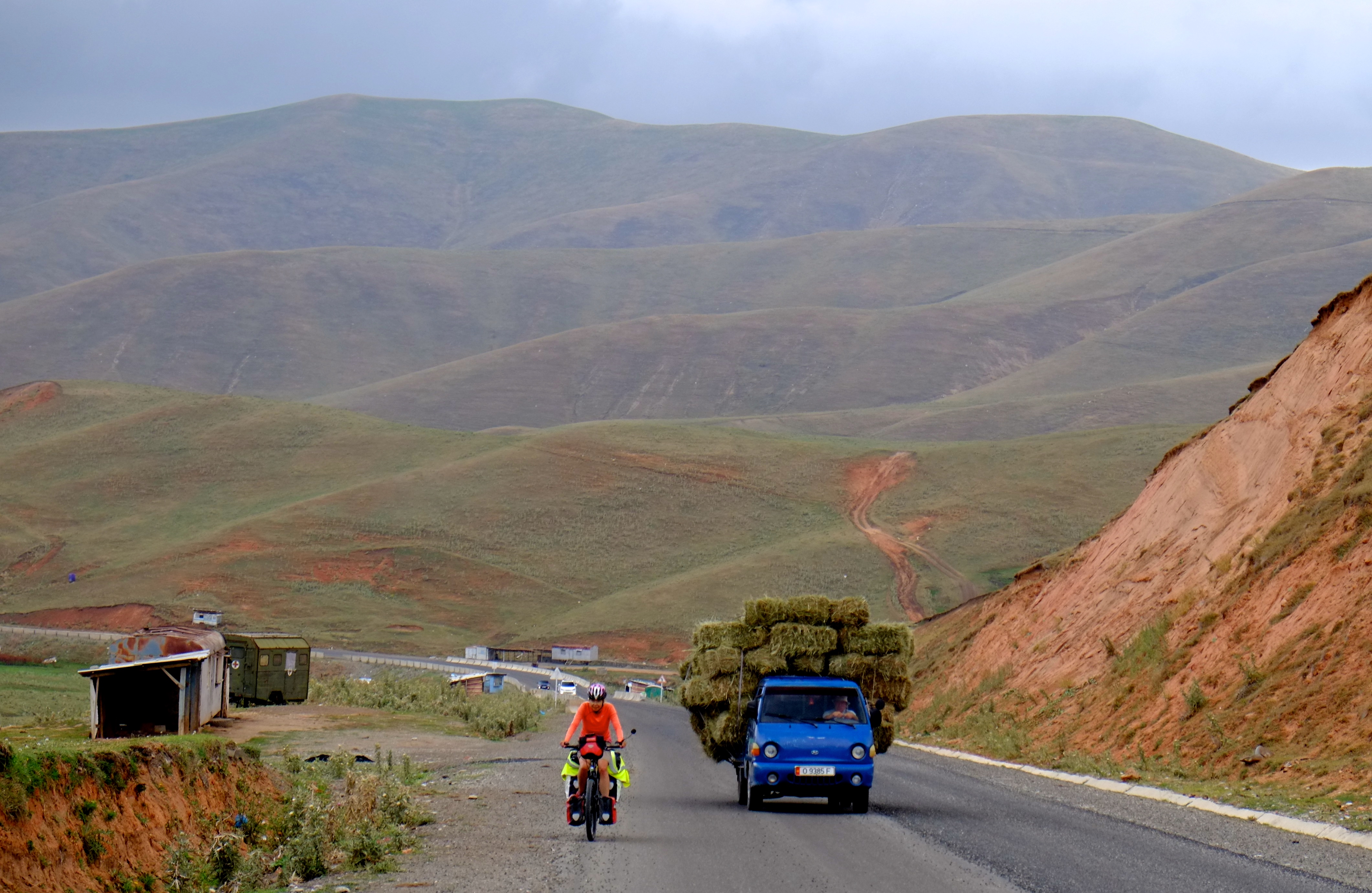
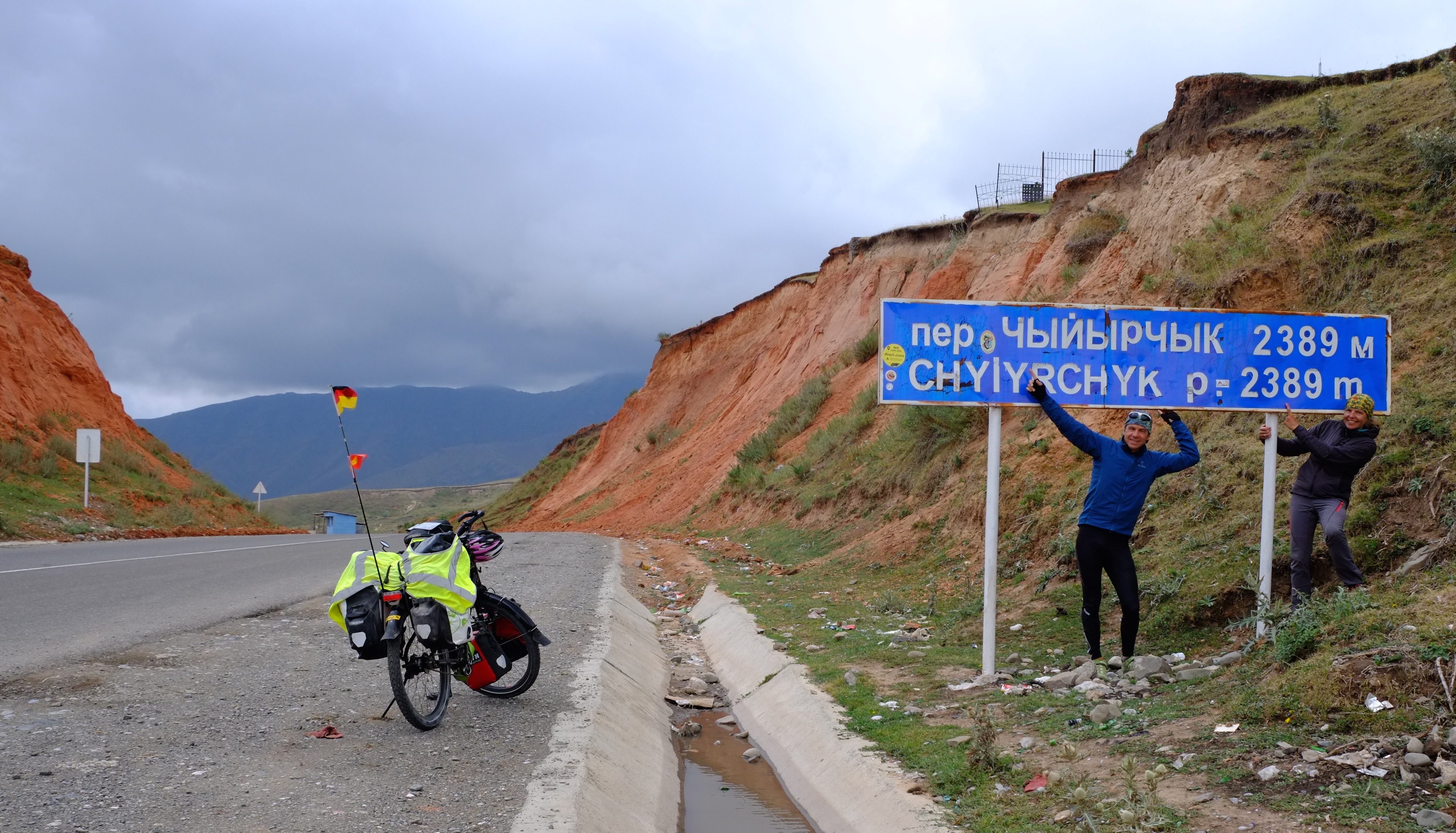
We’re in doubts if we should leave as heavy rainfalls are forecast. We anyway leave as we are on a tight schedule given our expiring Tajikistan visas and are happy we did as it doesn’t rain all day. It’s a climbing day through desolate landscapes with small villages in a bad state, a pass of 2,389m and little tailwind. On our way we are given apples and carrots and meet an Irish-American cycling couple. We are grateful for the guesthouse in Gulcha as we don’t have to cook ourselves as we are shattered after a long days’ cycling.

Arriving at the guesthouse with well prepared owners
Preparation at its best!

Day 2: Gulcha – Ak Bosoga: 77km, altitude gain 1369m
Early start on a beautiful day with clear blue sky and no wind. We continue on undulating roads through the Gulcha valley. High mountains to the left and right, the valley narrows and opens up again to make room for another small village. Later the landscape reminds us on the deserts of California. We are cycling into a strong headwind – one tailwind day had been too good for us. At the end of the afternoon we ask in the village for a place to sleep and the family invites us in. We get chai, cookies, fresh melon and soup and our own room to sleep. We love Kyrgyz hospitality.

An unexpected coffee break

DSCF8149

And another break
And another break

DSCF8220

The wind is picking up
Almost there...
Almost there…
The Kyrgyz family we stayed with

Day 3: Ak Bosoga – Sary Tash: 30km, altitude gain 922m
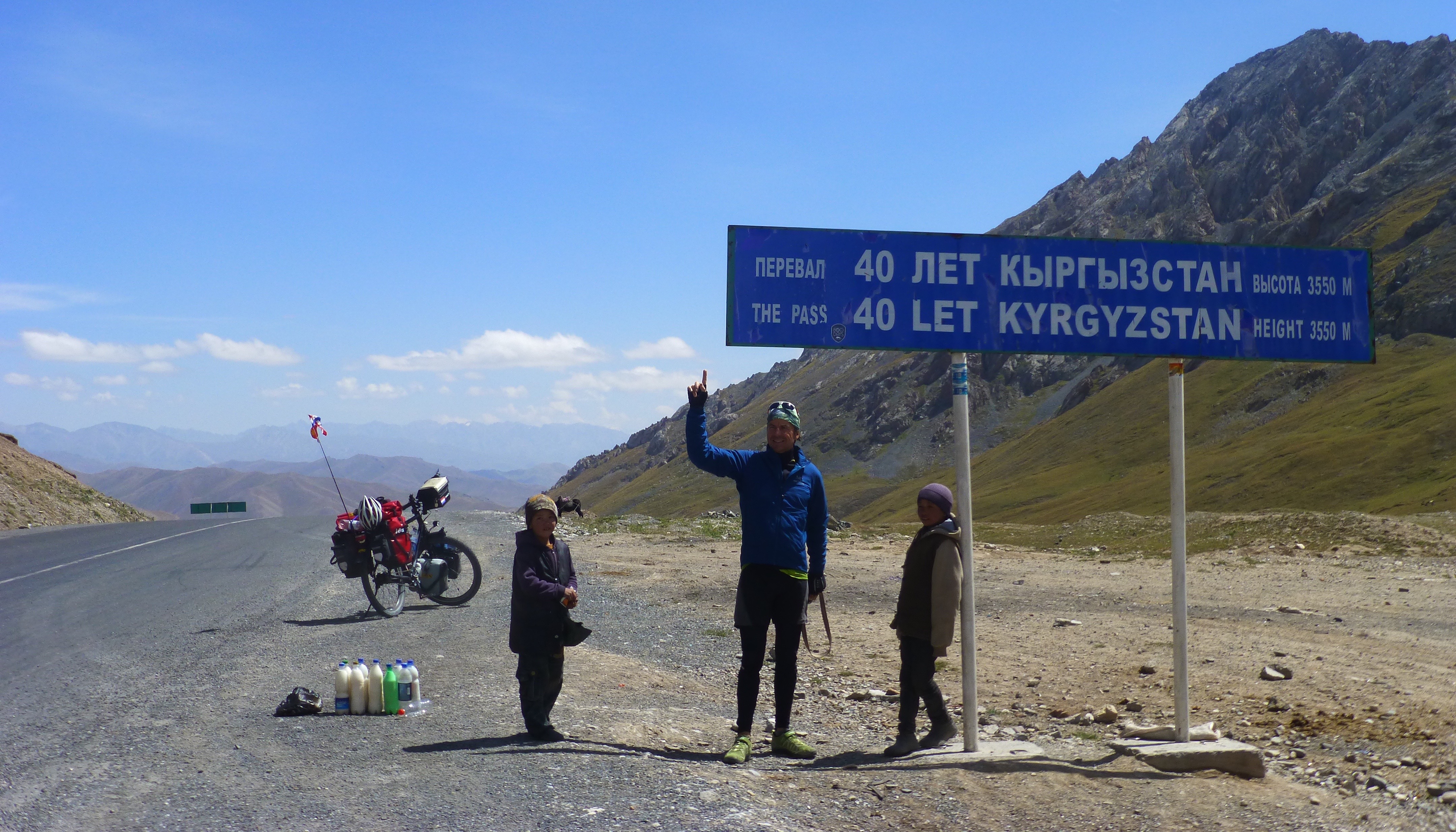
Another early start and with heavy legs we are climbing up another pass, again against the wind. Gradients are tough, most of the time at around 8%. After four hours we reach the top at 3615m, annoyed with the wind and the kids who are touching everything. For the first time we see snow-capped Peak Lenin, the second highest mountain in Kyrgyzstan at 7134m. Later, Sary Tash offers superb views over a dazzling mountain horizon. We finally go down, but only for three kilometers, then the road climbs for another two kilometers to the second peak at 3550m. What a deception!  We arrive early, have lunch at our guesthouse, do the necessary shopping at one of the two shops that also serves as the local bar, money changer and telecom outlet. We are lucky as the shop owner’s husband seems to be shopping in Osh and every time we are asking for something that’s missing she is bellowing our order into her phone. We can pick it up the next morning at 7am.

Ascending the first pass before Sary Tash
Our first 1000 kilometers cycled
Summit #1
Summit #1
Summit #2
Summit #2

Day 4: Sary Tash
Another rest day at 3200m as it doesn’t look inviting to fight against the heavy storm and rain outside. I don’t mind as it gives us more time to get adjusted to the altitude. The coming days we’ll be at over 4000m.

Downtown Sary Tash
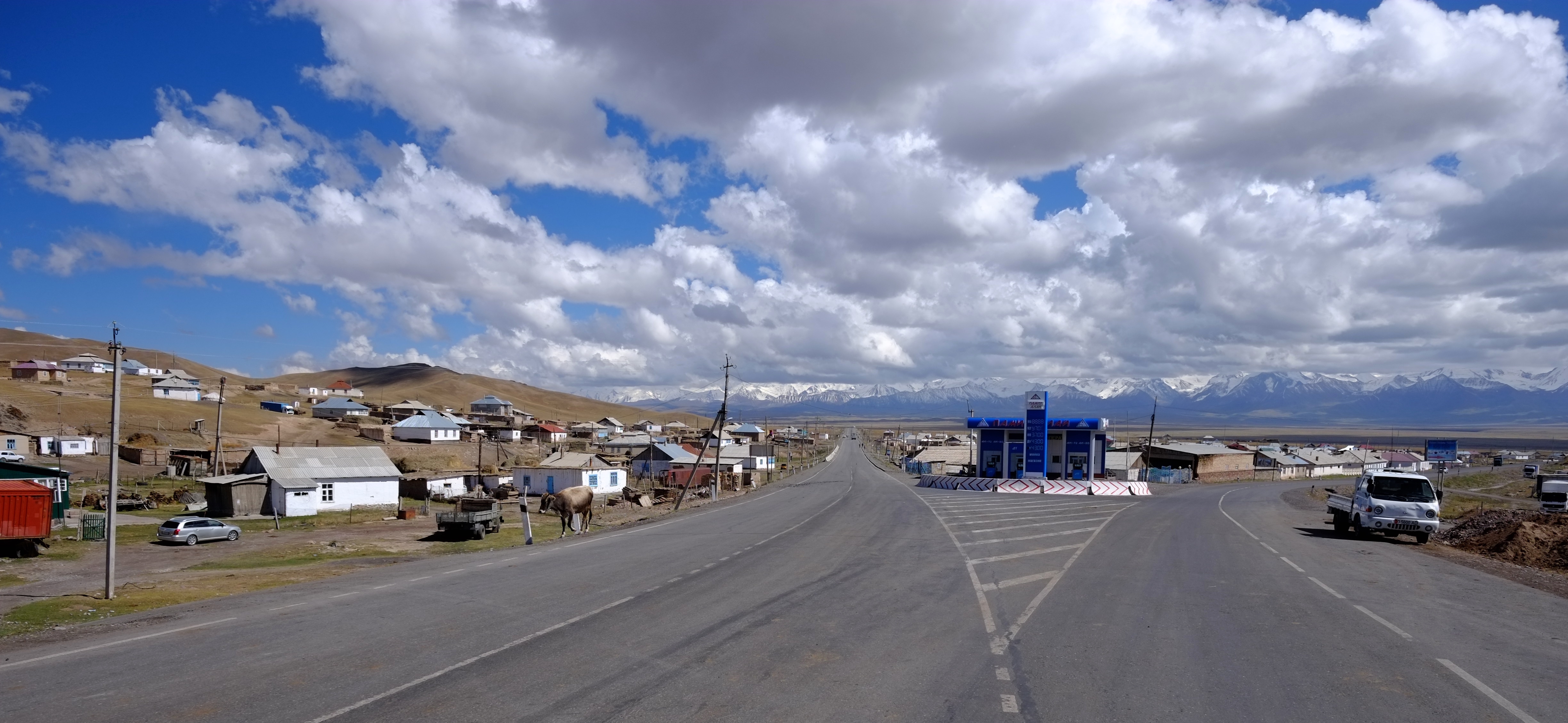
Downtown Sary Tash: Left turn goes to China, right turn to Tajikistan
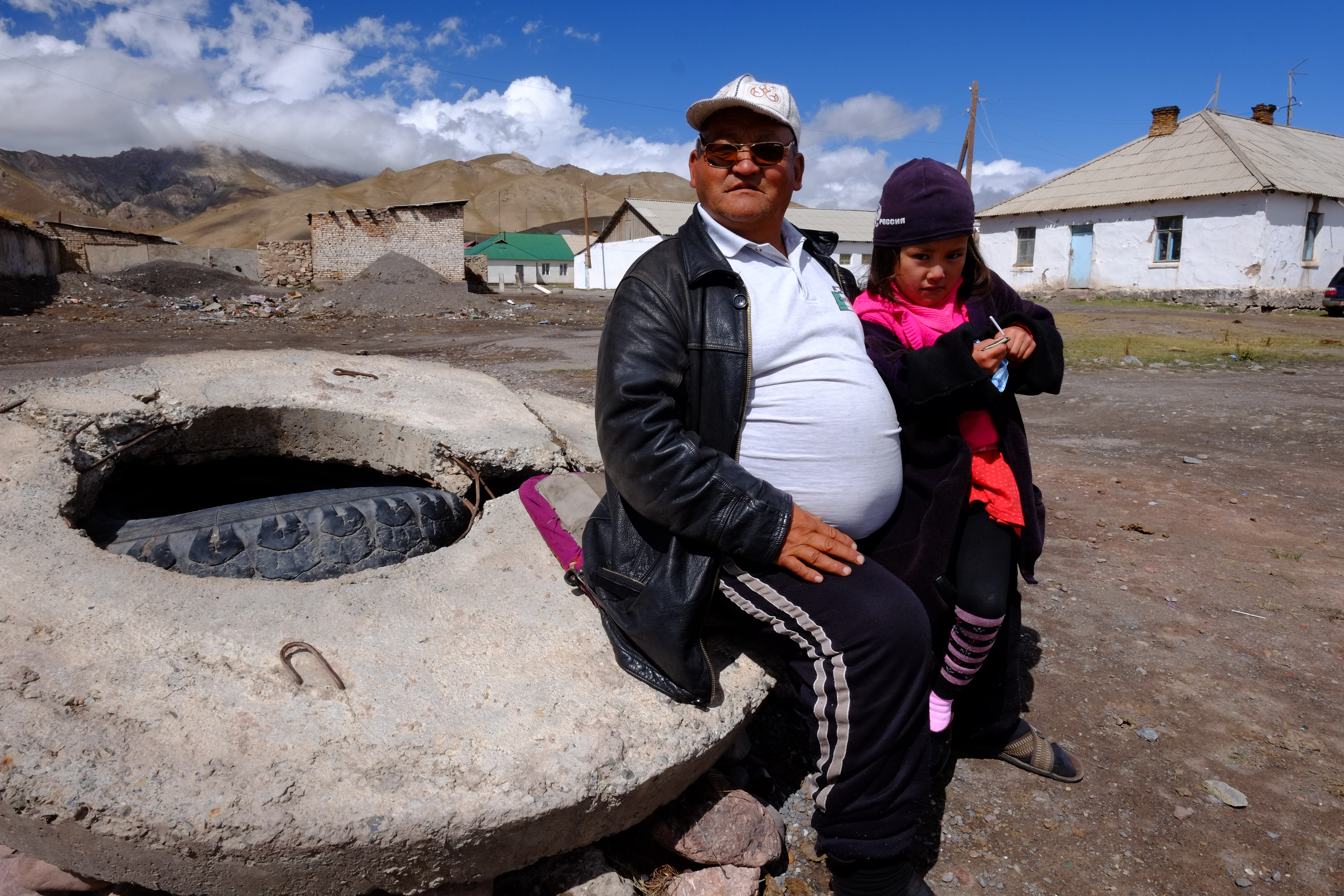
Locals
Locals

Day 5: Sary Tash – Karakul: 101km, altitude gain 1497m
A beautiful day with a clear blue sky and rested legs – ideal to tackle two passes in one day. For about 20km we cycle with a view of the dazzling snow-capped mountain chain, to the right Peak Lenin. We pass the first border at 10:30 am without problems and shortly after start the climb of today’s first pass through 20km of no man’s land. Around us are red mountains, marmots and a few eagles are circling in the air. Other than that there is silence. Shortly before the border we meet an Australian motorcyclist warning us that there are issues with customs at the Tajik border. Two French tourists are held by not returning their passports as they don’t want to pay a 10 $ fee for hoax-fumigation.
Arriving at the closed border gate a soldier walks slowly towards us asking for cigarettes. As we have none he walks away without opening the gate. Five minutes later he comes back, opens the gate, guides us to the customs office ( a sea container at an elevation of over 4100m), takes our passports and asks us to wait. Another five minutes later we get our stamped passports back and are officially welcomed to Tajikistan. We slowly cycle through another gate, always waiting for the fumigation-men, but nothing happens. We’re lucky again. We are now on a short downhill – just before the border we passed our ninth and last pass in Kyrgyzstan at 4336m – and cycle through a moon-like landscape with rough mountains around us, along an almost dried-out riverbed and dust storms that resemble thermal activities. We are even luckier as we are by now flying with a very strong tailwind making it easier for us to tackle today’s pass number two. At around 6pm we reach the summit with a fantastic view of lake Karakul. As from now it’s only downhill – 30km! However, the wind decides to change and the last 10km are a fight against it. Right before dark we arrive. Shattered but happy about our achievement – especially as we learned the next day, that we overtook a Scottish couple on their lightweight bikes!

Leaving Sary Tash
Leaving Sary Tash
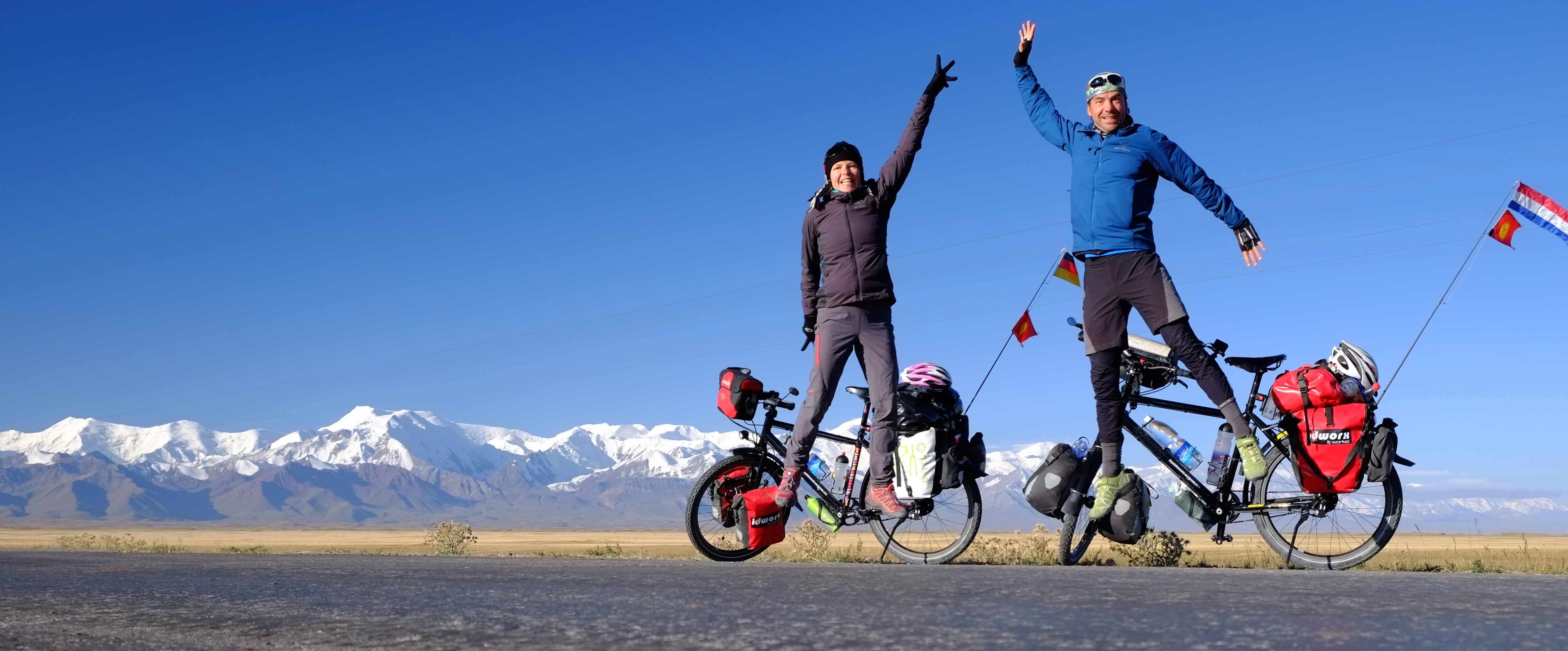
Photo session with Peak Lenin as a backdrop
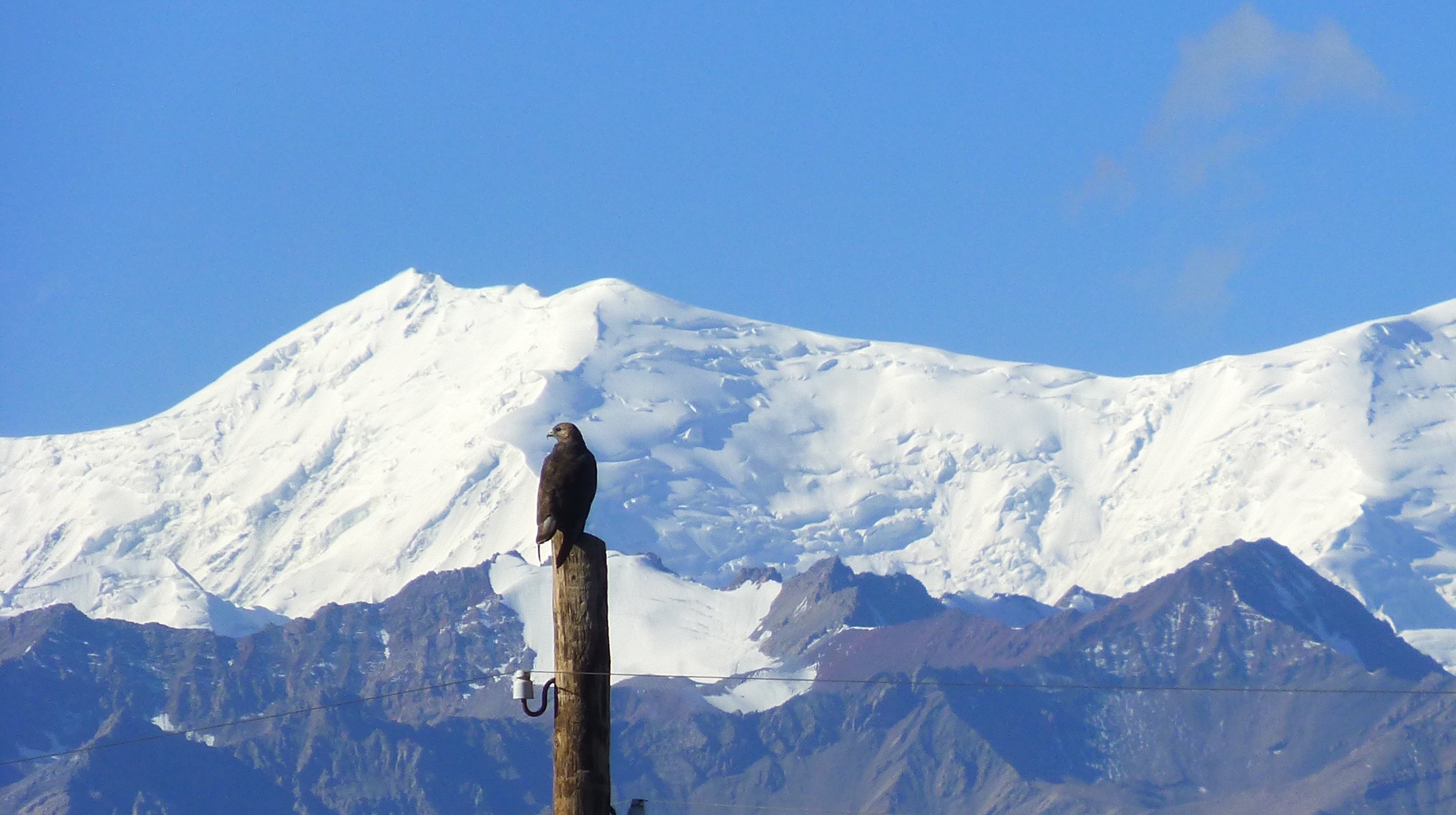
Is this an eagle?
Photo session with Peak Lenin as a backdrop
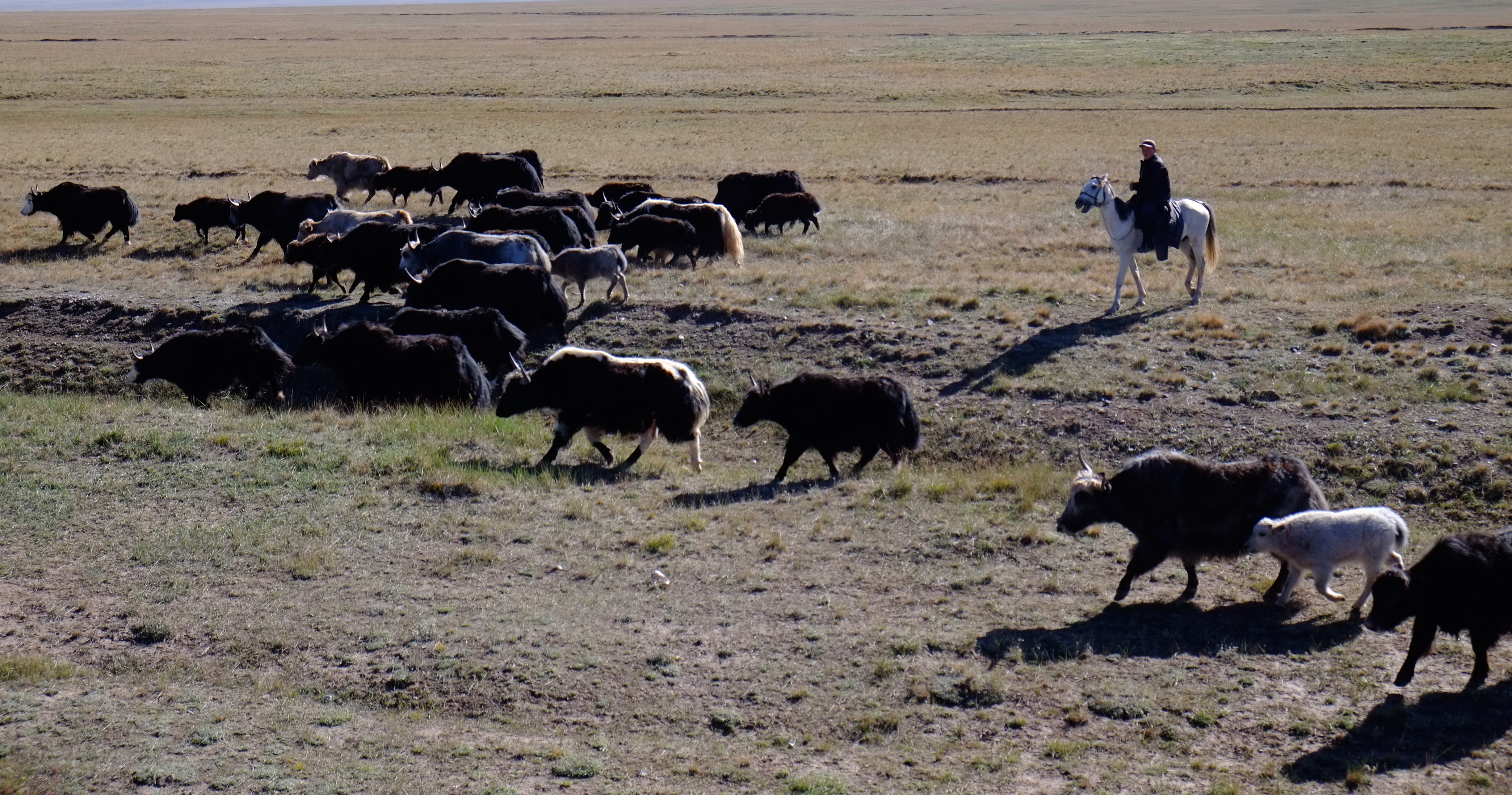
The first Yaks we see

DSCF8671

Lunch break right before the Kyrgyz border crossing
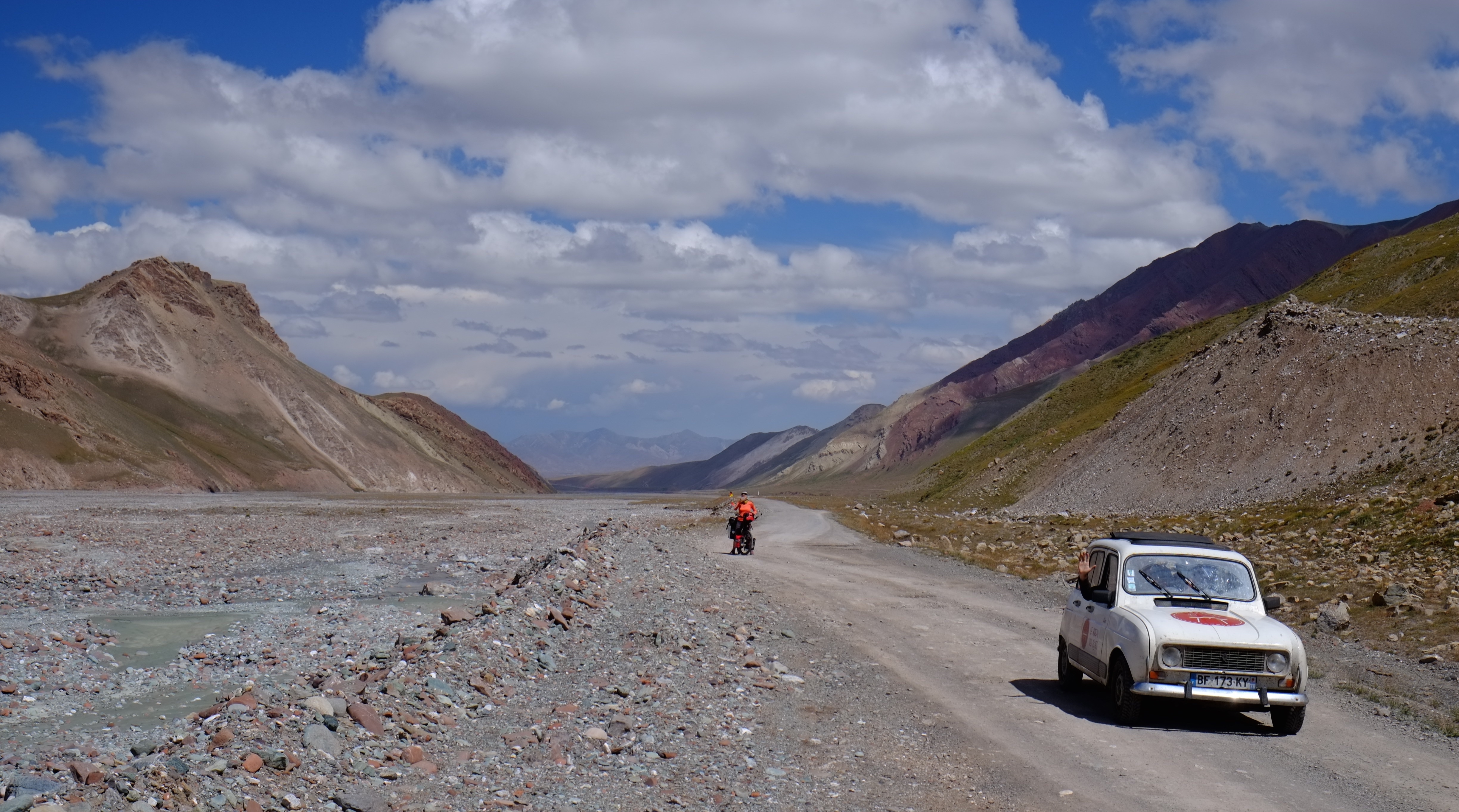
If an old R4 can do the Pamir Highway we should be able to do so, too!
The beginning of the first pass in no man's land between the borders
The beginning of the first pass in no man’s land between the borders
Getting closer to the top

DSCF8773

A fluffy marmot
A fluffy marmot
Highest point ever by bike at 4336m
We can Selfie :-)
We can Selfie 🙂
Dust storms
Dust storms
Final destination: Karakol
Final destination: Karakul
And from here it's only: downhill, downhill, downhill
And from here it’s only: downhill, downhill, downhill
Arrived!
Arrived!

Der berühmt-berüchtigte Pamir Highway – Teil 1

23. August – 8. September 2015 – Der Pamir Highway ist eines der Highlights unserer Reise, daher berichten wir über die wichtigsten Geschehnisse in insgesamt vier Teilen anhand unserer täglichen Tagebucheinträge.

293km, altitude gain: 5224m (1121km and 15107m altitude gain in total)
293km, 5.224 Höhenmeter (1,121km and 15.107 Höhenmeter insgesamt)

Tag 1: Osh – Gulcha: 85km, 1.436 Höhenmeter
Wir zweifeln noch, ob wir losfahren sollen, da starker Regen vorhergesagt ist. Da es früh morgens nur stark bewölkt ist, fahren wir trotzdem los, da unser Tadschikistan-Visum bereits vor Tagen angelaufen ist. Gute Entscheidung, denn es regnet den ganzen Tag überhaupt nicht. Wir fahren heute nur bergauf, durch trostlose Landschaften und kleine, heruntergekommene Dörfer. Wir bezwingen einen Pass von 2.389m und haben leichten Rückenwind. Unterwegs bekommen wir Äpfel und Karotten geschenkt und treffen ein irisch/amerikanisches Radlerpaar. Glücklicherweise gibt es in Gulcha ein Guesthouse, so müssen wir nicht selber kochen, da wir nach einem langen Tag doch sehr müde sind.

Arriving at the guesthouse with well prepared owners
Gute Vorbereitung ist alles

Tag 2: Gulcha – Ak Bosoga: 77km, 1.369 Höhenmeter
Es geht früh los an einem wunderschönen Morgen mit strahlend blauem Himmel und ohne Wind. Wir strampeln durch das hügelige Gulcha-Tal und sind von hohen Bergen links und rechts umgeben. Das Tal wird mal enger, mal breiter und macht immer wieder Platz für ein kleines Dorf. Später erinnert uns die Landschaft an die Wüsten von Kalifornien. Und plötzlich kommt Wind auf – Gegenwind, denn mehr als einen Tag Rückenwind ist uns nicht vergönnt. Am Ende des Nachmittags fragen wir in einem Dorf nach Übernachtungsmöglichkeiten und werden direkt eingeladen. Wir bekommen Chai, Kekse, frische Wassermelone und Suppe und sogar ein eigenes Zimmer zum Schlafen. Das nennen wir mal Gastfreundschaft!

An unexpected coffee break
Unerwartete Kaffeepause

DSCF8149

And another break
Und schon wieder Pause

DSCF8220

The wind is picking up
Aufkommender Wind
Almost there...
Fast geschafft…
The Kyrgyz family we stayed with
Bei dieser kirgisischen Familie haben wir übernachtet

Tag 3: Ak Bosoga – Sary Tash: 30km, 922 Höhenmeter
Auch heute starten wir früh und mit schweren Beinen machen wir uns an den nächsten Pass, wieder gegen den Wind. Die Steigungen sind schwer, meist so um die 8%. Nach vier Stunden erreichen wir den Gipfel auf 3.615m, vom Wind und den Kindern, die alles anfassen, genervt. Zum ersten Mal sehen wir den schneebedeckten Berg Peak Lenin, den zweithöchsten Berg Kirgisistans mit einer Höhe von 7.134m. Später in Sary Tash haben wir eine fantastische Aussicht auf die gesamte Bergkette. Endlich geht es bergab, aber nur für drei Kilometer, dann steigt die Straße wieder für die nächsten zwei Kilometer auf den zweiten Gipfel auf 3.550m. Das ist wie ein Schlag ins Gesicht! Trotzdem kommen wir früh an und können in unserem Guesthouse zu Mittag essen. Danach kaufen wir alles Nötige ein in einem der zwei Läden, der gleichzeitig lokale Bar, Wechselstube und Mobilfunkanbieter ist. Wir haben Glück, denn der Besitzer ist gerade beim Einkaufen in Osch und jedes Mal, wenn wir nach etwas fragen, ruft die Dame hinter dem Tresen ihren Mann an und brüllt unsere Bestellung ins Telefon. Am nächsten Morgen können wir alles um 7 Uhr abholen.

Ascending the first pass before Sary Tash
Der erste Pass vor Sary Tash
Our first 1000 kilometers cycled
Unsere ersten 1.000 Kilometer
Summit #1
Gipfel #1
Summit #2
Gipfel #2

Tag 4: Sary Tash
Wir legen einen Ruhetag auf 3.200m Höhe ein, da wir keine Lust haben, gegen den gerade tobenden Sturm und Regen anzukämpfen. Ich bin ganz froh darum, da wir somit etwas mehr Zeit haben, uns an die Höhe zu gewöhnen. Die nächsten Tage werden wir über 4.000m verbringen.

Downtown Sary Tash
Stadtzentrum Sary Tash – links geht’s nach China, rechts nach Tadschikistan
Locals
Einheimische

Tag 5: Sary Tash – Karakul: 101km, 1.497 Höhenmeter
Ein herrlicher Tag, strahlend blauer Himmel und ausgeruhte Beine – ideal, um gleich zwei Pässe an einem Tag zu überradeln. 20 Kilometer radeln wir mit Aussicht auf eine atemberaubende Bergkette, zur Rechten liegt Peak Lenin. Um 10.30 Uhr passieren wir problemlos die erste Grenze und kurz danach beginnt der erste Pass durch 20 Kilometer Niemandsland. Wir sind umringt von majestätischen roten Bergen und von Murmeltieren. Adler kreisen in der Luft. Ansonsten ist es nur still. Kurz vor der tadschikischen Grenze treffen wir einen australischen Motorradfahrer, der uns vor Problemen an der Grenze warnt. Zwei französische Touristen würden gerade festgehalten – sie erhalten ihre Pässe nicht zurück – weil sie sich weigerten, eine Desinfektionsgebühr von 10 USD – die natürlich Schwachsinn ist – zu bezahlen. Am geschlossenen Grenztor angekommen, schlendert ein Soldat langsam auf uns zu, fragt nach Zigaretten und da wir keine haben läuft er genauso langsam wieder zurück. Fünf Minuten später kommt er wieder zurück, öffnet das Tor, führt uns zu den Zollbeamten in einem Seecontainer auf ca. 4.100m Höhe, nimmt unsere Pässe in Empfang und bittet uns, zu warten. Weitere fünf Minuten später bekommen wir unsere abgestempelten Pässe zurück und werden damit offiziell in Tadschikistan willkommen geheißen. Langsam fahren wir durch ein weiteres Tor – immer Ausschau haltend nach den Desinfektionsmännern – aber nichts passiert. Hatten wir doch wieder einmal Glück gehabt! Jetzt geht es erst einmal bergab. Kurz vor der Grenze hatten wir unseren neunten und letzten Pass in Kirgisistan mit einer Höhe von 4.336m überquert und jetzt radeln wir durch eine mondartige Landschaft mit kargen Bergen um uns herum, einem fast ausgetrockneten Flussbett und Staubstürmen, die eher heißen Thermen ähneln. Und wir haben noch mehr Glück: wir fliegen fast, da wir starken Rückenwind haben, das vereinfacht uns die Überquerung des zweiten Passes enorm. Gegen 18 Uhr erreichen wir Gipfel und von nun an geht es die letzten 30km nur noch nach unten. Allerdings macht uns der Wind einen Strich durch die Rechnung – die letzten 10km müssen wir gegen starken Gegenwind radeln. Kurz vor Einbruch der Dunkelheit erreichen wir unser Ziel – müde, aber stolz auf die heute erreichte Tagesetappe, vor allem, weil wir am nächsten Tag erfahren, dass wir zwei Schotten auf ihren Leichträdern überholt haben.

Leaving Sary Tash
Nach Sary Tash
Photo session with Peak Lenin as a backdrop
Ist das ein Adler?
Photo session with Peak Lenin as a backdrop
Fotosession mit Peak Lenin im Hintergrund
The first Yaks we see
Unsere ersten Yaks

DSCF8671

Lunch break right before the Kyrgyz border crossing
Mittagspause kurz vor der kirgisischen Grenze
If an old R4 can do the Pamir Highway we should be able to do so, too!
Wenn ein alter R4 den Pamir Highway schafft, dann machen wir das doch mit Links! 
The beginning of the first pass in no man's land between the borders
Der Anfang des ersten Passes im Niemandsland zwischen den Grenzen 
Getting closer to the top
Beinahe oben

DSCF8773

A fluffy marmot
Ein flauschiges Murmeltier
Highest point ever by bike at 4336m
Höchster Gipfel mit 4.336m, den wir je mit den Rädern bezwungen haben
We can Selfie :-)
Auch wir können Selfies 🙂
Dust storms
Staubstürme
Final destination: Karakol
Endstation: Karakul
And from here it's only: downhill, downhill, downhill
Und ab hier geht’s nur noch nach unten 
Arrived!
Angekommen!

From Kyrgyzstan to Pebblestan

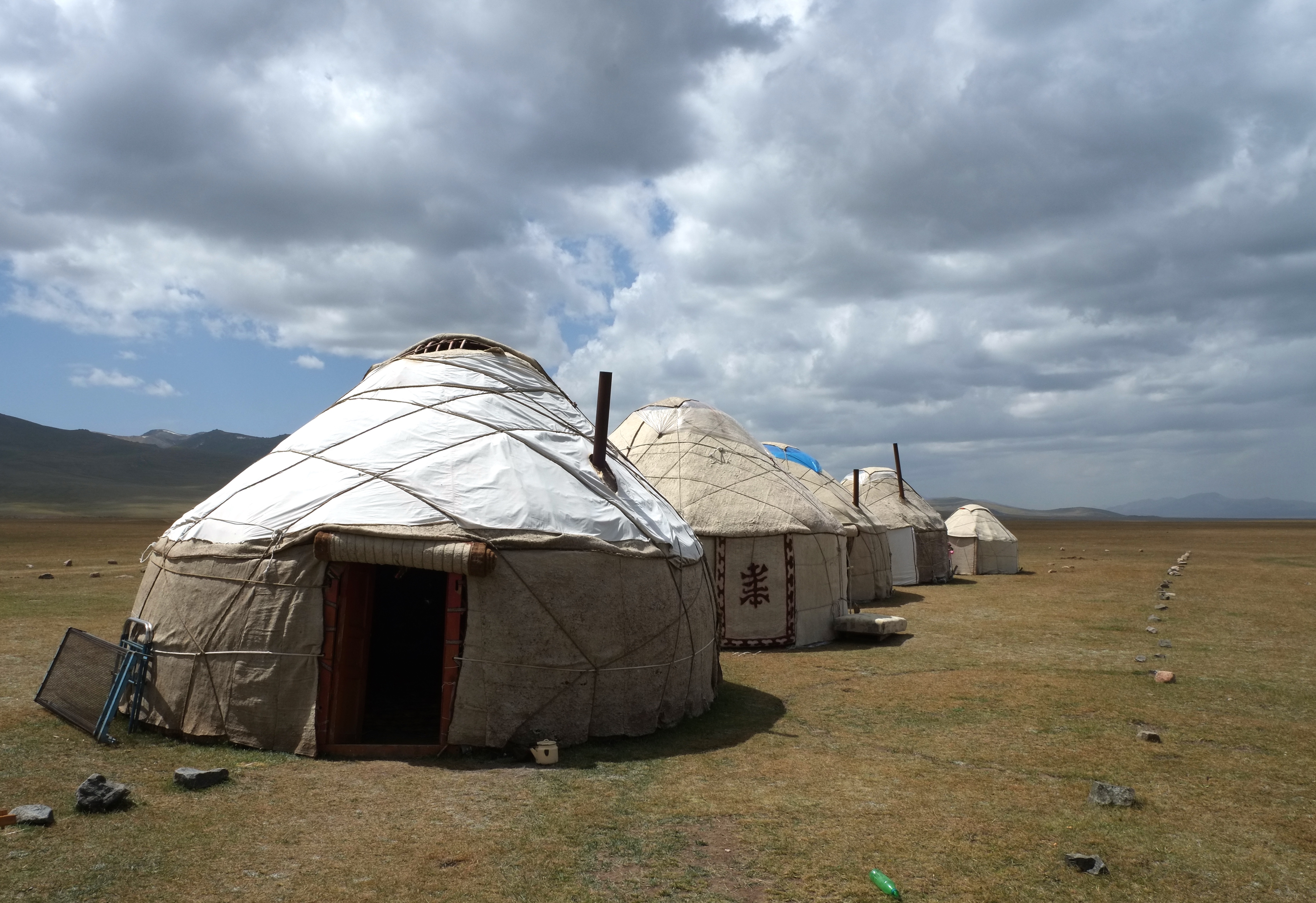
09 – 20 August, 2015 – 200m later around the corner we reached the top. No sign indicated that we were at over 3,400m. We took a few photos, enjoyed the view, put on a few more clothes and then cycled downhill. Finally! We passed a few yurt camps before we decided to stop at a smaller camp with lake view, pitched the tent together with three handy children and joined the family for Chai (tea), bread and kumys, which is fermented mare milk and a beloved national drink in spring and summer. It has a little alcohol and tastes very sour with a slightly prickly feeling on the tongue. It is drinkable but not really our taste, especially as there are all kinds of other indefinable things swimming in it.

Leaving the highest point to date
After the children helped with pitching the tent they also wanted to explore the inside
Our little yurt behind its big brothers
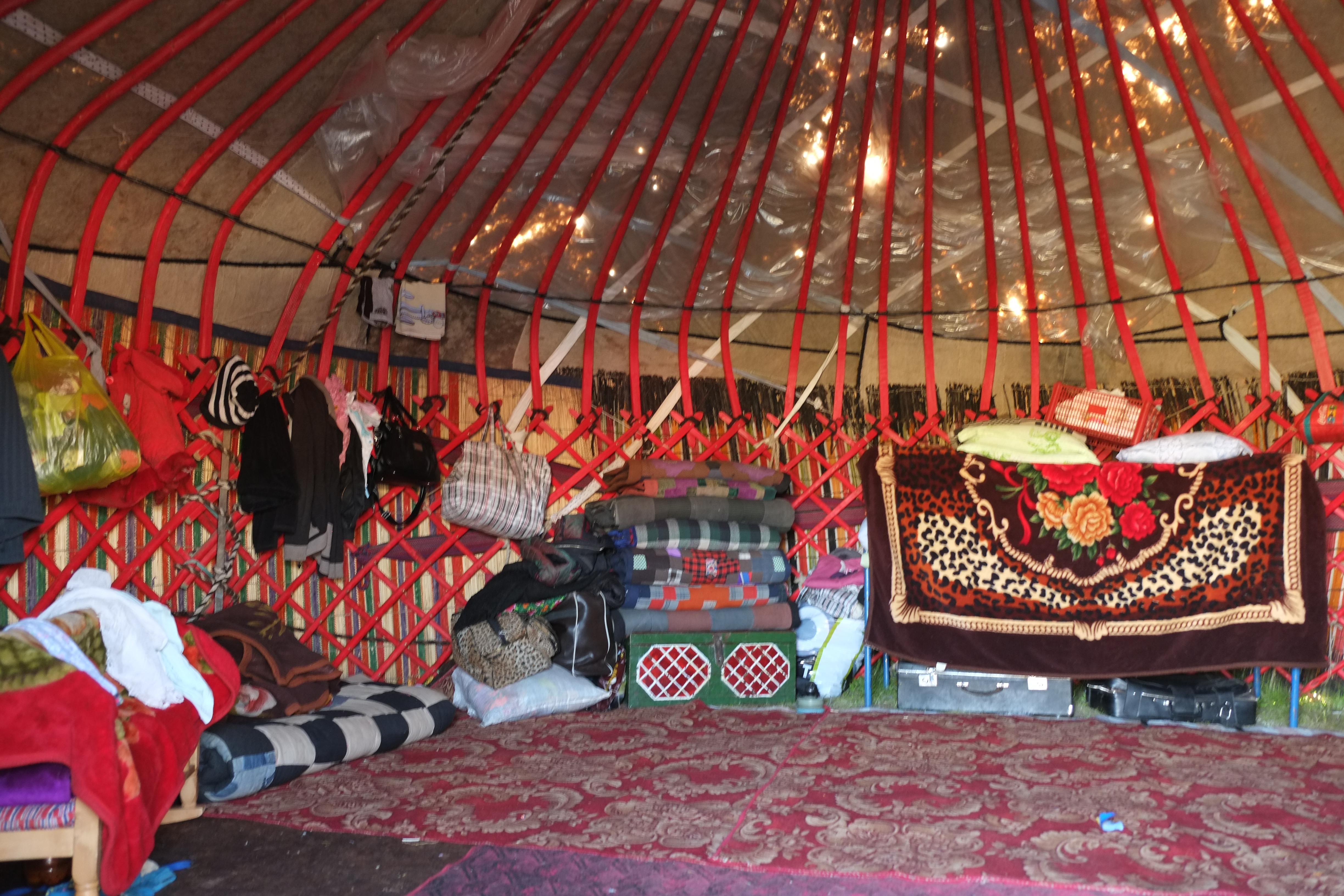
The inside of a sleeping yurt: mattresses, blankets and pillows are neatly folded and stored along the felt walls during the day. There are always enough blankets to host a few more guests.
The inside of a sleeping yurt: mattresses, blankets and pillows are neatly folded and stored along the felt walls during the day. There are always enough blankets to host a few guests.
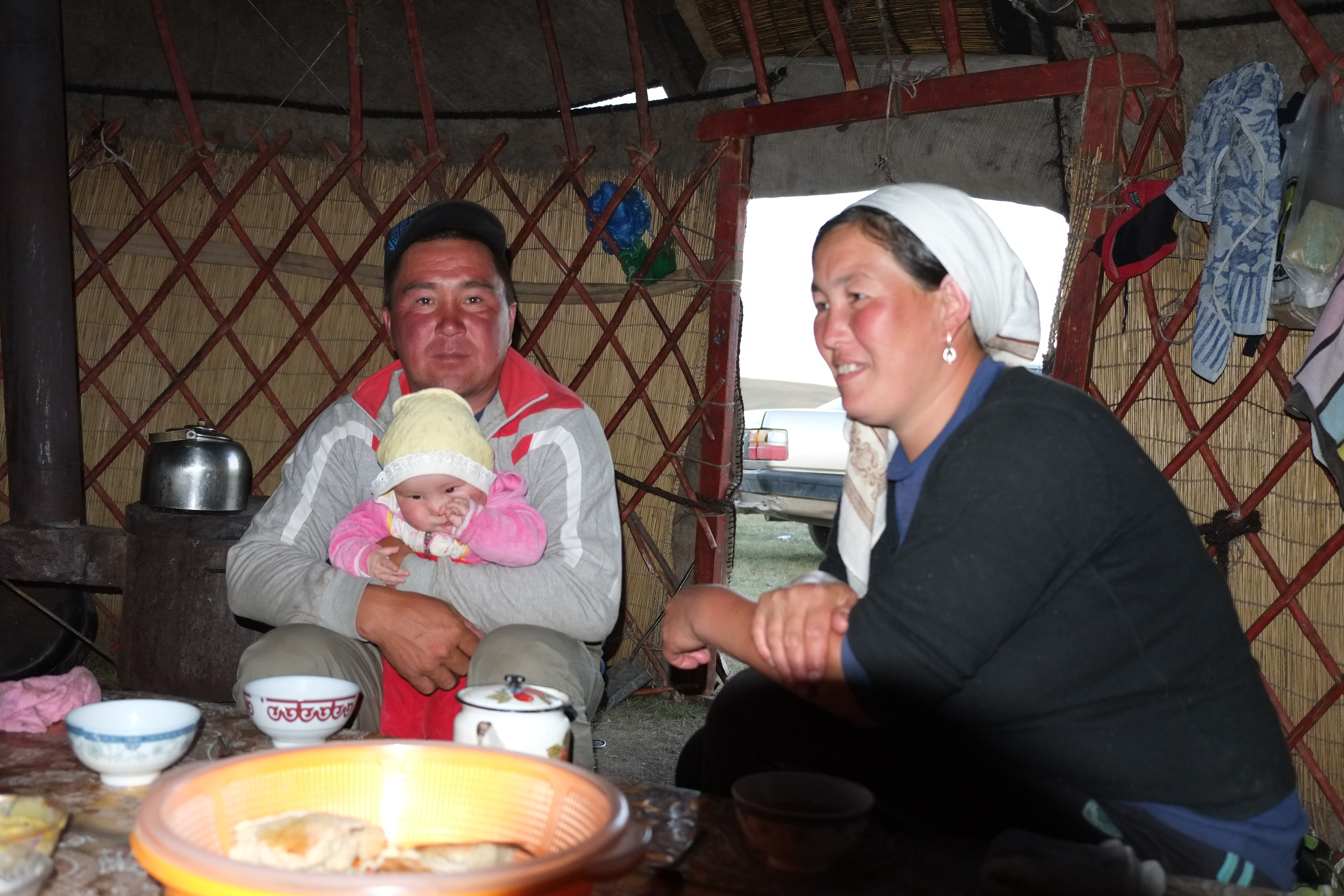
The inside of a dining yurt: for dinner we had soup with vegetables and mutton meat served with bread and washed down with enormous amounts of chai
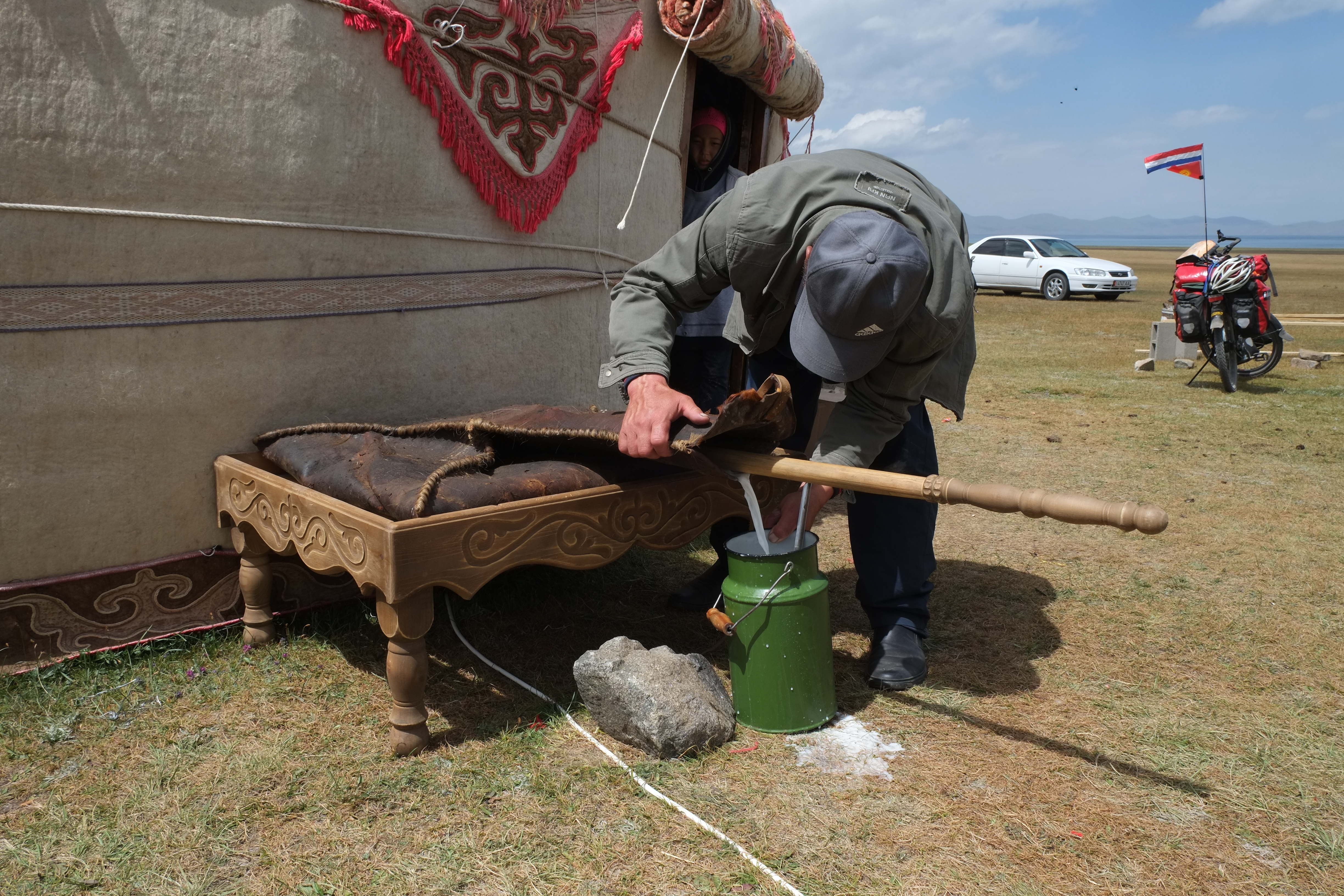
Milking the mare
Milking the mare…
Leather storage bottle for fermented mare milk
…for the fermented mare milk stored in leather bottles

Communication turned out to be quite difficult as my Russian is very limited as well as their English. Now was the time to make use of our handy Russian-German dictionary with useful phrases as we were trying to find out at what time we could get dinner. The closest we could find was the sentence “Will there be warm food?” Later on it would prove to be even less useful when checking for a hostel room with sentences like “Do you have a room with sea view?” Going back to sign language or our pictionary still proves to be the best option.

At slightly over 3,000m the Song Köl area is only accessible between early June and late August. During this time, herders build their camps and move up their cattle. At the same time it is school holiday, so the farmers can take their children with them. We were amazed about their way of living and about how they bring up their children. They are used to work, older children take care of their younger siblings, girls are helping with the cooking, getting water from the nearby river, boys are herding the cows, sheep or horses. Everybody is busy all day long, but on the other hand it still felt very peaceful and relaxed to us. The adults would get up when it gets light while the children continued sleeping all next to each other in the sleeping Yurt. We all would have an extended breakfast with greasy noodles fried with onions and the mandatory Chai before heading off around the lake.

A coffee break and curious herders
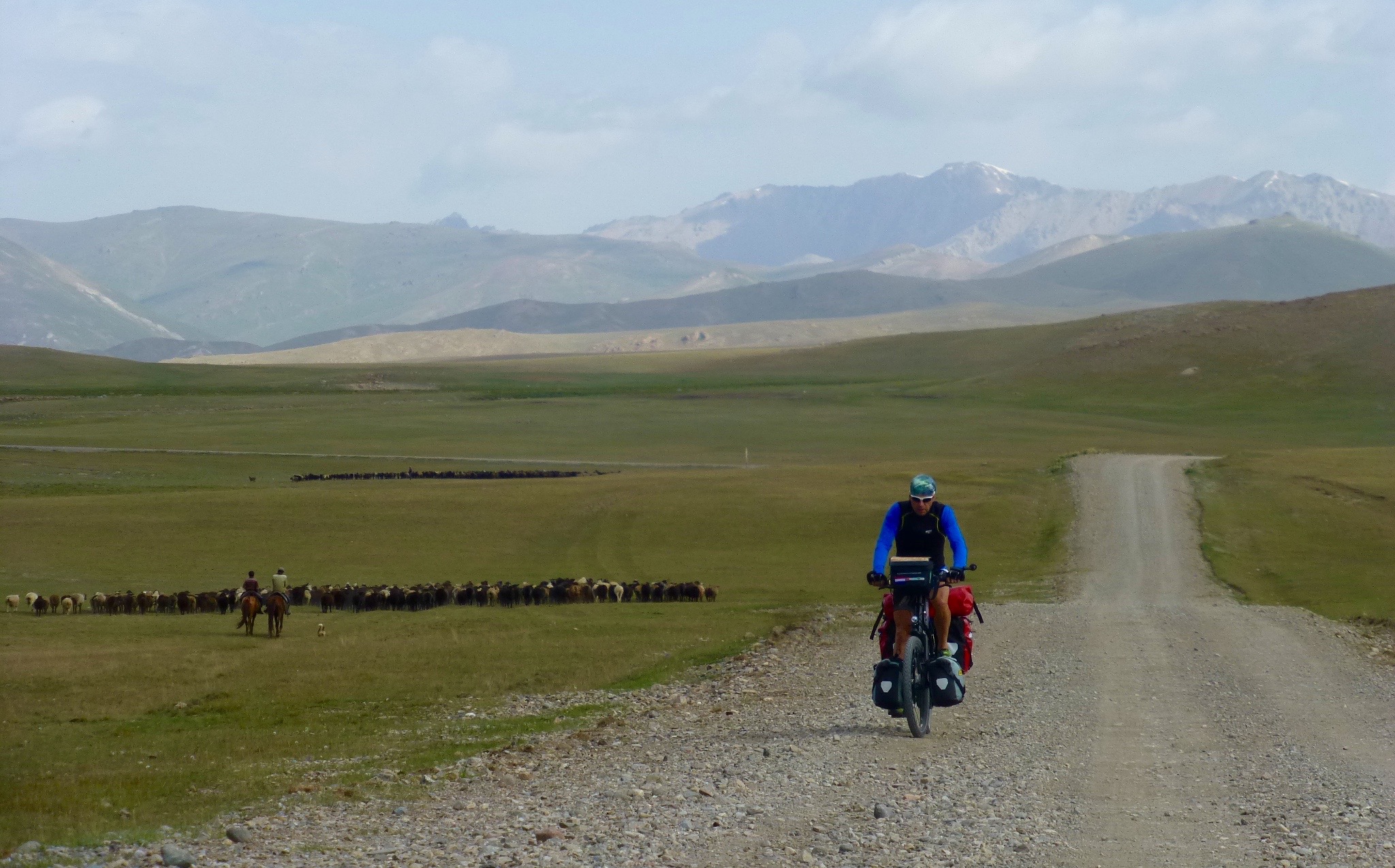
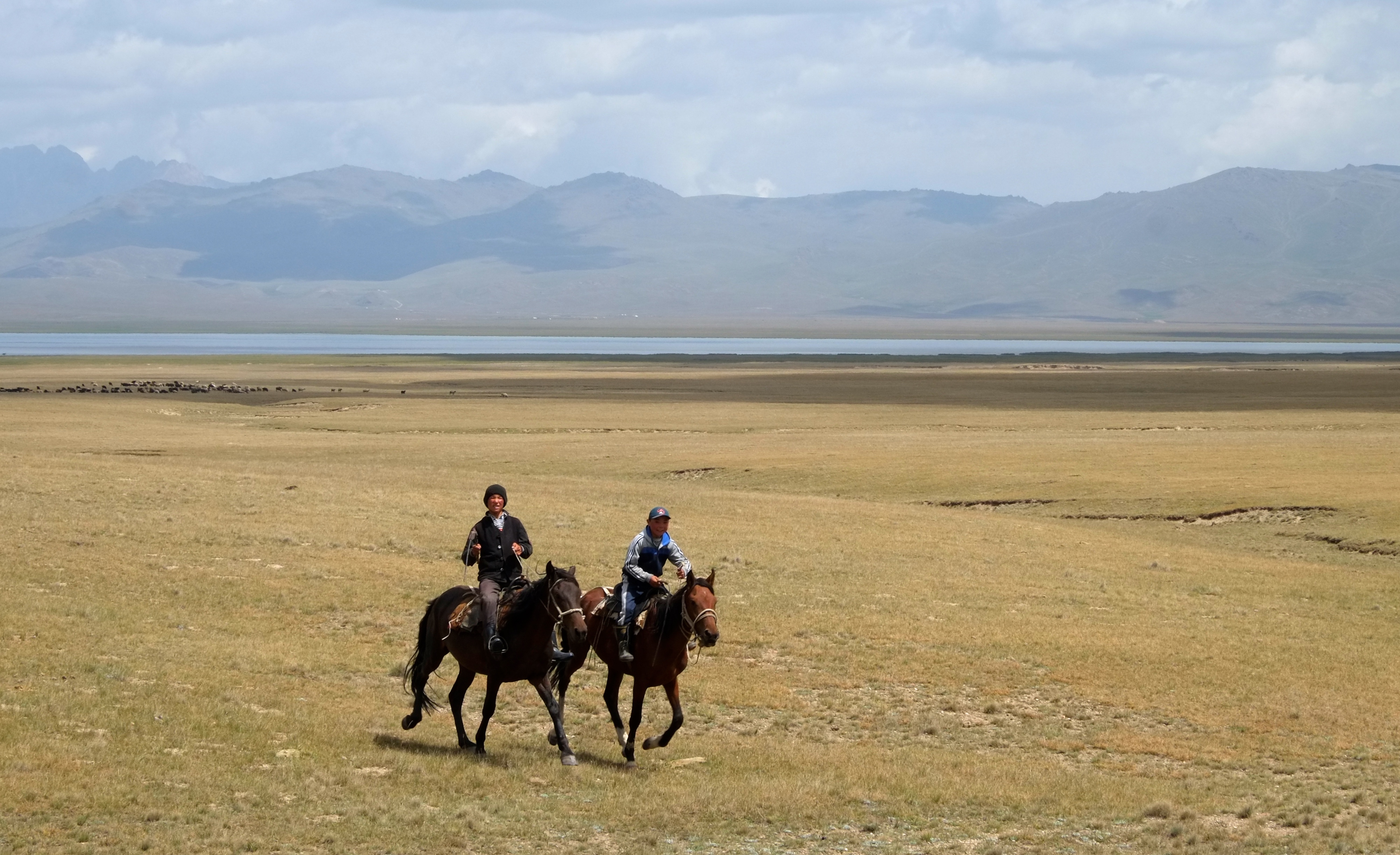
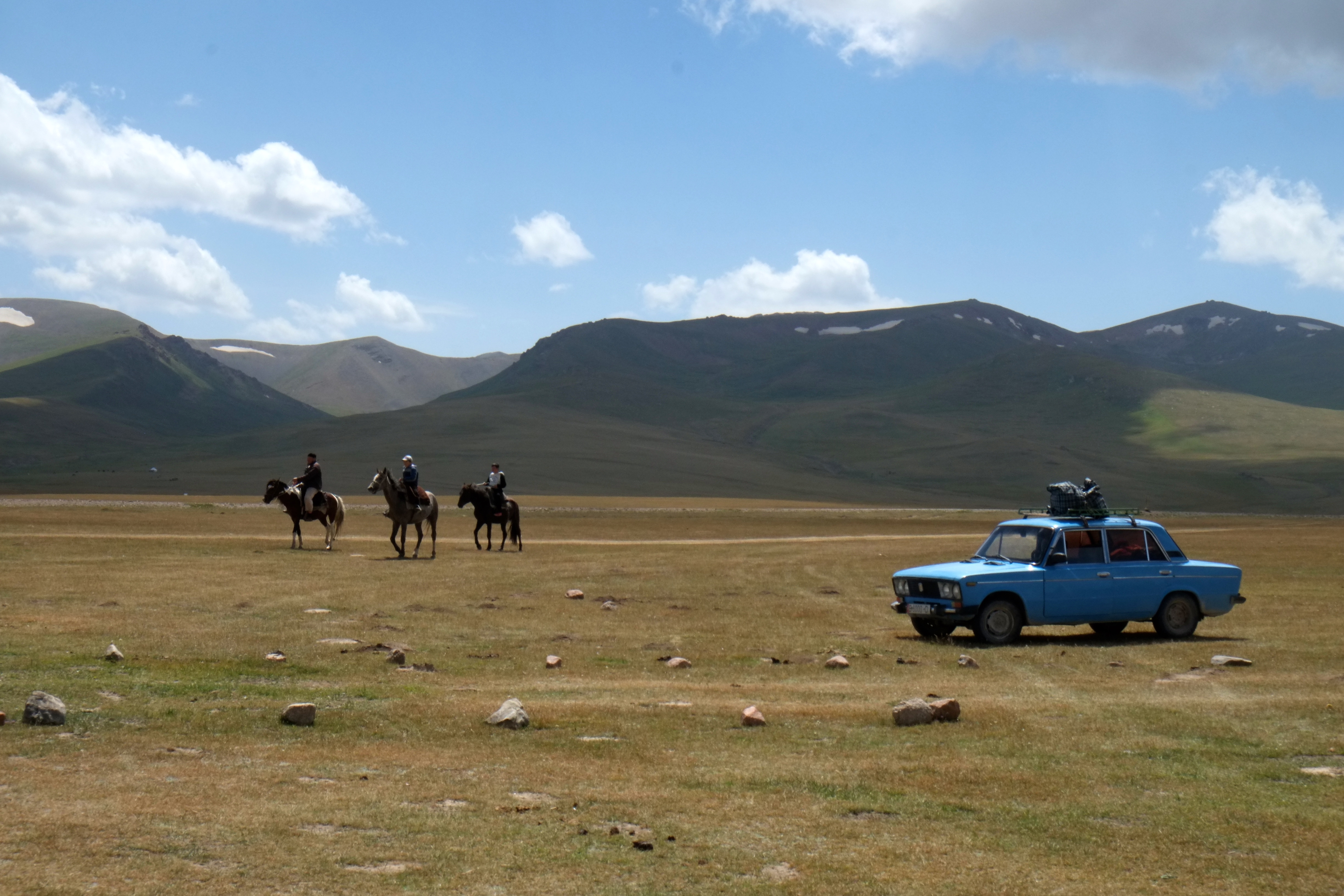
Riding with the cowboys
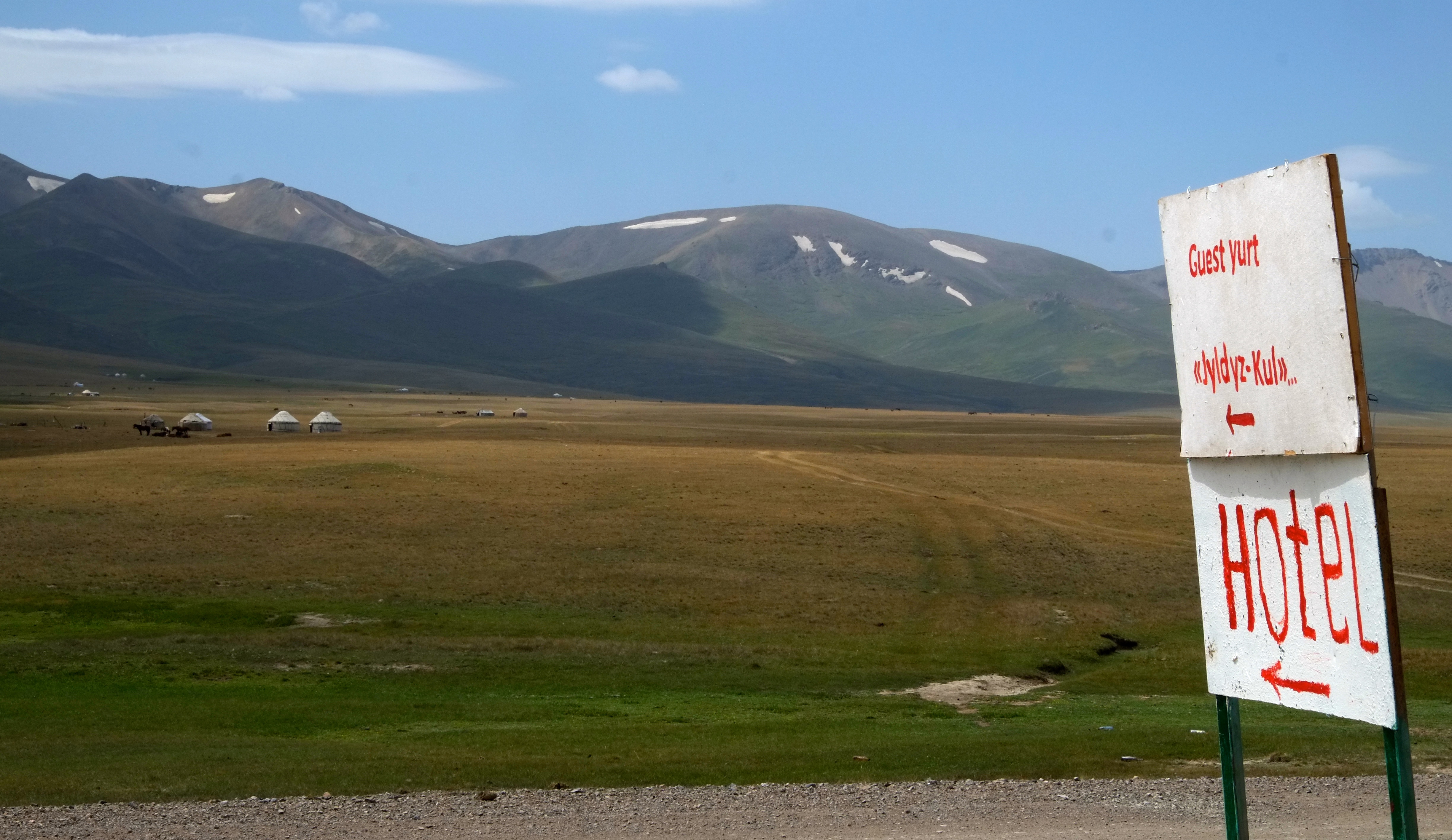
Hotels Kyrgyz-style
Hotels Kyrgyz-style
Enjoying Kyrgyz hospitality: invited by a family on vacation at Song Köl
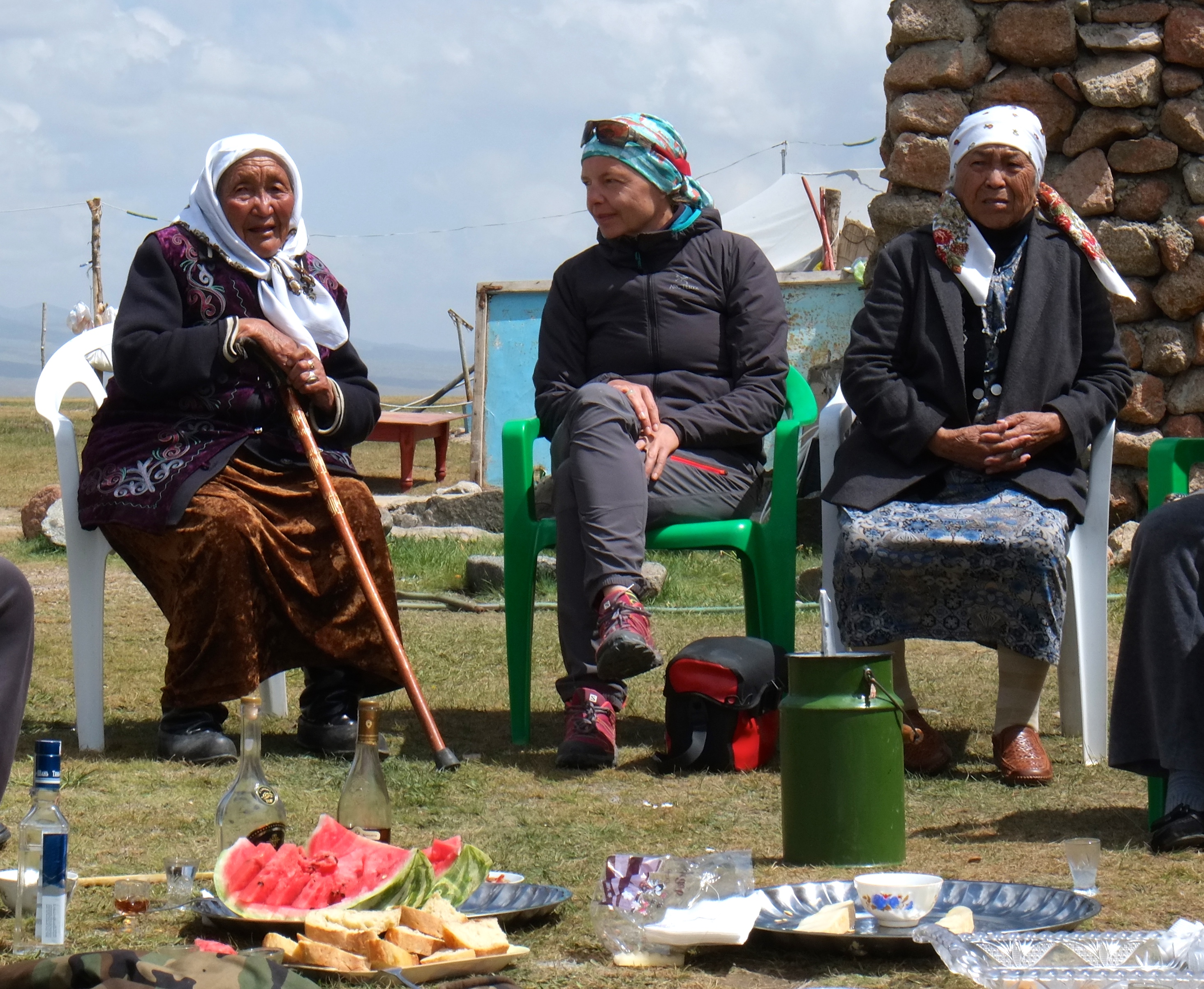
3 old women having lunch
Three old women having lunch

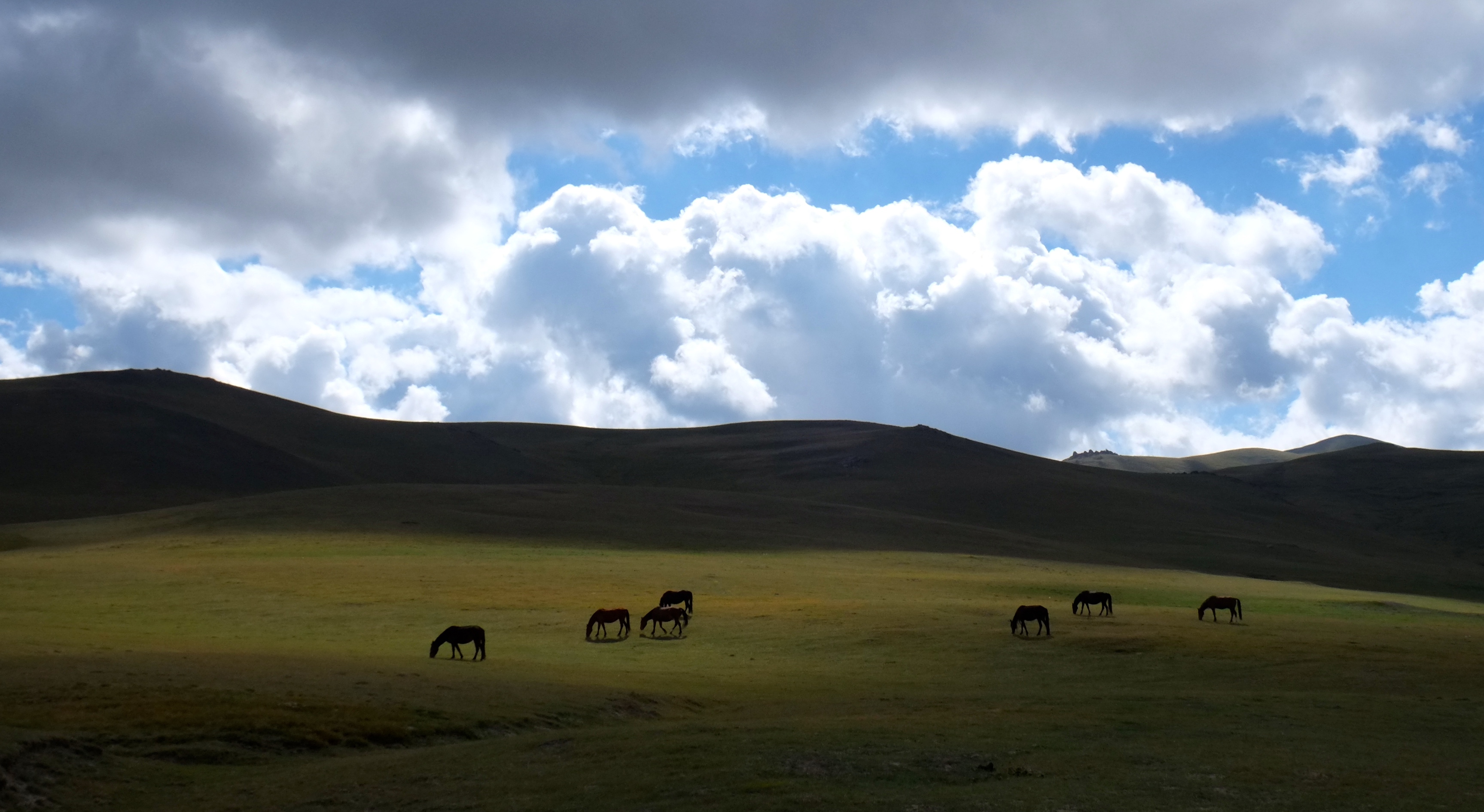
The lake is ringed by a saw-toothed horizon of peaks, fronted by lush summer pastures. Herders’ yurts dot the shore side meadows every kilometer or so. We felt like cycling through a Hollywood setting for a Western movie with cowboys on horses near and far. We could hardly get enough of this beautiful scenery, all the pain to get there was forgotten.

DSCF6941 DSCF6947

DSCF6977

DSCF7066

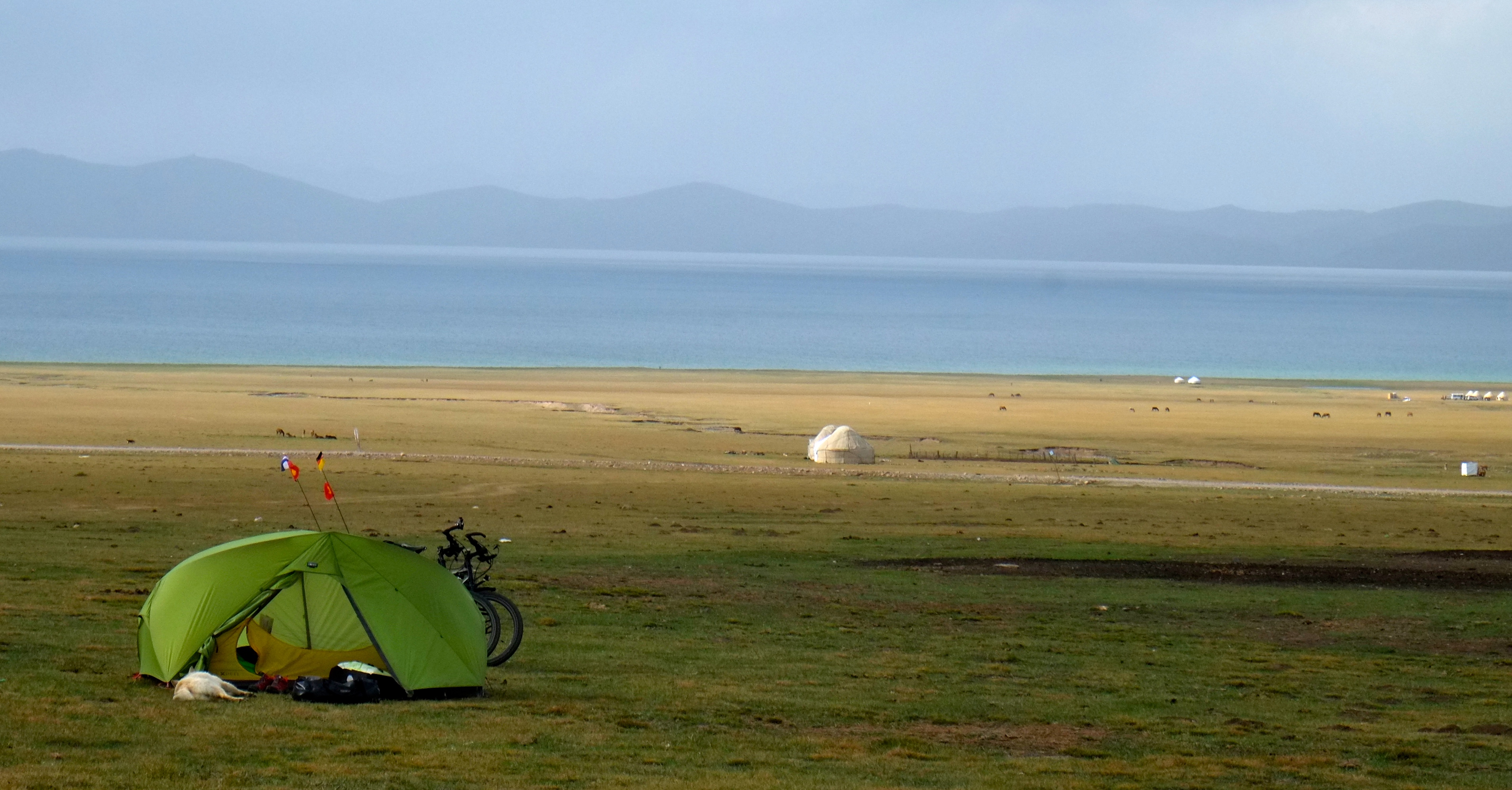
A perfect camp spot
Another perfect camp spot
Our
Our new furry friend: we gave him some stale bread and he wouldn’t leave our tent anymore – all night he watched over our tent and couldn’t wait for us to emerge from it the next morning to greet us with his wagging tale.

DSCF7209

DSCF7193

DSCF7174

Over another pass and down via 33 switchbacks we left the area and now descended with more stunning views over the valley and high snow-capped mountains we knew we had to cross soon as well.

DSCF7304

I can fly, I can fly...
I can fly, I can fly…
At the top of yet another pass

DSCF7421

DSCF7398

P1220575

Pass after pass after pass we climbed on still unbelievably bad roads and we made slow progress towards Osh. One day we had to stop early as I was unwell. Soon I started vomiting and it became clear we wouldn’t be able to traverse the last pass before Kazarman. A few days later Johan spent most of the rest day in bed respectively on the toilet as he now suffered from diarrhoea. We nonetheless continued the following day as I had to finish a job and we knew there was another 3,000m pass to overcome. It’s been a tough day with weak bodies, endless undulating roads, pebbles, rocks, dust and the sun burning relentlessly. Temperatures in their high 30s and speeding Audi 100 – 50 % of the local population is driving this make, the other 50% drives in Japanese cars with the steering wheel on right – didn’t make the journey more pleasant. But we endured and pitched our tent at the foot of the pass next to a river where we could wash and cook and relax our bodies.

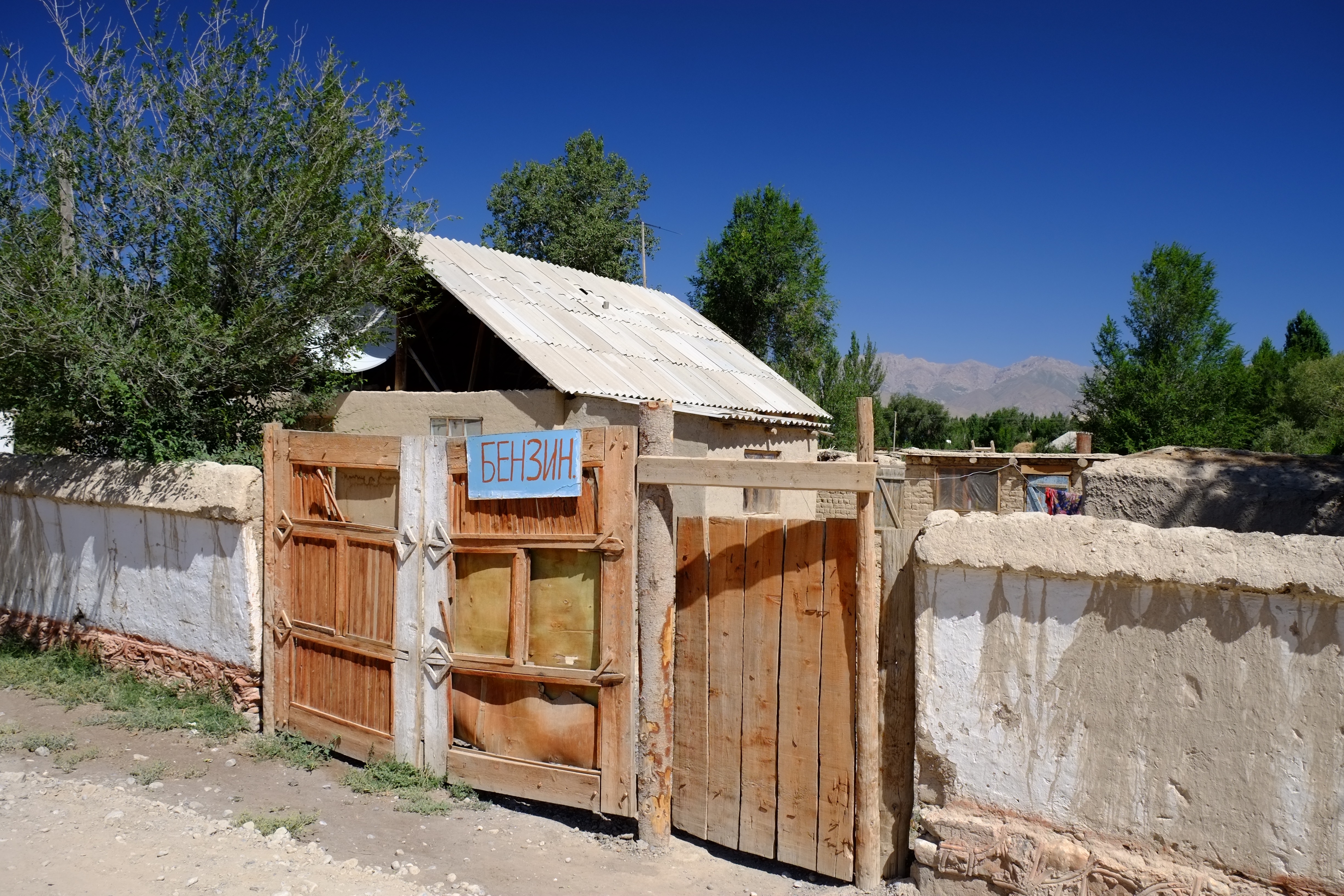
Petrol station in a remote village

DSCF7365

DSCF7447

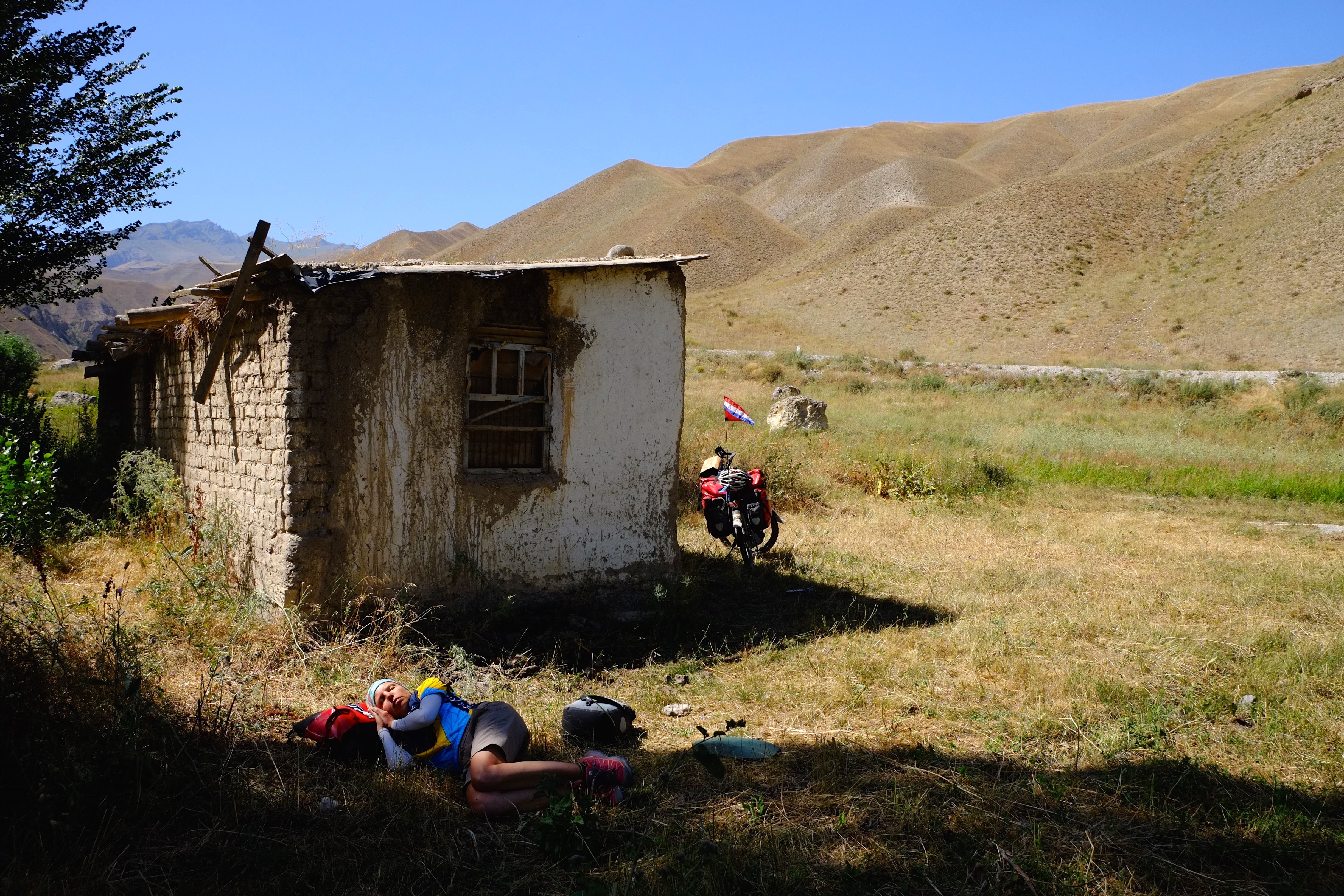
Sick on the road
Sick on the road

DSCF7546

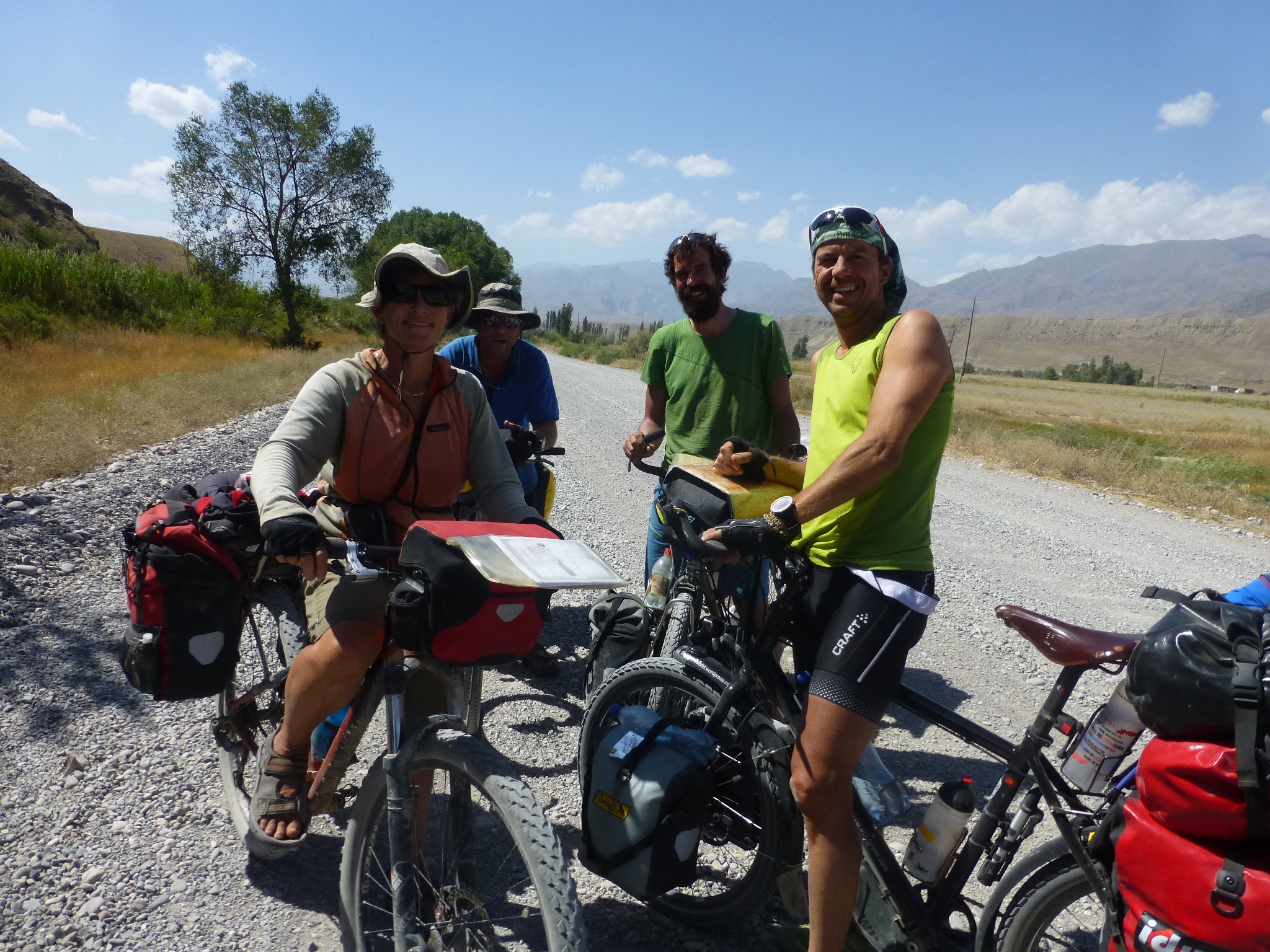
Meeting other cyclists from New Zealand and Switzerland
Almost daily we meet other cyclists, here from New Zealand and Switzerland
Riverside lunch
Riverside lunch

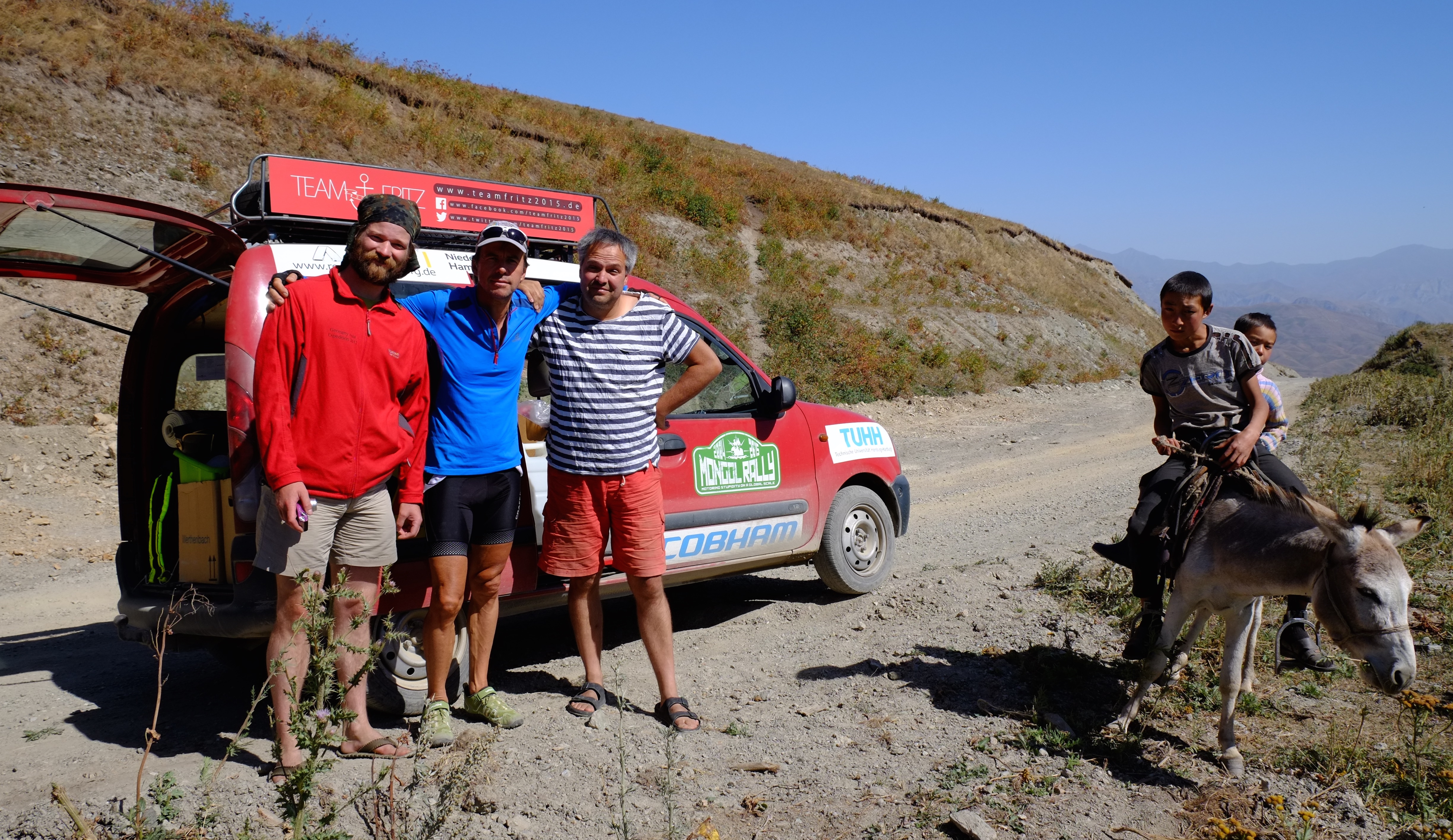
Then came our lucky day. Cycling slowly up the last pass before Osh on another cloudless and hot day we soon met a German in her 4WD treating us with “Nimm 2” (German candy) and refilling our water bottles. A few kilometres further up another German car stopped, two guys participating in a race from London to Mongolia stepped out and refilled our water bottles once again. Later, we were just cooking a big pot of yummy spaghetti, three cars from France and Belgium stopped. And again, they treated us well, refilling our water bottles once more and giving us Swiss chocolate.

Two funny German guys treating us well

DSCF7688

DSCF7711

Friendly people along the road
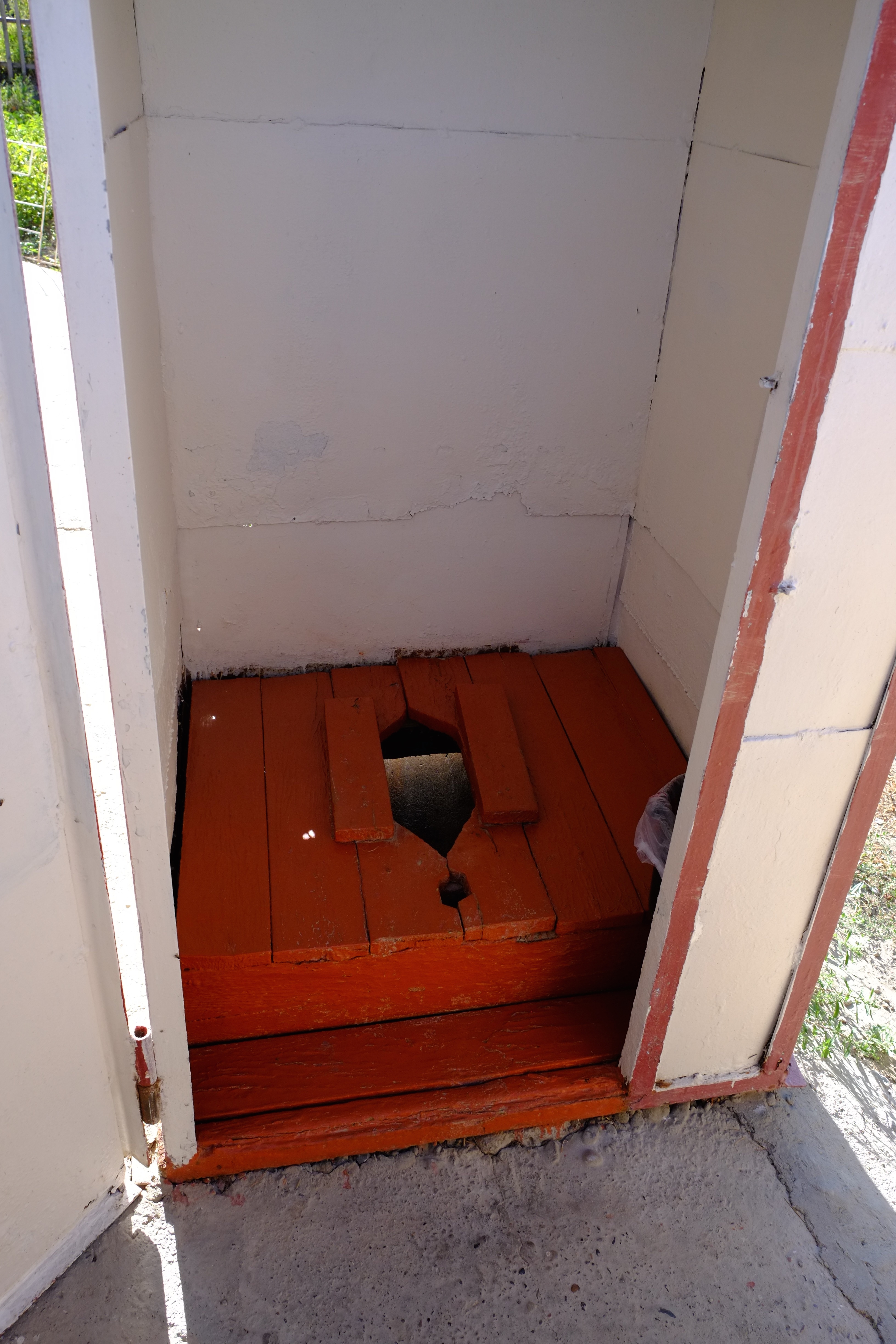
A typical clean toilet
A typical clean toilet: there is also toilet paper which is as rough as sandpaper
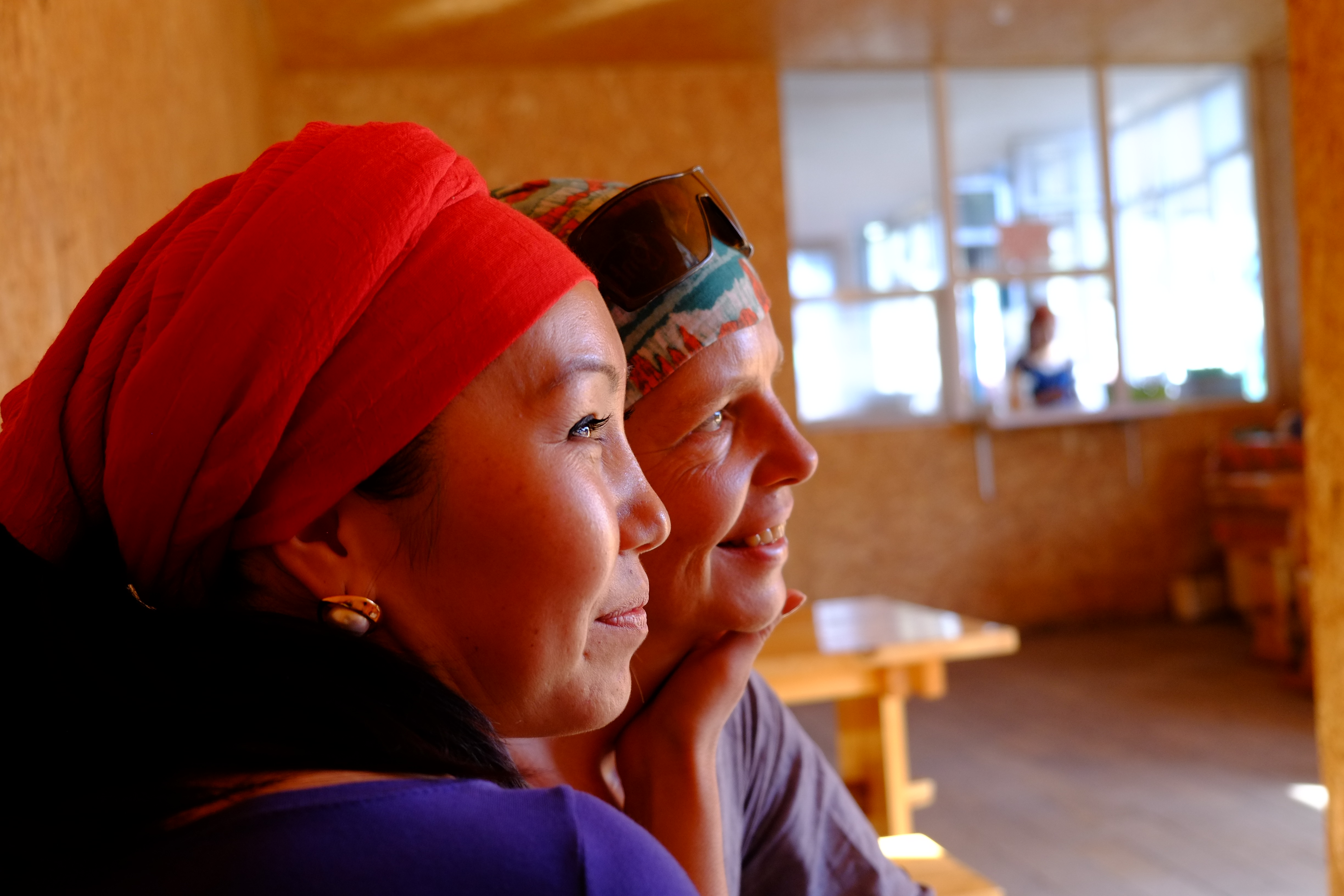
A Kyrgyz waitress in a small cafe being very happy that she could take a picture with me
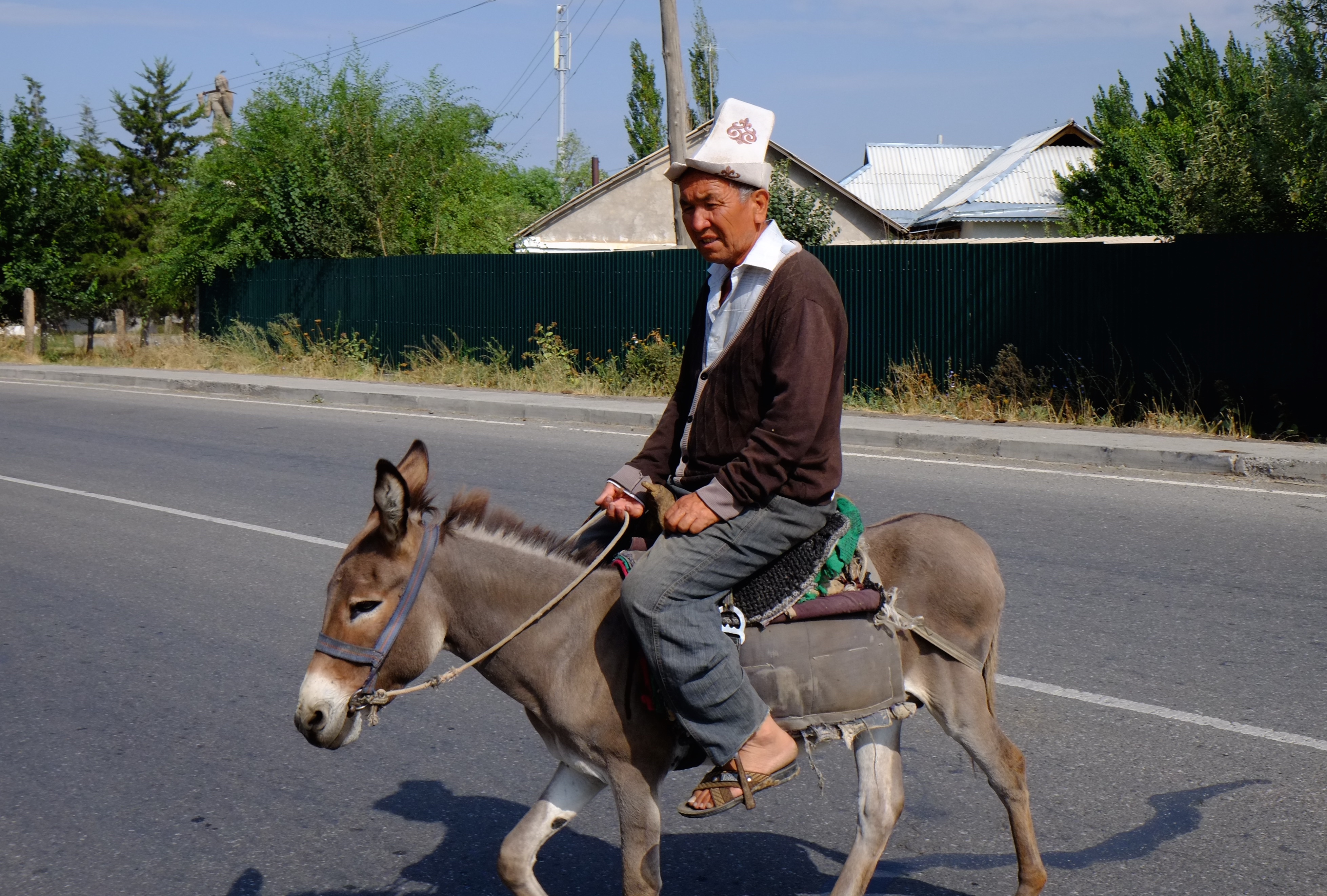
Typical Kyrgyz outfit
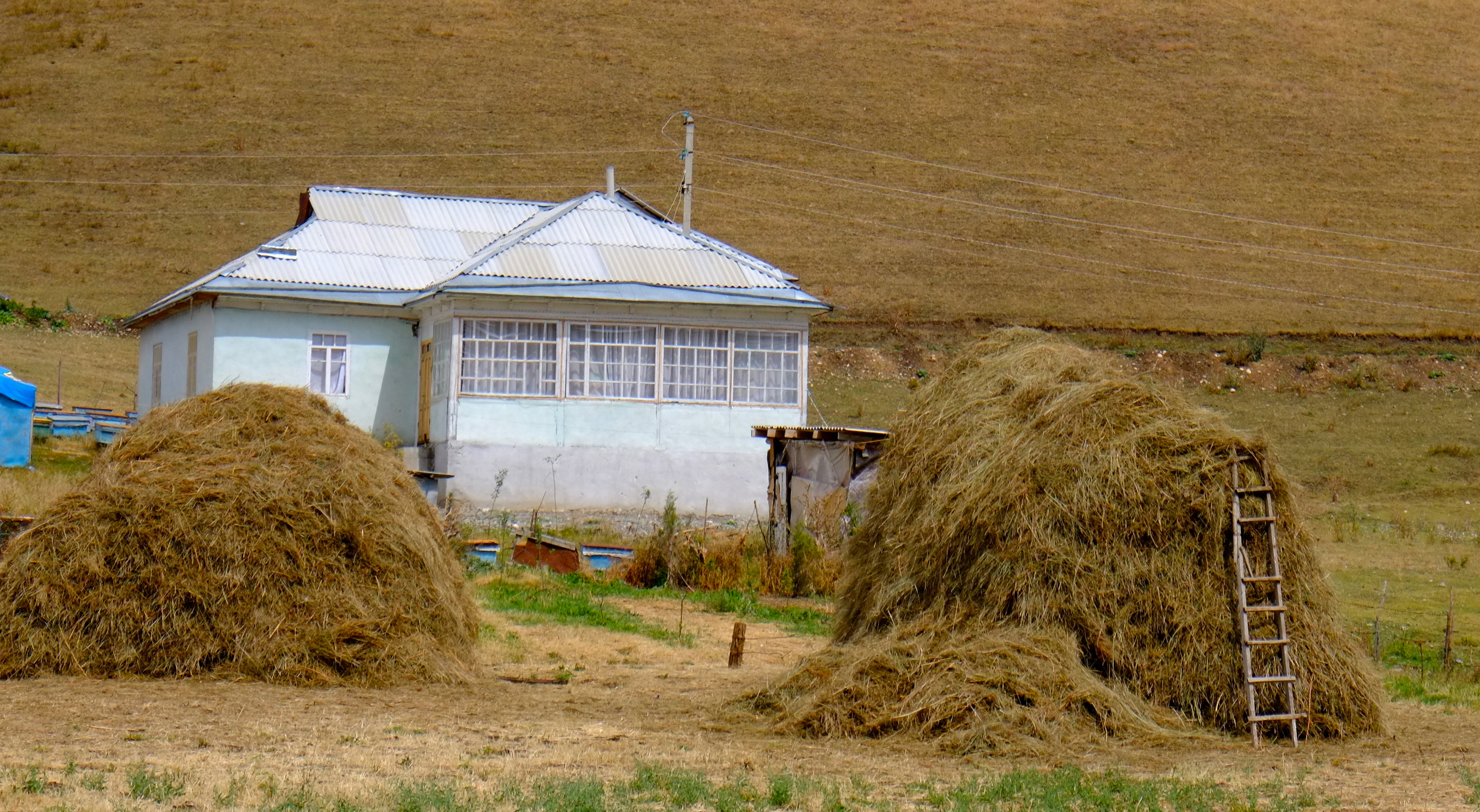
Kygryz-style house
Kygryz-style house

DSCF7995

And another pass tackled
Happy children along the road
Shopping once again
Shopping once again

P1220636

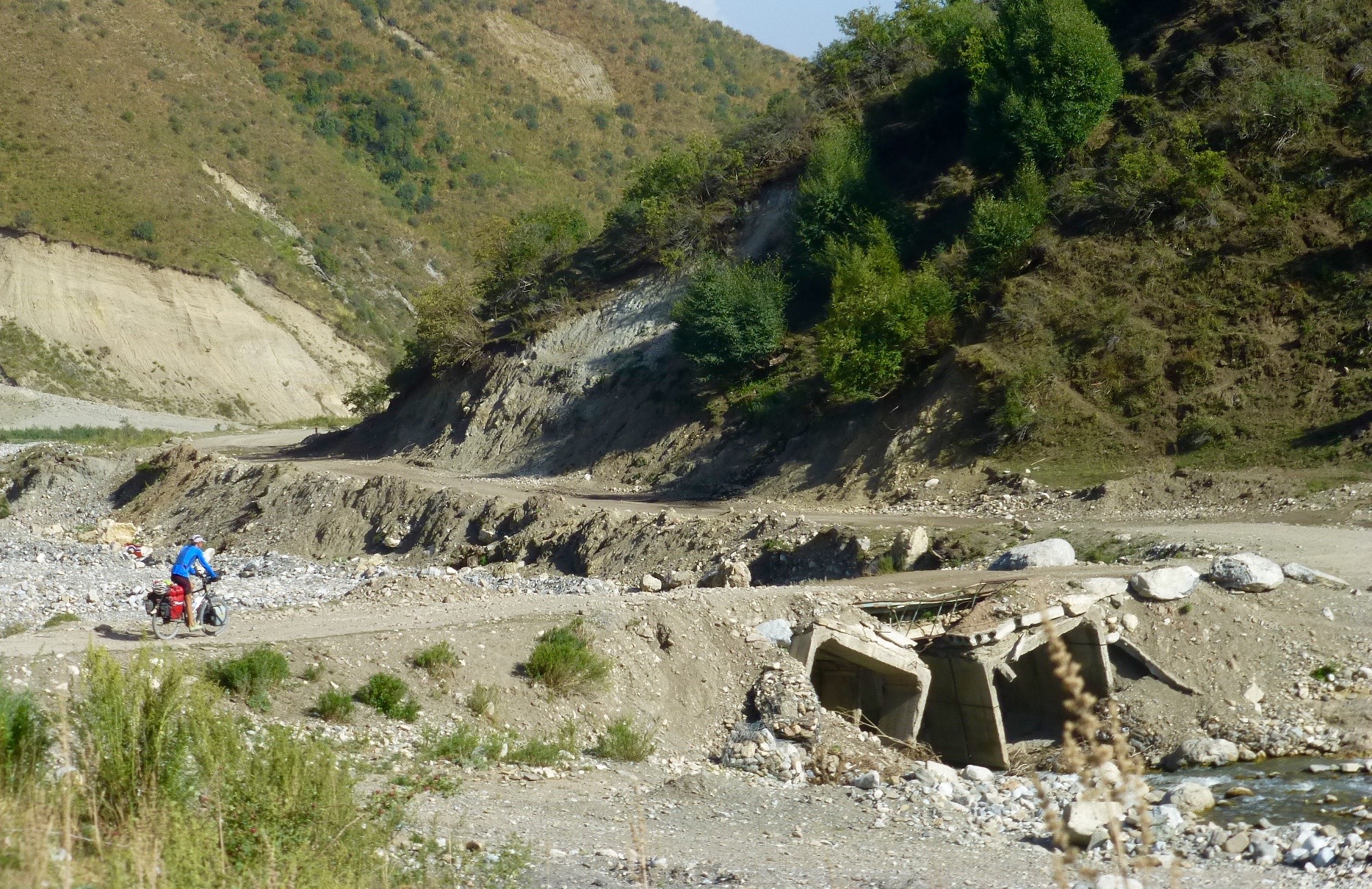
One of the many broken bridges we and many heavy trucks are passing

Traversing the pass we officially entered South Kyrgyzstan. And in many ways this area felt like a different country. Hotter in terms of climate as well as human temperament and closer to the conservative Islamic culture than the industrialised, Russified Bishkek. People however are unfailingly hospitable, giving us fruit or vegetables when passing by and welcoming us in every village with their hellos, welcomes or bye-byes.

The pass marking the border between North and South Kyrgyzstan
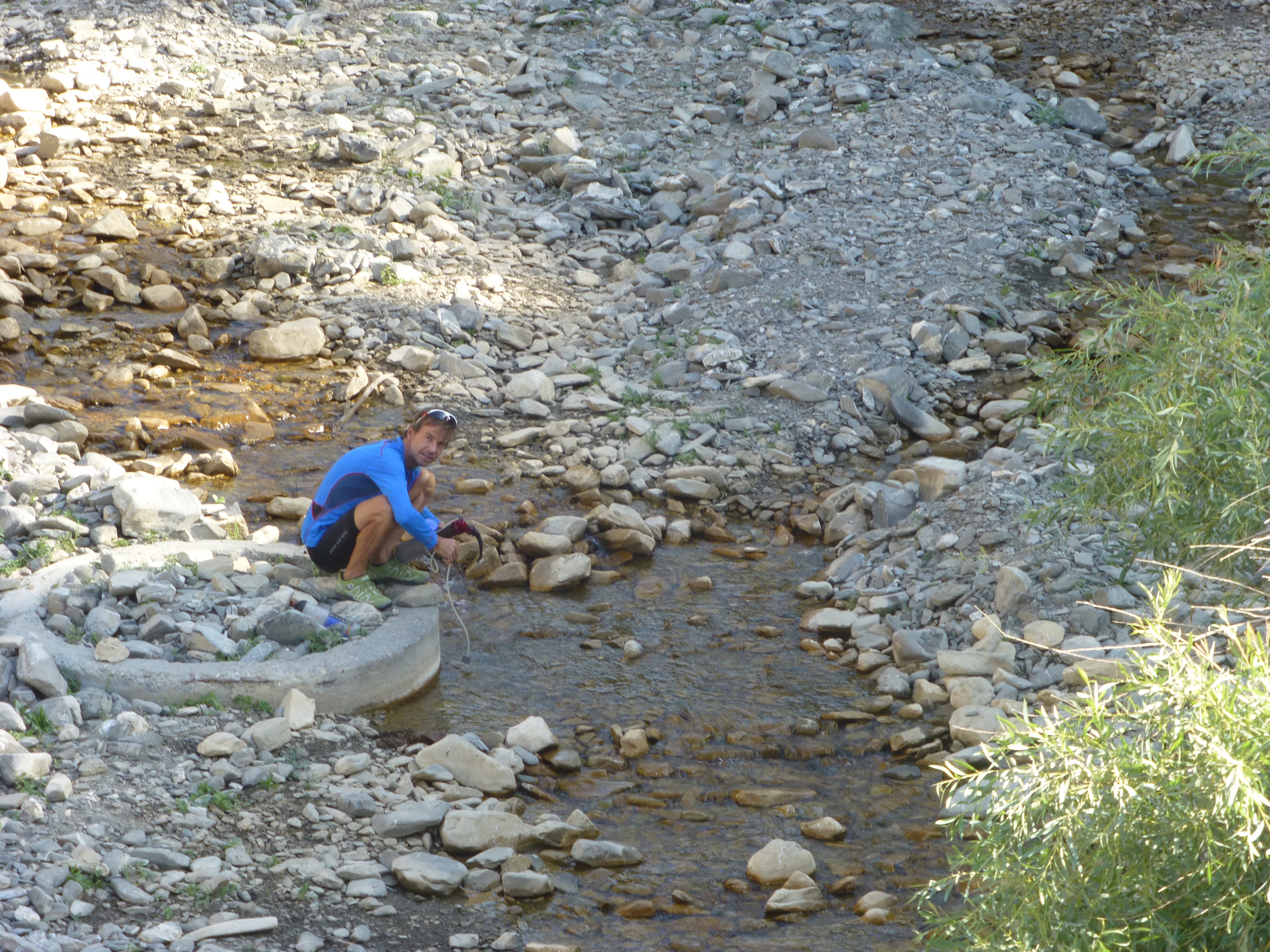
Filtering water
Filtering water

The landscape changed as well. From arid, rugged and mostly treeless and often yellowish dried countryside to a now still mountainous but much more fertile area with apple, walnut and plum trees lining the streets and giving us the much-needed shelter from the sun. We continued wobbling over rocks, pebbles and sand, sweat running down our faces and bodies, breathing in dust, up and down and once more up. The river roared hundreds of meters below us and we couldn’t wait to finally roll downhill and to finally meet tarmac again. After a few more hours of strenuous cycling there it was: a village and tarmac. We tried to buy lunch, but all we could find in the first shop was a drunk elderly couple savouring a glass of vodka and in the second shop two 4-packs of yoghurt, a package of crisps and another package of sweet biscuits. Hungry, we sat down under a tree and ate like starving wolves, when some children came running to watch us, going away again to pick sunflower seeds that they were currently drying on the roads. They clearly understood how hungry we were and their empathy and this nice little gesture meant a lot to us.

Village life: drying sunflower seeds on the roads
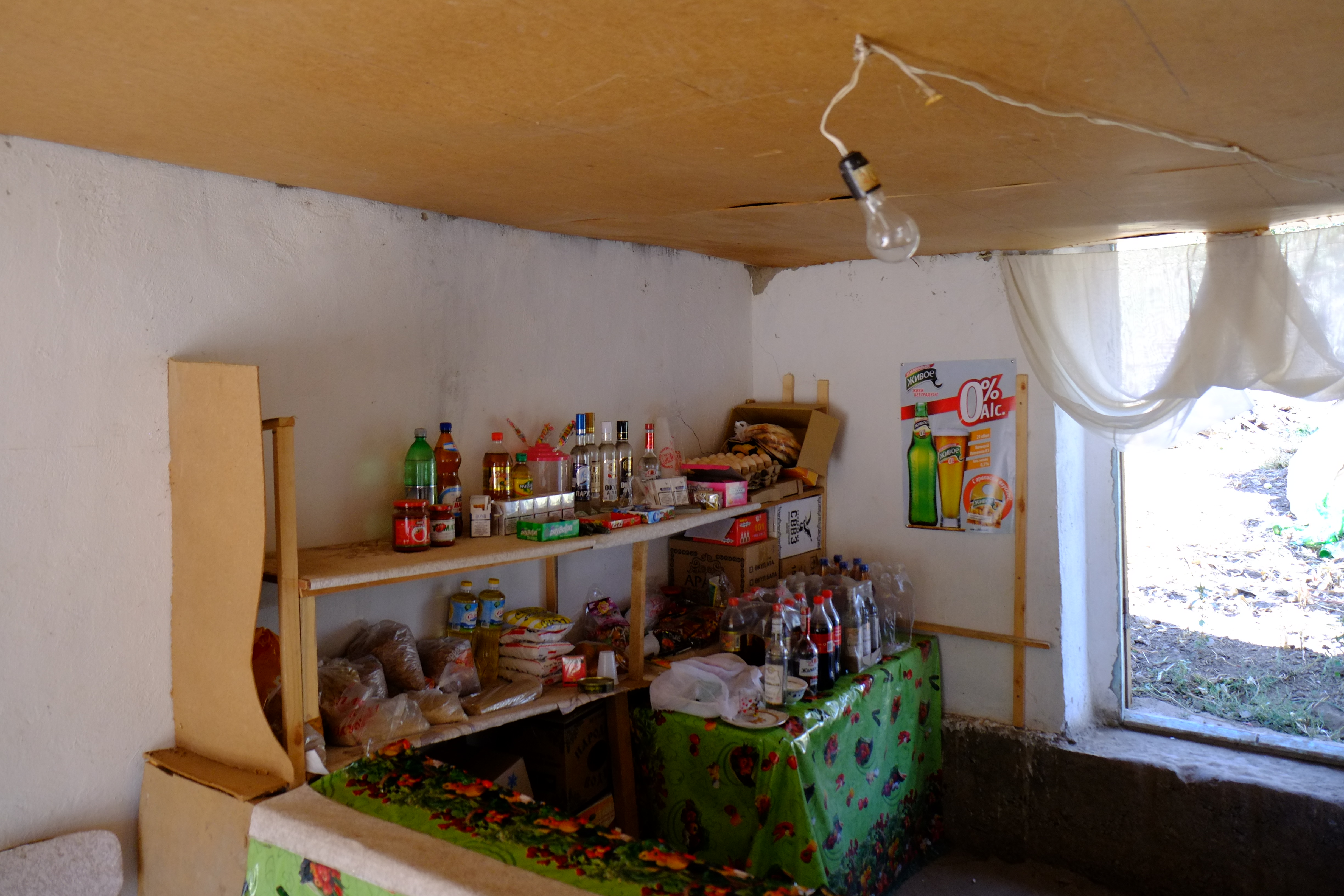
The enormous assortment of a typical village shop
The enormous assortment of a typical village shop: most importantly there is Vodka and cigarette

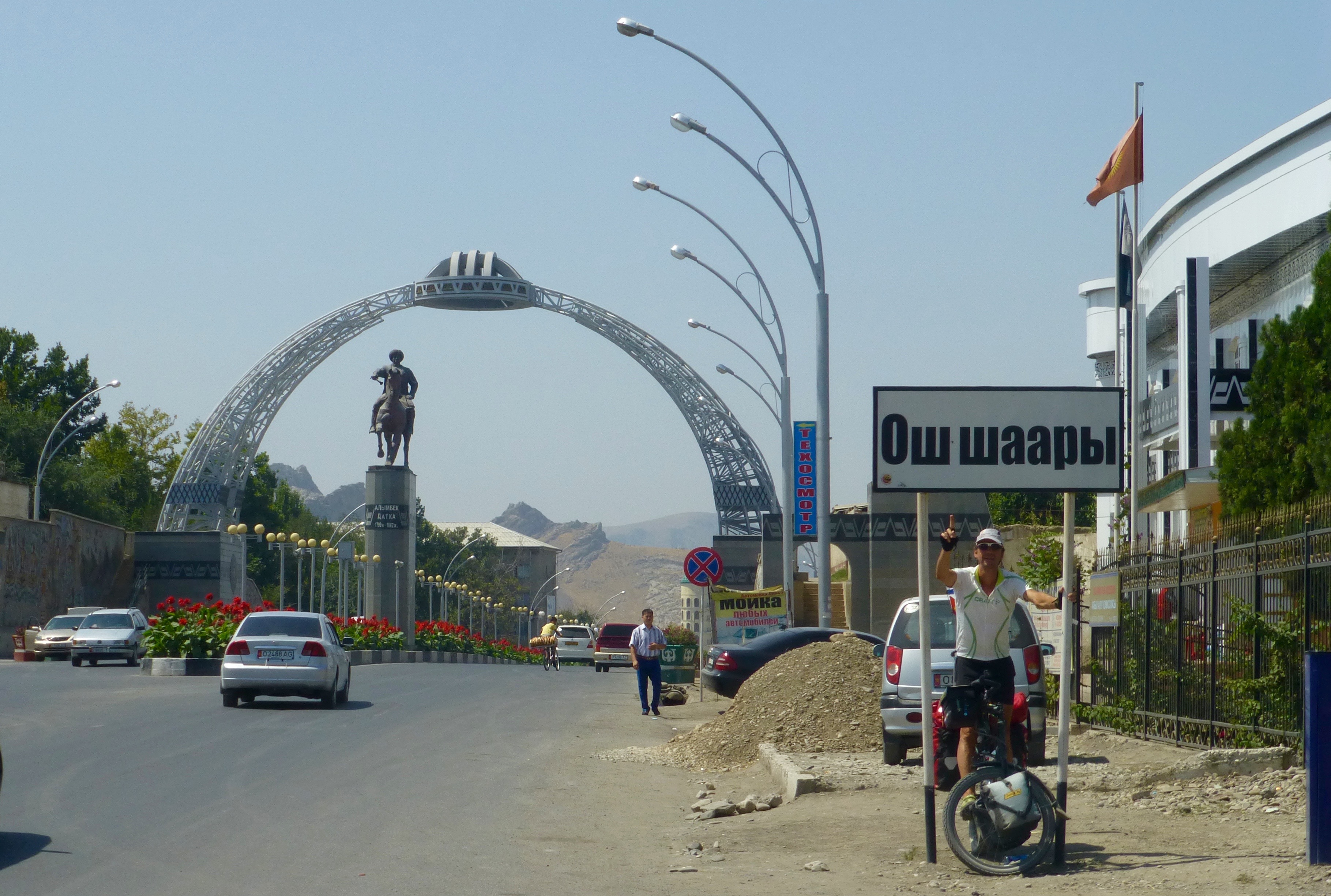
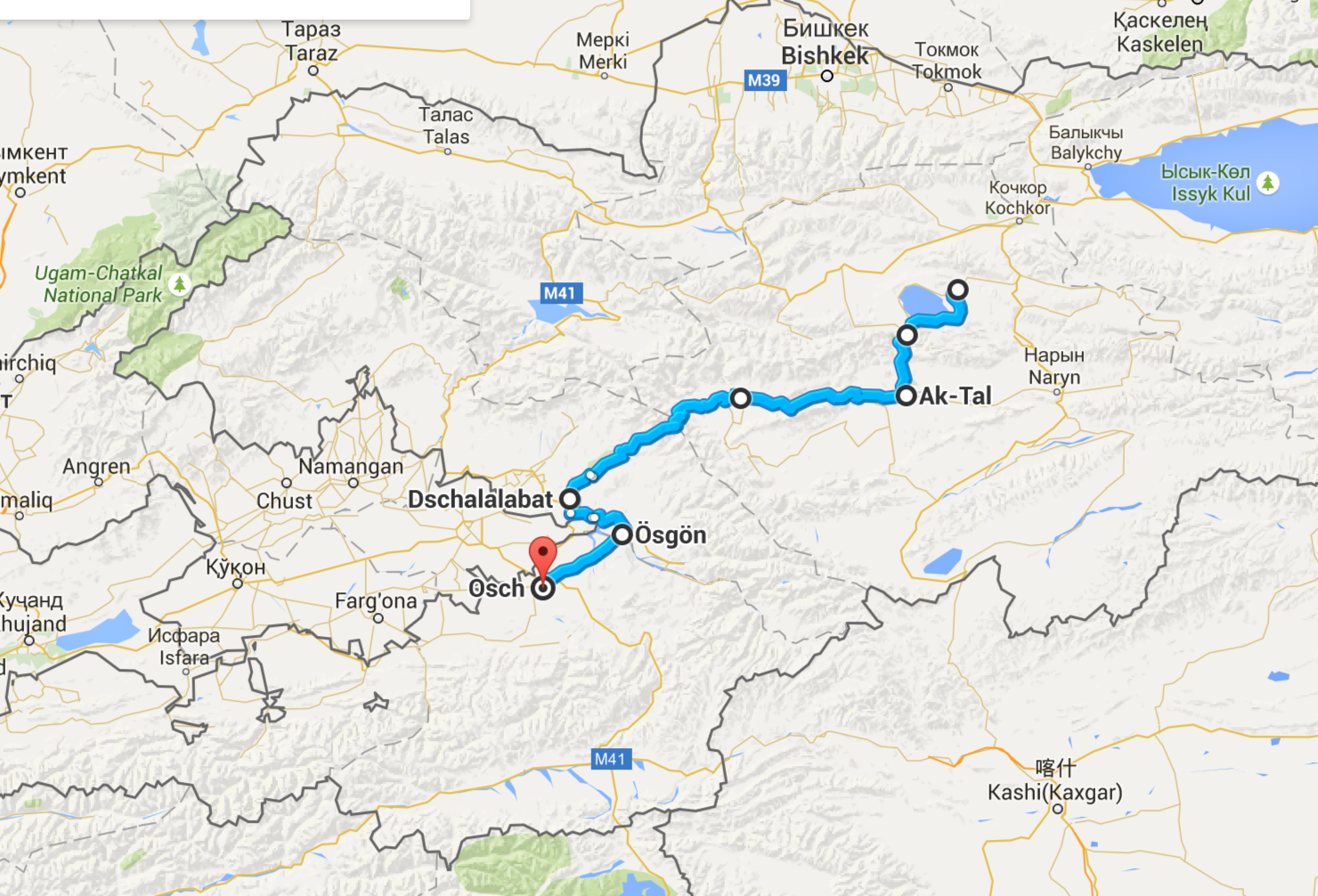
Once we hit the tarmac cycling felt like flying and we enjoyed the smooth ride despite traffic picking up again. Within a few days we reached Osh and celebrated our achievements to date: by now we had traversed six passes and gained 10.000m.  With two rest days we prepared for the real challenge – the Pamir Highway.

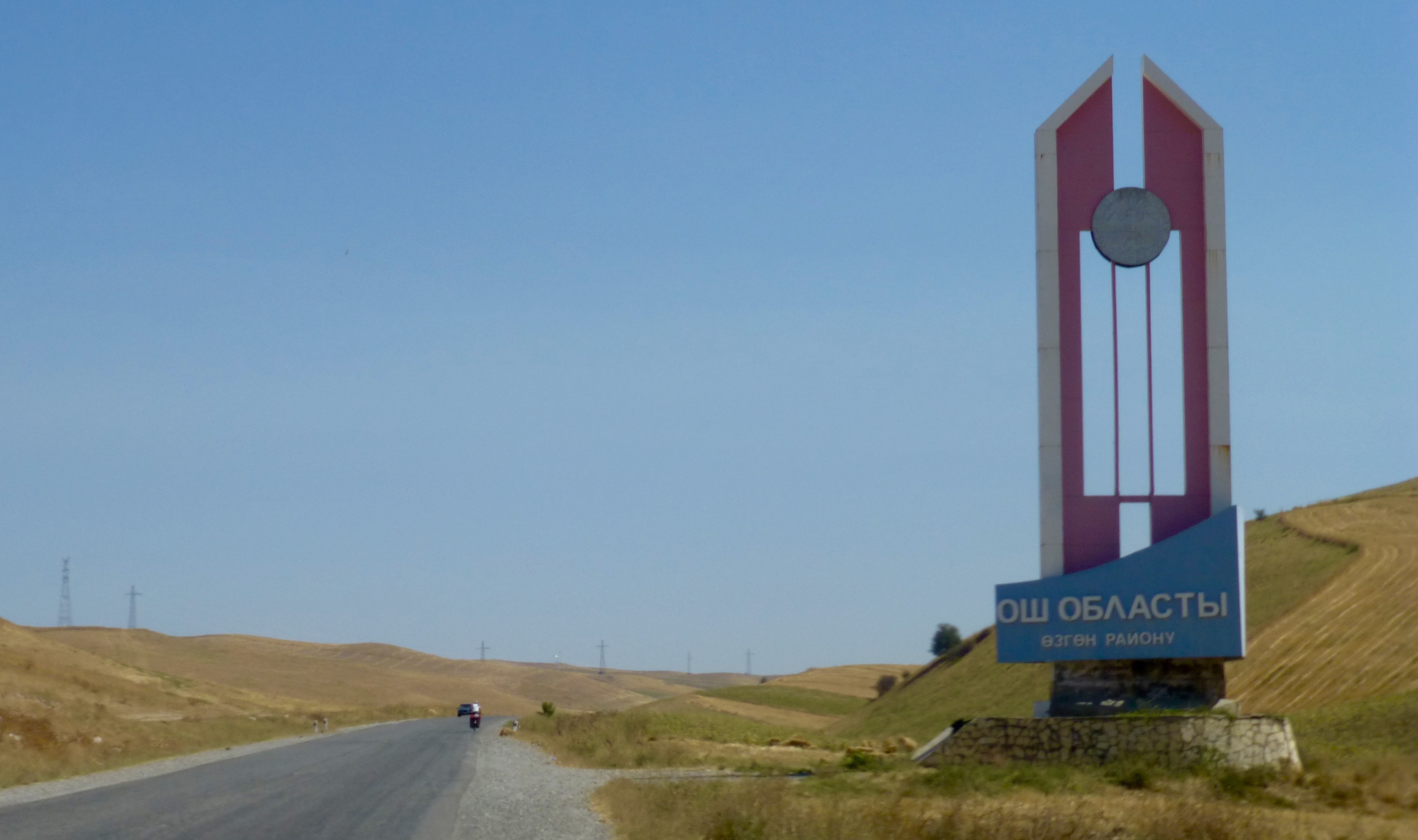
Entering the province of Osh with 'beautiful' Soviet architecture
Entering the province of Osh with ‘beautiful’ Soviet architecture
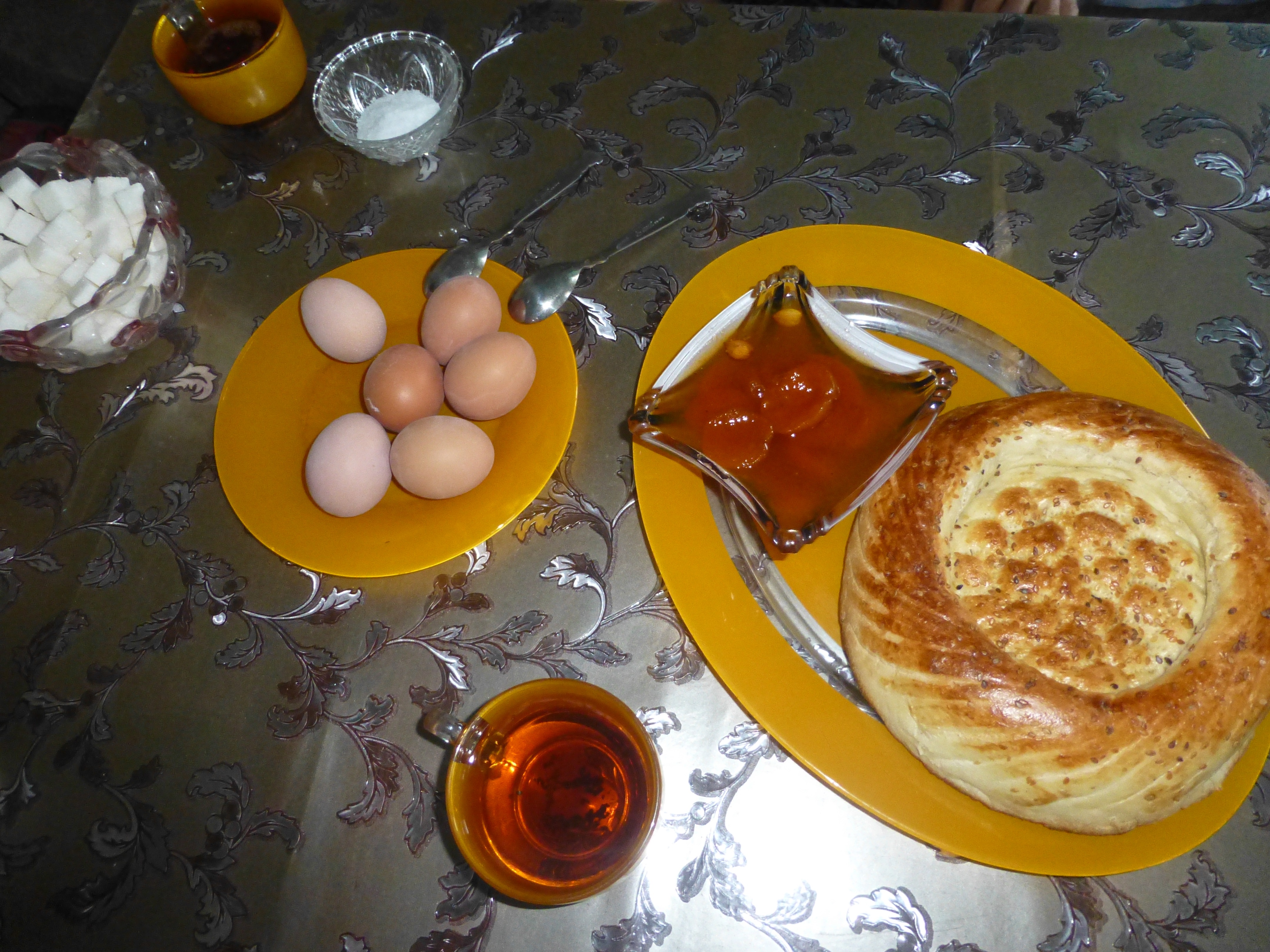
Typical breakfast: eggs, bread and self-made jam served with black tea and sometimes coffee
Our room at a hotel which took us an hour to find as they don't put up signs in Kyrgyzstan
Our room at a hotel which took us an hour to find as they don’t put up signs in Kyrgyzstan
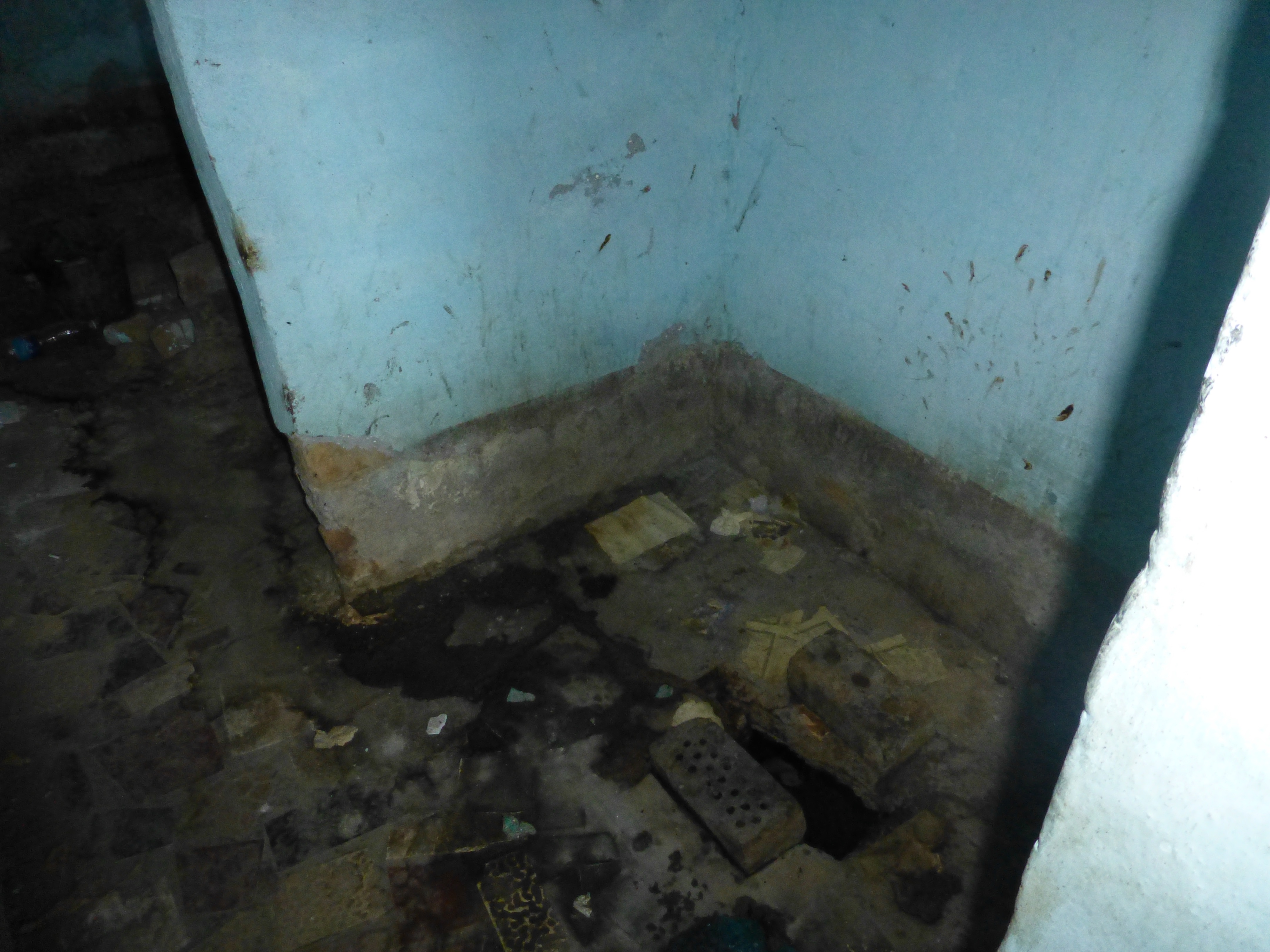
And the filthy outside toilet at the same hotel
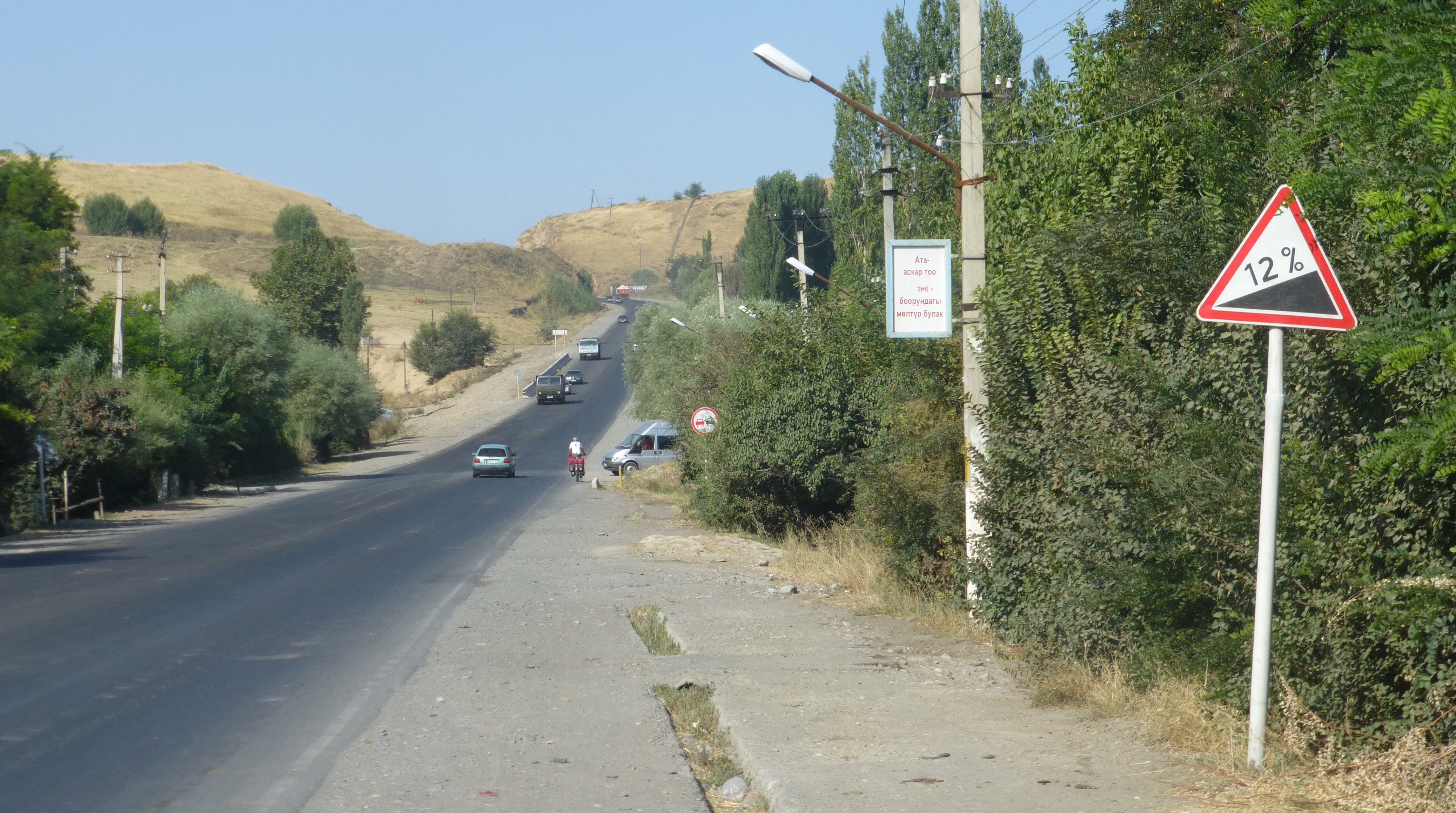
In Kyrgyzstan all signs indicating the gradients of hills are at 12%
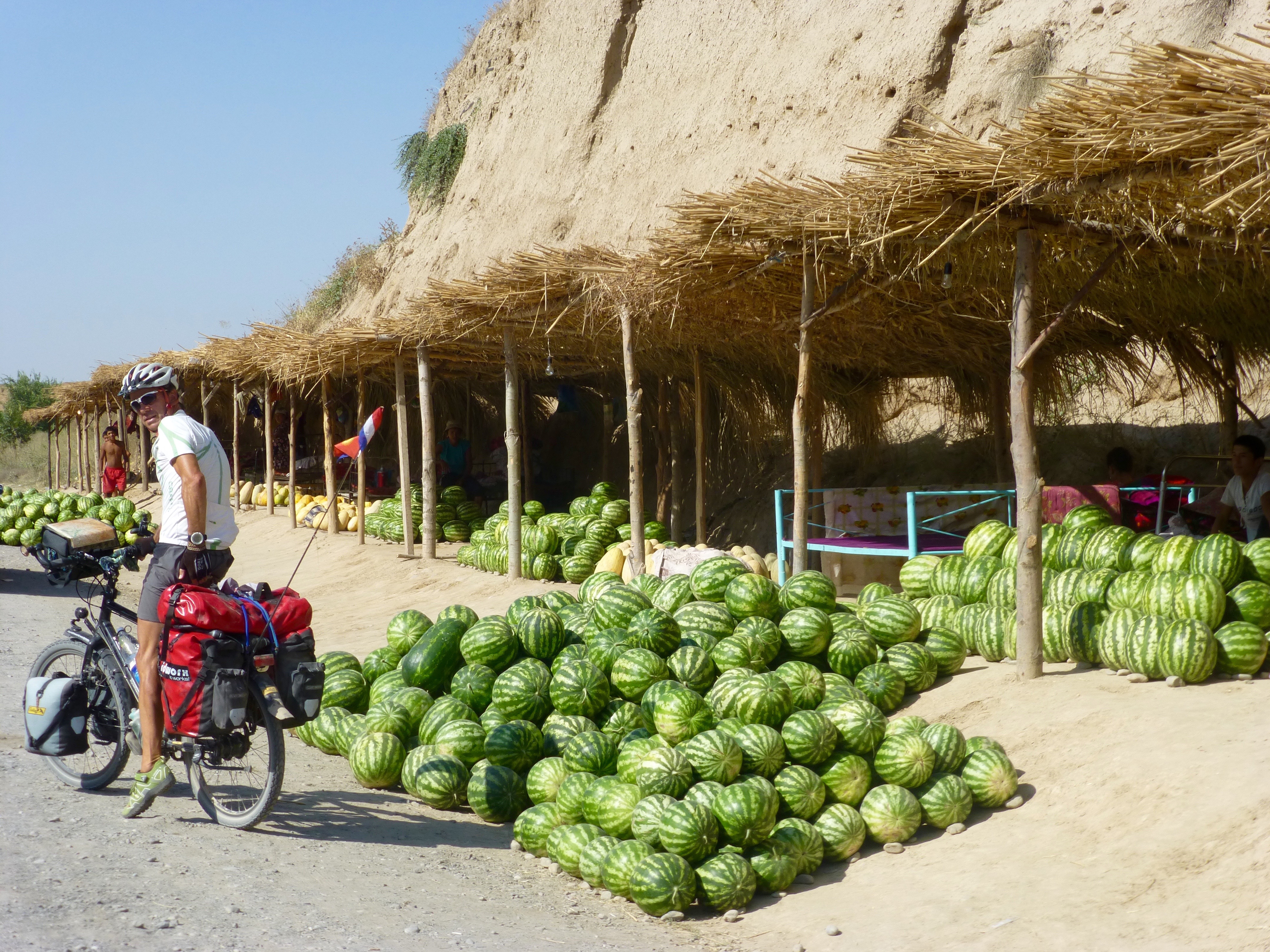
Our favorite snacks. In the meantime we manage to eat one melon in one go!
Entering Osh
Entering Osh
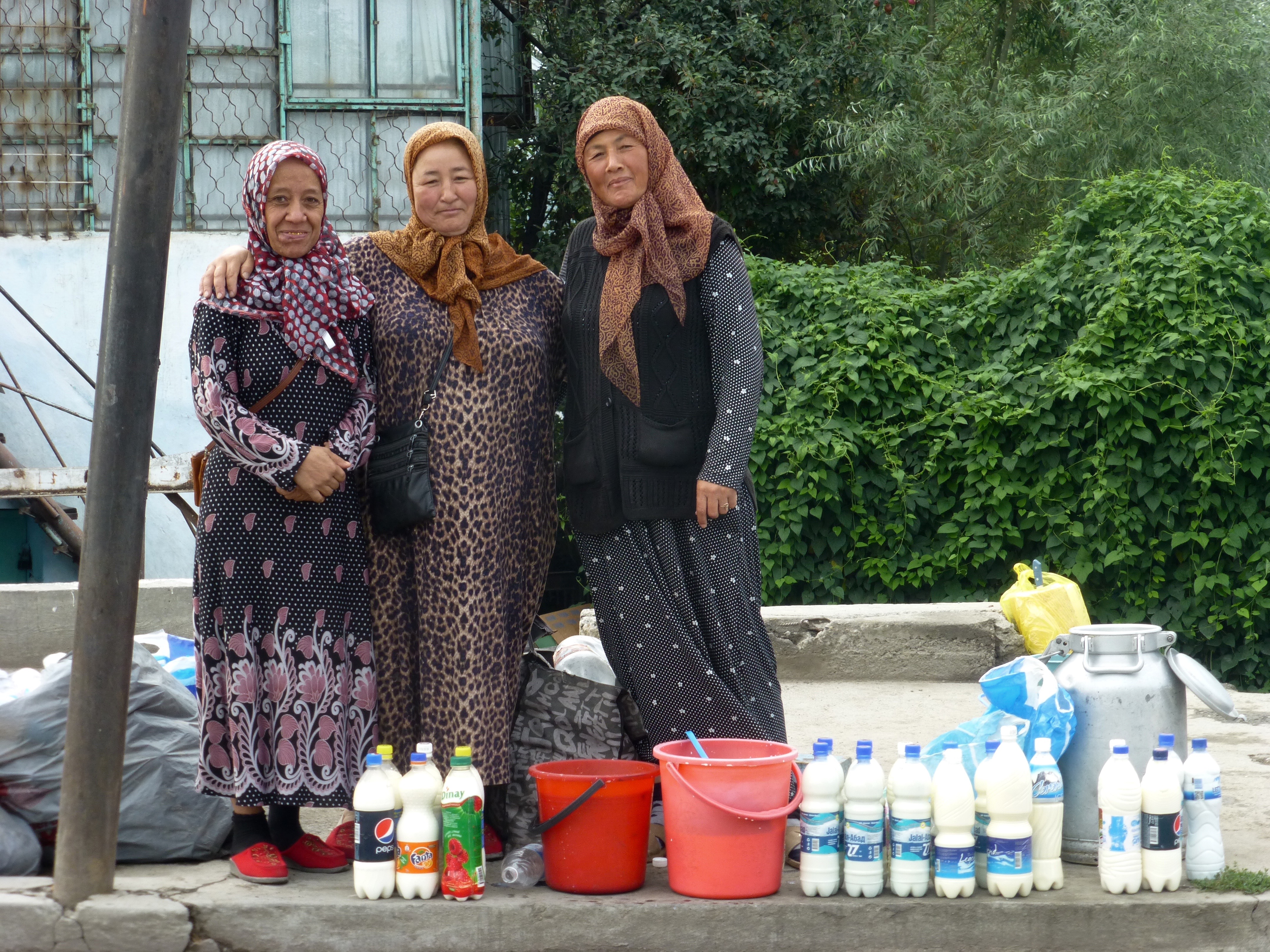
Women selling kumys along the road

Cycling was’t easy these past weeks. However, we are enjoying every day, our freedom, the beautiful landscapes and that we are able to do what we do.

528km (830km in total) and total altitude gain of 9517 m
528km (830km in total) and total altitude gain of 9517m

Von Kirgisistan nach Kieselstan

9. – 20. August 2015 – Nach 200 Metern und einmal um die Ecke waren wir auch schon oben. Wieder einmal gab es kein Schild, das uns bestätigte, dass wir über 3.400m hoch waren. Wie immer machten wir ein Paar Fotos, genossen die Aussicht, zogen warme Klamotten an und rollten dann bergab. Endlich! Wir passierten einige Yurt-Camps bevor wir uns für ein kleineres Camp mit Seeblick entschieden, um hier die Nacht zu verbringen. Mit den praktisch veranlagten Kindern stellten wir unser Zelt auf und genossen dann gemeinsam mit der Familie Chai, Brot und Kumys. Kumys ist fermentierte Stutenmilch und ein beliebtes Nationalgetränk im Frühling und Sommer. Es enthält ein wenig Alkohol, schmeckt säuerlich und prickelt ein bisschen auf der Zunge. Sicher trinkbar, aber nicht wirklich unser Geschmack, vor allem weil auch noch viele undefinierbare Dinge darin herumschwimmen.

Leaving the highest point to date
Wieder auf dem Weg nach unten
After the children helped with pitching the tent they also wanted to explore the inside
Nachdem die Kinder beim Aufstellen des Zeltes geholfen haben, wollten sie es natürlich auch von innen begutachten
Our little yurt behind its big brothers
Unsere kleine Yurt hinter ihren großen Brüdern
The inside of a sleeping yurt: mattresses, blankets and pillows are neatly folded and stored along the felt walls during the day. There are always enough blankets to host a few more guests.
Das Innere der Schlafyurt: Matratzen, Decken und Kissen werden fein säuberlich gefaltet und tagsüber entlang der Filzwand gestapelt. Es sind immer ausreichend Betten für Gäste da!
The inside of a dining yurt: for dinner we had soup with vegetables and mutton meat served with bread and washed down with enormous amounts of chai
Das Innere der Yurt, in der gegessen wird: Zum Abendessen bekamen wir Gemüsesuppe mit zähem Hammelfleisch, Brot und unendlich viel Tee.
Milking the mare
Die Stute wird gemolken….
Leather storage bottle for fermented mare milk
…um daraus Kumys zu machen, der in Lederflaschen aufbewahrt wird.

Die Kommunikation war allerdings recht mühselig, da mein Russisch ebenso rudimentär ist wie das Englisch der Einheimischen. Jetzt kam uns endlich unser praktisches Russisch-Deutsch-Reisewörterbuch zugute, da wir herausfinden wollten, wann es Abendessen gibt. “Gibt es warmes Essen?” war allerdings das Beste, was wir finden konnten. Später, auf der Suche nach einer kleinen Pension, bewies sich unser Wörterbuch als noch nutzloser mit Sätzen wie “Haben Sie ein Zimmer mit Seeblick?”. Zeichensprache oder unser Bilder-Wörterbuch stellten sich dann doch immer wieder als deutlich praktischer heraus.

Aufgrund der Höhe von über 3.000m ist das Gebiet um Song Köl nur zwischen Anfang Juni und Ende August zugänglich. Während dieser Zeit bauen die Hirten ihre Yurten auf und bringen ihren Viehbestand auf die Weiden nach oben. Gleichzeitig beginnen auch die Schulferien, damit die Familie gemeinsam umziehen kann. Uns hat die Lebensweise und die Art, wie die Kinder aufgezogen werden, sehr beeindruckt. Schon früh werden die Kinder an die Arbeit gewöhnt, die Älteren kümmern sich um die kleinen Geschwister, Mädchen helfen beim Kochen und Wasserholen aus den nahen Flüssen, Jungs hüten die Kühe, Schafe oder Pferde. Die Menschen sind den ganzen Tag beschäftigt, trotzdem spürten wir keinerlei Hektik oder Stress, ganz im Gegenteil. Die Erwachsenen stehen bei Sonnenaufgang auf, die Kinder schlafen ungestört weiter, bis sie von selbst aufwachen.

Gemeinsam haben wir am nächsten Morgen mit der ganzen Familie gefrühstückt – dieses Mal gab es fettige und mit Zwiebeln angebratene Nudeln und natürlich Chai. Danach radelten wir weiter um den See.

A coffee break and curious herders
Kaffeepause mit neugierigen Hirten
Riding with the cowboys
Cowboys unter sich
Hotels Kyrgyz-style
Hotels im Stil Kirgisistans
Enjoying Kyrgyz hospitality: invited by a family on vacation at Song Köl
Kirgisische Gastfreundschaft: Einladung zum Tee von einer Familie, die Urlaub am Song Köl machte
3 old women having lunch
Drei alte Frau beim Essen

Der See ist umgeben von unzähligen Gipfeln und saftig-grünem Weideland. Alle Paar Kilometer stehen Yurten auf den Wiesen. Irgendwie fühlte es sich an, als radelten wir durch eine Hollywood-Landschaft für einen Western mit Cowboys nah und fern. Wir konnten an dieser Landschaft kaum sattsehen, die ganzen Anstrengungen, um dorthinzukommen, waren vergessen.

DSCF6941 DSCF6947

DSCF6977

DSCF7066

A perfect camp spot
Noch ein perfekter Zeltplatz
Our
Unser neuer pelziger Freund: mit altem Brot haben wir sein Herz erobert und der Hund wich nicht mehr von unserer Seite. Die ganze Nacht hat er unser Zelt bewacht und konnte es am nächsten Morgen kaum erwarten, dass wir aus dem Zelt krochen, um uns mit wedelndem Schwanz zu begrüßen.

DSCF7209

DSCF7193

DSCF7174

Über einen weiteren Pass und danach über 33 Kehren nach unten verließen wir das Gebiet wieder. Wieder gab es beeindruckende Aussichten über das ganze Tal und die hohen, schneebedeckten Berge, von denen wir wussten, dass wir sie demnächst auch noch überqueren mussten.

DSCF7304

I can fly, I can fly...
Und fliegen kann ich auch….
At the top of yet another pass
Der Pass nach Song Köl

DSCF7421

DSCF7398

P1220575

Pass um Pass eroberten wir, leider noch immer auf so unglaublich schlechten Straßen, dass wir nur langsam in Richtung Osch vorankamen. An einem Tag mussten wir früher anhalten, da es mir schlecht ging. Ich musste mich übergeben und uns wurde schnell klar, dass wir den nächsten Pass heute nicht mehr schaffen würden. Wenige Tage später verbrachte Johan die meiste Zeit unseres Ruhetages im Bett beziehungsweise auf der Toilette, er hatte Durchfall. Am nächsten Tag ging es dann trotzdem weiter, da ich eine Übersetzung abliefern musste und dafür Internet brauchte und wir einen über 3.000 Meter hohen Pass überqueren mussten. Ein weiterer sehr anstrengender  Tag mit schwachen Körpern, unendlichen hügeligen Straßen, Kieselsteinen, Felsen, Staub und einer erbarmungslos auf uns herunter scheinenden Sonne. Temperaturen um die 35 Grad und rasende Audis 100 – 50% der Bevölkerung fährt Audi 100 und die andere Hälfte fährt japanische Autos mit dem Lenkrad auf der rechten Seite – machten die Reise nicht einfacher. Aber wir hielten durch, stellten unser Zelt am Fuße des Passes an einem Fluss auf, wo wir uns waschen und kochen konnten und uns ein wenig von den Anstrengungen des Tages erholten.

Petrol station in a remote village
Tankstelle in einem kleinen, abgelegenen Dorf

DSCF7365

DSCF7447

Sick on the road
Krank unterwegs

DSCF7546

Meeting other cyclists from New Zealand and Switzerland
Fast täglich treffen wir andere Radfahrer, hier aus Neuseeland und der Schweiz
Riverside lunch
Mittagessen am Flussufer

Dann kam unser Glückstag. Wir schlängelten uns an einem wolkenlosen und heißen Tag langsam auf unserem letzten Pass vor Osch hoch, als eine Münchnerin in ihrem Geländewagen hielt und uns mit Nimm 2 und Wasser versorgte. Wenige Kilometer weiter oben kam uns dann ein weiteres deutsches Auto entgegen, dieses Mal zwei Jungs, die an einer Ralley von London in die Mongolei teilnahmen. Auch sie füllten unsere Wasserflaschen auf. Später, wir kochten gerade leckere Spaghetti am Straßenrand, hielten drei Autos aus Frankreich und Belgien – wieder gab es frisches Wasser und dieses Mal sogar noch Schweizer Schokolade.

Two funny German guys treating us well
Zwei lustige deutsche Jungs, die es gut mit uns meinten

DSCF7688

DSCF7711

Friendly people along the road
Freundliche Menschen am Straßenrand
A typical clean toilet
So sieht eine typische, saubere Toilette aus: es gibt sogar Klopapier, das ist aber so rauh wie Schmirgelpapier.
A Kyrgyz waitress in a small cafe being very happy that she could take a picture with me
Eine kirgisische Kellnerin in einem kleinen Cafe, die sich riesig freute, dass sie mit mir zusammen ein Foto machen durfte.
Typical Kyrgyz outfit
Typisches kirgisisches Outfit
Kygryz-style house
Kirgisisches Haus auf dem Land

DSCF7995

And another pass tackled
Und wieder einen Pass geschafft
Happy children along the road
Fröhliche Kinder am Straßenrand
Shopping once again
Einkaufen

P1220636

One of the many broken bridges we and many heavy trucks are passing
Eine der vielen fast eingestürzten Brücken, die nicht nur wir, sondern auch LKWs überqueren

Mit der Überquerung dieses Passes waren wir nun offiziell in Süd-Kirgisistan. Und in vielerlei Hinsicht fühlte sich dieses Gebiet fast wie ein anderes Land an. Viel heißer – sowohl das Klima als auch das Temperament der Menschen – und näher an der islamischen Kultur als das industrialisierte, russifizierte Bischkek im Norden. Die Menschen sind auch hier unglaublich gastfreundlich, reichten uns Gemüse oder Obst, wenn wir vorbeifuhren und begrüßten uns in den Dörfern winkend und mit herzlichen Hallos und Bye-Byes.

The pass marking the border between North and South Kyrgyzstan
Der Pass, der auch die Grenze zwischen Nord- und Süd-Kirgisistan ist
Filtering water
Wasser filtern

Die Landschaft hat sich auch geändert: von der trockenen, rauhen, baumlosen und fast ausschließlich gelb-verbrannten Landschaft in eine immer noch bergige, aber viel fruchtbarere Gegend mit Apfel-, Walnuss- und Pflaumenbäumen am Straßenrand, die uns den heiß-ersehnten Schatten lieferten. Wir hobbelten weiter über Felsen, Kiesel und Sand, der Schweiß rann uns über das Gesicht und an unseren Körpern hinunter, wir atmeten viel Staub ein und fuhren hoch und runter und immer wieder hoch. Der Fluß tobte hunderte von Metern unter uns und wir konnten es kaum erwarten, endlich nur noch nach unten zu radeln und endlich wieder auf geteerten Straßen zu fahren. Ein Paar Stunden später war es dann soweit: endlich das ersehnte Dorf und endlich Asphalt. Wir wollten uns unser Mittagessen kaufen, wurden aber im ersten Laden von zwei Wodka-trinkenden Alten abgewiesen und im zweiten Laden gab es nur je vier kleine Becher Joghurt, zwei Tüten Chips und eine Tüte Schokokekse. Unter einen Baum aßen wir wie ausgehungerte Wölfe als einige Kinder angerannt kamen, uns kurz beobachteten, um dann wegzurennen und uns getrocknete Sonnenblumenkerne zu bringen. Ihnen war klar, dass wir sehr hungrig waren und ihr Einfühlungsvermögen und diese kleine Geste hat uns sehr bewegt.

Village life: drying sunflower seeds on the roads
Dorfleben: Sonnenblumenkerne werden auf der Straße getrocknet
The enormous assortment of a typical village shop
Das riesige Angebot eines typischen Dorfladens – Hauptsache, es gibt ausreichen Wodka und Zigaretten, alles andere ist Nebensache.

Auf Asphalt fühlte sich das Radeln fast wie Fliegen an und wir genossen es in vollen Zügen, obwohl der Verkehr jetzt deutlich zunahm. Innerhalb weniger Tage erreichten wir Osch und feierten , was wir bisher erreicht hatten: immerhin hatten wir bis hierhin bereits sechs Pässe überquert und knapp 10.000 Höhenmeter erstrampelt. Mit zwei Ruhetagen bereiteten wir uns auf die nächste Herausforderung vor: den Pamir-Highway.

Entering the province of Osh with 'beautiful' Soviet architecture
Einfahrt in die Provinz Osch mit wunderbarer Sowiet-Architektur
Typical breakfast: eggs, bread and self-made jam served with black tea and sometimes coffee
Typisches Frühstück: Eier, Brot und selbstgemachte Marmelade, Schwarztee und manchmal sogar noch Kaffee.
Our room at a hotel which took us an hour to find as they don't put up signs in Kyrgyzstan
Unser Zimmer in einem Hotel, das wir ca. eine Stunde suchten, da es die Kirgisen nicht für notwendig erachten, Schilder anzubringen.
And the filthy outside toilet at the same hotel
Und hier die eklige Variante einer Toilette im besagten, unauffindbaren Hotel
In Kyrgyzstan all signs indicating the gradients of hills are at 12%
Alle Berge in Kirgisistan habe eine Steigung von 12%.
Our favorite snacks. In the meantime we manage to eat one melon in one go!
Unser Lieblings-Snack. Mittlerweile verputzen wir eine komplette Melone alleine!
Entering Osh
In Osch angekommen
Women selling kumys along the road
Frauen, die am Straßenrand Kumus verkaufen

Das Radfahren war schwer in den letzten Wochen. Trotzdem haben wir jeden Tag genossen, unsere Freiheit, die unbeschreiblich schönen Landschaften und vor allem, dass wir in der Lage sind, das zu machen, was wir wollen.

528km (830km insgesamt) und 9517 Höhenmeter insgesamt