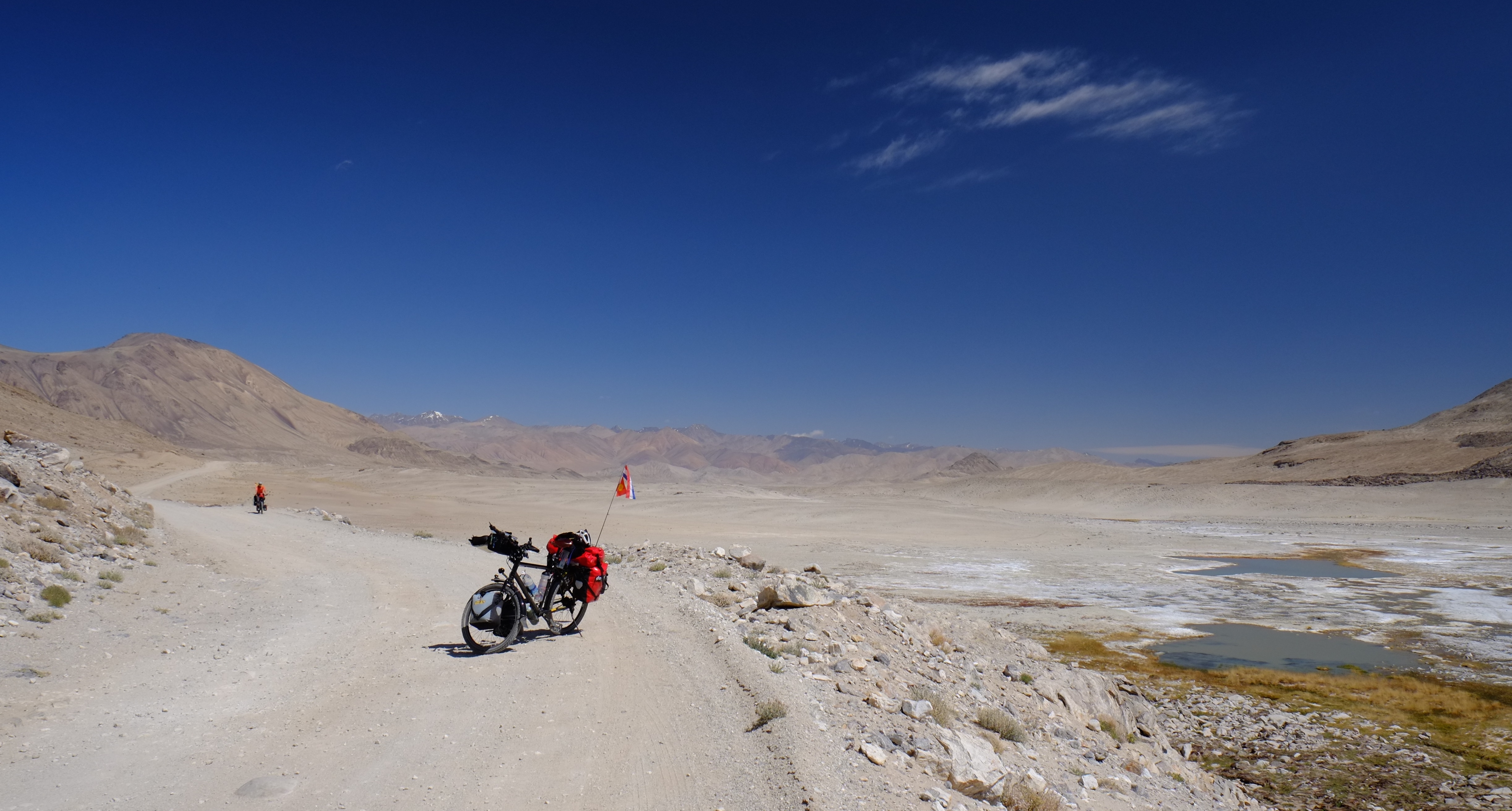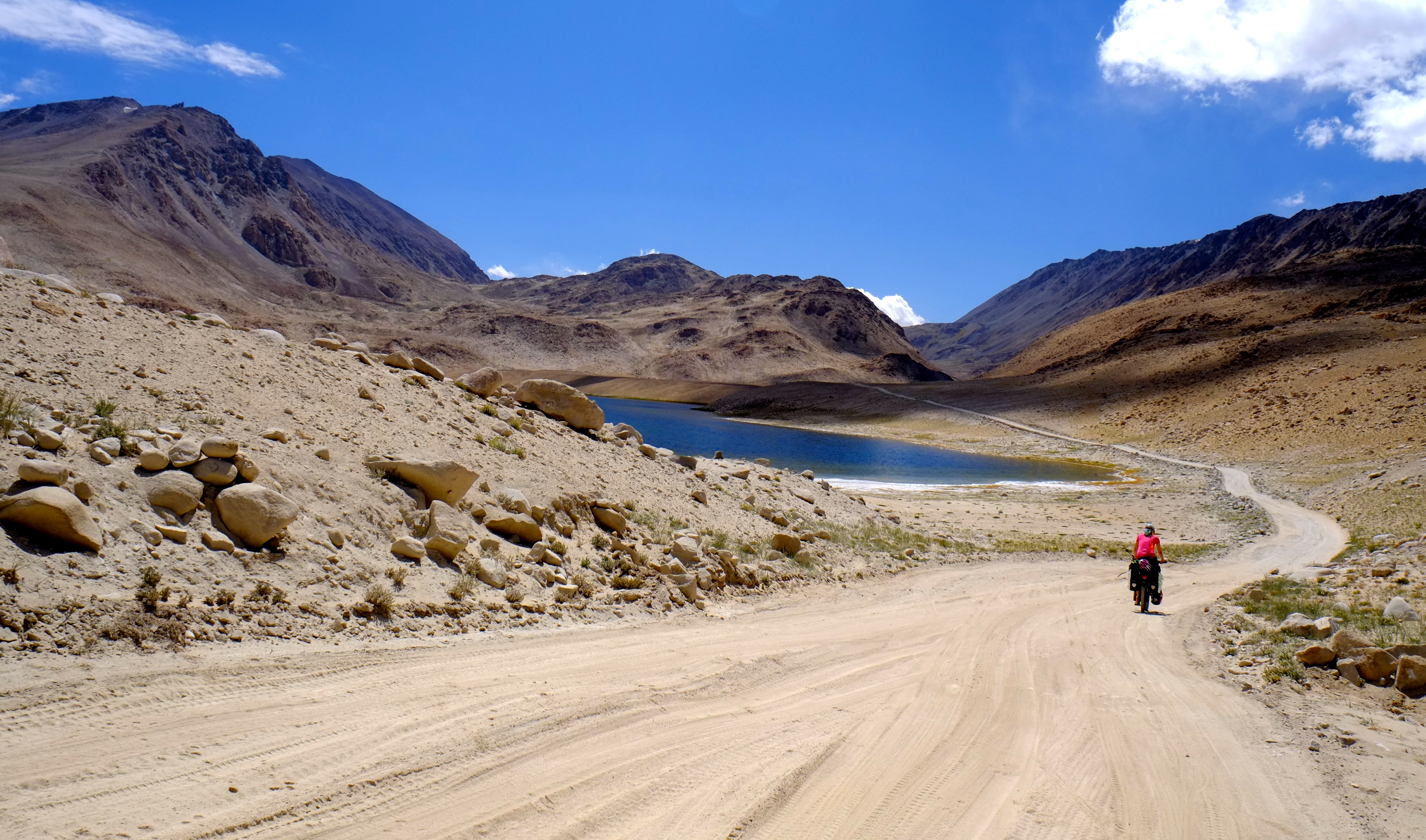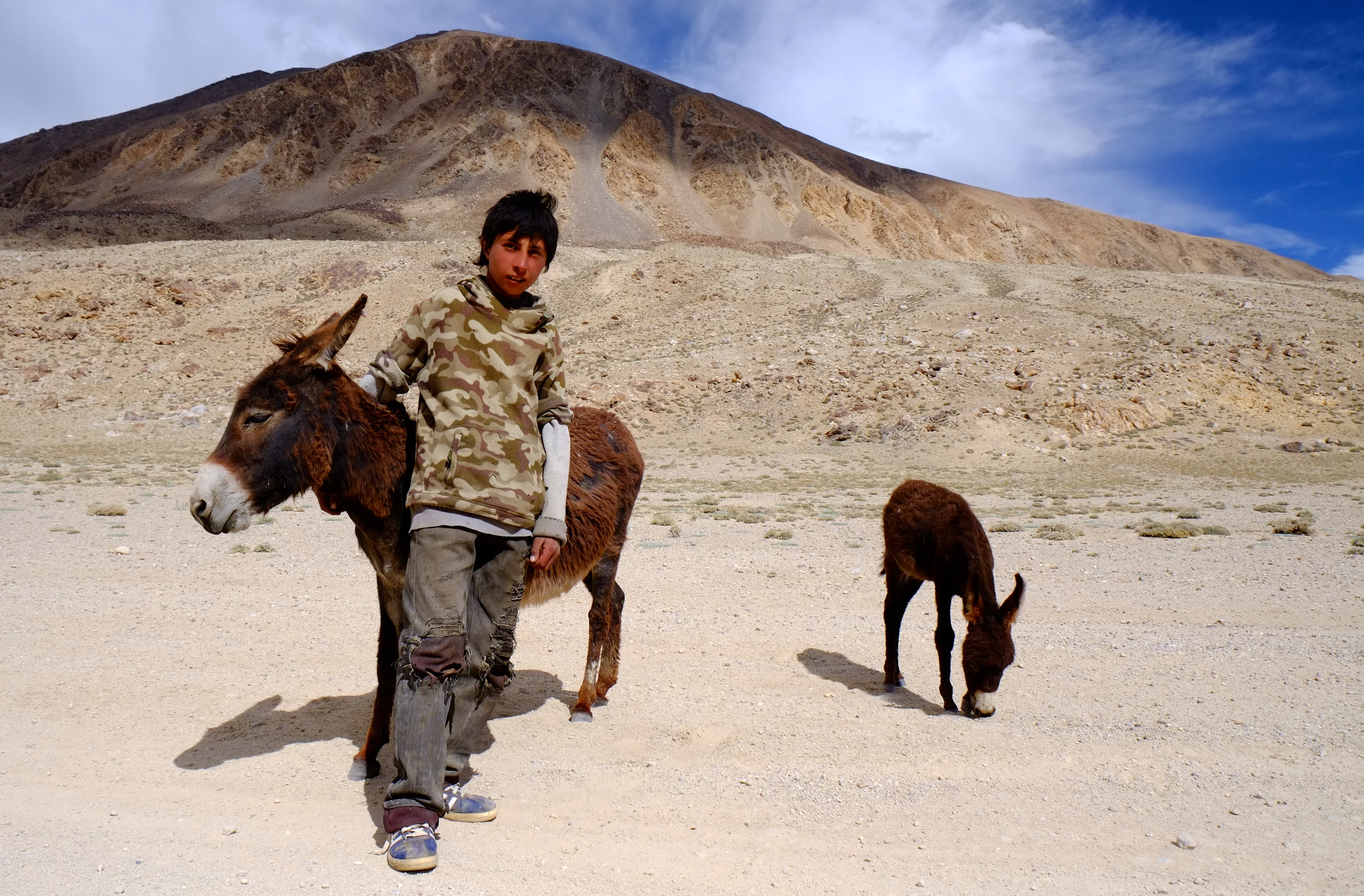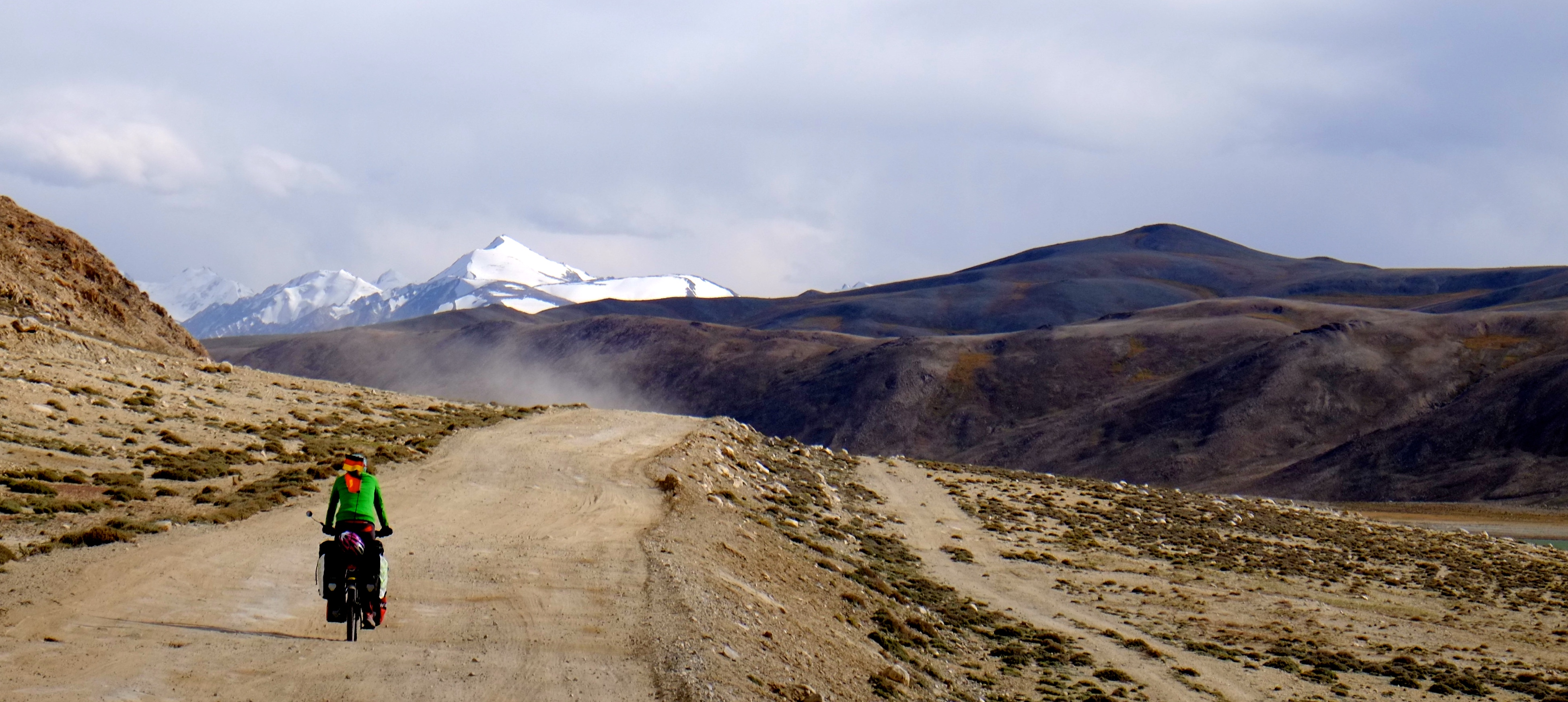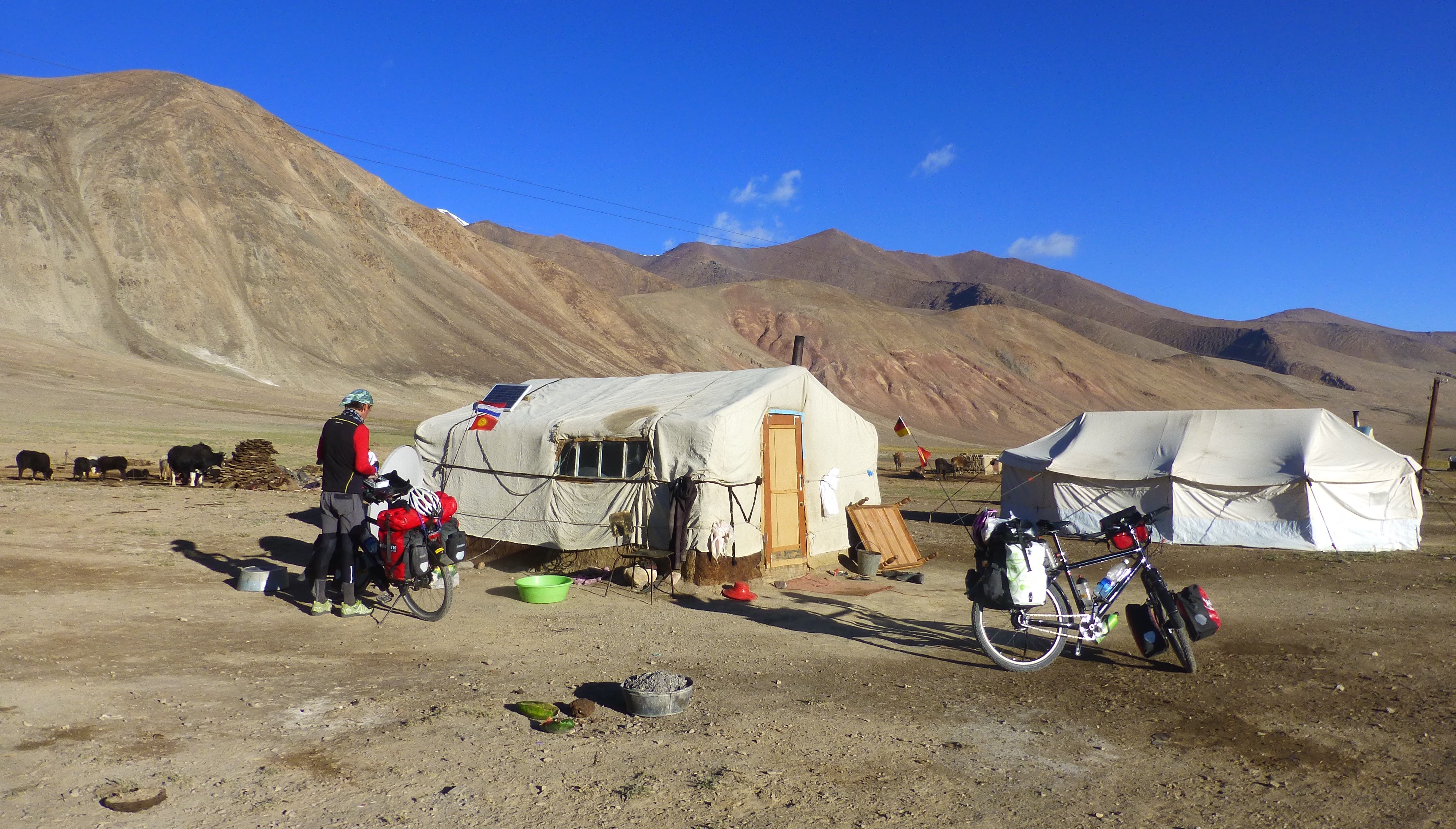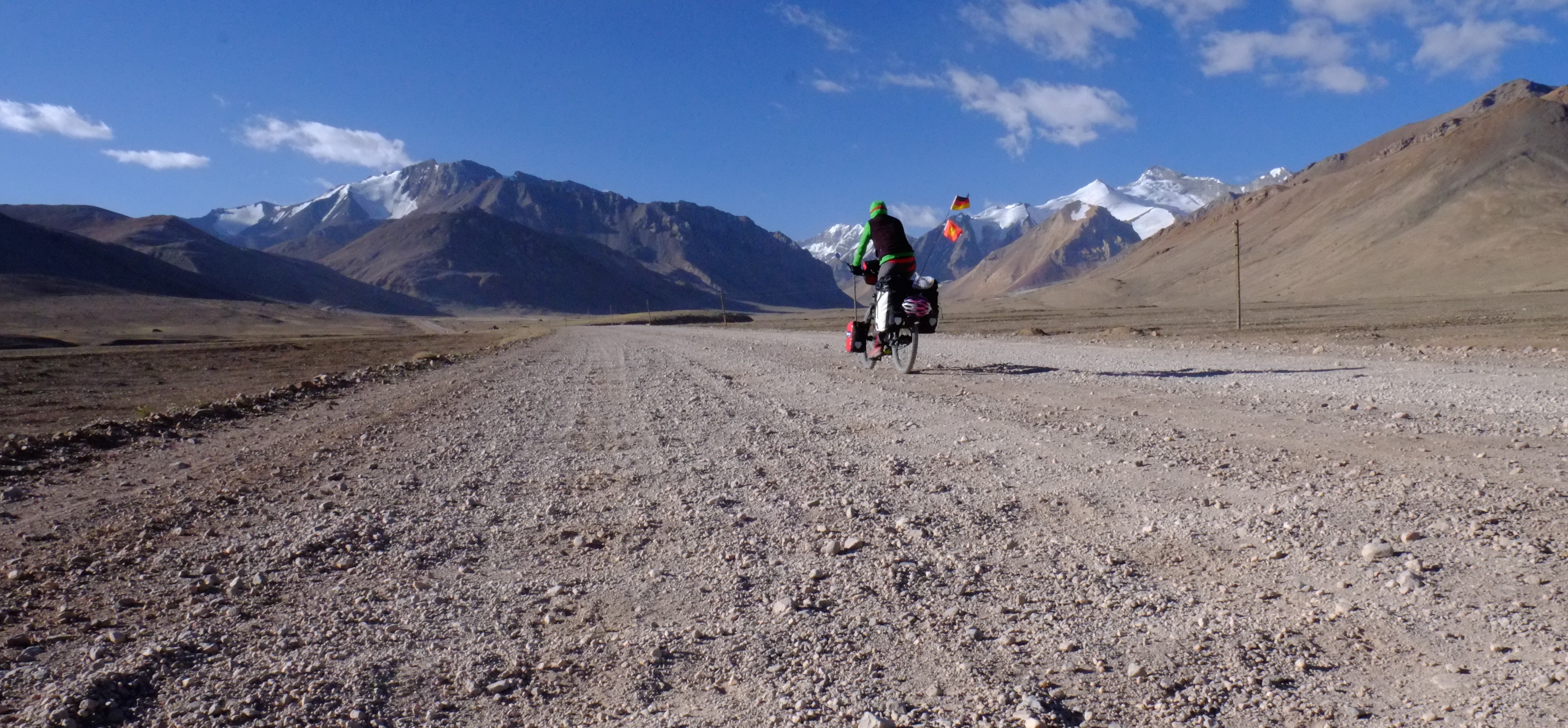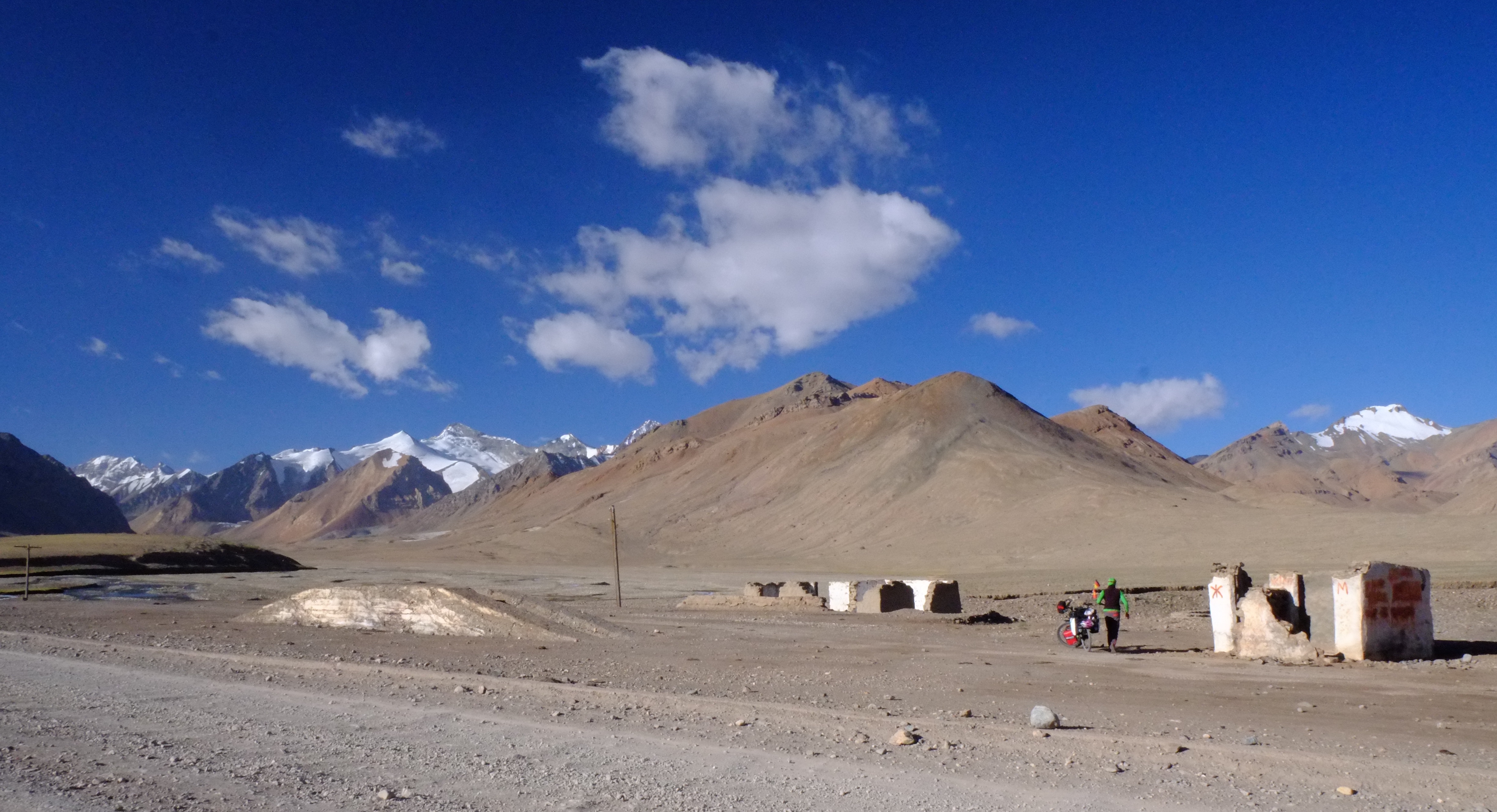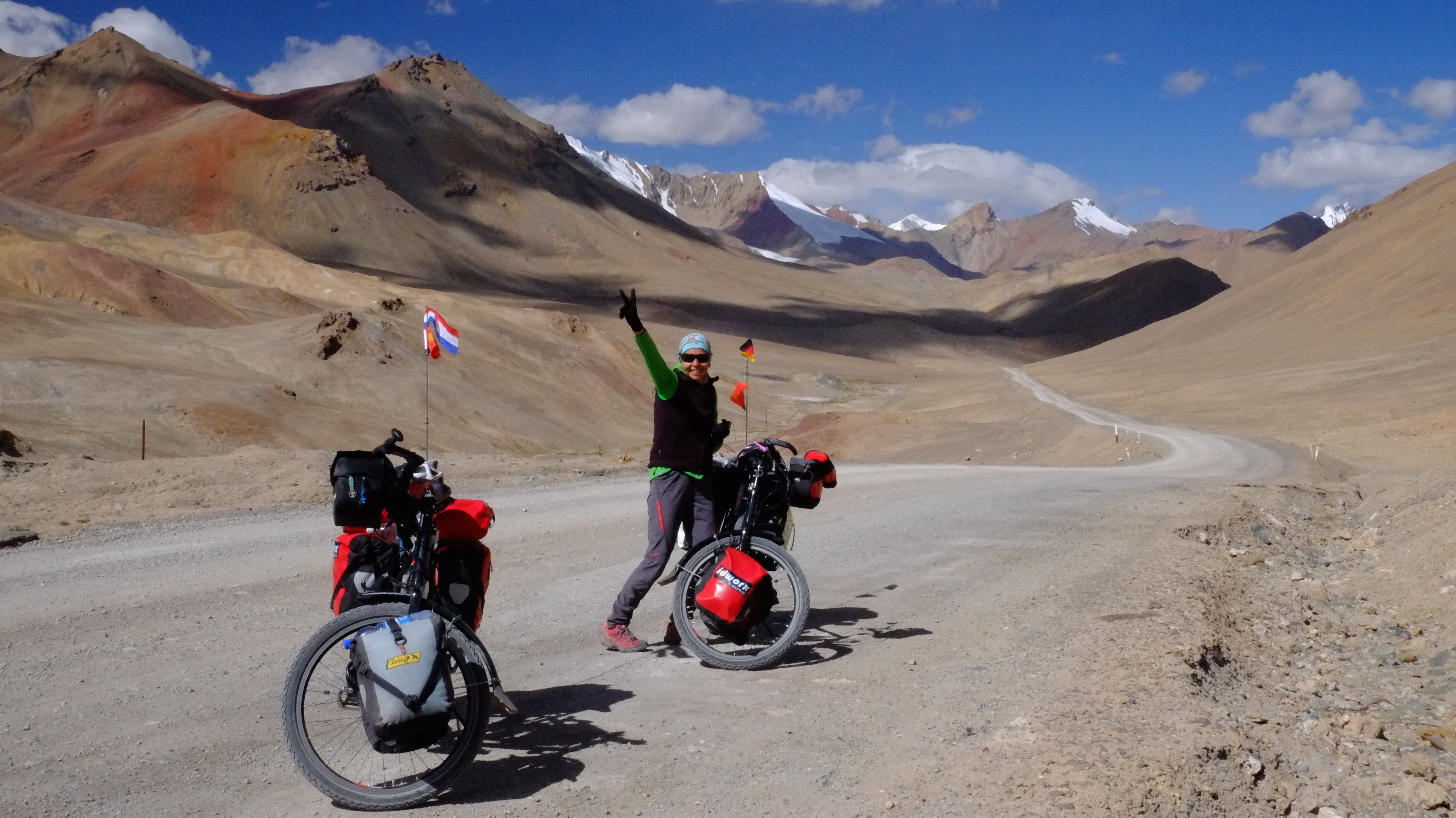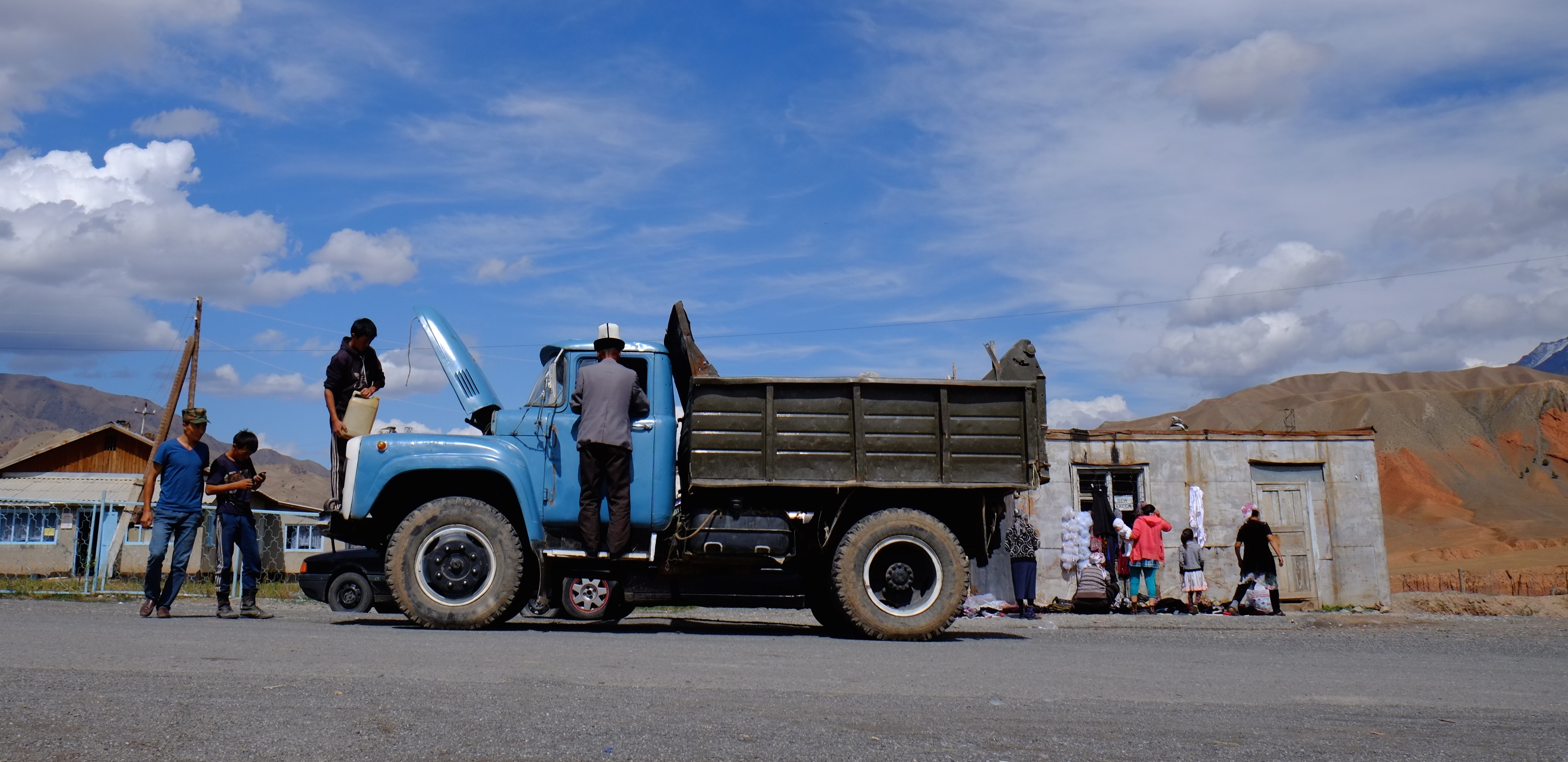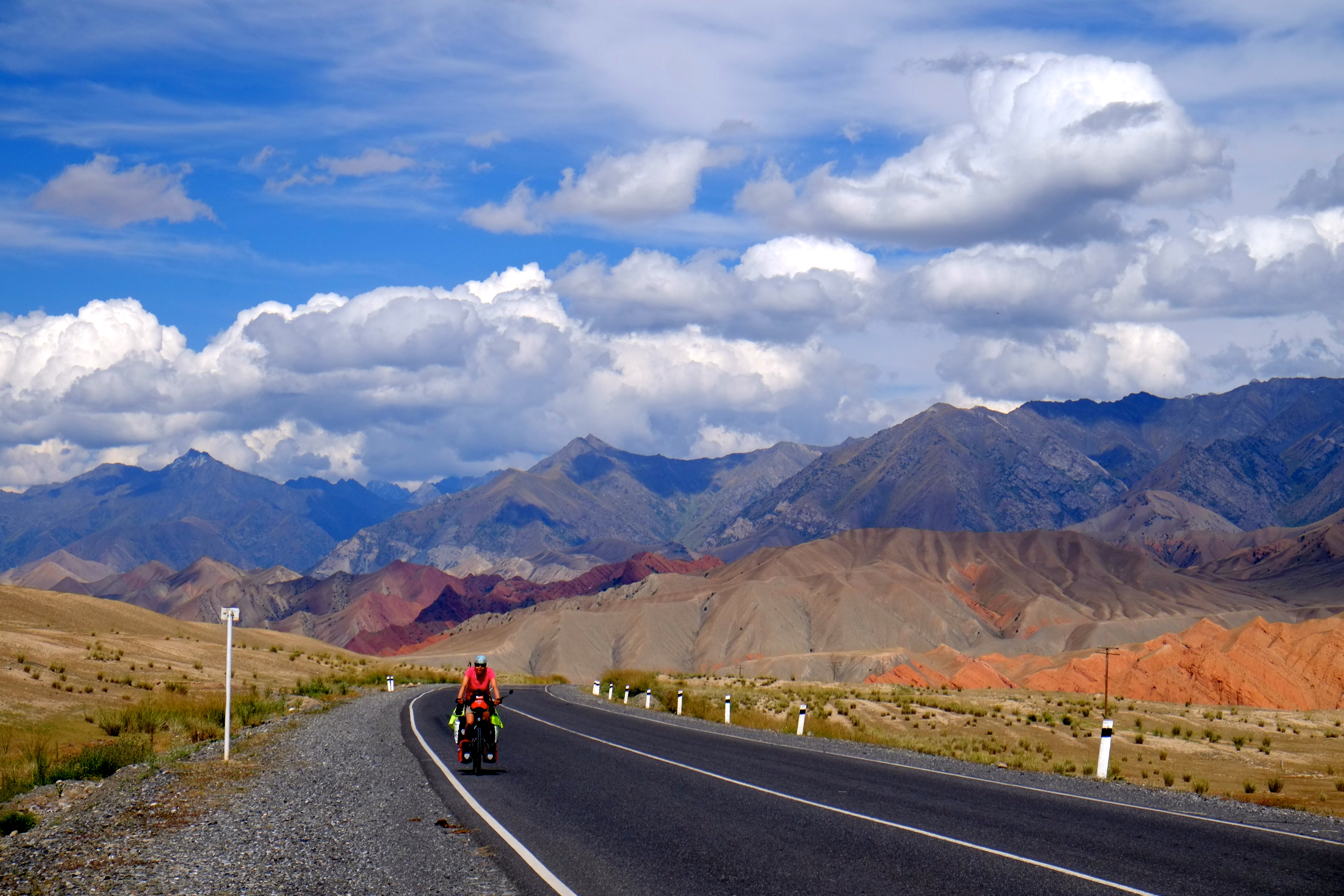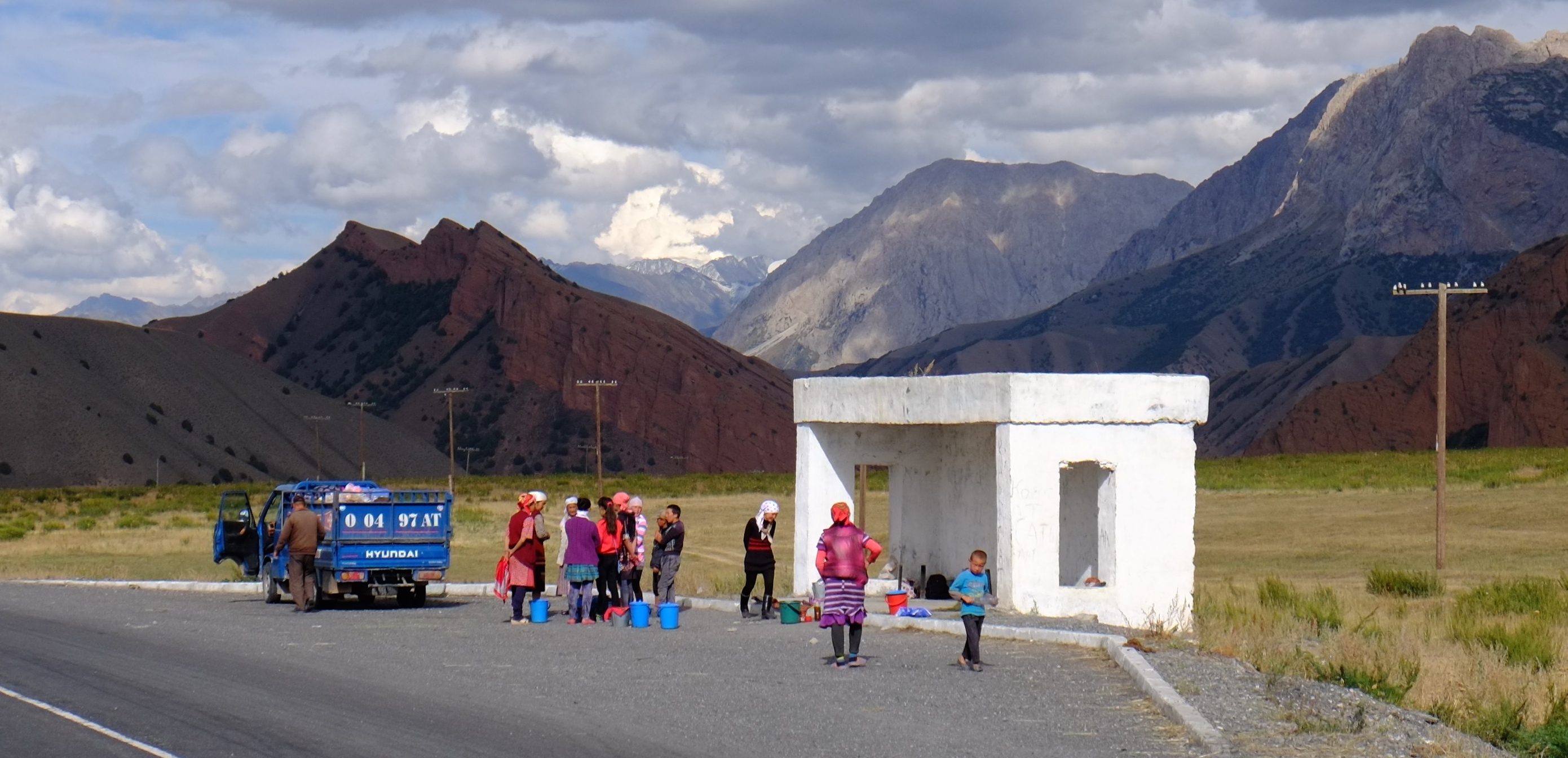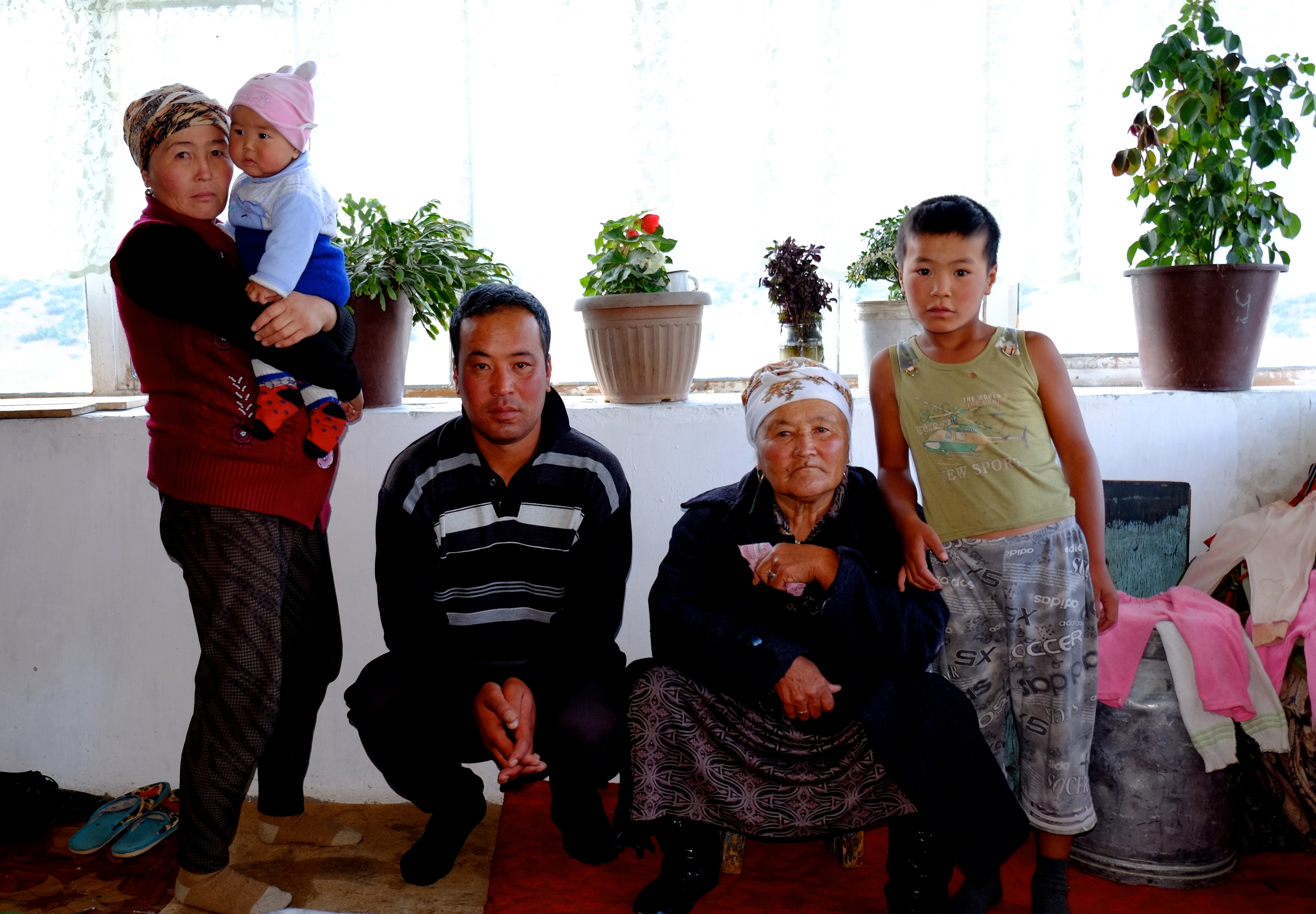
The 3Ms – Medressas, Mosques and Mausoleums

Fast facts Uzbekistan:

  • The region’s cradle of culture for more than 2 millennia and proud home to a spellbinding arsenal of architecture and ancient cities
  • Hospitality is an essential element of daily life, which we experienced every day in the non-tourism-spoilt countryside
  • The country is famous for plov (fried rice), which we could hardly get – cooking time is about 2 hours and usually needs to be pre-ordered
  • Population: around 30 million people
  • Neighbouring countries: Kazakhstan (North), Kyrgysztan and Tajikistan (East), Afghanistan (South), Turkmenistan (West)
Hier muss noch was rein
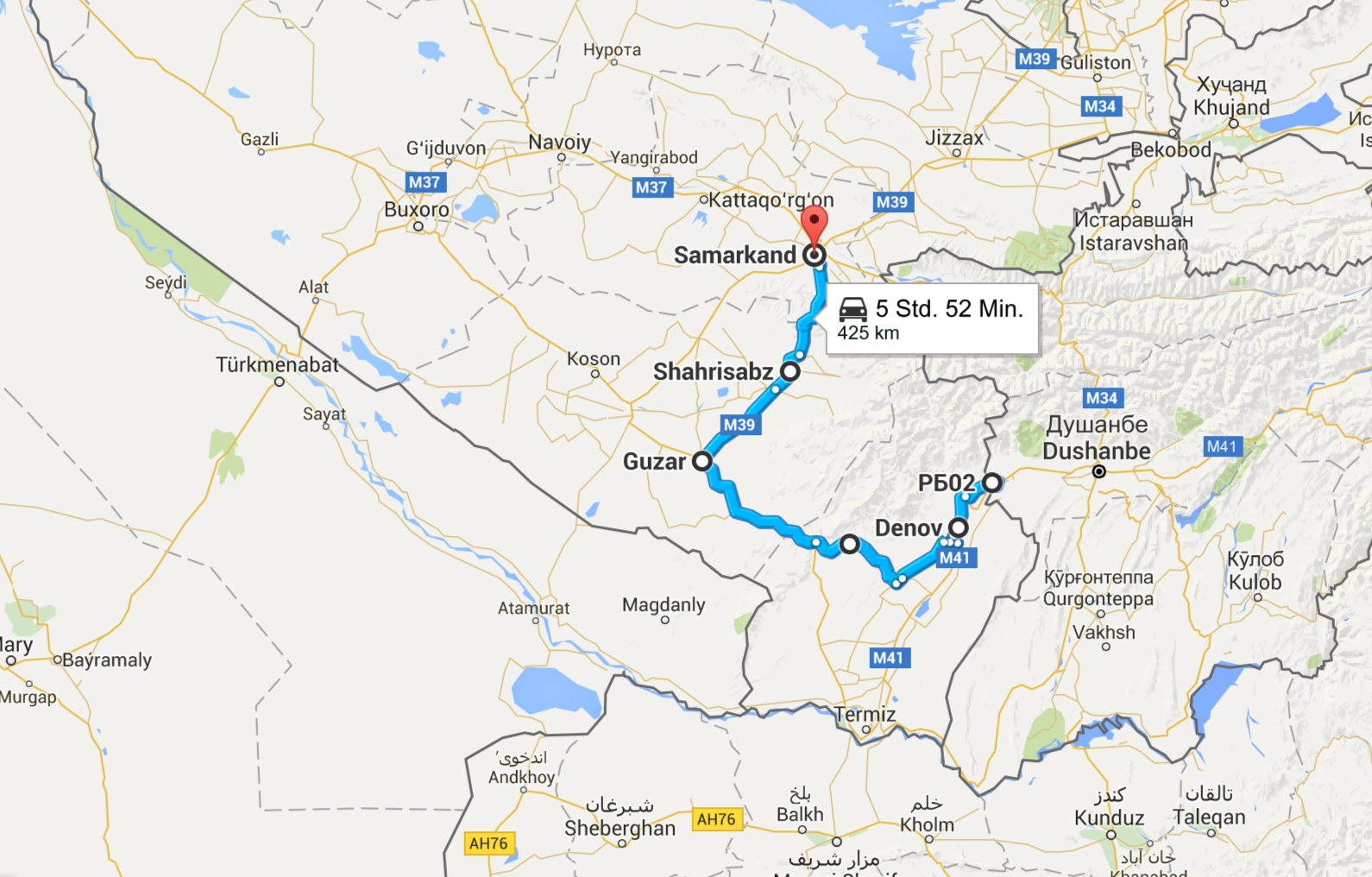
Distance: 395 km (2,012km in total)

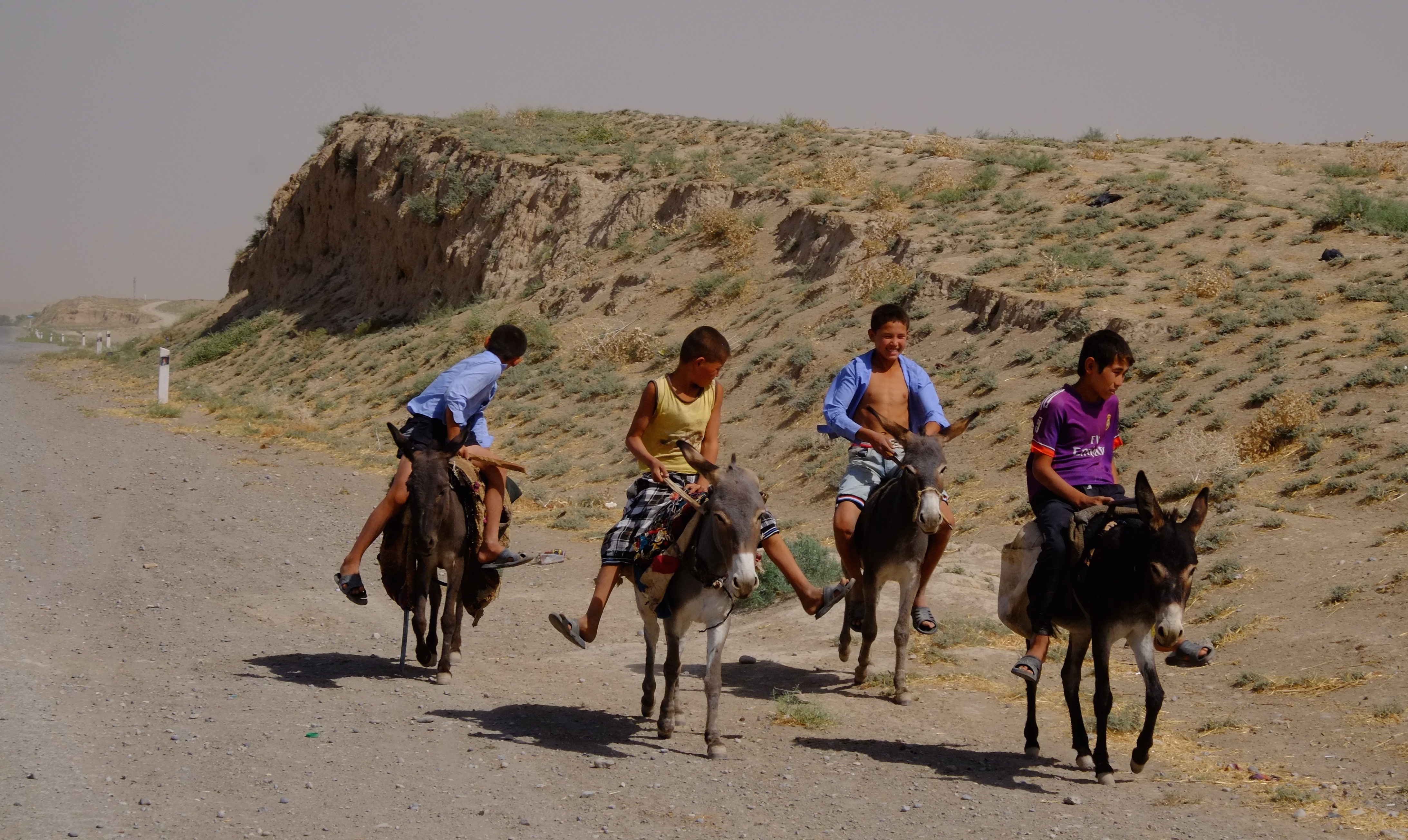
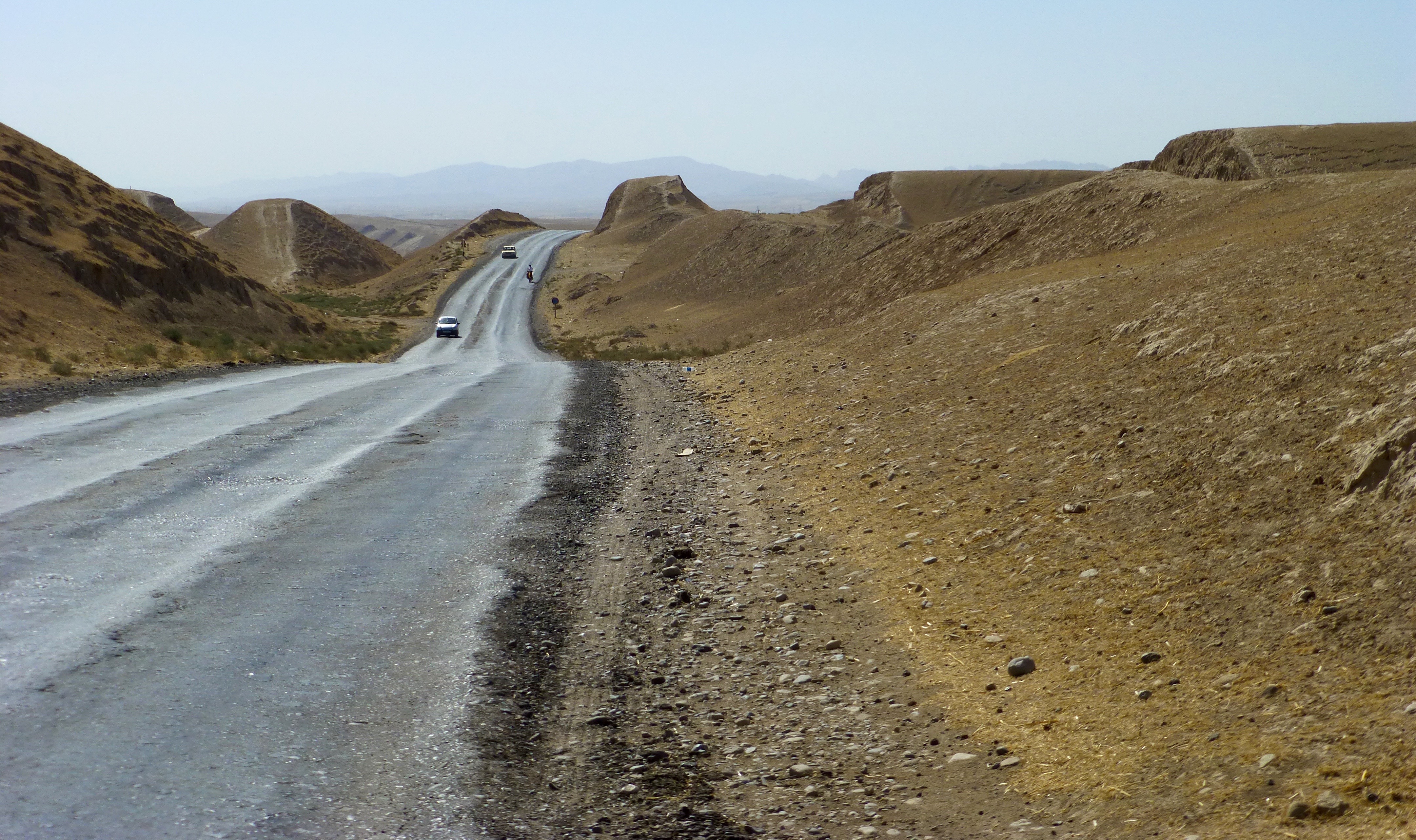
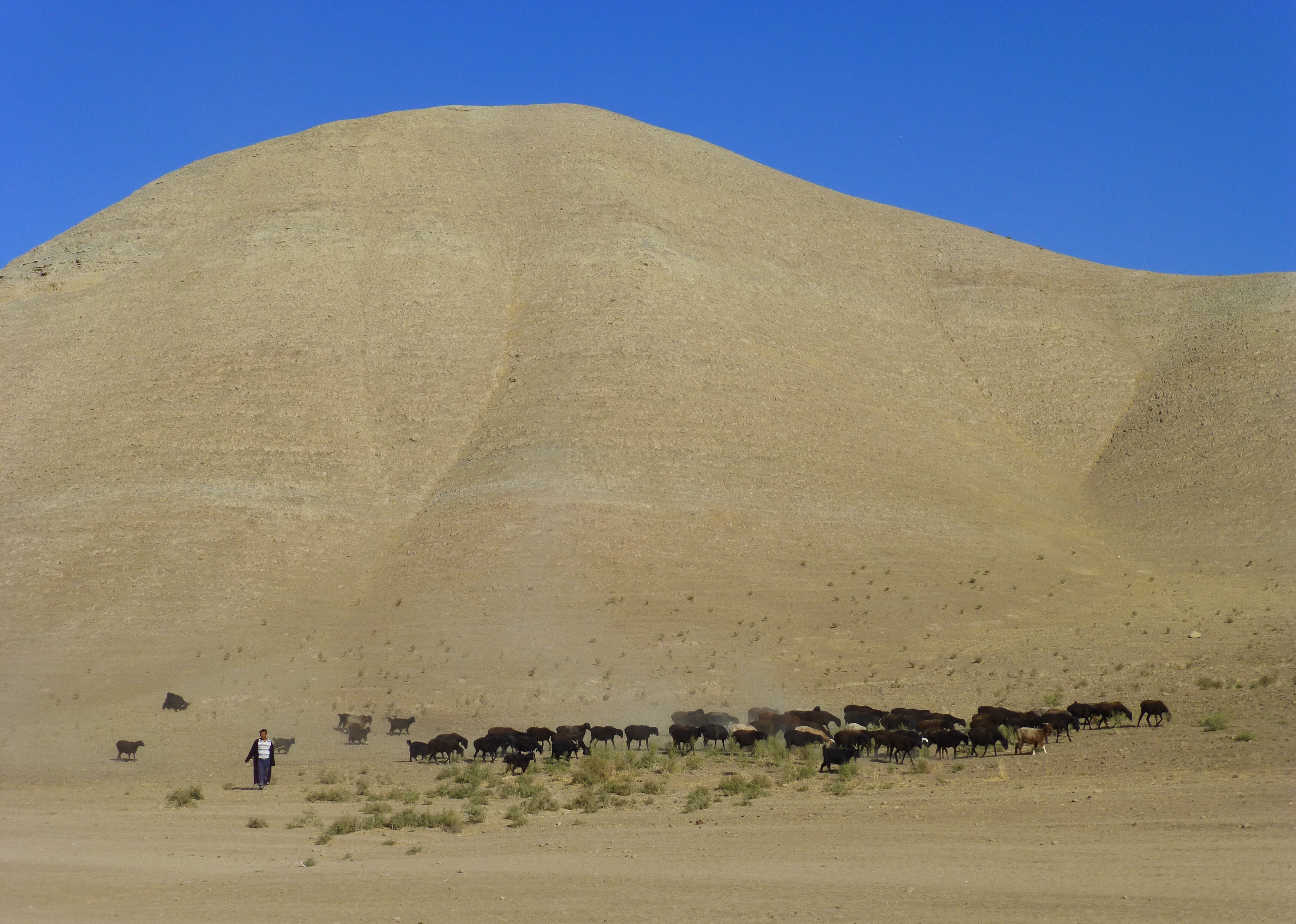
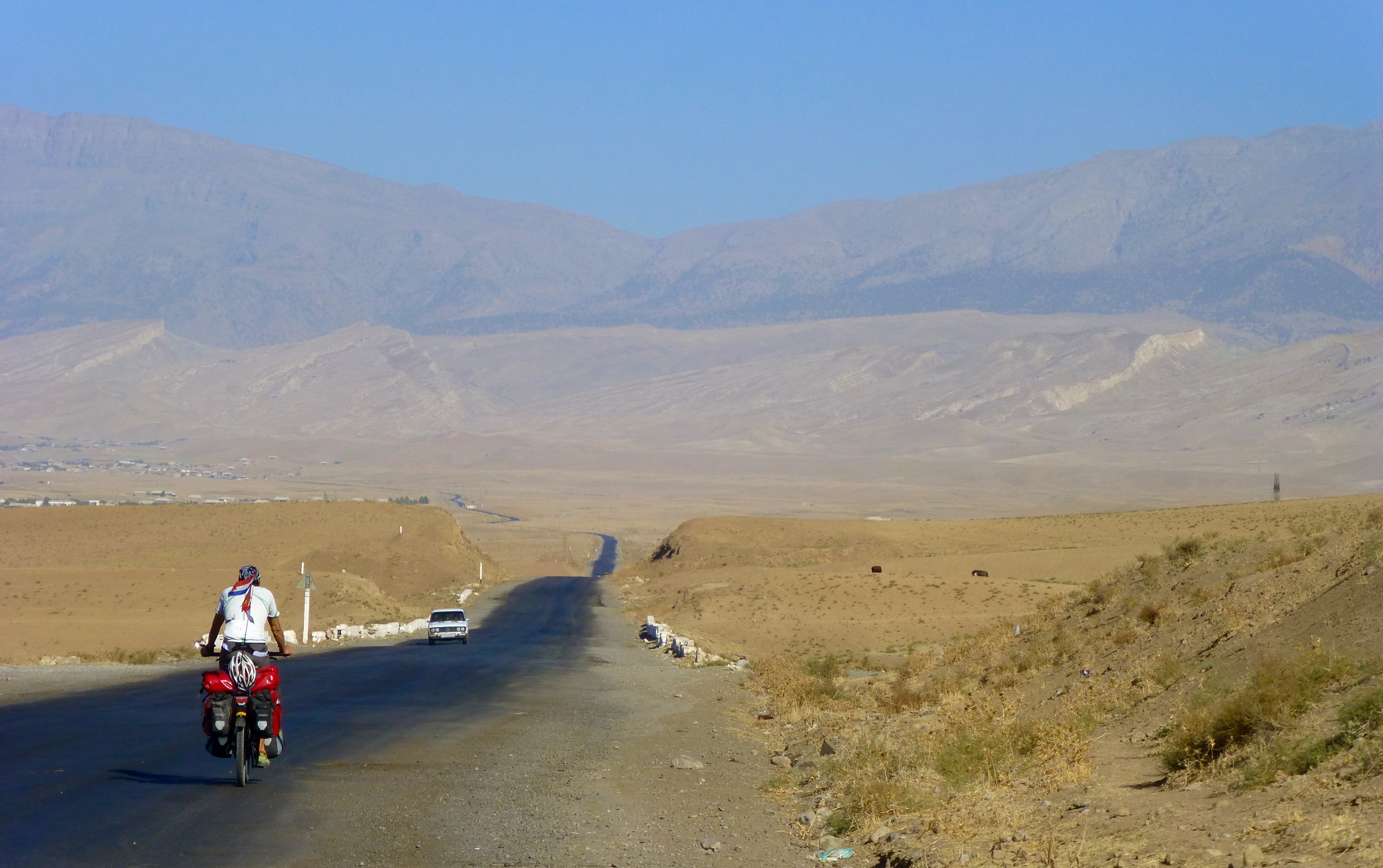
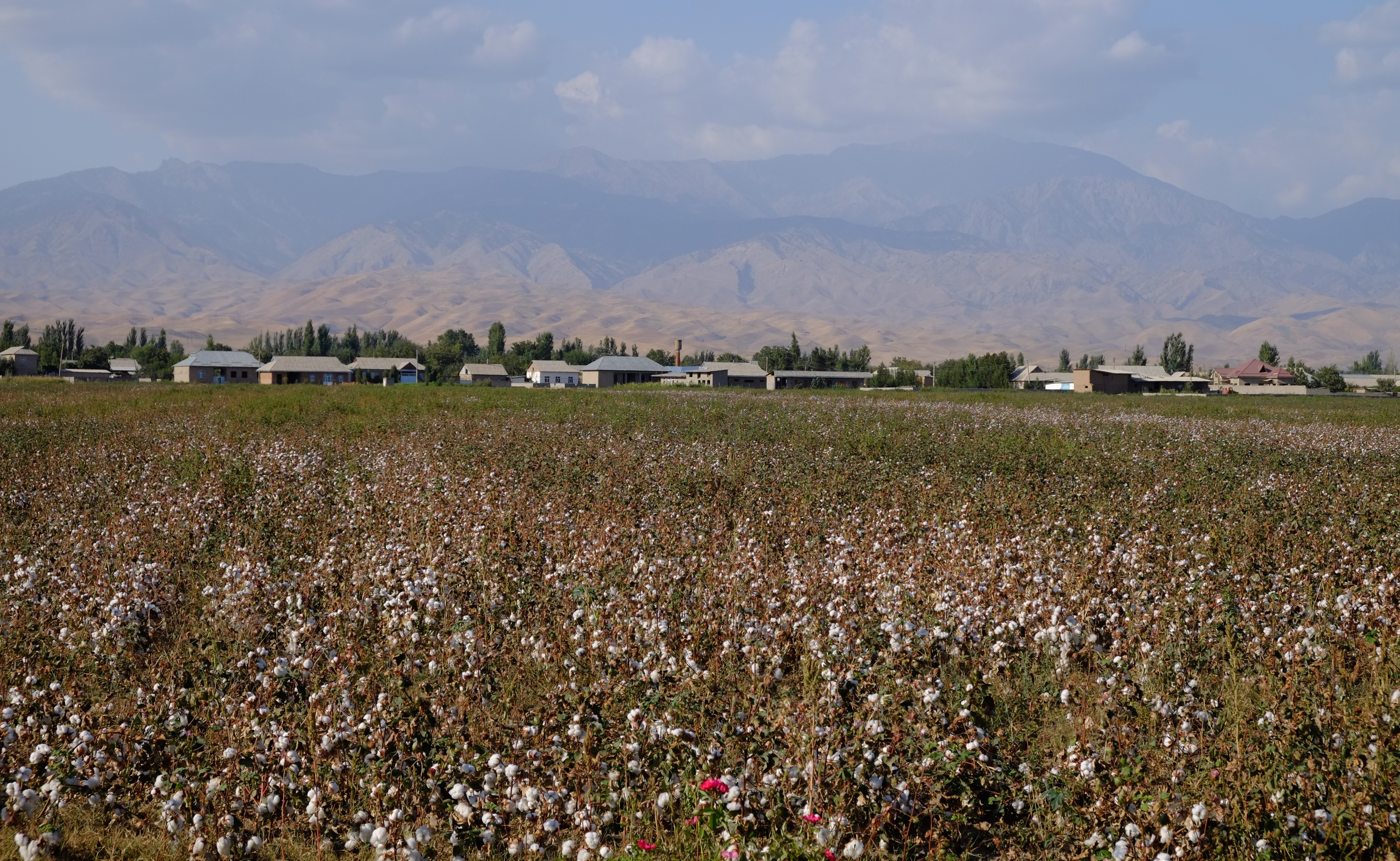
20 – 29 September, 2015 – After almost 70km of easy cycling we reached the border at 1pm, changed some money at a really bad rate and got three huge piles of banknotes or 500,000 Sum, worth around 80 EUR. From now on we would carry our money in plastic bags as our wallets couldn’t bear so many bills. We made it easily through Tajik customs after our passports had been registered or checked at three different checkpoints and then arrived at the Uzbek border. We knew things would become more difficult now. We had thoroughly counted all our money in advance because we had to declare every penny. As there was only space for three different currencies on the form I almost panicked: I still had 0.20 Tajik Somoni (0.03 EUR) in my wallet and Johan received from our Australian Soccer friends Omani Real. We heard stories from other travellers who had to pay huge fines for not having declared their cents! Once we had filled in our forms the real inspection would begin: the customs officers made us open our panniers and emptied all of them. We had to start our computers and cameras so they could look at our pictures and everything else that’s on there. Johan had to give them a copy of a photo taken from an aluminium factory – the Uzbeks now officially appointed him as a spy. They were also very interested in the books we are reading! About 1.5 hours later we could continue our journey on slightly undulating roads. All we saw to our left and right were cotton, vegetable and fruit fields and small stalls selling grapes and apples.
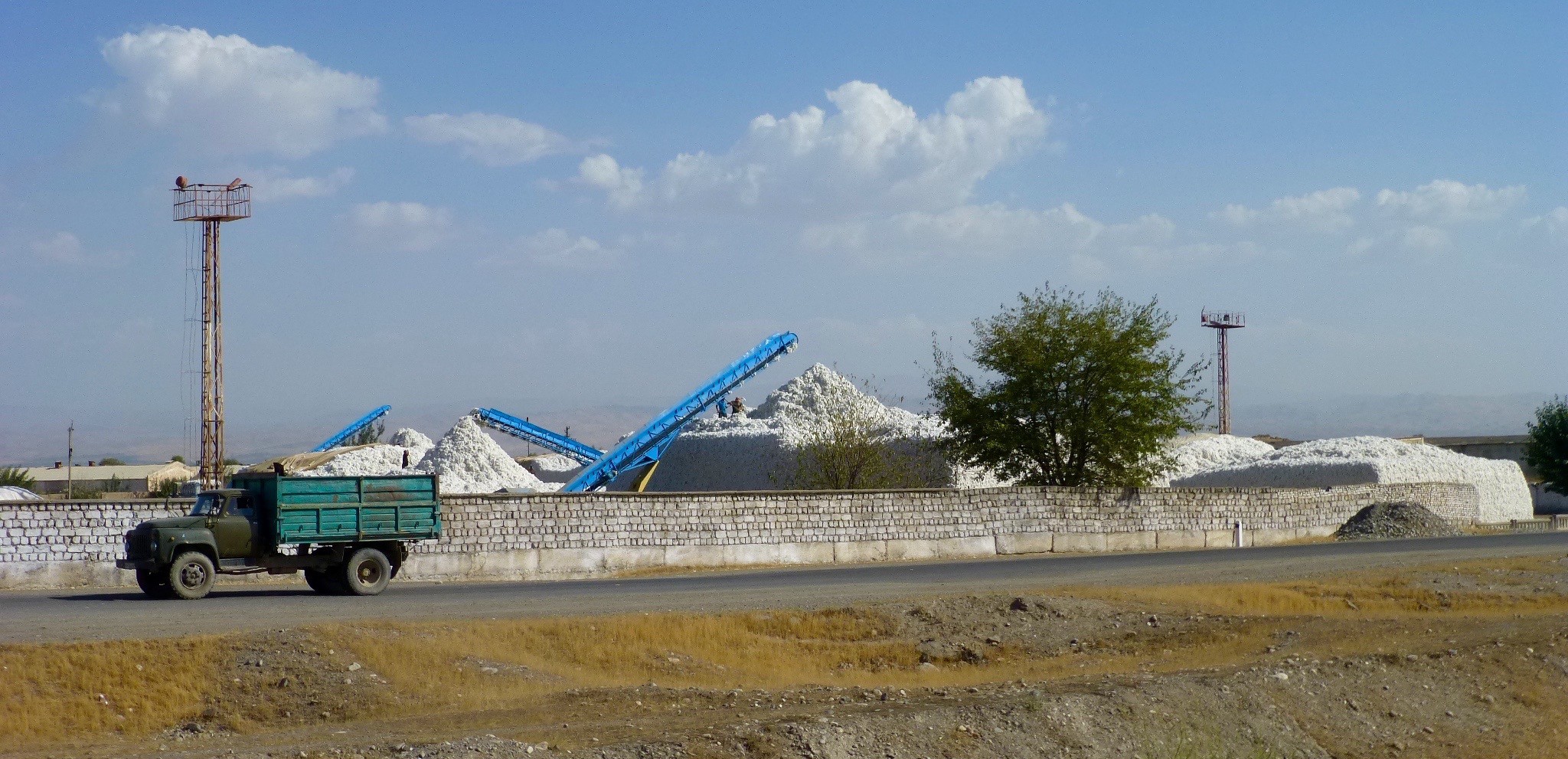
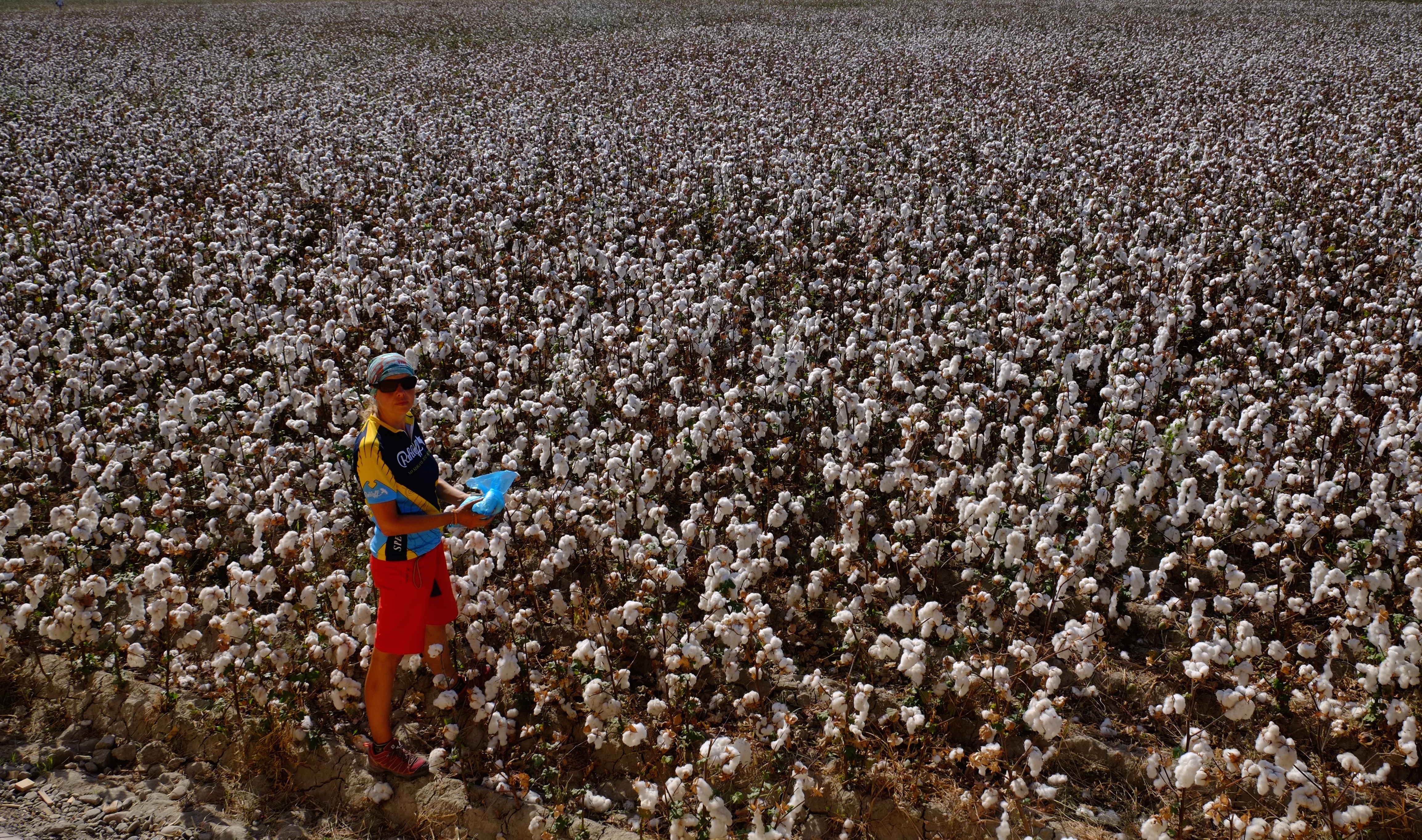
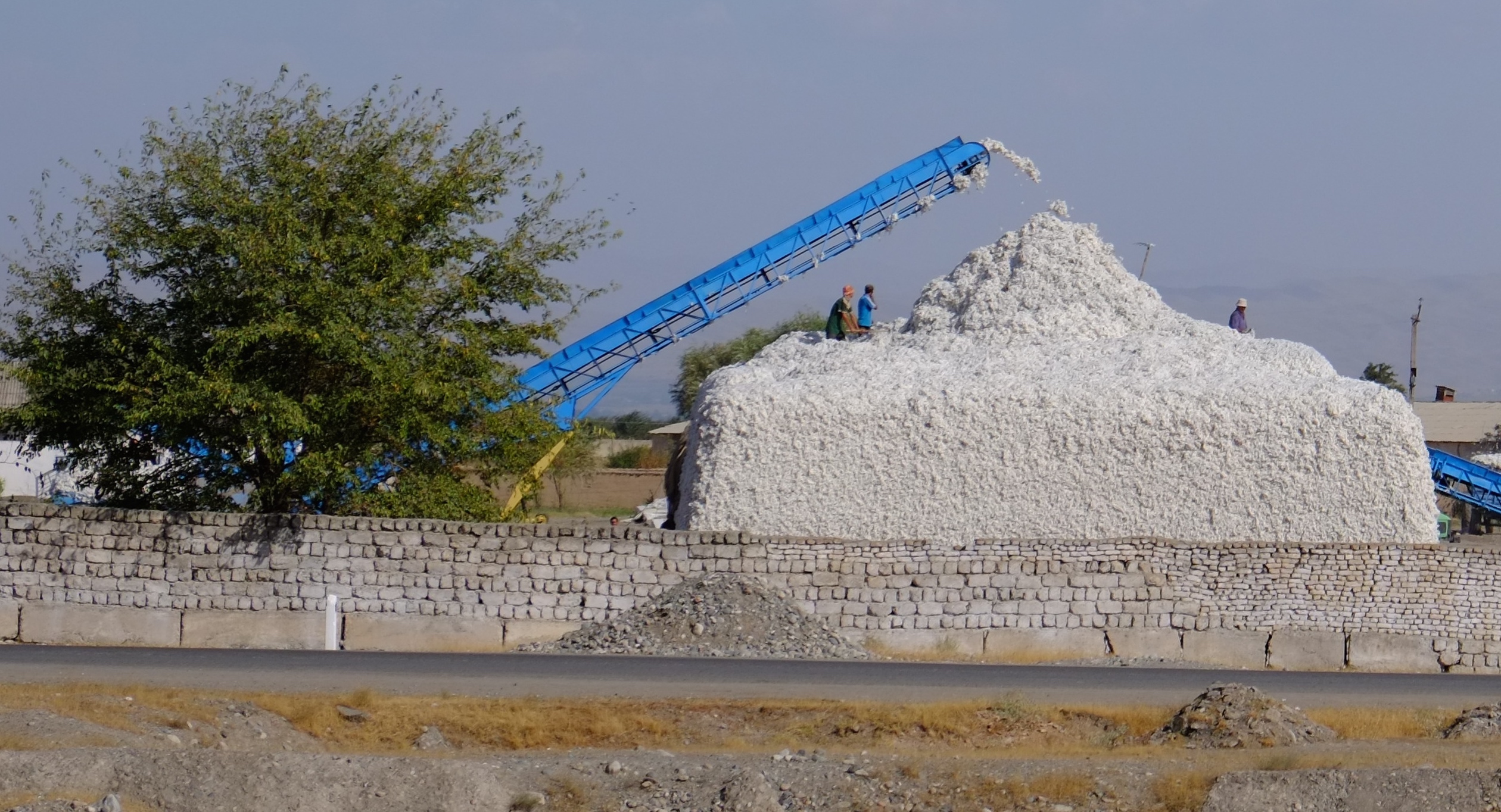
The cotton harvest has begun
More cotton harvesting...handy filling for our little self-made mascots
More cotton harvesting…handy filling for our little self-made mascots
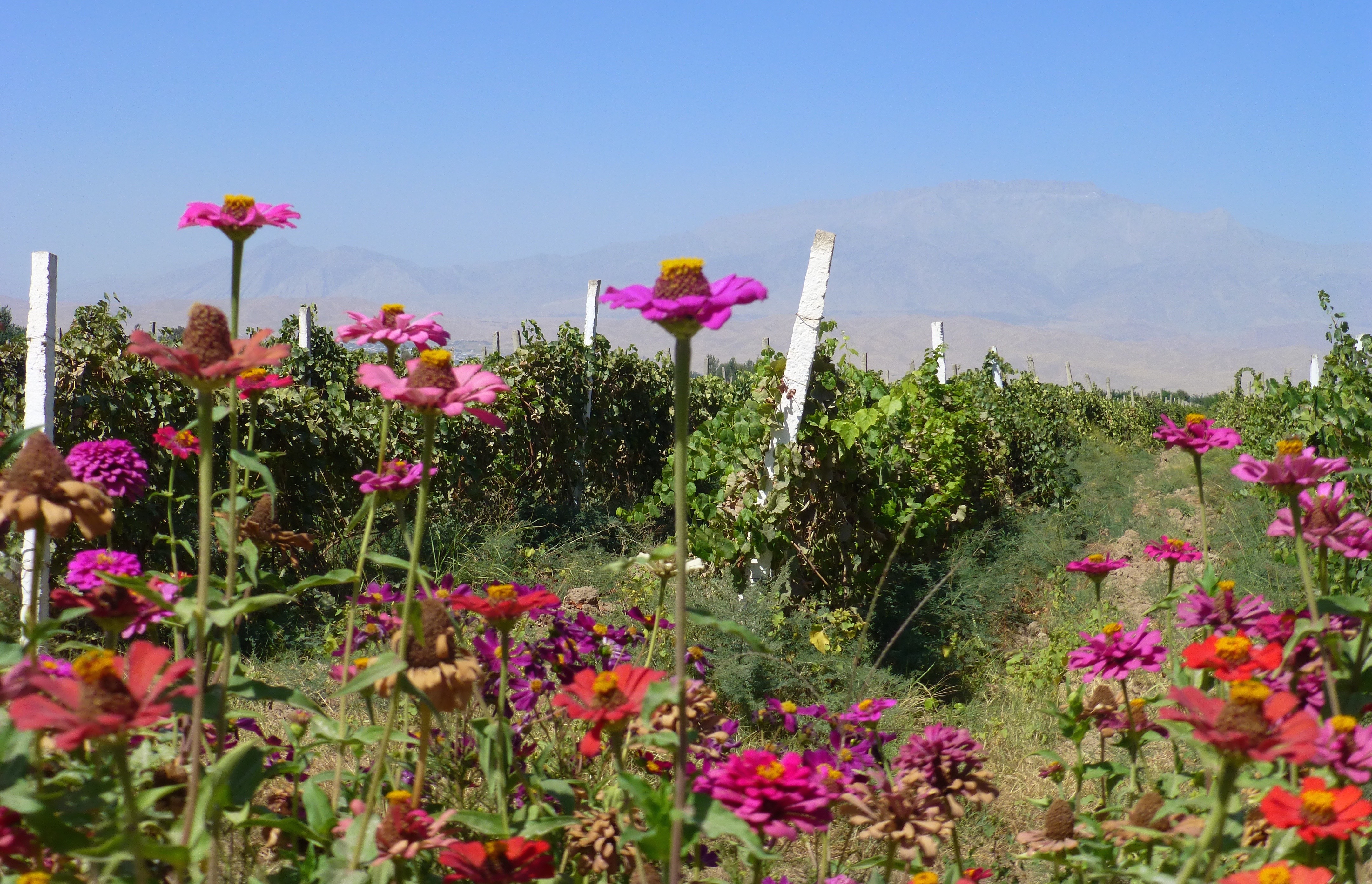
Flowers growing in unison with grapes
Talking about harvesting...this is a slightly different harvest
Talking about harvesting…this is a slightly different harvest
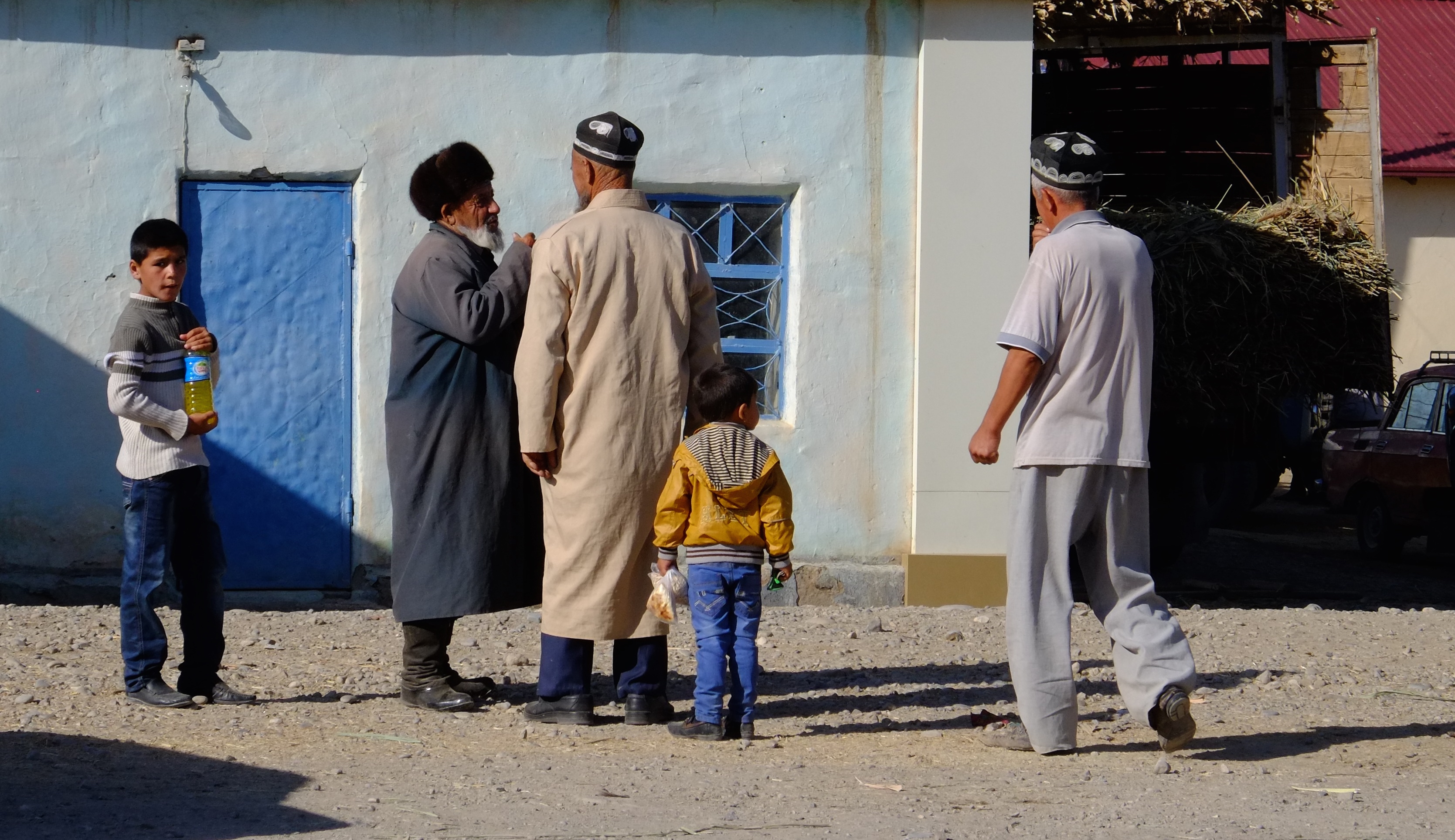
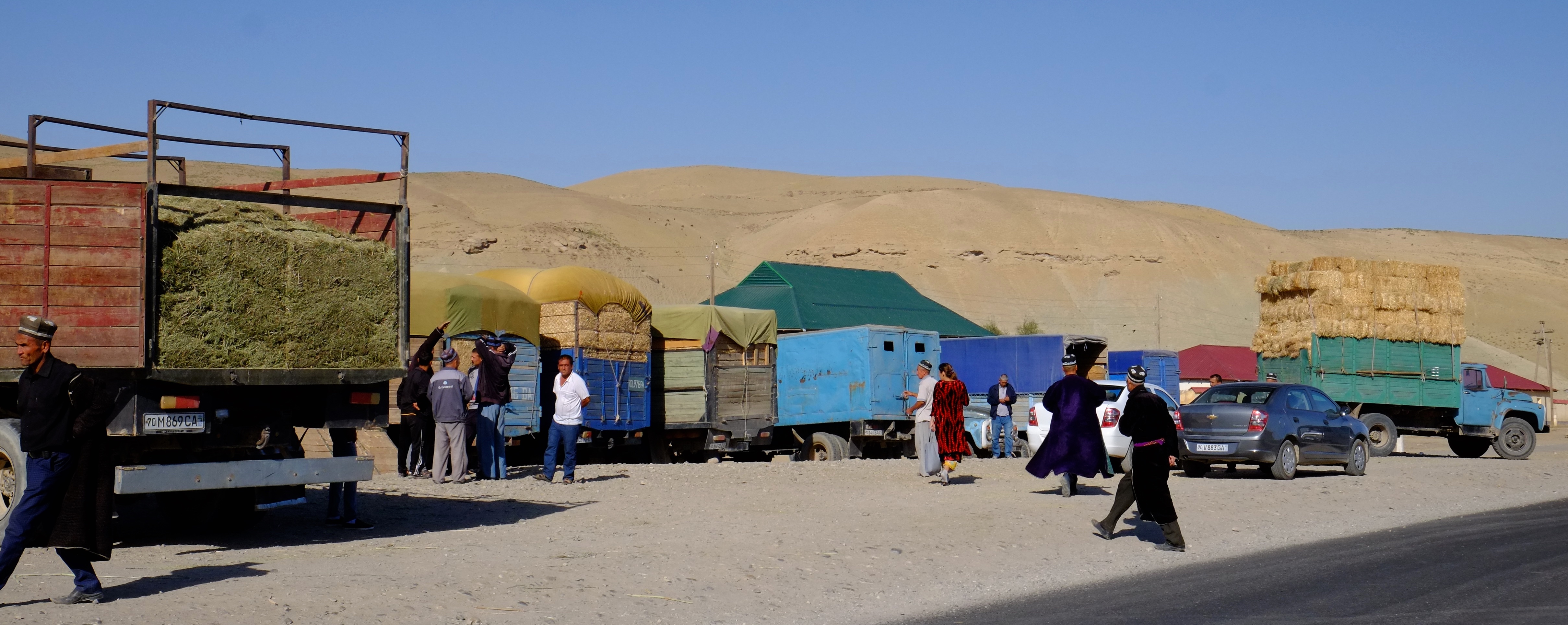
En route
En route
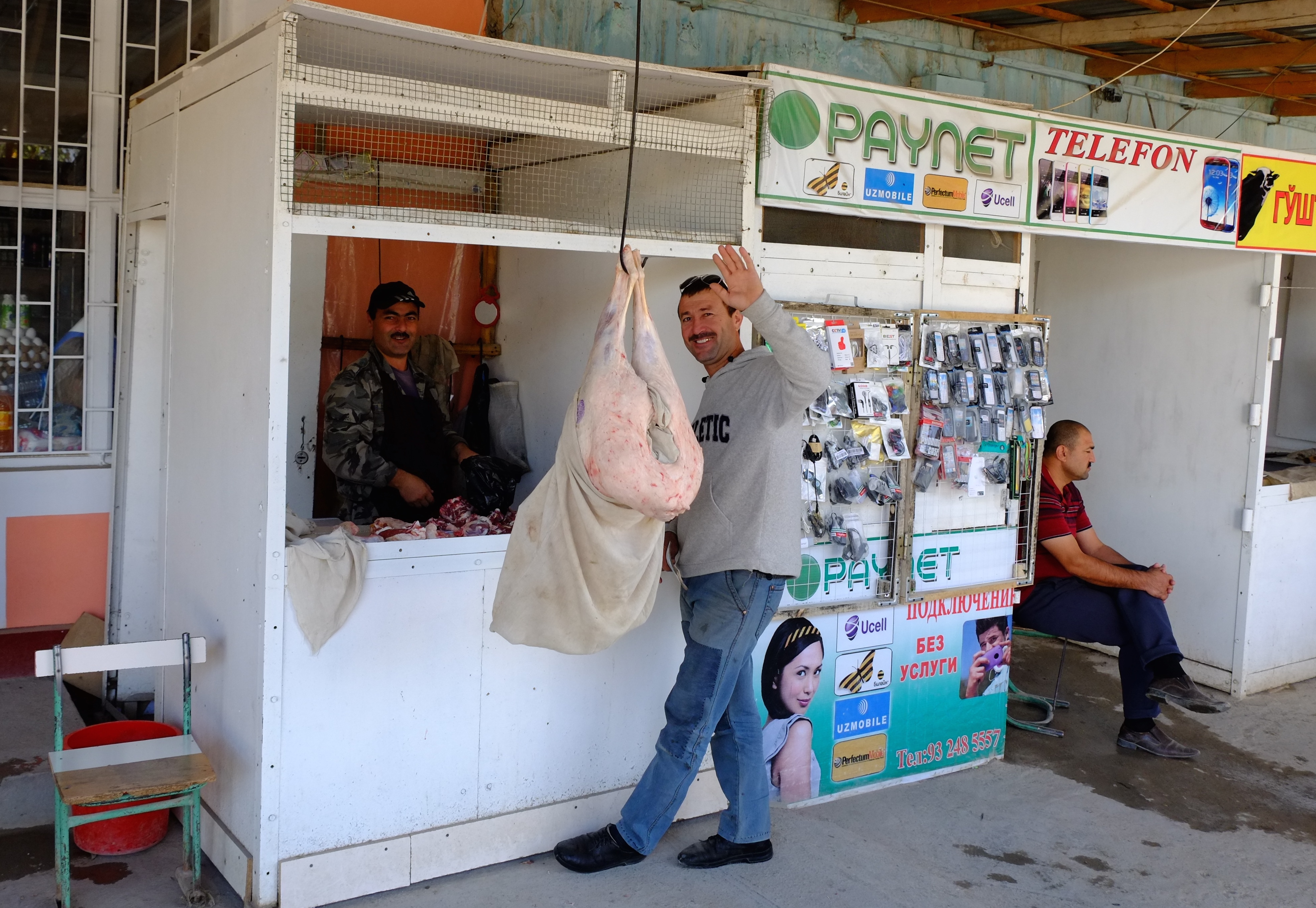
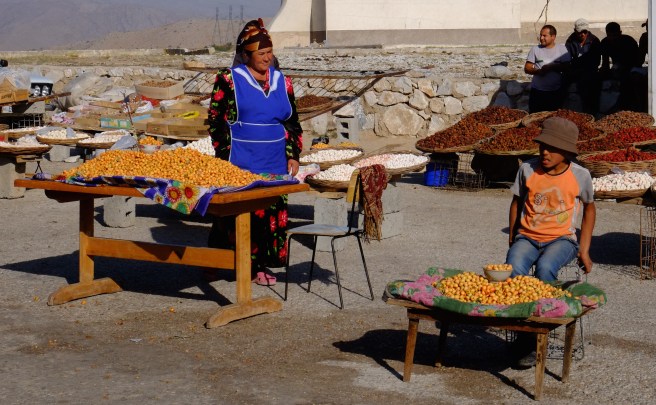
Market en route to Samarkand
Market on our way to Samarkand

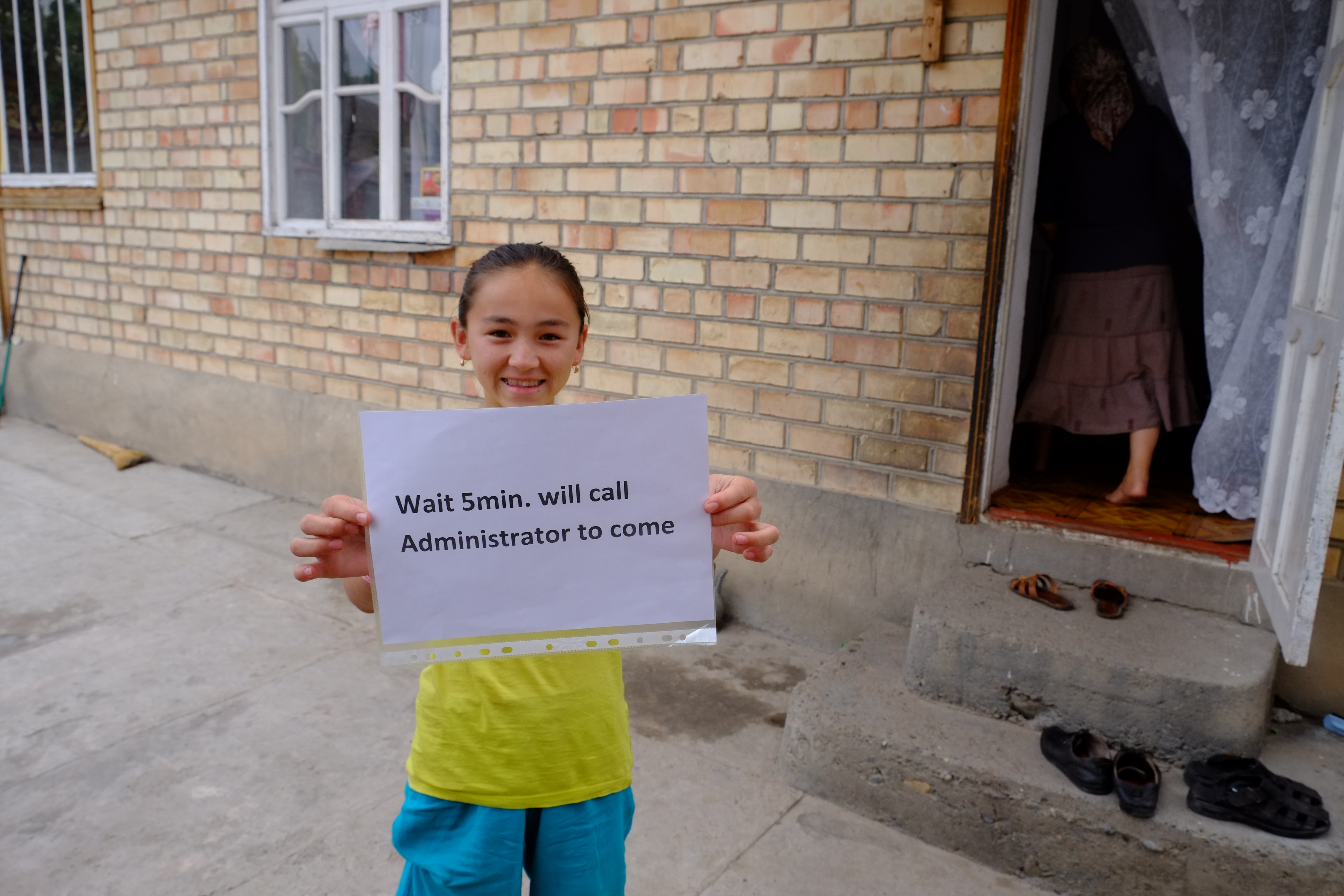
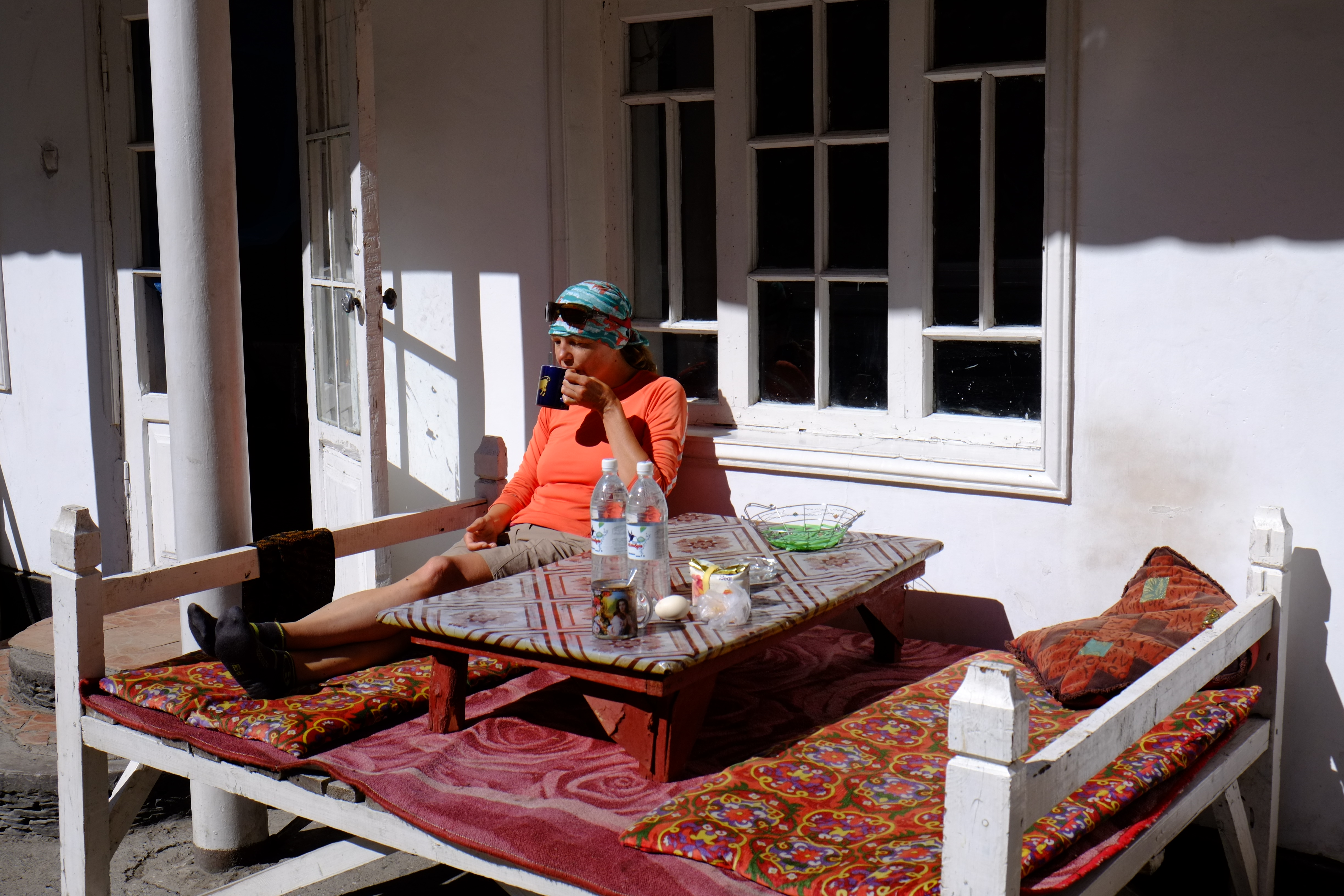
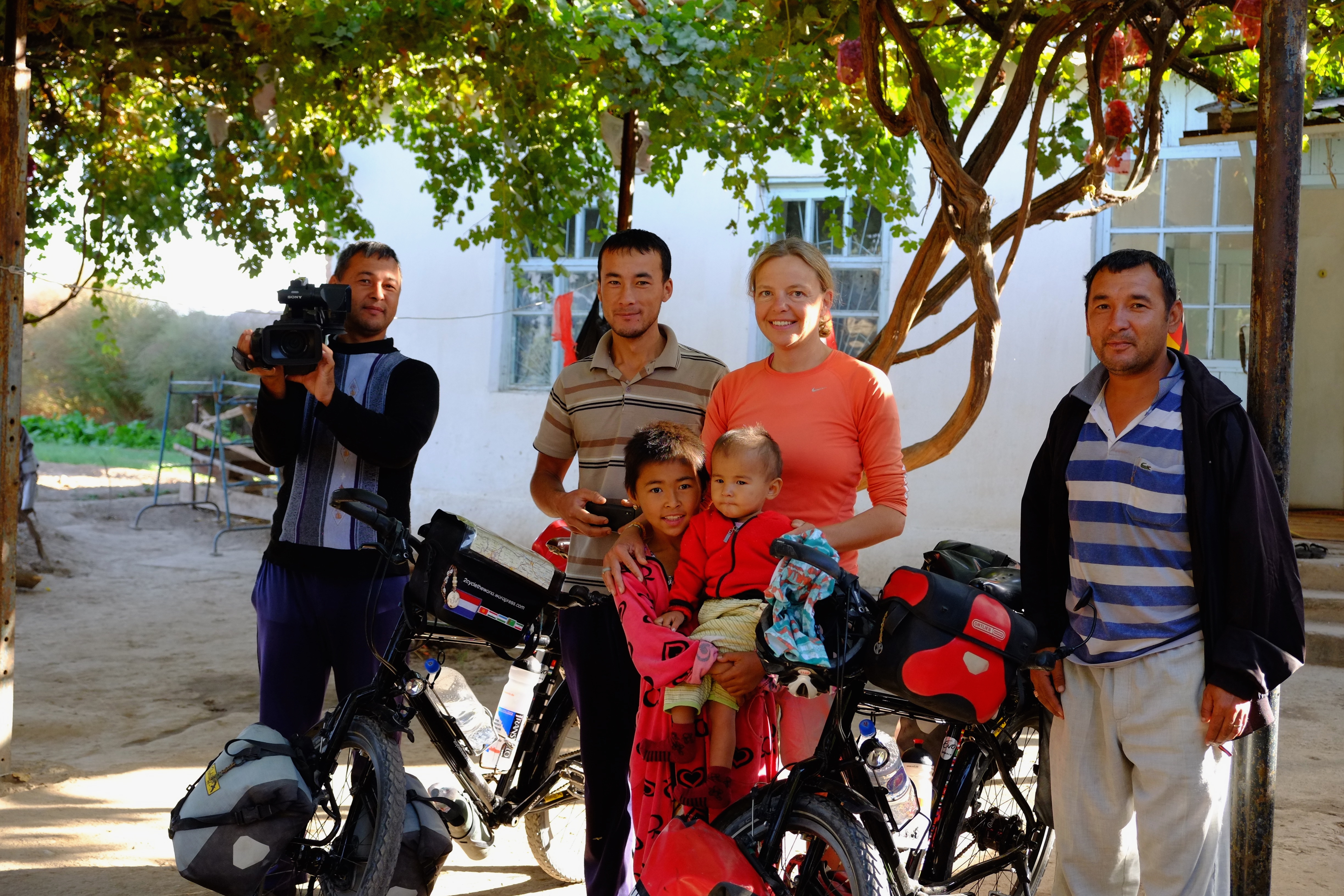
As it was difficult to find a spot for wild camping without being seen – there were people everywhere and we felt a bit like being back in India: each time we stopped within a few minutes we were surrounded by a crowd – we asked at people’s houses if we could pitch out tent in their garden or on their field. Without hesitating they invited us into their house, prepared tea, bread and sweets for us and gave us a room to sleep. Sometimes we could cook our own food but still had to eat their bread and cookies. We slept on the ground on thin mattresses that were piled meter-high in their living rooms, always ready to serve fellow travelers.

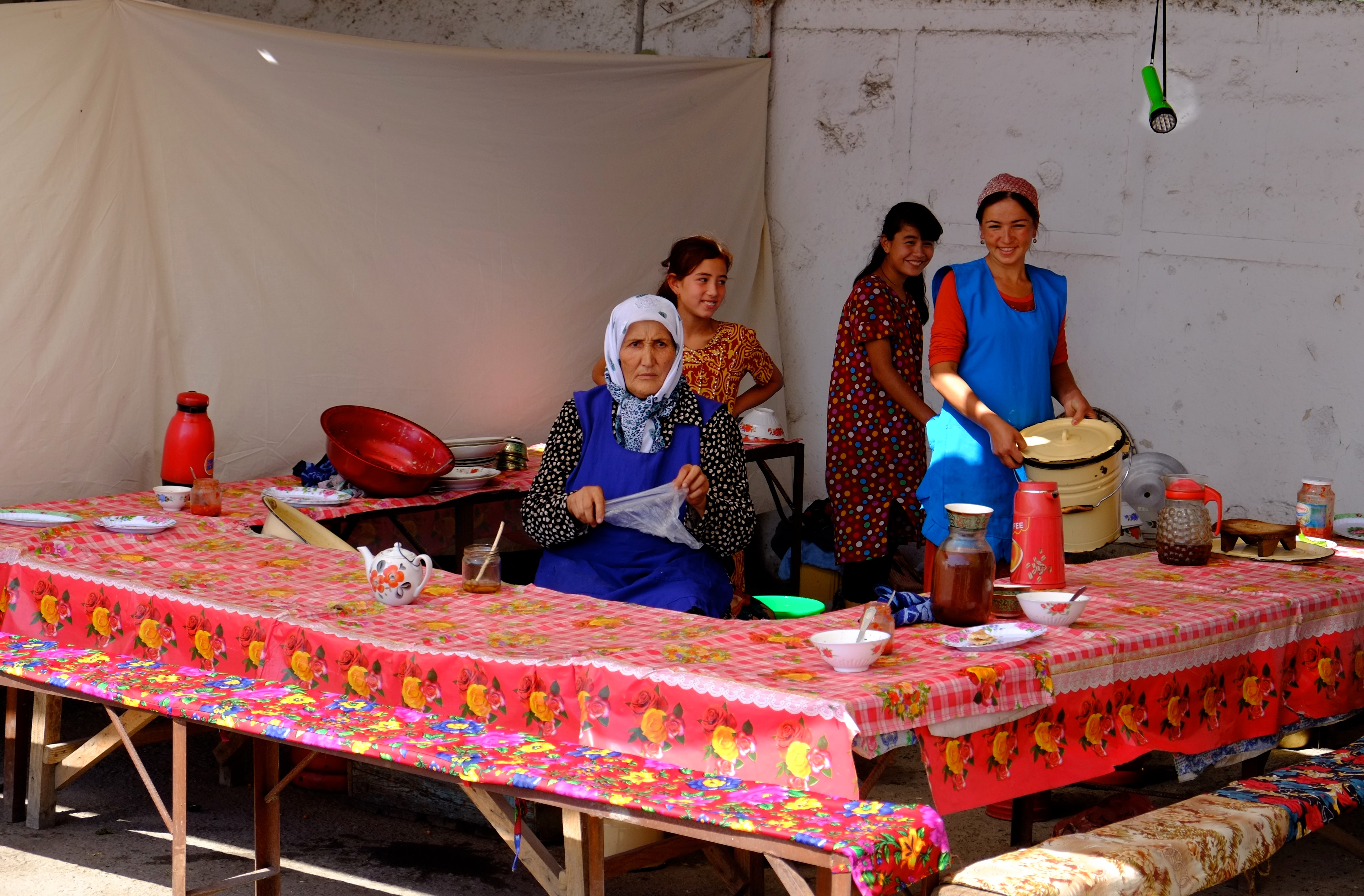
Staple meal in Uzbekistan
Our first homestay - they insisted on getting our phone number even though they wouldn't speak a single word English!
Our first homestay – they insisted on getting our phone number even though they wouldn’t speak a single word English!
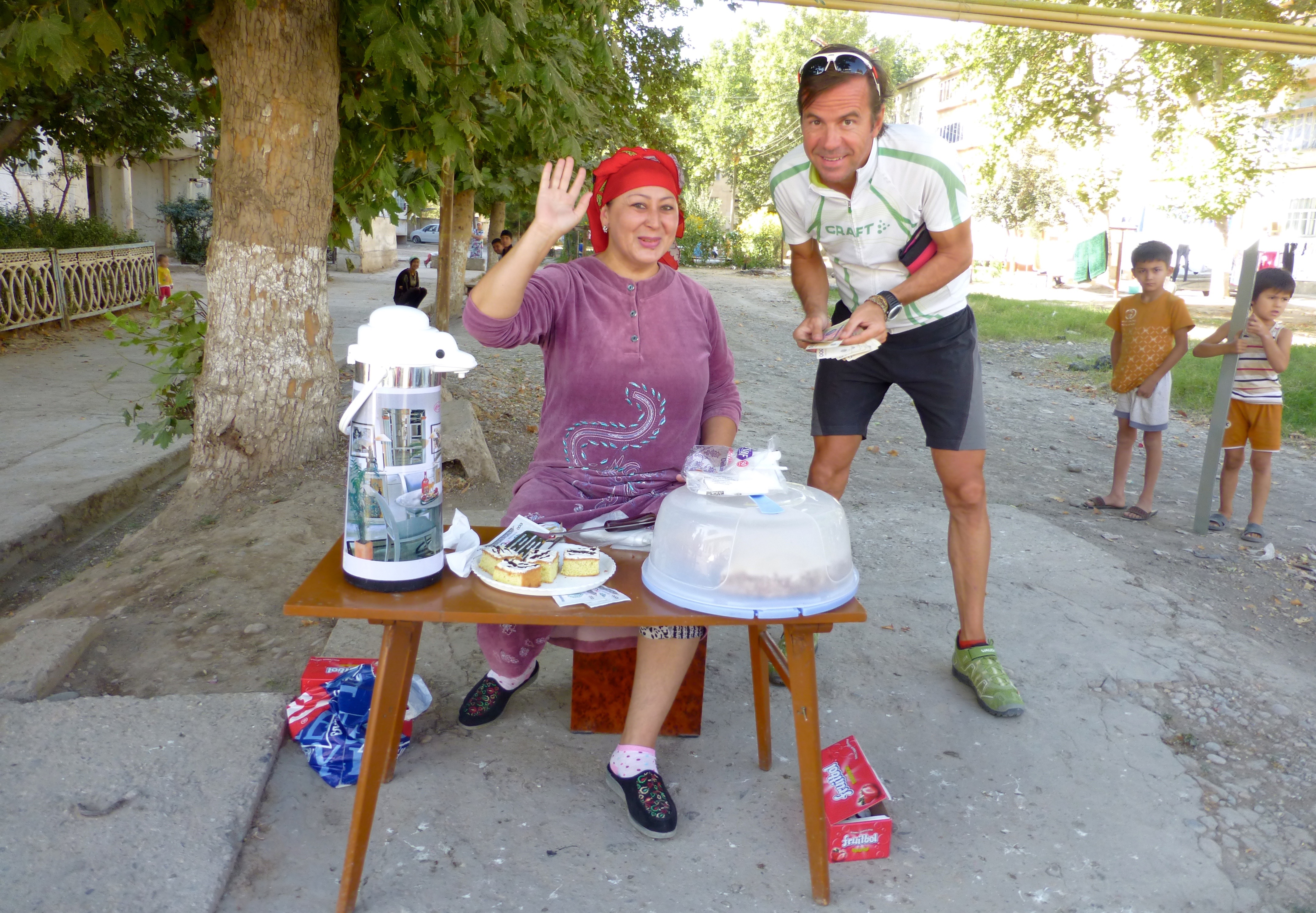
This lady is selling home-made cakes and Nescafe - a cyclist's heaven!
This lady is selling home-made cakes and Nescafe – a cyclist’s heaven!
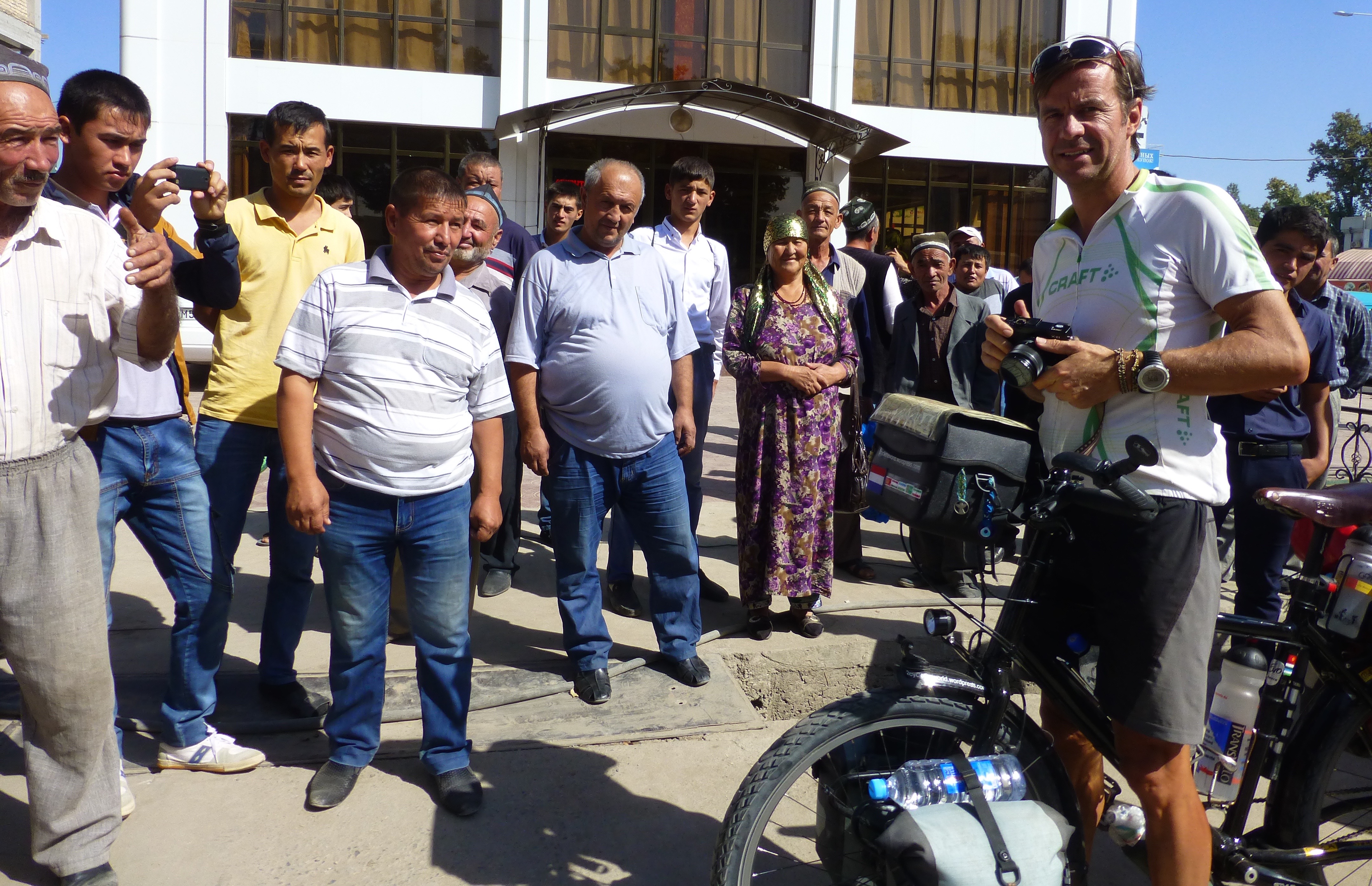
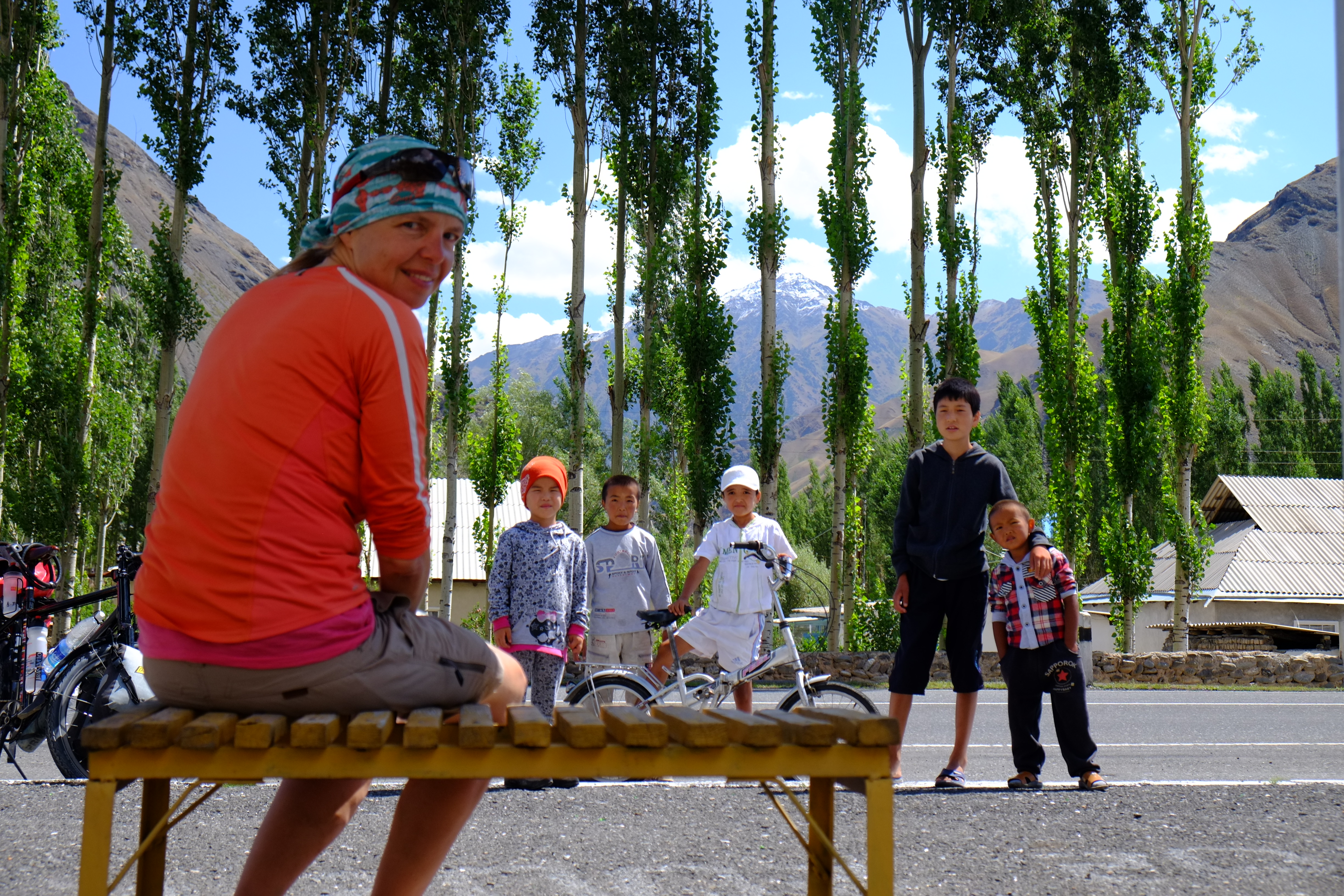
When I came back from grocery shopping, Johan was surrounded by this crowd!
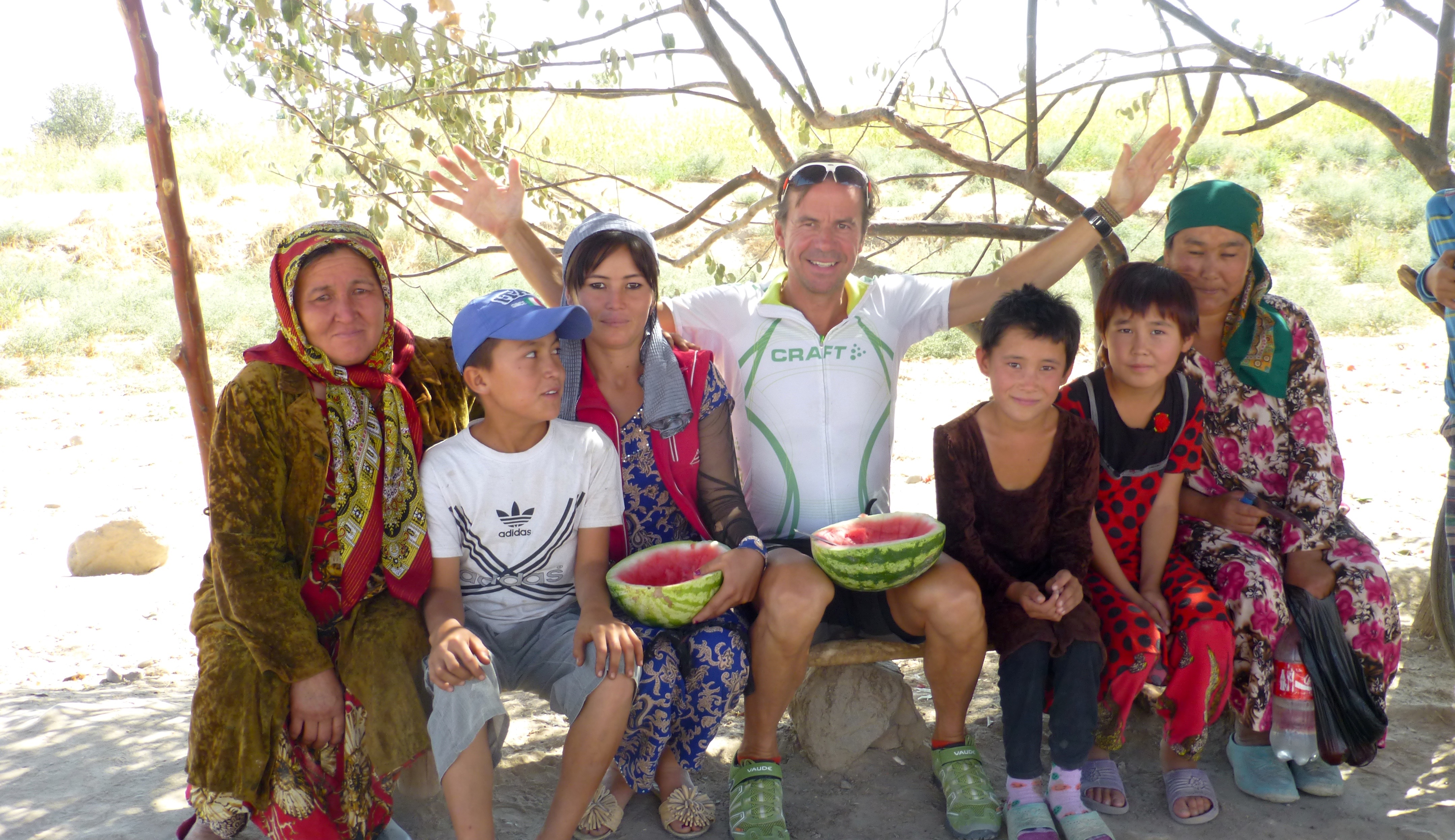
Our absolute favorite afternoon snack on a hot summerday
Our absolute favorite afternoon snack on a hot summerday – I am talking about the watermelon!
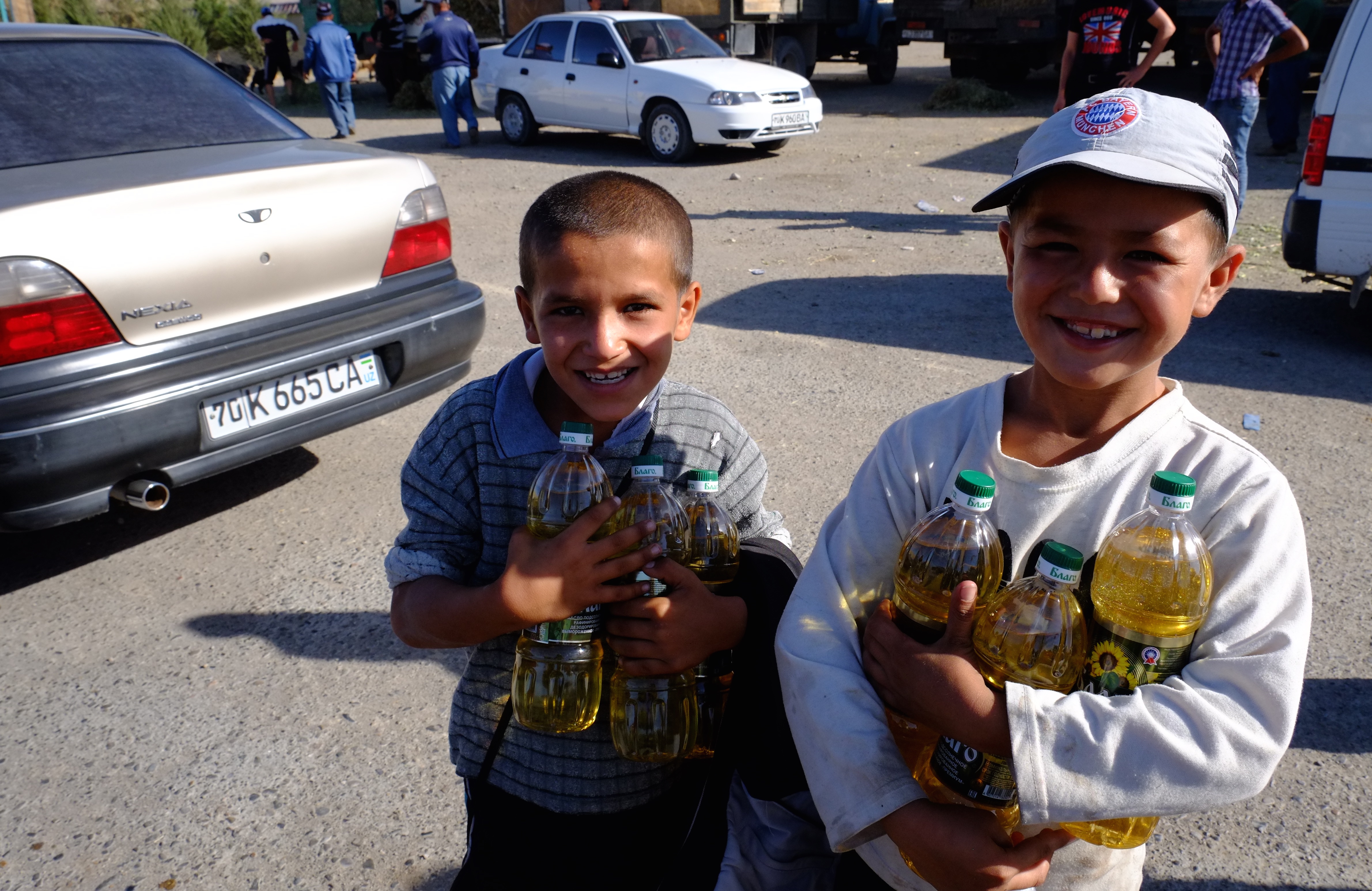
Sunflower oil - the staple oil in Uzbekistan
Sunflower oil – much used in Uzbekistan
Another popular means of transportation

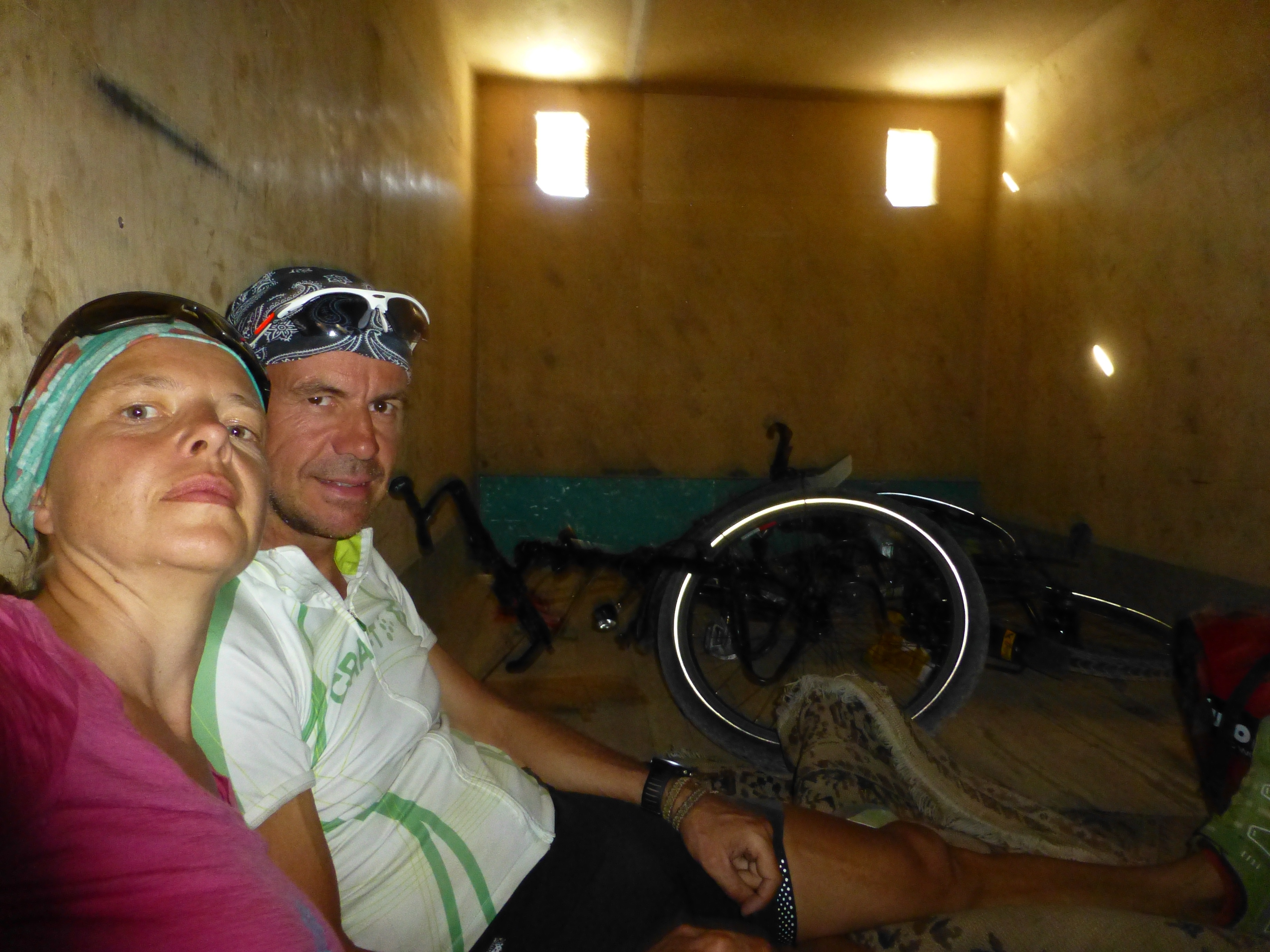
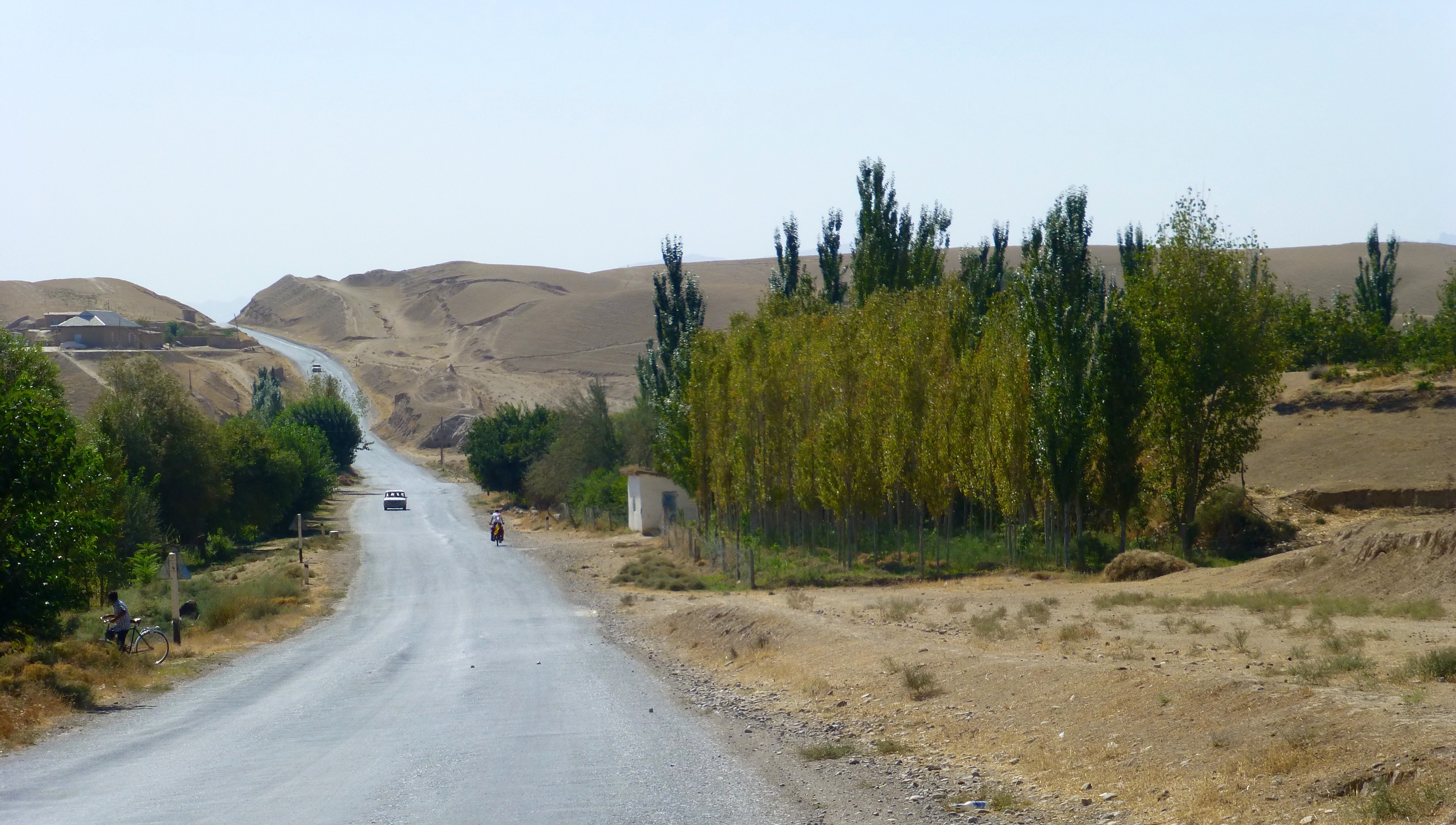
On our third day travelling through now mountainous countryside we passed a police checkpoint at around 3pm. The police officer asked for our hotel slips and as we had none he made clear to us that we had to register at a hotel tonight. You need to know that it is mandatory in Uzbekistan to register at hotels at least every third day otherwise you’ll get into serious trouble at the border once leaving the country. Before this checkpoint we weren’t really worried about the registration and as this had been a tough day with a lot of climbing and headwinds we had planned to look for a camp spot or homestay once more. The distance to the next hotel was still around 50km. With a continuously undulating road and very strong headwinds we knew we would never make it to the town before nightfall and decided to hitch a ride. The first truck driver immediately stopped – but he was from Iran and his truck sealed – no way we could have squeezed our bikes in his cabin. Then another truck stopped and three men stepped out. After we made ourselves understood they had a huge discussion amongst themselves. As far as we understood there was another police checkpoint in about 35km and one of them wanted to take us and the other one didn’t, given the risk with the police. People in Uzbekistan also aren’t allowed to invite foreigners into their homes, let alone give them a lift. Ten minutes later our bikes were loaded into the truck and we were sitting next to them on a soft blanket trying to sit stable and at times jumping up a meter given the many potholes and the fact that the driver might have forgotten about his fragile freight. About an hour later we arrived a few hundred meters before the checkpoint, unloaded and repacked our bikes, thanked the driver and cycled the remaining 15km to the hotel. P1230113
P1230114

P1230121

P1230127

Selfie in the truck
Selfie in the truck

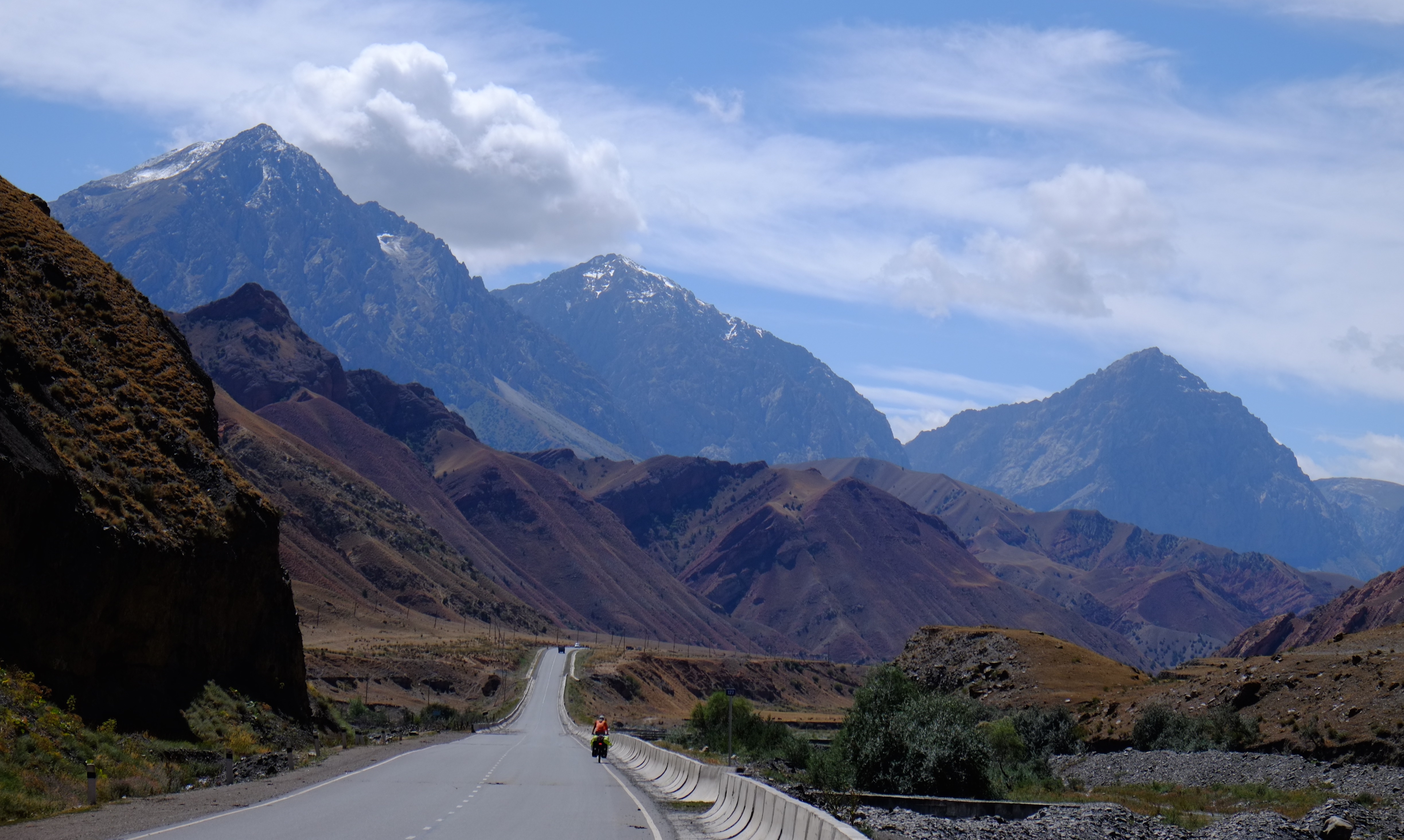
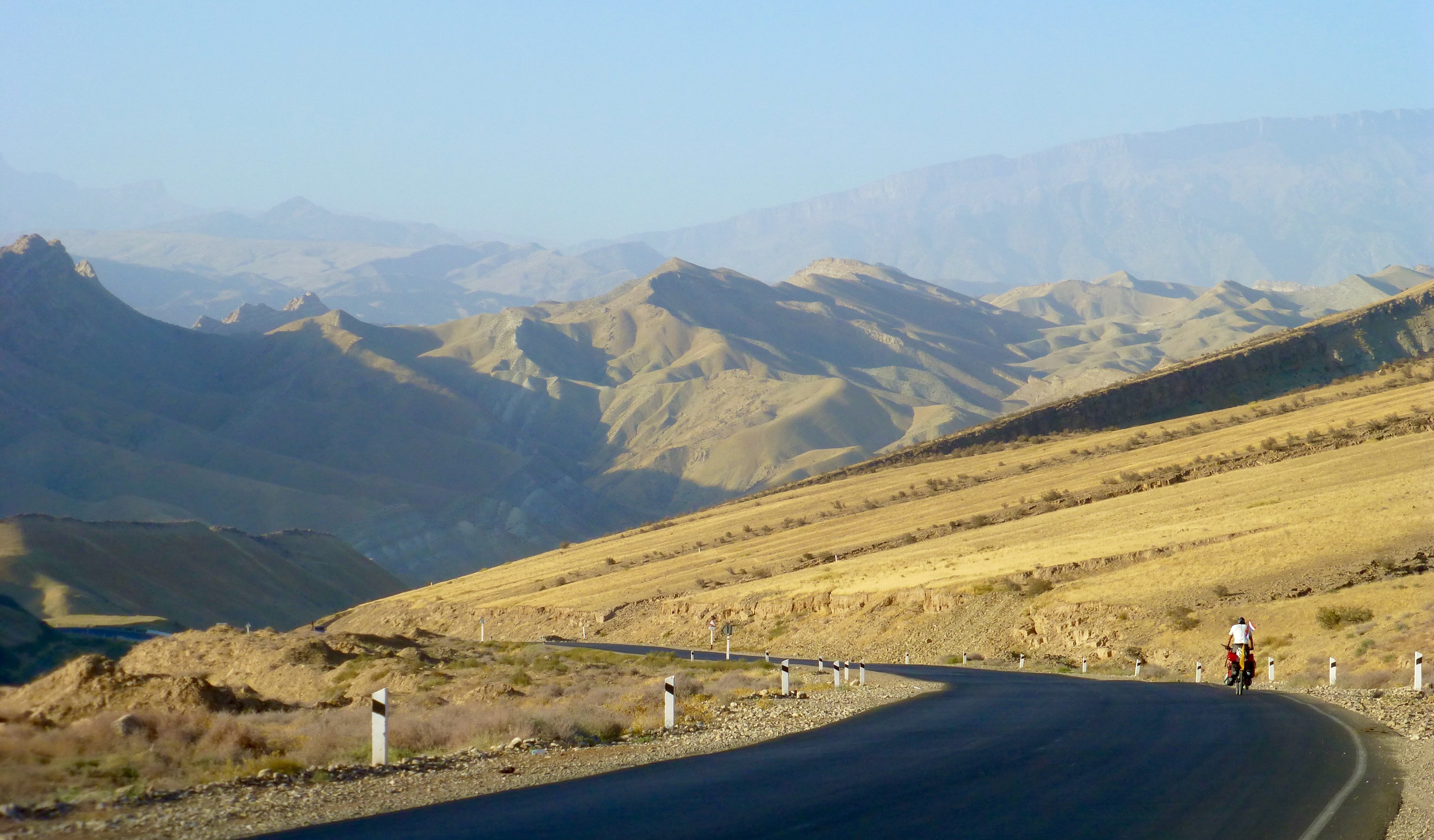
On our way to our first longer stop at Samarkand we had to cross a few unexpected passes, often struggling with headwinds and bad roads that looked as if a cow had shat asphalt. We met lovely people who sweetened our days with fruit and other goodies. We also met a few not so nice people: At a restaurant where they tried to screw us by asking far too much money for what we had. In the end we paid one third less than they asked for and we were quite upset as they had tried to ask extra money for napkins next to the 10% service fee.
The surprisingly mountainous countryside
Refueling before the next climb

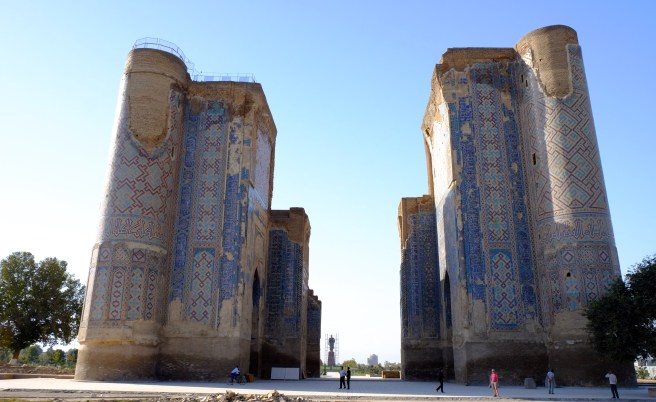
After almost two months on the road through amazing landscapes we were now looking forward to some sightseeing of ancient towns featuring old Islamic architecture. Our first planned stop was Shakhrisabz, Timur’s hometown who in the 14th century turned the town into an extended family monument. Timur is considered the last of the great nomadic conquerors of the Eurasian Steppe. All that is left of his monuments is a gigantic 38m-high gate covered with gorgeous unrestored, filigree-like mosaics. Unfortunately most of the old town had been broken down for renovation at the time we visited and we continued our journey to Samarkand the same day.
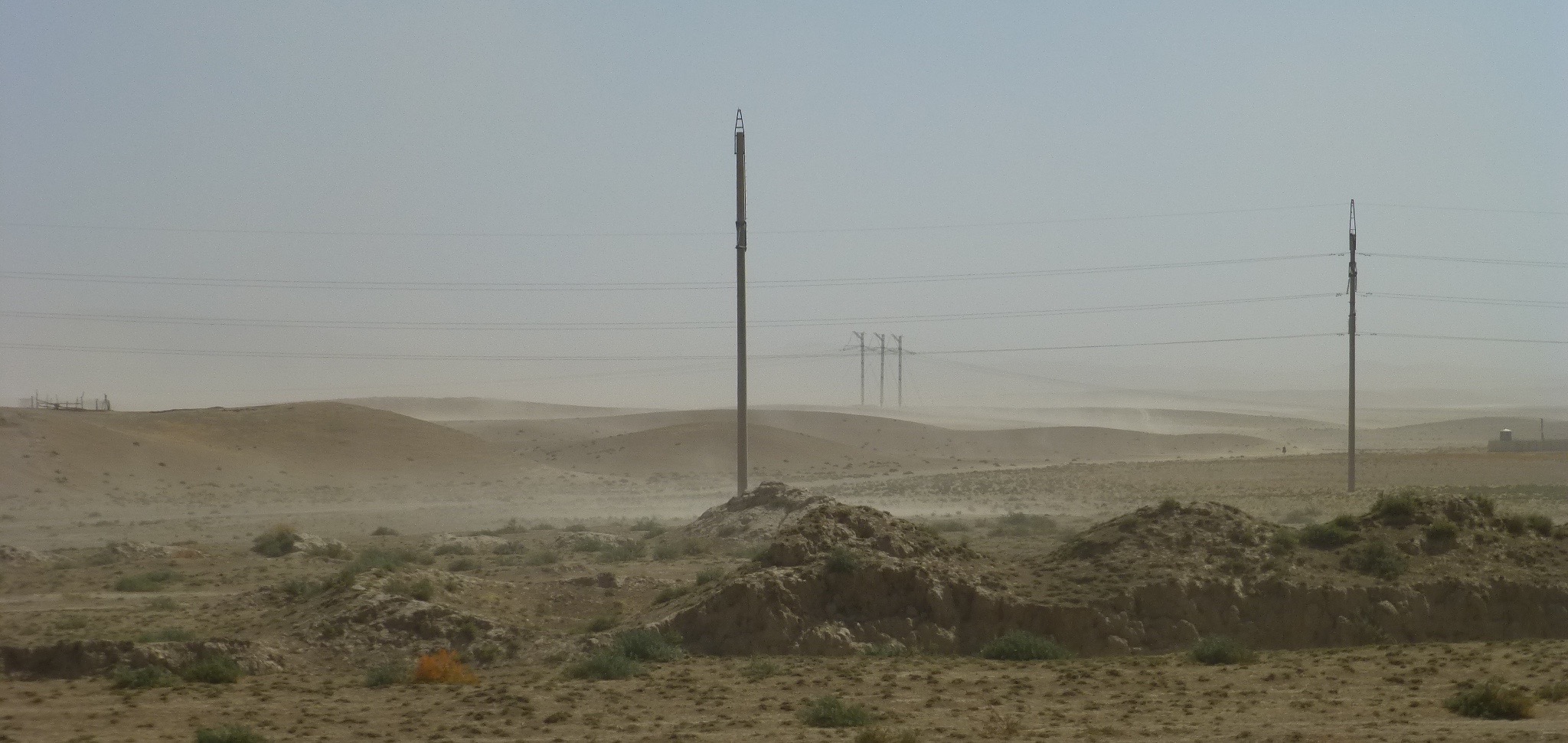
A sand storm thankfully not affecting us - the wind was this time in our back and blew us to
A sand storm thankfully not affecting us – the wind was this time in our back and blew us to Shakhrisabz
DSCF0091
The massive remainder of the palace gate in Shakhrisabz, I am the little pink spot on the right

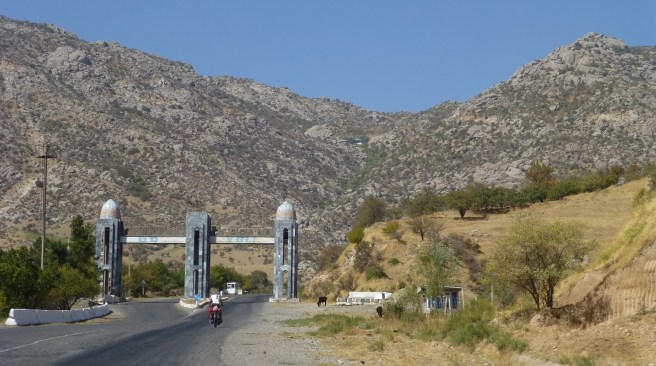
We entered Samarkand from a part that most likely no tourist will ever get to see. Several times I checked our online map to make sure we are entering the town and not going to some small villages. The road into town was non-existing, dusty, pebbly and pot-holed, just one big disaster. Small shops and houses lined the road and we felt sorry for the people having to live here. Only two kilometers before we reached the center the streets would improve.
P1230145
At the foot of the last pass before Samarkand
DSCF0137
The winding pass road
DSCF0148
Fruit sellers at the top of the mountain
DSCF0153
Jaws was here as well (remember the James Bond movies ‘The spy who loved me’ or ‘Moonraker’?)
P1230159
2,000km right before Samarkand
DSCF0165
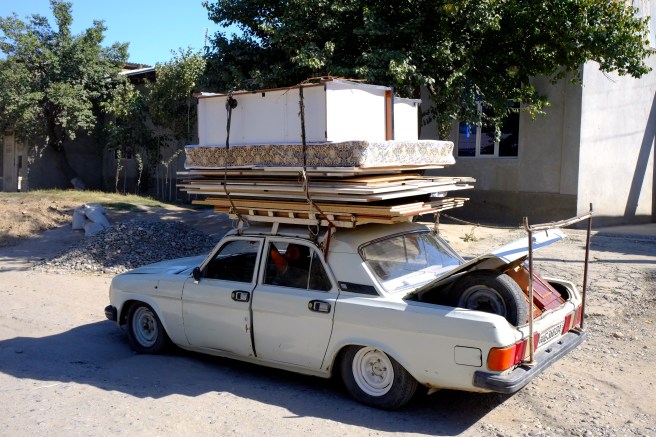
The good thing about few furniture: if you are moving, everything fits in one car 🙂

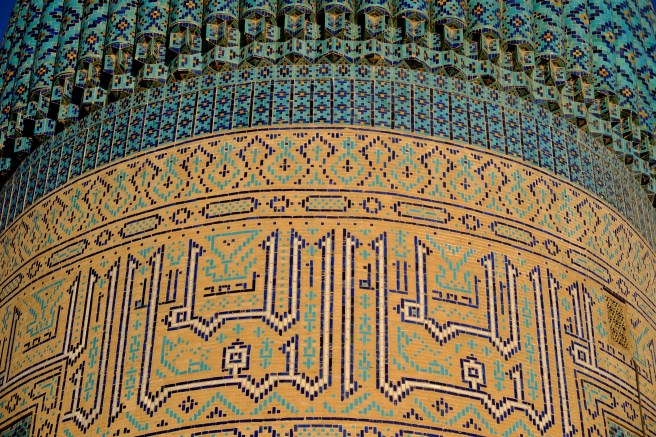
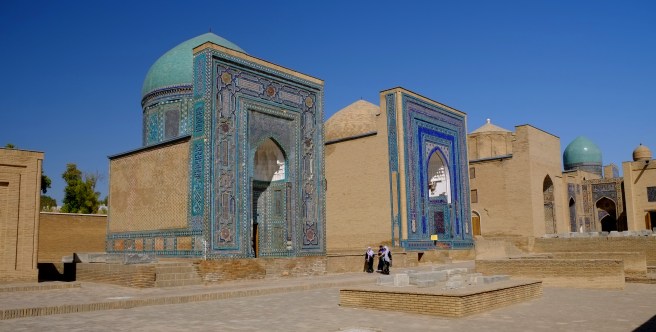
Samarkand is a key Silk Road City and already Alexander the Great who took the town in 329 BC said: “Everything I have heard about Marakanda is true, except that it’s more beautiful than I ever imagined.” We really liked Samarkand despite knowing that most of the monuments have been restored by the Soviets and only few original parts remained. And while some parts of the town felt a little like Disneyland with its clean alleys, souvenir shops and cafés, these gigantic medressas, mosques and mausoleums made quite an impression on us knowing they belong to the world’s oldest preserved buildings.

Samarkand impressions:

DSCF0216

DSCF0374

DSCF0504

DSCF0520
Mausoleums
DSCF0541
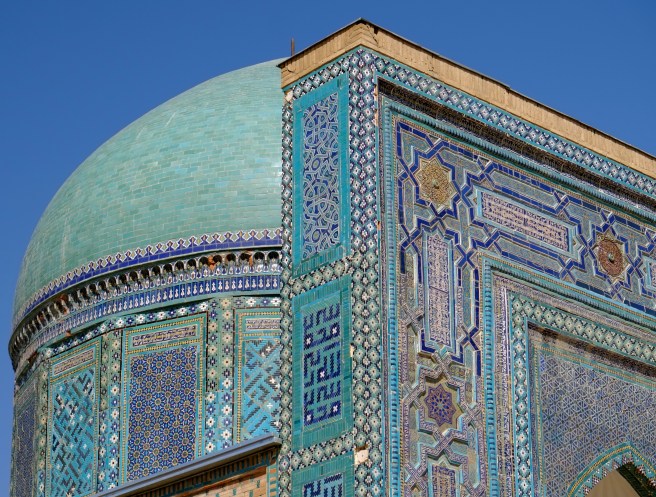
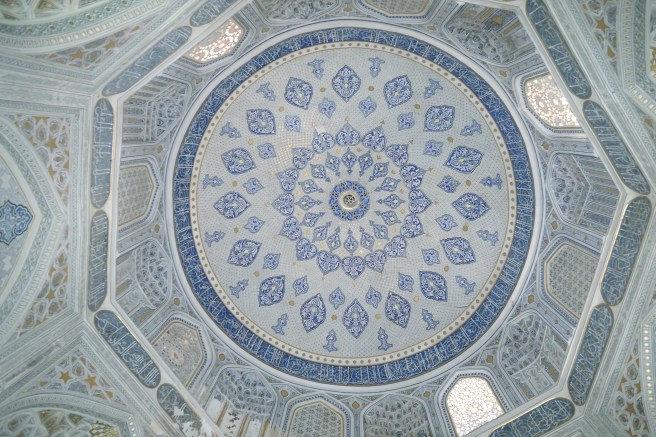
A beautiful mosaic mausoleum dome
DSCF0644
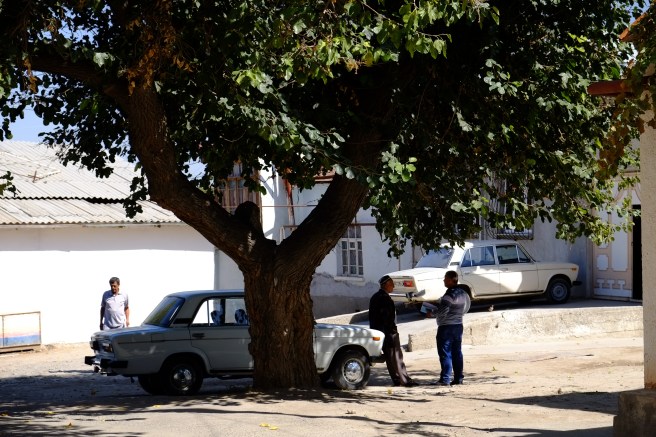
Peaceful street life
DSCF0686
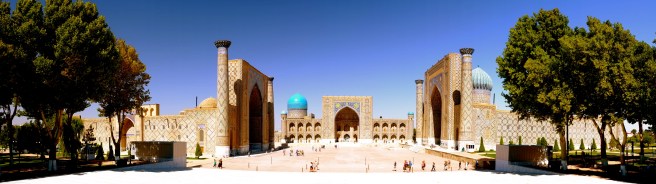
The grande Registan Square with its Medressas (former Quran schools)
DSCF0674
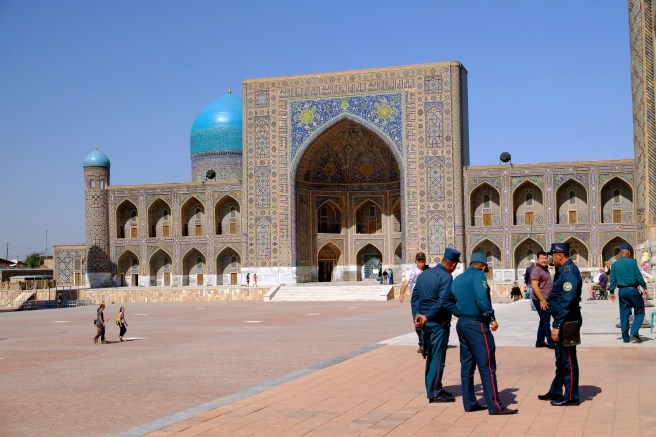
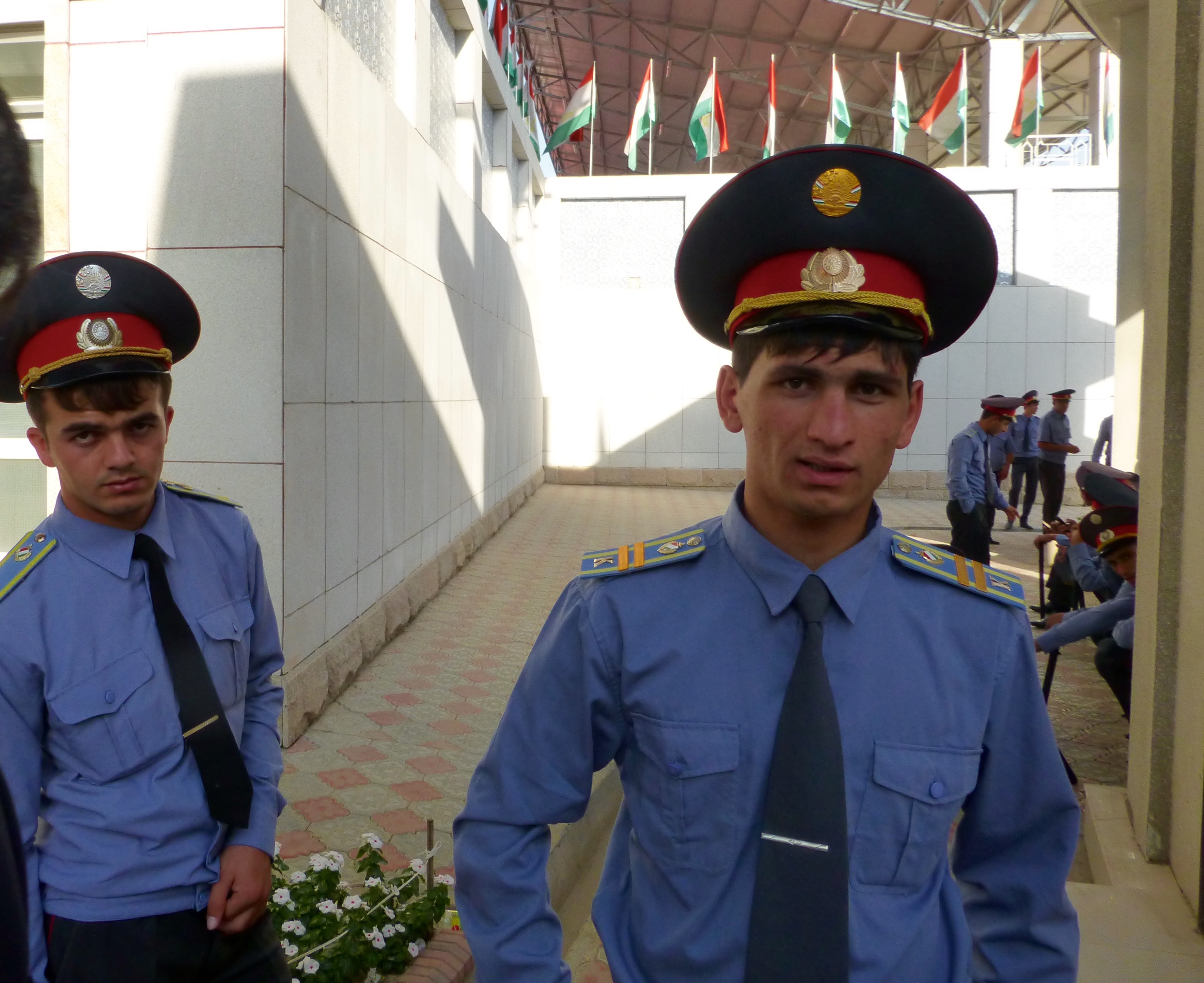
The police is everywhere in a police state
DSCF0776
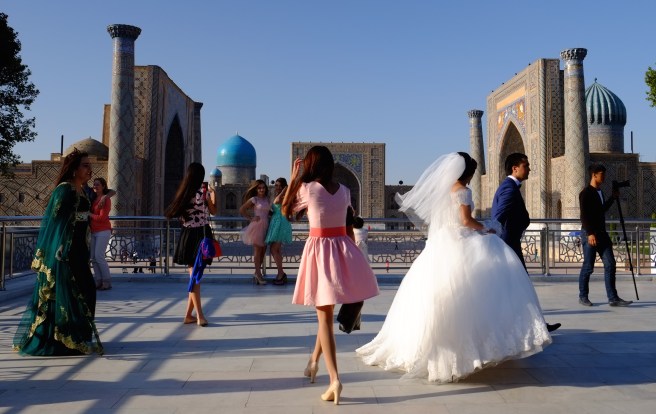
The Registan is a great backdrop for wedding photos, a few other couples were already getting ready for the set
DSCF0813
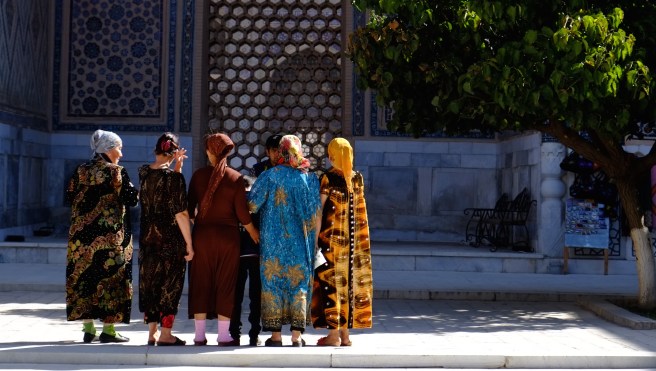
Traditional velvet dresses at the Registan
DSCF0867
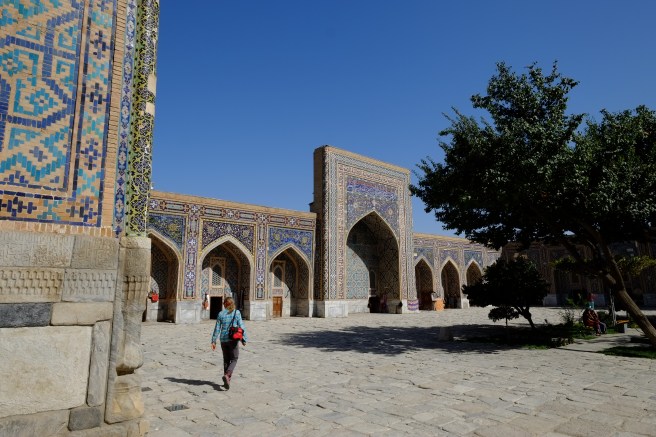
The inside of a  Medressa/Mosque
DSCF0878
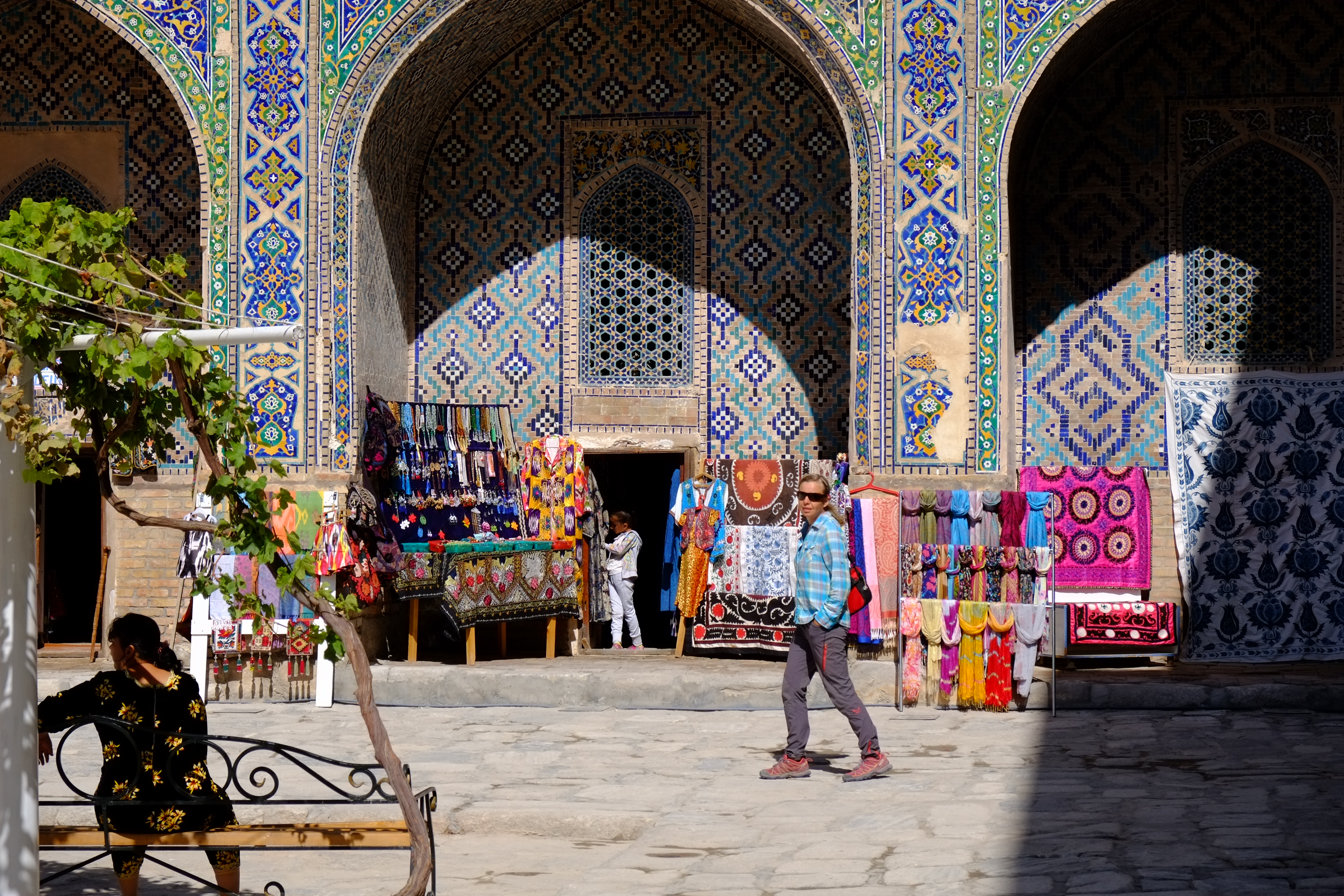
A peaceful courtyard at a Mosque/Medressa
Even the smallest space is used for souvenir shops

DSCF0923

A typical Uzbek cemetry
A typical Uzbek cemetery

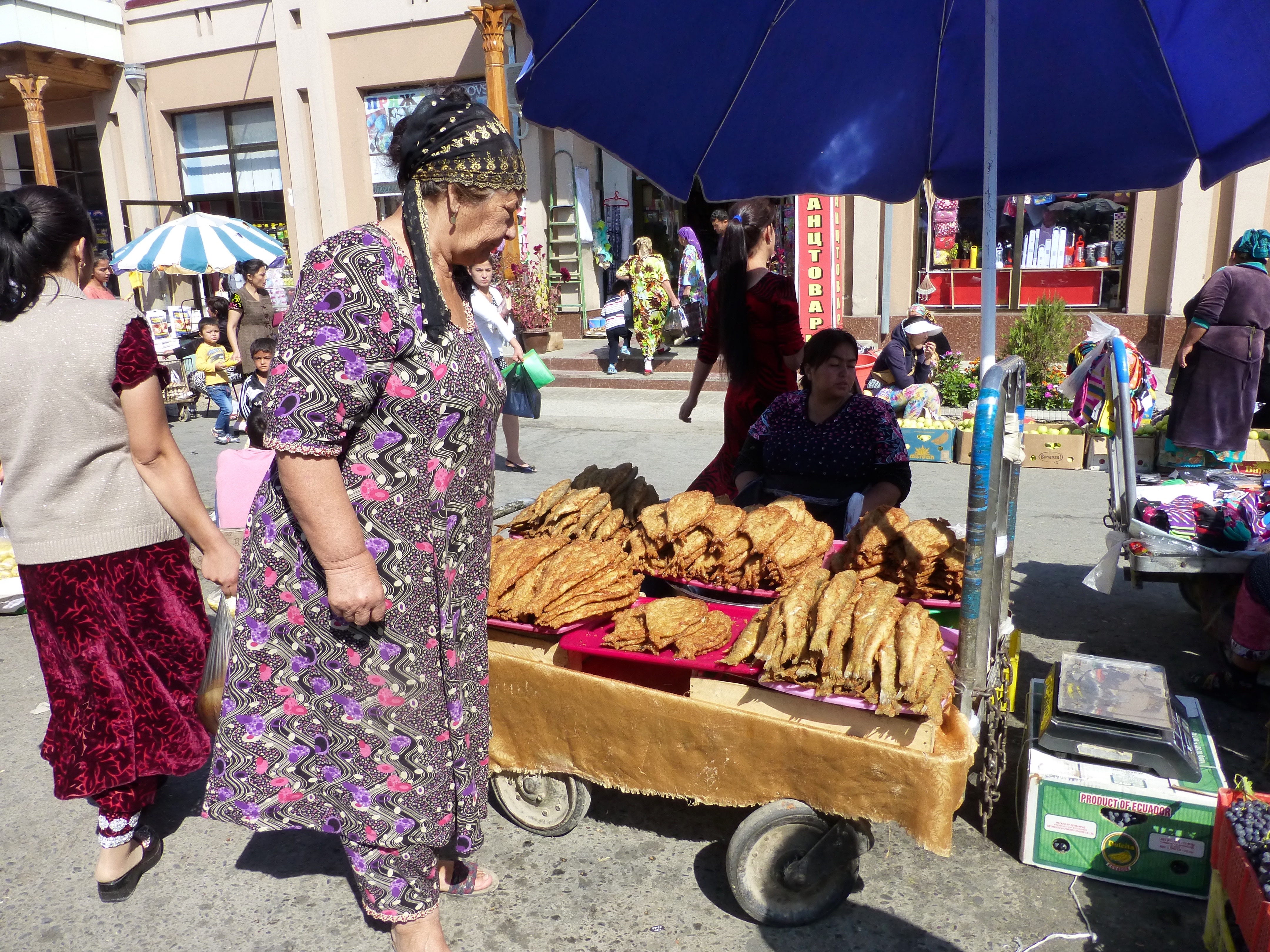
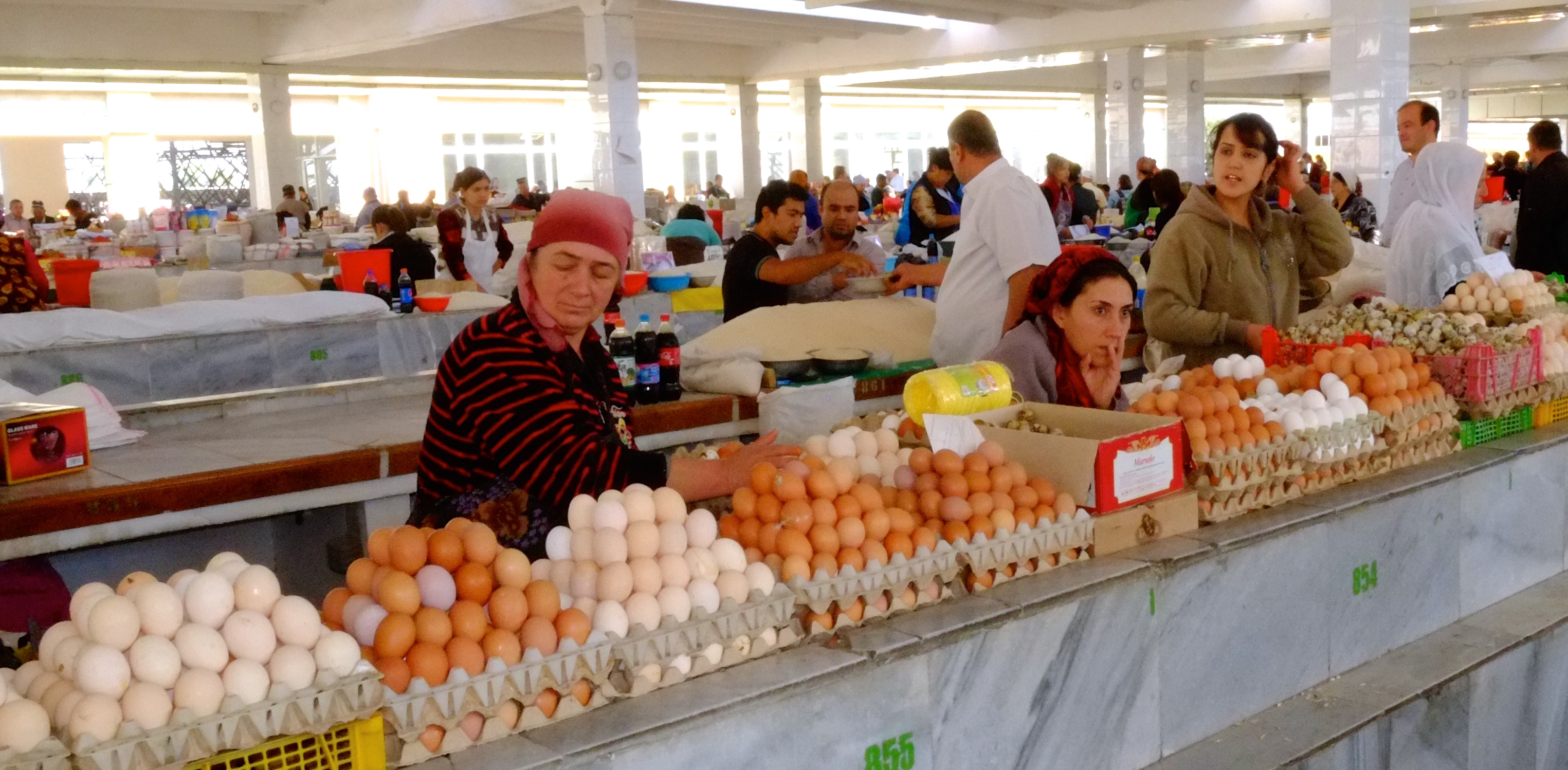
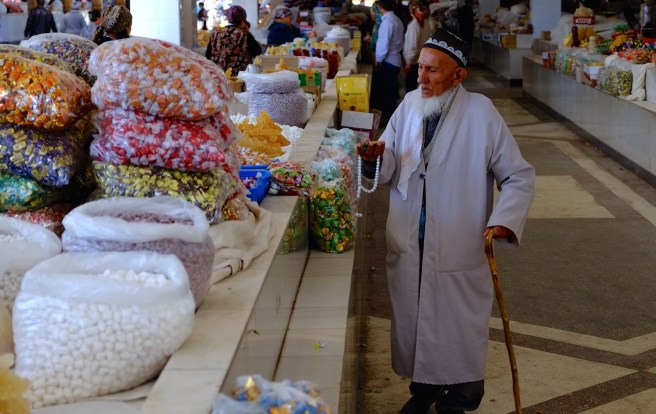
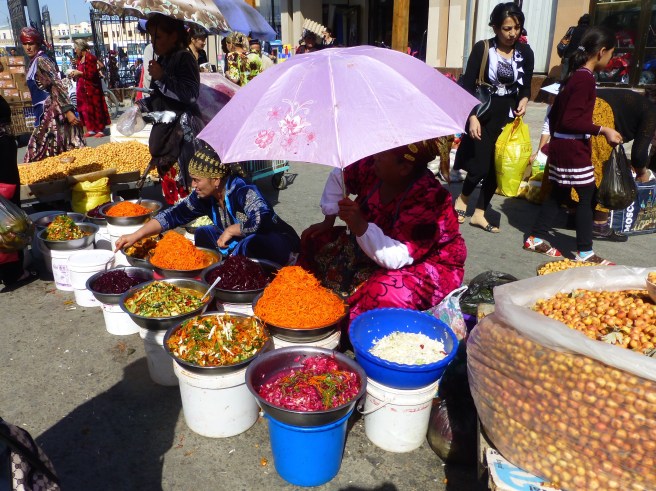
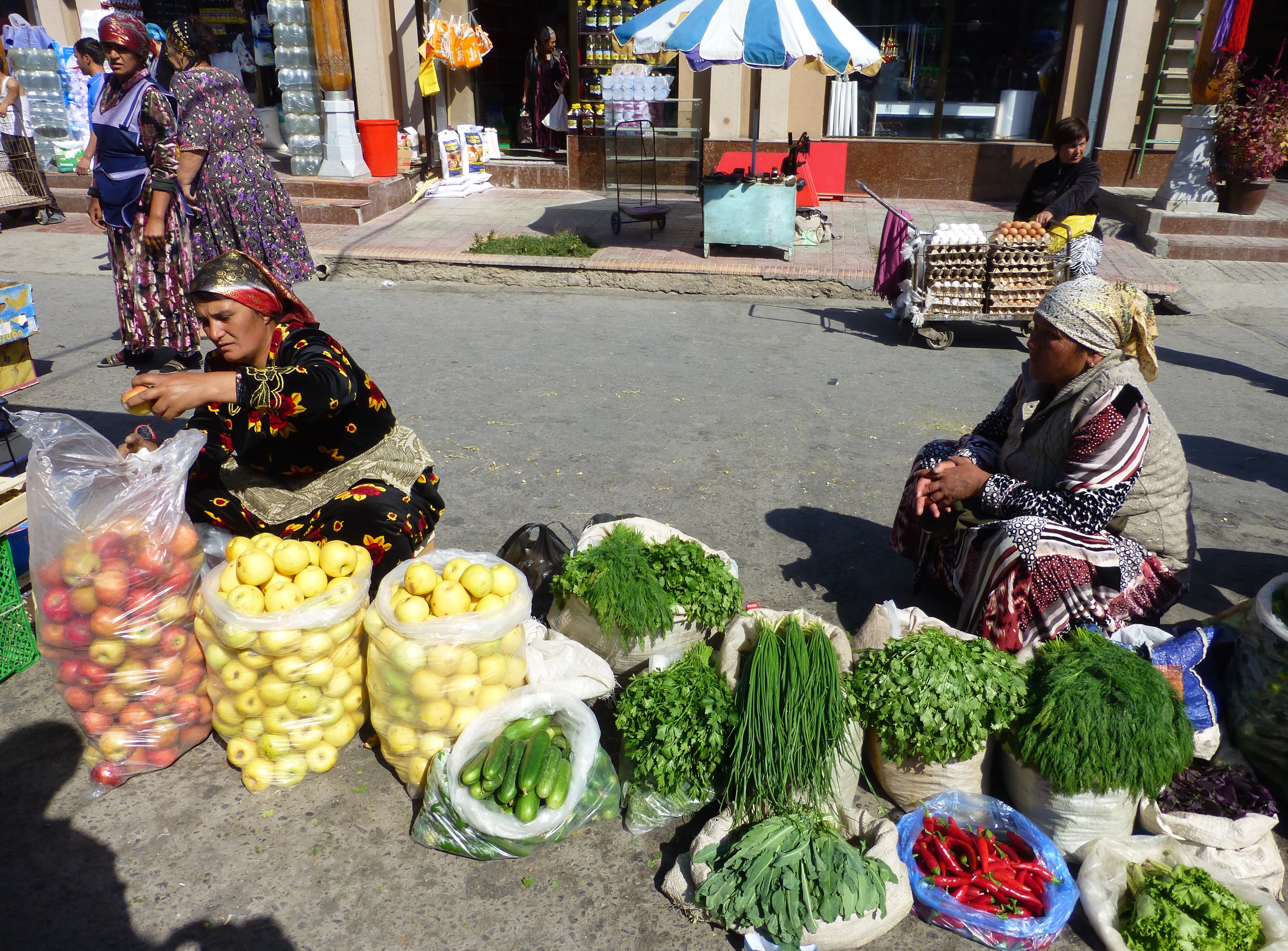
At the Samarkand market, where you can get everything from…
P1230207
…fruits, vegetables and and herbs,…
P1230202
…fried fish,…
...eggs...
…eggs,…
DSCF0980
…candy,…
P1230209
…pickles,…
P1230214
…and most importantly bread.


Relaxing in Dushanbe

Fast facts Tajikistan:

  • A small landlocked jewel with huge and beautiful mountains, second only in height to the Himalaya/Karakoram range
  • Neighbouring countries: Kyrgyzstan (North), China (East), Afghanistan (South), Uzbekistan (West)
  • Population: 8.5 million people
  • Poorest country in Central Asia: a teacher earns approximately 80 USD per month and it is estimated that 20% of the population lives on less than 1.25 USD per day.
  • Drug trafficking is the major illegal income source

9 – 20 September 2015 – We’ve had a wonderful time in Dushanbe. Only then we realized how tired we were. Not only from a 24-hour drive heart-stoppingly close to cliffs but also from the hard work over the past few weeks. The coming days we did not set an alarm, we did not struggle against headwinds and instead just slept, read, ate, updated the blog, slept, strolled through the city, relaxed a bit more, applied for our Turkmen transit visas, slept again, met a few other cyclists and enjoyed the luxury of our guesthouse.

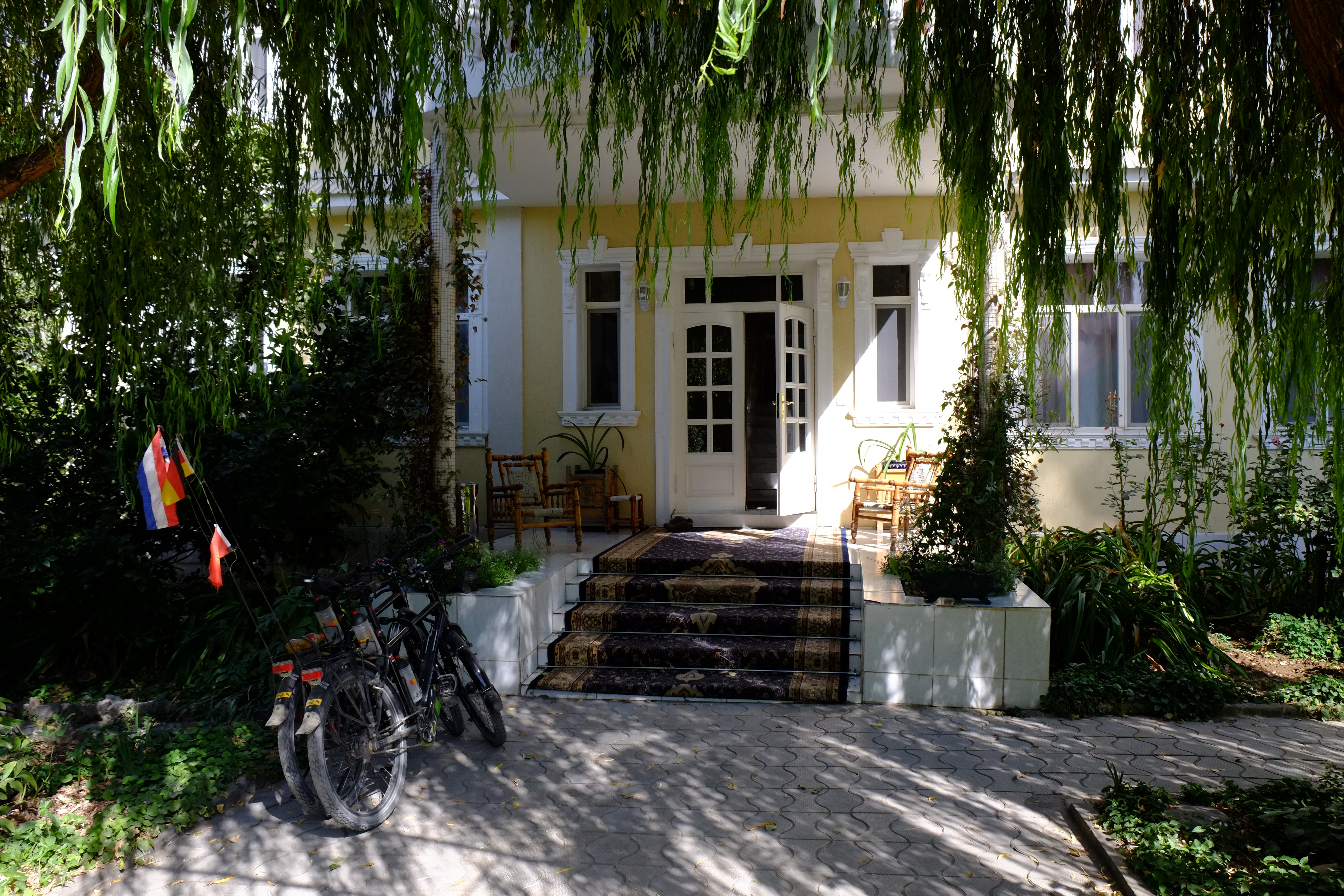
Marian's guesthouse in Dushanbe - our little paradise
Marian’s Guesthouse in Dushanbe – our little paradise
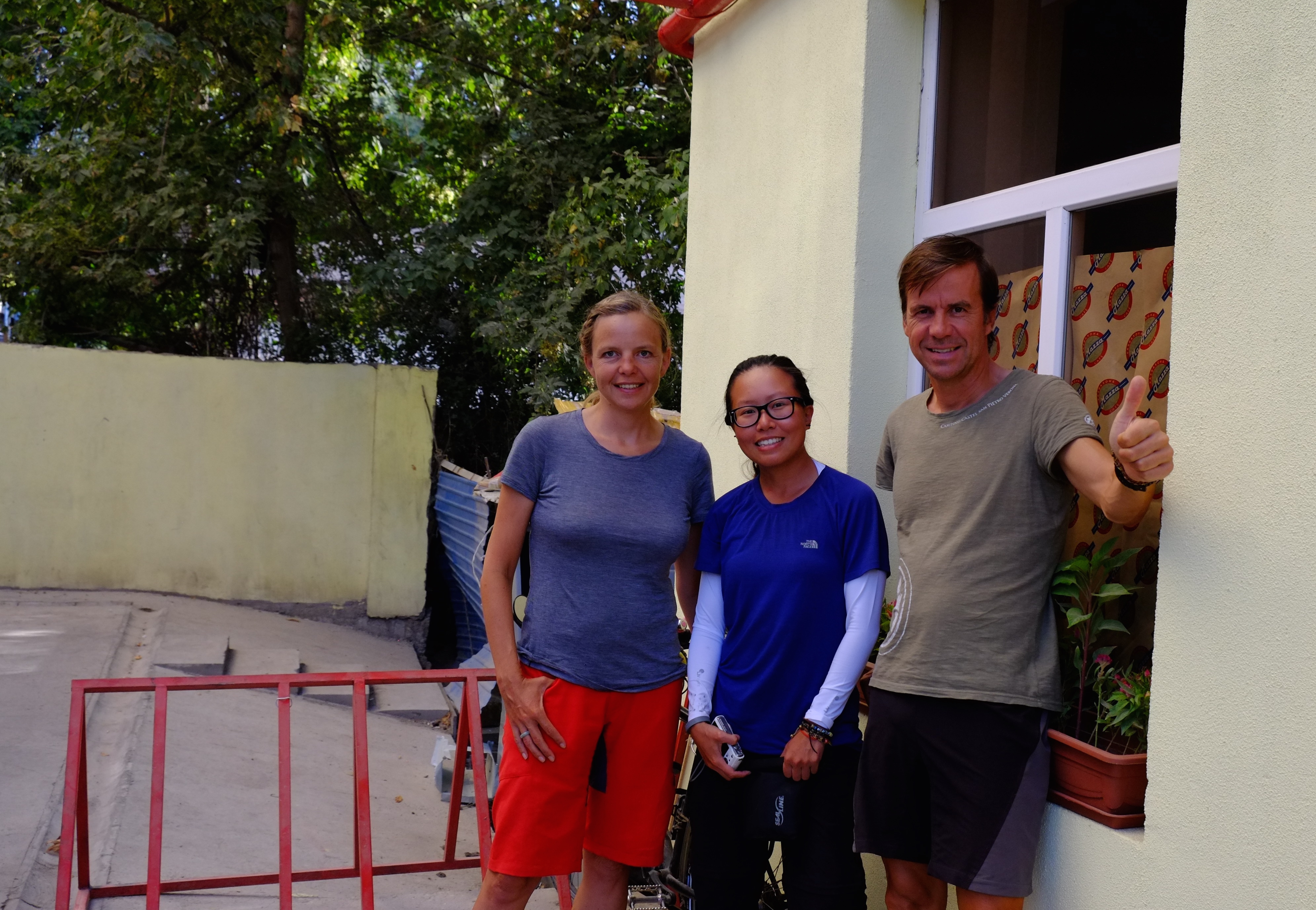
Finally meeting Phoebe who is cycling to Singapore. We met her brother a few years ago in Singapore and have been following Phoebe's travels since earlier this year.
Finally meeting Phoebe who is cycling to Singapore. We met her brother a few years ago in Singapore and have been following Phoebe’s travels since earlier this year.
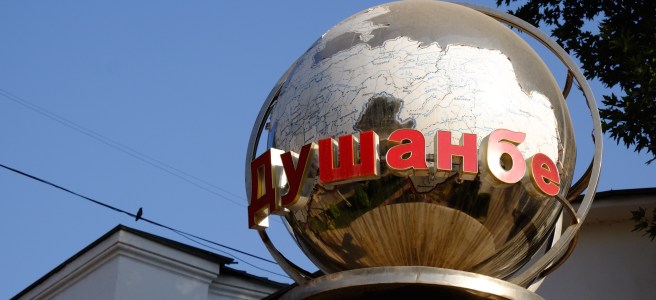
The world seen from Dushanbe
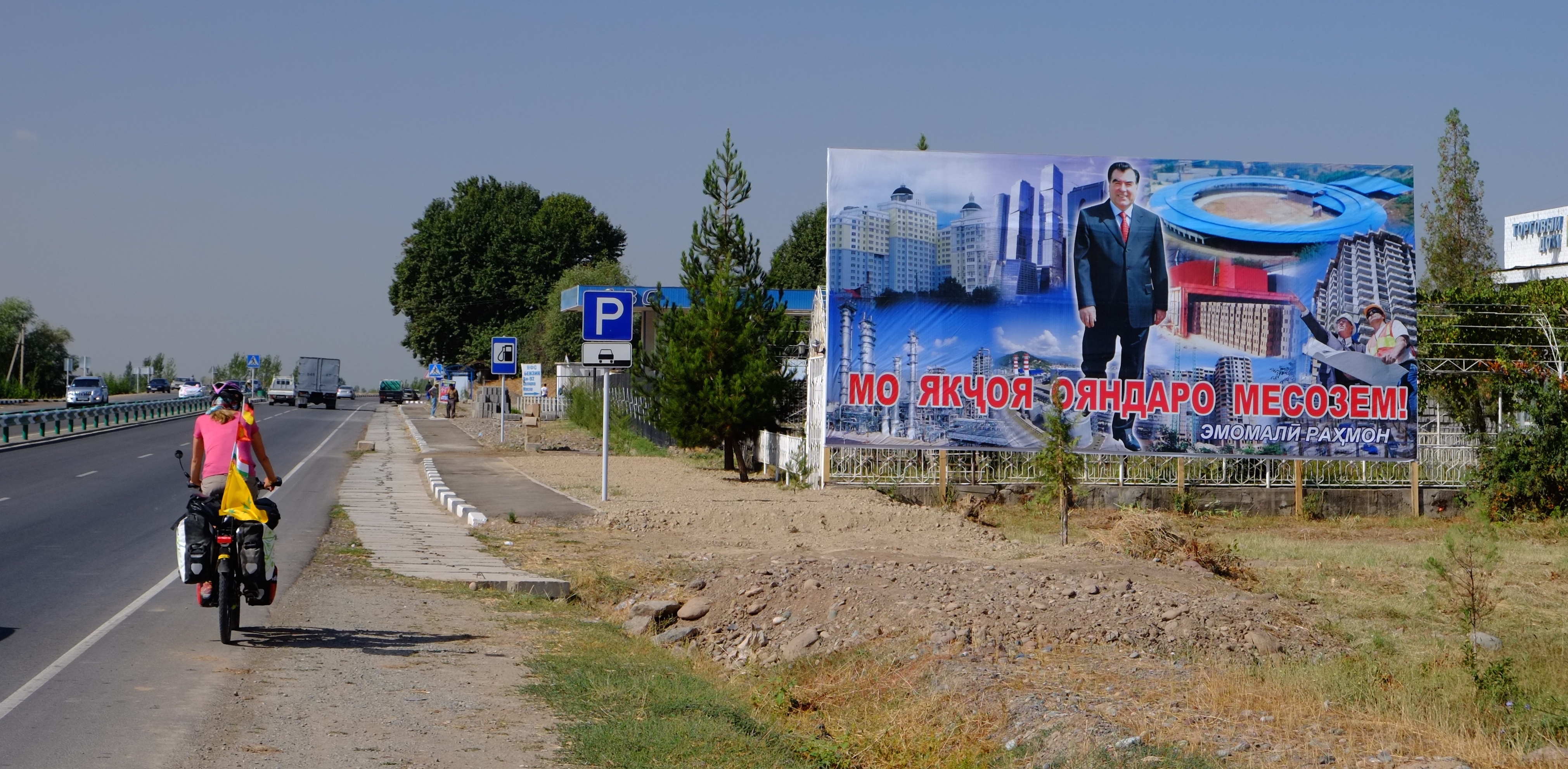
Tajikistan's president - smiling at us from millions of billboards
Tajikistan’s president – looking at us from millions of billboards
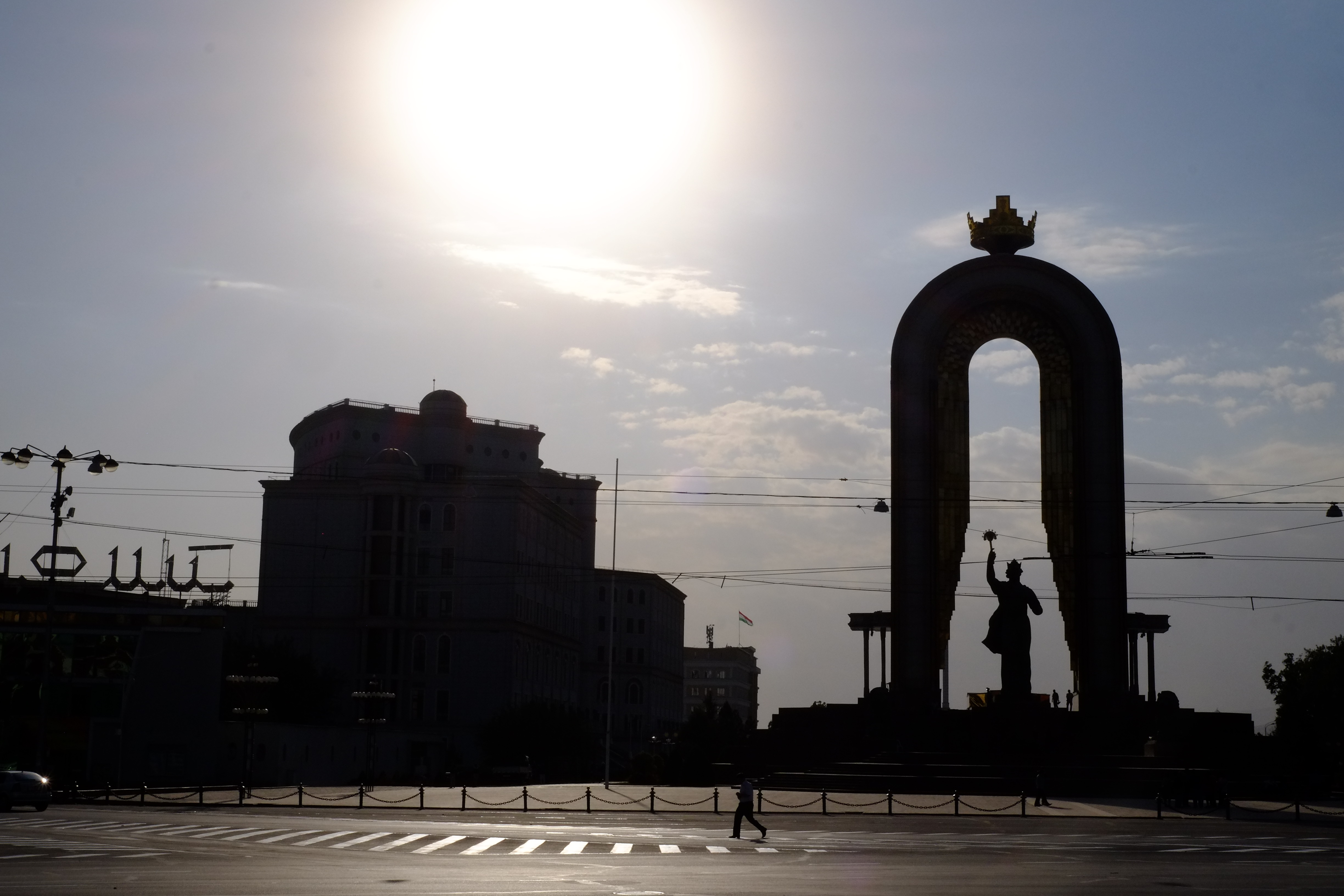
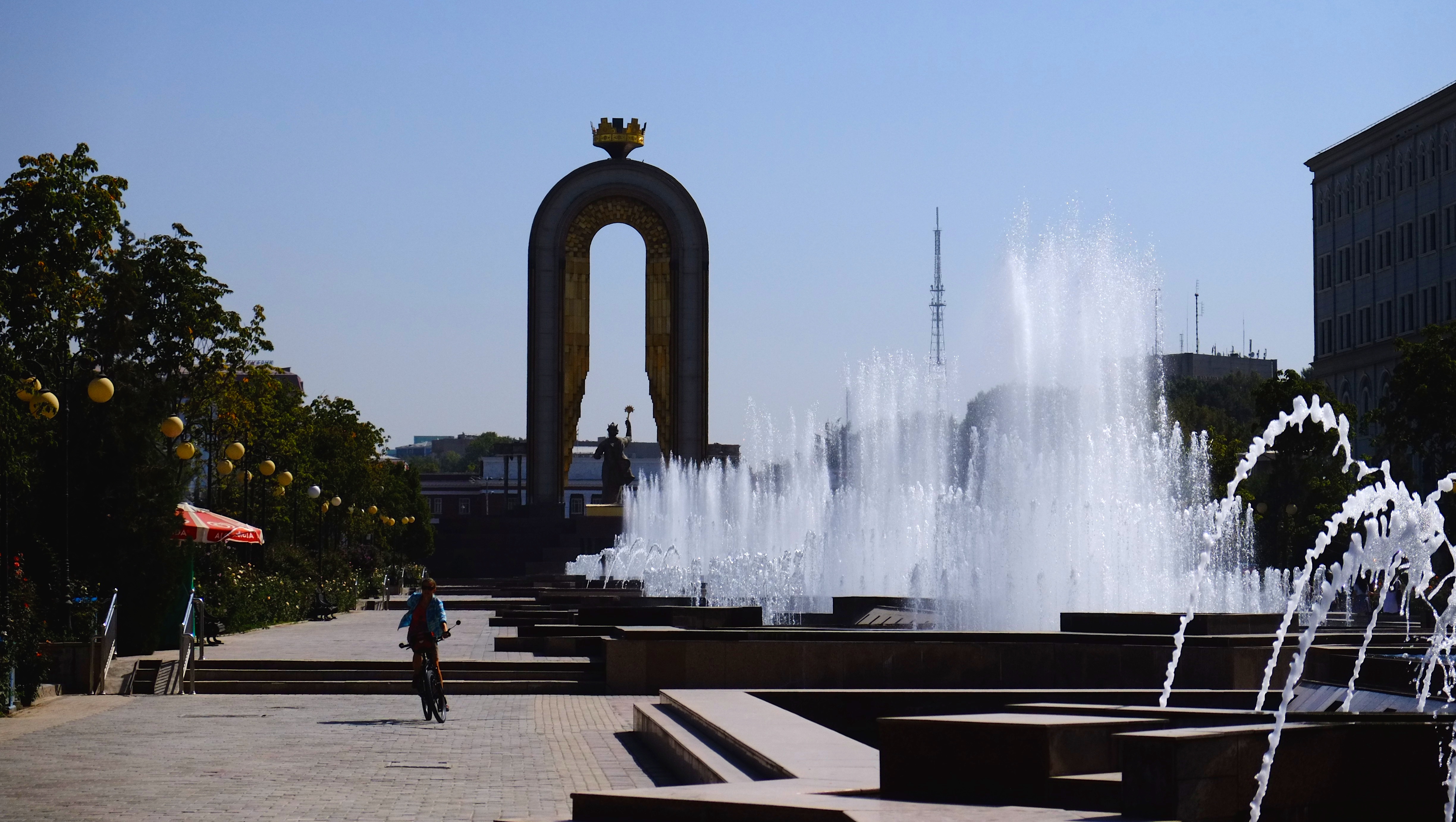
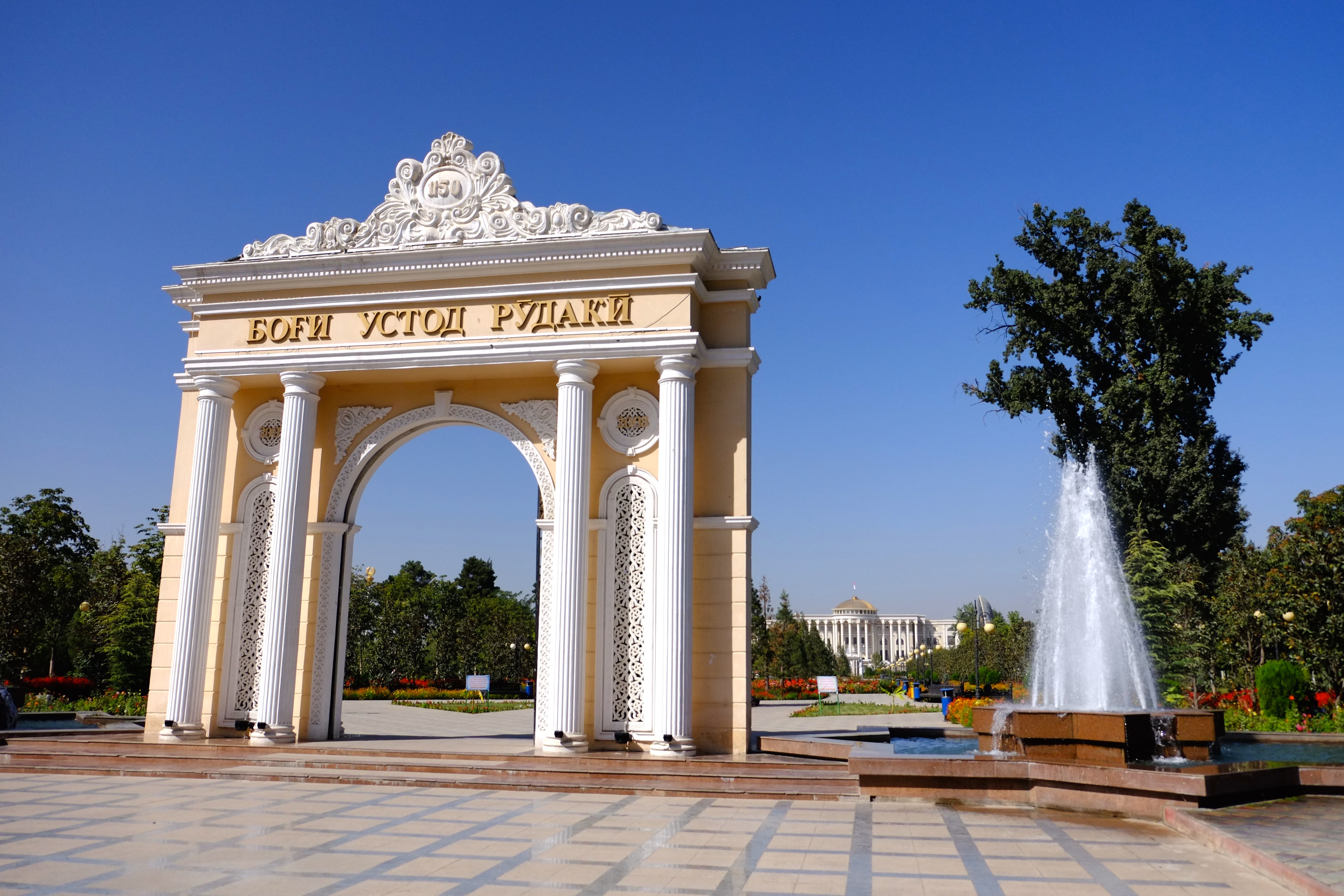
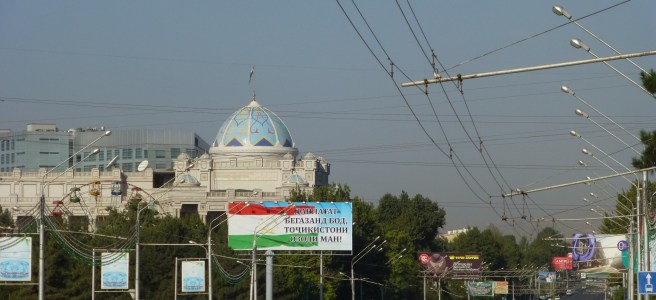
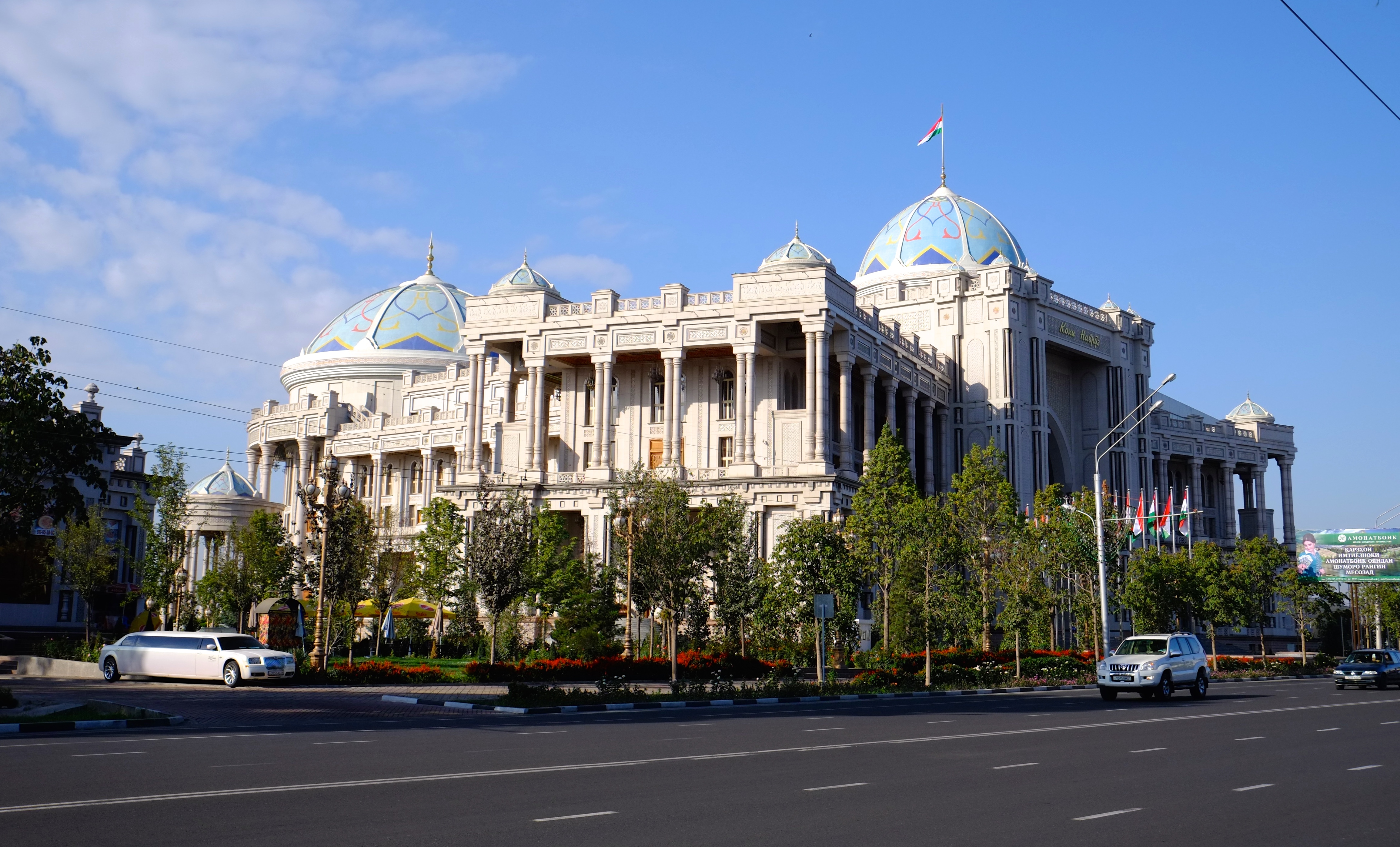
One of Dushanbe's landmarks
One of Dushanbe’s landmarks

DSCF9779

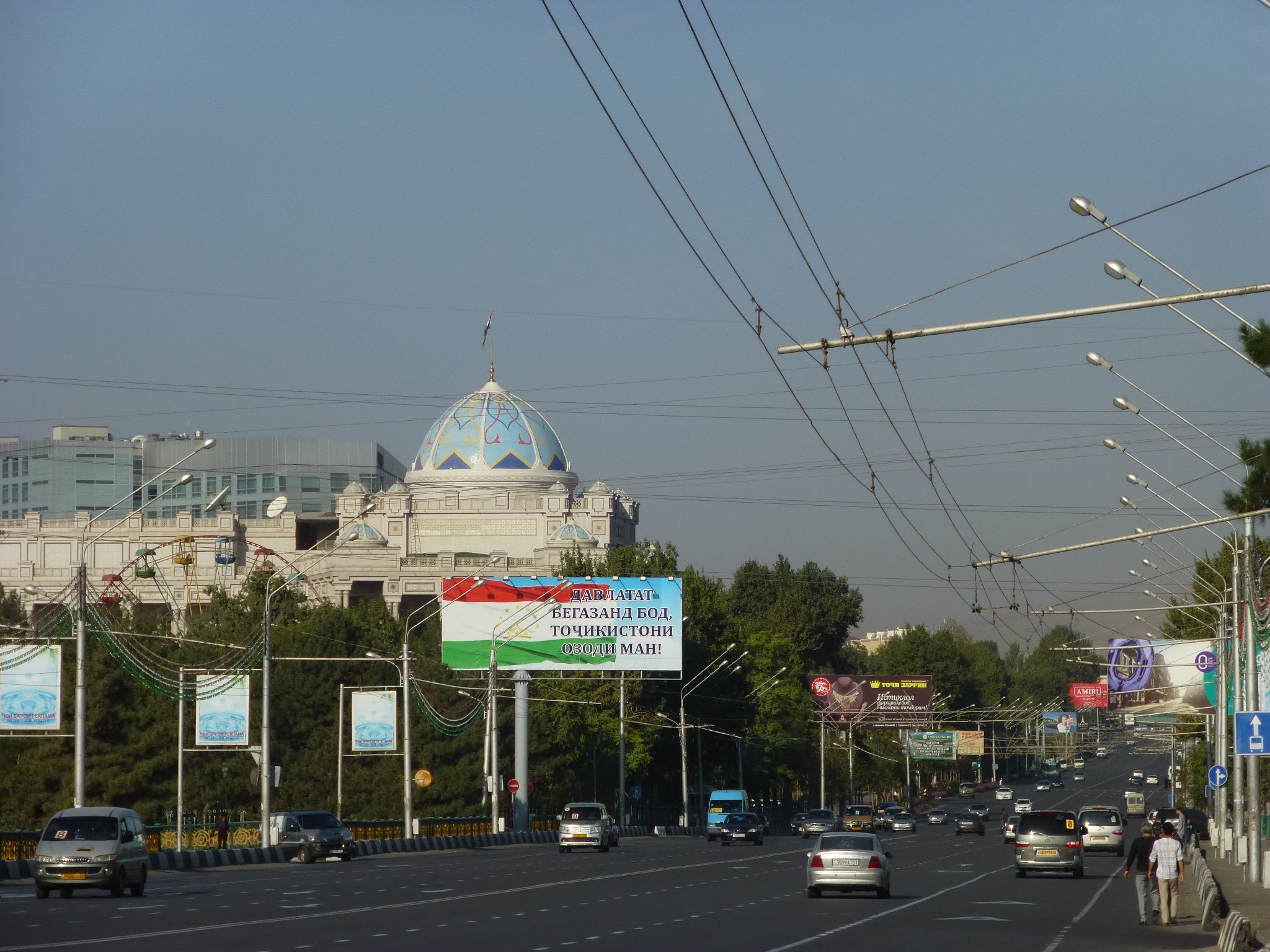
And another monstrous building
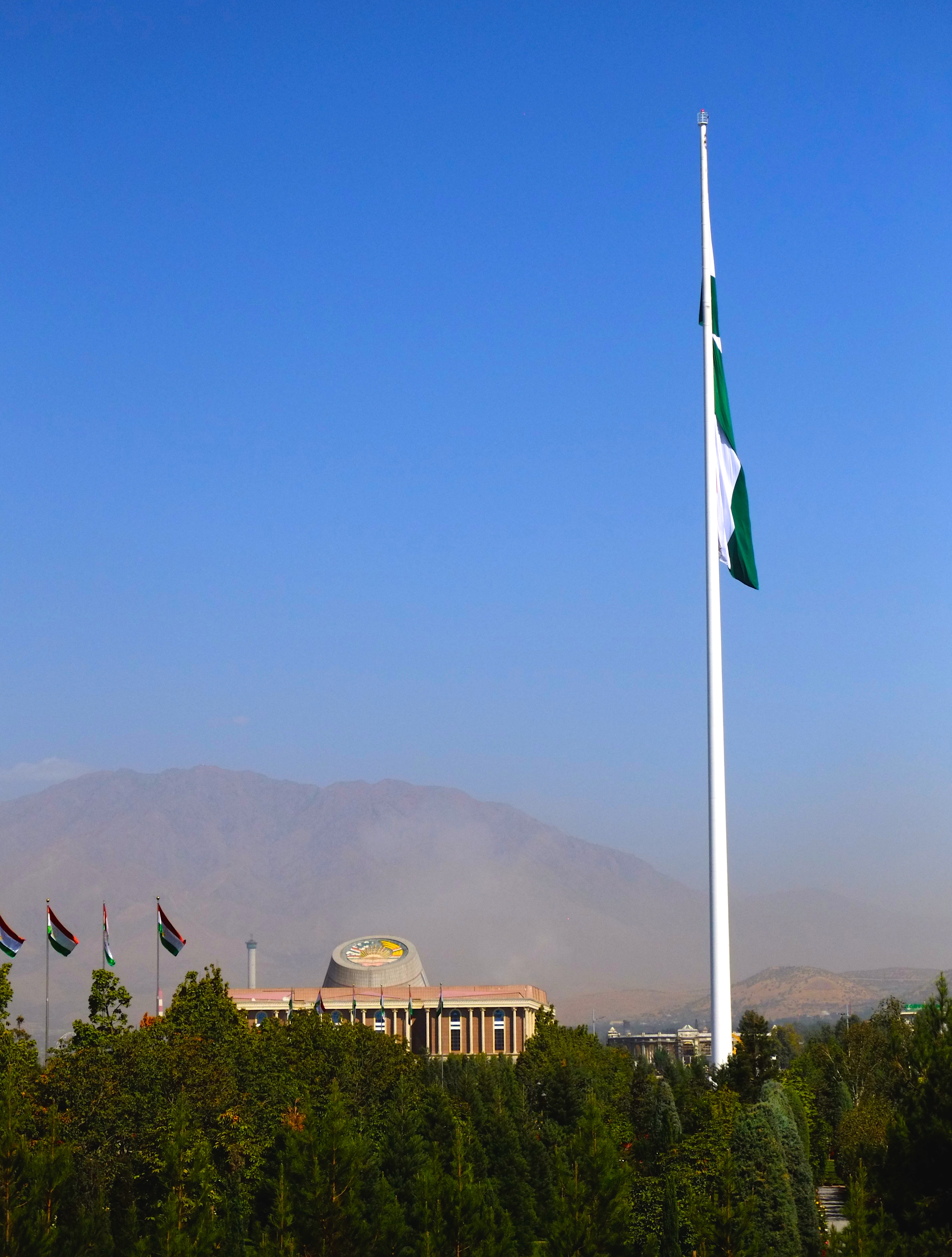
Once Asia's largest flagpole, the flag alone measures 2000 square meters!
Once Asia’s largest flagpole, the flag alone measures 2000 square meters!

The day our visas should have been ready we nervously cycled to the embassy. We had heard too many stories of people getting rejected for no obvious reasons. We arrived at around 9am only to hear that they would only open by 9.30am. Finally inside we were told to come back the next day, the visas weren’t ready as yet. Now we were even more thankful that we had arrived on time in Dushanbe as the next day was Friday and Sunday was the day we had to leave Tajikistan. If we wouldn’t get the visas on Friday we would have to leave without. But lucky as we are the next day it was ready – we only had to cycle across the city through mad traffic to pay our 110 $ visa fee to a Pakistan Bank located at the other end of the city and pedal once more all the way back.

Two happy chaps
Two happy chaps with their Turkmenistan visas

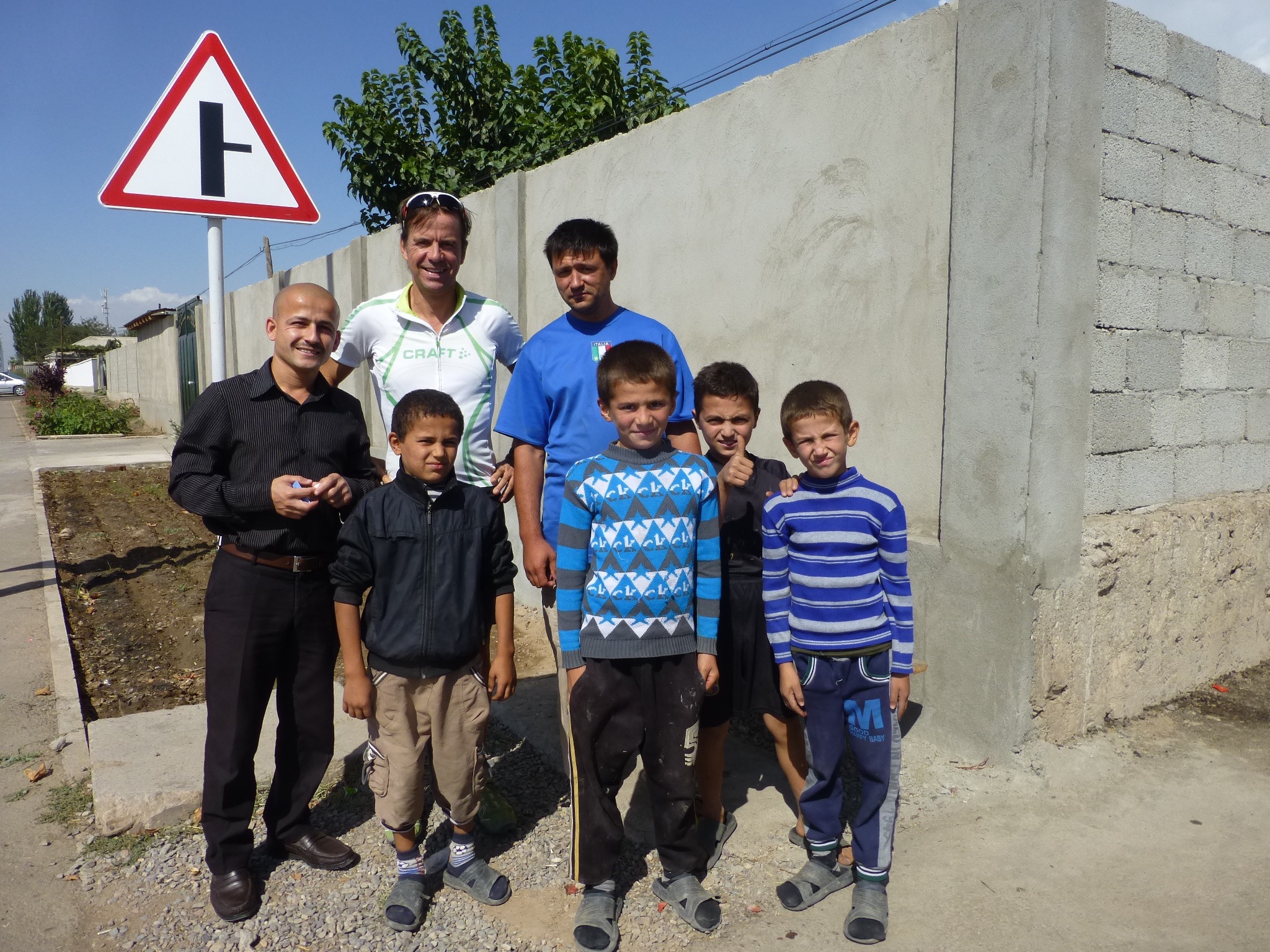
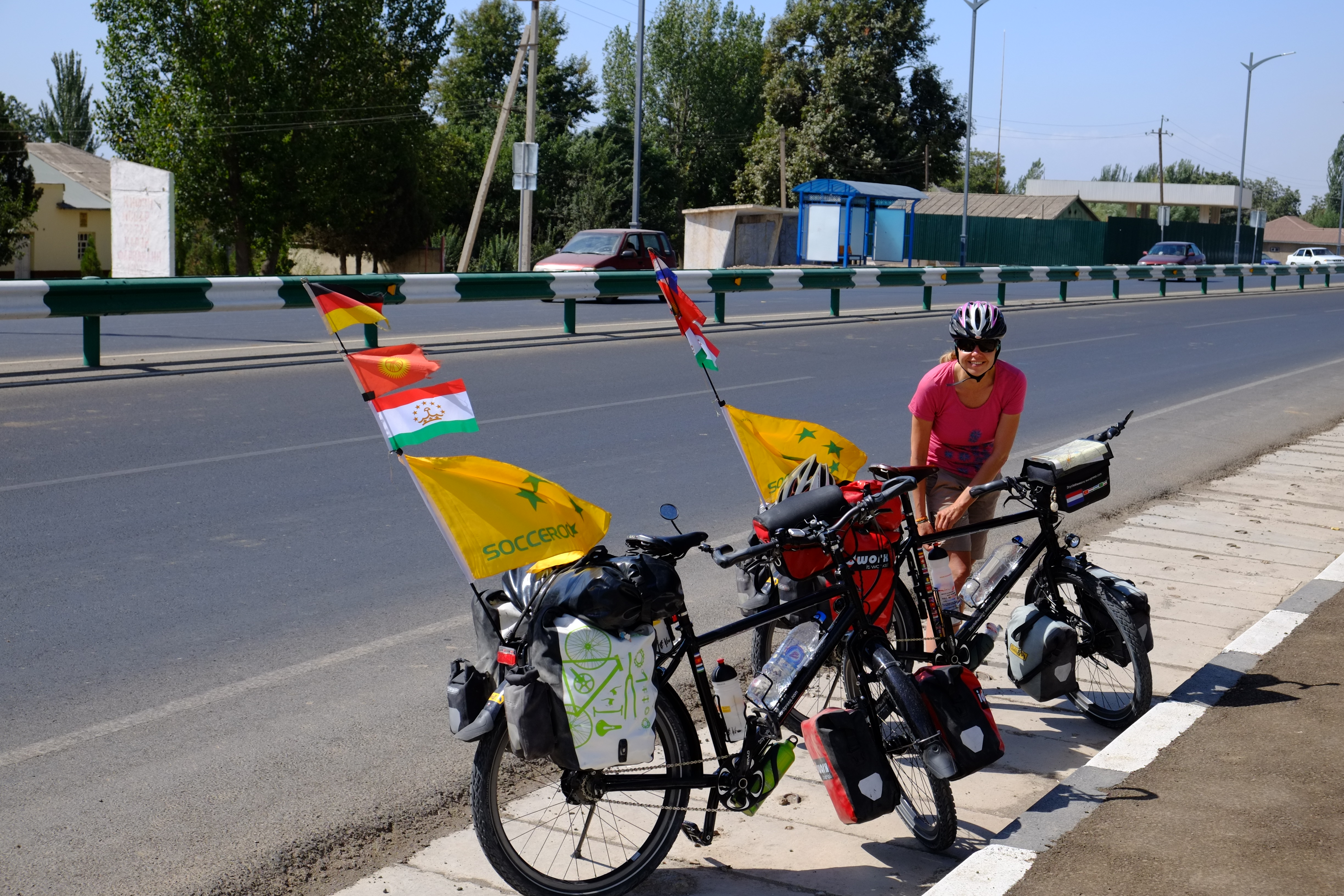
Finally we were ready to hit the road again. The next morning the alarm went off early again but we couldn’t believe our eyes. It was raining! We haven’t seen any rain in weeks. The forecast was bad for the whole day and eventually we stayed another day. Good decision, the following day we set off on a clear and sunny day with slight tailwinds. Mostly we cycled along boring cotton fields, apple plantations and grapevines, with a barren mountain chain in the background. But after 12 days off the bikes we enjoyed sitting once again on our hard saddles. Halfway to the border we got a water melon and ate it together with the friendly and very well English-speaking people. Later that day I got fresh grapes and Johan a freshly baked bread. From everywhere we once more heard friendly ‘Hellos’ and ‘Salams’ and people kept asking us how we liked Tajikistan. We were no longer ‘normal’ tourists but cycling travellers attracting a lot of attention and causing much confusion. ‘Why do you cycle? Why not go by car? This is so much easier!’, were the questions and comments we got from locals. Only the poorest or kids are cycling in Tajikistan, everyone else rides a car.

Leaving Dushanbe in the early morning
The melon has already been eaten


Let the president always be with us
TAILWIND!!!
TAILWIND!!!
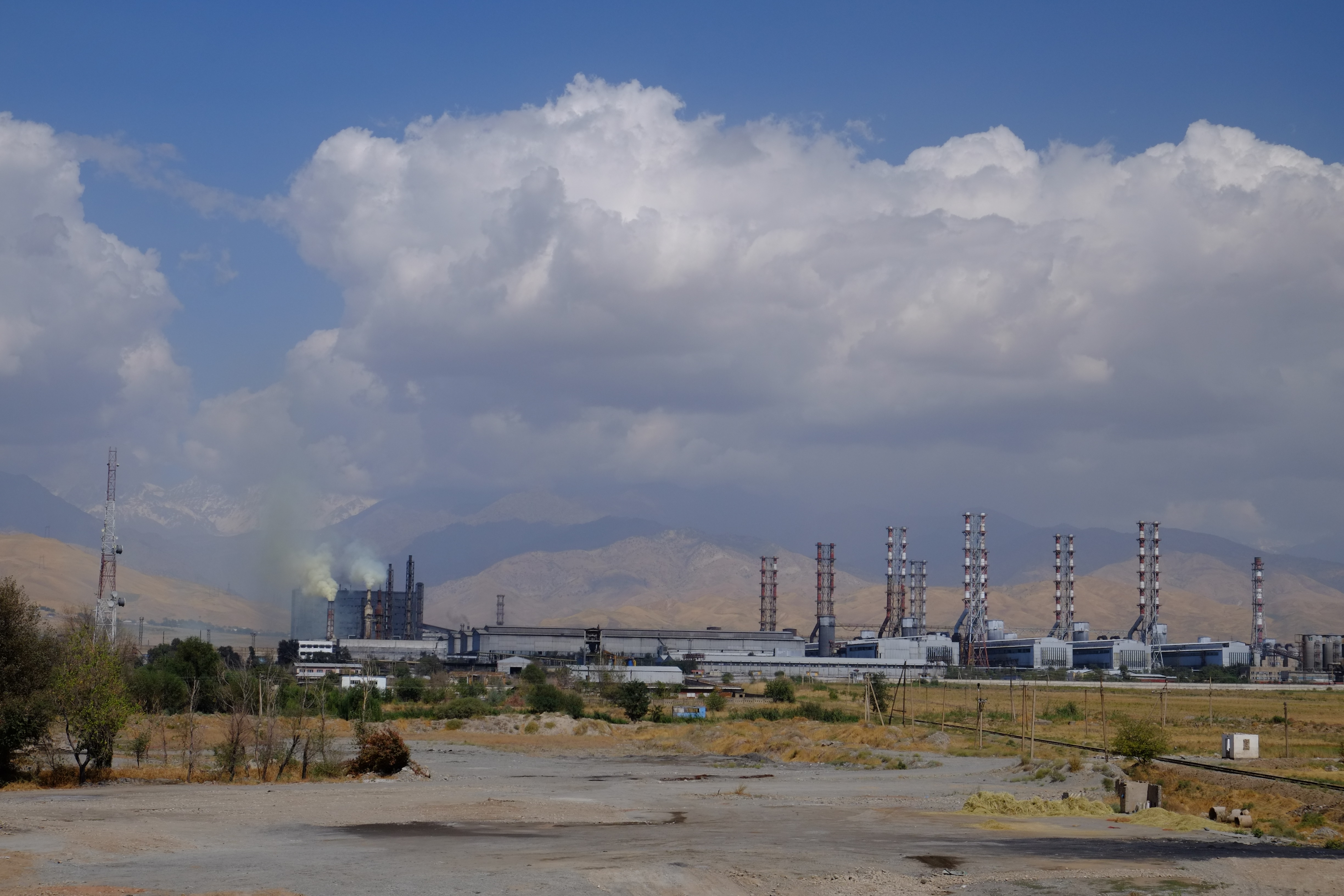
Aluminium production - we are now part of an espionage plot, as the Uzbek customs officer asked us for a copy of this photo
Aluminium production – we are now part of an espionage plot, as the Uzbek customs officer asked us for a copy of this photo
At lunch time
At lunch time
Cotton fields
Cotton fields
Time for the cotton harvest

We entered the country from a very poor area and cycled through one of the most remote regions. The climate is rough with hot and arid summers and very cold winters. People are shy but very friendly and hospitable. Food is basic with little variety. Soup is the staple dish and if we were lucky there were a few other vegetables than potatoes in it. With it we usually got stale bread and sweets. Sometimes fried potatoes or plov (fried rice with carrots and mutton meat) was served. If we were very lucky we got tomato and cucumber salad, most likely the cause for our constant stomach issues.

Bathrooms are basic and usually quite dirty. This surprised us as they are very tidy if it comes to their houses. You must not enter the house with shoes, that’s a major offence. Early in the morning they start sweeping the floors and it continues throughout the day, often to our annoyance as they cause more dust than anything else. Squat toilets are built as far away from the house as possible and shower facilities usually don’t work – there was either boiling hot or ice-cold water, nothing in between. Sometimes there would only be a few drops coming out of the tap. But then these were bathrooms built for tourists. Locals on the countryside only have toilets, washing takes place in front of their houses with water out of a tin pot or a bucket.

Tajiks are very bad drivers, same as everywhere else in Central Asia. Due to the condition of the roads, cars – the majority being old ladas from the Sovjet era – are in the same poor state. Tajiks only know one speed: fast. Wheels spin whenever they leave, they are overtaking everywhere whether they see something or not, they are always on the phone and we’ve hardly seen cars without broken windshields.

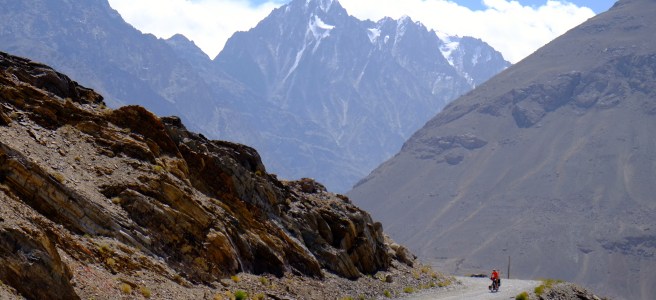
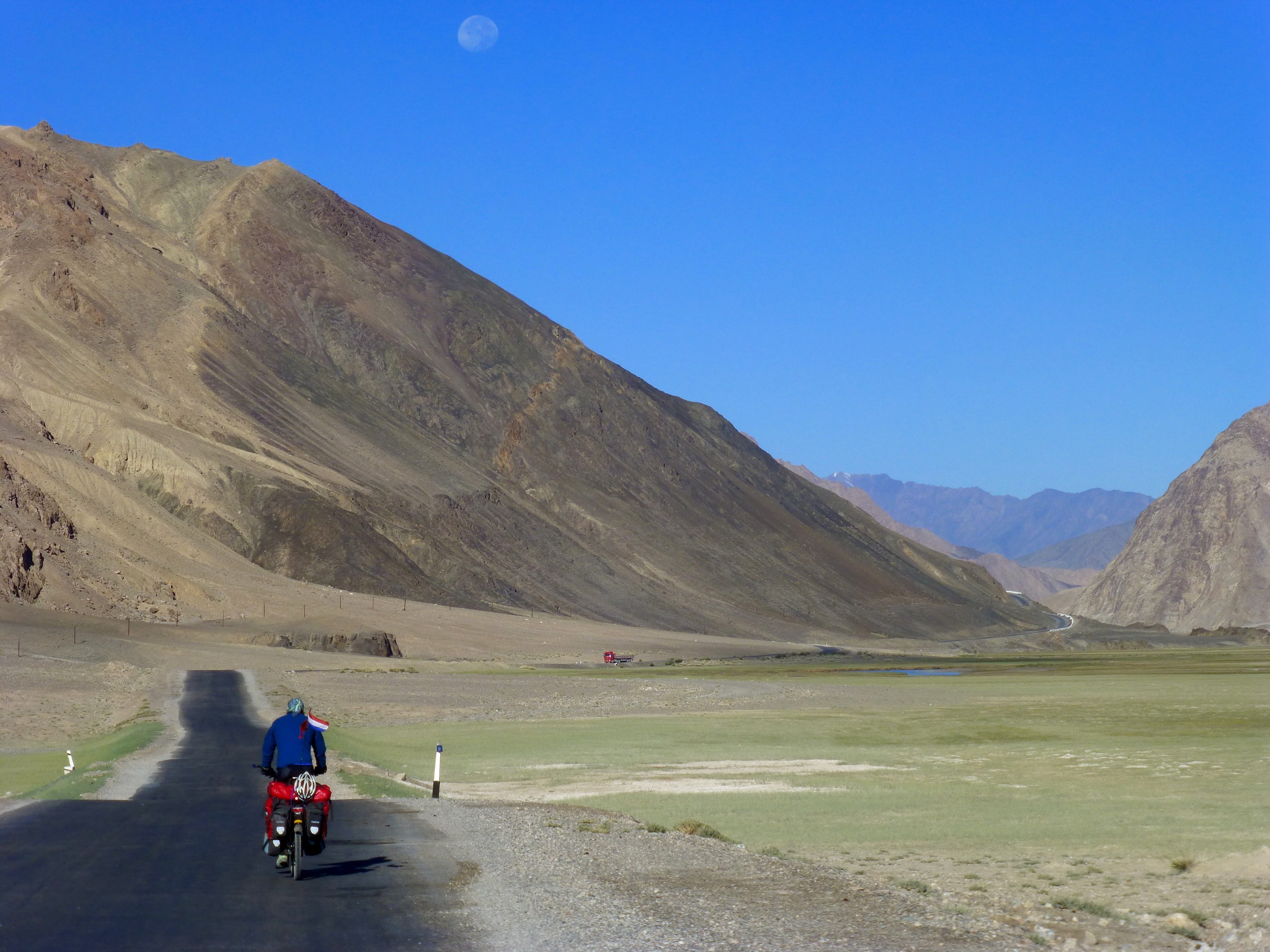
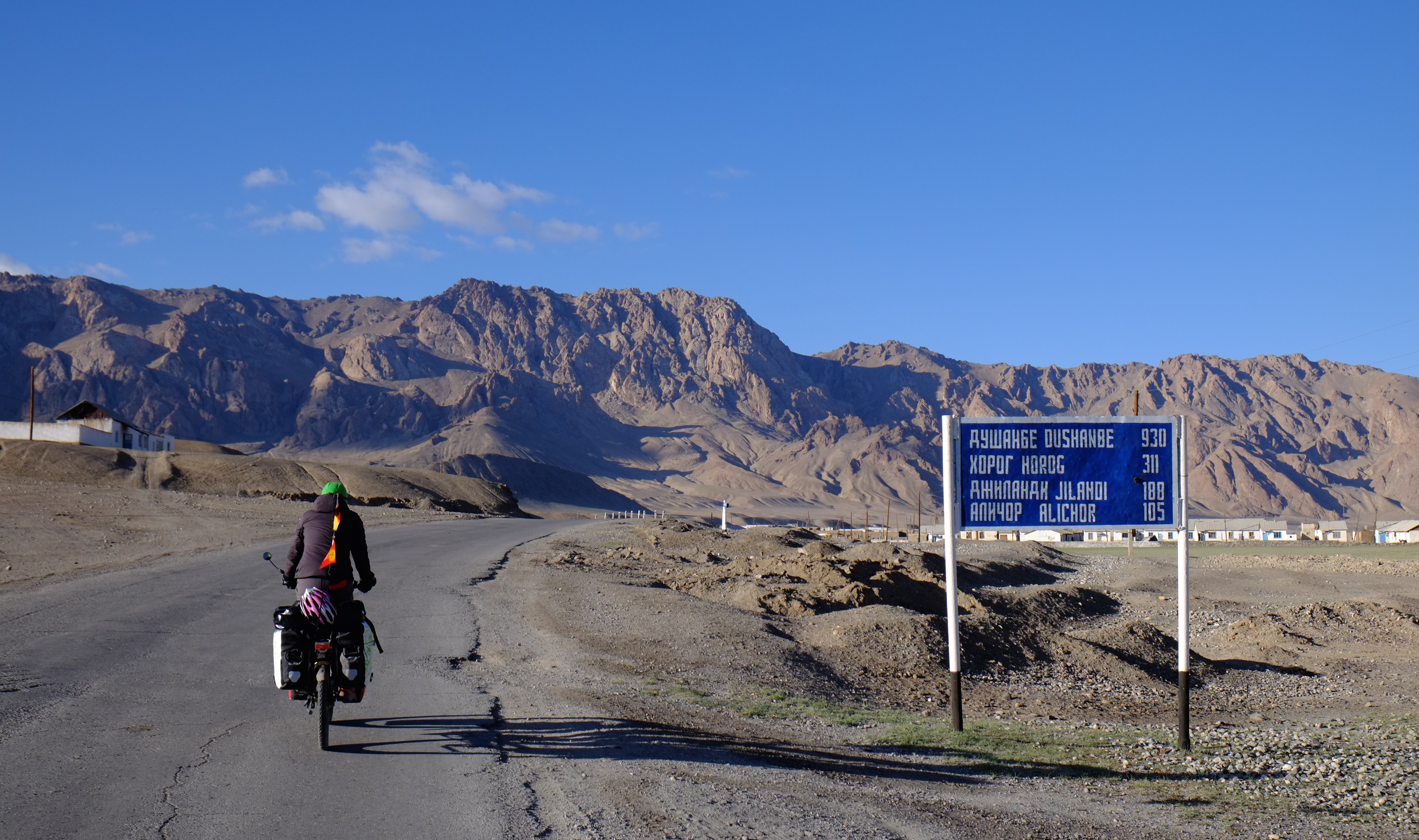
Landscapes were absolutely stunning and breathtaking most of the time. Being such a mountainous country it’s been the toughest cycling experience for us ever. Despite all the pain and effort we’ve been through we are very grateful that we made it through the Pamirs in one piece and that we were able to explore these extraordinary landscapes.

Ausspannen in Dushanbe

Fakten Tadschikistan:

  • Ein kleiner, von Land umgebener Juwel mit atemberaubenden Bergen, die höchsten nach dem Himalaja/Karakorum
  • Nachbarländer: Kirgisistan (Norden), China (Osten), Afghanistan (Süden), Usbekistan (Westen)
  • Bevölkerung: 8,5 Millionen
  • Das ärmste Land Zentralasiens: ein Lehrer verdient ungefähr 80 USD im Monat und Schätzungen gehen davon aus, dass 20% der Bevölkerung mit weniger als 1,25 USD auskommen muss
  • Drogenhandel ist die größte illegale Einkommensquelle

9. – 20. September 2015 – Wir hatten eine sehr schöne Zeit in Dushanbe. Erst hier fiel uns auf, wie müde wir waren. Nicht nur von einer abenteuerlichen 24-Stunden-Fahrt am Rande des Abgrunds, sondern vor allem von der harten Arbeit der letzten Wochen. Jetzt stellten wir uns endlich keinen Wecker mehr, mussten nicht gegen den Wind ankämpfen, dagegen schliefen wir viel, lasen, aßen, aktualisierten den Blog, schliefen, ich arbeitete, wir liefen durch die Stadt, entspannten uns ein bisschen mehr, kümmerten uns um unsere Turkmenistan Visa, schliefen ein bisschen mehr, trafen andere Radfahrer und genossen den Luxus unseres Gasthauses.

Finally meeting Phoebe who is cycling to Singapore. We met her brother a few years ago in Singapore and have been following Phoebe's travels since earlier this year.
Endlich treffen wir Phoebe, die nach Singapur radelt. Vor ein Paar Jahren haben wir ihren Bruder in Singapur getroffen und verfolgen Phoebes Reisen virtuell seit einigen Monaten.
The world seen from Dushanbe
Die Welt aus der Sicht von Dushanbe
Tajikistan's president - smiling at us from millions of billboards
Tadschikistans Präsident, der auf uns von Millionen Plakaten herunterschaut
One of Dushanbe's landmarks
Eines der Wahrzeichen von Dushanbe

DSCF9779

And another monstrous building
Und noch ein monströses Gebäude
Once Asia's largest flagpole, the flag alone measures 2000 square meters!
Einst Asiens größter Fahnenmast – die Flagge allein hat eine Fläche von 2000 Quadratmetern!
An enormous tea house
Alles ist hier groß – hier ein enormes Teehaus

Am Tag, als unsere Visa fertig sein sollten, radelten wir nervös zur Botschaft. Wir haben so viele Geschichten von Menschen gehört, denen das Visum grundlos verweigert wurde. Wir kamen um 9 Uhr wie vereinbart an, die Botschaft machte aber erst um 9.30 Uhr auf. Nachdem wir dann endlich rein durften mussten wir leider erfahren, dass unsere Visa noch nicht fertig waren. Jetzt waren wir erst recht froh, dass wir so rechtzeitig nach Dushanbe gereist sind, denn der nächste Tag war Freitag und am Sonntag mussten wir das Land verlassen. Wenn wir morgen das Visum nicht bekämen, müssten wir ohne ausreisen. Aber wir hatten wieder einmal Glück, am nächsten Tag waren die Visa fertig, wir mussten nur noch quer durch die ganze Stadt und wahnsinnigen Verkehr radeln, um die Visagebühr von 110 $ bei der Pakistan Bank zu bezahlen und dann wieder zurückradeln, um unsere Pässe mit neuem Aufkleber abzuholen.

Two happy chaps
Zwei Glückspilze mit ihren Turkmenistan Visa

Jetzt konnten wir endlich wieder weiterradeln. Am nächsten Morgen klingelte der Wecker wieder früh und wir trauten unseren Augen nicht: Es regnete! Wochenlang hatte es nicht geregnet. Die Vorhersage war für den ganzen Tag schlecht und letztendlich blieben wir noch einen Tag länger. Das war eine gute Entscheidung, denn am nächsten Tag fuhren wir bei Sonnenschein und leichtem Rückenwind los. Die Strecke war langweilig, meist fuhren wir an Baumwoll- und Obstplantagen mit Äpfelbäumen und Traubenstöcken vorbei und einer kahlen Bergkette im Hintergrund. Das machte aber nichts, nach zwölf radlosen Tagen waren wir froh, wieder auf unseren harten Sätteln sitzen zu dürfen. Auf halbem Weg zur Grenze bekamen wir eine Melone geschenkt, die wir gemeinsam mit den netten und sehr gut Englisch sprechenden Menschen aßen. Später bekamen wir noch leckere Trauben frisch gepflückt und ein warmes Brot aus dem Backofen geschenkt. Von überall her hörten wir wieder “Hello” und “Salam” und die Menschen fragten uns, ob es uns denn in Tadschikistan gefiele. Jetzt waren wir nicht mehr länger ‘normale’ Touristen, sondern radelnde Reisende, die viel Aufmerksamkeit auf sich ziehen und oft für Verwirrung sorgen. ‘Warum fahrt ihr mit dem Fahrrad? Warum nicht mit dem Auto? Das ist doch viel einfacher!’ hörten wir immer wieder von den Ortsansässigen. Hier radeln nur die Ärmsten oder Kinder, alle anderen fahren Auto.

Leaving Dushanbe in the early morning
Auf dem Weg nach Usbekistan, Stadtausgang Dushanbe
The melon has already been eaten
Die Melone ist bereits aufgegessen


Let the president always be with us
Auf dass der Präsident immer bei uns sei!
TAILWIND!!!
RÜCKENWIND!!!
Aluminium production - we are now part of an espionage plot, as the Uzbek customs officer asked us for a copy of this photo
Aluminiumfabrik – wir sind nun Teil eines Spionagekomplotts – der usbekische Grenzbeamte hat uns um eine Kopie dieses Fotos gebeten.
At lunch time
Mittagessenszeit
Cotton fields
Baumwollfelder
Time for the cotton harvest
Baumwollernte

Wir sind in das Land von seiner ärmsten Seite eingereist und fuhren durch eine der abgelegensten Gebiete. Das Klima ist hart mit heißen und trockenen Sommern und sehr kalten Wintern. Die Menschen sind scheu, aber sehr nett und gastfreundlich. Das Essen ist sehr einfach und bietet wenig Variationen. Suppe ist DAS Gericht und wenn wir Glück hatten, dann gab es außer Kartoffeln noch anderes Gemüse in der Suppe. Oft aßen wir dazu altes Brot und Süßigkeiten. Manchmal gab es Bratkartoffeln oder Plov (gebratener Reis mit Karotten und etwas Hammelfleisch). Und wenn wir ganz besonderes Glück hatten, gab es Tomaten- und Gurkensalat, der war wahrscheinlich immer der Grund für unsere ständigen Magen- und Darmprobleme.

Die Bäder sind hier ebenfalls sehr spartanisch und oft leider auch sehr dreckig. Letzteres ist überraschend, denn die Häuser sind extrem sauber. Auf keinen Fall dürfen sie mit Schuhen betreten werden, das kommt einem schweren Verbrechen gleich. Schon früh morgens wird mit dem Fegen begonnen, dann werden die Böden genässt und gewischt und dann wird wieder gefegt. Die Stehklos sind immer so weit wie möglich weg vom Haus und die Duschen funktionieren in der Regel nicht, wenn es denn welche gibt. Entweder kommen aus dem Hahn nur ein Paar Tropfen oder kochendheißes oder eiskaltes Wasser, dazwischen gibt es nichts. Aber dann muss man auch wissen, dass diese Bäder auch nur für Touristen gebaut werden, die Menschen hier auf dem Land haben keine Badezimmer, sie waschen sich an einem einfach Waschbecken vor dem Haus. Manchmal gibt es noch nicht einmal ein Waschbecken und man gießt sich das Wasser mit einer Zinnkanne über die Hände und den Rest.

Die Tadschiken sind sehr schlechte Autofahrer, wie übrigens überall sonst in Zentralasien auch. Aufgrund des schlechten Zustands der Straßen sehen Autos nicht viel besser aus – meist sind es hier alte Ladas noch aus Sowietzeiten. Tadschiken können auch nur schnell fahren. Die Reifen quietschen, wenn sie losfahren, sie überholen, ob sie etwas sehen oder nicht, sie telefonieren fast ununterbrochen während der Fahrt und wir haben fast keine Autos ohne Risse in der Windschutzscheibe gesehen.

Die Landschaften waren außergewöhnlich und fast immer atemberaubend. Aufgrund der vielen und hohen Berge war es für uns wohl schwierigste Land zum Radeln. Trotz aller Schmerzen und Anstrengungen durch dieses Land, sind wir froh, dass wir es heil durch den Pamir und das Wakhan-Tal geschafft haben und dass wir die Möglichkeit hatten, diese außergewöhnlichen Landschaften zu erkunden.

The Infamous Pamir Highway – Part 4

23 August – 8 September, 2015 – As the Pamir Highway has been an important milestone of our journey you’ll find below our diary entries with the highlights of every day presented in four parts.

Bildschirmfoto 2015-09-17 um 15.49.16

Day 16 and 17: Ishkashim – Dushanbe: 700km
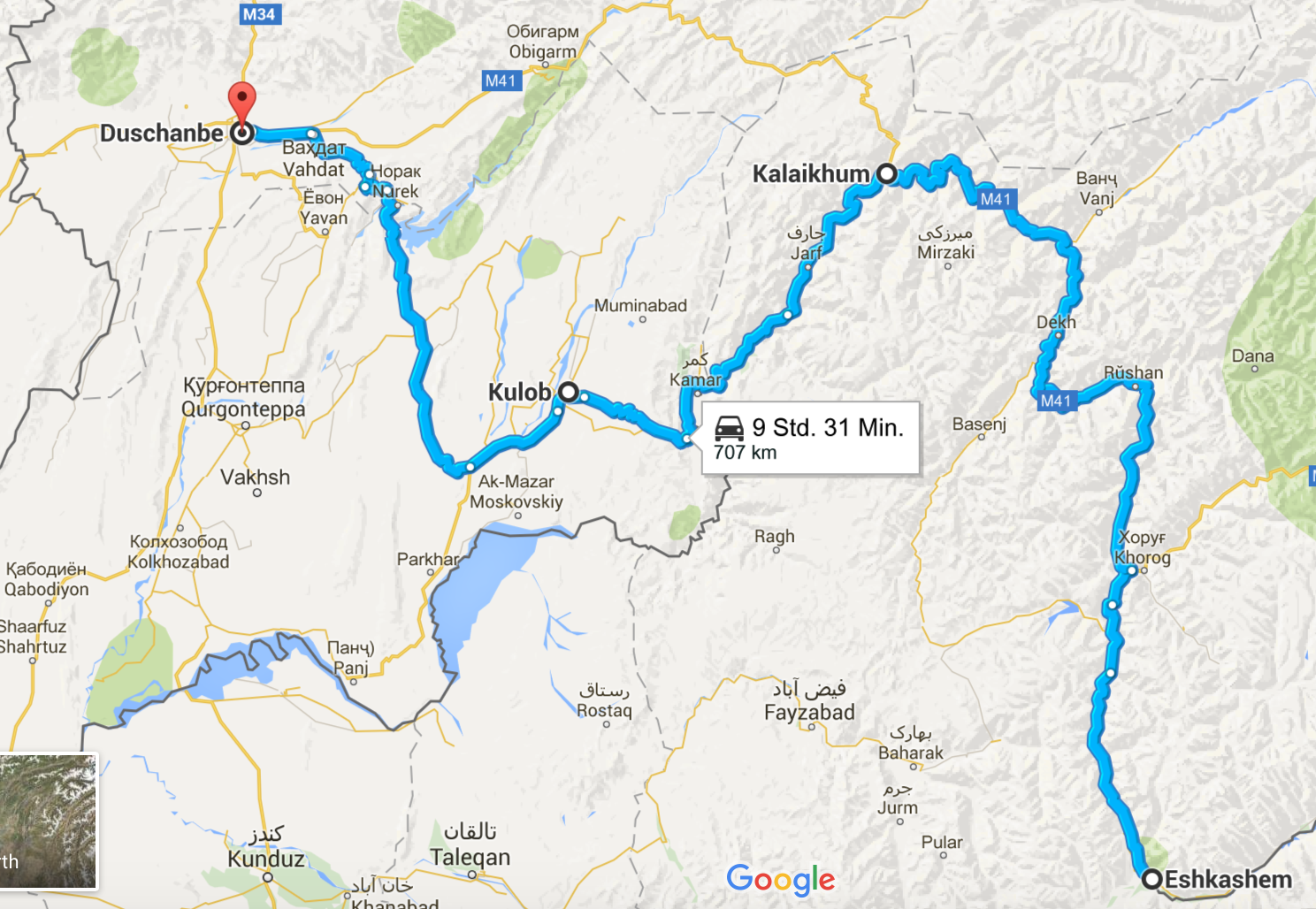
With Johan still being weak and us having to be in Dushanbe for our Turkmenistan visa application we take a taxi already from Ishkashim and not from Khorog as originally planned. The guesthouse manager is able to negotiate a good deal with a taxi driver and we head off with our bikes on top of the car and the trunk stuffed with our many panniers. 10 minutes later we pick up an Afghan police officer who also has to go Dushanbe – there it goes our private taxi. Annoyed and a few phone calls later we negotiate another discount as our private taxi has become a shared taxi. Unfortunately our macho driver thinks he owns the road and we think he might have obtained his driver’s licence in India as most of the time he is driving on the left handside. Much to our annoyance, as the left is the cliff with the river a few hundred meters below. The bone-crunching road that has in the meantime rejoined the Pamir Highway continues twisting through canyons and gorges with barren mountains raising to the left and right. At the other side of the river still lies Afghanistan and a small donkey track winds along the river. The vistas are spectacular and we both are saddened that we aren’t able to cycle this part of the Pamir Highway. We also regret that we’ve relied on our travel guide’s advice to make a detour through the Wakhan Valley as we are now on the most spectacular part of the highway. Every once in a while Johan advises the driver to slow down, to drive on the right handside of the road and not to pass trucks on a one-way-track while we cannot see anything due to the dust raised by the vehicle in front of us. At nightfall we even get more scared as the road is worsening, the visibility is low and the driver seems to be more interested in the many phone calls that keep coming in until as late as 2am than paying attention to the road. Poor Johan stays awake all night, once avoiding a collision with a pile of sand and constantly arguing with the driver to make sure we’ll arrive safely. The next morning – on a finally paved highway – the driver once more needs to demonstrate his skills: at a horrendous speed of 140 km/h and a car that’s almost falling apart I tell him off and stubborn as he is he continues at 60 km/h asking every few seconds if he is still going too fast. The atmosphere in the car climaxes when we arrive in Dushanbe and Johan tries to guide our driver to our chosen guesthouse, but he just doesn’t want to follow Johan’s instructions – while not even knowing where to go. Listening to the driver’s behavior in silence for a while and us standing at a crossing and the driver not wanting to turn left as needed I burst out and yell at him to do what Johan is telling him, adding some abusive language in German and we finally arrive after 24 sleepless hours. During this far too exciting journey we pass about 20 military and police check points, each time showing our passports and each time having long discussions because of the Afghan in a car with European tourists. Later we learn that there had been a clash with several fatalities a few days ago in Dushanbe.

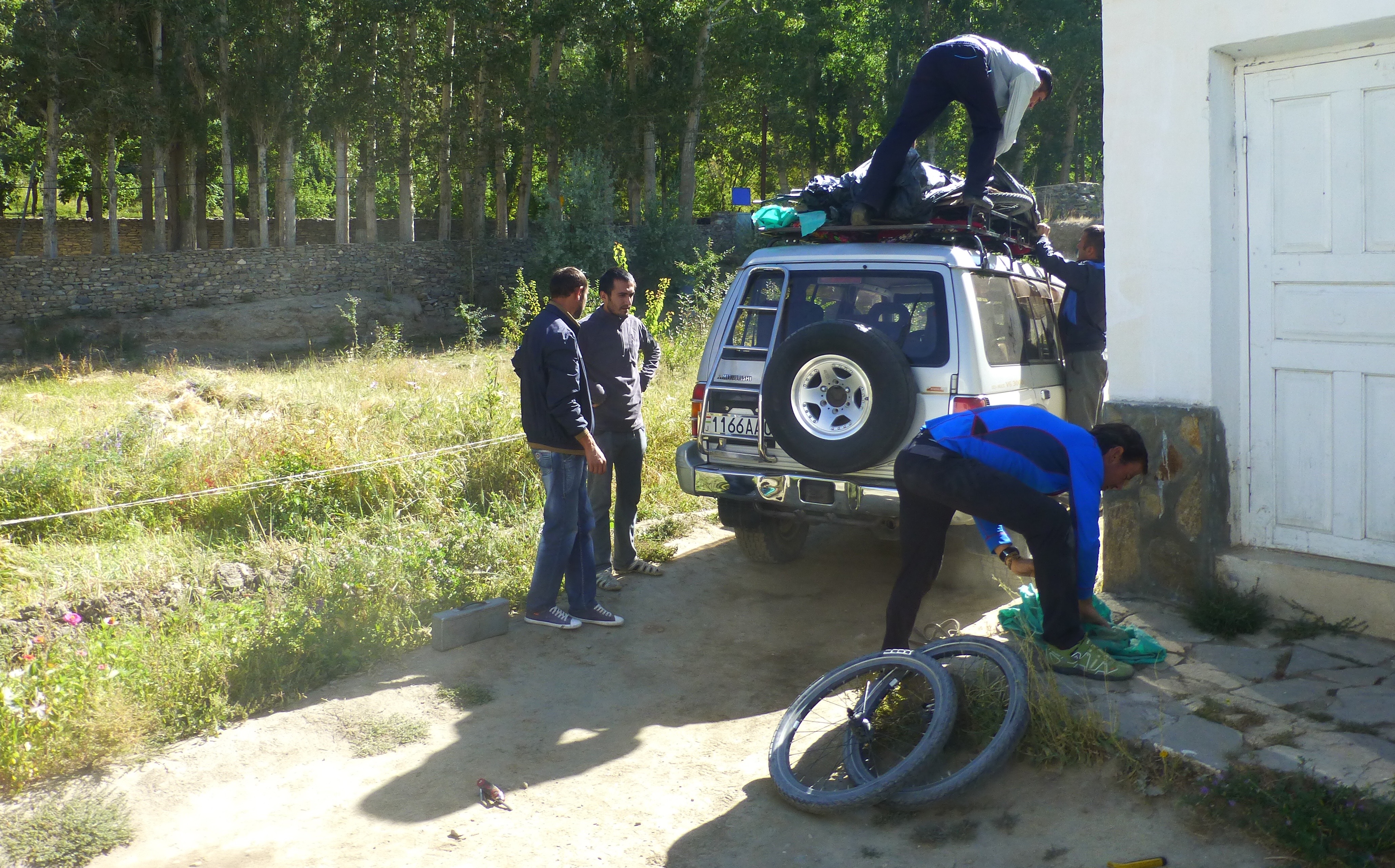
Getting the car packed for a long journey

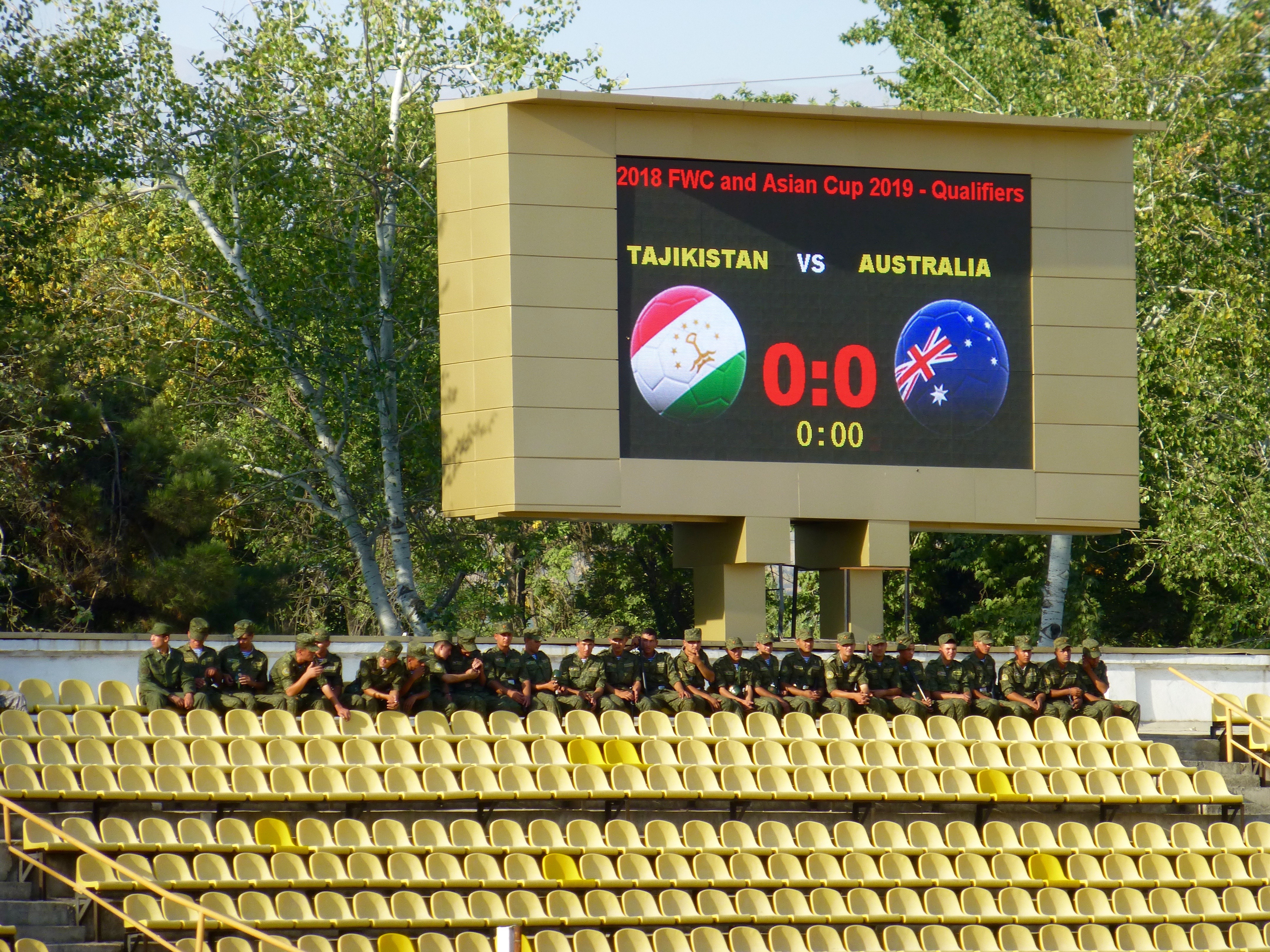
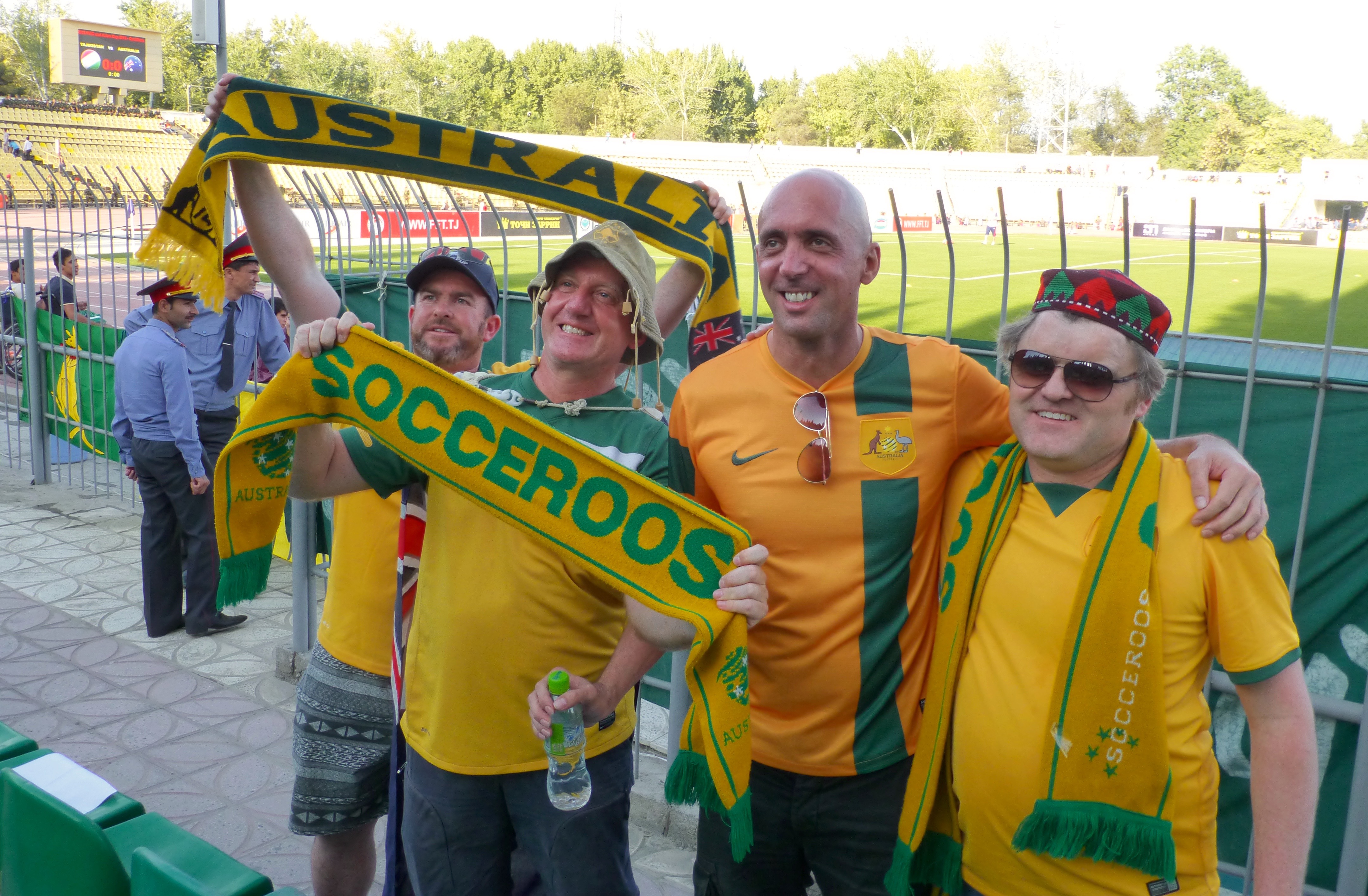
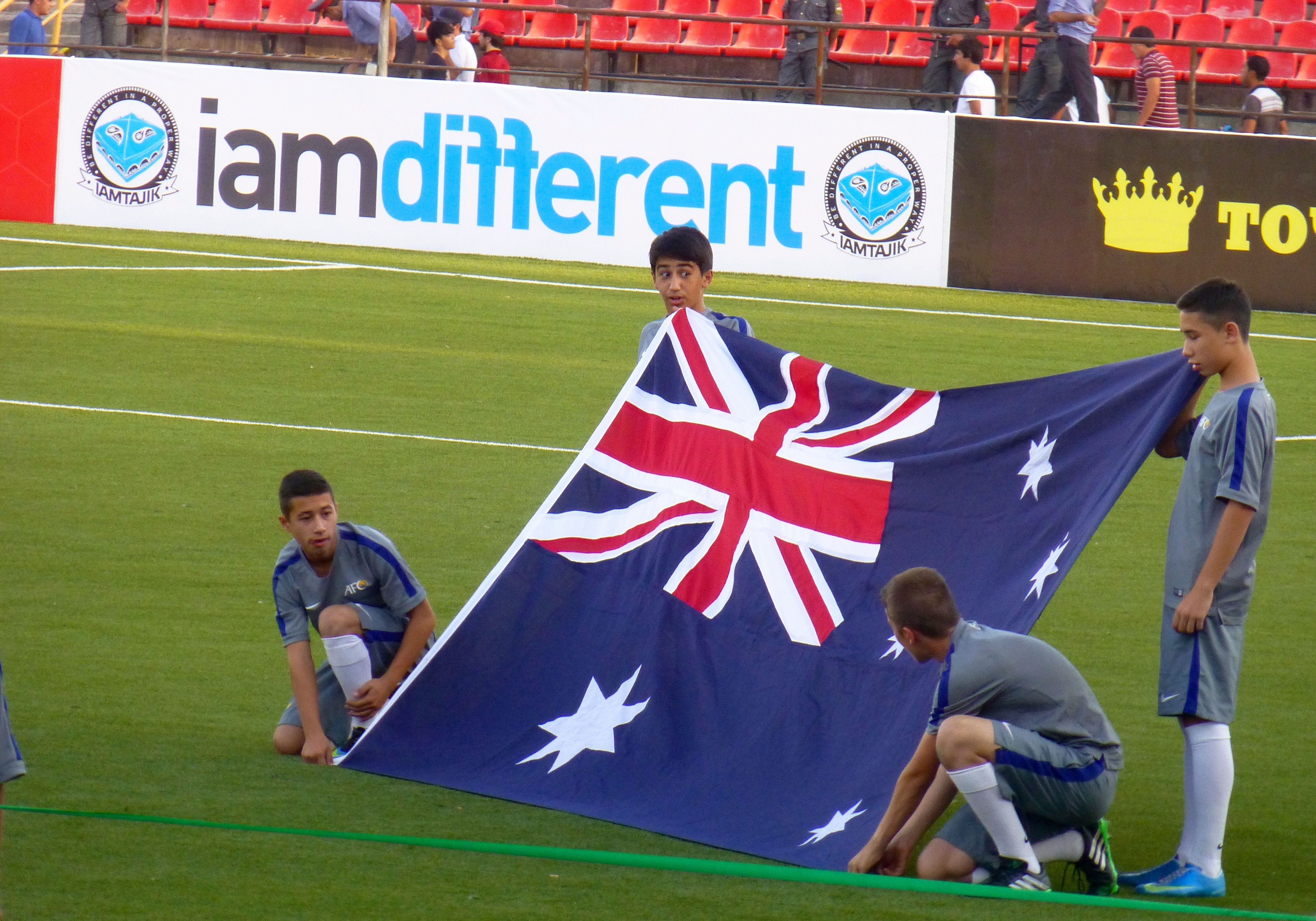
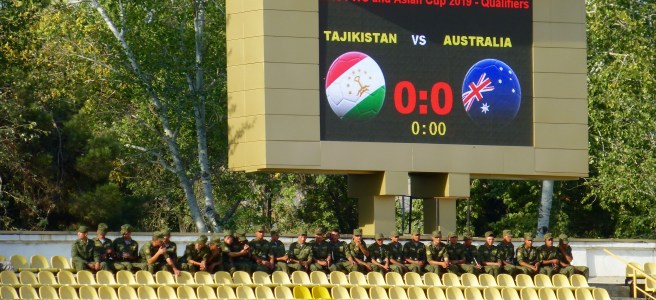
Johan negotiates a fantastic deal at Marian’s Guesthouse where we will relax until we have our visas for Turkmenistan. Today also happens to be the day the Australian football team plays against Tajikistan to qualify for the 2018 World Championship. Lucky as we are we chose to stay at an Australian-run guesthouse with a few Australian fans. Not only do we have a great deal with Marian for our stay in Dushanbe, she also offers us tickets for the game. We have a fantastic evening (and a few more later on) supporting the Australian team with our new Aussie friends and even I enjoy the atmosphere in the stadium while not being a football enthusiast at all.

Life treats us well again!

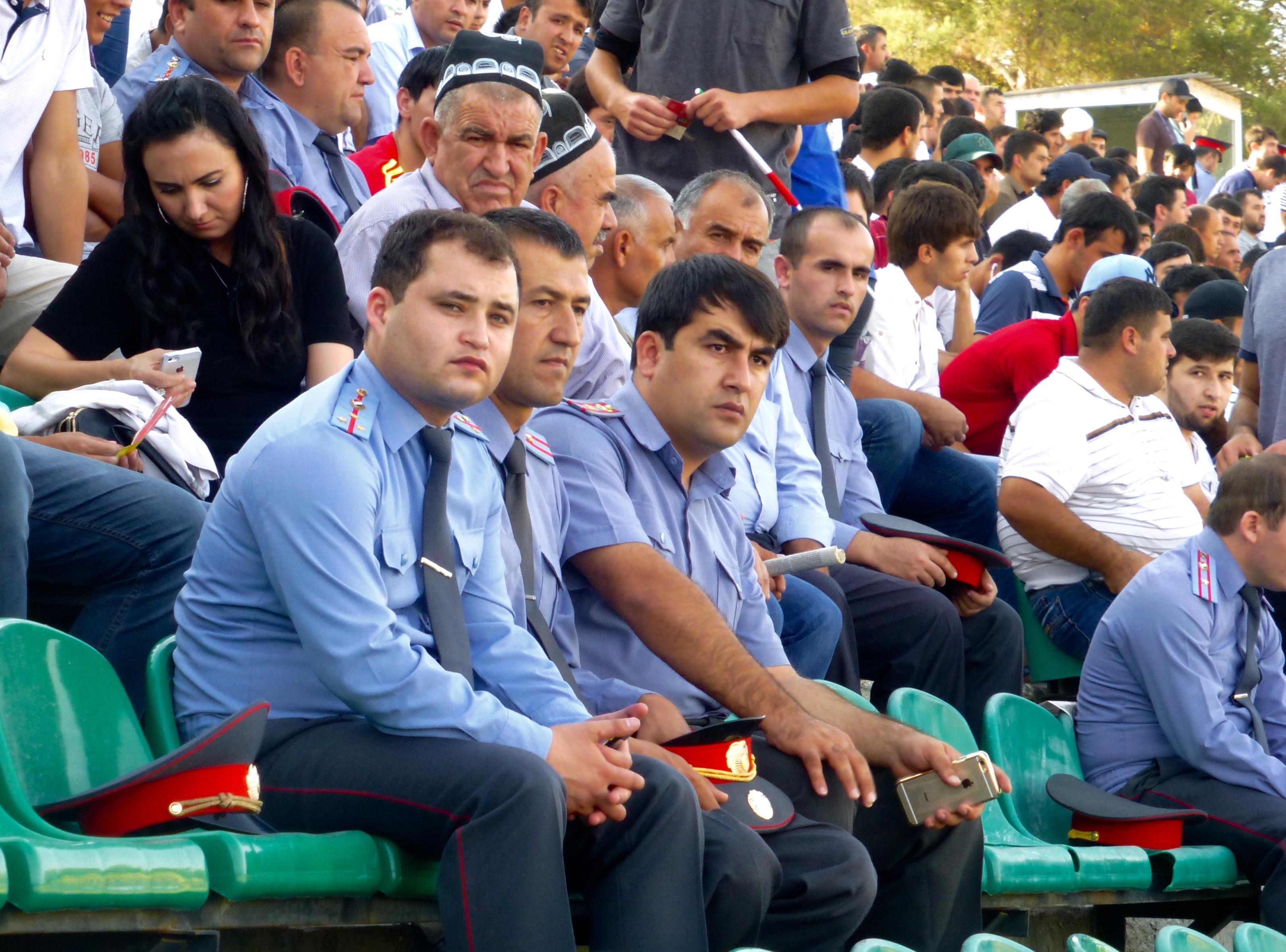
Highly secured stadium

P1220986

P1220987

Our new Aussie friends

P1230077

A peaceful audience
A peaceful audience

Der berühmt-berüchtigte Pamir-Highway – Teil 4

3. August – 8. September 2015 – Der Pamir Highway ist eines der Highlights unserer Reise, daher berichten wir über die wichtigsten Geschehnisse in insgesamt vier Teilen anhand unserer täglichen Tagebucheinträge.

Bildschirmfoto 2015-09-17 um 15.49.16

Tage 16 und 17: Ishkashim – Dushanbe: 700km
Johan fühlt sich noch immer schlecht und da wir rechtzeitig in Dushanbe für die Beantragung unserer Turmenistan-Visa sein müssen, nehmen wir bereits ab Ishkashim und nicht erst ab Khorog ein Taxi. Der Gasthaus-Besitzer verhandelt einen guten Deal für ein privates Taxi und mit den Rädern auf dem Dach und unseren Taschen im Kofferraum fahren wir los. Keine zehn Minuten später hält der Taxifahrer, um einen afghanischen Polizisten, der ebenfalls nach Dushanbe muss, mitzunehmen. Soviel zu privatem Taxi! Genervt telefonieren wir mit dem Manager des Gasthauses und handeln zumindest einen Rabatt raus. Leider fährt unser Macho-Taxifahrer wie ein Wilder und denkt, die Straße gehöre ihm alleine. Wir glauben, er hat seinen Führerschein in Indien gemacht, da er meist auf der linken Straßenseite fährt. Was uns noch mehr aufregt, da links die Klippe ist und mehrere hundert Meter unter uns der Fluss. Die halsbrecherische Straße, mittlerweile wieder mit dem Pamir Highway vereint, windet sich durch Schluchten und Canyons mit kahlen Bergen, die links und rechts in die Höhe sprießen. Auf der anderen Seite des Flusses liegt noch immer Afghanistan und dort führt ein schmaler Eselspfad am Fluss entlang. Die Aussichten sind spektakulär und wir sind beide traurig, dass wir diese Strecke nicht radeln können. Wir bedauern auch, dass wir uns auf unseren Reiseführer verlassen haben und durch das Wakhan-Tal geradelt sind, da wir uns jetzt erst auf dem spektakulärsten Teil des Highways befinden. Immer wieder weist Johan den Fahrer zurecht langsamer zu fahren, auf der rechten Seite der Straße zu fahren und LKWs auf der einspurigen Straße nicht zu überholen, wenn vor lauter Staub nichts zu sehen ist. In der Nacht wird die Fahrt noch gruseliger, da sich die Straße weiter verschlechtert, die Sicht schlecht ist und der Fahrer mehr an den vielen Telefonanrufen interessiert, die bis spät in die Nacht reinkommen, als an der Straße. Armer Johan bleibt die ganze Nacht wach, damit wir sicher ankommen, streitet unnachgiebig mit dem Fahrer und verhindert sogar ein Auffahren auf einen Sandhaufen am Straßenrand. Am nächsten Morgen als wir endlich auf einer geteerten Straße fahren muss der Fahrer wieder sein Können unter Beweis stellen. Mit einer für uns horrenden Geschwindigkeit von 140 km/h und einem Auto, das dabei fast auseinander fällt, brülle ich ihn dieses Mal an, damit er langsamer fährt. Stur fährt er die nächsten Minuten mit 60 km/h weiter und fragt andauernd, ob es so nun Recht sei. Die Stimmung im Auto erreicht in Dushanbe ihren Höhepunkt, als Johan freundlich versucht, unserem Fahrer den Weg zu unserem B&B anzuweisen und er partout den Anweisungen nicht folgen will, obwohl er keine Ahnung hat, wohin wir fahren müssen. Ich koche mittlerweile innerlich und an einer Kreuzung, an der er wieder mal nicht abbiegen will, brülle ich erneut und schicke noch ein Paar deutsche Schimpfwörter hinterher. Fünf Minuten später kommen wir dann nach 24 Stunden Autofahrt endlich an. Während dieser viel zu nervenaufreibenden Fahrt passieren wir übrigens ungefähr 20 Militär- und Polizei-Checkpoints. Jedes Mal müssen wir unsere Pässe zeigen und jedes Mal gibt es Theater, weil ein Afghane mit zwei Touristen reist. Später erfahren wir, dass es nur wenige Tage zuvor in einem Vorort von Dushanbe einen Anschlag mit mehreren Toten gab.

Getting the car packed for a long journey
Autopacken für eine lange Reise

In Marian’s Guesthouse verhandelt Johan einen fantastischen Preis und wir können uns so richtig erholen, bis wir unsere Visa für Turkmenistan bekommen. Heute findet zufällig auch das Fußball-Qualifikationsspiel für die WM 2018 zwischen Australien und Tadschikistan statt. Und da die Besitzerin des B&Bs Australierin ist, bekommen wir gleich zwei Karten geschenkt. Wir verbringen einen super Abend mit netten Australiern und selbst mir gefällt die Atmosphäre im Fußballstadion, obwohl ich so gar kein Fußballfan bin.

Das Leben meint es wieder gut mit uns!

Highly secured stadium
Hochsicherheits-Stadion

P1220986

P1220987

Our new Aussie friends
Unsere neuen australischen Freunde

P1230077

A peaceful audience
Friedvolle Zuschauer

The Infamous Pamir Highway – Part 3

23 August – 8 September, 2015 – As the Pamir Highway has been an important milestone of our journey you’ll find below our diary entries with the highlights of every day presented in four parts.

253km, altitude gain of 2,493 m (1,558km und Attitüde gain of 18.991 in total)
253km, altitude gain of 2,493 m (1,558km and altitude gain of 18.991 in total)

Day 10: Murghab – Alichor: 107km, altitude gain 841m
Early start and fantastic weather: no wind and another day with clear-blue sky. Shortly after Murghab we pass our first military checkpoint. We are now cycling through the Gorno-Badakhshan Autonomous Region for which a permit is needed. Our passports are thoroughly checked, details entered into a journal and ten minutes later we continue. We pedal up our first pass of today of 3600m, a piece of cake as we start climbing at 3500m. The coming hours the road is undulating uphill through a valley, we cycle through small canyons and to our left and right are red rocky mountains. Again hardly any vegetation, only a few thistles, succulents and grasses line the road. After the second pass of over 4100m the landscape becomes boring with a wide valley and brownish mountains around us. We feel a bit like in the movie ‘Groundhog Day’ as the road follows the same pattern over and over again: uphill, then left and downhill, another right turn and then uphill again. Despite the headwind as of 3pm we make good progress and end up at another homestay where we wash ourselves in the same room where we eat and sleep. We get two buckets, one filled with warm water. Our room also seems to be the only room where the phones can be charged and while Johan is standing naked in one of the buckets one after the other person tries to come in to check the status of the phones – of course without knocking on the door first. To avoid any embarrassments we watch the door until we are finished washing. The phone checking continues later on while we are trying to sleep. That evening we have a good laugh as we imagine all these interesting features of Tajik homestays to be added to our own B&B upon our return.

Leaving Murghab
Leaving Murghab
Right before the first pass at 3,600m

P1220864

DSCF9160

Another break with instant noodles and cookies for lunch
Two very funny and inspiring guys from England and Poland
Two very funny and inspiring guys from England and the Netherlands
'Fantastic' roads - at least hazards are marked
‘Fantastic’ roads – at least hazards are marked

Day 11: Alichor – Kharghush Pass: 62 km, altitude gain 773m
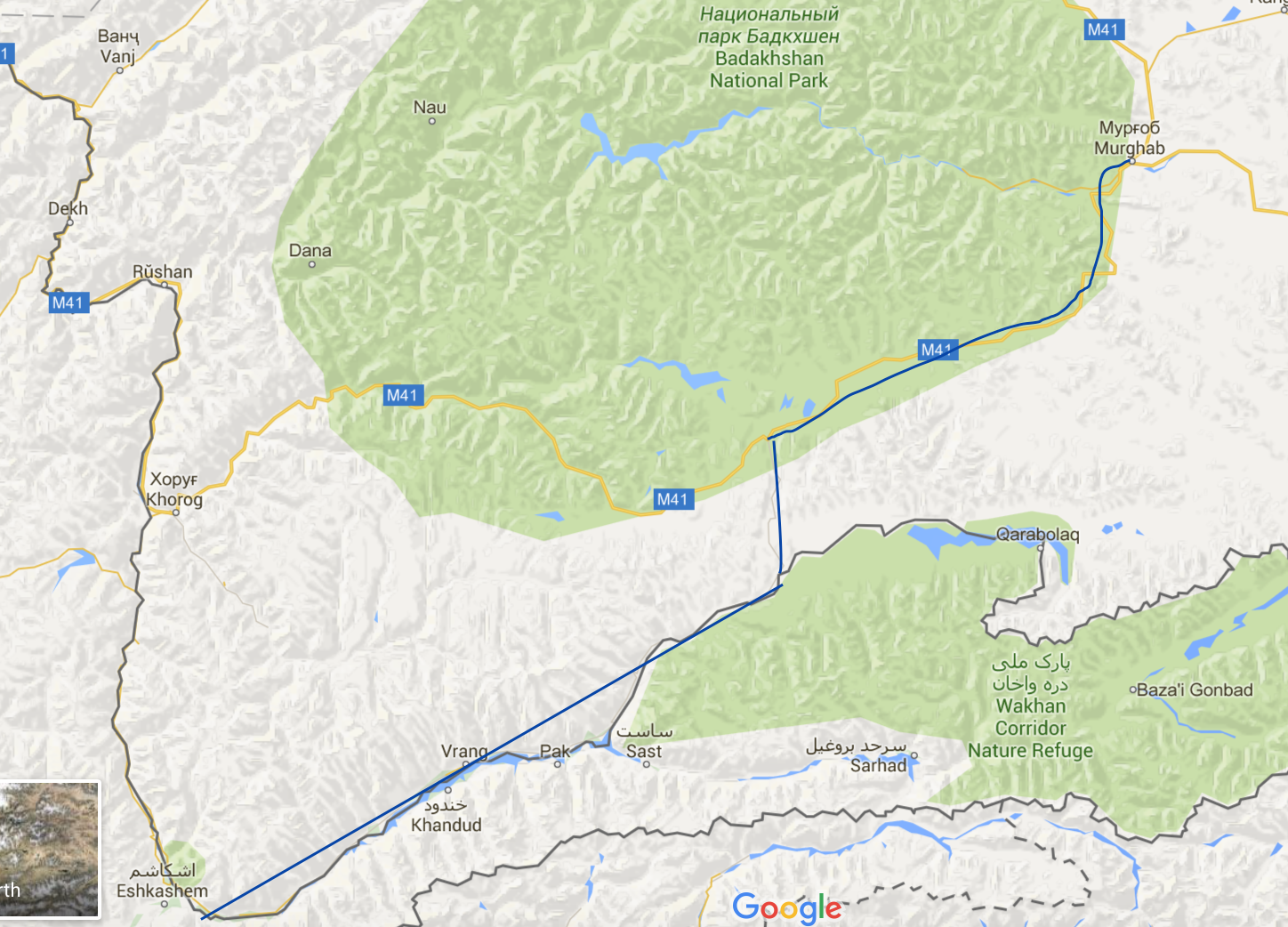
25 km asphalt and then we leave the Pamir Highway to cycle a loop through the Wakhan valley along the border of Afghanistan, only separated by the river Pamir. Other cyclists told us not to be worried about the Taliban as they can’t swim. So we don’t worry. We first cycle on a pretty bad road through sand, over rocks, up and down and up again, along a few salt lakes until we finally reach the pass. With a strong headwind and steep gradients we often have to push our bikes – now we know why they are called push bikes! After the summit the weather doesn’t really improve but we move on to find a camp spot at lower altitude. We pass another military checkpoint – this time with armed soldiers who are first asking for cigarettes and then for earphones – we pitch our tent with a vista of Afghanistan and the Pamir River. Traffic is almost non-existing:  today we meet 5 French cyclists and 3 cars pass by.

One of the many salt lakes that follow
The beginning of the end of asphalt
Struggling through sand
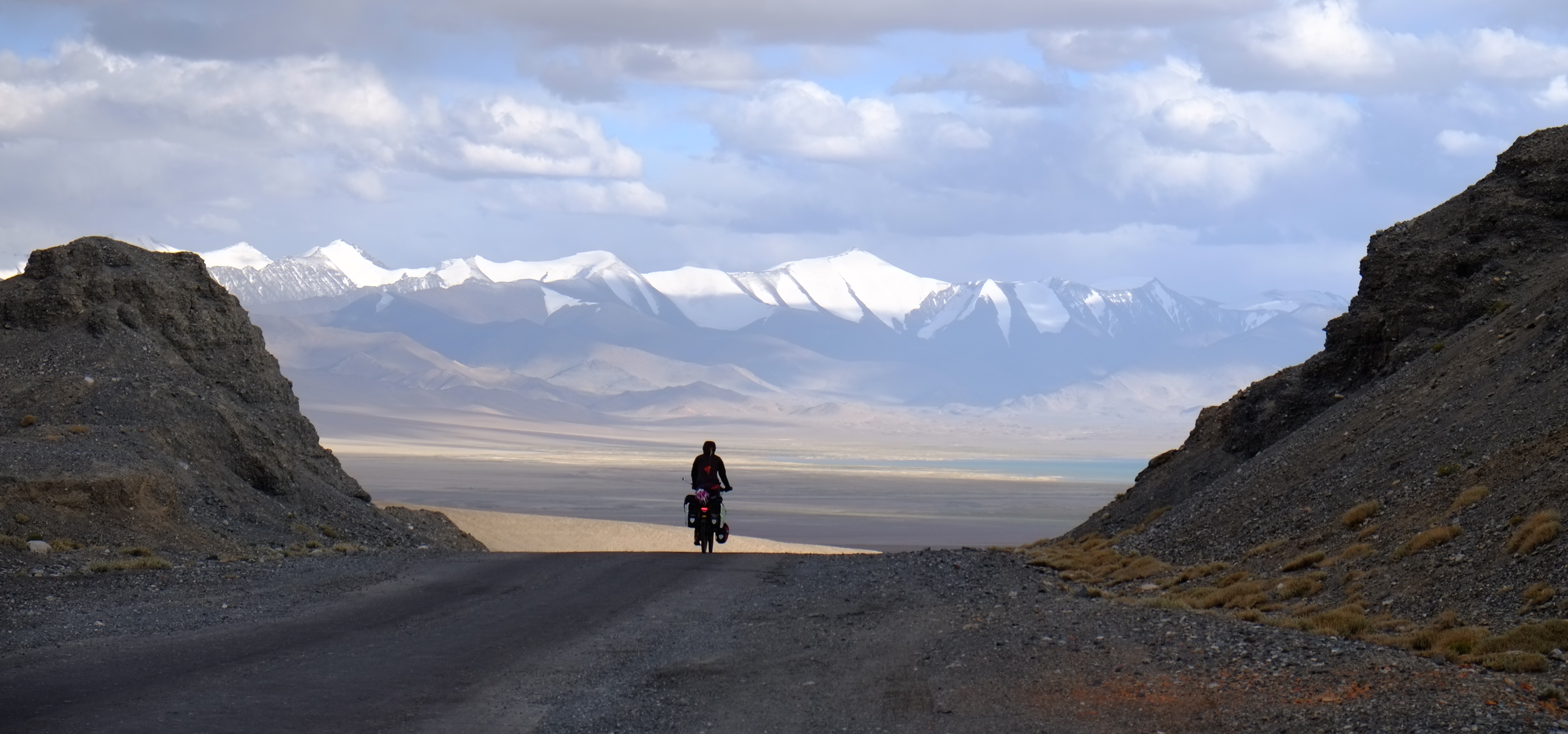
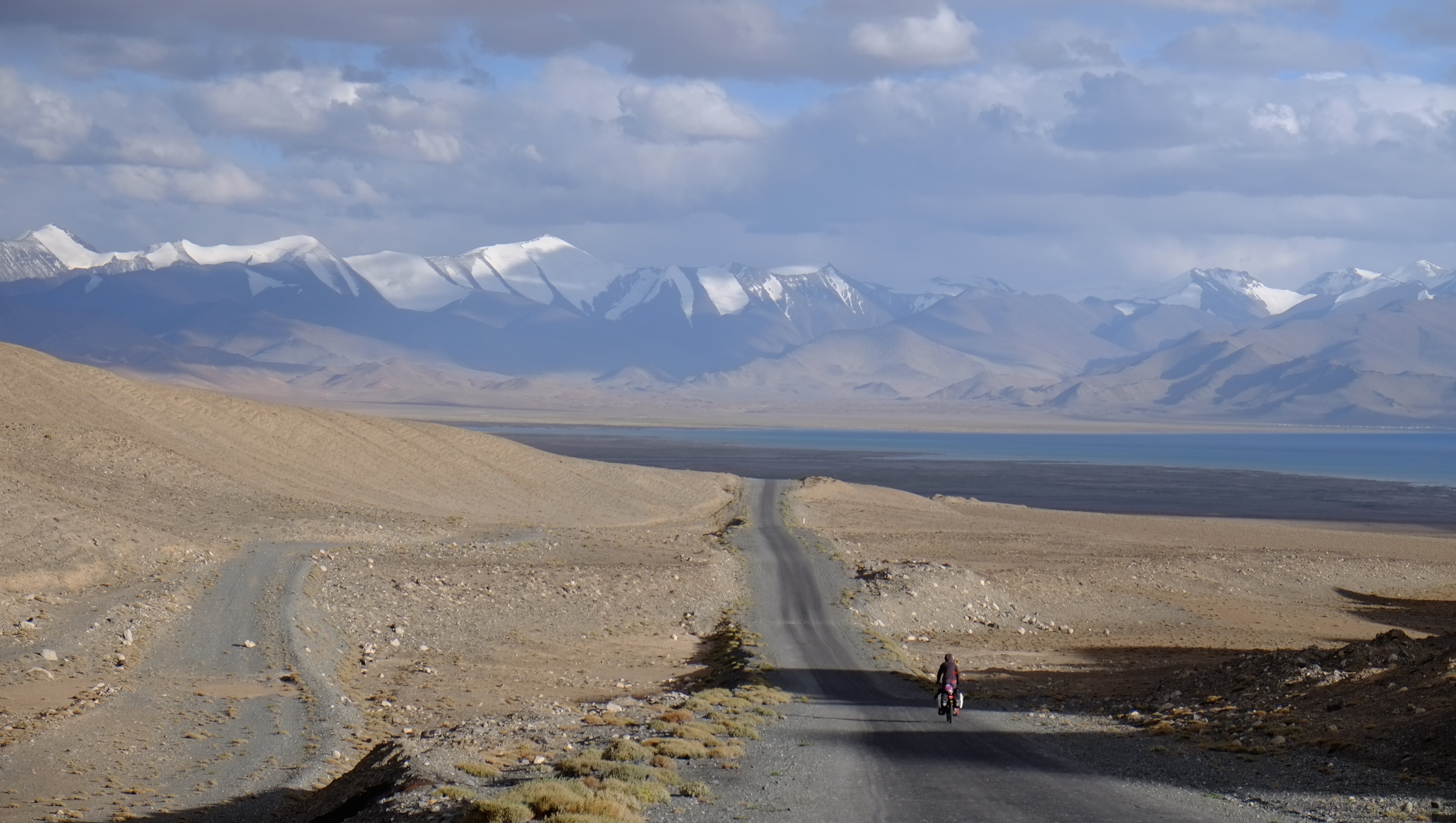
Another loner in the vastness of this beautiful scenery
Another loner in the vastness of this beautiful landscape
At the top of the second pass - the snow-capped mountain belongs to the Afghan Hindukush
At the top of the second pass – the snow-capped mountains belong to the Afghan Hindukush
Protection from the cold wind
Finally arrived after a long and tiresome day - Afghanistan in the background
Finally arrived after a long and tiresome day – Afghanistan in the background

Day 12: Kharghush to the middle of nowhere: 22km, altitude gain 152m
A day we don’t want to remember. Extremely strong headwind and a maddening bad road prevents us from making any progress. At 3pm we have a huge argument: Johan wants to continue for about 9km – the last hour we only cycled 3km – and I want to stop as we’ve been cycling to the limit for the past days. Shortly afterwards we find the perfect spot for our camp next to a river and hidden under trees. At night Johan wakes up with a start as he dreamed that the Taliban were trying to kidnap us and I wake up because I hear strange noises. For the rest of the night Johan keeps his knife in his hand to protect us from the evil. Today we meet one Dutch cyclist and two cars are passing by.

Tough cycling on rough roads

P1220883

It's been a tough day
It’s been a day…
But the beauty of the natures keeps us going
…but the beauty of the nature keeps us going

P1220888

"To my left is Afghanistan"
“To my left is Afghanistan”
Our hidden camp
Our hidden camp

Day 13: Middle of nowhere to Langar: 44km, altitude gain 396m
We are descending from 3600m to 2800m and are still climbing almost 400m! Does that make any sense? We keep meeting cyclists who tell us we would only descend as from now and they lied! We promise each other to tell the next cyclist that they would soon cycle on tarmac again and that the next pass is a piece of cake! Other than that the day is great, well rested legs, no wind all morning and scenic surroundings, looking all day at the infamous mountain range Hindukush and the roaring turquoise river Pamir – at least when the road allows. In the evening we check-in at a homestay with a perfect German-speaking landlady. A film crew from the German TV station mdr shooting a mountaineering documentary has checked in as well and we spend a nice evening chatting with them. Today it’s been busy on the road: 2 French and 2 Swiss cyclists, 7 cars and 3 trucks full of workers at the back.

Rolling landscape with a Hindukush backdrop

DSCF9429

Roads looking scarier on the photo than in reality
Can you find the little cyclist?
The mightiness of the mountains

P1220910

A few more hills and we're in Langar
A few more hills and we’re in Langar
We finally made it!
We finally made it – and yes, there are still trees on this planet 😉
Our nice homestay
Our nice homestay

Day 14: Langar – Ptup, 46km, altitude gain 350m
Late start and never-ending bad roads. Whoever told us that the roads would become better after Langar is a liar. Either we go through sand, over huge rocks, washboard or 20cm deep gravel. And yes, there is some asphalt as well, but that is melting, so once again no pleasure to ride on. By the evening our bottoms are sore and hours later we are still shaky from the bumpy roads. But enough ranting. The landscape has changed a lot. We are now at the wide river Panj, again marking the border between Afghanistan and Tajikistan. The valley is semi-arid and apart from occasional clusters of shrubs or willow, birch and other small trees the landscape remains barren. The villages that emerge every few kilometers seem like small oases to us with all the trees, fields and vegetable gardens we haven’t seen since Osh two weeks ago. Between two villages we see about 10 to 15 men far away at the river, a rubber boat trying to get to the Tajikistan shore and five big 4WD cars waiting next to the road. My first thought is that they are fishing, but Johan’s got a better idea: the men are smuggling drugs from Afghanistan to Tajikistan. It is estimated that as much as 50% of Tajikistan’s economic activity in the last decade was linked to Afghanistan’s narcotic trade. We try to get away from there as quickly as the road allows. Today we meet a group of supported German cyclists, 1 truck and about 20 – 30 cars.

Another shop with extraordinary choice: 10 different types of cookies and candies, 100 packages instant noodle soup, Vodka and cigarettes
Another shop with an extraordinary choice: 10 different types of cookies and candies, 100 packages of instant noodle soup, Vodka and cigarettes
Field work
Field work
Cycling through another oasis
Resting from too much field work
Another majestic mountain

DSCF9563

P1220930

"Sending my love to everyone out there"
“Sending my love to everyone out there”
Just in case you were thinking we are exaggerating about the roads...
Just in case you were thinking we are exaggerating about the roads…
Washing dirty laundry

DSCF9600

And here is the evidence: smugglers!
At the end of another exhausting day we got served fried potatoes swimming in oil with old bread and cucumber salad, cookies and tea.
At the end of another exhausting day we get served fried potatoes swimming in oil with old bread and cucumber salad, cookies and tea.

Day 15: Ptup – Ishkashim: 18km, altitude gain 341m
Another day we’d rather forget. We leave with Johan having severe stomach cramps on a sunny and stormy day. Guess what – we are cycling into the wind. Four hours later we are just 18km further, having pushed our bikes up most of the time due to the storm. Johan marks the road as I did a few days ago. We hire a taxi to Ishkashim as we know we won’t make it by bike, given the weather and road circumstances.

Village life on an early Sunday morning
Today's vista of Afghanistan
Today’s vista of Afghanistan
Today's state of the road
Today’s state of the road: pebbles, …
...and sand. And have a look at our flags, sigh!
…and sand. And have a look at our flags, sigh!
No, I am not having a good time today
Push, push, push...
Push, push, push…

Der berühmt-berüchtigte Pamir Highway – Teil 3

3. August – 8. September 2015 – Der Pamir Highway ist eines der Highlights unserer Reise, daher berichten wir über die wichtigsten Geschehnisse in insgesamt vier Teilen anhand unserer täglichen Tagebucheinträge.

253km, 2.493 Höhenmeter (1.558km und 18.991 Höhenmeter insgesamt)

Tag 10: Murghab – Alichor: 107km, 841 Höhenmeter
Früher Start und super Wetter: kein Wind und wieder einmal strahlend blauer Himmel. Kurz nach Murghab passieren wir unseren ersten Militär-Checkpoint, da wir jetzt durch die Autonome Gorno-Badakhshan Region radeln, wofür eine Sondergenehmigung notwendig ist. Unser Pässe werden gründlich überprüft, die Daten in ein großes Buch übertragen und zehn Minuten später dürfen wir weiterziehen. Gleich fahren wir auch unseren ersten Pass hoch, was allerdings lächerlich einfach ist, da wir nur von 3.500m auf 3.600m steigen. Danach geht es hügelig weiter durch ein Tal. Immer wieder fahren wir durch kleine Schluchten und um uns herum sehen wir nur rote Berge. Vegetation ist wie seit Tagen kaum vorhanden, außer ein Paar Disteln, Sukkulenten und Gräsern wächst hier nichts. Nach dem zweiten Pass auf 4.100m über dem Meeresspiegel kommen wir uns ein bisschen vor wie im Film “Und täglich grüßt das Murmeltier”, da sich die langweilige Landschaft Kilometer um Kilometer wiederholt: erst geht es nach oben, dann kommt eine Linkskurve, dann wieder nach unten, eine Rechtskurve und das Spiel beginnt von vorne. Gegen 15 Uhr beginnt der Wind wieder sein Spiel gegen uns, trotzdem kommen wir gut voran und schaffen es sogar bis zum nächsten Homestay, wo wir ein Zimmer bekommen, in dem wir essen, uns waschen und schlafen. Zum Waschen bekommen wir zwei Eimer, von denen einer mit warmem Wasser gefüllt ist. Unser Zimmer ist übrigens auch Handy-Ladestelle. Während Johan gerade nackt in einem Eimer steht, um sich zu waschen, versucht ein nach dem anderen Bewohner des Hauses, den Ladestatus des Telefons zu überprüfen. Geklopft wird natürlich nicht, jeder stürmt einfach so ins Zimmer. Um weitere Peinlichkeiten zu vermeiden, bewachen wir nun abwechseln die Tür, bis wir beide gewaschen sind. Das Checken der Telefone geht übrigens die ganze Nacht weiter. Diesen Abend haben wir viel Spaß und viele neue Ideen für unser eigenes B&B gesammelt, wenn wir wieder zurück sind.

Leaving Murghab
Kurz hinter Murghab
Right before the first pass at 3,600m
Vor unserem ersten 3.600m-Pass

P1220864

DSCF9160

Another break with instant noodles and cookies for lunch
Mittagspause mit Tütensuppe und Keksen
Two very funny and inspiring guys from England and Poland
Zwei sehr lustige und inspirierende Jungs aus England und Holland
'Fantastic' roads - at least hazards are marked
‘Fantastische’ Straßenzustände – zumindest sind die größten Löcher markiert

Tag 11: Alichor – Kharghush Pass: 62 km, 773 Höhenmeter
Nach 25km verlassen wir die asphaltierte Straße und den Pamir Highway, um durch das Wakhan-Tal entlang der afghanischen Grenze und des Flusses Pamir zu radeln. Andere Radler meinten, wir bräuchten uns um die Taliban keine Sorgen zu machen, da sie nicht schwimmen könnten. Also machen wir uns auch keine Sorgen! Die Tour beginnt auf einer recht schlechten und sandigen Straße, über Felsen, hoch und runter und wieder hoch, an Salzseen vorbei bis wir schließlich den Pass erreichen. Wir haben extremen Gegenwind, die Straße ist extrem steil und so schieben wir unsere Räder öfter als uns lieb ist. Nach dem Gipfel sind Wetter und Straßen nicht viel besser, aber zumindest geht es abwärts und so radeln wir weiter, da wir so niedrig wie möglich unser Zelt aufschlagen möchten. Wir kommen an einem weiteren Checkpoint vorbei, wo bewaffnete Soldaten dieses Mal nach Zigaretten und Kopfhörern fragen, und schlagen später unser Zelt mit Blick auf Afghanistan und den Fluss Pamir auf. Die Verkehrslage ist heute sehr entspannt: wir treffen fünf französische Radler und drei Autos fahren an uns vorbei.

One of the many salt lakes that follow
Einer der vielen Salzseen
The beginning of the end of asphalt
Der Anfang vom Ende des Asphalts
Struggling through sand
Wir kämpfen uns durch Sand
Another loner in the vastness of this beautiful scenery
Noch ein Einzelkämpfer in den Weiten Tadschikistans
At the top of the second pass - the snow-capped mountain belongs to the Afghan Hindukush
Auf dem zweiten Gipfel – die schneebedeckten Berge gehören zum Hindukusch in Afghanistan
Protection from the cold wind
Komplettschutz vor dem eisigen Wind
Finally arrived after a long and tiresome day - Afghanistan in the background
Endlich angekommen nach einem langen und anstrengenden Tag – im Hintergrund Afghanistan

Tag 12: Kharghush bis Irgendwo im Nirgendwo: 22km, 152 Höhenmeter
An diesen Tag denken wir nicht gerne zurück. Wieder einmal extrem starker Gegenwind und eine zum wahnsinnig werdend schlechte Straße verhindern jegliches Vorankommen. Um 15 Uhr kracht es gewaltig: Johan möchte unbedingt noch 9km weiterradeln – obwohl wir in der letzten Stunde nur 3km geschafft haben – und ich möchte für heute stoppen, da wir die letzten Tage bis zum Limit geradelt sind. Kurz danach finden wir ein perfektes Lager versteckt unter Bäumen und neben einem Fluss. Nachts schreckt Johan auf, da er träumt, dass die Taliban versuchen, uns zu entführen und ich wache auf, da ich komische Geräusche höre. Johan behält sein Messer für den Rest der Nacht in der Hand, um uns vor dem Bösen zu beschützen. Heute treffen wir übrigens nur einen holländischen Radfahrer und zwei Autos.

Tough cycling on rough roads
Schwerer Kampf auf unmöglichen Straßen

P1220883

It's been a tough day
Was für ein Tag…
But the beauty of the natures keeps us going
…nur die Schönheit der Natur lässt uns weitermachen.

P1220888

"To my left is Afghanistan"
“Zu meiner Linken ist Afghanistan”
Our hidden camp
Unser versteckter Zeltplatz

Tag 13: Vom Irgendwo im Nirgendwo bis nach Langar: 44km, 396 Höhenmeter
Heute geht es abwärts von 3.600m auf 2.800m und trotzdem müssen wir fast 400m hochfahren! Das macht doch alles keinen Sinn! Immer wieder treffen wir Radfahrer, die uns erzählen, dass wir ab jetzt nur noch nach unten fahren und alle lügen! Wir schwören uns, den nächsten Radlern zu erzählen, dass sie bald auf Asphalt treffen und die bevorstehenden Steigungen Kinderkram seien. Ansonsten ist der Tag super, wir haben ausgeruhte Beine, den ganzen Morgen keinen Wind und spektakuläre Landschaften um uns herum. Den ganzen Tag dürfen wir – wenn es denn die Straße zulässt – auf den berüchtigten Hindukusch und den unter uns tobenden Pamir schauen. Wir finden einen Homestay mit einer perfekt Deutsch sprechenden Besitzerin. Den Abend verbringen wir mit einer Film-Crew, die eine Bergsteiger-Doku für den mdr dreht. Heute war viel los auf der Straße:  zwei französische und zwei Schweizer Radler, sieben Autos und drei LKWs mit vielen Arbeitern auf der Pritsche.

Rolling landscape with a Hindukush backdrop
Hügelige Landschaft und der Hindukusch im Hintergrund

DSCF9429

Roads looking scarier on the photo than in reality
Die Straße sieht gefährlicher aus als sie ist
Can you find the little cyclist?
Wer findet den kleinen Radfahrer?
The mightiness of the mountains
Die Mächtigkeit der Berge

P1220910

A few more hills and we're in Langar
Noch ein Paar Hügel weiter und dann sind wir in Langar
We finally made it!
Endlich geschafft, und ja, es gibt sie noch – die Bäume!
Our nice homestay
Unser netter Homestay

Tag 14: Langar – Ptup, 46km, 350 Höhenmeter
Wir fahren spät los, wieder mal auf schlechten Straßen. Wer auch immer uns erzählt hat, dass die Straße nach Langar besser wird, hat ebenfalls gelogen. Entweder müssen wir durch den Sand schieben, über riesige Felsbrocken hoppeln, werden auf Waschbrett durchgeschüttelt oder fahren auf 20cm tiefem Schotter. Und wenn es dann mal Asphalt gibt, schmilzt dieser, was das Fahren nicht angenehmer macht. Am Abend sind unsere Hintern wund und noch Stunden später vibrieren wir innerlich. Aber genug gemeckert! Die Landschaft hat sich stark geändert. Wir fahren nun am Fluss Panj entlang, der auch hier die Grenze zu Afghanistan markiert. Auch dieses Tal ist von Trockenheit gezeichnet und abgesehen von immer wieder auftretenden Busch-, Birken- und Weidenansammlungen bleibt die Landschaft kahl. Die Dörfer, die wir alle Paar Kilometer durchfahren, kommen uns mit ihren Baum-Alleen, Feldern und Gemüsegärten, die wir seit Osch vor zwei Wochen nicht mehr gesehen haben, wie Oasen vor. Zwischen zwei Dörfern sehen wir in der Ferne zehn bis 20 Männer am Fluss, ein Schlauchboot, das versucht, in Tadschikistan an Land zu gehen und fünf große Geländewägen, die am Straßenrand stehen. Mein erster Gedanke ist, “die angeln”, aber Johan ist schlauer: die Männer schmuggeln Drogen aus Afghanistan nach Tadschikistan. Es wird geschätzt, dass 50% der wirtschaftlichen Tätigkeit Tadschikistans im letzten Jahrzehnt auf den Drogenhandel mit Afghanistan zurückzuführen ist. Wir versuchen, hier so schnell wie möglich wegzukommen. Heute kommt uns eine Gruppe deutscher Radler, deren Gepäck im Auto reist, entgegen, sowie ein LKW und ungefähr 20 bis 30 Autos.

Another shop with extraordinary choice: 10 different types of cookies and candies, 100 packages instant noodle soup, Vodka and cigarettes
Wieder so ein Laden mit grandioser Auswahl: zehn verschiedene Arten von Keksen und Bonbons, 100 Päckchen Tütensuppen, Wodka und Zigaretten.
Field work
Feldarbeit
Cycling through another oasis
Wir radeln durch eine weitere Oase
Resting from too much field work
Pause, die Feldarbeit ist anstrengend
Another majestic mountain
Majestätische Berge

DSCF9563

P1220930

"Sending my love to everyone out there"
“Die allerherzlichsten Grüße an alle”
Just in case you were thinking we are exaggerating about the roads...
Nur für den Fall, ihr denkt, wir übertreiben mit den Straßen…
Washing dirty laundry
Schmutzige Wäsche waschen

DSCF9600

And here is the evidence: smugglers!
Und hier ist der Beweis: Schmuggler!
At the end of another exhausting day we got served fried potatoes swimming in oil with old bread and cucumber salad, cookies and tea.
Am Ende eines anstrengenden Abends bekommen wir in Fett schwimmende Kartoffeln, altes Brot, Gurkensalat, Kekse und Tee.

Tag 15: Ptup – Ishkashim: 18km, 341 Höhenmeter
Noch ein Tag, den wir am Liebsten vergessen möchten. Johan hat starke Magenkrämpfe, wir fahren bei sonnigem und stürmigem Wetter trotzdem los. Natürlich fahren wir gegen den Wind, was sonst. Vier Stunden später haben wir gerade Mal 18km geschafft. Die Steigungen mussten wir meist hochschieben, gegen den Sturm war an Fahrradfahren nicht zu denken. Johan markiert sein Revier wie ich vor ein Paar Tagen und wir nehmen uns vor lauter Frust ein Taxi nach Ishkashim, da wir wissen, dass wir die Strecke per Rad unmöglich noch schaffen können.

Village life on an early Sunday morning
Dorfleben an einem frühen Sonntagmorgen
Today's vista of Afghanistan
Die heutige Aussicht auf Afghanistan
Today's state of the road
Der heutige Zustand der Straße: Kieselsteine, …
...and sand. And have a look at our flags, sigh!
…und Sand. Und wohin wehen unser Fahnen? Arghh!
No, I am not having a good time today
Nein, heute ist nicht mein Tag.
Push, push, push...
Schieben, schieben und nochmals schieben…

The Infamous Pamir Highway – Part 2

23 August – 8 September, 2015 – As the Pamir Highway has been an important milestone of our journey you’ll find below our diary entries with the highlights of every day presented in four parts.

137km, 1047 meters altitude gain (1258km and 16,155 m altitude gain in total)

Day 6: Karakul – bottom of pass Akbaital: 48km, altitude gain 503m
A late start and a tremendous headwind prevents us from making any progress. We meet two Austrian cyclists and Eddy (not Merckx) from Belgium who are today’s lucky ones. We get updates on the road and continue. Extreme washboard after 40km doesn’t help us and I get weaker and weaker and even start walking at times as it is easier than cycling against this wind. Right before the pass we see a farmer’s camp and decide to call it a day. Johan and I agree to pitch the tent and cook ourselves and five minutes later Johan ‘books’ us into the hut including half-board for around 7 EUR. At first happy to be be done for the day, we would soon regret it. The people are very hospitable, prepare chai for us which is served with bread, kefir and butter. We relax in the overheated hut at temperatures of around 30 degrees but almost suffocate from the exhaust of the little oven used for cooking and heating. We can’t wash ourselves so we endure and soon dinner is served. Again chai and bread and a kind of ravioli filled with meat and onions. A tasty but greasy dish. Right after dinner our bed is being prepared next to the dining table. The 10-year-old daughter lays out many thick blankets and pillows on the floor and indicates that we now can go to sleep. The whole family is still sitting around the table eating and drinking and we feel a bit odd to go to bed, especially as we are still dressed in our cycling clothes and not keen on keeping them on all night. Not being able to wash has already been hard enough. We are being told another time to go to sleep and we finally obey. With low voices the family continues eating and firing the heating. After dinner the father lits a few cigarettes, farts with Johan laying right next to him and us almost dying with all our clothes on under two heavy blankets. About a sleepless hour later the family starts making their own sleeping arrangements, now stumbling over us as their bedding is right behind us. Finally ready, the daughter begins to talk endlessly for at least another hour, us still fully awake, but in the meantime secretly undressed under our blankets. No way I could sleep in my sports bra and cycling shorts as our clothes pannier stands on the other side of the hut. Now I am only wearing my sweaty tee. Johan had been smart enough to bring his pyjama with him. My challenge now is to keep my naked bottom under the blanket and to get dressed on time the next morning. When the talking finally stops we hear another strange noise – the girl is peeing into a bowl right next to the beds. This procedure is being repeated several times and in the morning we get up more shattered than the evening before. An altitude of 4100m and my beginning stomach problems most likely didn’t really help either.

Our nice little homestay

Leaving Sary Tash

Leaving Sary Tash
Leaving Sary Tash
Lake Karakul
Lake Karakul
Eddy from Belgium
Eddy from Belgium

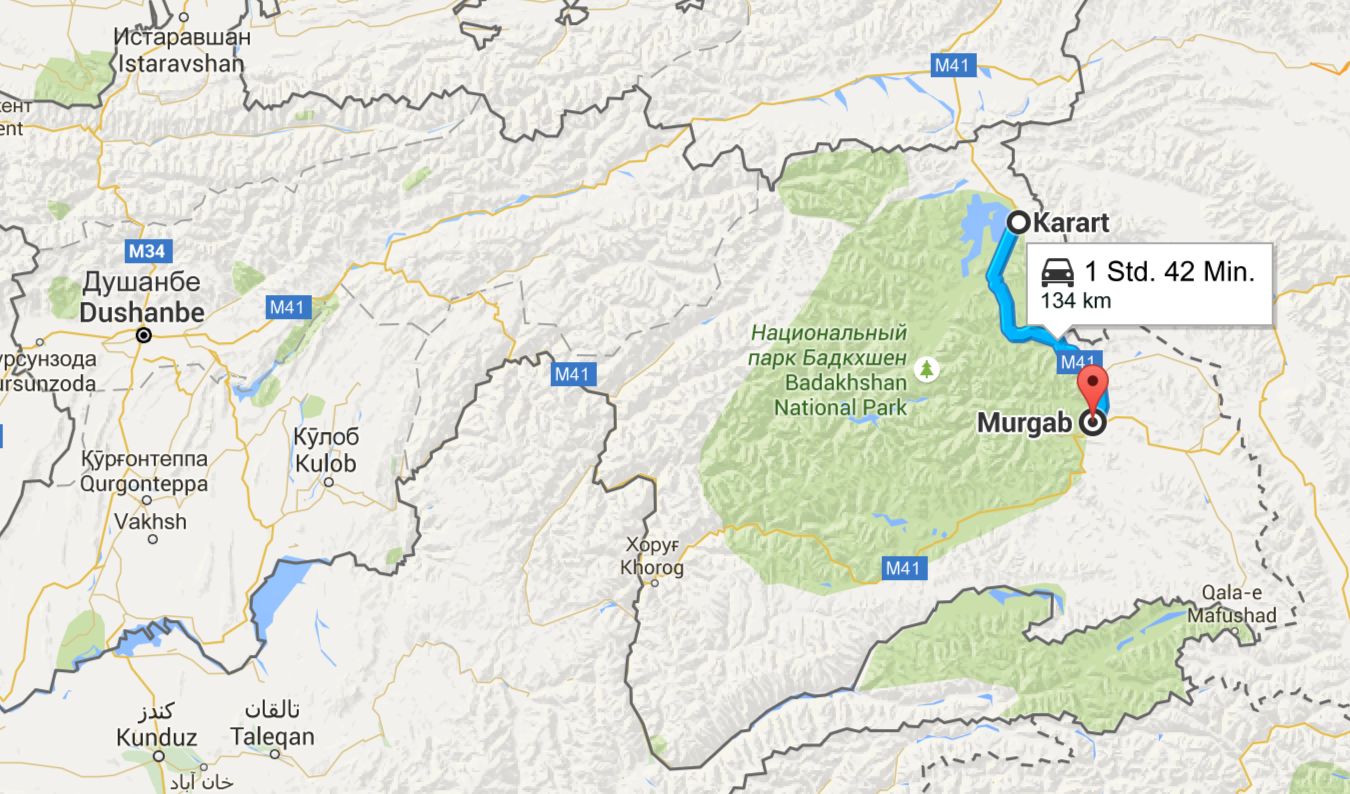
Day 7: Pass Akbaital – Murghab: 89km, altitude gain 544m
Today we would traverse our highest pass ever at an altitude of 4655m. As we leave early we start cycling without any wind. I feel very bad with stomach cramps and have to relieve myself right before the pass for the first time. The climb is very difficult with very steep gradients and we walk several times. The altitude adds to the difficulty and we often only manage to cycle 50m before we rest again. The landscape is surreal, red mountains that change colours with the light, hardly any vegetation and besides the funny whistles from the marmots that curiously watch us an eerie silence. After 12.5 km we happily reach the summit and as from now it would only go down – altitude and health-wise. I start feeling like a dog as I leave a mark every few kilometers. After lunch we have our first strange encounter. About 500m ahead I see people standing on the road, there is nothing else close-by and I get a little worried not knowing what to expect. We both take out our pepper spray and cycle next to each other. Only a maximum of 10 to 20 cars are passing us each day and we know we are on our own. Getting closer we recognize two soldiers armed with machine guns standing and another man sitting on the road. As we approach, the sitting man gets up to let us pass. Johan greets ‚Salam’, they are all greeting back and we are gone with the wind.  At around 3pm the wind picks up again and again it is headwind. I am very exhausted as my diarrhoea is getting worse by the minute and knowing I still have to cycle at least 10km against the strong wind makes me break down for the first time on this trip. I can’t stop crying not knowing how to get to the next village. Johan tries to comfort me and we continue slowly with me cycling in his slipstream. When we finally see the village after the last bend in a valley tears keep running again. This time they are tears of joy. We are nearly there. This night I spend mostly on the loo – another sleepless night!

Leaving our camp early in the morning
Washboard!
Washboard!
First toilet break
First toilet break
Ascending the highest pass
Confident to be able to make it
Ha - we made it...
Ha – we made it…
...but we definitely didn't fly
…but we definitely didn’t fly
The beginning of a very long downhill
Sand storms
Sand storms
This was more or less the population between the pass and Murghab
Happily arrived in Murghab

Days 8 and 9: Murghab
Long cycling days, food I should not have eaten, maybe contaminated water, headwinds, sleepless nights due to the altitude, the most demanding cycling ever on bad roads and a heavy bike had taken its toll. I am down with fever and the worst diarrhoea ever and we need to take two days off of cycling. My symptoms correspond with the traveller’s diarrhoea and I start taking antibiotics which make me feel much better the second day and confident to be able to continue our journey tomorrow.

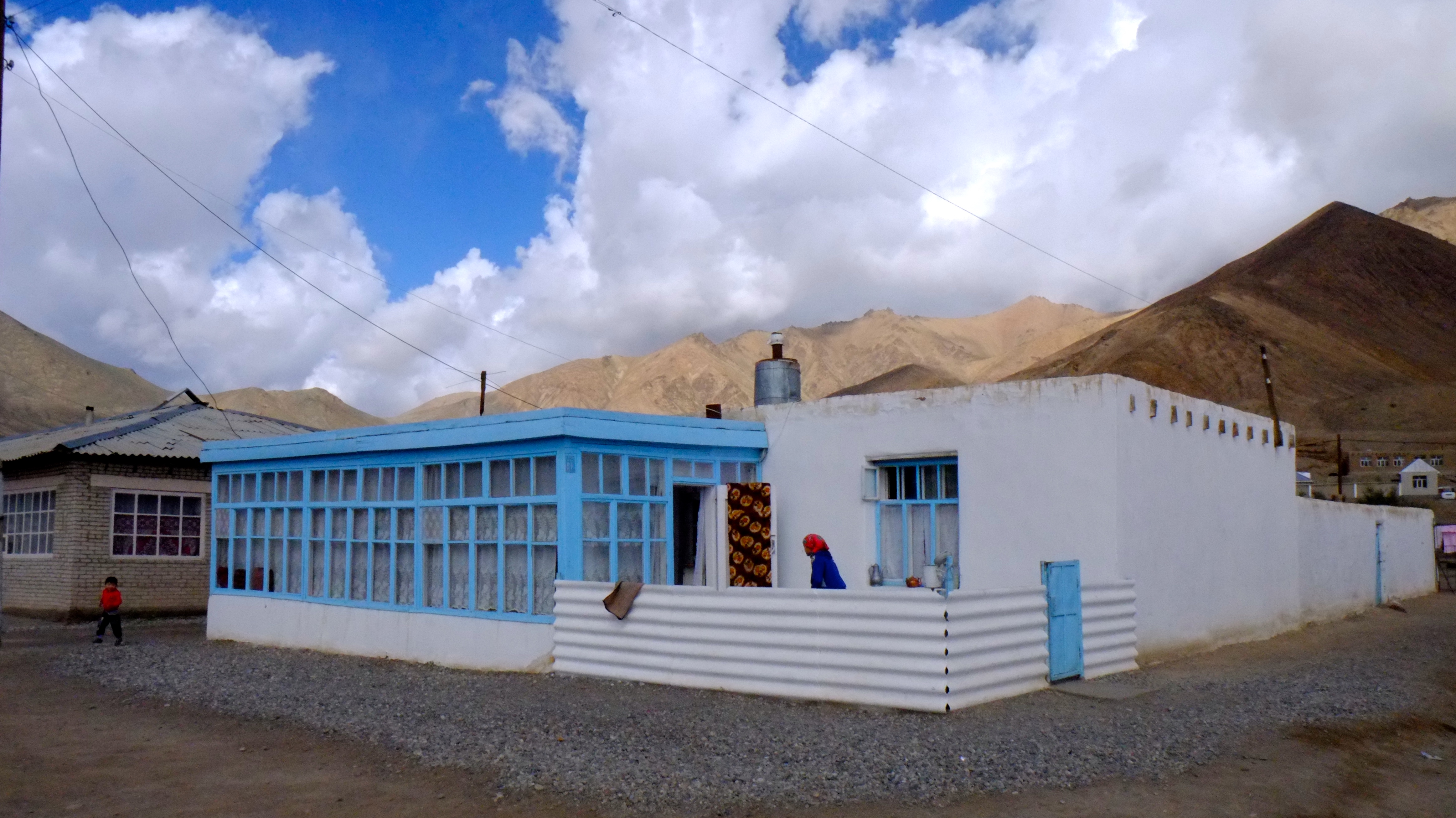
A typical townhouse in the Pamirs
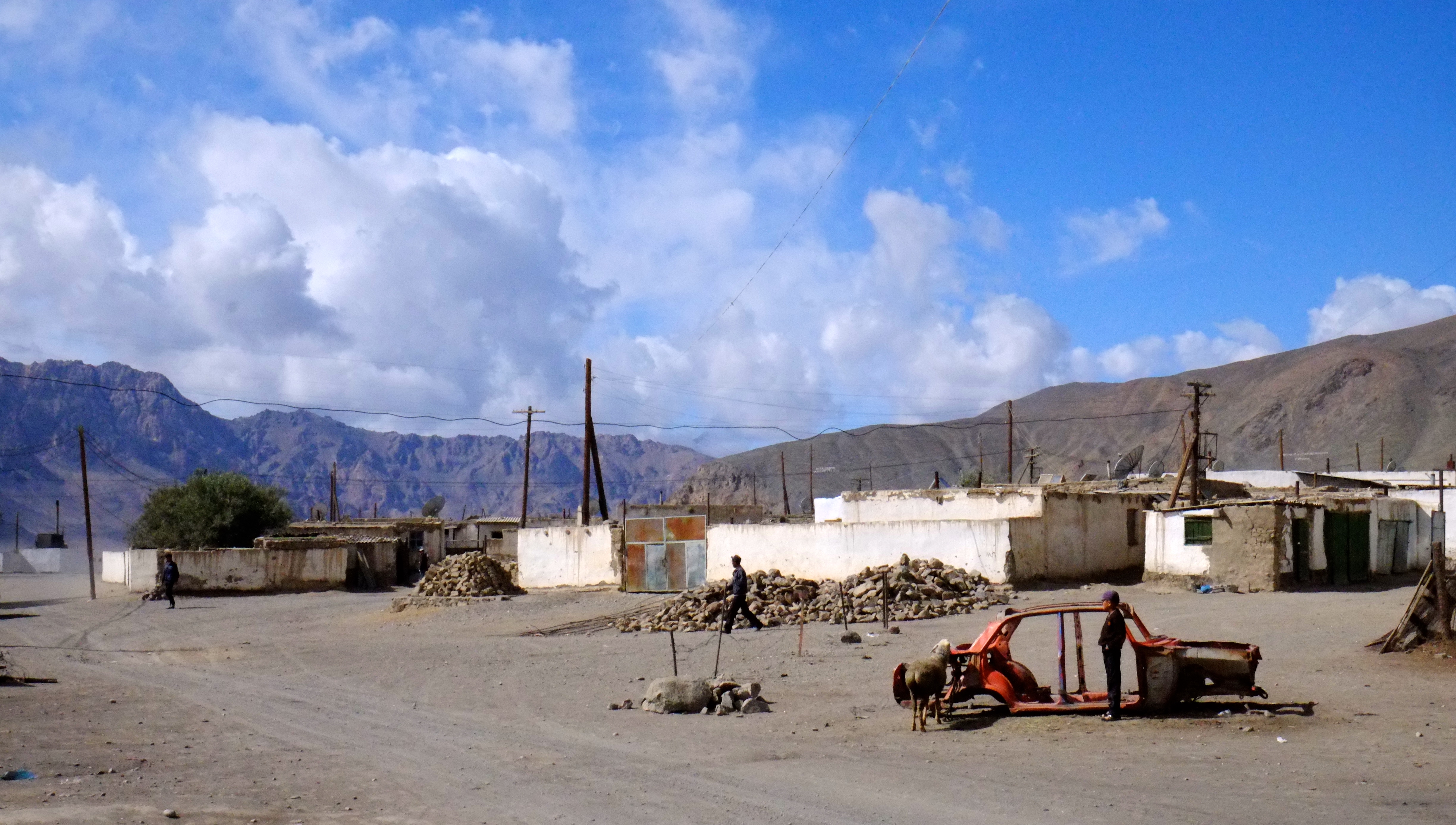
The desolate township of Murghab
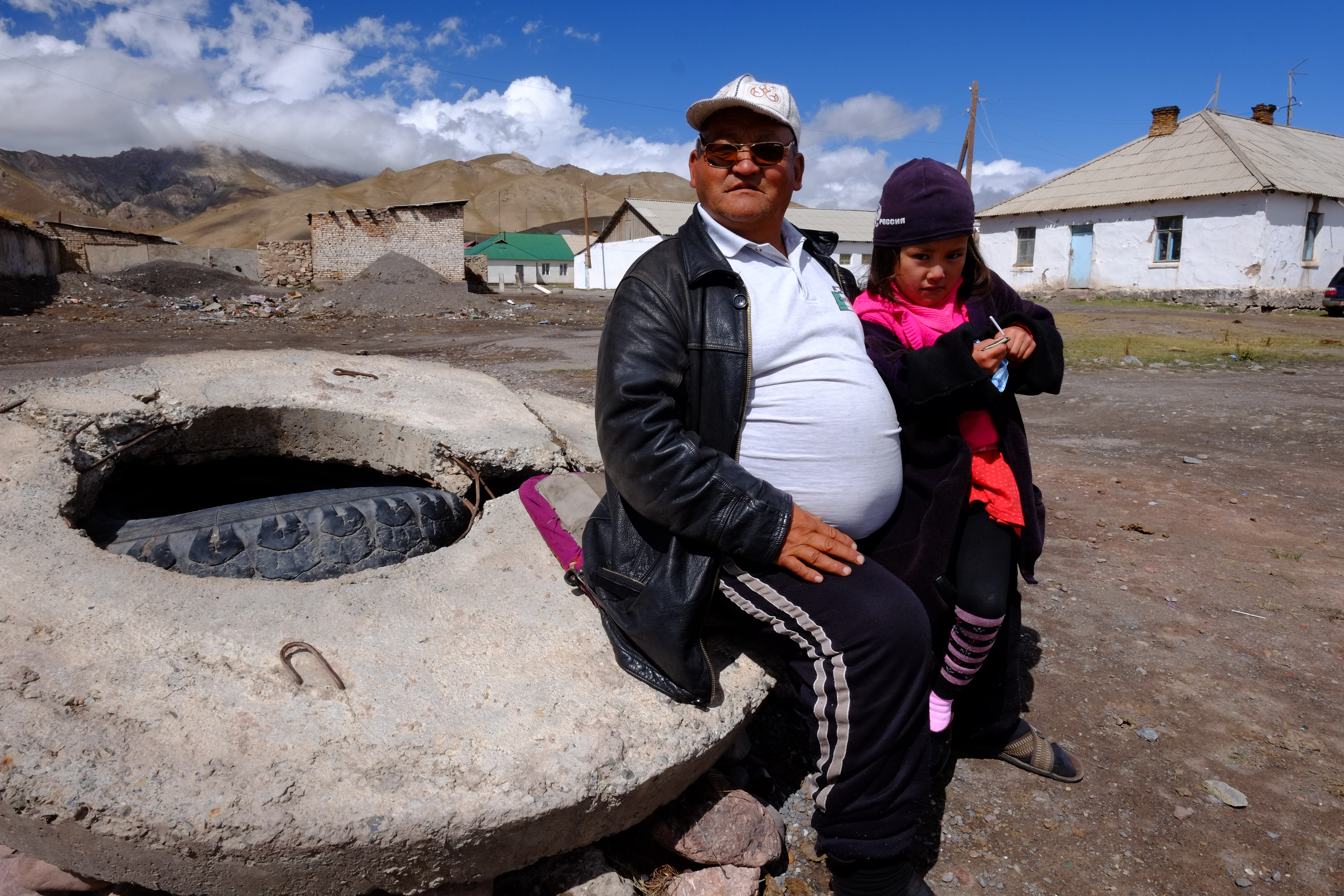
Lenin welcomes us in the smallest village
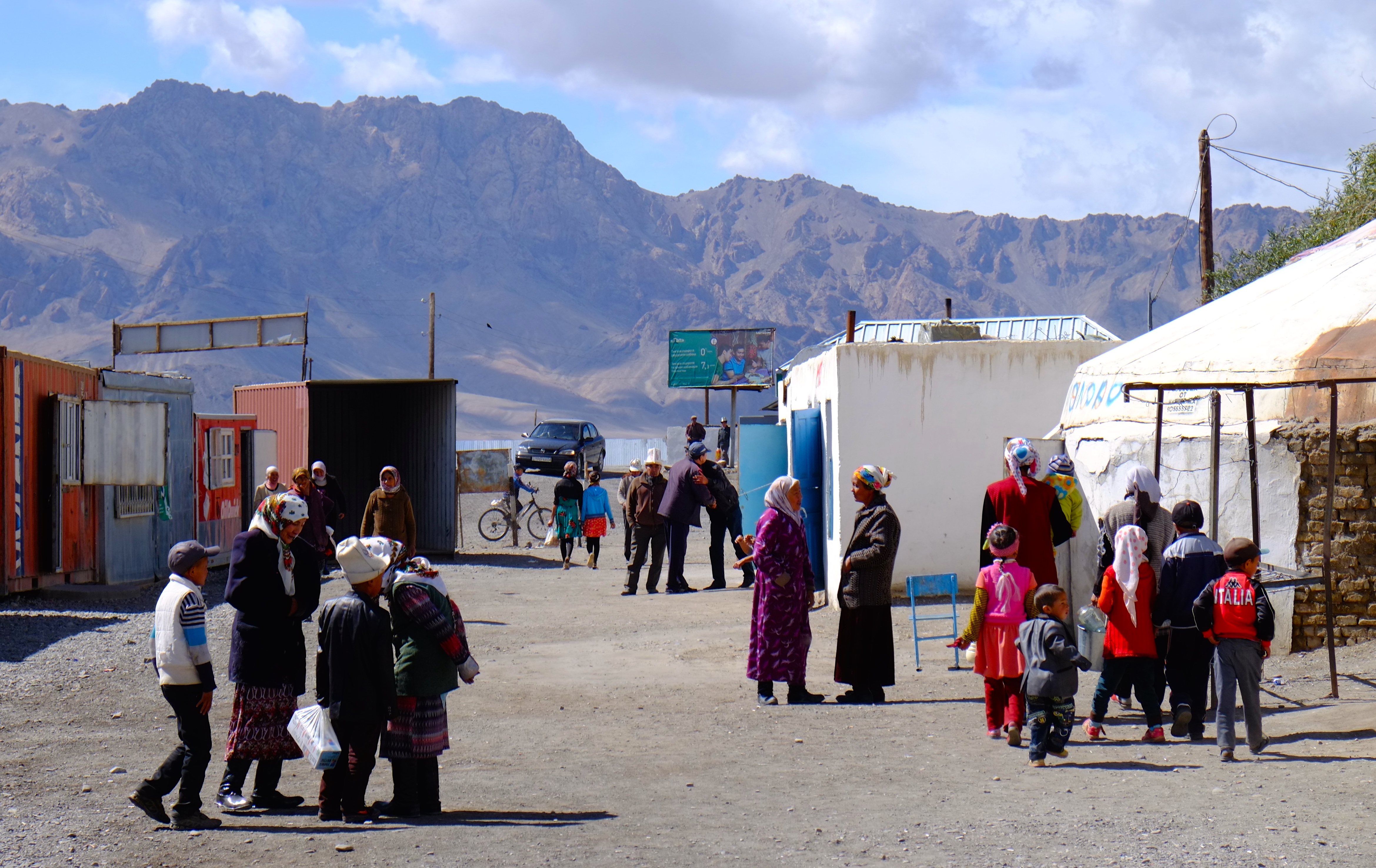
Market time
Market time

Der berühmt-berüchtigte Pamir Highway – Teil 2

23. August – 8. September 2015 – Der Pamir Highway ist eines der Highlights unserer Reise, daher berichten wir über die wichtigsten Geschehnisse in insgesamt vier Teilen anhand unserer täglichen Tagebucheinträge.

137km, 1047 meters altitude gain (1258km and 16,155 m altitude gain in total)
137km, 1.047 Höhenmeter (1.258km und 16,155 Höhenmeter insgesamt)

Tag 6: Karakul – Fuß des Passes Akbaital: 48km, 503 Höhenmeter
Wir kommen heute kaum voran, wir sind spät losgefahren und der Wind bläst gnadenlos in unser Gesicht. Wir treffen zwei österreichische Radler und Eddy (nicht Merckx) aus Belgien, die heute Glück haben, erkundigen uns über die bevorstehende Strecke und weiter geht es. Nach 40km gesellt sich zum Wind auch noch extremes Waschbrett und ich werde vor Anstrengung immer schwächer und schiebe immer öfter mein Rad, da ich so bei diesem Gegenwind und Straßenbelag deutlich schneller vorankomme. Kurz vor dem Pass sehen wir ein Camp und beschließen, dort zu bleiben. Bevor wir bei den Bauern anfragen klären wir ab, dass wir unser eigenes Zelt aufbauen und selber kochen. Fünf Minuten später hat uns Johan für knapp sieben Euro ein Bett in der Hütte ‘gebucht’ einschließlich Halbpension. Zunächst sind wir froh, da wir uns für den restlichen Tag viel Arbeit sparen, bereuen dies aber recht schnell. Die Menschen sind sehr gastfreundlich, wir bekommen Tee, Brot Kefir und Butter. In der total überheizten Hütte ruhen wir uns bei Temperaturen von ca. 30 Grad ein bisschen aus, ersticken aber beinahe, da der kleine Ofen, der zum Kochen und Heizen genutzt wird, viel zu viel Rauch in die Hütte bläst. Wir können uns nicht waschen und so halten wir bis zum Abendessen durch. Es gibt wieder Tee und Brot und so etwas wie Ravioli mit Fleisch- und Zwiebelfüllung. Schmeckt lecker, ist aber viel zu fett. Nach dem Essen fängt die zehnjährige Tochter an, unser Bett vorzubereiten. Dazu legt sie dicke Decken und Kissen auf dem Boden aus und deutet an, dass wir uns nun schlafen legen könnten. Da der Rest der Familie noch um den Tisch herum sitzt und isst und wir noch immer in unseren Radklamotten vor uns hinmüffeln, bleiben wir erst einmal sitzen. Außerdem würden wir uns ja zumindest gerne unsere Schlafanzüge anziehen, wenn wir uns schon nicht waschen können. Nach der zweiten Aufforderung, uns doch jetzt schlafen zu legen, gehorchen wir. Flüsternd fährt die Familie mit ihrem Abendessen fort und feuert immer wieder die Heizung. Nach dem Essen lässt das Oberhaupt der Familie direkt neben Johan einige Fürze fahren, raucht zwei Zigaretten während wir fast eingehen unter den schweren Decken und mit all unseren Kleidern am Körper.  Ungefähr eine uns endlos vorkommende Stunde später, in der wir natürlich kein Auge zugetan haben, beginnt die Familie mit den eigenen Schlafens-Arrangements. Dazu müssen weitere Decken ausgelegt werden, die direkt hinter uns gestapelt sind und so stolpert das Mädchen für die nächsten 10 Minuten andauern über uns. Nachdem sie endlich fertig sind und alle liegen, beginnt das Mädchen endlos zu reden. Wir sind natürlich immer noch hellwach, mittlerweile haben wir uns jedoch heimlich ausgezogen. Beim besten Willen konnte ich mir nicht vorstellen, eine Nacht in Sport-BH und Radhose zu verbringen. Johan war so schlau, und hat sich seinen Schlafanzug mitgenommen, ich hatte leider nur mein verschwitztes T-Shirt, unsere Kleidertasche stand am anderen Ende der Hütte für uns unerreichbar. Jetzt lag ich vor der Herausforderung, meinen nackten Hintern unter der dicken Decke bei weiterhin 30 Grad in der Hütte zu verstecken und mich am nächsten Morgen rechtzeitig bevor die Familie wach wird, anzuziehen. Nachdem es dann endlich still wird hören wir ein weiteres seltsames Geräusch: das Mädchen ist wieder aufgestanden, um in eine Schüssel zu pinkeln. Dieser Vorgang wiederholt sich dann mehrfach in der Nacht und am Morgen wachen wir müder auf als am Tag zuvor. Die Höhe von 4.100m und meine sich ankündigenden Magenprobleme haben zu dieser schlechten Nacht wohl auch noch beigetragen.

Our nice little homestay
Homestay am Karakul-See

Leaving Sary Tash

Leaving Sary Tash
Wir verlassen Sary Tash
Lake Karakul
Am See Karakul
Eddy from Belgium
Eddy aus Belgien

Tag 7: Pass Akbaital – Murghab: 89km, 544 Höhenmeter
Heute überqueren wir unseren höchsten Pass von 4.655m. Da wir früh losfahren, weht noch kein Wind. Mir geht es nicht sehr gut, ich habe starke Magenkrämpfe und muss mich kurz vor dem Pass zum ersten mal erleichtern. Der Anstieg ist sehr schwer und steil und wir schieben beide des öfteren. Die Höhe macht es uns nicht leichter und oft schaffen wir nur 50m, bevor wir wieder pausieren. Die Landschaft um uns herum ist irreal, rote Berge, die mit der Lichteinstrahlung die Farbe ändern, kaum Vegetation und neben den lustigen Pfeiftönen der Murmeltiere, die uns neugierig beobachten, herrscht unheimliche Stille. Nach 12,5 km erreichen wir glücklich den Gipfel und ab hier geht es nur noch nach unten – sowohl was die Höhe aber auch meinen Gesundheitszustand anbelangt. So langsam komme ich mir wie ein Hund vor, der alle Paar Kilometer seine Marke hinterlässt. Nach dem Mittagessen passiert zum ersten Mal etwas Seltsames. Ungefähr 500m vor uns sehe ich  Menschen auf der Straße stehen, obwohl hier nichts um uns herum ist als Landschaft. Ich werde etwas nervös, da ich nicht weiß, was uns erwartet. Wir stecken unser Pfefferspray in die Tasche und radeln nebeneinander. Täglich passieren uns nur ungefähr 10 bis 20 Autos und wir wissen, dass wir auf uns selbst gestellt sind. Als wir näher kommen erkennen wir zwei Soldaten, die mit Maschinengewehren bewaffnet sind und einen weiteren Mann, der auf der Straße sitzt. Kurz bevor wir die Männer passieren, steht der sitzende Mann auf. Johan grüßt freundlich “Salam”, wir werden zurückgegrüßt und dürfen ungestört weiterradeln.

Gegen 15 Uhr beginnt es wieder zu winden und wieder ist es Gegenwind. Ich bin mittlerweile sehr erschöpft, mein Durchfall wird schlimmer und schlimmer und mit dem Wissen, dass wir noch mindestens zehn Kilometer gegen den Wind radeln müssen,  breche ich zusammen. Ich kann nicht mehr aufhören zu heulen, da ich nicht weiß, wie ich es bis ins nächste Dorf schaffen soll. Johan tröstet mich und in seinem Windschatten fahren wir langsam weiter. Als wir dann endlich nach einer letzten Kurve das Dorf im Tal liegen sehen, fließen die Tränen wieder – dieses Mal vor Freude. Wir haben es fast geschafft! Diese Nacht verbringe ich fast ausschließlich auf der Toilette – schon wieder schlaflos!

Leaving our camp early in the morning
Wir verlassen unser Lager am frühen Morgen
Washboard!
Waschbrett!
First toilet break
Erster Toilettenstopp!
Ascending the highest pass
Auf dem Weg zum Gipfel unseres höchsten Passes
Confident to be able to make it
Zuversichtlich, dass wir auch das schaffen!
Ha - we made it...
Ha – geschafft…
...but we definitely didn't fly
…geflogen sind wir allerdings nicht!
The beginning of a very long downhill
Der Anfang einer langen Abfahrt
Sand storms
Sandstürme
This was more or less the population between the pass and Murghab
Das war mehr oder weniger die gesamte Bevölkerung auf diesem Streckenabschnitt
Happily arrived in Murghab
Glücklich in Murghab

Tage 8 und 9: Murghab
Lange Radeltage, Essen, das ich wahrscheinlich nicht hätte zu mir nehmen sollen, eventuell verunreinigtes Wasser, Gegenwind, schlaflose Nächte aufgrund der Höhe, das härteste Radfahren auf schlechten Straßen, das ich je mitgemacht habe und ein schweres Fahrrad haben Spuren hinterlassen. Ich liege im Bett mit Fieber und sehr starkem Durchfall und muss zwei Tage pausieren. Die Symptome sprechen für Reisedurchfall und die Einnahme eines mitgebrachten Antibiotikums verbessern meinen Zustand am zweiten Tag schnell, so dass ich mich in der Lage fühle, morgen die Reise fortzusetzen.

A typical townhouse in the Pamirs
Ein typisches Stadthaus in den Pamirs
The desolate township of Murghab
Die etwas trostlose Stadt Murghab
Lenin welcomes us in the smallest village
Lenin heißt uns im kleinsten Dorf willkommen
Market time
Auf zum Markt!

The Infamous Pamir Highway – Part 1

23 August – 8 September, 2015 – As the Pamir Highway has been an important milestone of our journey you’ll find below our diary entries with the highlights of every day presented in four different parts.

293km, altitude gain: 5224m (1121km and 15107m altitude gain in total)
293km, altitude gain: 5224m (1,121km and 15,107m altitude gain in total)

Day 1: Osh – Gulcha: 85km, altitude gain 1436m
We’re in doubts if we should leave as heavy rainfalls are forecast. We anyway leave as we are on a tight schedule given our expiring Tajikistan visas and are happy we did as it doesn’t rain all day. It’s a climbing day through desolate landscapes with small villages in a bad state, a pass of 2,389m and little tailwind. On our way we are given apples and carrots and meet an Irish-American cycling couple. We are grateful for the guesthouse in Gulcha as we don’t have to cook ourselves as we are shattered after a long days’ cycling.

Arriving at the guesthouse with well prepared owners
Preparation at its best!

Day 2: Gulcha – Ak Bosoga: 77km, altitude gain 1369m
Early start on a beautiful day with clear blue sky and no wind. We continue on undulating roads through the Gulcha valley. High mountains to the left and right, the valley narrows and opens up again to make room for another small village. Later the landscape reminds us on the deserts of California. We are cycling into a strong headwind – one tailwind day had been too good for us. At the end of the afternoon we ask in the village for a place to sleep and the family invites us in. We get chai, cookies, fresh melon and soup and our own room to sleep. We love Kyrgyz hospitality.

An unexpected coffee break

DSCF8149

And another break
And another break

DSCF8220

The wind is picking up
Almost there...
Almost there…
The Kyrgyz family we stayed with

Day 3: Ak Bosoga – Sary Tash: 30km, altitude gain 922m
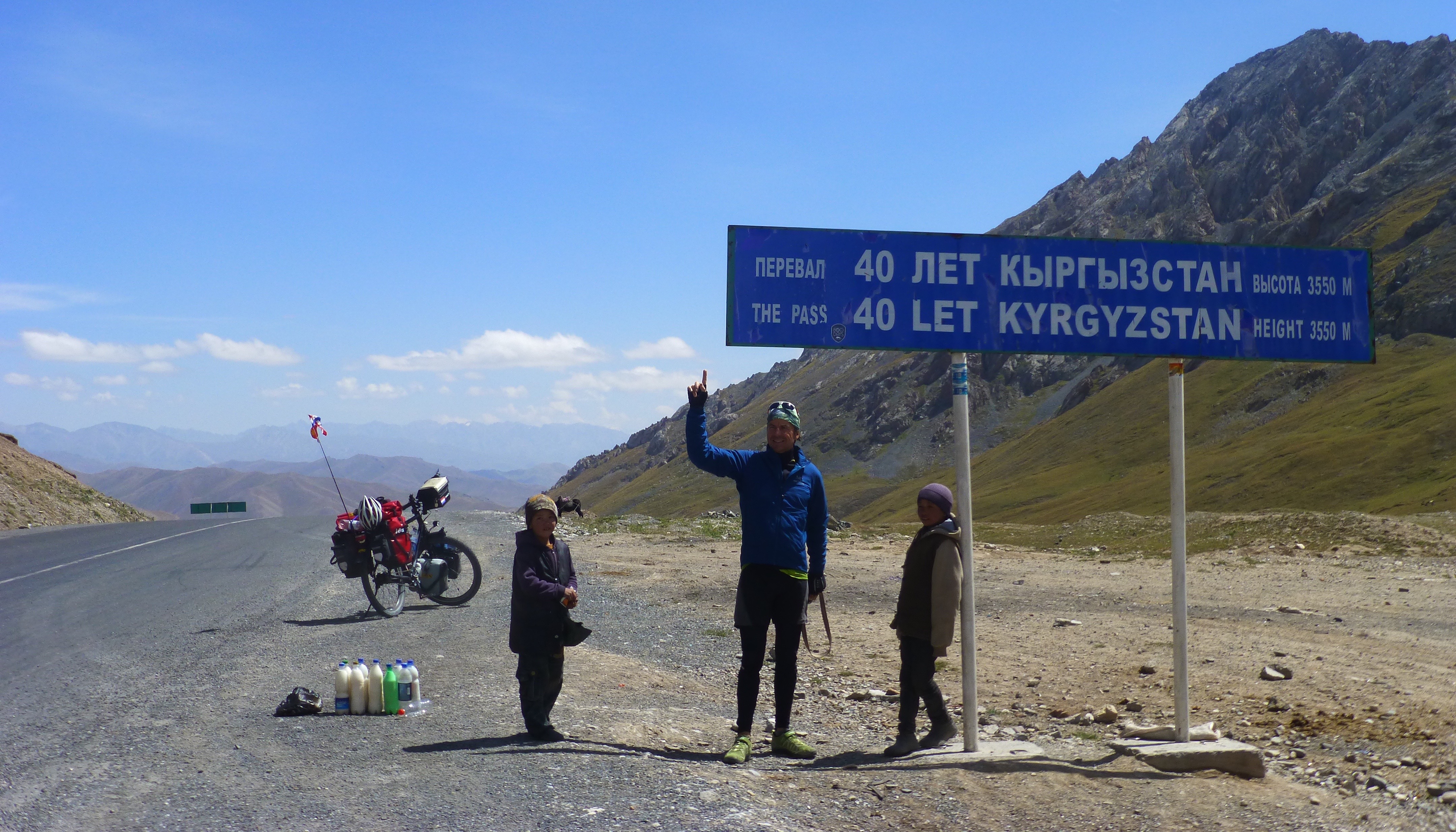
Another early start and with heavy legs we are climbing up another pass, again against the wind. Gradients are tough, most of the time at around 8%. After four hours we reach the top at 3615m, annoyed with the wind and the kids who are touching everything. For the first time we see snow-capped Peak Lenin, the second highest mountain in Kyrgyzstan at 7134m. Later, Sary Tash offers superb views over a dazzling mountain horizon. We finally go down, but only for three kilometers, then the road climbs for another two kilometers to the second peak at 3550m. What a deception!  We arrive early, have lunch at our guesthouse, do the necessary shopping at one of the two shops that also serves as the local bar, money changer and telecom outlet. We are lucky as the shop owner’s husband seems to be shopping in Osh and every time we are asking for something that’s missing she is bellowing our order into her phone. We can pick it up the next morning at 7am.

Ascending the first pass before Sary Tash
Our first 1000 kilometers cycled
Summit #1
Summit #1
Summit #2
Summit #2

Day 4: Sary Tash
Another rest day at 3200m as it doesn’t look inviting to fight against the heavy storm and rain outside. I don’t mind as it gives us more time to get adjusted to the altitude. The coming days we’ll be at over 4000m.

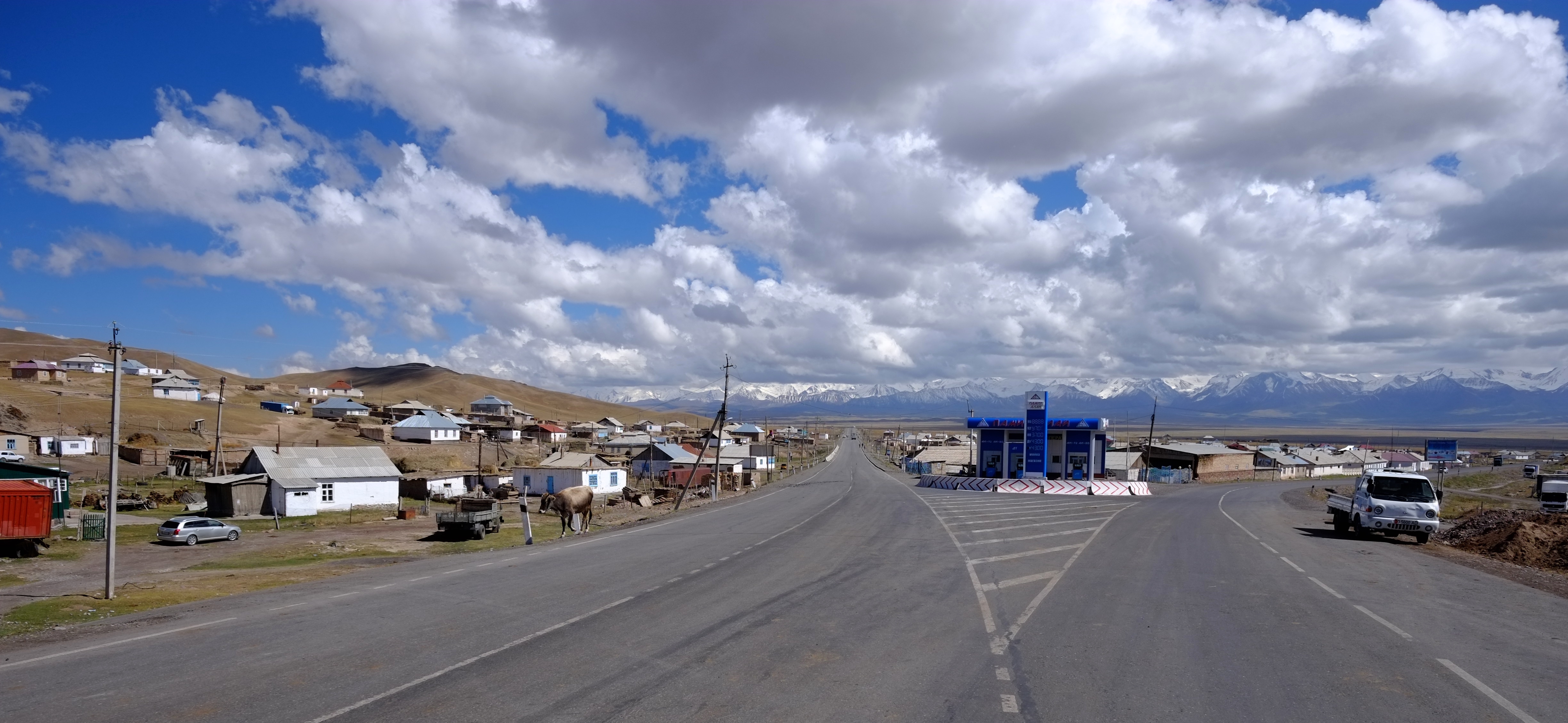
Downtown Sary Tash
Downtown Sary Tash: Left turn goes to China, right turn to Tajikistan
Locals
Locals

Day 5: Sary Tash – Karakul: 101km, altitude gain 1497m
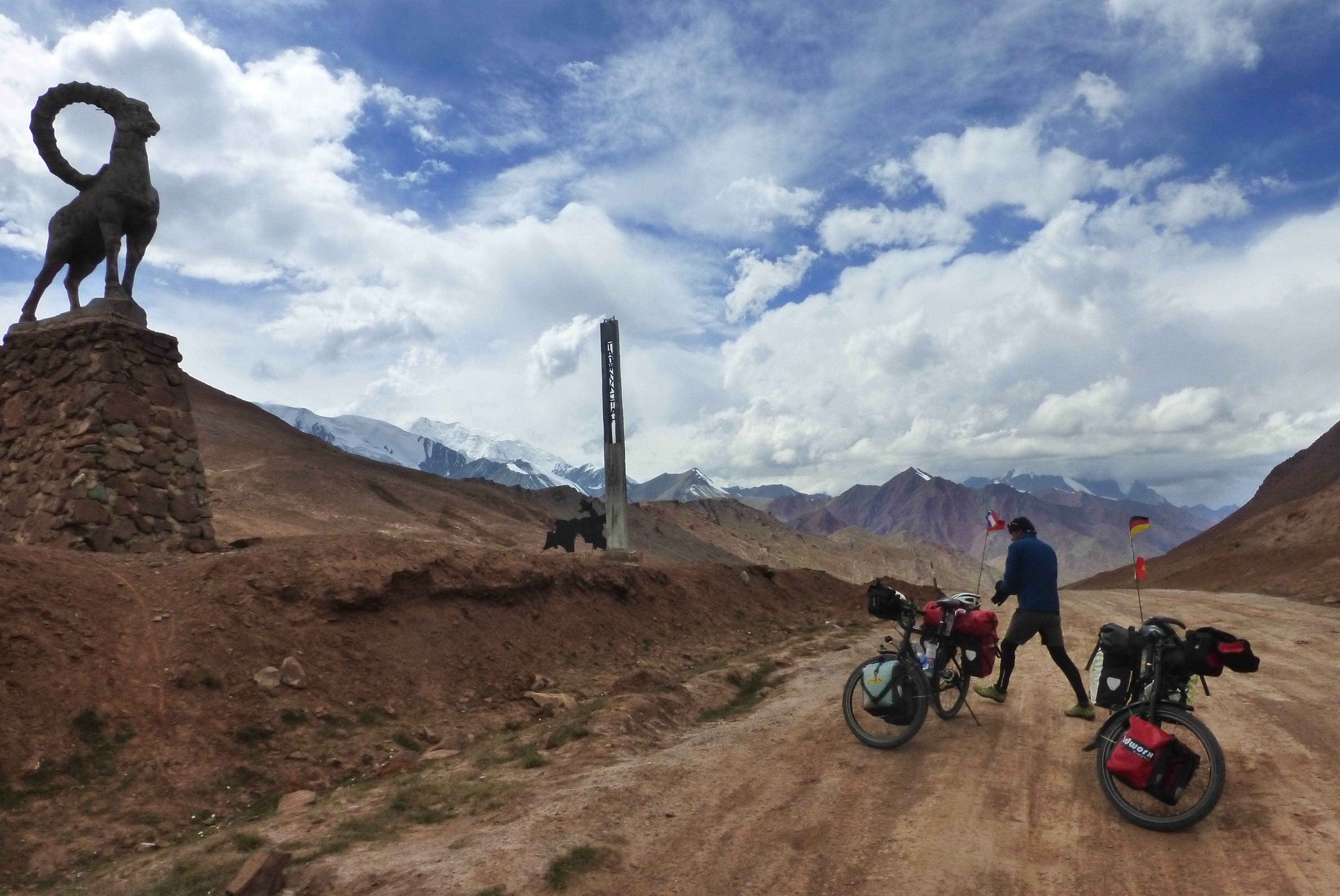
A beautiful day with a clear blue sky and rested legs – ideal to tackle two passes in one day. For about 20km we cycle with a view of the dazzling snow-capped mountain chain, to the right Peak Lenin. We pass the first border at 10:30 am without problems and shortly after start the climb of today’s first pass through 20km of no man’s land. Around us are red mountains, marmots and a few eagles are circling in the air. Other than that there is silence. Shortly before the border we meet an Australian motorcyclist warning us that there are issues with customs at the Tajik border. Two French tourists are held by not returning their passports as they don’t want to pay a 10 $ fee for hoax-fumigation.
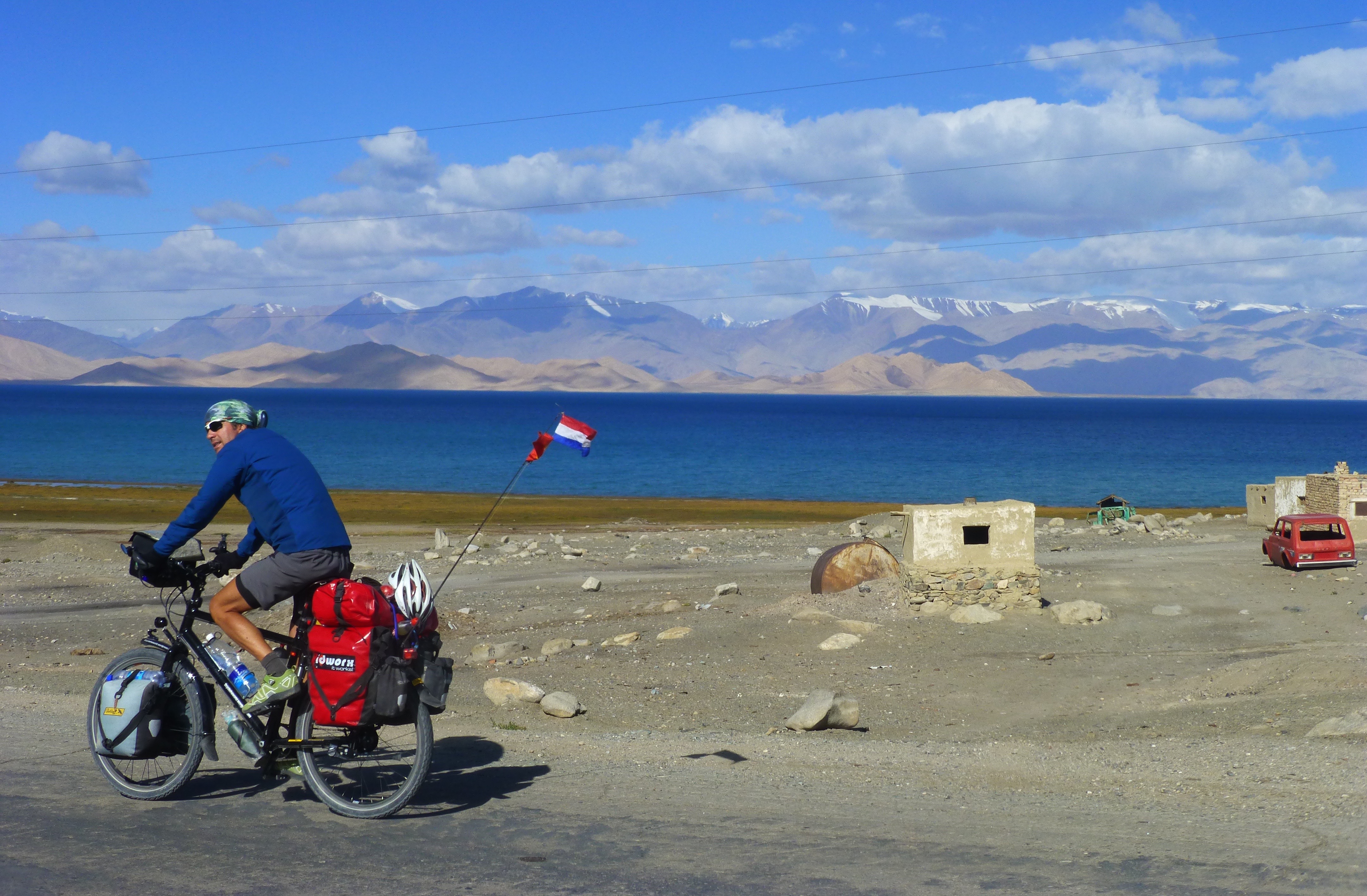
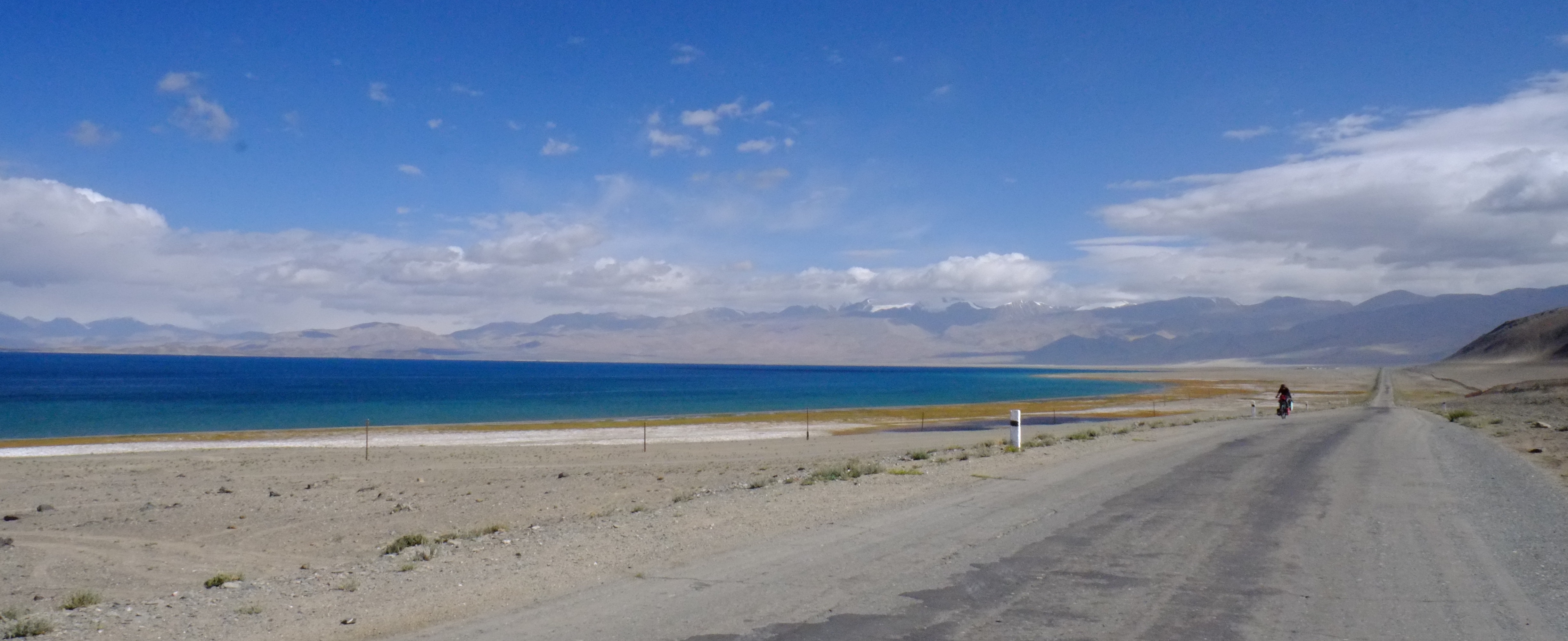
Arriving at the closed border gate a soldier walks slowly towards us asking for cigarettes. As we have none he walks away without opening the gate. Five minutes later he comes back, opens the gate, guides us to the customs office ( a sea container at an elevation of over 4100m), takes our passports and asks us to wait. Another five minutes later we get our stamped passports back and are officially welcomed to Tajikistan. We slowly cycle through another gate, always waiting for the fumigation-men, but nothing happens. We’re lucky again. We are now on a short downhill – just before the border we passed our ninth and last pass in Kyrgyzstan at 4336m – and cycle through a moon-like landscape with rough mountains around us, along an almost dried-out riverbed and dust storms that resemble thermal activities. We are even luckier as we are by now flying with a very strong tailwind making it easier for us to tackle today’s pass number two. At around 6pm we reach the summit with a fantastic view of lake Karakul. As from now it’s only downhill – 30km! However, the wind decides to change and the last 10km are a fight against it. Right before dark we arrive. Shattered but happy about our achievement – especially as we learned the next day, that we overtook a Scottish couple on their lightweight bikes!

Leaving Sary Tash
Leaving Sary Tash
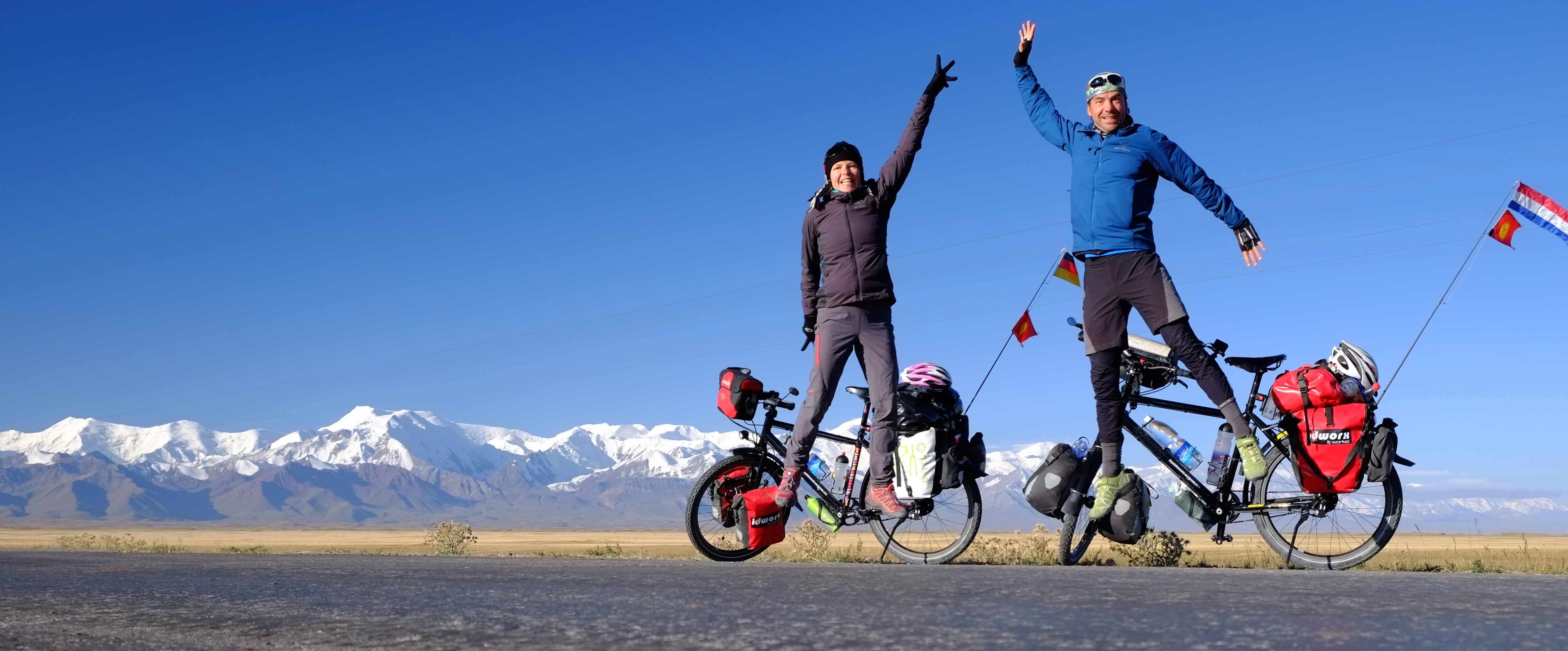
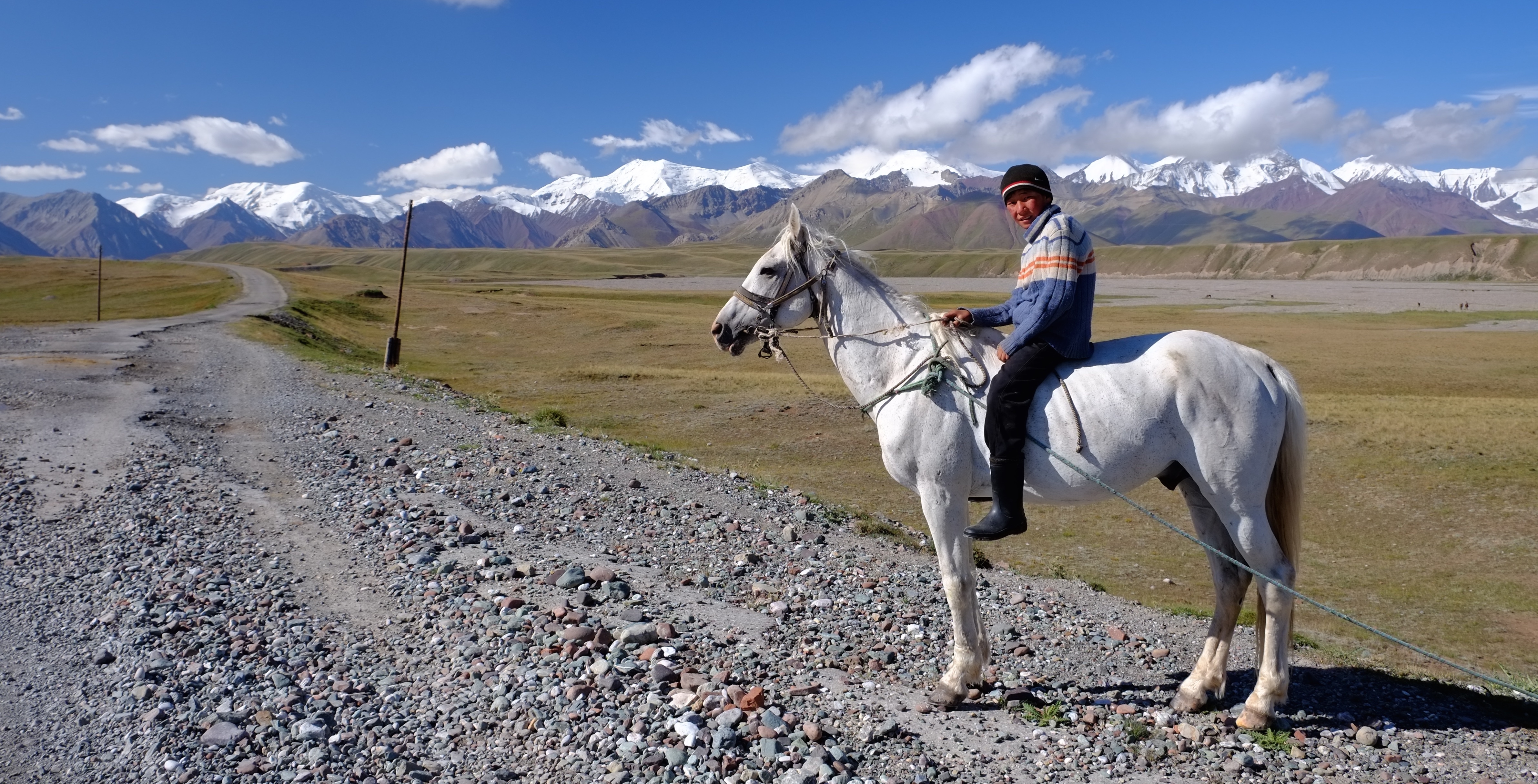
Photo session with Peak Lenin as a backdrop
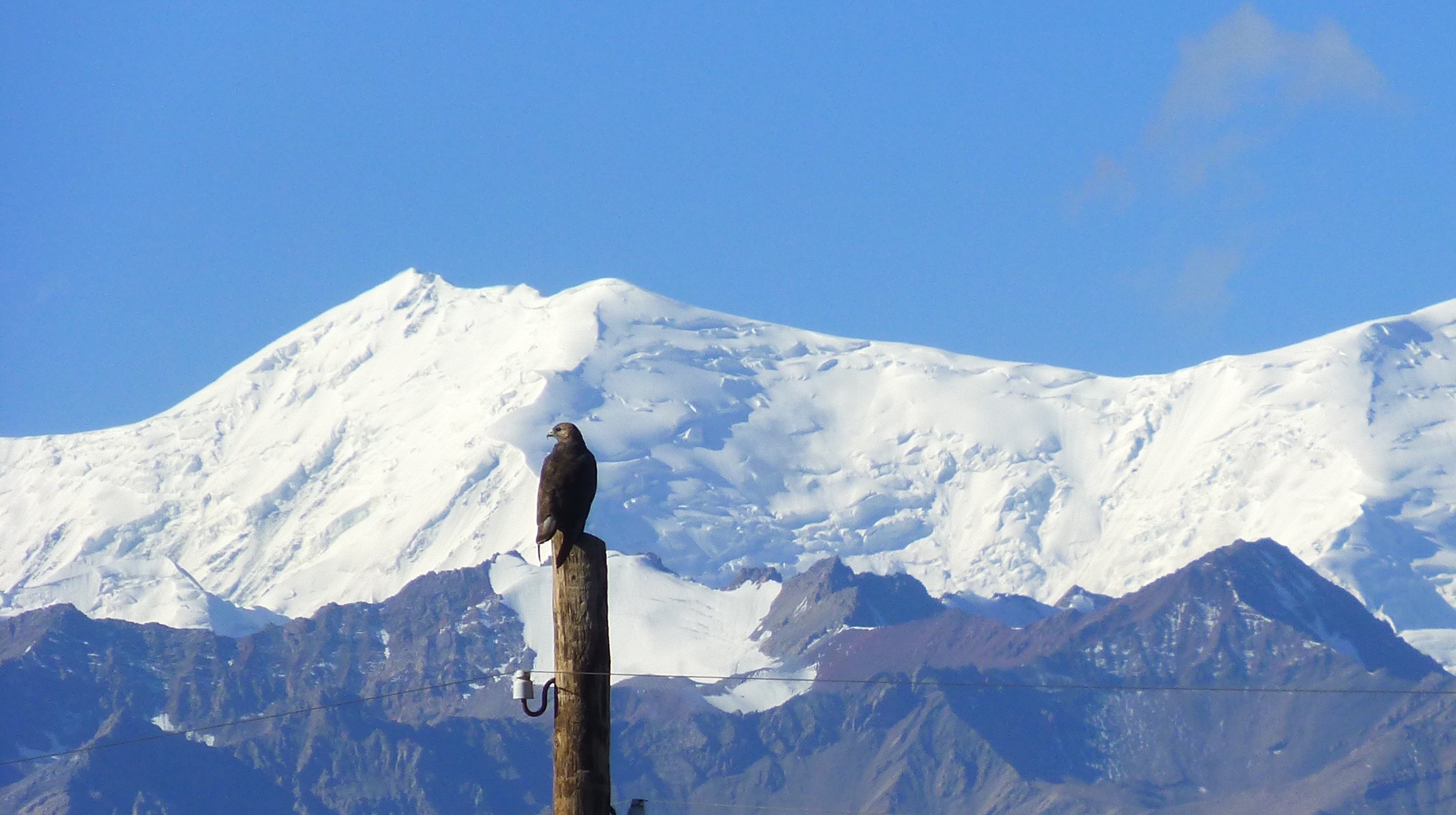
Is this an eagle?
Photo session with Peak Lenin as a backdrop
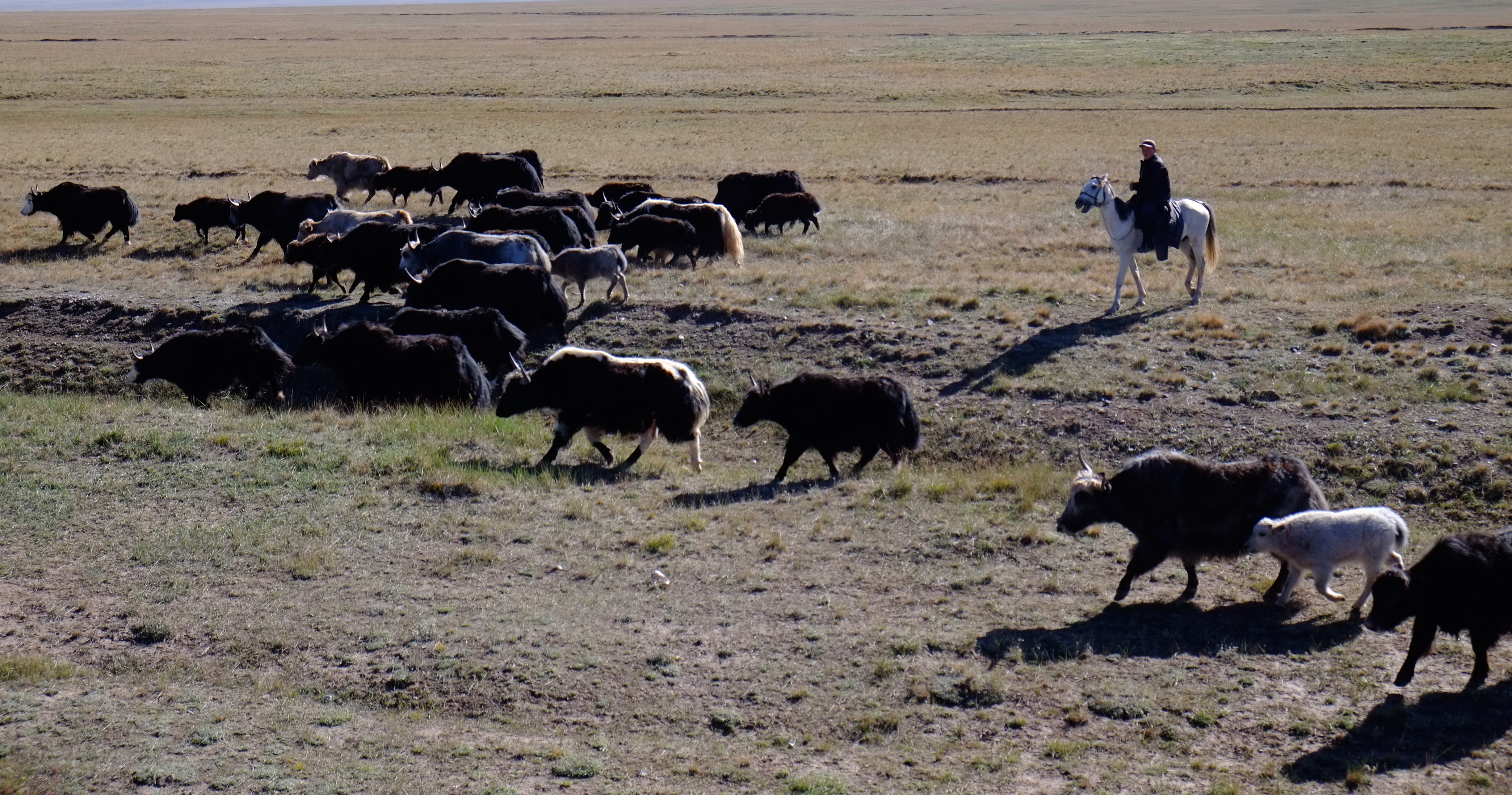
The first Yaks we see

DSCF8671

Lunch break right before the Kyrgyz border crossing
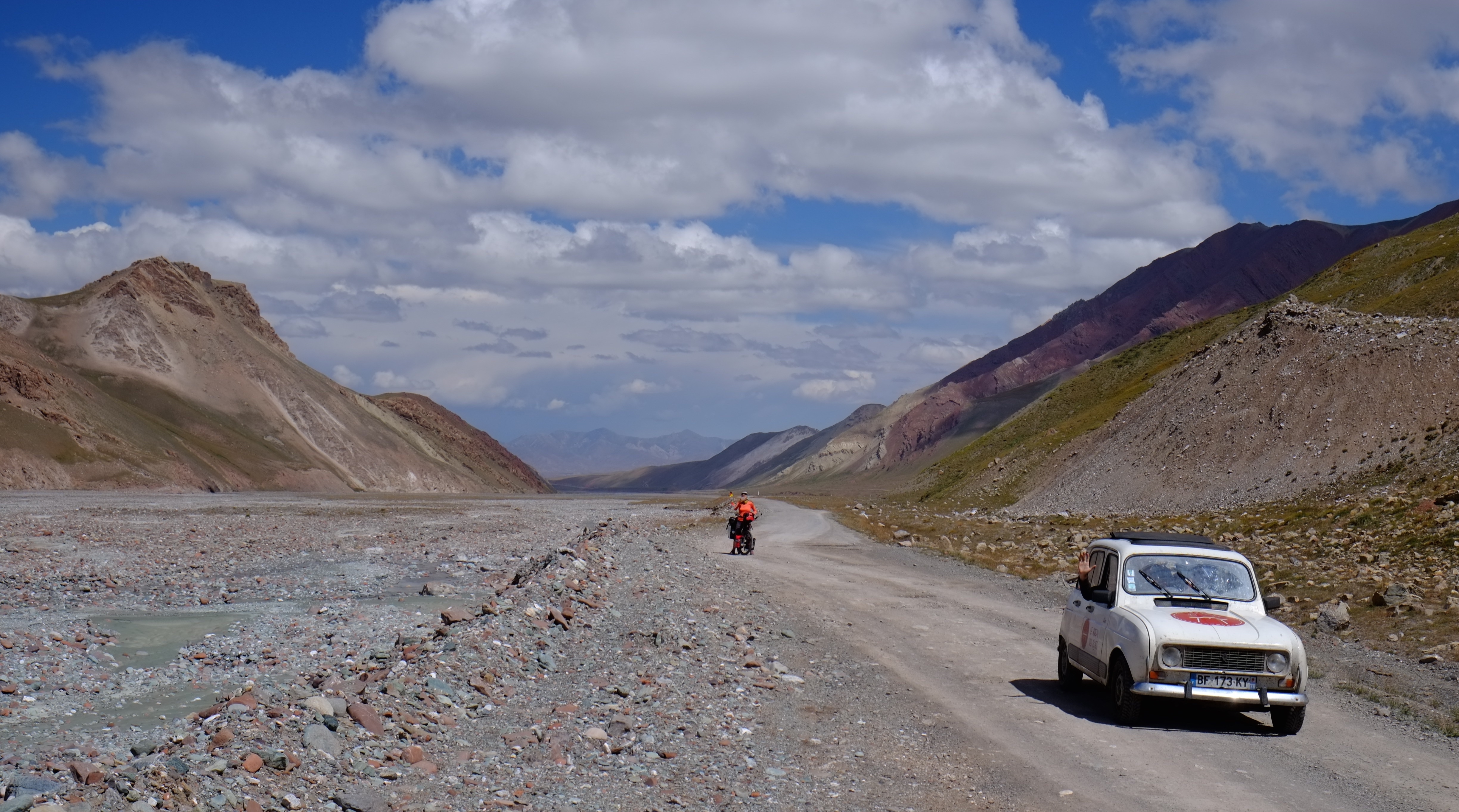
If an old R4 can do the Pamir Highway we should be able to do so, too!
The beginning of the first pass in no man's land between the borders
The beginning of the first pass in no man’s land between the borders
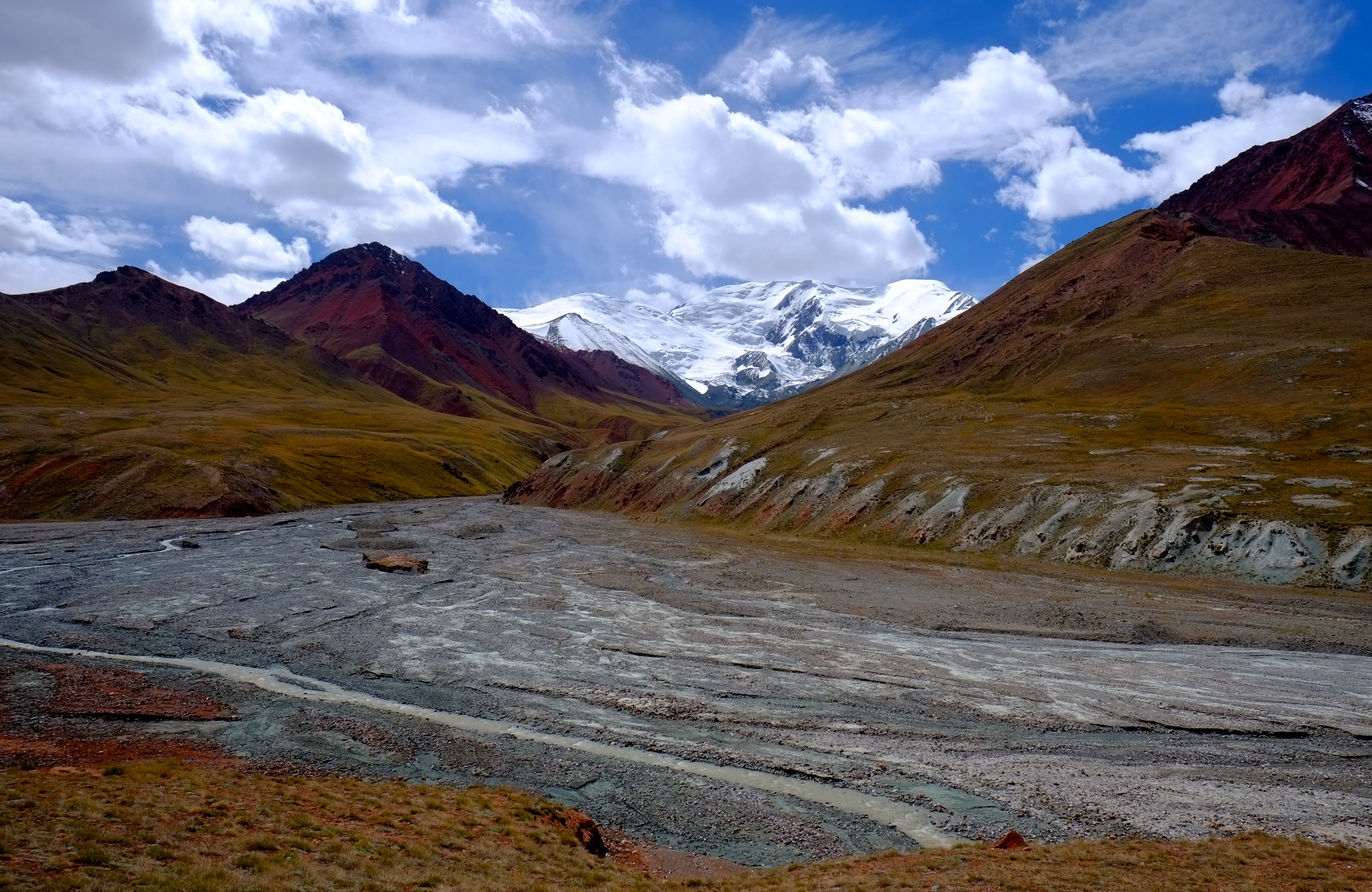
Getting closer to the top

DSCF8773

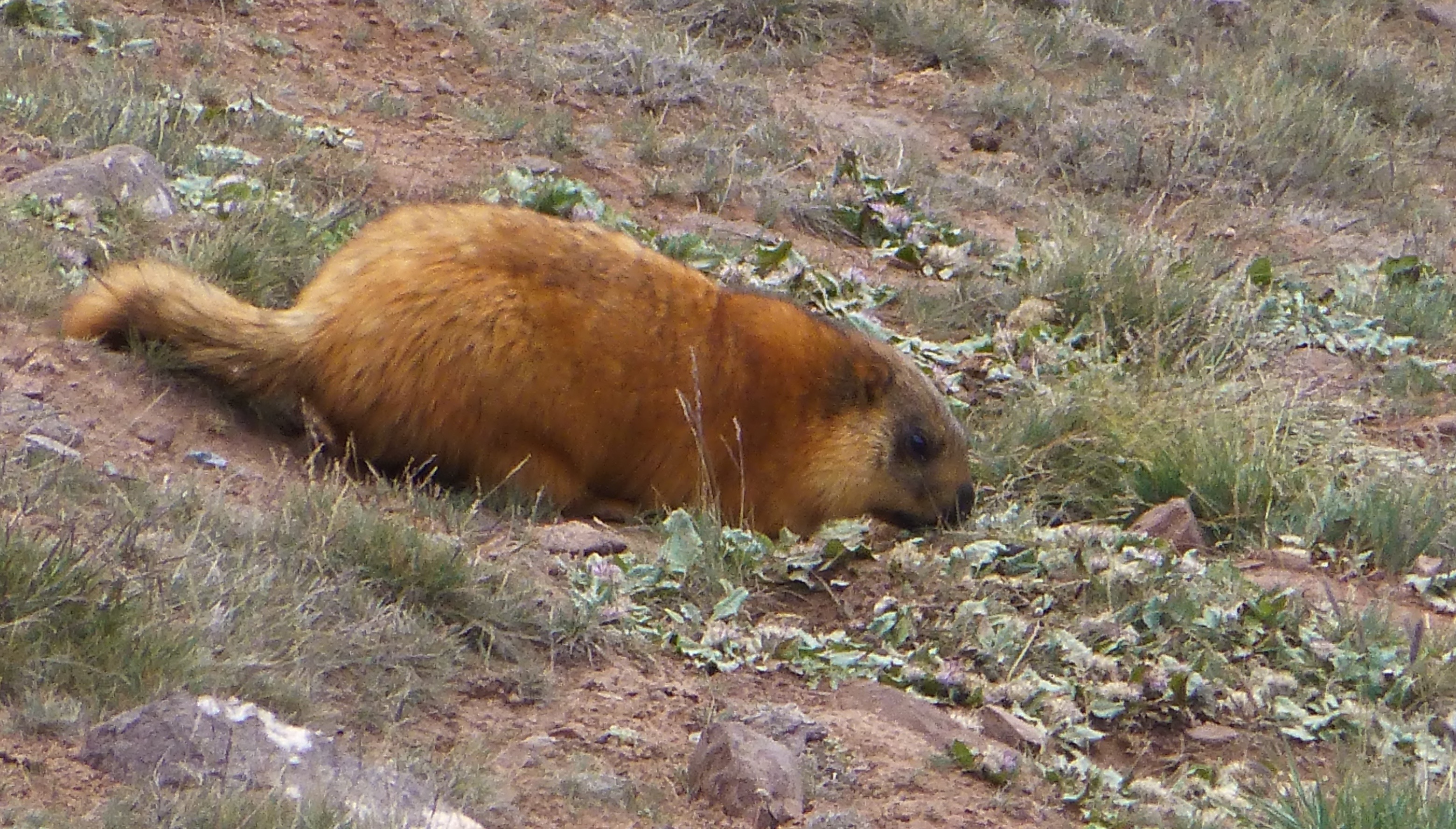
A fluffy marmot
A fluffy marmot
Highest point ever by bike at 4336m
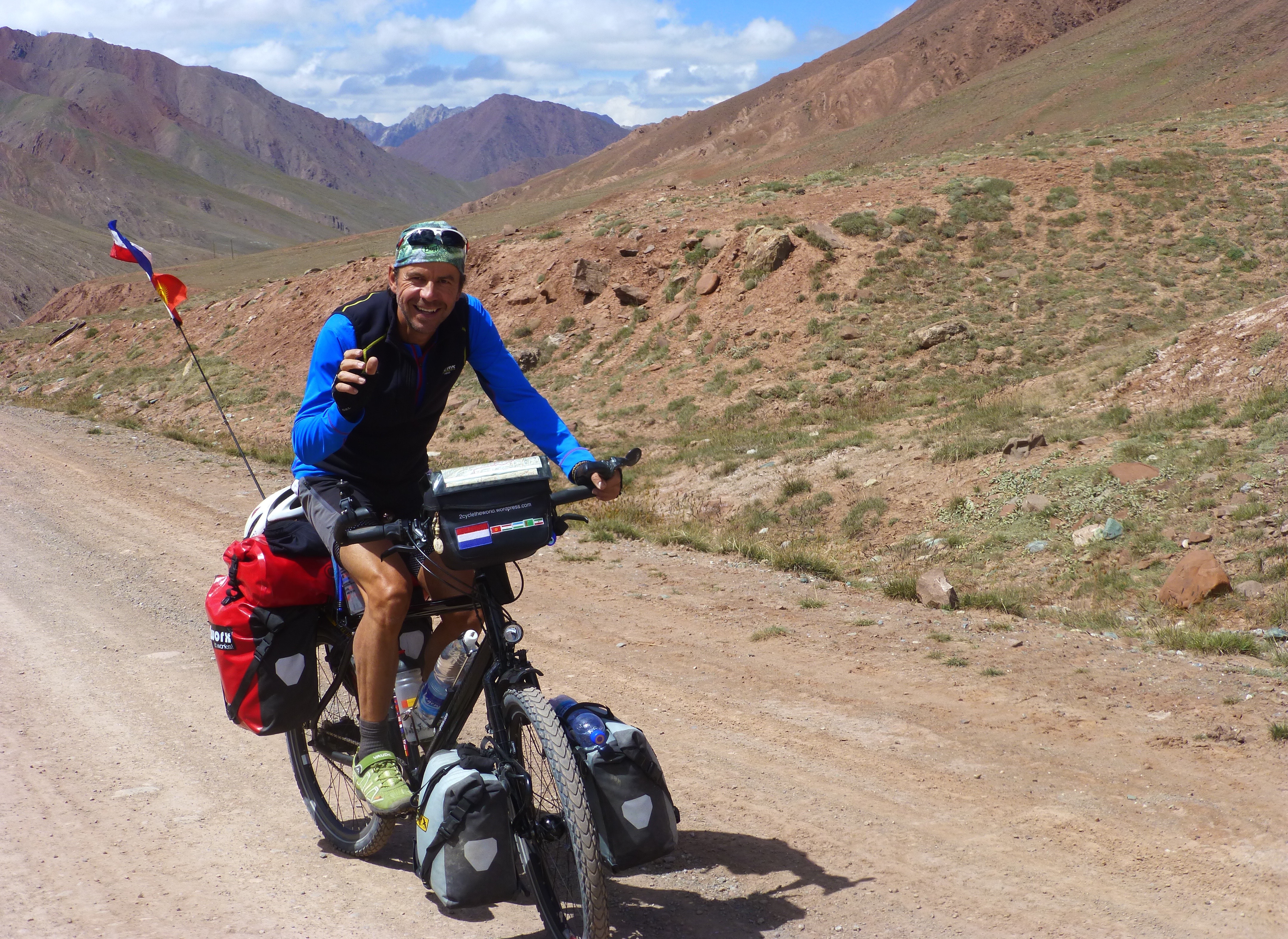
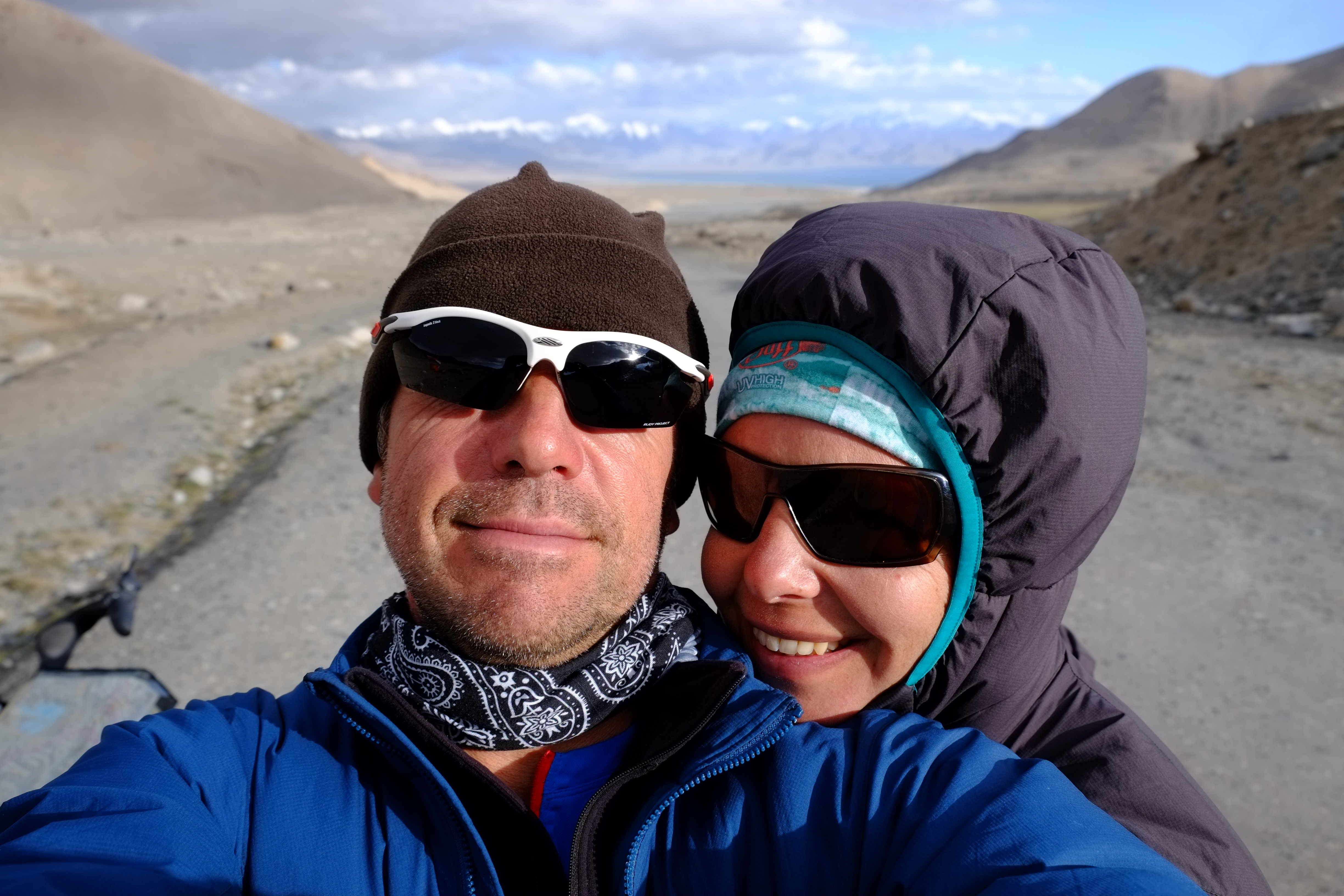
We can Selfie :-)
We can Selfie 🙂
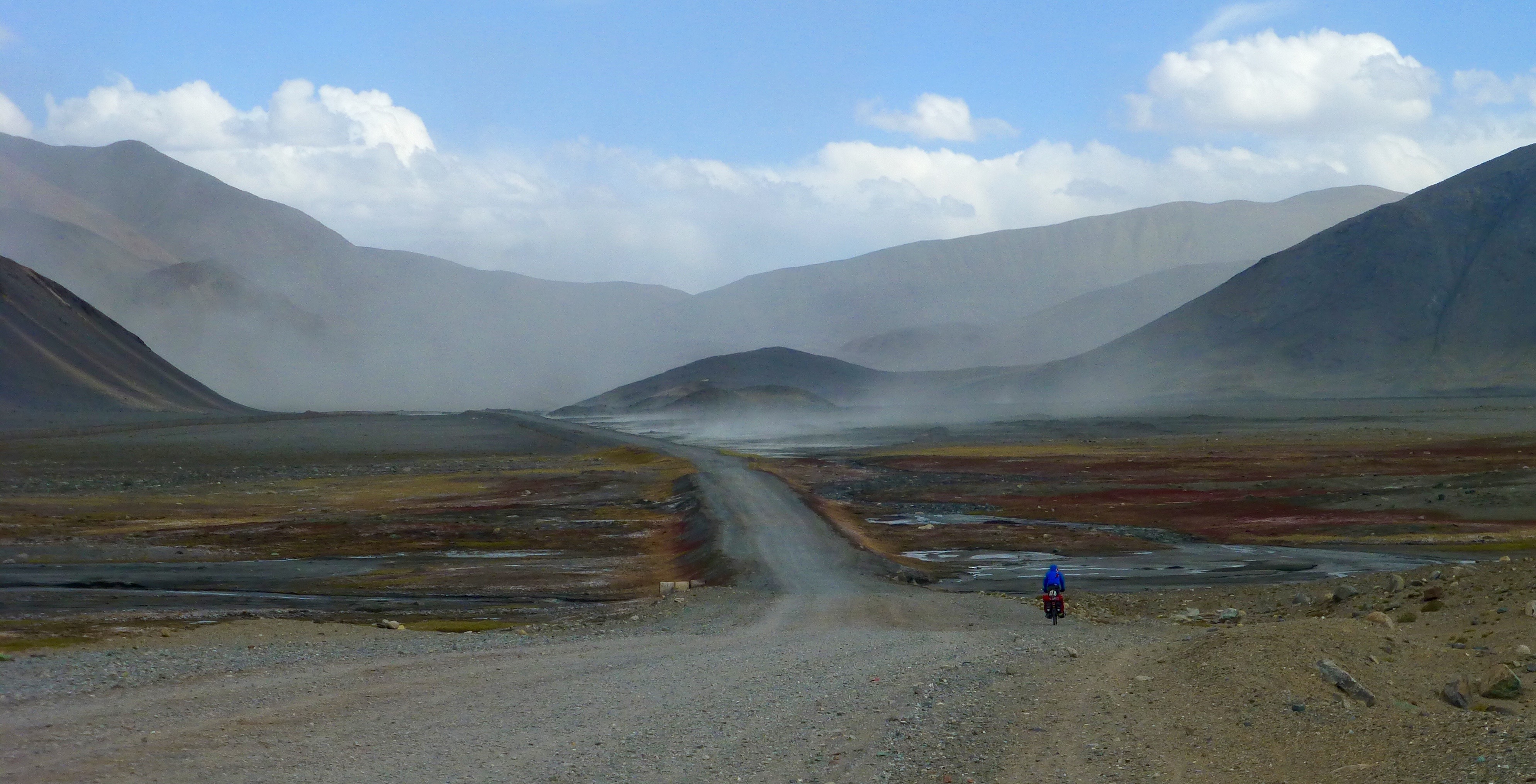
Dust storms
Dust storms
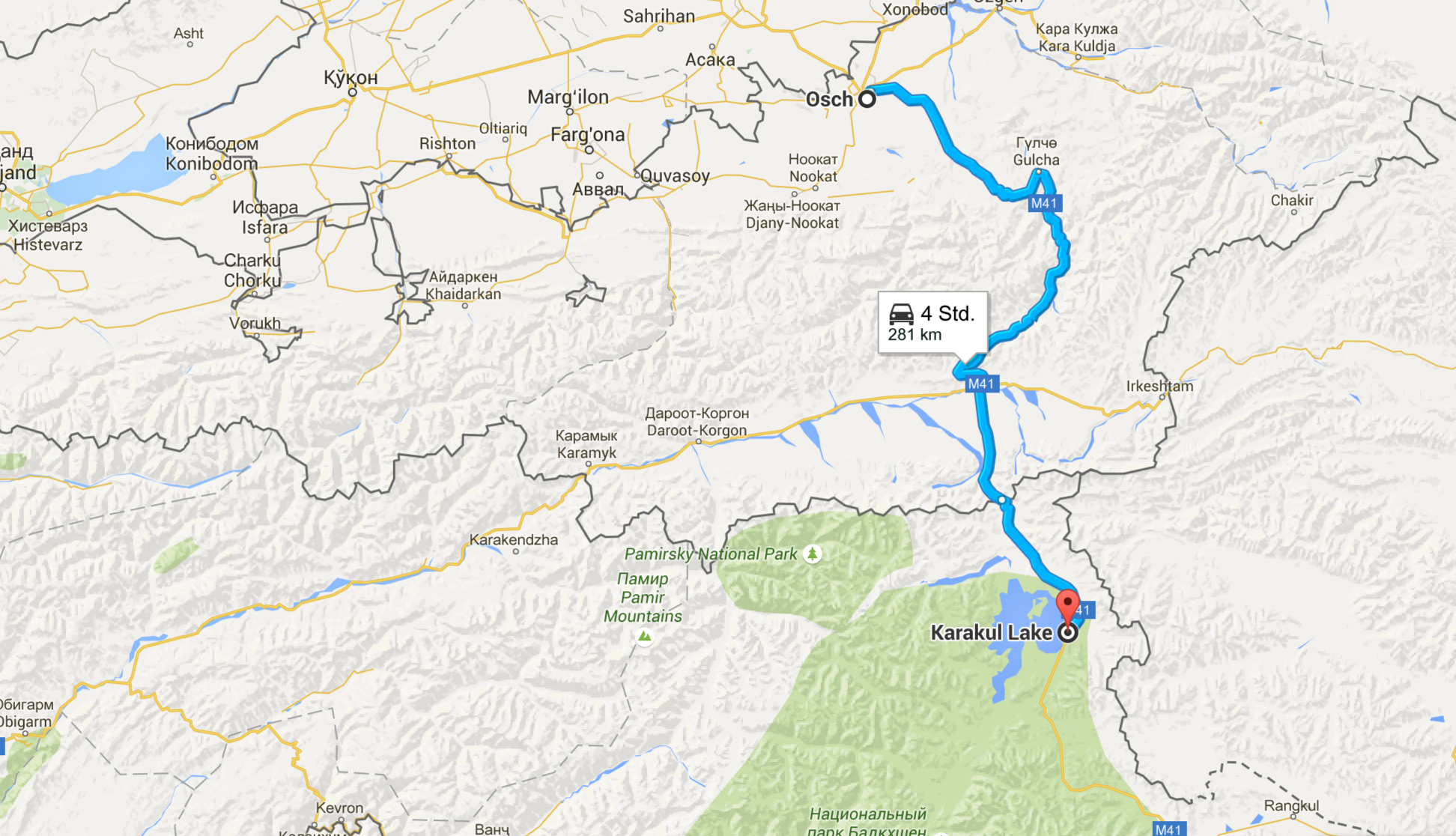
Final destination: Karakol
Final destination: Karakul
And from here it's only: downhill, downhill, downhill
And from here it’s only: downhill, downhill, downhill
Arrived!
Arrived!